In this article
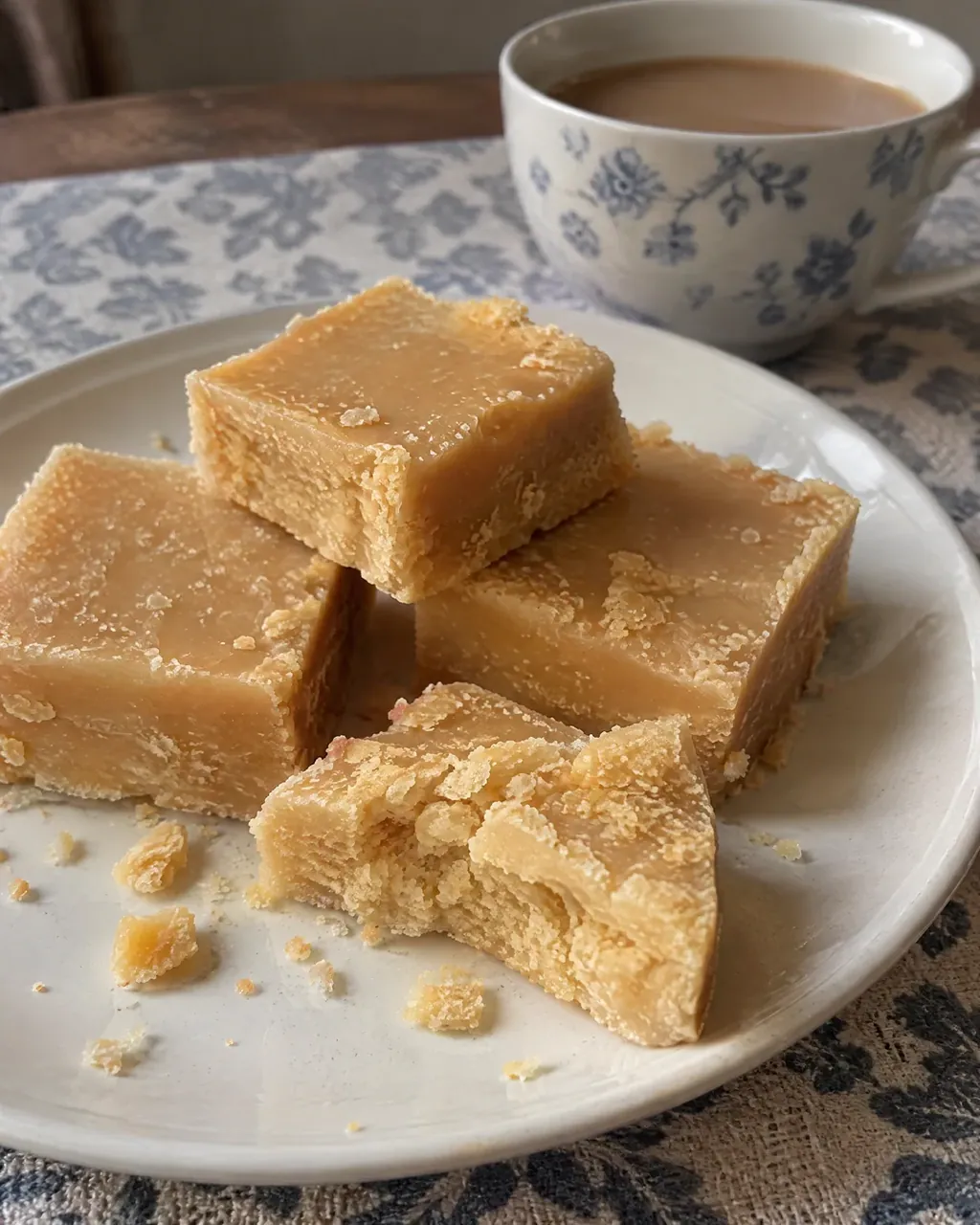
My English friend Margaret nearly dropped her teacup the day I called it fudge. Tablet, she told me, is not fudge, and no Scot would let me forget I had said it. Scottish tablet is the old sugar candy of Scotland, and recipes for it were being written down in Scottish kitchens in the early 1700s. Every corner shop and every grandmother’s tin in Scotland still has a slab of it. Fudge is soft and creamy. Tablet is firm and slightly grainy. It snaps cleanly when you break it, then melts on the tongue into butter and sugar.
There are only four ingredients: sugar, butter, milk and a can of sweetened condensed milk. Everything depends on two moments. The first is knowing when to stop boiling, and the second is beating it at the right time and for long enough, until it turns from glossy syrup into thick, grainy, matte candy. Stop too early and it never sets. Boil too long and it turns hard and gritty. Here is how to tell exactly when to stop boiling and start beating, with a thermometer or with a cup of cold water the way Margaret does it.
Why this Scottish tablet works
- Condensed milk. It adds creaminess and a gentle caramel flavor, and it makes the candy more forgiving than the oldest milk-only recipes.
- Sugar fully dissolved before boiling. Starting smooth stops large, crunchy sugar crystals from forming later.
- Boiled to the soft ball stage. At about 240 to 245 degrees the syrup has exactly enough water left to set firm but not rock hard.
- Beaten off the heat. Beating forces the sugar to form tiny crystals all at once, which gives tablet its fine, grainy snap.
- Poured fast. Tablet sets quickly once it thickens, so it goes into the tin the moment it loses its shine.
Ingredients
Makes one 8 inch square tin, about 36 small squares. The measurements are in US cups with grams in brackets.
For the tablet
- 1/2 cup unsalted butter (115g)
- 1 cup whole milk (240ml)
- 4 cups granulated sugar (800g)
- 1 can (14 ounces, 397g) sweetened condensed milk
- 1 teaspoon vanilla extract (optional)
- A pinch of fine salt
Use a heavy, deep saucepan that holds at least 4 quarts. The mixture bubbles up high as it boils, and a thin pan scorches the milk.
How to make Scottish tablet
- Line an 8 inch square tin with parchment, leaving the ends hanging over the sides. Set a cup of very cold water and a small spoon beside the stove.
- Put the butter and milk in the heavy saucepan over low heat. When the butter has melted, add the sugar and stir gently until every grain has dissolved and the mixture no longer feels gritty on the back of the spoon. This takes 8 to 10 minutes. Do not let it boil yet.
- Stir in the condensed milk and turn the heat up to medium. Bring to a boil, stirring all the time and scraping the bottom with a wooden spoon or heatproof spatula so nothing catches.
- Keep it at a steady rolling boil, stirring constantly, for 15 to 20 minutes. It darkens slowly to the color of pale toffee.
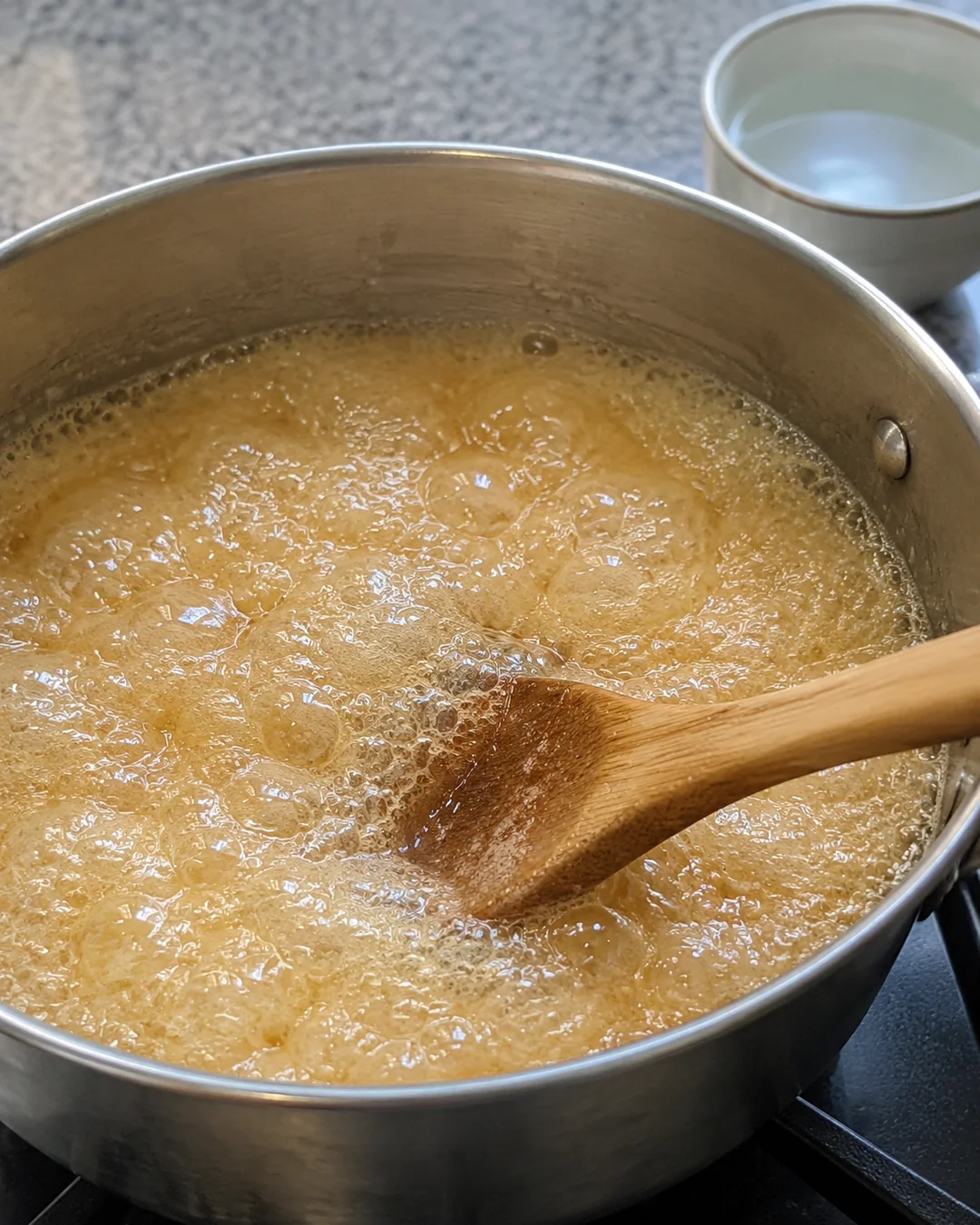
- Test it. Drop a little of the syrup into the cold water. When you can gather it into a soft ball between your fingers, it is ready. On a candy thermometer this is 240 to 245 degrees (116 to 118°C).
- Take the pan off the heat. Stir in the vanilla and salt.
- Beat hard with the wooden spoon, or with an electric hand mixer on low, for 5 to 10 minutes. Watch it closely. It turns thicker, loses its shine and begins to look grainy, and you feel it drag on the spoon.
- As soon as it looks matte and grainy, pour it into the lined tin and spread it level quickly, before it sets in the pan.
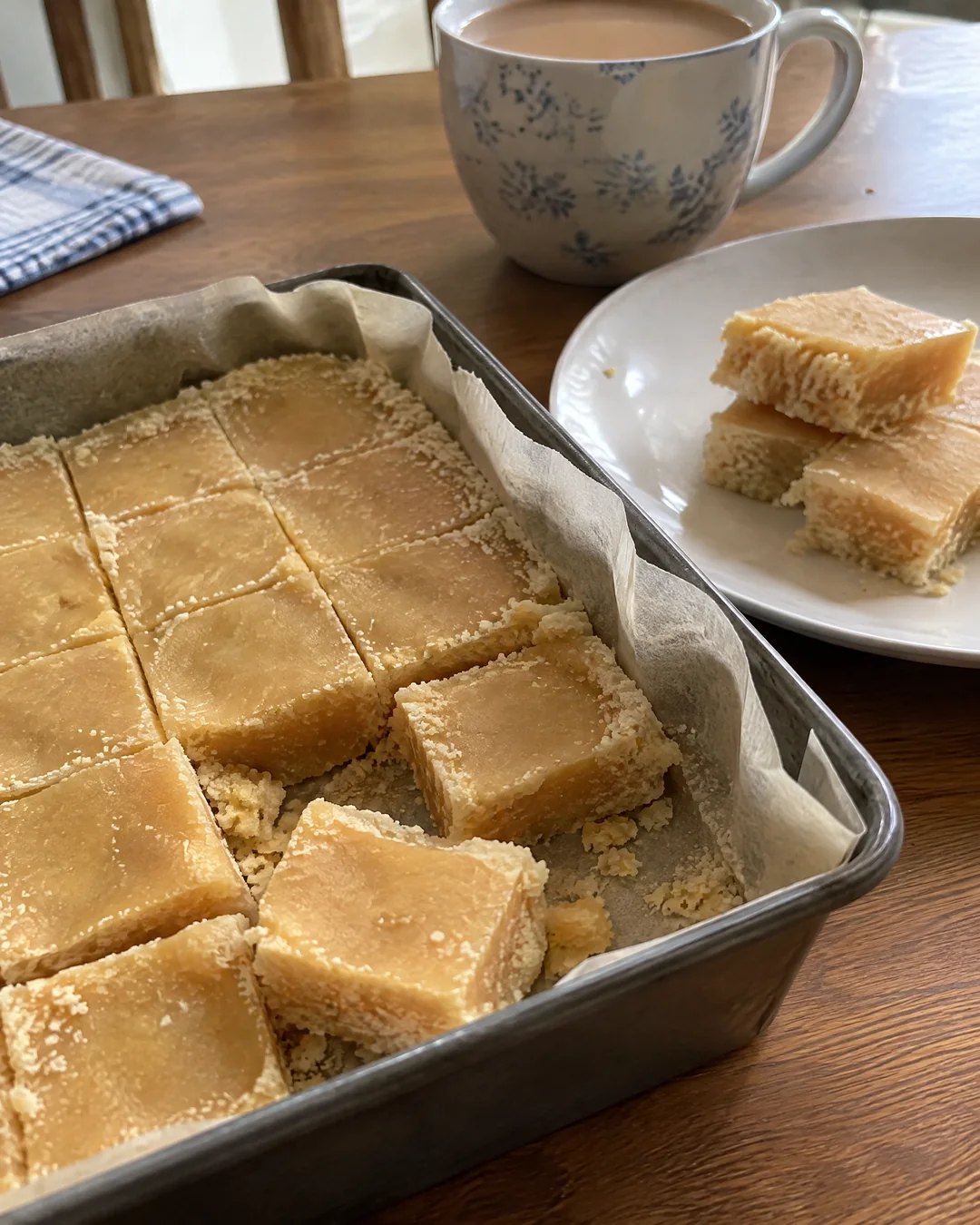
- Leave it for 15 minutes, then score it into small squares with a sharp knife while it is still warm.
- Let it set completely at room temperature for at least 2 hours, then lift it out and break it along the scored lines.
Tips that make the difference
- Never stop stirring while it boils. Condensed milk catches on the bottom of the pan in seconds and leaves dark burnt flecks.
- If it will not set after beating, scrape it back into the pan with a splash of milk, bring it back to a boil and test again.
- If it sets in the pan before you pour it, you beat a little too long. Press it into the tin with the back of a spoon while warm.
- Make it on a dry day. Humid air keeps tablet soft and sticky.
Variations
- Vanilla bean. Scrape the seeds of half a vanilla pod into the pan instead of the extract.
- Walnut tablet. Stir 1/2 cup finely chopped walnuts (55g) in just before pouring.
- Coconut. Stir in 1/3 cup desiccated coconut (30g) at the end of beating.
- Smaller batch. Halve everything and use a 6 inch tin; it boils a few minutes faster.
Storage and make-ahead
Keep tablet in an airtight tin, layered with parchment, at room temperature for up to 2 weeks.
Do not refrigerate it. The cold and damp soften the texture.
Tablet freezes well for up to 3 months, wrapped tightly. Thaw it in its wrapping so no moisture settles on it.
Frequently asked questions
What is the difference between tablet and fudge?
Both are made from sugar, butter and milk, but tablet is boiled a little longer and beaten until it crystallizes into fine grains. It is firmer and crumblier than fudge and snaps instead of bending.
Why didn’t my tablet set?
It was not boiled long enough or not beaten long enough. Boil to the soft ball stage, 240 to 245 degrees, and beat until it loses its shine.
Why is my tablet gritty and hard?
The sugar did not fully dissolve before boiling, or it boiled too long. Dissolve the sugar slowly over low heat first.
Do I need a thermometer?
No. Scottish grandmothers used the cold water test for centuries. A thermometer simply makes it easier.
Cut it small, keep it in a tin, and when somebody calls it fudge, hand them a square and let it explain itself.
Scottish Tablet (The Old Scottish Sugar Candy That Is Not Fudge)
Traditional Scottish tablet made with sugar, butter, milk and sweetened condensed milk, boiled to the soft ball stage and beaten until thick and grainy. Firmer and crumblier than fudge, it snaps and then melts.
Ingredients
- 1/2 cup unsalted butter
- 1 cup whole milk
- 4 cups granulated sugar
- 1 can (14 ounces, 397g) sweetened condensed milk
- 1 teaspoon vanilla extract
- A pinch of fine salt
Instructions
- Line an 8 inch square tin with parchment, leaving the ends hanging over the sides. Set a cup of very cold water and a small spoon beside the stove.
- Put the butter and milk in the heavy saucepan over low heat. When the butter has melted, add the sugar and stir gently until every grain has dissolved and the mixture no longer feels gritty on the back of the spoon. This takes 8 to 10 minutes. Do not let it boil yet.
- Stir in the condensed milk and turn the heat up to medium. Bring to a boil, stirring all the time and scraping the bottom with a wooden spoon or heatproof spatula so nothing catches.
- Keep it at a steady rolling boil, stirring constantly, for 15 to 20 minutes. It darkens slowly to the color of pale toffee.
- Test it. Drop a little of the syrup into the cold water. When you can gather it into a soft ball between your fingers, it is ready. On a candy thermometer this is 240 to 245 degrees (116 to 118°C).
- Take the pan off the heat. Stir in the vanilla and salt.
- Beat hard with the wooden spoon, or with an electric hand mixer on low, for 5 to 10 minutes. Watch it closely. It turns thicker, loses its shine and begins to look grainy, and you feel it drag on the spoon.
- As soon as it looks matte and grainy, pour it into the lined tin and spread it level quickly, before it sets in the pan.
- Leave it for 15 minutes, then score it into small squares with a sharp knife while it is still warm.
- Let it set completely at room temperature for at least 2 hours, then lift it out and break it along the scored lines.