In this article
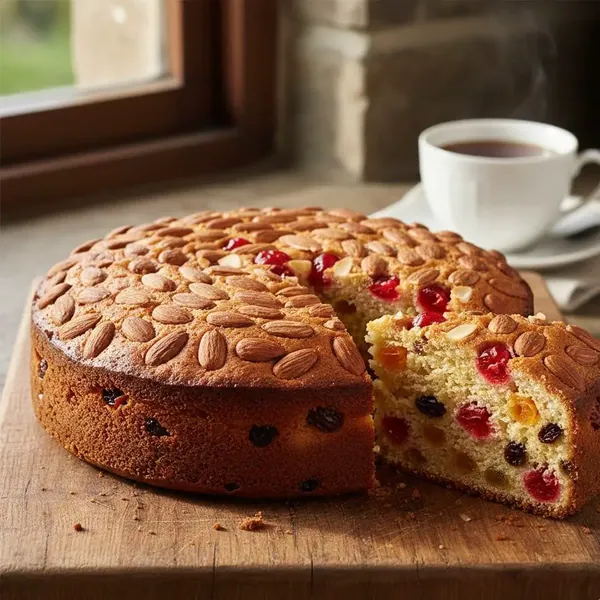
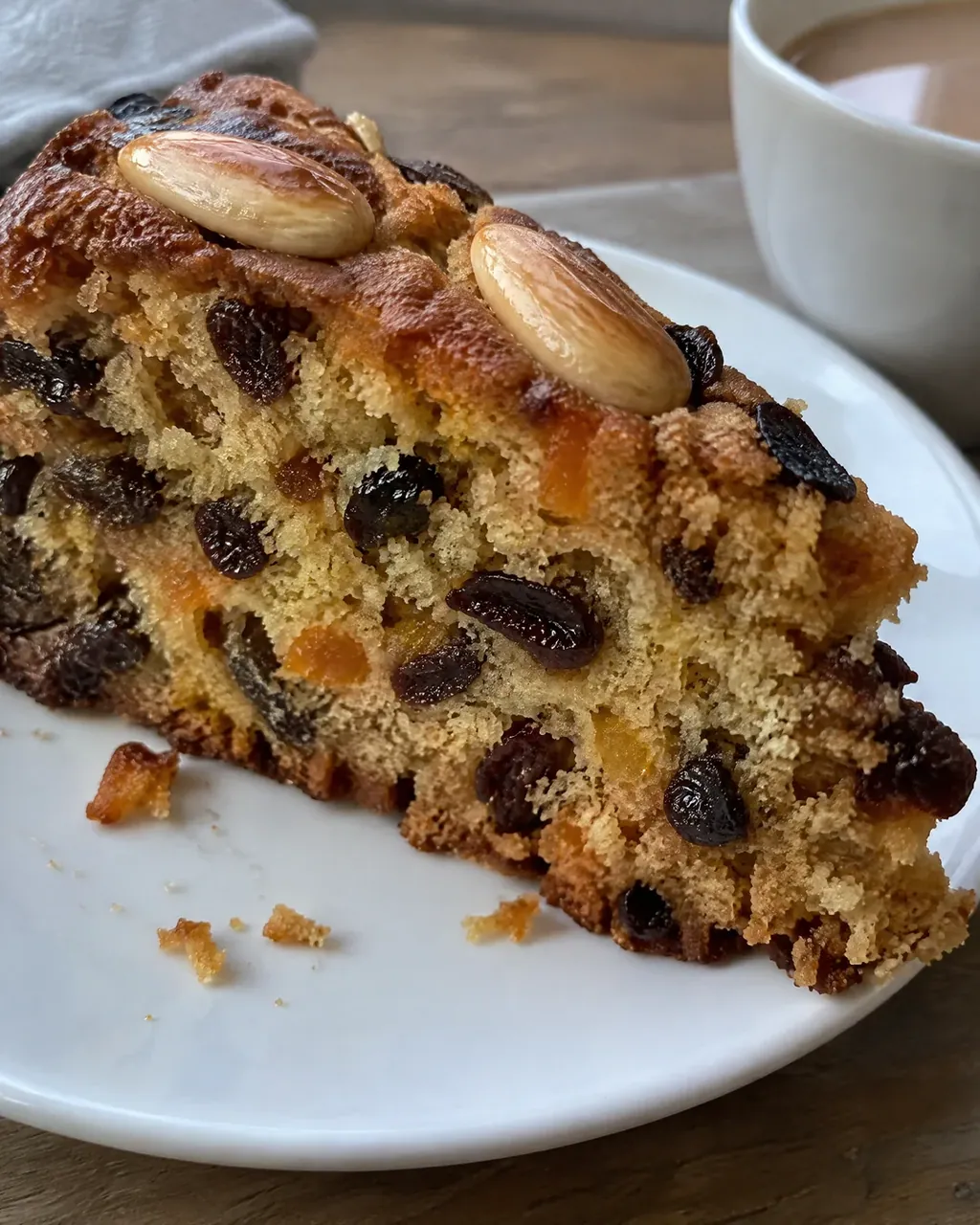
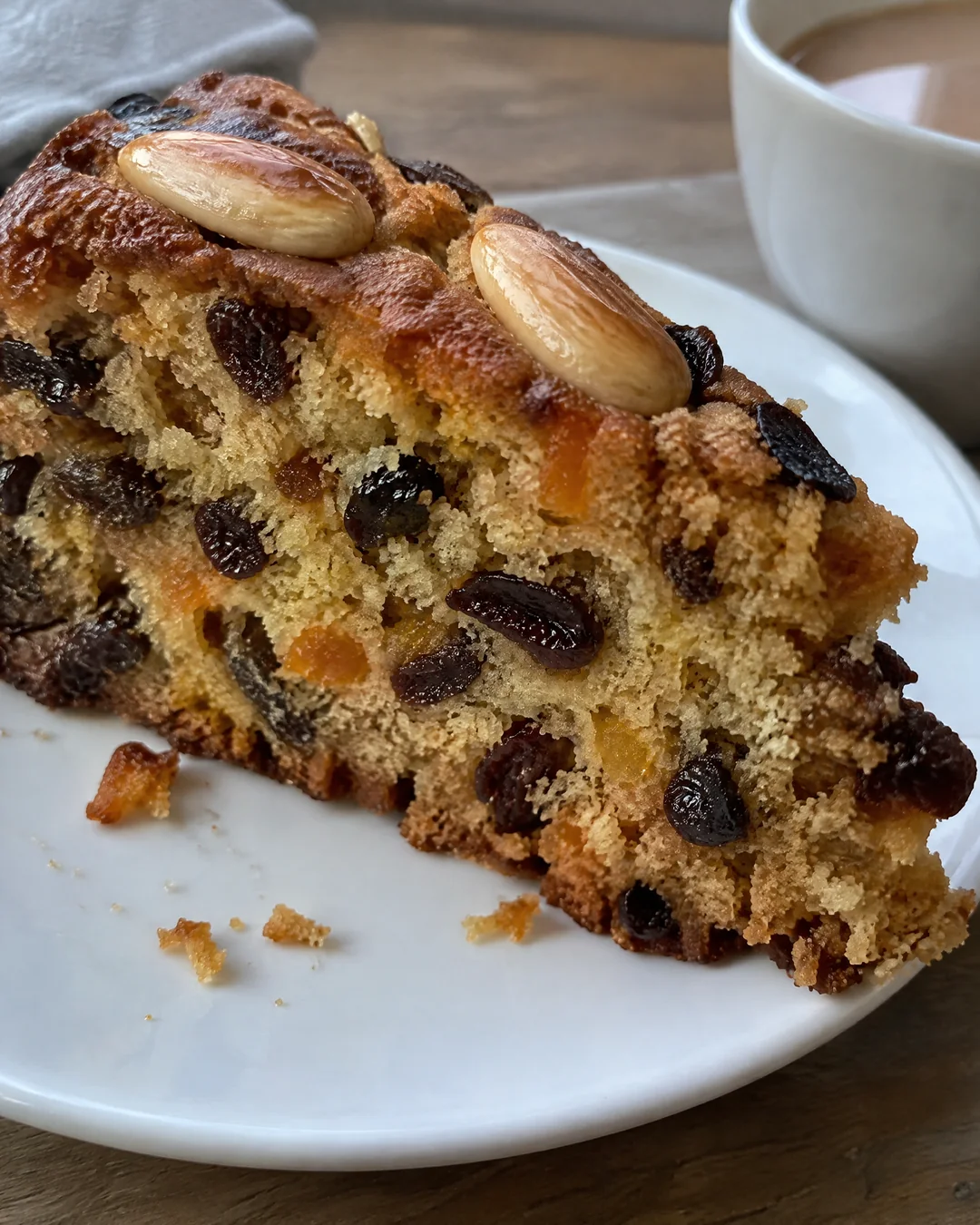
After I wrote about the British tea loaf, a good many readers told me they put a spoonful of marmalade in theirs. Scotland got there a long time ago. Dundee cake comes from the city of Dundee, on the east coast of Scotland, the town that made orange marmalade famous, and the marmalade goes straight into the batter. It is a fruit cake, but not the dark, heavy kind. The crumb is golden and buttery, full of sultanas and orange peel, and there is no icing on it at all. The top is covered with rings of whole almonds, pressed in before it bakes, and they toast to a deep gold in the oven.
It keeps for weeks in a tin, which is why Scottish grandmothers always seemed to have one ready when somebody came to the door. Two things worry people the first time they bake it: the fruit sinking to the bottom, and the outside burning before the middle of such a deep cake is done. Both have simple answers, and they are here, with all the measurements.
Why this Dundee cake works
- Marmalade in the batter. It gives the cake its faint bitter orange taste and keeps the crumb moist for weeks.
- A stiff batter. A fruit cake batter should be thick enough to hold a spoon upright for a moment. Thick batter holds the fruit up; thin batter lets it fall.
- Dry, floured fruit. Fruit that is damp or sticky slides through the batter. A spoonful of flour gives it something to grip.
- A low oven and a lined tin. A deep cake needs a long, gentle bake. Two layers of parchment protect the sides while the middle catches up.
- Almonds laid on, not pushed in. They sink a little on their own as the cake rises, and stay on the surface where they can toast.
Ingredients
Makes one deep 8 inch round cake (20cm), about 14 slices. The measurements are in US cups with grams in brackets.
For the cake
- 3/4 cup butter (170g), soft
- 3/4 cup plus 2 tablespoons packed light brown sugar (175g)
- Finely grated zest of 1 large orange
- 3 tablespoons orange marmalade (60g)
- 3 large eggs, at room temperature
- 1 3/4 cups all-purpose flour (225g)
- 1/4 cup ground almonds or almond flour (25g)
- 1 teaspoon baking powder
- 1/4 teaspoon salt
- 2 2/3 cups sultanas or golden raisins (400g)
- 1/3 cup chopped candied orange peel (50g)
- 2 tablespoons milk
For the top
- 1/2 cup whole blanched almonds (70g)
- 1 tablespoon milk mixed with 2 teaspoons sugar, for the glaze
Sultanas are what America sells as golden raisins; ordinary dark raisins work too, or half raisins and half currants. A thick-cut, slightly bitter orange marmalade is the traditional choice, but any orange marmalade will do. If your almonds still have their brown skins, pour boiling water over them, wait 5 minutes and the skins will slip off between your fingers.
How to make Dundee cake
Get ready
- Heat the oven to 300 degrees (150°C) with a rack in the lower third. Grease a deep 8 inch round cake pan, at least 3 inches high, or a springform pan. Line the bottom and sides with two layers of parchment, with the paper standing an inch above the rim.
- Put the sultanas and candied peel in a bowl. If the fruit feels sticky or wet, pat it dry with a paper towel. Take 2 tablespoons of the measured flour and toss it with the fruit until every piece is lightly coated.
Mix
- In a large bowl, beat the butter, brown sugar and orange zest for 3 to 4 minutes, until pale and fluffy. Beat in the marmalade.
- Beat in the eggs one at a time, adding a spoonful of the flour with each of the last two so the mixture does not curdle.
- Stir the rest of the flour, the ground almonds, baking powder and salt together, and fold them into the bowl with a spatula.
- Fold in the floured fruit and the 2 tablespoons of milk. The batter should be thick and should drop slowly off the spoon when you shake it. Do not thin it with more milk.
Top and bake
- Scrape the batter into the lined pan and level the top with the back of a wet spoon, making a very slight hollow in the middle so the cake bakes flat.
- Arrange the whole almonds on top in close rings, starting at the outside edge and working toward the middle. Lay them on gently; do not press them under the surface.
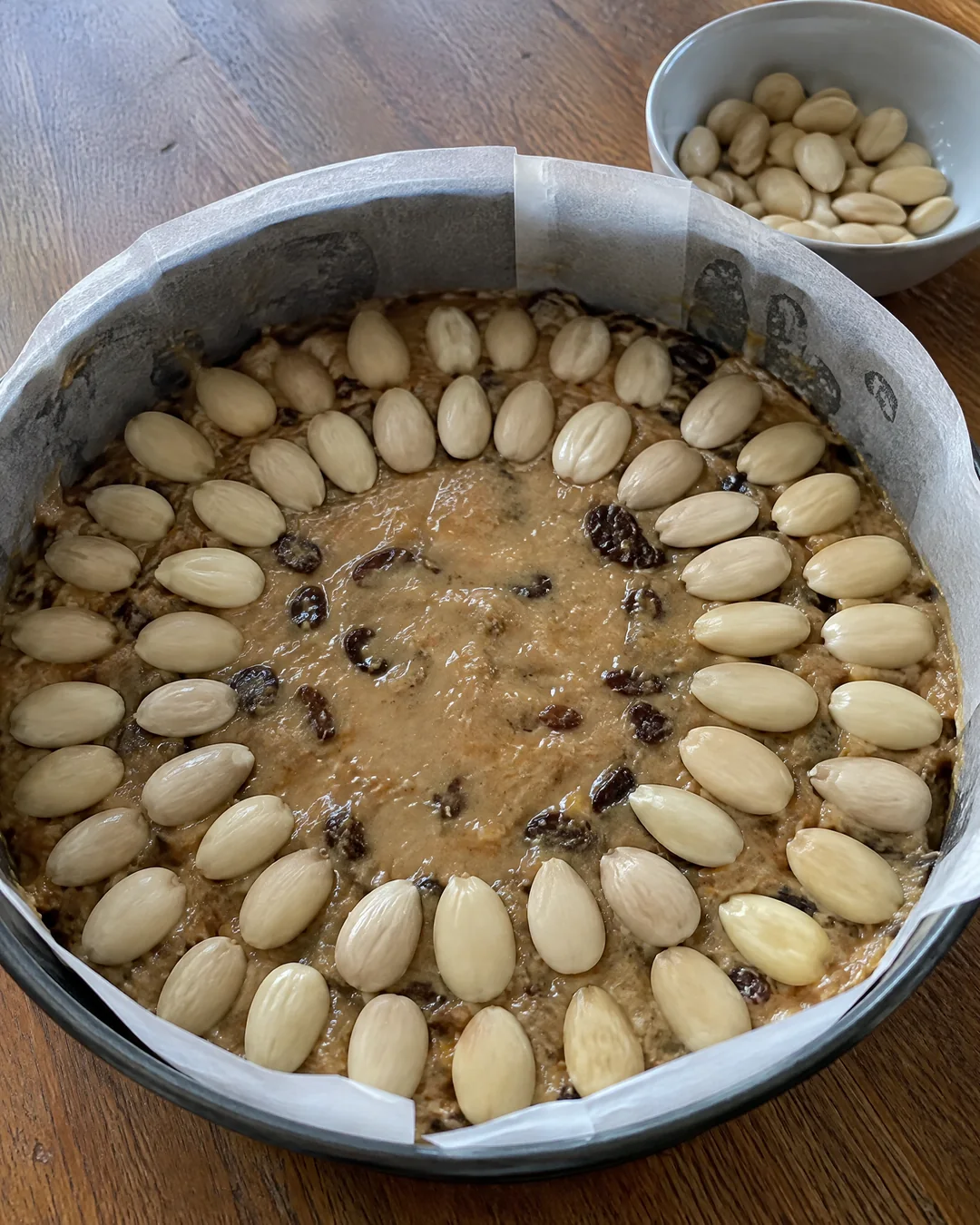
- Bake for 1 hour. Without taking the cake out, lay a piece of foil loosely over the top, then bake for another 45 minutes to 1 hour. The cake is done when it is firm in the middle, a skewer pushed into the center comes out clean, and you can no longer hear it sizzling when you put your ear near it.
- Brush the hot cake with the sweetened milk and return it to the oven for 2 minutes to dry into a light shine.
- Cool the cake in its pan on a rack for at least 3 hours, until completely cold. Peel off the parchment, wrap the cake in fresh parchment and foil, and keep it for 2 days before cutting if you can.
Tips that make the difference
- Bake by the skewer and the sound, not only by the clock. A fruit cake that is still singing and sizzling has wet batter in the middle.
- If your oven runs hot, wrap a folded strip of brown paper or newspaper around the outside of the pan and tie it with string. It keeps the sides from drying out.
- Keep the oven door shut for the first hour. A draft makes a deep cake dip in the middle.
- Have the eggs and butter at room temperature. Cold eggs curdle the mixture, and a curdled batter lets the fruit drop.
Variations
- With cherries. Replace 1/2 cup of the sultanas with halved candied cherries, rinsed, dried well and tossed in flour.
- Mixed fruit. Use equal parts sultanas, dark raisins and currants for a deeper color and taste.
Storage and make-ahead
Wrapped in parchment and foil and kept in an airtight tin in a cool cupboard, Dundee cake keeps for 3 to 4 weeks and its flavor deepens after the first few days.
Do not store it in the refrigerator. The cold hardens the butter in the crumb and dries the cake.
To freeze, wrap the whole cake or thick wedges in plastic wrap and foil and freeze for up to 3 months. Thaw overnight at room temperature in the wrapping.
Frequently asked questions
How do I stop the fruit sinking to the bottom?
Dry the fruit, toss it in a little of the flour, and keep the batter thick. Fruit sinks when it is wet or syrupy, when the batter has been thinned with too much milk, or when the mixture curdled because the eggs were cold.
How do I bake a deep cake through without burning the crust?
Use a low oven, 300 degrees, a pan lined with two layers of parchment, and a rack in the lower third. Cover the top loosely with foil after the first hour. The cake needs about 2 hours in all; a higher heat browns the outside long before the middle is set.
What is the difference between Dundee cake and other fruit cake?
Dundee cake is lighter in color and texture, with more butter and less dark sugar and spice. It has orange marmalade in the batter and is finished with whole almonds on top instead of icing or marzipan.
Bake it on a quiet afternoon, wrap it, and put it away in a tin. In two days it will be ready for the first slice and a pot of tea.
Scottish Dundee Cake (Marmalade in the Batter, Whole Almonds on Top)
A traditional Scottish Dundee cake: a golden, buttery fruit cake with orange marmalade stirred into the batter, plenty of sultanas and orange peel, and rings of whole blanched almonds pressed on top in place of icing, baked slowly so it cooks through without a burnt crust.
Ingredients
- 3/4 cup butter (170g), soft
- 3/4 cup plus 2 tablespoons packed light brown sugar
- Finely grated zest of 1 large orange
- 3 tablespoons orange marmalade
- 3 large eggs, at room temperature
- 1 3/4 cups all-purpose flour
- 1/4 cup ground almonds or almond flour
- 1 teaspoon baking powder
- 1/4 teaspoon salt
- 2 2/3 cups sultanas or golden raisins
- 1/3 cup chopped candied orange peel
- 2 tablespoons milk
- 1/2 cup whole blanched almonds
- 1 tablespoon milk mixed with 2 teaspoons sugar, for the glaze
Instructions
- Heat the oven to 300 degrees (150°C) with a rack in the lower third. Grease a deep 8 inch round cake pan, at least 3 inches high, or a springform pan. Line the bottom and sides with two layers of parchment, with the paper standing an inch above the rim.
- Put the sultanas and candied peel in a bowl. If the fruit feels sticky or wet, pat it dry with a paper towel. Take 2 tablespoons of the measured flour and toss it with the fruit until every piece is lightly coated.
- In a large bowl, beat the butter, brown sugar and orange zest for 3 to 4 minutes, until pale and fluffy. Beat in the marmalade.
- Beat in the eggs one at a time, adding a spoonful of the flour with each of the last two so the mixture does not curdle.
- Stir the rest of the flour, the ground almonds, baking powder and salt together, and fold them into the bowl with a spatula.
- Fold in the floured fruit and the 2 tablespoons of milk. The batter should be thick and should drop slowly off the spoon when you shake it. Do not thin it with more milk.
- Scrape the batter into the lined pan and level the top with the back of a wet spoon, making a very slight hollow in the middle so the cake bakes flat.
- Arrange the whole almonds on top in close rings, starting at the outside edge and working toward the middle. Lay them on gently; do not press them under the surface.
- Bake for 1 hour. Without taking the cake out, lay a piece of foil loosely over the top, then bake for another 45 minutes to 1 hour. The cake is done when it is firm in the middle, a skewer pushed into the center comes out clean, and you can no longer hear it sizzling when you put your ear near it.
- Brush the hot cake with the sweetened milk and return it to the oven for 2 minutes to dry into a light shine.
- Cool the cake in its pan on a rack for at least 3 hours, until completely cold. Peel off the parchment, wrap the cake in fresh parchment and foil, and keep it for 2 days before cutting if you can.