In this article
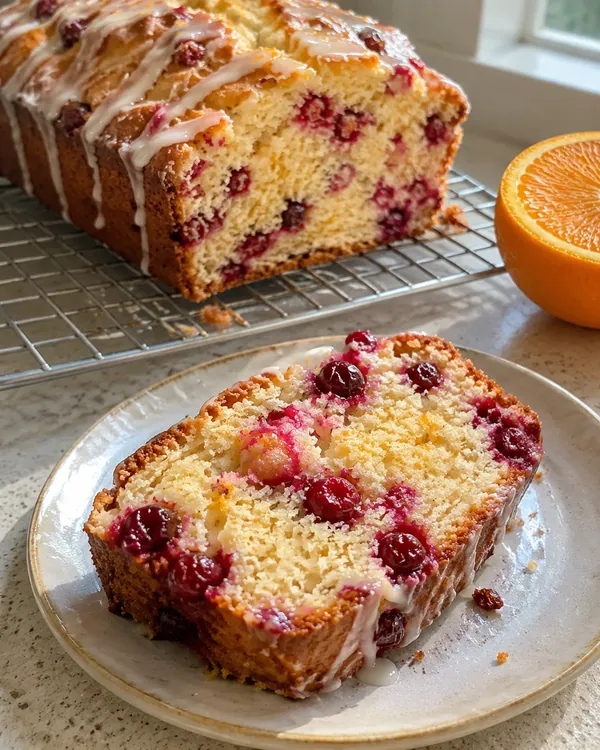
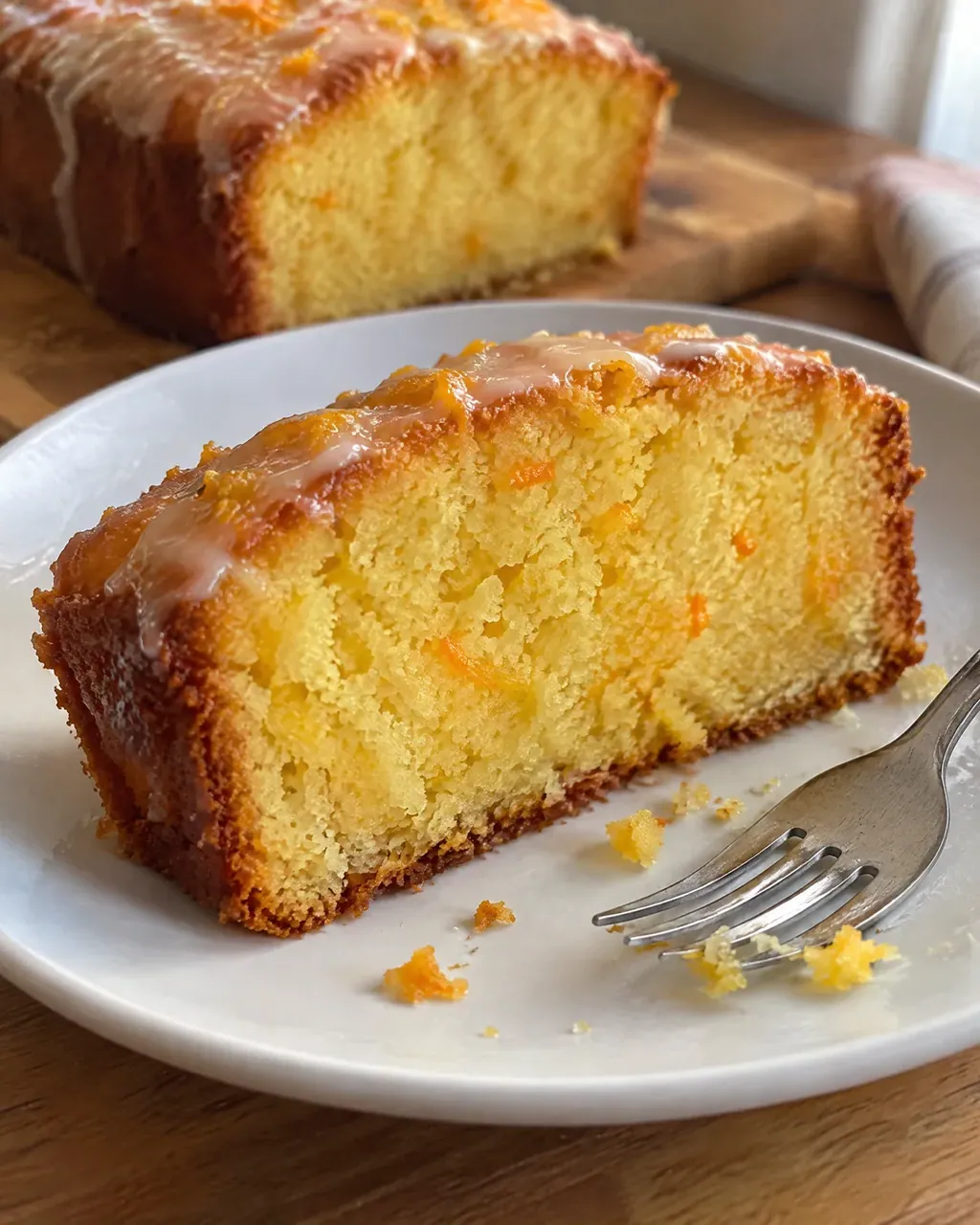
The first time I watched somebody make a whole orange loaf, I was sure it was a mistake. She washed one orange, cut it in chunks without peeling it, and dropped the whole thing into the blender: skin, white pith, everything but the seeds. Then the eggs, the sugar and the oil went in on top, and a minute later there was a thick, bright orange puree that became the whole batter. No zesting. No squeezing. Nothing in the trash. What came out of the oven was a golden loaf that tasted like marmalade baked into a cake, with tiny flecks of peel in every slice and a perfume that filled the kitchen.
The peel is where the flavor of an orange lives, and this loaf uses all of it. But the peel is also where the bitterness lives, and that is the one question everybody asks: how do you keep a cake with a whole orange in it from turning bitter? The answer is almost entirely in the orange you buy and in two small cuts with a knife. Here is which orange to use, how to prepare it, and the measurements for a loaf that is sweet, moist and never bitter.
Why this whole orange loaf works
- A thin-skinned seedless orange. A navel orange with a thin, smooth skin has very little white pith, and the pith is what turns bitter.
- The two ends cut off. The thick knob of pith at the stem end and the navel end carry most of the bitterness, so they come off before the blender.
- Oil, not butter. Oil blends smoothly with the orange puree and keeps the loaf moist for days.
- The blender does the work. The peel is cut so fine that it melts into the crumb as small soft flecks, never chewy strips.
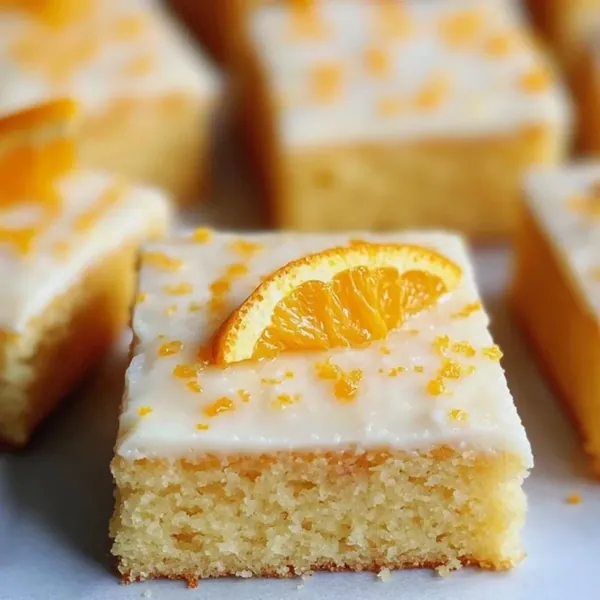
- A thin glaze of fresh juice. It adds a sharp, bright orange taste on top that balances the deeper marmalade flavor inside.
Ingredients
Makes one loaf in a 9 by 5 inch loaf pan, about 10 thick slices. The measurements are in US cups with grams in brackets.
For the loaf
- 1 medium thin-skinned seedless navel orange, about 7 ounces (200g), washed well
- 3 large eggs, at room temperature
- 1 cup granulated sugar (200g)
- 1/2 cup neutral oil such as canola or sunflower (120ml)
- 1/4 cup plain yogurt or sour cream (60g)
- 1 teaspoon vanilla extract
- 1 3/4 cups all-purpose flour (220g)
- 2 teaspoons baking powder
- 1/4 teaspoon baking soda
- 1/2 teaspoon fine salt
For the orange glaze
- 1 cup powdered sugar (120g)
- 2 tablespoons fresh orange juice, plus a little more if needed
Choose an orange that feels heavy for its size with a smooth, thin skin. Thick, bumpy, loose skin means a thick layer of white pith underneath, and that is the orange that makes a bitter cake. If the orange is waxed, scrub it under hot water with a brush before you cut it.
How to make whole orange loaf
Prepare the orange
- Heat the oven to 350 degrees (175°C). Grease a 9 by 5 inch loaf pan and line it with a strip of parchment that hangs over the two long sides.
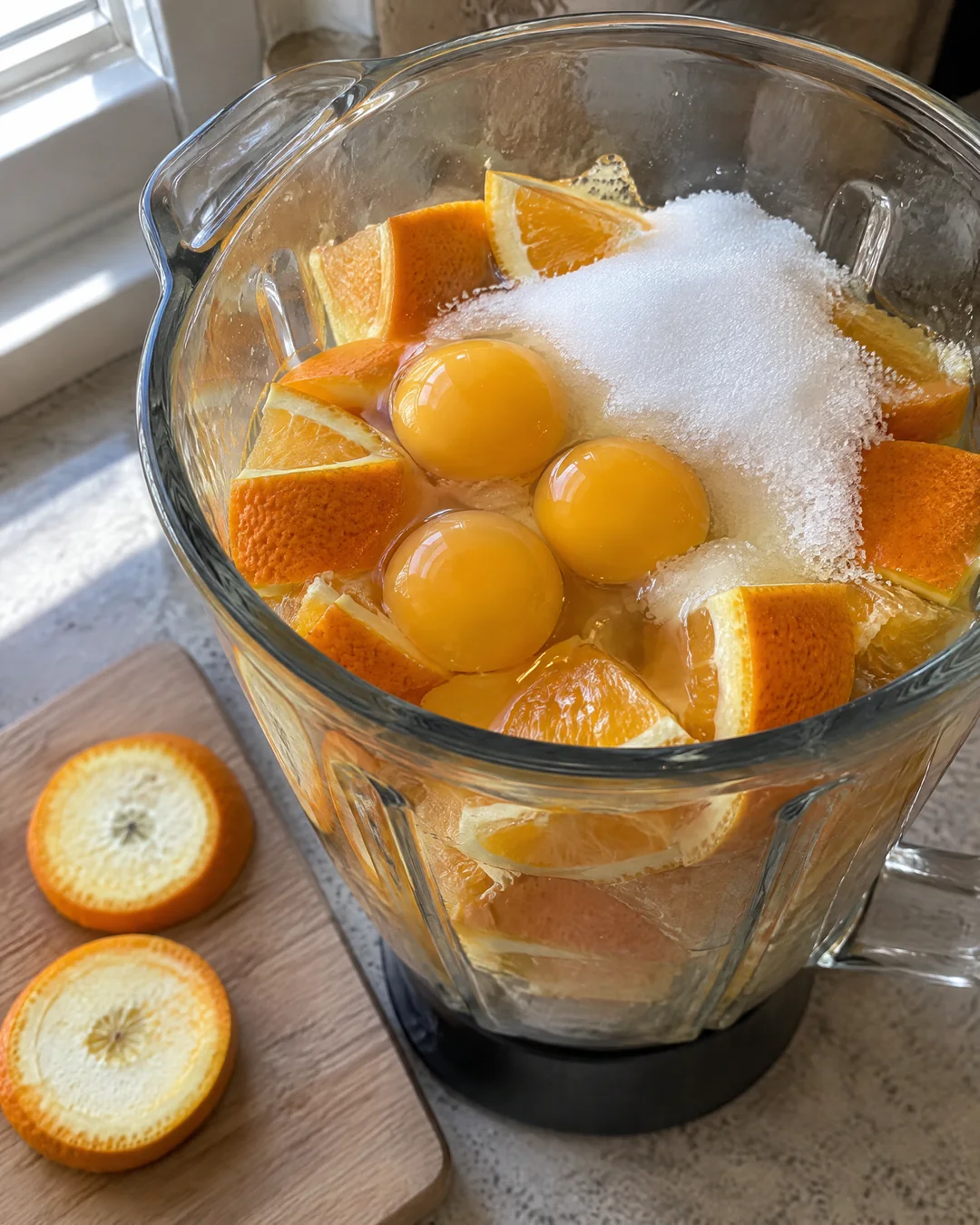
- Wash and dry the orange. Slice off both ends, about half an inch from each, and throw them away. Cut the rest of the orange, peel and all, into 8 chunks and pick out any seeds.
Make the batter
- Put the orange chunks, eggs, sugar, oil, yogurt and vanilla in a blender. Blend on high for about 1 minute, until the mixture is a thick, smooth puree with only tiny flecks of peel.
- In a large bowl, whisk together the flour, baking powder, baking soda and salt.
- Pour the orange puree over the flour and fold with a spatula just until no dry streaks remain. Do not beat it; a few small lumps are fine.
- Scrape the batter into the pan and level the top.
Bake and glaze
- Bake for 50 to 60 minutes, until the loaf is deep golden, has a crack along the top and a skewer pushed into the center comes out clean. If the top browns too fast, lay a sheet of foil loosely over it for the last 15 minutes.
- Cool the loaf in the pan for 15 minutes, then lift it out with the parchment and cool it completely on a rack.
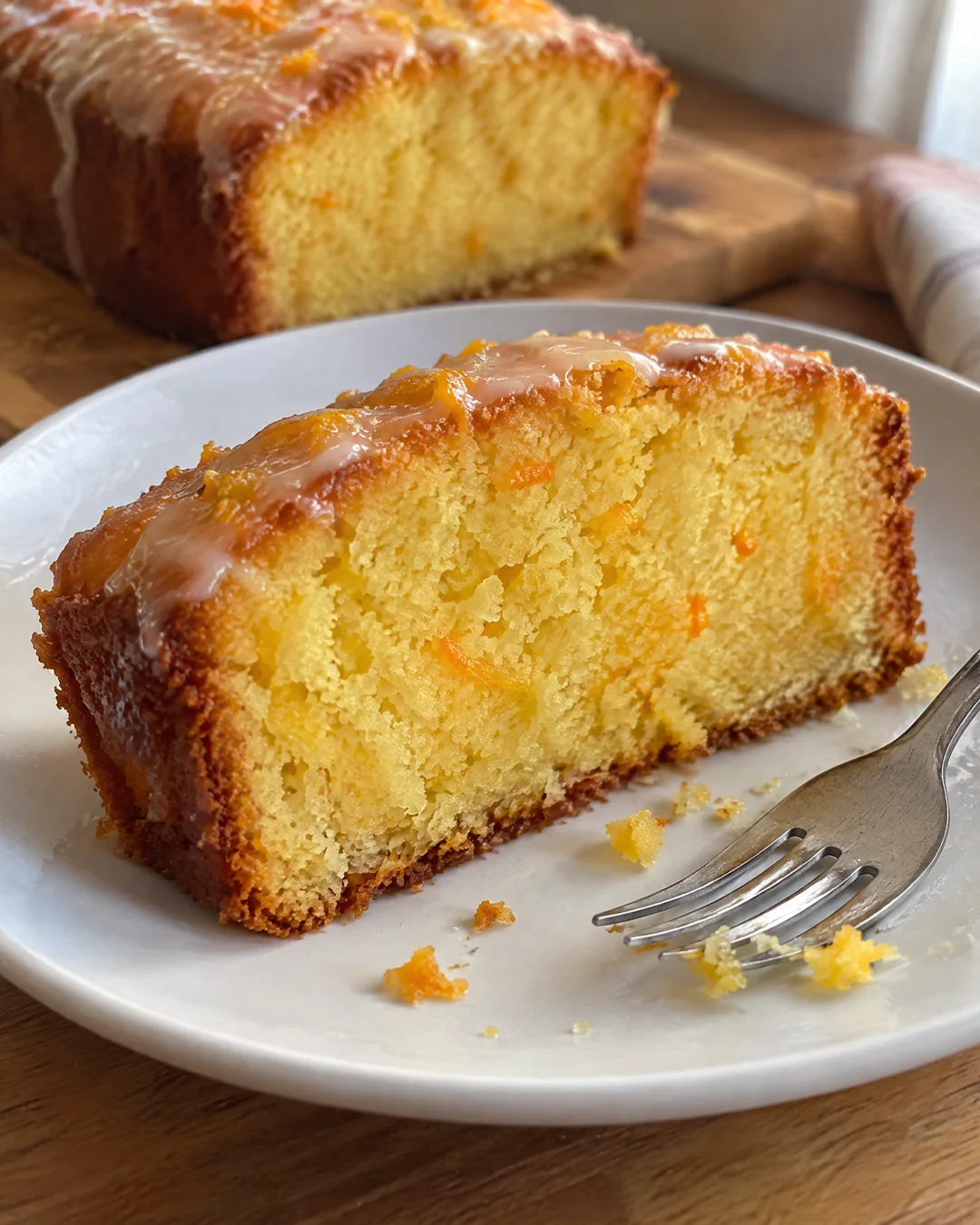
- Stir the powdered sugar and orange juice together until smooth and just thin enough to run slowly off a spoon. Spoon the glaze over the cold loaf and let it drip down the sides. Let it set for 20 minutes before slicing.
Tips that make the difference
- If your orange has a thick skin, drop it whole into a small pan of boiling water for 10 minutes, then cool it before cutting. The short boil softens the peel and takes away most of the bitterness.
- Weigh the orange if you can. A much larger orange adds too much liquid and the middle of the loaf stays wet.
- Blend until the puree is really smooth. Large pieces of peel are what people notice as bitter.
- Fold the flour in by hand. Putting the flour in the blender overworks the batter and makes the loaf tough.
- Glaze the loaf only when it is completely cold, or the glaze will melt and disappear into the crust.
Variations
- Orange and chocolate chip. Fold 1/2 cup of mini chocolate chips into the batter with the flour.
- Orange and almond. Replace 1/2 cup of the flour with almond flour and add a few drops of almond extract.
- Clementine loaf. Use 2 or 3 small seedless clementines to make the same weight. Their skin is thin and sweet, so nothing needs trimming but the stem.
- Orange poppy seed. Stir 1 tablespoon of poppy seeds into the flour before you add the puree.
Storage and make-ahead
Keep the loaf covered at room temperature for up to 4 days. The orange flavor gets deeper on the second day.
In warm weather, keep it in the refrigerator and let the slices come to room temperature before serving.
Freeze the loaf without the glaze, well wrapped, for up to 3 months. Thaw it wrapped on the counter and glaze it before serving.
Frequently asked questions
Will the peel make the cake bitter?
Not with a thin-skinned navel orange and both ends cut off. The bitterness sits in thick white pith, so a thin skin, trimmed ends and a smooth puree give a sweet loaf that tastes like marmalade.
Which orange should I buy?
A medium seedless navel orange with smooth, thin, tight skin. Avoid large oranges with thick bumpy skin, and avoid bitter marmalade oranges.
Can I make it without a blender?
A food processor works just as well. Process the orange chunks with the sugar first until fine, then add the eggs, oil, yogurt and vanilla.
Why is my loaf wet in the middle?
The orange was too large or the loaf needed more time. Use an orange close to 7 ounces and bake until a skewer from the very center comes out clean.
Bake it once and you will never zest an orange for a cake again.
Whole Orange Loaf Cake (The Entire Orange in the Blender, Peel and All, Never Bitter)
A moist whole orange loaf cake made with one entire orange, peel and all, pureed in the blender with eggs, sugar and oil, baked into a golden loaf that tastes like marmalade and finished with a thin orange glaze.
Ingredients
- 1 medium thin-skinned seedless navel orange, about 7 ounces (200g), washed well
- 3 large eggs, at room temperature
- 1 cup granulated sugar
- 1/2 cup neutral oil such as canola or sunflower
- 1/4 cup plain yogurt or sour cream
- 1 teaspoon vanilla extract
- 1 3/4 cups all-purpose flour
- 2 teaspoons baking powder
- 1/4 teaspoon baking soda
- 1/2 teaspoon fine salt
- 1 cup powdered sugar
- 2 tablespoons fresh orange juice, plus a little more if needed
Instructions
- Heat the oven to 350 degrees (175°C). Grease a 9 by 5 inch loaf pan and line it with a strip of parchment that hangs over the two long sides.
- Wash and dry the orange. Slice off both ends, about half an inch from each, and throw them away. Cut the rest of the orange, peel and all, into 8 chunks and pick out any seeds.
- Put the orange chunks, eggs, sugar, oil, yogurt and vanilla in a blender. Blend on high for about 1 minute, until the mixture is a thick, smooth puree with only tiny flecks of peel.
- In a large bowl, whisk together the flour, baking powder, baking soda and salt.
- Pour the orange puree over the flour and fold with a spatula just until no dry streaks remain. Do not beat it; a few small lumps are fine.
- Scrape the batter into the pan and level the top.
- Bake for 50 to 60 minutes, until the loaf is deep golden, has a crack along the top and a skewer pushed into the center comes out clean. If the top browns too fast, lay a sheet of foil loosely over it for the last 15 minutes.
- Cool the loaf in the pan for 15 minutes, then lift it out with the parchment and cool it completely on a rack.
- Stir the powdered sugar and orange juice together until smooth and just thin enough to run slowly off a spoon. Spoon the glaze over the cold loaf and let it drip down the sides. Let it set for 20 minutes before slicing.