In this article
A clootie dumpling is a pudding that never sees a cake tin. In Scots a cloot is a cloth, and that is exactly what this is cooked in. The mixture of flour, breadcrumbs, dried fruit, treacle and spice is tied up in a piece of wet, floured cotton, lowered into a big pot of simmering water and left there for three hours, with somebody topping up the water from the kettle.
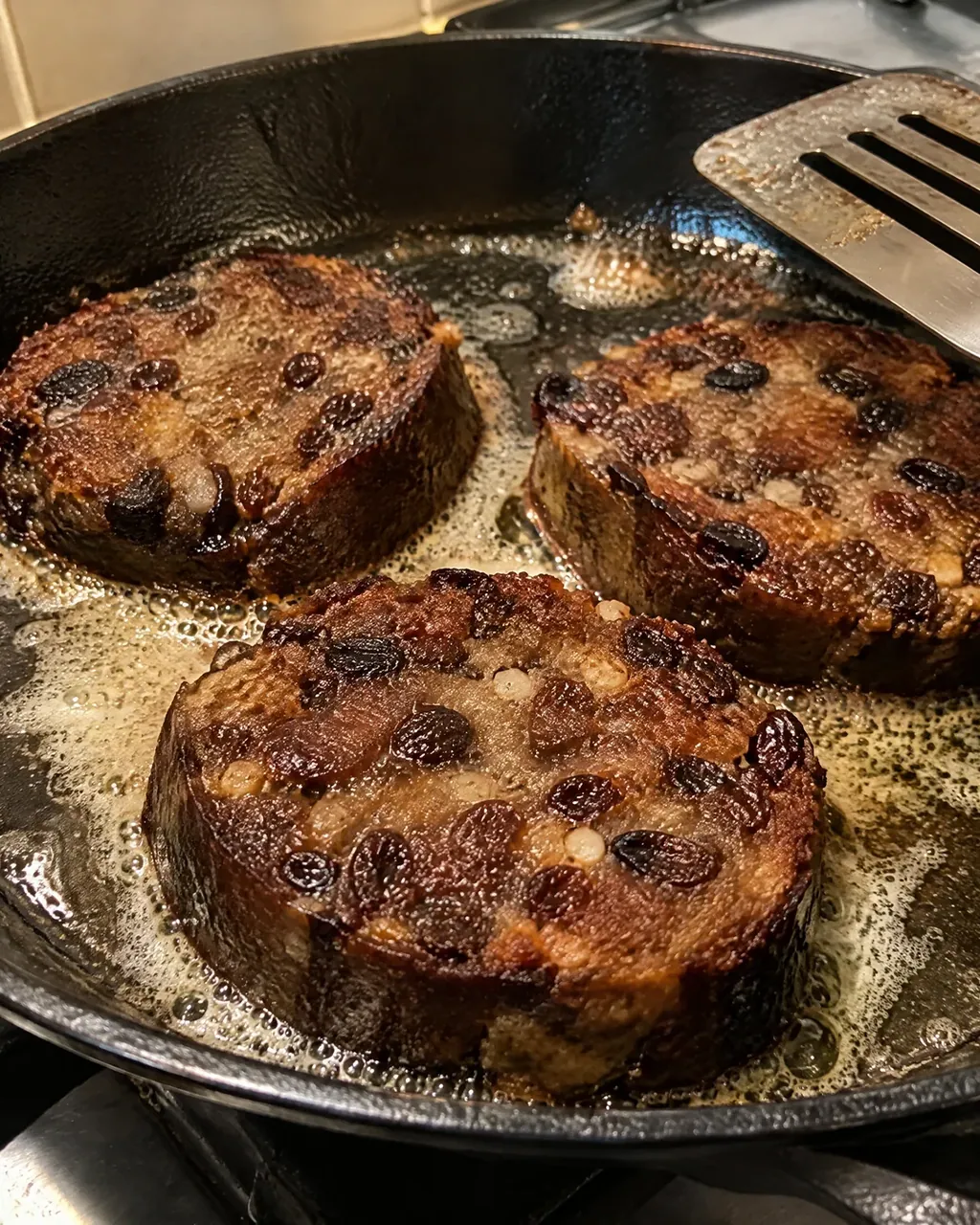
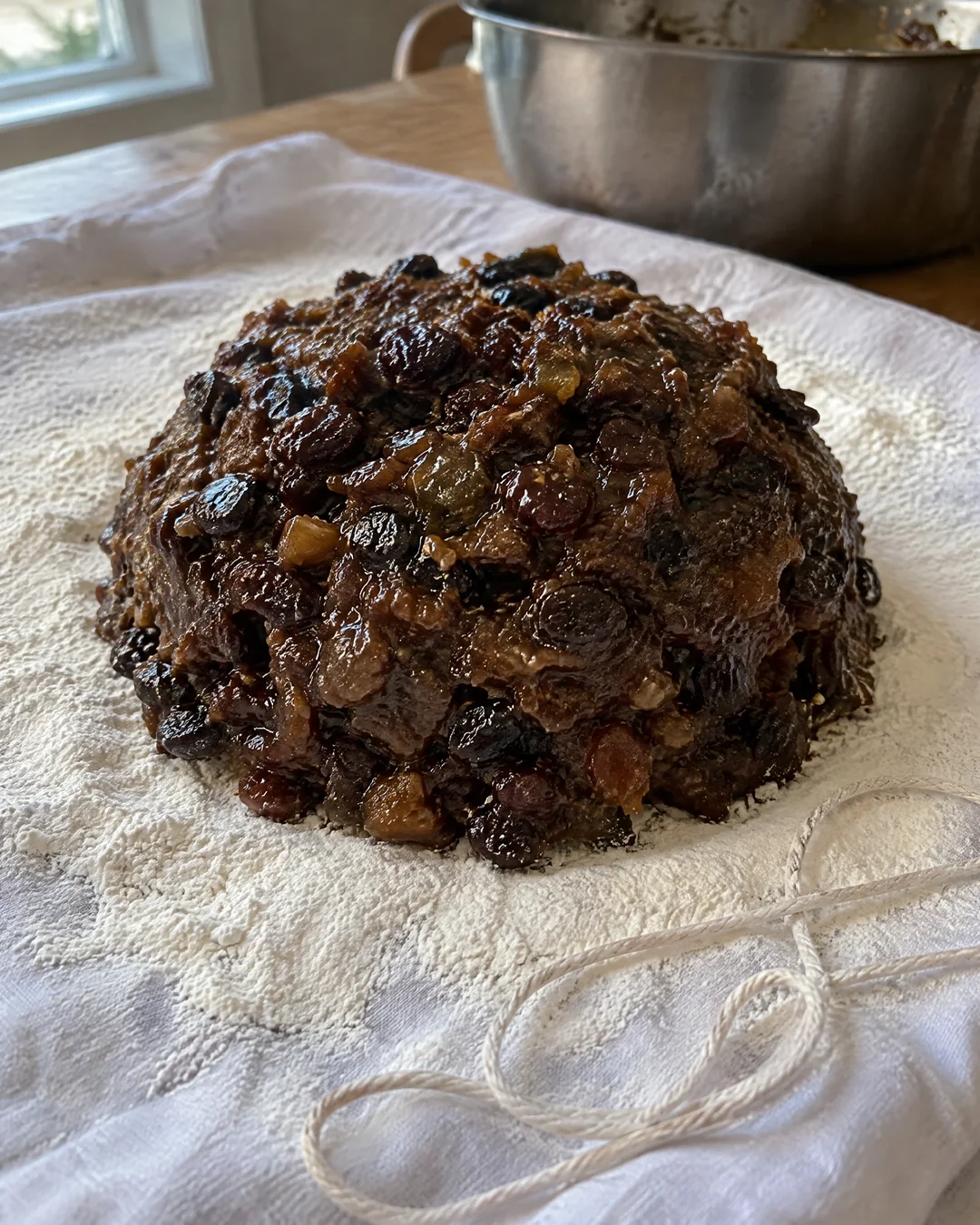
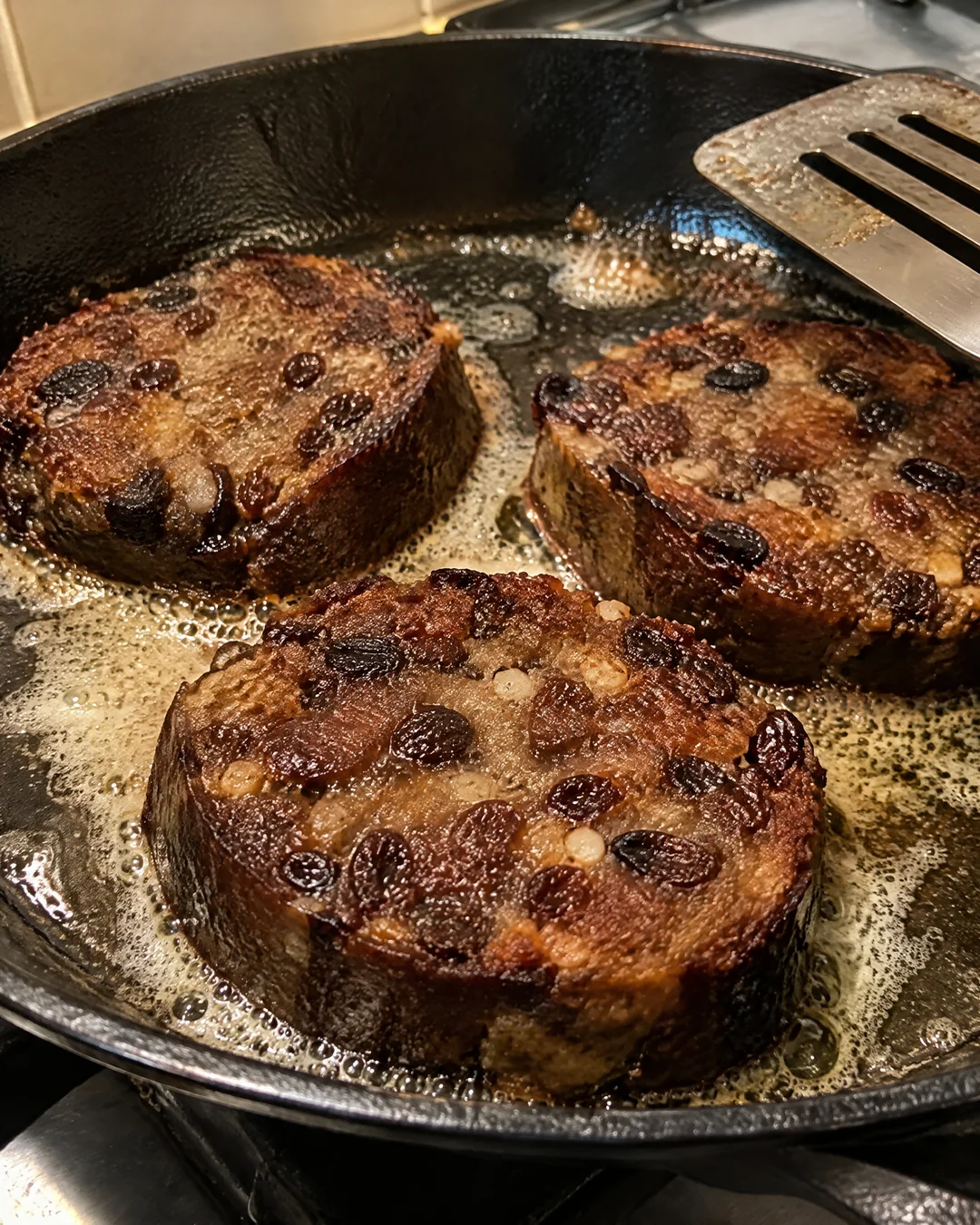
When it comes out it is pale, damp and a little sad looking. Then comes the second part, which is the one nobody outside Scotland expects: the dumpling is peeled out of its cloth and dried, once in front of the fire and nowadays in a low oven, until it grows a dark, shiny skin all over. It is eaten warm with custard that evening, and the next morning the cold slices are fried in butter for breakfast. Here is how to prepare the cloth so that skin forms, and how long the dumpling needs in the pot.
Why this clootie dumpling works
- The wet, floured cloth. Flour on a scalded cloth cooks into a thin paste against the dumpling. That paste is what becomes the famous skin.
- Breadcrumbs with the flour. They lighten the mixture so the dumpling is soft and moist, not a heavy lump.
- Suet or grated butter. Small pieces of fat melt slowly during the long simmer and keep the crumb tender for days.
- The drying. A short spell of dry heat sets the skin, darkens it and makes it shiny, and it is what lets the dumpling keep.
Ingredients
Makes one large dumpling, about 12 slices. You need a clean cotton or linen cloth about 24 inches (60 cm) square, kitchen string and a pot of at least 6 quarts. The measurements are in US cups with grams in brackets.
For the dumpling
- 1 3/4 cups all-purpose flour (225g)
- 1 1/2 cups fresh white breadcrumbs (110g)
- 1 cup shredded beef suet (125g), or 1/2 cup very cold butter (115g), coarsely grated
- 1/2 cup packed dark brown sugar (100g)
- 1 cup raisins or sultanas (150g)
- 3/4 cup currants (110g)
- 1 teaspoon baking soda
- 1 teaspoon ground cinnamon
- 1 teaspoon ground ginger
- 1/2 teaspoon ground allspice or mixed spice
- 1/2 teaspoon salt
- 1 medium apple, peeled and coarsely grated
- 2 tablespoons molasses or black treacle
- 1 large egg
- 2/3 cup buttermilk or whole milk (160ml)
For the cloth
- About 1/4 cup all-purpose flour (30g), for dusting
- 1 tablespoon granulated sugar, for dusting the finished skin
Black treacle is the British name for a dark syrup very close to regular unsulphured molasses, which is the right swap. Beef suet is the traditional fat; cold butter grated on the large holes of a grater gives nearly the same result. Fresh breadcrumbs are simply day-old white bread, crusts off, whizzed or grated into crumbs. The cloth should be plain white cotton or linen with no fabric softener on it: a clean flour-sack tea towel or a square of unbleached muslin, doubled if thin.
How to make clootie dumpling
Prepare the pot and the cloth
- Put a heatproof saucer or small plate upside down in the bottom of a large, deep pot. Fill the pot two thirds full of water and bring it to a boil. Fill the kettle too; you will need it later.
- Lower the cloth into the boiling water with tongs for 1 minute. Lift it out, let it cool just enough to handle, and wring it out well.
- Spread the hot, damp cloth on the counter. Sprinkle the 1/4 cup of flour evenly over the middle in a circle about 14 inches across, right to where the edge of the dumpling will be. Shake it gently so the flour sticks in a thick, even layer. This layer is the skin.
Mix and tie
- In a large bowl, stir together the flour, breadcrumbs, suet or grated butter, brown sugar, raisins, currants, baking soda, spices and salt.
- Add the grated apple, the molasses, the egg and the buttermilk. Stir with a wooden spoon to a soft, sticky mixture that drops heavily from the spoon. Add a spoonful more milk if it is stiff.
- Spoon the mixture into the middle of the floured cloth and pat it into a round mound.
- Gather the edges of the cloth up around it and tie tightly with string, leaving about an inch of slack inside the cloth so the dumpling has room to swell. Leave a long tail of string to lift it by.
Simmer and dry
- Lower the dumpling onto the saucer in the boiling water. The water should come at least three quarters of the way up it. Tie the tail of string to the pot handle, bring back to a simmer and put on the lid.
- Simmer gently for 3 hours. Check every 30 minutes and top up with boiling water from the kettle so the level never drops. Do not let the pot go off the simmer.
- Heat the oven to 300 degrees (150°C). Lift the dumpling out by the string and let it drain in a colander for a minute. Dip it briefly in a bowl of cold water, which loosens the cloth.
- Untie the string and open the cloth. Put a plate over the dumpling, turn it over, and peel the cloth away slowly. The surface will be pale and wet.
- Set the plate, or slide the dumpling onto a baking sheet, in the oven for 15 to 20 minutes, until the skin is dry, dark and shiny. Sprinkle with the tablespoon of sugar and serve warm in thick slices.
Tips that make the difference
- Flour the cloth generously and evenly. Bare patches leave holes in the skin, and a thin dusting gives no skin at all.
- Keep the water at a steady simmer and always top up with boiling water. Cold water stops the cooking and makes the dumpling heavy.
- Peel the cloth off while the dumpling is hot. If it cools in the cloth the skin sticks and tears away.
Variations
- With butter only. Use the grated cold butter in place of suet. The crumb is a touch softer and the flavor a little richer.
- Fried for breakfast. Cut cold dumpling in slices half an inch thick and fry in butter for 2 minutes a side, until crisp at the edges. This is how many Scottish families like it best.
Storage and make-ahead
Once cold, wrap the dumpling in parchment and foil or keep it in an airtight tin. It keeps in a cool place for up to a week, and the flavor deepens after a day or two.
To freeze, wrap thick slices individually and freeze for up to 3 months. Thaw overnight and warm or fry as above.
Frequently asked questions
How do I prepare the cloth so the skin forms?
Scald the cloth in boiling water, wring it out, and while it is hot and damp dust the middle with a thick, even layer of flour. The wet flour cooks against the dumpling into a paste. When the dumpling is unwrapped and dried in a low oven, that paste turns into the dark, shiny skin.
How long does a clootie dumpling need to simmer?
Three hours for a dumpling of this size, at a steady gentle simmer with the lid on. A smaller one made with half the mixture needs about 2 hours. A longer simmer does no harm, but a shorter one leaves the middle doughy.
What can I use if I cannot find suet?
Very cold butter, grated on the large holes of a box grater and tossed straight into the flour, is the best swap. Vegetable suet, sold in British shops, also works measure for measure.
Serve the first slices warm with a jug of hot custard, and hide a few for the morning, because the fried slices are the ones the family will ask about.
Scottish Clootie Dumpling (Boiled in a Cloth, Dried Until It Grows a Skin)
A traditional Scottish clootie dumpling: flour, breadcrumbs, suet or butter, raisins, currants, treacle and warm spice, tied in a wet floured cloth, simmered for three hours and dried in a low oven until it has its dark shiny skin. Served warm with custard, or fried in butter the next morning.
Ingredients
- 1 3/4 cups all-purpose flour
- 1 1/2 cups fresh white breadcrumbs
- 1 cup shredded beef suet (125g), or 1/2 cup very cold butter (115g), coarsely grated
- 1/2 cup packed dark brown sugar
- 1 cup raisins or sultanas
- 3/4 cup currants
- 1 teaspoon baking soda
- 1 teaspoon ground cinnamon
- 1 teaspoon ground ginger
- 1/2 teaspoon ground allspice or mixed spice
- 1/2 teaspoon salt
- 1 medium apple, peeled and coarsely grated
- 2 tablespoons molasses or black treacle
- 1 large egg
- 2/3 cup buttermilk or whole milk
- About 1/4 cup all-purpose flour (30g), for dusting
- 1 tablespoon granulated sugar, for dusting the finished skin
Instructions
- Put a heatproof saucer or small plate upside down in the bottom of a large, deep pot. Fill the pot two thirds full of water and bring it to a boil. Fill the kettle too; you will need it later.
- Lower the cloth into the boiling water with tongs for 1 minute. Lift it out, let it cool just enough to handle, and wring it out well.
- Spread the hot, damp cloth on the counter. Sprinkle the 1/4 cup of flour evenly over the middle in a circle about 14 inches across, right to where the edge of the dumpling will be. Shake it gently so the flour sticks in a thick, even layer. This layer is the skin.
- In a large bowl, stir together the flour, breadcrumbs, suet or grated butter, brown sugar, raisins, currants, baking soda, spices and salt.
- Add the grated apple, the molasses, the egg and the buttermilk. Stir with a wooden spoon to a soft, sticky mixture that drops heavily from the spoon. Add a spoonful more milk if it is stiff.
- Spoon the mixture into the middle of the floured cloth and pat it into a round mound.
- Gather the edges of the cloth up around it and tie tightly with string, leaving about an inch of slack inside the cloth so the dumpling has room to swell. Leave a long tail of string to lift it by.
- Lower the dumpling onto the saucer in the boiling water. The water should come at least three quarters of the way up it. Tie the tail of string to the pot handle, bring back to a simmer and put on the lid.
- Simmer gently for 3 hours. Check every 30 minutes and top up with boiling water from the kettle so the level never drops. Do not let the pot go off the simmer.
- Heat the oven to 300 degrees (150°C). Lift the dumpling out by the string and let it drain in a colander for a minute. Dip it briefly in a bowl of cold water, which loosens the cloth.
- Untie the string and open the cloth. Put a plate over the dumpling, turn it over, and peel the cloth away slowly. The surface will be pale and wet.
- Set the plate, or slide the dumpling onto a baking sheet, in the oven for 15 to 20 minutes, until the skin is dry, dark and shiny. Sprinkle with the tablespoon of sugar and serve warm in thick slices.