In this article
My friend Margaret says real Scottish shortbread has three ingredients and nothing else, and if you put a fourth one in, you can call it a cookie, but you cannot call it shortbread. No vanilla, no egg, no baking powder. Her grandmother taught her the old rule that lets you make it anywhere in the world without a recipe card: one part sugar, two parts butter, three parts flour, by weight. In our kitchen that comes to 100 grams of sugar, 200 grams of butter and 300 grams of flour, which is exactly what the recipe below uses.
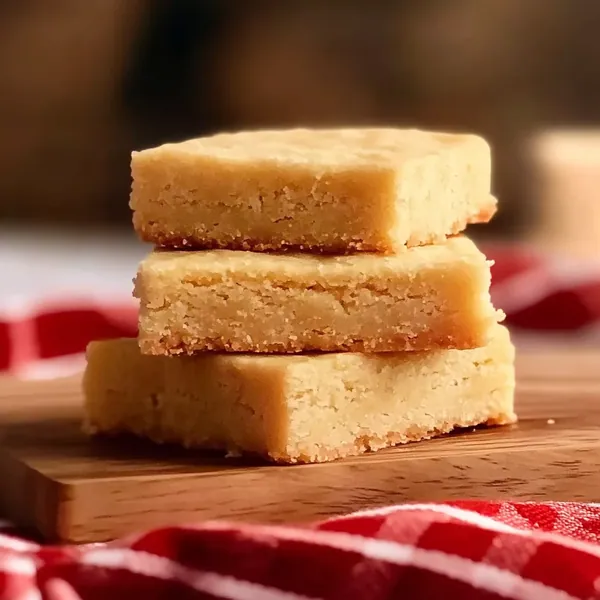
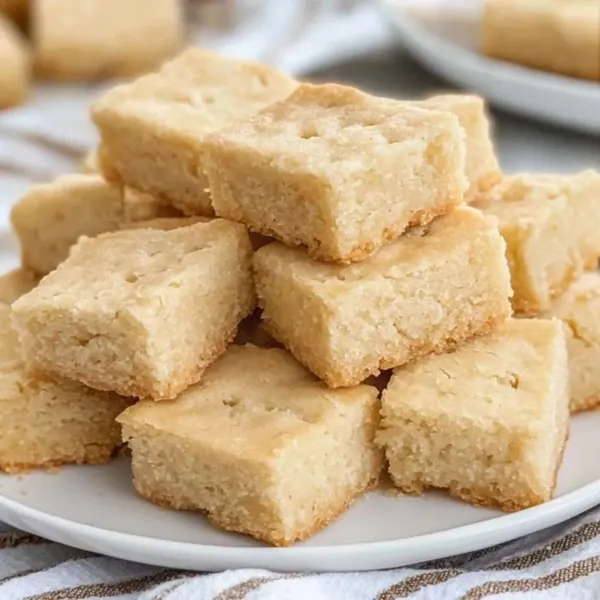
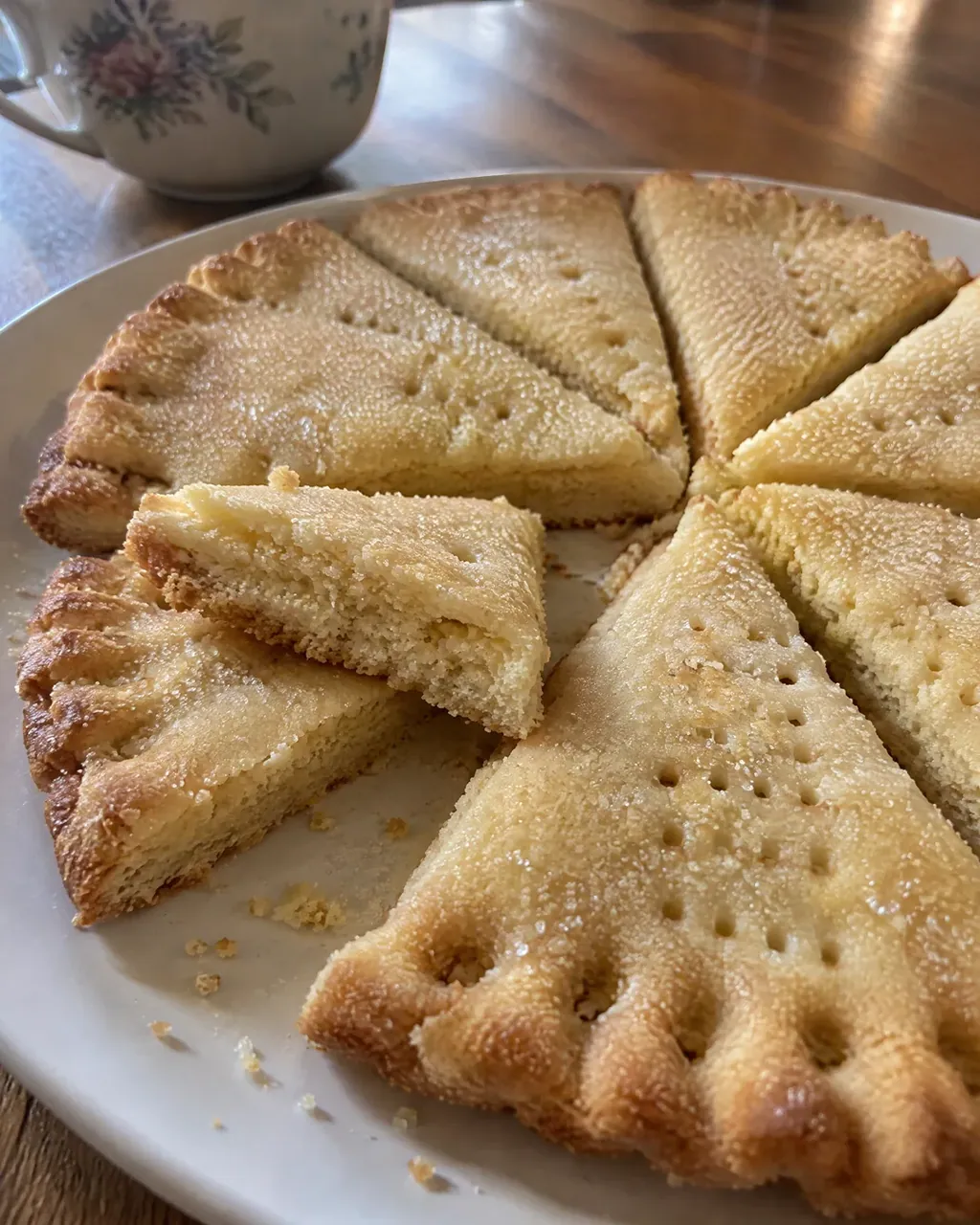
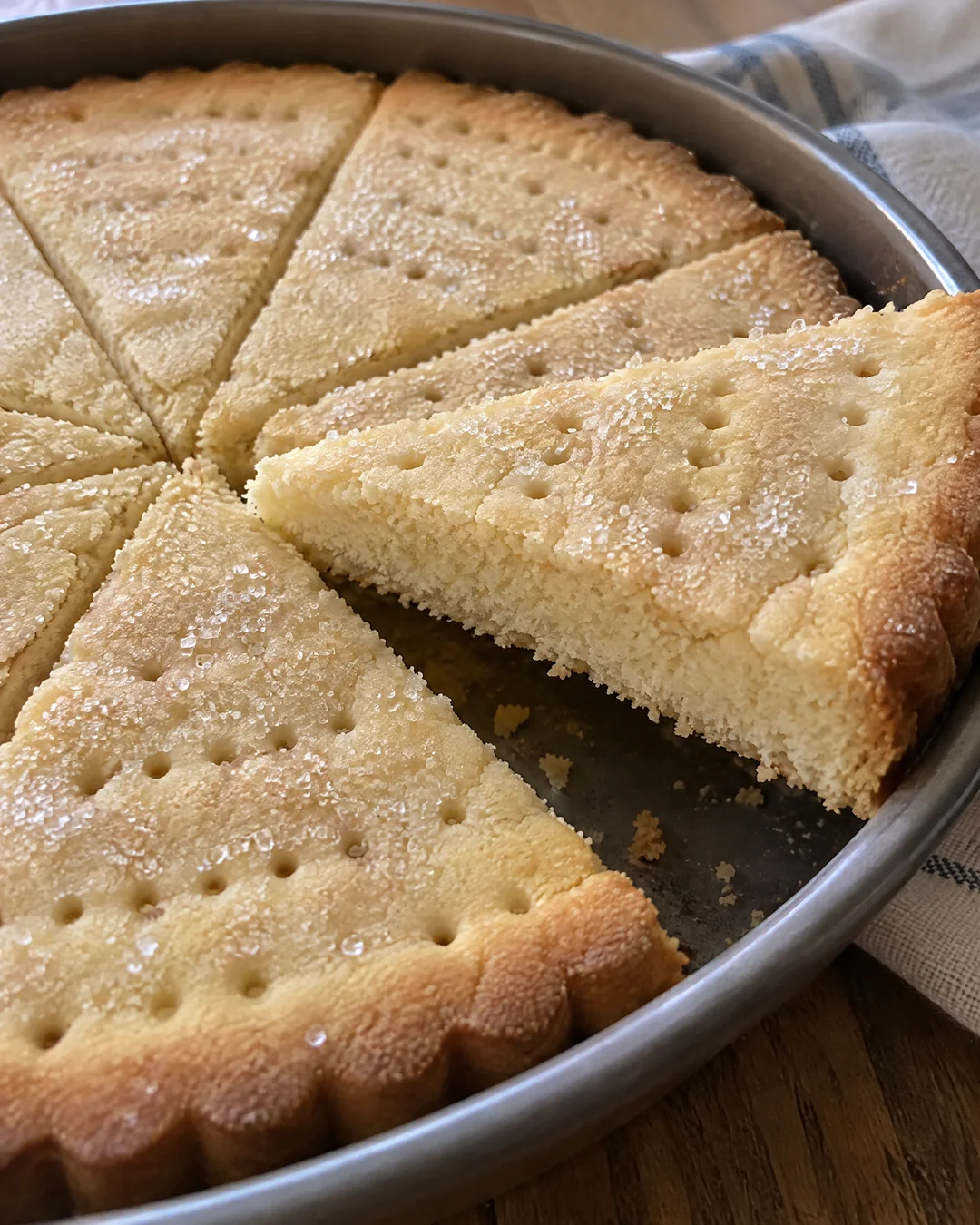
The round one, baked whole and cut into wedges with a scalloped edge, is called petticoat tails, and the story goes that it dates back to Mary Queen of Scots, who liked it with her tea. Margaret says the mistake Americans make is warm butter and a heavy hand. The butter should be cool, just soft enough to dent with a finger, and the flour is worked in with the fingertips until the dough looks like damp sand. Then it goes into a slow oven and comes out pale, the color of straw, never brown. If it melts on your tongue and leaves crumbs on your sweater, you did it right.
Why this Scottish shortbread works
- The 1-2-3 ratio. One part sugar to two parts butter to three parts flour gives the short, sandy crumb that holds together and still melts.
- Cool butter. Butter that is soft but still cool keeps the dough short. Warm, greasy butter bakes into a hard, oily biscuit.
- No kneading. Working the dough develops the flour and makes it tough. Fingertips and a light hand keep it tender.
- A slow oven. Baking low and long cooks the shortbread through while it stays pale, which is how Scottish shortbread should look and taste.
- Cut while warm, cooled in the pan. Warm shortbread cuts cleanly; cold shortbread shatters. It must cool in the pan or the wedges break.
Ingredients
Makes one 9 inch round cut into 16 petticoat tails, or about 18 fingers in an 8 inch square pan. US cups with grams in brackets; the grams keep the 1-2-3 ratio exact.
- 1 cup unsalted butter (200g, which is 1 cup minus 2 tablespoons), cool but soft enough to dent
- 1/2 cup granulated or superfine sugar (100g), plus 1 tablespoon for the top
- 2 1/3 cups all-purpose flour (300g)
Use the best butter you can get, because it is most of the flavor. If your butter is unsalted, a pinch of salt is allowed by most Scottish grandmothers, Margaret says, and it does not count as a fourth ingredient.
How to make Scottish shortbread
- Heat the oven to 300 degrees (150°C). Have ready a 9 inch round cake pan or a 9 inch tart pan with a removable bottom, ungreased.
- In a mixing bowl, beat the cool butter and sugar with a wooden spoon until smooth and pale, about 2 minutes. Do not let the butter go warm and shiny.
- Add the flour and work it in with your fingertips, rubbing gently, until the mixture looks like damp sand and holds together when you squeeze a handful. Do not knead it.
- Tip the crumbs into the pan and press them out evenly with your knuckles and the back of a spoon. Pinch all round the edge with your thumb and finger to make the scalloped edge of petticoat tails.
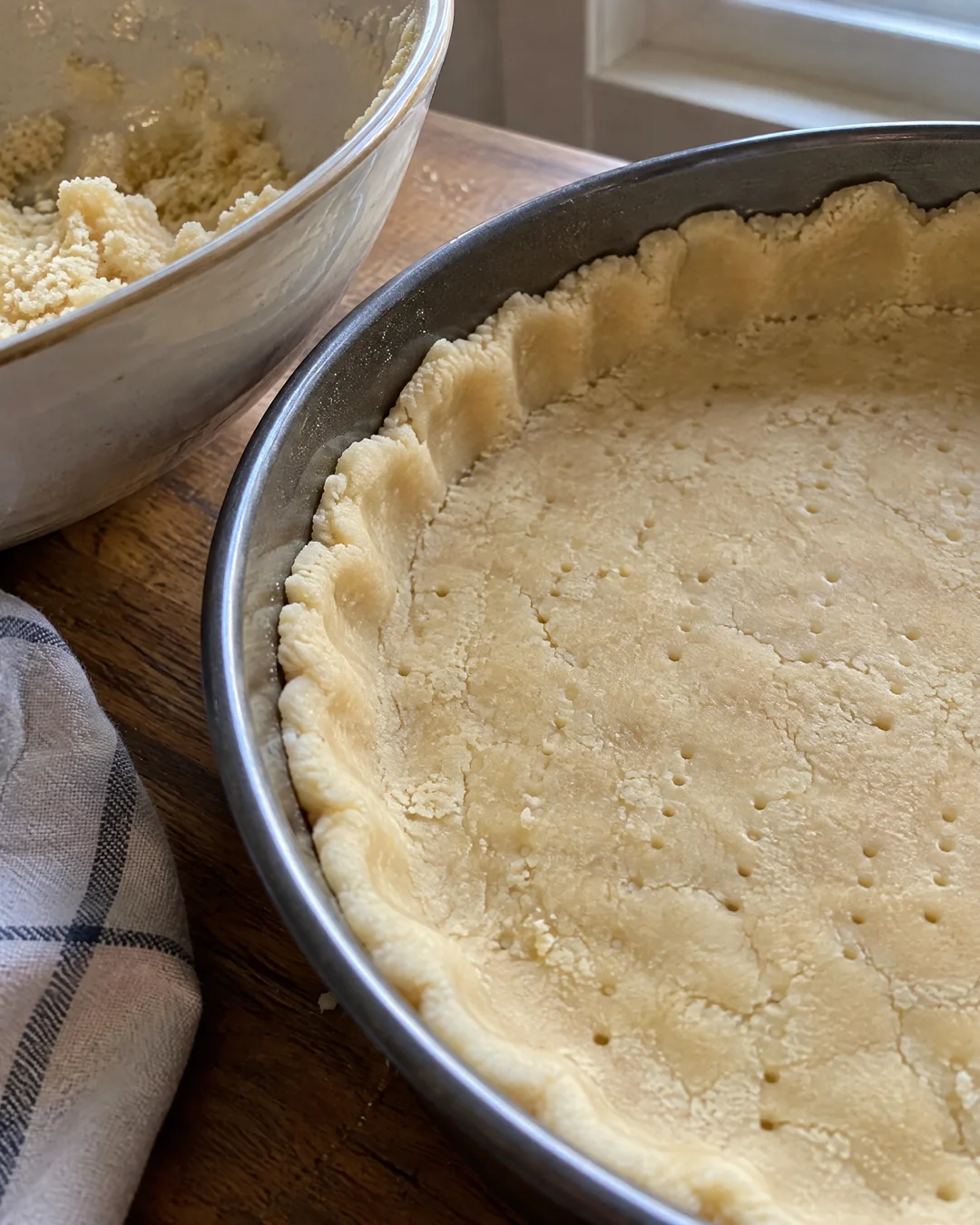
- Prick the round all over with a fork, right through to the bottom, and lightly mark it into 16 wedges with a knife.
- Bake at 300 degrees for 40 to 45 minutes, until it is firm at the edges and the color of pale straw, with no brown at all except perhaps the very rim.
- As soon as it comes out, sprinkle the tablespoon of sugar over the top and cut through the marked wedges while it is still warm.
- Leave it in the pan until completely cold, at least 30 minutes, before lifting the wedges out.
Tips that make the difference
- If the kitchen is warm, chill the pressed round in the pan for 15 minutes before baking so the edges stay sharp.
- Pale is the goal. If the top starts to color before 40 minutes, your oven runs hot; turn it down 25 degrees next time.
- Weigh it if you can. The 1-2-3 ratio is by weight, and cups of flour vary more than you would think.
- Fork pricks are not decoration. They let steam out so the shortbread bakes flat and even.
Variations
- Sandier crumb. Swap 1/3 cup (40g) of the flour for rice flour, the way Margaret’s grandmother did.
- Fingers. Press the dough into an 8 inch square pan, bake the same way and cut into fingers while warm.
- Rounds. Roll the dough into a log, chill it, slice it thick and bake the rounds on a sheet for 25 to 30 minutes.
- Demerara edge. Roll the log in coarse brown sugar before slicing for a crunchy rim.
Storage and make-ahead
Keep shortbread in an airtight tin at room temperature for up to 2 weeks. It improves after a day or two as the butter flavor settles.
Do not store it with soft cakes or bread; it will pick up their moisture and lose its snap.
It freezes well for up to 3 months, wrapped tightly. Thaw it in its wrapping so no condensation lands on it.
Frequently asked questions
How pale should Scottish shortbread be?
The color of pale straw, with no browning on top. Traditional shortbread is baked in a slow oven, 300 degrees, for 40 to 45 minutes, so it cooks through while staying light. Brown shortbread tastes toasted, not buttery.
Why is my shortbread hard?
Usually the butter was too warm or the dough was kneaded. Use cool butter and rub the flour in gently with your fingertips until it looks like damp sand.
What is the 1-2-3 rule?
One part sugar, two parts butter, three parts flour, by weight. It is the old Scottish way to remember shortbread without a recipe.
Why are they called petticoat tails?
The round, cut into wedges with a scalloped edge, looks like the panels of an old-fashioned petticoat. The story goes that Mary Queen of Scots was fond of it.
Three ingredients, cool butter, a light hand and a slow oven. Margaret says that is all there is to it, and after all these years I have never found a reason to argue.
Scottish Shortbread (Three Ingredients, the Old 1-2-3 Rule)
Real Scottish shortbread with only butter, sugar and flour, by the old 1-2-3 rule: one part sugar, two parts butter, three parts flour, pressed into a round, baked pale at 300 degrees for 40 to 45 minutes and cut into petticoat tails.
Ingredients
- 1 cup unsalted butter (200g, which is 1 cup minus 2 tablespoons), cool but soft enough to dent
- 1/2 cup granulated or superfine sugar (100g), plus 1 tablespoon for the top
- 2 1/3 cups all-purpose flour
Instructions
- Heat the oven to 300 degrees (150°C). Have ready a 9 inch round cake pan or a 9 inch tart pan with a removable bottom, ungreased.
- In a mixing bowl, beat the cool butter and sugar with a wooden spoon until smooth and pale, about 2 minutes. Do not let the butter go warm and shiny.
- Add the flour and work it in with your fingertips, rubbing gently, until the mixture looks like damp sand and holds together when you squeeze a handful. Do not knead it.
- Tip the crumbs into the pan and press them out evenly with your knuckles and the back of a spoon. Pinch all round the edge with your thumb and finger to make the scalloped edge of petticoat tails.
- Prick the round all over with a fork, right through to the bottom, and lightly mark it into 16 wedges with a knife.
- Bake at 300 degrees for 40 to 45 minutes, until it is firm at the edges and the color of pale straw, with no brown at all except perhaps the very rim.
- As soon as it comes out, sprinkle the tablespoon of sugar over the top and cut through the marked wedges while it is still warm.
- Leave it in the pan until completely cold, at least 30 minutes, before lifting the wedges out.