In this article
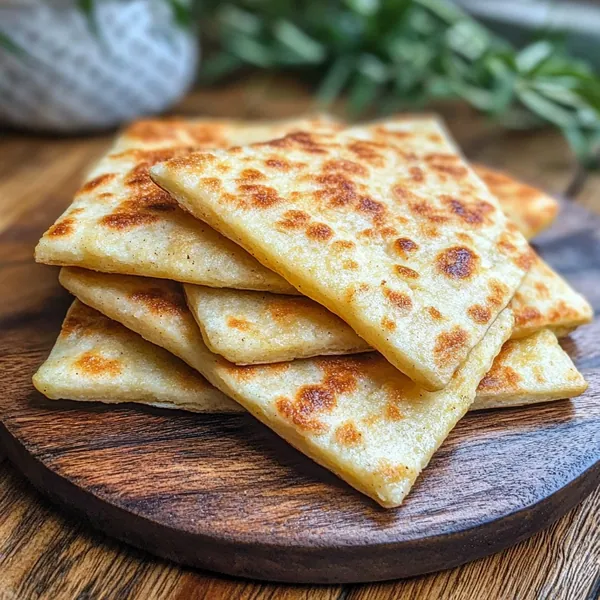
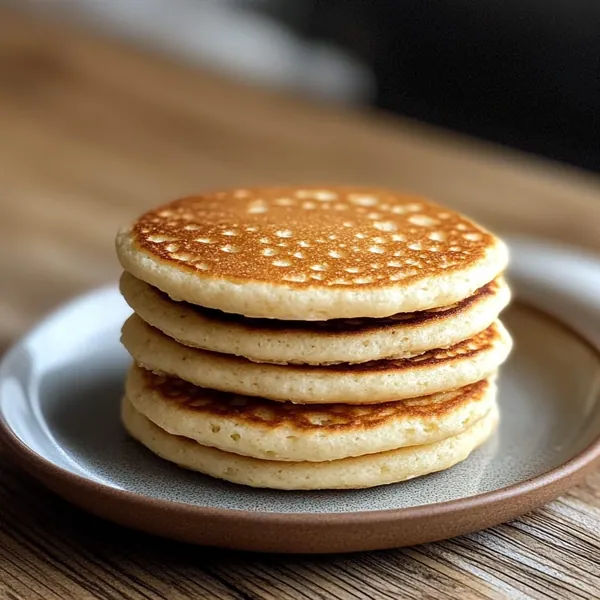
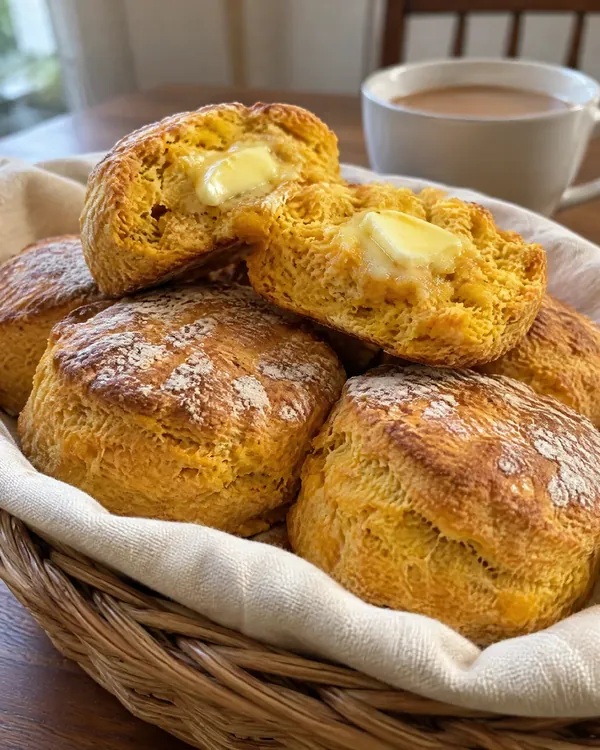
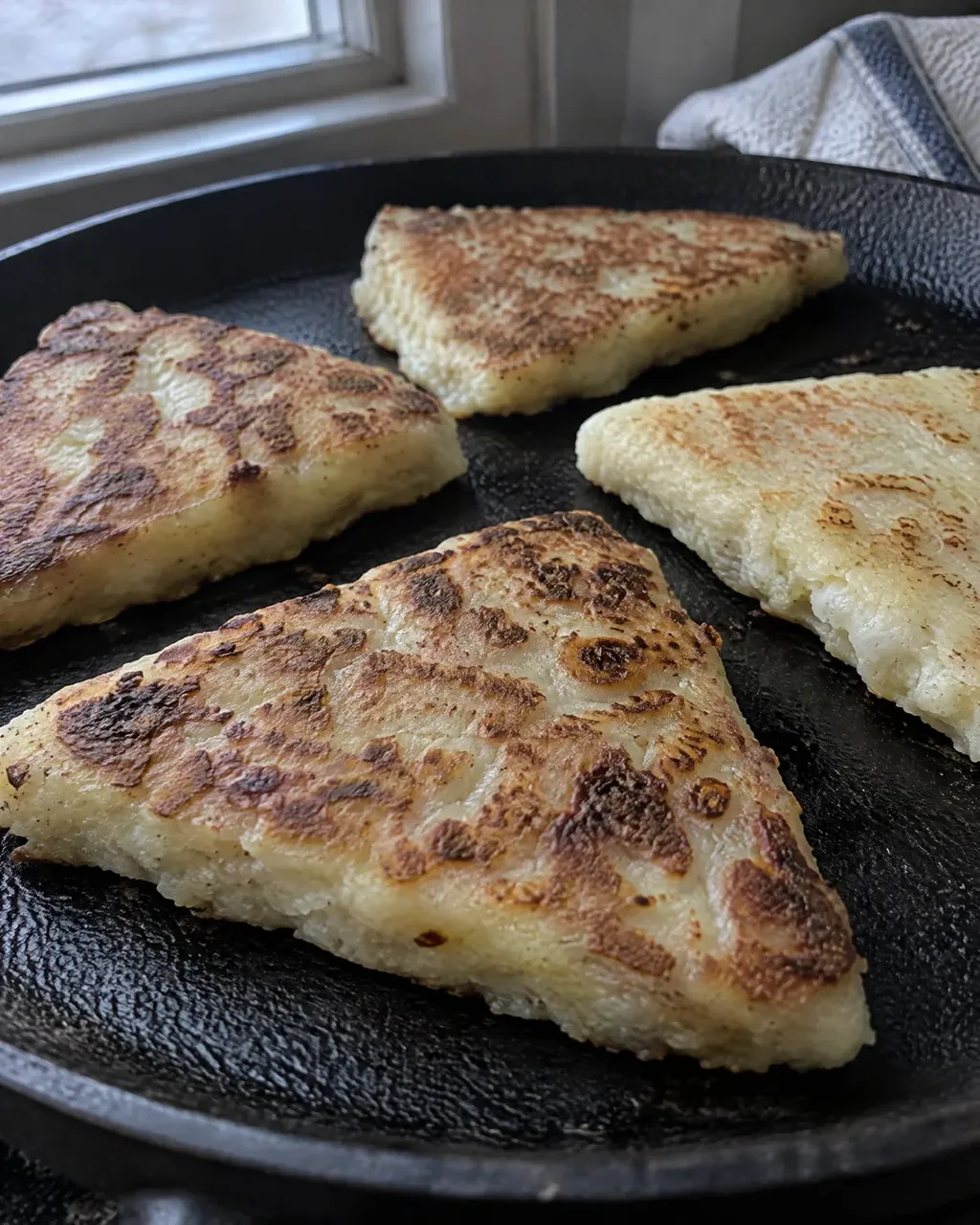
My friend Margaret told me over tea one afternoon that Scottish potato scones are made from last night’s mashed potatoes and a little flour, and that they cook in a dry skillet without a single drop of oil. I was sure she had left something out. She had not. In Scotland they are called tattie scones, and Margaret says a Scottish breakfast is not a breakfast without two of them on the plate, hot from the griddle, with butter melting into them. They are nothing like an American biscuit or the tall English scone you have with jam. They are thin, soft and flat, closer to a potato pancake, with brown freckles on both sides where they touched the hot iron.
They are also one of the cheapest things you can make, because the main ingredient is the mash left over from supper. The only hard part is the rolling. Use too little flour and the dough sticks and tears; use too much and the scones turn tough and dry. Here is how to roll them thin without them cracking, and how to cook them so they stay soft and tender inside.
Margaret made them in my kitchen the next morning, and she was right about the butter. They soak it up like nothing else, and they taste like the best part of a baked potato.
Why this potato scones works
- Cold mash. Potato straight from the refrigerator is firm and needs only a little flour, which keeps the scones light and tender.
- Just enough flour. The dough should feel like soft play dough, not bread dough. Every extra spoon makes them tougher.
- Melted butter in the dough. It adds flavor and keeps the dough supple so it rolls thin without breaking.
- A dry, hot griddle. No oil means the scones cook through and freckle brown instead of frying.
- Rolled thin. About a quarter inch thick, so the middle cooks before the outside gets too dark.
Ingredients
Makes 8 triangles from two rounds. The measurements are in US cups with grams in brackets.
For the scones
- 2 cups cold mashed potatoes, plain or with a little butter and milk (about 450g)
- 2 tablespoons unsalted butter, melted (30g)
- 1/2 teaspoon fine salt (less if your mash is already salted)
- 3/4 cup all-purpose flour (95g), plus a little for rolling
- 1/4 teaspoon baking powder (optional, for slightly softer scones)
To serve
- Butter
- Fried or scrambled eggs, optional
If you are making mash just for this, use floury potatoes such as russets, mash them with butter only and no milk, and chill them for at least an hour. Very wet, milky mash needs more flour and makes heavier scones.
How to make potato scones
Make the dough
- Put the cold mashed potato in a bowl and break it up with a fork so there are no lumps.
- Stir in the melted butter and salt.
- Sift the flour and baking powder over the potato and work it in with a fork, then with your hand, just until it comes together into a soft dough that does not stick to your fingers. If it is still sticky, add flour a spoon at a time.
- Divide the dough in two and shape each half into a flat round disc.
Roll and cook
- Heat a cast iron griddle or heavy skillet over medium heat for 3 to 4 minutes. Do not add oil.
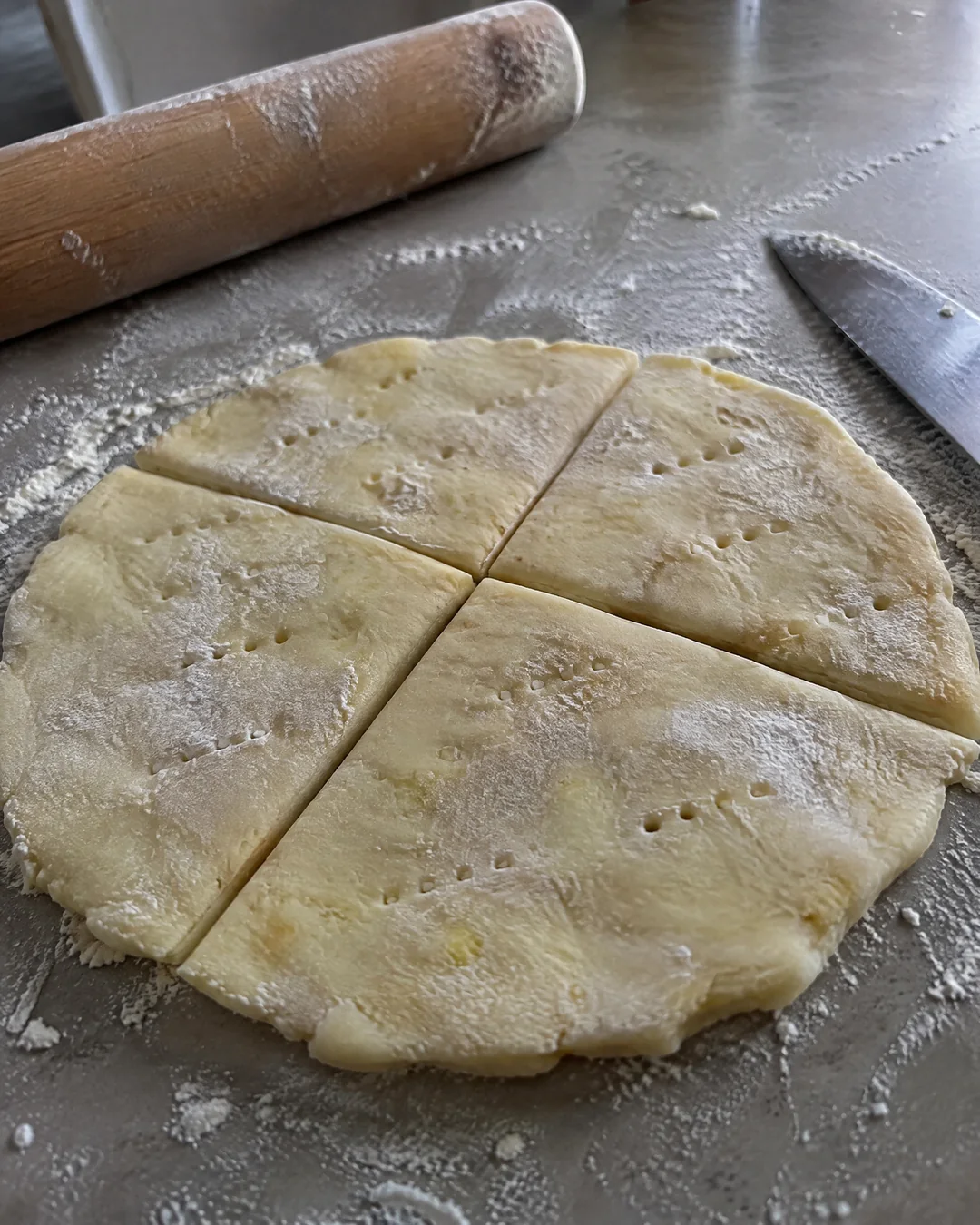
- Dust the counter and a rolling pin with flour. Roll one disc from the middle outward into a round about 8 inches across and a quarter inch thick, turning it a quarter turn after each roll so it does not stick.
- If the edges crack, press them back together with your fingers and roll again. Small cracks at the very edge are fine.
- Cut the round into 4 triangles with a sharp knife. Prick each one a few times with a fork.
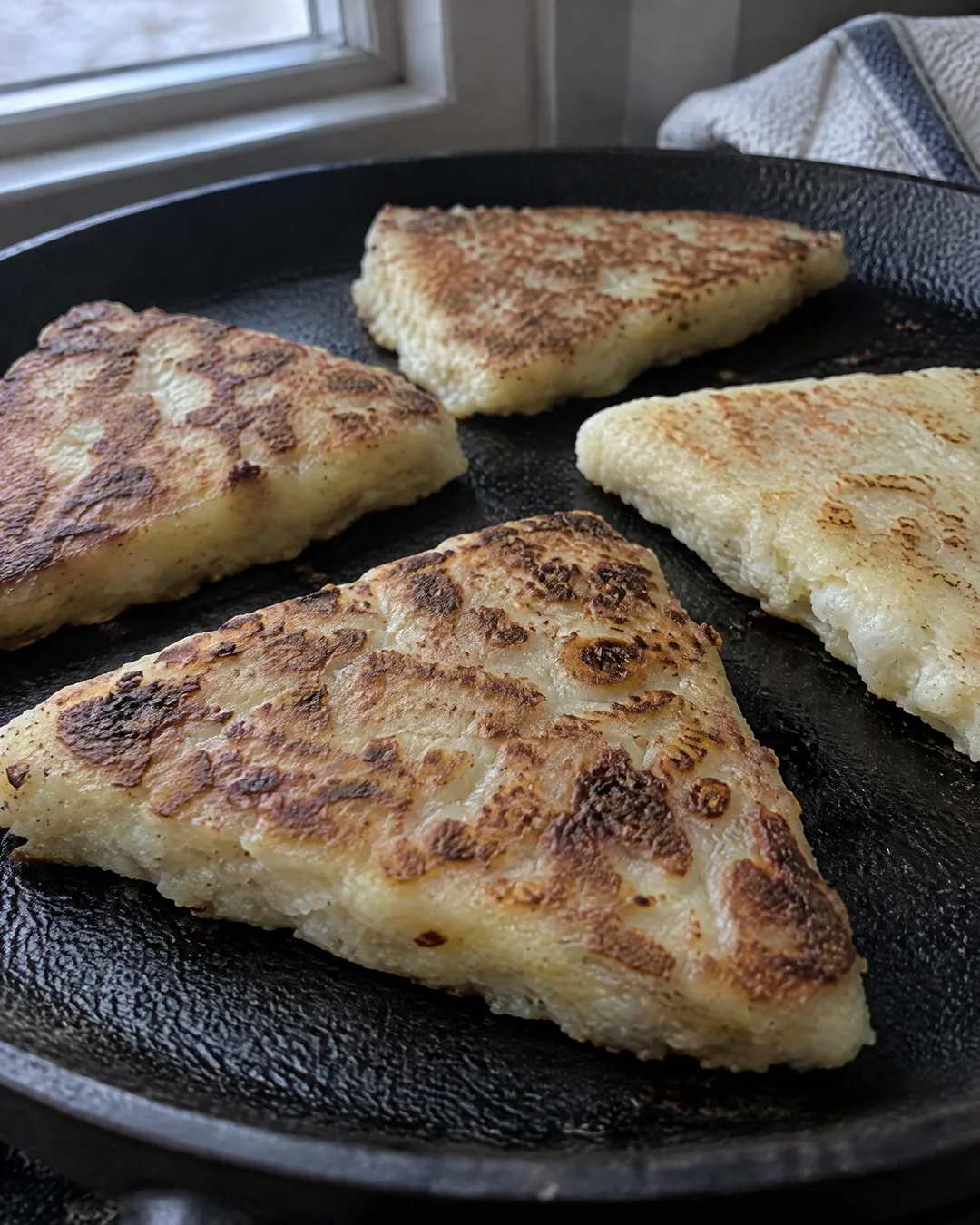
- Lift the triangles onto the dry hot griddle with a spatula and cook for 3 to 4 minutes, until the underside has brown freckles.
- Turn and cook the other side for 3 to 4 minutes more. Wrap the cooked scones in a clean towel to keep them soft while you cook the second round.
- Serve hot with butter, on their own or with eggs.
Tips that make the difference
- Roll from the center out and turn the dough often. It keeps the round even and stops it sticking.
- If the scones brown before the middle is cooked, lower the heat a little. They should take 3 to 4 minutes a side.
- Brush off the extra flour before cooking, or it will scorch on the griddle.
- Keeping the cooked scones wrapped in a towel steams them gently, which is what keeps them soft and bendy.
Variations
- Cheese scones. Work a handful of finely grated sharp cheddar into the dough.
- Green onion. Add two finely sliced green onions for a savory supper side.
- Crisp in butter. Reheat leftover scones in a little butter in a skillet until crisp at the edges.
- Breakfast plate. Serve with eggs, grilled tomatoes and mushrooms the way Margaret does.
Storage and make-ahead
Cooled potato scones keep in a sealed container in the refrigerator for up to 3 days. Reheat them on a dry or lightly buttered skillet for a minute on each side.
To freeze, layer them with parchment and freeze for up to 2 months. Reheat straight from frozen in a skillet.
Frequently asked questions
Why do my potato scones crack when I roll them?
The dough is too dry or too cold and stiff. Work in a little more melted butter, let it sit for 5 minutes, and roll gently from the middle.
Why are they tough?
Too much flour. Add only enough to stop the dough sticking, and handle it as little as you can.
Can I use instant mashed potatoes?
Fresh mash gives the best texture. Prepared instant potato works if it is made thick and chilled first.
Should there be oil in the pan?
No. Tattie scones are cooked on a dry griddle. That is what gives the brown freckles and keeps them soft rather than fried.
Make extra mash at supper tonight, and have potato scones with butter for breakfast tomorrow.
Scottish Potato Scones (Tattie Scones from Leftover Mash, Cooked in a Dry Pan)
Traditional Scottish potato scones, or tattie scones, made from cold leftover mashed potato, a little butter and just enough flour, rolled thin, cut into triangles and cooked on a dry griddle until freckled brown on both sides.
Ingredients
- 2 cups cold mashed potatoes, plain or with a little butter and milk
- 2 tablespoons unsalted butter, melted
- 1/2 teaspoon fine salt
- 3/4 cup all-purpose flour (95g), plus a little for rolling
- 1/4 teaspoon baking powder
- Butter
- Fried or scrambled eggs, optional
Instructions
- Put the cold mashed potato in a bowl and break it up with a fork so there are no lumps.
- Stir in the melted butter and salt.
- Sift the flour and baking powder over the potato and work it in with a fork, then with your hand, just until it comes together into a soft dough that does not stick to your fingers. If it is still sticky, add flour a spoon at a time.
- Divide the dough in two and shape each half into a flat round disc.
- Heat a cast iron griddle or heavy skillet over medium heat for 3 to 4 minutes. Do not add oil.
- Dust the counter and a rolling pin with flour. Roll one disc from the middle outward into a round about 8 inches across and a quarter inch thick, turning it a quarter turn after each roll so it does not stick.
- If the edges crack, press them back together with your fingers and roll again. Small cracks at the very edge are fine.
- Cut the round into 4 triangles with a sharp knife. Prick each one a few times with a fork.
- Lift the triangles onto the dry hot griddle with a spatula and cook for 3 to 4 minutes, until the underside has brown freckles.
- Turn and cook the other side for 3 to 4 minutes more. Wrap the cooked scones in a clean towel to keep them soft while you cook the second round.
- Serve hot with butter, on their own or with eggs.