In this article
The first time you make a British sticky ginger loaf, you will be sure you have done something wrong. The whole cake is made in a saucepan on the stove, and the batter you pour into the tin runs like cream. There is no creaming of butter and sugar, no mixer, and no bowl to wash. Butter, dark brown sugar and black treacle, which is what Britain calls molasses, are melted together until the pan is full of something dark and shiny. Milk cools it down, an egg goes in, and the flour and ginger are whisked straight into the pan.
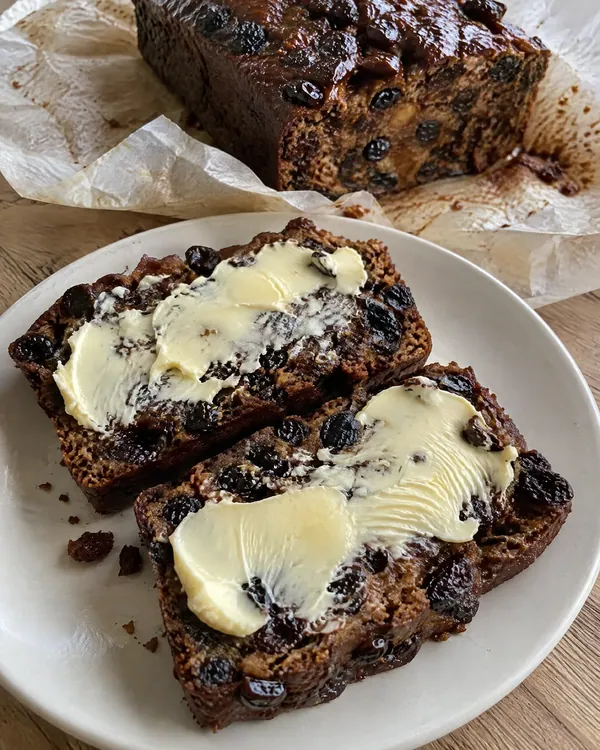
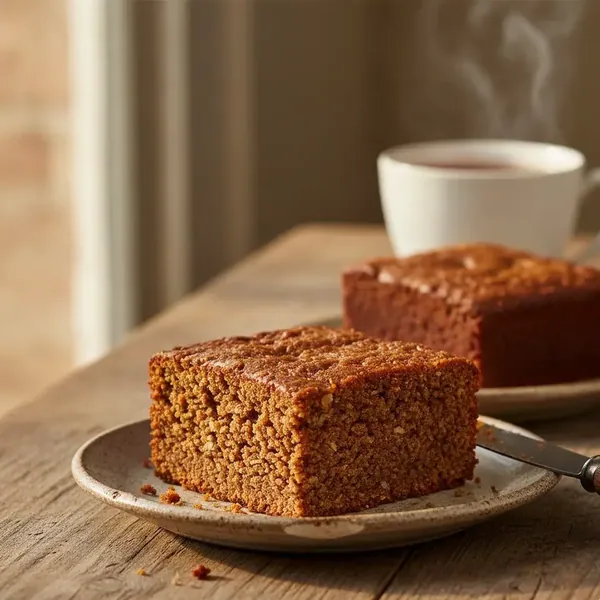
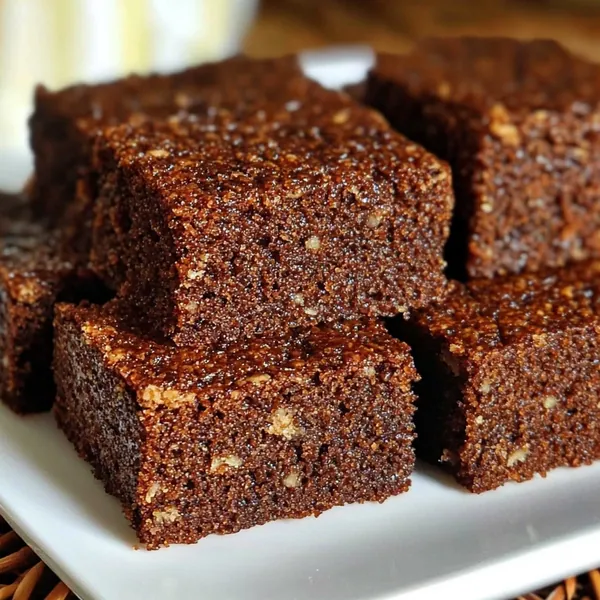
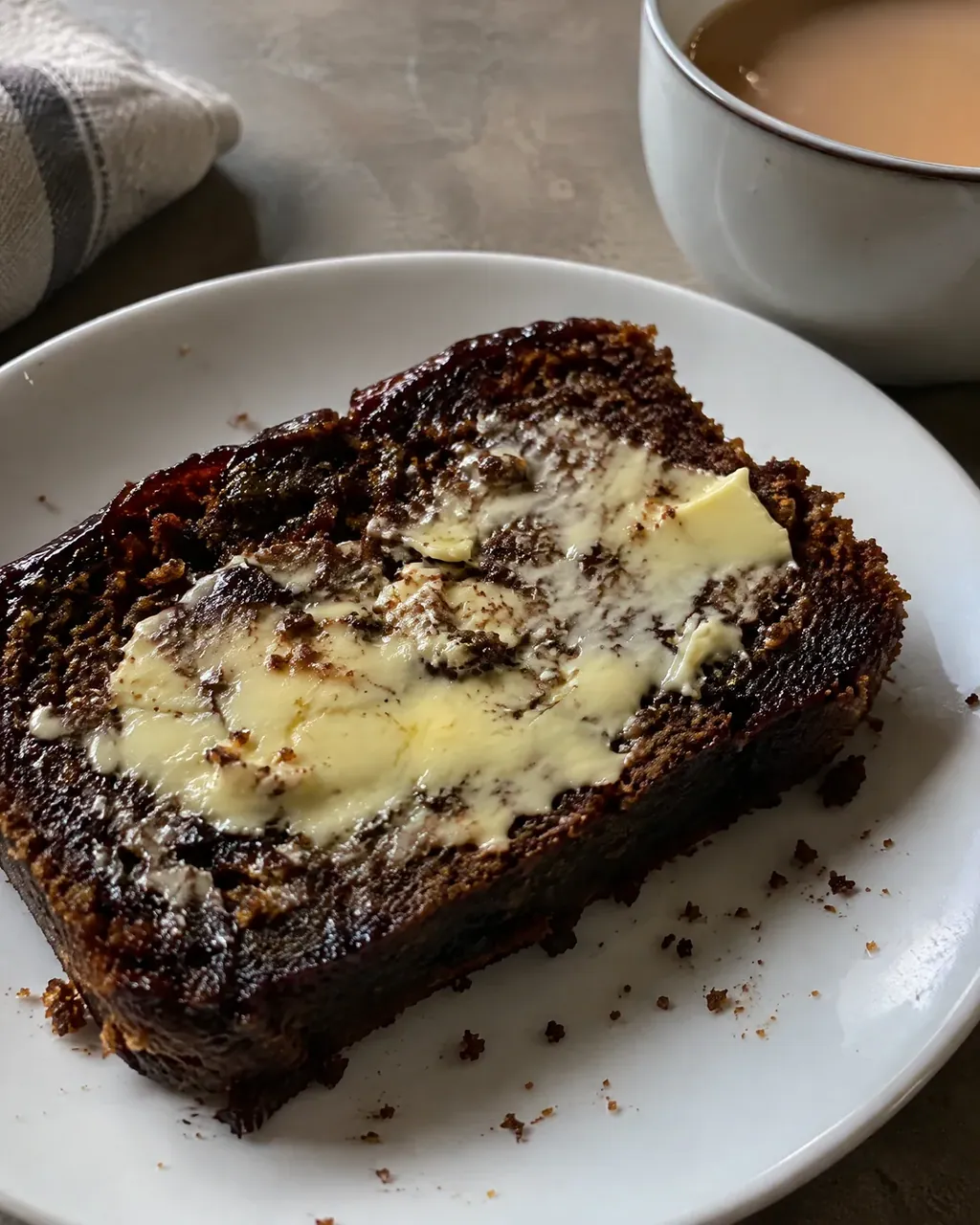
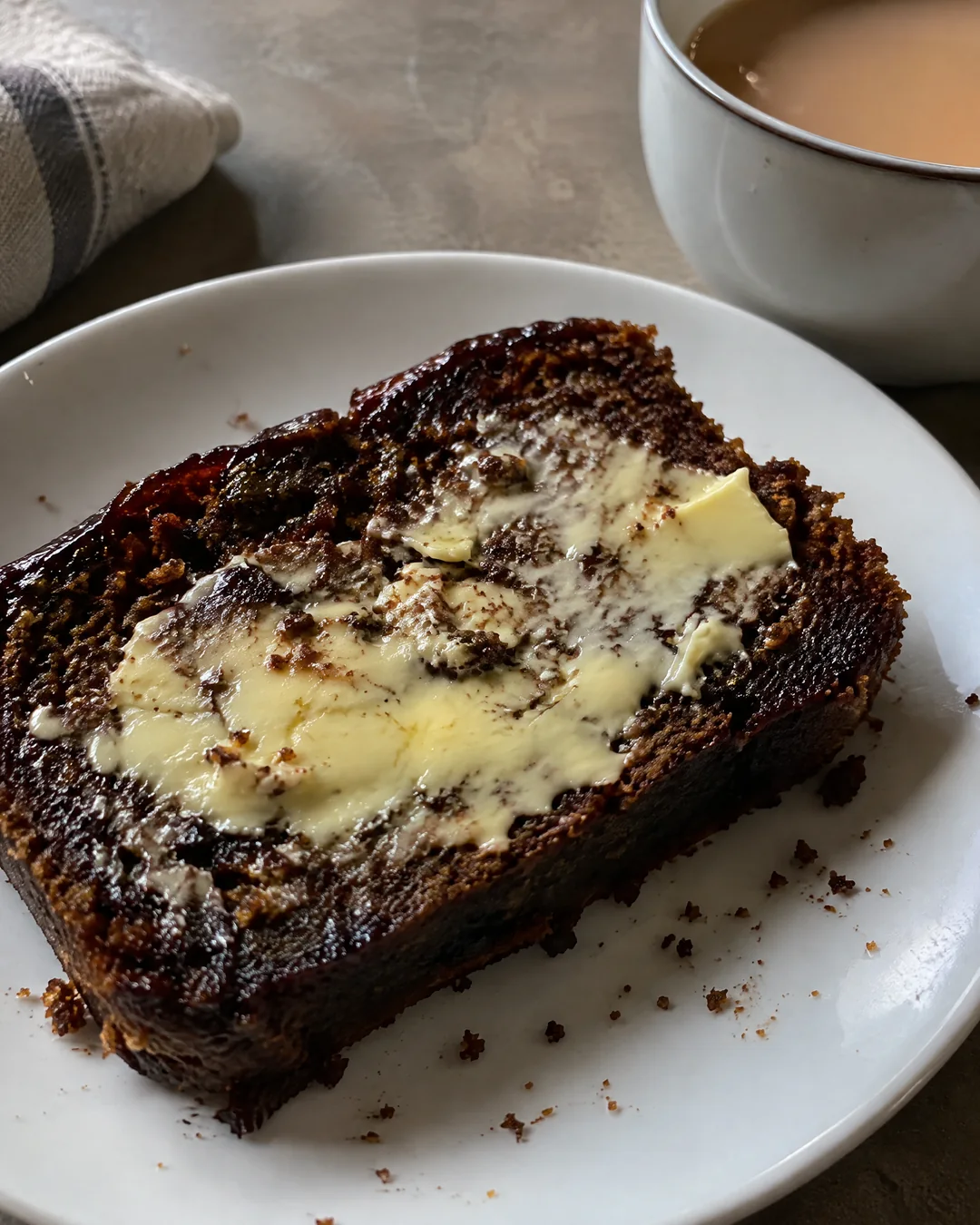
It bakes low and slow and comes out nearly black, with a plain flat top that is not sticky at all. The stickiness arrives later. Wrapped in its paper and left alone, the loaf draws moisture to its surface, and by the next day the top is tacky enough to hold a fingerprint. Every day after that it gets darker, stickier and better, which is why British cooks bake it a few days before they need it. Here are the measurements for that thin batter, and how to get the sticky top every time.
Why this sticky ginger loaf works
- Everything is melted. Melting the butter, sugar and molasses together makes a smooth dark syrup that coats the flour and gives a soft, close crumb with no mixer.
- A thin batter. All that milk and syrup makes a cake that is damp all the way through, the opposite of a dry crumbly gingerbread.
- Molasses and syrup together. Molasses gives the dark color and the deep taste; golden syrup or honey softens it so the loaf is never bitter.
- A low oven. A sugary, runny batter burns at the edges in a hot oven. A gentle heat sets it slowly and keeps the top flat.
- Time in the wrapper. The sugars in the loaf pull moisture to the surface as it sits, and that is what turns the top sticky.
Ingredients
Makes one 9 by 5 inch loaf (a 2 pound loaf tin), about 12 thick slices. The measurements are in US cups with grams in brackets.
For the saucepan
- 1/2 cup butter (115g), 1 stick
- 1/2 cup plus 1 tablespoon packed dark brown sugar (115g)
- 1/3 cup molasses or black treacle (115g)
- 1/3 cup golden syrup or mild honey (115g)
- 1 cup whole milk (240ml)
- 1 large egg, beaten
Dry ingredients
- 1 3/4 cups all-purpose flour (225g)
- 1 tablespoon ground ginger
- 1 teaspoon ground cinnamon
- 1 teaspoon baking soda
- 1 teaspoon baking powder
- 1/4 teaspoon salt
Use regular unsulphured molasses. Blackstrap molasses is too strong and bitter for this loaf. Golden syrup is a pale British cane syrup; mild honey or light corn syrup can take its place. The ginger must be fresh from a jar opened this year, or the loaf will taste of nothing.
How to make sticky ginger loaf
Melt
- Heat the oven to 325 degrees (160°C). Grease a 9 by 5 inch loaf pan and line it with one large piece of parchment pressed into the corners so it comes up above the rim on all sides.
- Put the butter, brown sugar, molasses and golden syrup in a medium saucepan. Warm over low heat, stirring now and then, until the butter has melted and the sugar has dissolved. Do not let it boil.
- Take the pan off the heat and pour in the milk. Stir until smooth. The mixture should now be just warm to the touch.
- Whisk in the beaten egg.
Whisk and bake
- In a bowl, stir the flour, ginger, cinnamon, baking soda, baking powder and salt together, then sift or whisk them into the saucepan in two additions. Whisk until there are no lumps. The batter will be very thin, like pouring cream. That is correct.
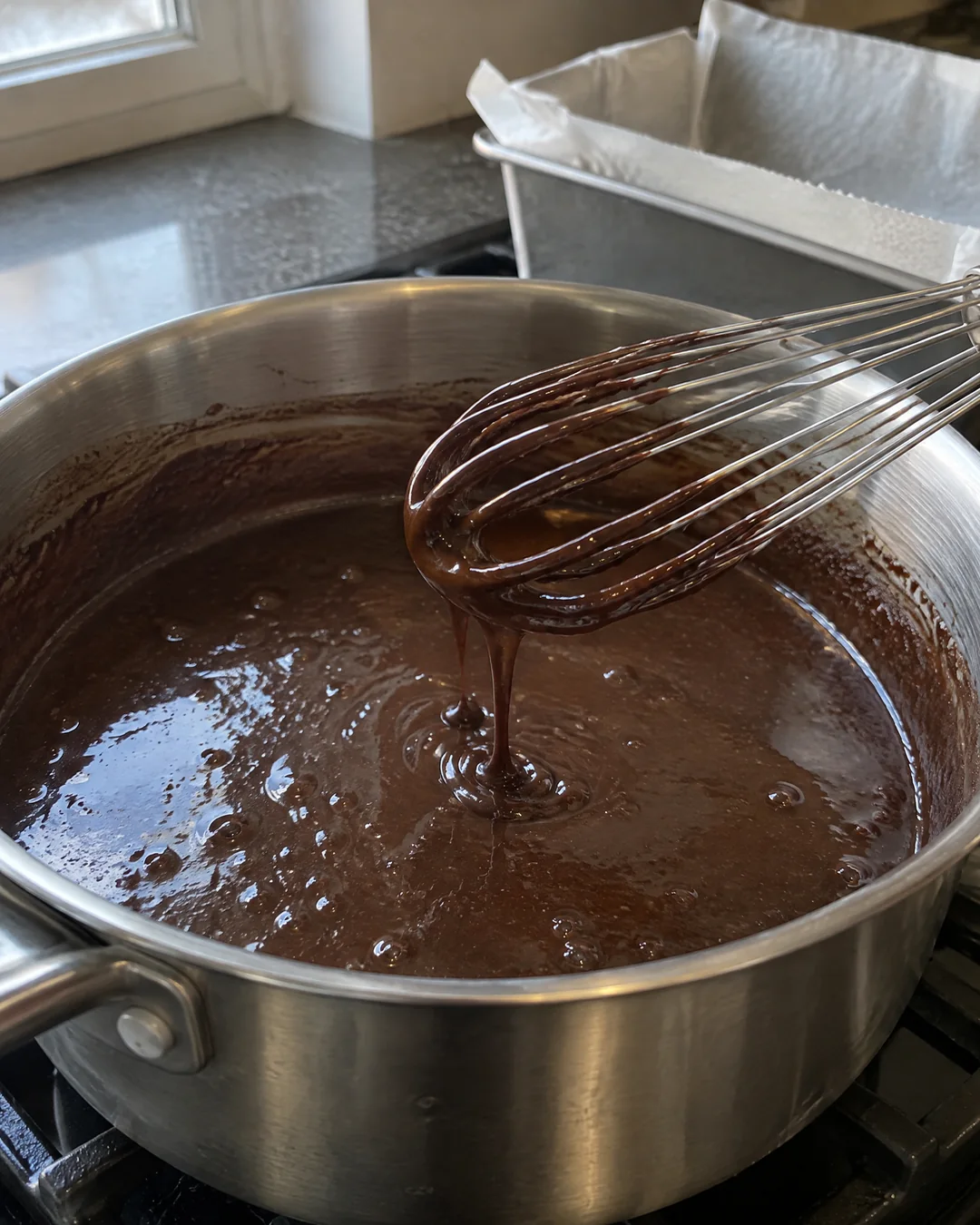
- Pour the batter into the lined pan. Set the pan on a baking sheet and put it on the middle shelf of the oven.
- Bake for 50 to 60 minutes without opening the oven door for the first 40 minutes. The loaf is done when it has risen, the top is firm and springs back when pressed, and a skewer pushed into the center comes out clean.
- Cool the loaf completely in the pan, on a rack.
- Lift the cold loaf out by its parchment. Fold the parchment over the top, wrap the whole thing in foil and leave it at room temperature overnight, or for up to 3 days, before slicing. The top will turn sticky as it sits.
Tips that make the difference
- Keep the heat low under the saucepan. If the syrup boils, the sugar cooks too far and the loaf turns hard at the edges.
- Let the pan cool to just warm before the egg goes in. A hot syrup scrambles the egg into little threads.
- Do not open the oven early. The batter is so thin that a rush of cool air makes the middle sink before it has set.
- Grease the measuring cup lightly before you measure the molasses and syrup, and they will slide out without leaving half behind.
- Be patient with the top. It is dry when the loaf comes out of the oven and turns sticky only after a night wrapped in its paper.
Variations
- Extra ginger. Fold 1/3 cup of finely chopped crystallized ginger into the batter for hot little pieces all through the loaf.
- Lemon icing. Stir 3/4 cup powdered sugar with enough lemon juice to make a thick icing and spoon it over the cold loaf. Ginger and lemon are an old British pair.
- Orange ginger loaf. Add the grated zest of one orange to the saucepan with the milk.
- As a pudding. Warm thick slices for a few seconds and serve them with hot vanilla custard or a spoonful of whipped cream.
Storage and make-ahead
Wrapped in parchment and foil, or kept in an airtight tin, the ginger loaf keeps at room temperature for up to a week and gets stickier and darker every day.
Do not keep it in the refrigerator. The cold dries the crumb and the top loses its stickiness.
To freeze, wrap the whole loaf or thick slices tightly in plastic wrap and foil and freeze for up to 3 months. Thaw at room temperature in the wrapping, then leave it a day for the top to turn sticky again.
Frequently asked questions
Is the batter really supposed to be that thin?
Yes. It should pour like cream. The flour swells and sets as the loaf bakes slowly, and all that liquid is what makes the crumb so damp. Do not add more flour.
Why is the top of my ginger loaf not sticky?
It has not waited long enough, or it was left unwrapped. The stickiness comes after baking. Wrap the cold loaf in its parchment and foil and leave it at least overnight. Two or three days is better.
What is black treacle?
Black treacle is the British name for a dark cane syrup very close to American molasses. Regular unsulphured molasses is the right swap, measure for measure. Avoid blackstrap, which is bitter.
Why did my loaf sink in the middle?
The oven door was opened too soon, the oven was too hot, or there was too much baking soda. Measure the soda level, keep the oven at 325 degrees and leave the door shut for the first 40 minutes.
Bake it on a quiet evening, wrap it up, and forget about it for two days. Then put the kettle on and cut the first thick slice.
British Sticky Ginger Loaf (Made in a Saucepan, Stickier Every Day)
A British sticky ginger loaf: butter, dark brown sugar and molasses melted together in a saucepan, whisked with milk, an egg, flour and plenty of ground ginger into a batter as thin as soup, and baked into a dark loaf whose top turns sticky overnight.
Ingredients
- 1/2 cup butter (115g), 1 stick
- 1/2 cup plus 1 tablespoon packed dark brown sugar
- 1/3 cup molasses or black treacle
- 1/3 cup golden syrup or mild honey
- 1 cup whole milk
- 1 large egg, beaten
- 1 3/4 cups all-purpose flour
- 1 tablespoon ground ginger
- 1 teaspoon ground cinnamon
- 1 teaspoon baking soda
- 1 teaspoon baking powder
- 1/4 teaspoon salt
Instructions
- Heat the oven to 325 degrees (160°C). Grease a 9 by 5 inch loaf pan and line it with one large piece of parchment pressed into the corners so it comes up above the rim on all sides.
- Put the butter, brown sugar, molasses and golden syrup in a medium saucepan. Warm over low heat, stirring now and then, until the butter has melted and the sugar has dissolved. Do not let it boil.
- Take the pan off the heat and pour in the milk. Stir until smooth. The mixture should now be just warm to the touch.
- Whisk in the beaten egg.
- In a bowl, stir the flour, ginger, cinnamon, baking soda, baking powder and salt together, then sift or whisk them into the saucepan in two additions. Whisk until there are no lumps. The batter will be very thin, like pouring cream. That is correct.
- Pour the batter into the lined pan. Set the pan on a baking sheet and put it on the middle shelf of the oven.
- Bake for 50 to 60 minutes without opening the oven door for the first 40 minutes. The loaf is done when it has risen, the top is firm and springs back when pressed, and a skewer pushed into the center comes out clean.
- Cool the loaf completely in the pan, on a rack.
- Lift the cold loaf out by its parchment. Fold the parchment over the top, wrap the whole thing in foil and leave it at room temperature overnight, or for up to 3 days, before slicing. The top will turn sticky as it sits.