In this article
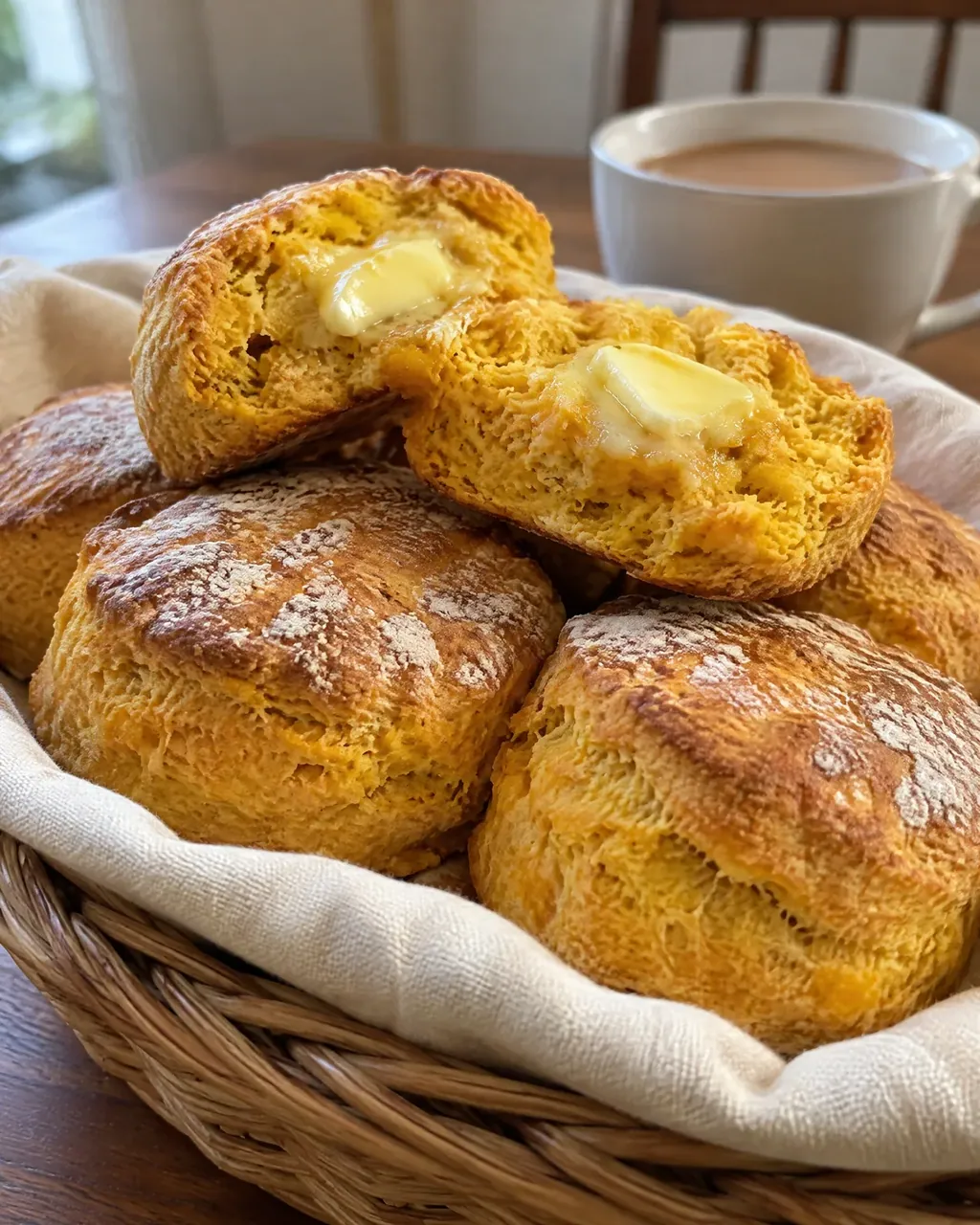
In Queensland, in the north-east of Australia, the scones are orange. Pumpkin grows easily there and turns up on the supper table most nights of the week, and for generations the cold mashed pumpkin left in the bowl has gone into the next morning’s scones. It takes the place of most of the milk, turns the dough gold all the way through and keeps the scones soft for days, when a plain scone is dry by evening. If you have never had a scone, think of a tall, tender biscuit that is just a little sweet, split open while it is warm and spread with butter.
They are not spiced and they are not glazed, so do not expect the pumpkin scone from an American bakery case. These are plain, light and faintly sweet, and the pumpkin is there for color and softness more than for flavor. The whole secret is the balance of pumpkin to flour and a very light touch with the dough. Here is how much pumpkin goes with how much flour, what to do if your pumpkin is wet, and how to keep the scones tall and light instead of heavy.
Why this pumpkin scones works
- Cold mashed pumpkin. Cold pumpkin keeps the butter from melting and the dough from turning sticky, so you need less flour and get a lighter scone.
- One cup of pumpkin to two and a half cups of flour. This ratio gives a soft dough that holds its shape and still tastes and looks of pumpkin.
- Self-rising flour. The leavening is already evenly mixed through the flour, which is how Australian cooks get such an even rise.
- Mixed with a knife. Cutting the flour in with a butter knife instead of stirring keeps the dough from being overworked and tough.
- Baked touching. Scones set close together hold each other up and rise tall with soft sides instead of spreading.
Ingredients
Makes 12 scones about 2 1/4 inches across. The measurements are in US cups with grams in brackets.
For the scones
- 2 tablespoons soft butter (28g)
- 1/3 cup granulated sugar (65g)
- 1 large egg
- 1 cup cold mashed cooked pumpkin (240g), see the note
- 2 1/2 cups self-rising flour (310g), plus more for the table
- 1/4 teaspoon salt
- 1 to 2 tablespoons milk, only if needed, plus a little more for brushing
To serve
- Soft butter
- Jam, optional
Any dense, sweet pumpkin or winter squash works: butternut squash is the easiest to find and the closest to what Australians use. Steam or roast it until soft, mash it smooth and chill it. Canned pumpkin puree works too. No self-rising flour? Whisk 2 1/2 cups all-purpose flour with 3 3/4 teaspoons baking powder and an extra 1/2 teaspoon salt.
How to make pumpkin scones
Make the dough
- Heat the oven to 425 degrees (220°C). Line a baking tray with parchment or dust it with flour.
- In a large bowl, beat the soft butter and sugar together with a wooden spoon until creamy. Beat in the egg.
- Stir in the cold mashed pumpkin until the mixture is smooth and evenly orange.
- Sift the self-rising flour and salt over the bowl. Using a butter knife, cut and fold the flour through the pumpkin mixture until it comes together in a soft, slightly sticky dough with no dry flour left. If it is dry and crumbly, add the milk a tablespoon at a time. Stop as soon as it holds together.
Shape and bake
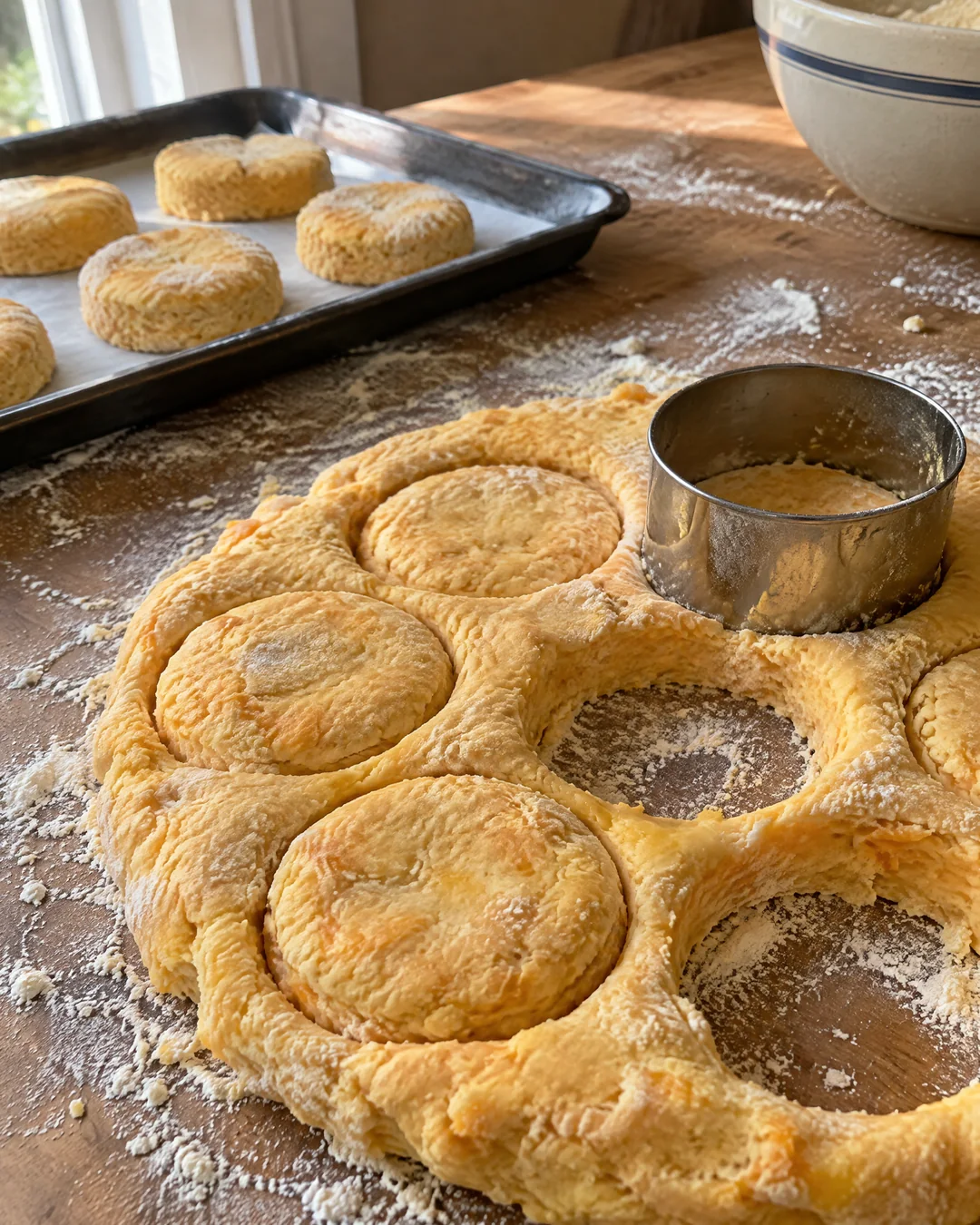
- Turn the dough onto a well-floured table. With floured fingertips, gently pat it out to a round about 1 inch thick. Do not knead it and do not use a rolling pin.
- Dip a 2 1/4 inch round cutter in flour and cut straight down without twisting. Gather the scraps gently, pat them out and cut again, to make 12 scones.
- Set the scones on the tray so they are just touching each other. Brush the tops lightly with milk.
- Bake for 15 to 18 minutes, until the scones are well risen and golden on top and sound hollow when tapped underneath.
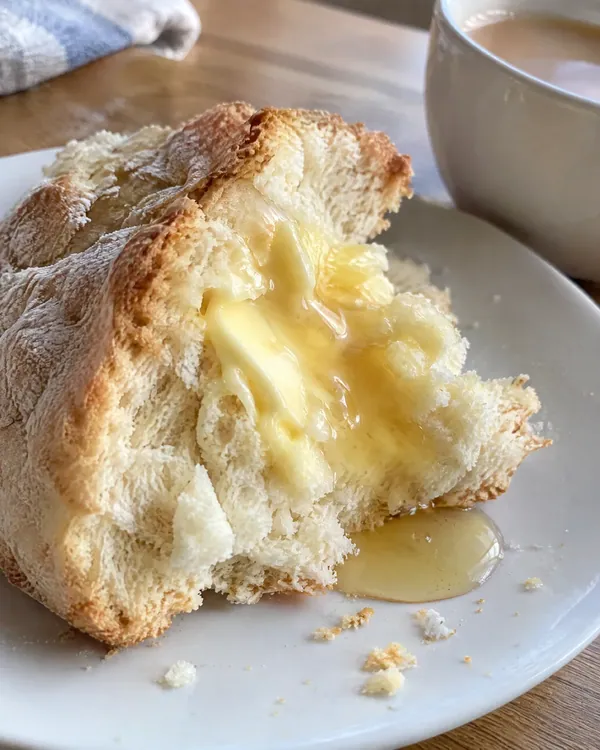
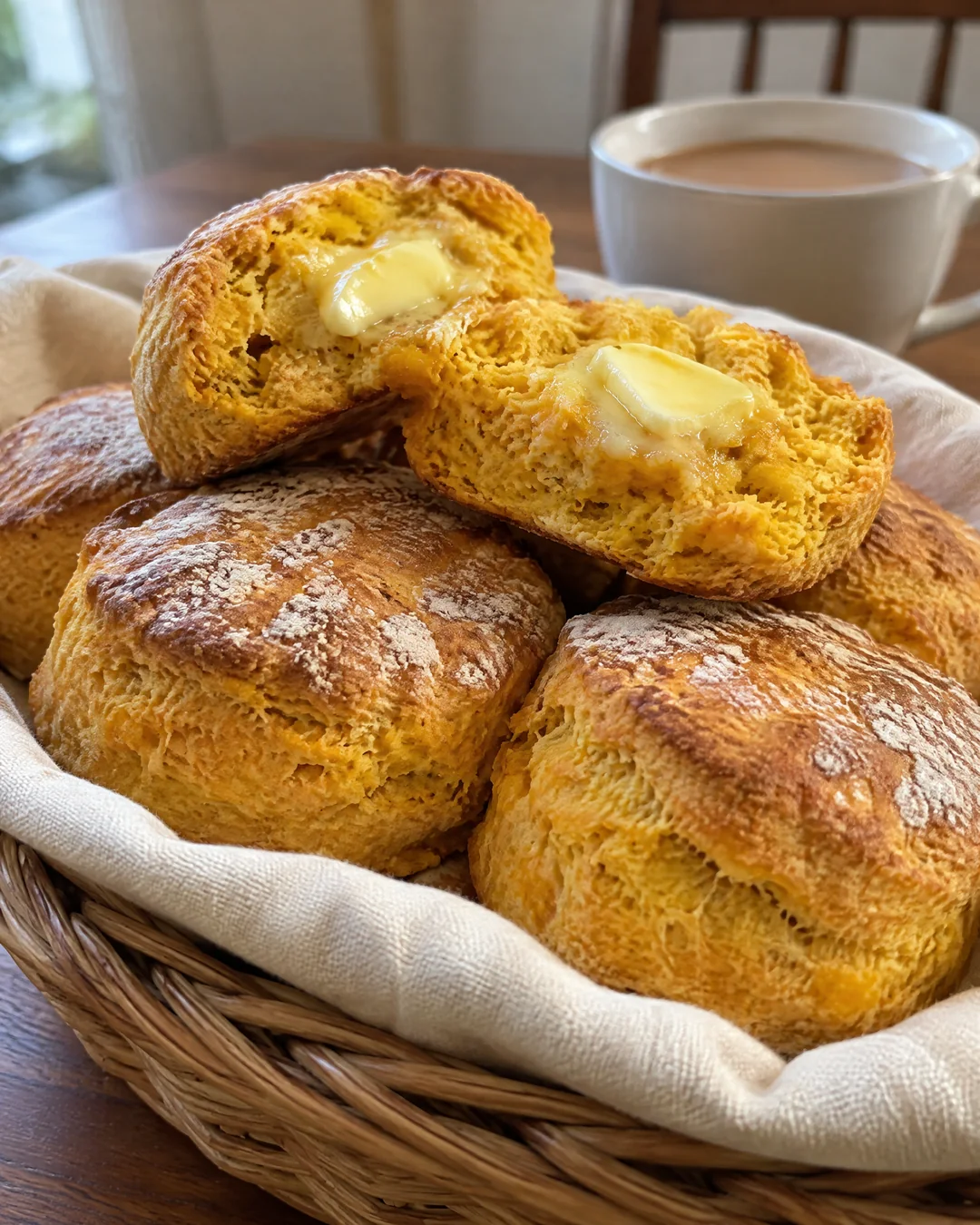
- Move them to a rack and cover loosely with a clean towel for 5 minutes, which keeps the tops soft. Split them by pulling them apart and serve warm with butter.
Tips that make the difference
- Keep the pumpkin cold and fairly dry. If it looks wet, let it drain in a sieve for 10 minutes, or the dough will need extra flour and the scones will be heavy.
- Handle the dough as little as possible. Every extra fold makes a tougher scone; it should look a little rough when you pat it out.
- Pat it thick. Scones only rise by about half, so dough patted thinner than an inch gives flat scones.
- Cut straight down. Twisting the cutter seals the edges and makes the scones rise crooked.
- A hot oven matters. Make sure it has reached full temperature before the tray goes in, so the scones spring up at once.
Variations
- Date pumpkin scones. Fold in 1/2 cup of chopped dates with the flour, a favorite in Australian country bakeries.
- Lightly spiced. Add 1/2 teaspoon of cinnamon and a pinch of nutmeg to the flour for a more American taste.
- Sweet potato scones. Use cold mashed sweet potato in place of the pumpkin, in the same amount.
- Cheese and pumpkin. Leave out the sugar, add 3/4 cup of grated sharp cheddar and a pinch of pepper, and serve with soup.
Storage and make-ahead
Pumpkin scones stay soft longer than plain ones. Keep them in an airtight container at room temperature for up to 3 days.
To refresh them, warm the scones in a 325 degree (160°C) oven for 5 to 8 minutes, or split and toast them.
To freeze, wrap the cooled scones well and freeze for up to 2 months. Thaw at room temperature and warm through before serving.
Frequently asked questions
How much pumpkin goes with how much flour?
One cup of cold mashed pumpkin (240g) to 2 1/2 cups of self-rising flour (310g). If your pumpkin is very moist you may need a tablespoon or two more flour on the table; if it is dry, a spoonful of milk in the dough.
Can I use canned pumpkin?
Yes. Use 1 cup of plain canned pumpkin puree, not pie filling, straight from the refrigerator. It is usually a little wetter than home-mashed pumpkin, so hold back the milk.
Why are my scones heavy?
The dough was overmixed, the pumpkin was too wet and needed too much flour, or the oven was not hot enough. Mix with a knife, drain wet pumpkin and bake at a full 425 degrees.
Do they taste strongly of pumpkin?
No. The flavor is mild and slightly sweet. The pumpkin gives the scones their gold color and their soft, moist crumb.
Save a cup of mashed pumpkin from supper tonight, and tomorrow morning you are fifteen minutes of work away from a tray of golden scones.
Pumpkin Scones (The Australian Classic Made with Cold Mashed Pumpkin, Light and Soft)
Traditional Australian pumpkin scones from Queensland: cold mashed pumpkin, a little butter and sugar, one egg and self-rising flour, barely mixed and baked close together until tall, golden and soft. Eaten split and buttered.
Ingredients
- 2 tablespoons soft butter
- 1/3 cup granulated sugar
- 1 large egg
- 1 cup cold mashed cooked pumpkin (240g), see the note
- 2 1/2 cups self-rising flour (310g), plus more for the table
- 1/4 teaspoon salt
- 1 to 2 tablespoons milk, only if needed, plus a little more for brushing
- Soft butter
- Jam, optional
Instructions
- Heat the oven to 425 degrees (220°C). Line a baking tray with parchment or dust it with flour.
- In a large bowl, beat the soft butter and sugar together with a wooden spoon until creamy. Beat in the egg.
- Stir in the cold mashed pumpkin until the mixture is smooth and evenly orange.
- Sift the self-rising flour and salt over the bowl. Using a butter knife, cut and fold the flour through the pumpkin mixture until it comes together in a soft, slightly sticky dough with no dry flour left. If it is dry and crumbly, add the milk a tablespoon at a time. Stop as soon as it holds together.
- Turn the dough onto a well-floured table. With floured fingertips, gently pat it out to a round about 1 inch thick. Do not knead it and do not use a rolling pin.
- Dip a 2 1/4 inch round cutter in flour and cut straight down without twisting. Gather the scraps gently, pat them out and cut again, to make 12 scones.
- Set the scones on the tray so they are just touching each other. Brush the tops lightly with milk.
- Bake for 15 to 18 minutes, until the scones are well risen and golden on top and sound hollow when tapped underneath.
- Move them to a rack and cover loosely with a clean towel for 5 minutes, which keeps the tops soft. Split them by pulling them apart and serve warm with butter.