In this article
Damper is the bread of the Australian bush. The stockmen and drovers who moved cattle and sheep across that enormous country could not carry yeast, and they had no oven. What they had was flour and salt in the saddlebags, water from wherever they camped, and a fire. At the end of the day the dough was mixed in a few minutes, patted into a big round and laid straight into the hot ashes, with more ashes raked over the top. When it was done somebody dug it out, knocked the grey dust off the crust and tore it open.
Today damper is baked in a hot oven, or in a cast iron camp oven set in the coals, and most cooks use self-rising flour with a little butter and milk so it comes out lighter than the old drovers ever knew it. If you are American, think of one enormous biscuit. If you are British, think of soda bread with even less fuss. It takes ten minutes to mix and it is eaten hot, with a great deal of butter. The whole art is in not overworking it, and in knowing when it is baked through. Both are explained here.
Why this Australian damper works
- No yeast. The lift comes from the baking powder in self-rising flour, so there is no rising time at all.
- Butter rubbed in. A little cold butter worked into the flour makes the crumb tender and not tough.
- Mixed with a knife. Cutting the liquid in with a table knife brings the dough together without kneading, which keeps the bread light.
- A deep cut on top. The cut opens in the oven and lets the heat reach the middle of a thick loaf.
- A hot oven. Strong heat gives a quick rise and a firm crust before the inside can dry out.
Ingredients
Makes one round loaf, enough for 6 to 8 people with a meal. The measurements are in US cups with grams in brackets.
For the damper
- 3 cups self-rising flour (375g), plus extra for dusting
- 1/2 teaspoon fine salt
- 4 tablespoons cold butter (55g), cut in small cubes
- 1/2 cup milk (120ml)
- 1/2 cup water (120ml), you may not need all of it
To serve
- Butter
- Golden syrup, honey or jam
No self-rising flour in the house? Use 3 cups of all-purpose flour (375g) stirred with 4 1/2 teaspoons of baking powder, and raise the salt to 1 teaspoon. Golden syrup is a pale amber cane syrup; in the Australian bush it was known as cocky’s joy. Honey is the closest swap on the table.
How to make Australian damper
Mix
- Heat the oven to 425 degrees (220°C). Line a baking sheet with parchment and dust it with flour.
- Put the flour and salt in a large bowl and stir them together. Add the cold butter and rub it in with your fingertips until the mixture looks like coarse breadcrumbs.
- Stir the milk and water together in a cup. Make a well in the middle of the flour and pour in about three quarters of the liquid.
- Mix with a table knife, using a cutting motion and turning the bowl, until the dough comes together in soft, shaggy clumps. Add the rest of the liquid a spoonful at a time, only where dry flour is left. The dough should be soft and slightly sticky, not wet.
Shape and bake
- Tip the dough onto a floured counter. With floured palms, gather and pat it gently into a ball, turning it over once or twice. Do not knead it. Ten seconds of handling is enough.
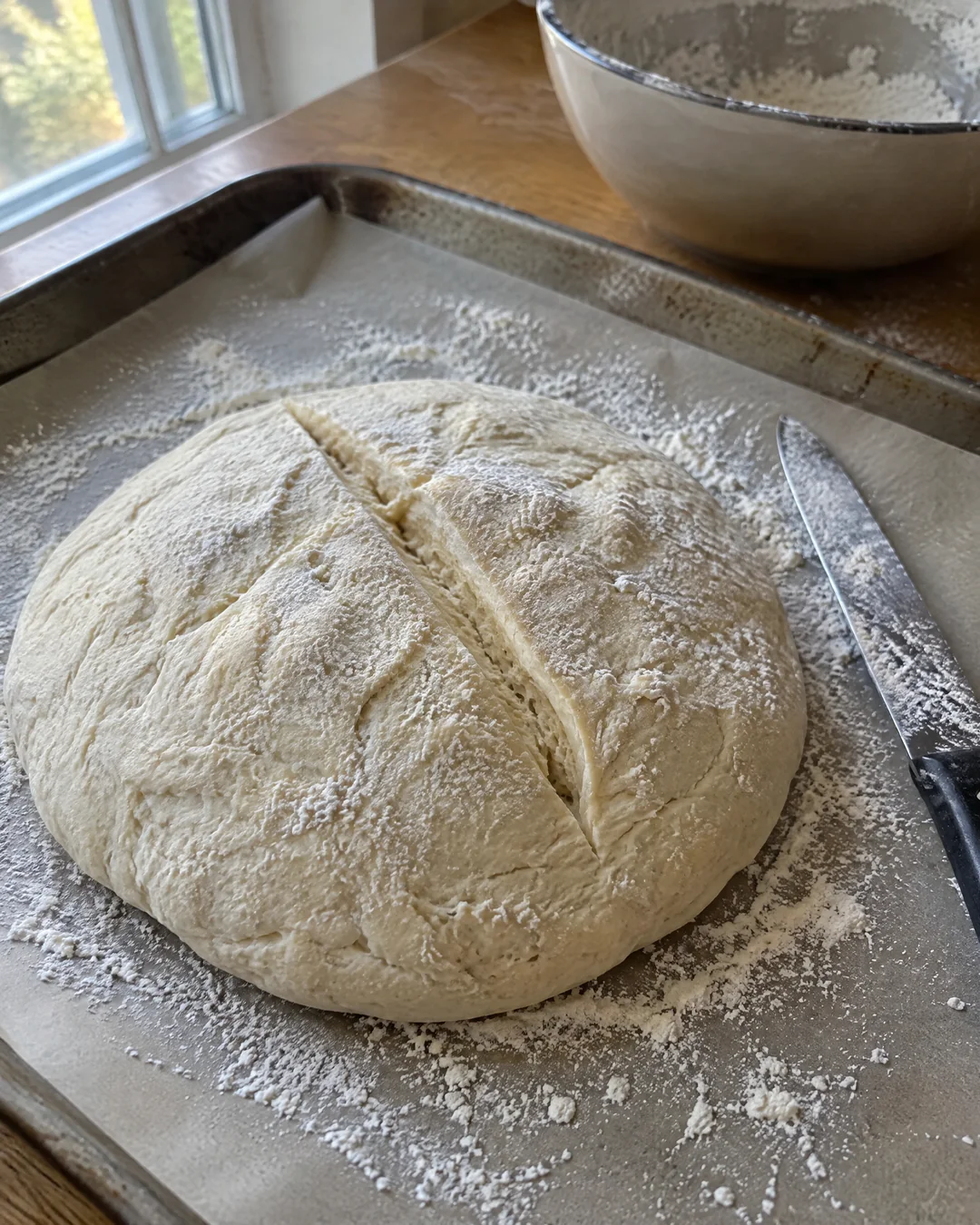
- Set the ball on the baking sheet and pat it into a round about 7 inches (18 cm) across and 2 inches (5 cm) high. Dust the top with a little flour.
- With a sharp knife, cut one deep line, or two lines at right angles, across the top, going about a third of the way down into the dough.
- Bake for 30 to 35 minutes, until the damper is well risen and golden and the cut has opened wide.
- To check it, lift the loaf with a towel, turn it over and knock on the bottom with your knuckles. A baked damper sounds hollow, like a drum. If the sound is dull and heavy, put it back upside down for 5 more minutes.
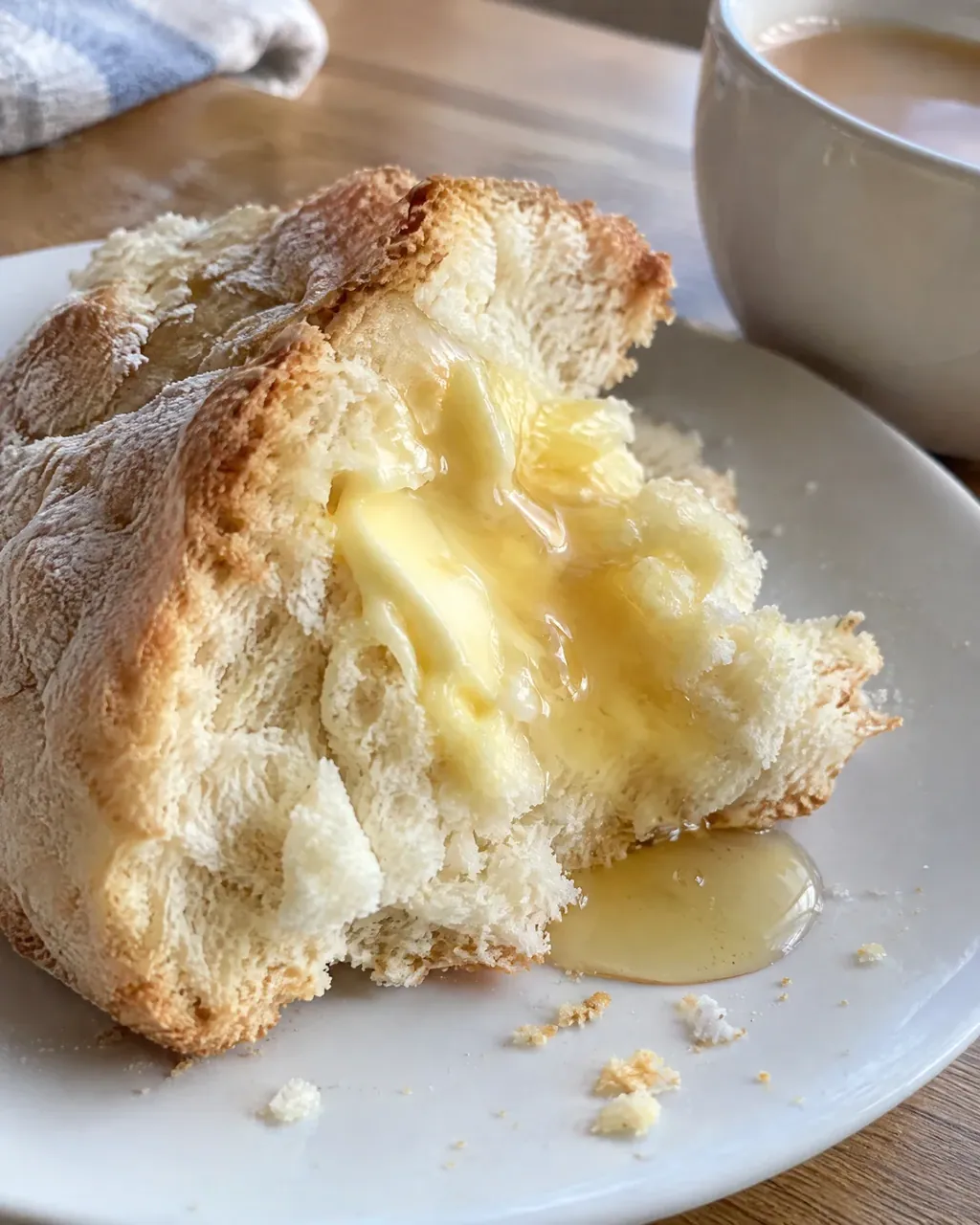
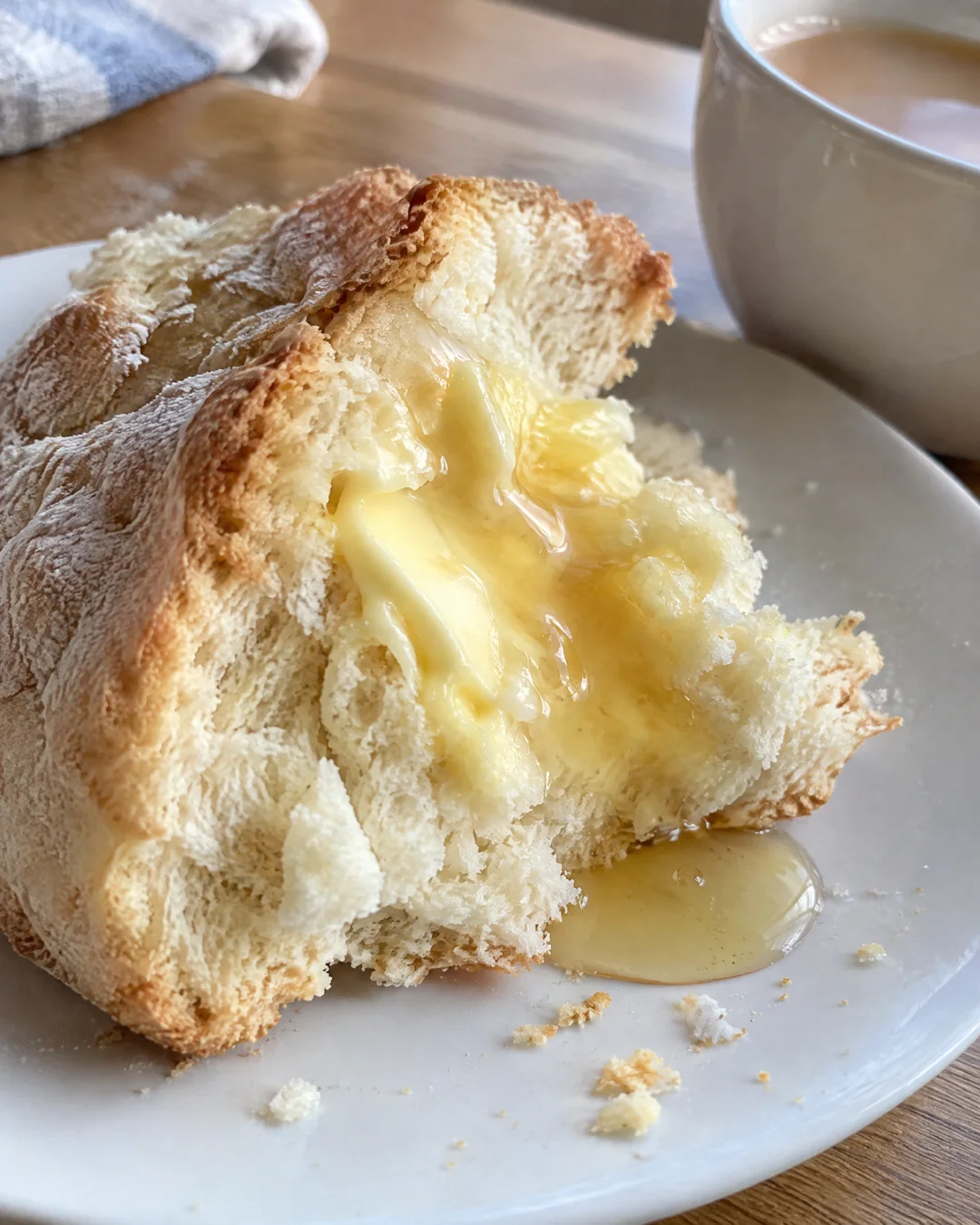
- Let it stand for 10 minutes, then tear it apart and eat it hot with butter and golden syrup.
Tips that make the difference
- Stop mixing the moment the dough holds together. Damper that has been kneaded like yeast bread turns out tough and heavy.
- Hold some of the liquid back. Flour varies, and a dough that is too wet spreads flat in the oven instead of rising.
- Do not skip the cut. Without it the crust sets before the middle has risen and the loaf stays doughy in the center.
- If the top is browning too fast after 20 minutes, lay a piece of foil loosely over it for the rest of the baking.
- Eat it the day it is made. Damper has almost no fat and no sugar, so it goes stale by the next morning. Toasted, it gets a second life.
Variations
- Cheese and herb damper. Stir 1 cup of grated sharp cheddar and 1 tablespoon of chopped chives or parsley into the flour before the liquid goes in.
- Sweet damper. Add 2 tablespoons of sugar and 1/2 cup of sultanas or raisins to the flour.
- Camp oven damper. Put the round in a greased, floured cast iron Dutch oven, cover it and bake it in the kitchen oven at 425 degrees for 25 minutes, then uncover it for 10 minutes to brown.
- Water only. For the plain drovers’ version, leave out the butter and the milk and use about 1 cup of water. It is heavier, and very good with stew.
Storage and make-ahead
Damper is at its best hot from the oven and within a few hours of baking.
Wrap any leftover bread in a clean towel and keep it at room temperature until the next day. Split and toast it, and butter it while it is hot.
To freeze, wrap the cold loaf or the pieces tightly and freeze for up to 2 months. Thaw, then warm in a 350 degree (175°C) oven for 10 minutes.
Frequently asked questions
Why is my damper heavy and hard?
It was mixed or kneaded too much, or the dough was too dry. Mix with a knife only until it comes together, keep it soft and a little sticky, and shape it with a light touch.
How do I know when damper is cooked through?
Turn it over and knock on the bottom. It should sound hollow. A skewer pushed into the thickest part through the cut should come out clean, with no wet dough on it.
Is damper the same as soda bread?
They are close relatives. Irish soda bread is raised with baking soda and buttermilk; damper is raised with baking powder, in the form of self-rising flour, and uses plain milk or water.
Can I cook damper on a campfire?
Yes. The easiest way is in a covered cast iron camp oven set on a bed of hot coals, with a few coals on the lid, for about 30 minutes. Keep it out of the flames, which burn the crust before the middle is done.
Bring it to the table whole, on a board, and let everybody tear off their own piece. That is how it was eaten around the fire, and it is still the best way.
Australian Damper (Bush Bread with No Yeast)
Australian damper: a quick bush bread with no yeast, made from self-rising flour, a little butter, milk and water, mixed in minutes with a knife, shaped into a round, cut across the top and baked in a hot oven. Torn apart hot and eaten with butter and golden syrup.
Ingredients
- 3 cups self-rising flour (375g), plus extra for dusting
- 1/2 teaspoon fine salt
- 4 tablespoons cold butter (55g), cut in small cubes
- 1/2 cup milk
- 1/2 cup water (120ml), you may not need all of it
- Butter
- Golden syrup, honey or jam
Instructions
- Heat the oven to 425 degrees (220°C). Line a baking sheet with parchment and dust it with flour.
- Put the flour and salt in a large bowl and stir them together. Add the cold butter and rub it in with your fingertips until the mixture looks like coarse breadcrumbs.
- Stir the milk and water together in a cup. Make a well in the middle of the flour and pour in about three quarters of the liquid.
- Mix with a table knife, using a cutting motion and turning the bowl, until the dough comes together in soft, shaggy clumps. Add the rest of the liquid a spoonful at a time, only where dry flour is left. The dough should be soft and slightly sticky, not wet.
- Tip the dough onto a floured counter. With floured palms, gather and pat it gently into a ball, turning it over once or twice. Do not knead it. Ten seconds of handling is enough.
- Set the ball on the baking sheet and pat it into a round about 7 inches (18 cm) across and 2 inches (5 cm) high. Dust the top with a little flour.
- With a sharp knife, cut one deep line, or two lines at right angles, across the top, going about a third of the way down into the dough.
- Bake for 30 to 35 minutes, until the damper is well risen and golden and the cut has opened wide.
- To check it, lift the loaf with a towel, turn it over and knock on the bottom with your knuckles. A baked damper sounds hollow, like a drum. If the sound is dull and heavy, put it back upside down for 5 more minutes.
- Let it stand for 10 minutes, then tear it apart and eat it hot with butter and golden syrup.