In this article
My English friend Margaret’s mother came from Ireland, and she baked a loaf of soda bread every single day of her married life. Not because she loved baking, Margaret says, but because soda bread does not keep. Yesterday’s loaf is for toast, and today’s has to be made. So every morning the same wide bowl came out: flour, salt and baking soda, a well in the middle, the buttermilk poured in all at once, and one hand going round and round the bowl with the fingers spread like a claw. Two minutes later the dough was on a floured tray with a deep cut from side to side, and the oven door was closing.
There is no yeast in this bread, no kneading and no waiting. The baking soda meets the acid in the buttermilk and the loaf rises in the oven, all by itself. That is also why so many first loaves come out like a brick: the dough was handled too much, or it sat on the counter while the oven heated. Here is how to mix soda bread so it is tender, and how to tell, with a knock on the bottom, that it is baked all the way through.
Why this soda bread works
- Baking soda and buttermilk. The acid in the buttermilk sets off the soda and fills the dough with bubbles, so no yeast and no rising time are needed.
- A wet, shaggy dough. A soft, sticky dough bakes into a tender crumb. A dry, tidy dough bakes into a hard one.
- Almost no handling. Mixing stops the moment the dough comes together, which keeps the loaf light.
- The deep cut. Cutting the round nearly to the bottom, from side to side in both directions, lets the heat reach the dense middle.
- A hot start. The first minutes in a very hot oven lift the loaf before the crust sets.
Ingredients
Makes one round loaf about 8 inches wide, enough for 10 slices. The measurements are in US cups with grams in brackets.
For the loaf
- 4 cups all-purpose flour (500g), plus more for the tray and your hands
- 1 teaspoon baking soda, level, with any lumps pressed out
- 1 teaspoon fine salt
- 1 3/4 cups cold buttermilk (420ml), well shaken
To serve
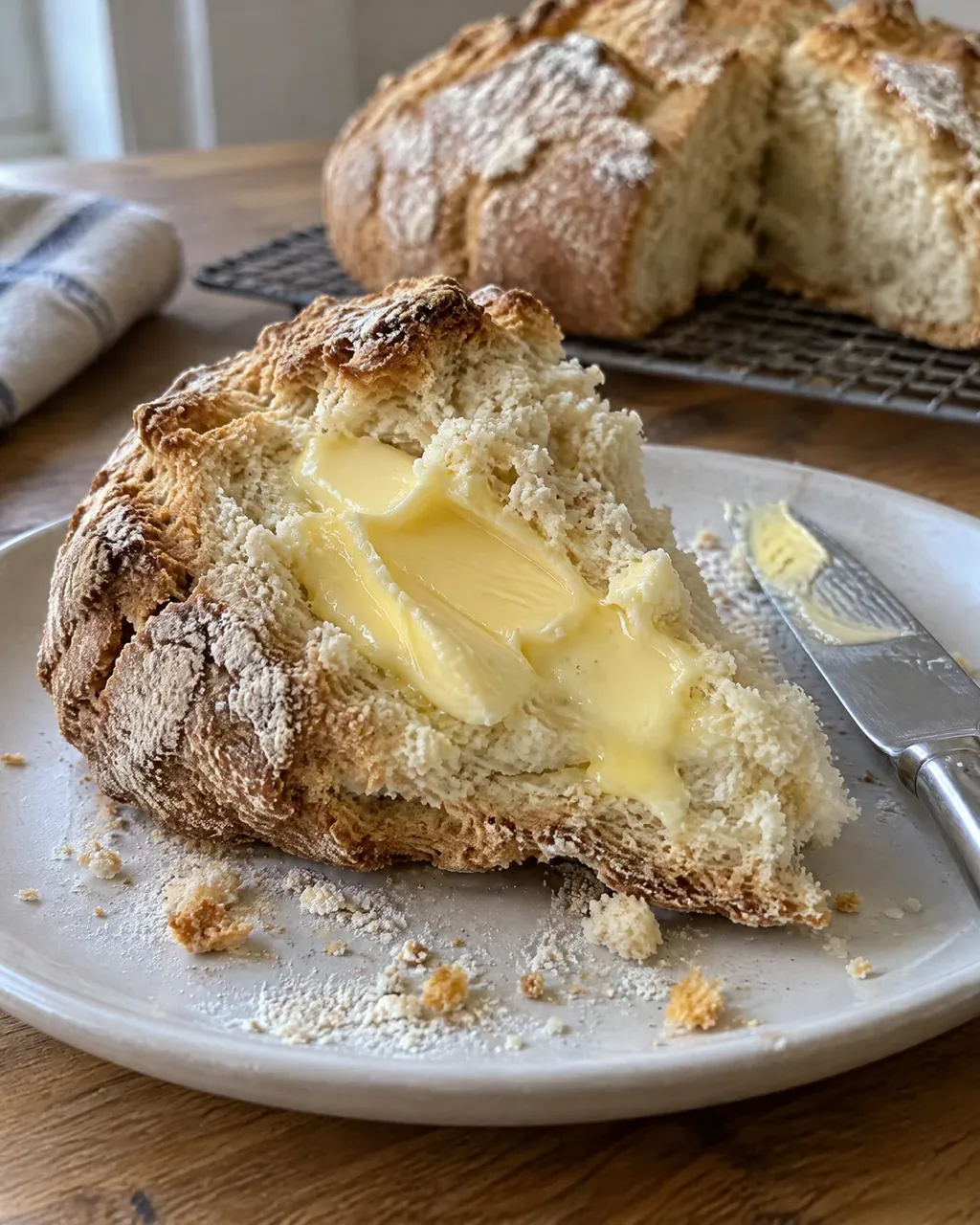
- Soft salted butter, and plenty of it
- Jam or marmalade, optional
Real buttermilk gives the best rise and flavor. If you have none, stir 2 tablespoons of lemon juice or white vinegar into 1 3/4 cups of whole milk and let it stand for 10 minutes until it thickens. Measure the soda carefully: too much gives the bread a soapy taste and a yellow tinge.
How to make soda bread
Get ready first
- Heat the oven to 425 degrees (220°C). Dust a baking sheet generously with flour. Have everything ready before you mix, because the dough cannot wait.
- In a large, wide bowl, whisk the flour, baking soda and salt together very well, for a full minute, so the soda is spread evenly through the flour.
Mix and shape
- Make a well in the center of the flour and pour in almost all the buttermilk at once, keeping back a splash.
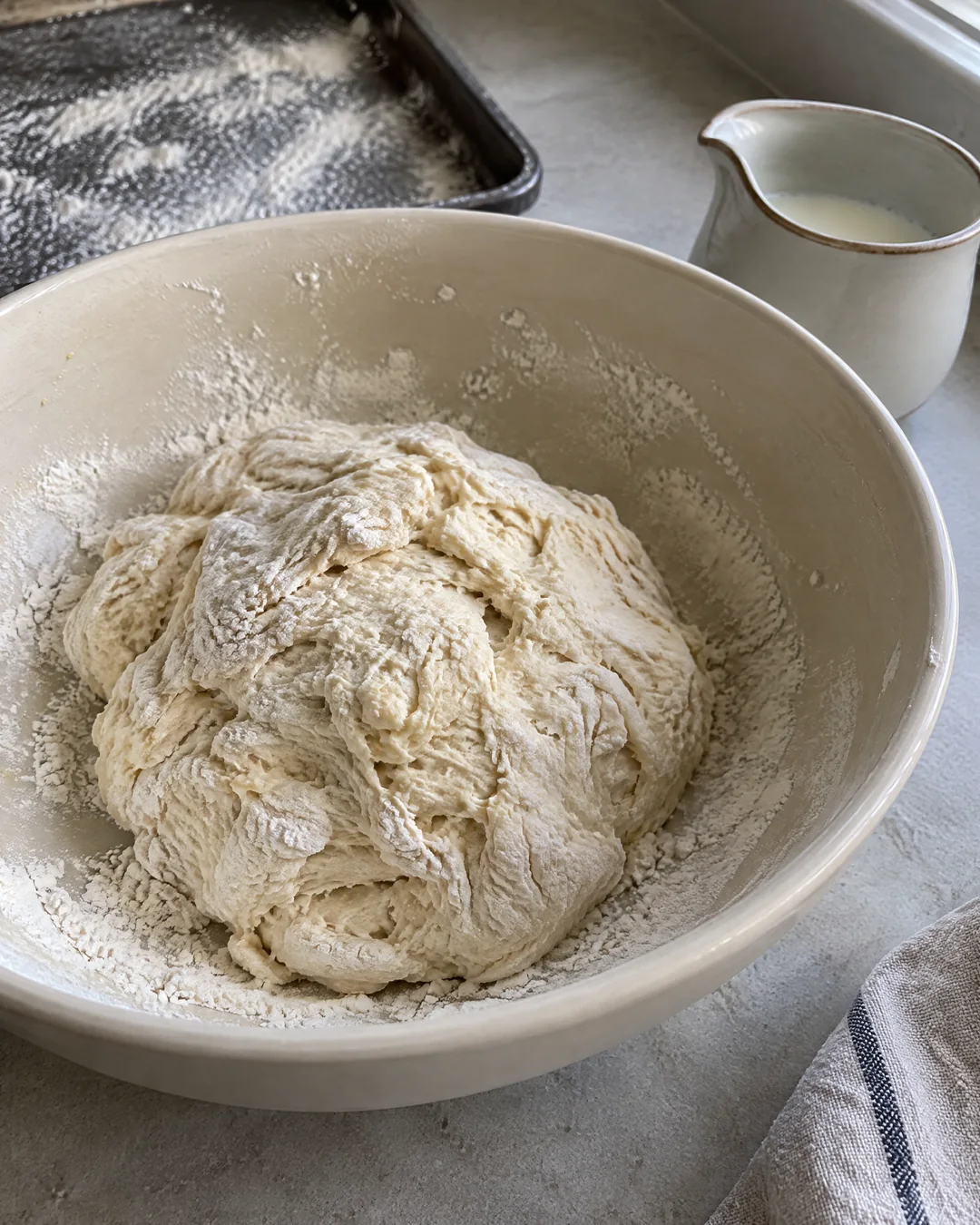
- With one hand held like a claw, fingers spread and stiff, stir in wide circles from the center outward until the flour is wet and the dough comes together in a soft, shaggy, slightly sticky mass. This takes less than a minute. Add the last splash of buttermilk only if dry flour remains in the bottom of the bowl.
- Tip the dough onto a floured counter. With floured hands, turn it over once or twice and pat it gently into a round about 2 inches high. Do not knead it.
- Lift the round onto the floured baking sheet. With a sharp knife, cut deep from one side to the other, then again the other way, going about three quarters of the way down so the loaf is marked in four quarters.
Bake
- Bake for 15 minutes at 425 degrees (220°C), then lower the oven to 400 degrees (200°C) and bake for 25 to 30 minutes more, until the crust is deep golden brown.
- Turn the loaf over with a towel and knock on the bottom with your knuckles. It should sound hollow, like a drum. If the sound is dull, put it back upside down for 5 more minutes.
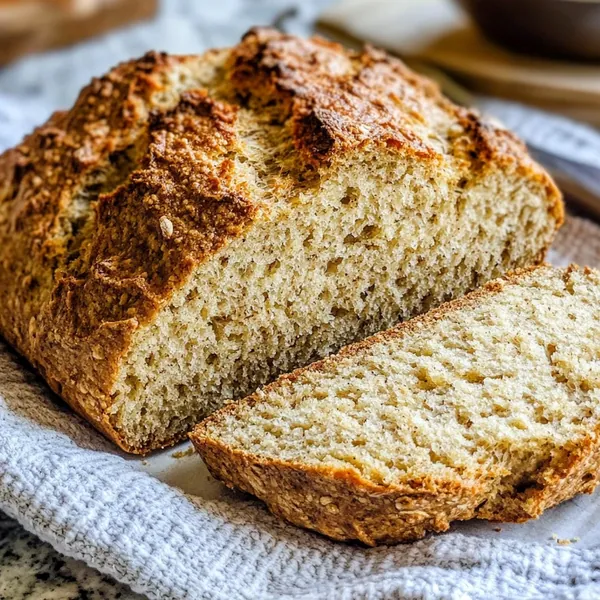
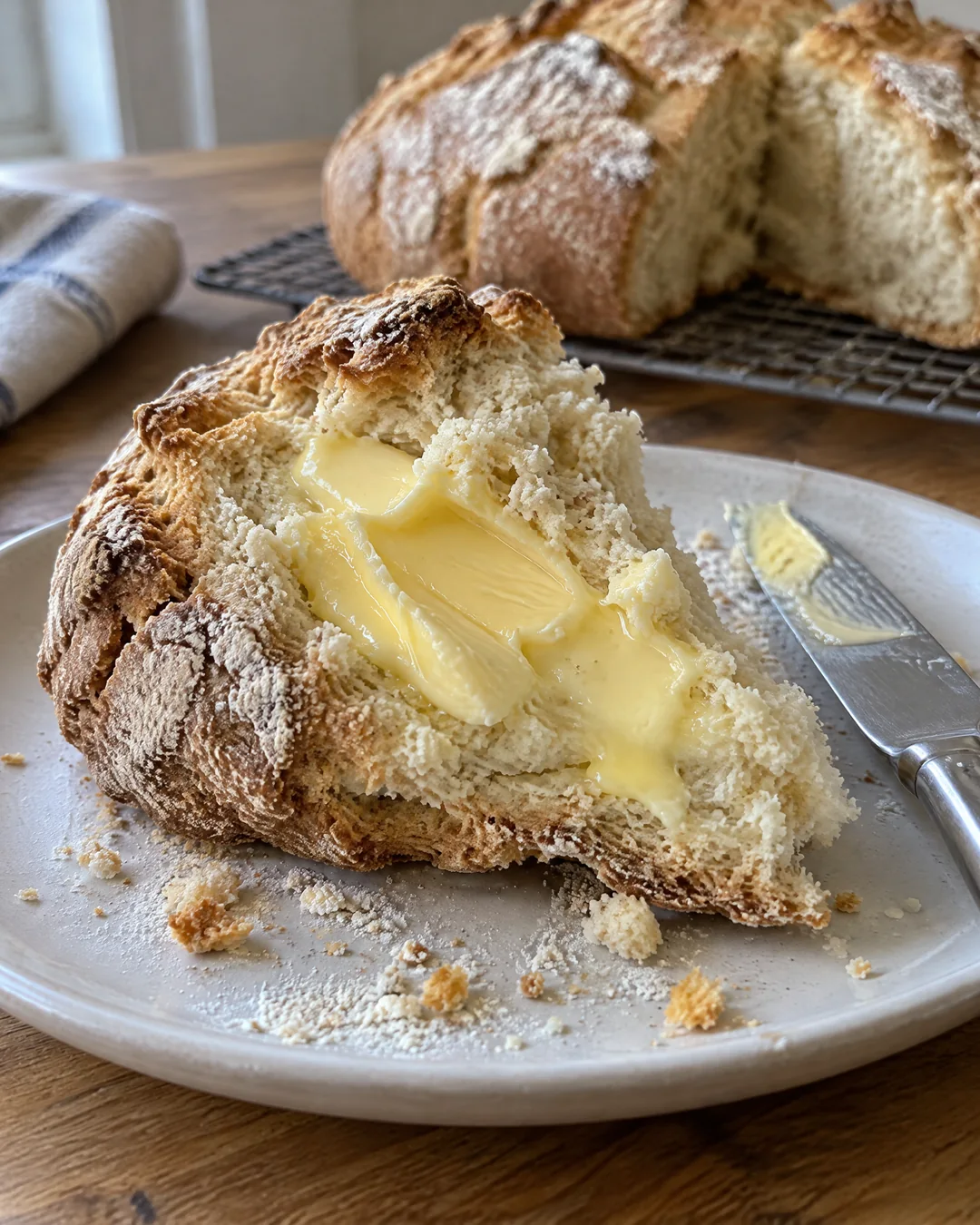
- Cool on a wire rack for at least 20 minutes. For a softer crust, wrap the warm loaf in a clean tea towel while it cools. Break it along the cuts and serve warm with butter.
Tips that make the difference
- Mix with your hand, not a spoon and never a mixer. You can feel the moment the dough comes together and stop right there.
- A sticky dough is a good dough. Flour your hands and the counter instead of working more flour into the loaf.
- From the moment the buttermilk goes in, you have about five minutes to get the loaf into the oven. The bubbles start right away and they do not last.
- Cut deeper than feels right. A shallow cut closes up and leaves a doughy center.
- Let it cool before slicing. Cut hot, the crumb is gummy; after 20 minutes it slices cleanly.
Variations
- Brown soda bread. Use 2 cups of whole wheat flour and 2 cups of all-purpose flour, and add 2 more tablespoons of buttermilk.
- Fruit soda bread. Stir 1 tablespoon of sugar and 3/4 cup of raisins into the flour before adding the buttermilk.
- Seeded loaf. Add 2 tablespoons of rolled oats and 1 tablespoon of caraway or sunflower seeds to the flour.
- Soda farls. Pat the dough into a flat round 3/4 inch thick, cut it in four wedges and cook them in a dry, floured skillet over medium-low heat, about 8 minutes a side.
Storage and make-ahead
Soda bread is best on the day it is baked. Keep what is left wrapped in a clean tea towel at room temperature for one day.
On the second day, slice and toast it. Toasted soda bread with butter is as good as fresh.
To freeze, wrap the cooled loaf or individual slices tightly and freeze for up to 2 months. Thaw at room temperature and warm in a low oven for 10 minutes.
Frequently asked questions
Why is my soda bread hard as a brick?
The dough was too dry, it was kneaded, or it waited before going into the oven. Keep the dough soft and sticky, stop mixing the moment it comes together, and bake it right away.
How do I know it is baked through?
Turn the loaf over and knock on the bottom. A hollow, drum-like sound means it is done. A dull thud means the middle needs a few more minutes.
Why is the top cut so deep?
The loaf is dense and bakes fast, so the middle is the last part to cook. The deep cut opens the loaf up and lets the heat of the oven reach the center.
Can I use regular milk?
Not on its own. The soda needs acid to work. Sour the milk with lemon juice or vinegar first, as described in the ingredient note.
Mix it while the kettle boils, and put the butter on the table before the loaf comes out.
Irish Soda Bread (Four Ingredients, No Yeast, No Rising, in the Oven in Five Minutes)
Traditional Irish soda bread made with four ingredients: flour, buttermilk, baking soda and salt, mixed by hand in two minutes, cut deep across the top and baked into a crusty round loaf with a soft, tender crumb.
Ingredients
- 4 cups all-purpose flour (500g), plus more for the tray and your hands
- 1 teaspoon baking soda, level, with any lumps pressed out
- 1 teaspoon fine salt
- 1 3/4 cups cold buttermilk (420ml), well shaken
- Soft salted butter, and plenty of it
- Jam or marmalade, optional
Instructions
- Heat the oven to 425 degrees (220°C). Dust a baking sheet generously with flour. Have everything ready before you mix, because the dough cannot wait.
- In a large, wide bowl, whisk the flour, baking soda and salt together very well, for a full minute, so the soda is spread evenly through the flour.
- Make a well in the center of the flour and pour in almost all the buttermilk at once, keeping back a splash.
- With one hand held like a claw, fingers spread and stiff, stir in wide circles from the center outward until the flour is wet and the dough comes together in a soft, shaggy, slightly sticky mass. This takes less than a minute. Add the last splash of buttermilk only if dry flour remains in the bottom of the bowl.
- Tip the dough onto a floured counter. With floured hands, turn it over once or twice and pat it gently into a round about 2 inches high. Do not knead it.
- Lift the round onto the floured baking sheet. With a sharp knife, cut deep from one side to the other, then again the other way, going about three quarters of the way down so the loaf is marked in four quarters.
- Bake for 15 minutes at 425 degrees (220°C), then lower the oven to 400 degrees (200°C) and bake for 25 to 30 minutes more, until the crust is deep golden brown.
- Turn the loaf over with a towel and knock on the bottom with your knuckles. It should sound hollow, like a drum. If the sound is dull, put it back upside down for 5 more minutes.
- Cool on a wire rack for at least 20 minutes. For a softer crust, wrap the warm loaf in a clean tea towel while it cools. Break it along the cuts and serve warm with butter.