In this article
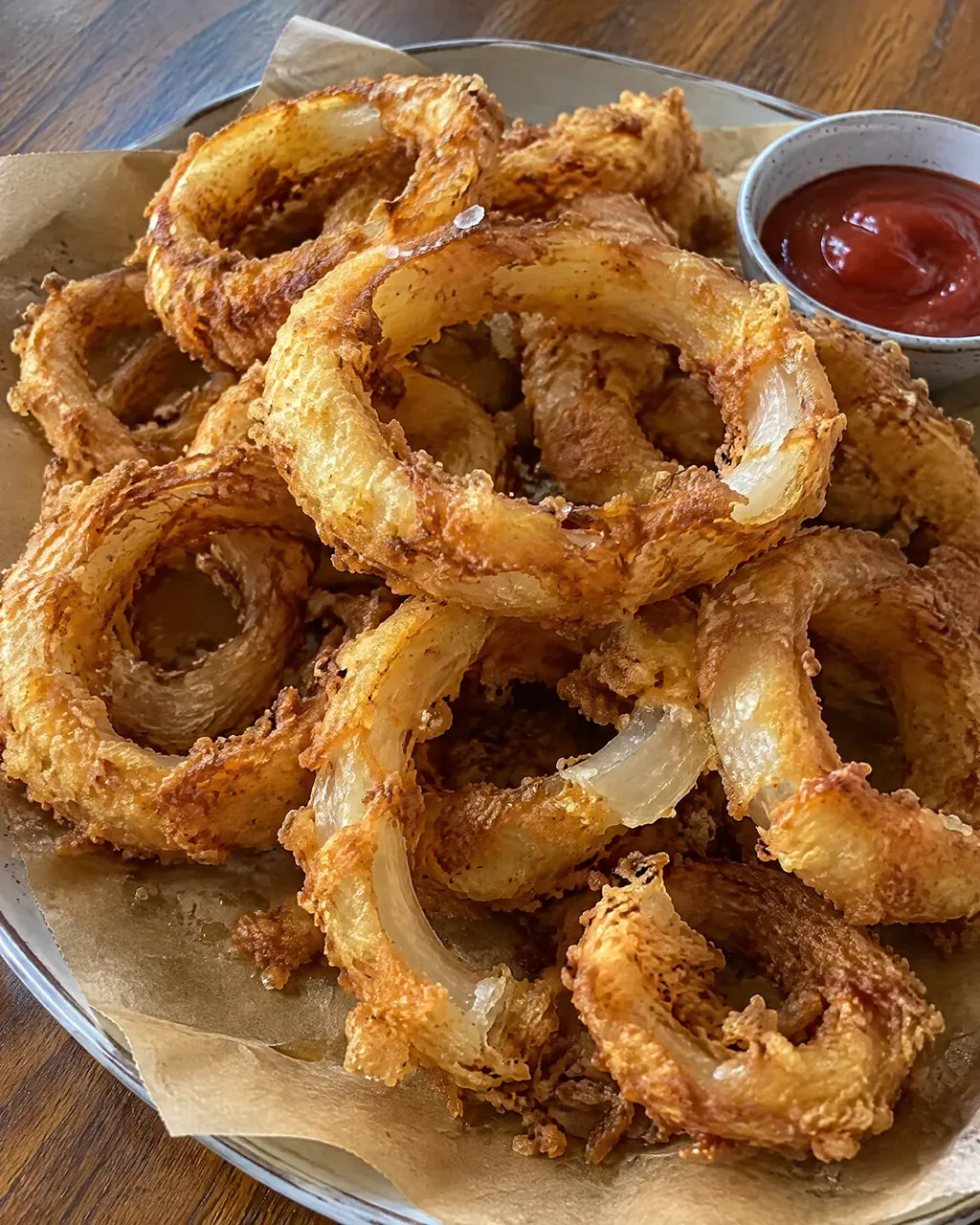
My father judged every diner in three counties by its onion rings. He did not care about the coffee or the pie. He ordered the onion rings, ate one, and decided. And at every single diner, he told the waitress, kindly and very seriously, that my mother’s were better. He was right. Hers were thick, sweet onion inside, soft and almost melting, with a craggy golden crust that crackled loud enough to hear across the table. On the nights she made them, he ate them standing at the stove before they reached the table, and then sat down and told us they were all right.
There is no batter in her onion rings. There is buttermilk and there is seasoned flour, and the rings go through each one twice. The buttermilk soak softens the raw edge of the onion and makes it sweeter, and its thickness gives the flour something to grab. The second dip is what builds the crags, and the crags are what crunch. The other half of the secret is the oil. Too cool and the rings drink it and turn greasy; too hot and the crust burns before the onion softens. She fried them at a steady 350 to 365 degrees, a few at a time, and salted them the second they came out.
Why this buttermilk onion rings works
- Sweet onions, cut thick. Thick rings of a sweet onion soften to almost jammy inside the crust.
- A buttermilk soak. Buttermilk tames the sharp raw taste and helps the coating stick.
- Double dipped. Buttermilk, flour, buttermilk, flour. The second coat makes the thick, craggy crust.
- A rest before frying. Ten minutes on a rack lets the coating hydrate so it clings in the oil.
- Steady oil heat. Frying between 350 and 365 degrees gives a crisp, dry crust instead of a greasy one.
Ingredients
Serves 4 as a side. The measurements are in US cups with grams and milliliters in brackets.
For the soak
- 2 large sweet onions (about 900g)
- 2 cups buttermilk (480ml)
- 1 teaspoon fine salt
- 1/2 teaspoon black pepper
For the coating
- 2 cups all-purpose flour (250g)
- 1/4 cup cornstarch (32g)
- 2 teaspoons fine salt
- 1 teaspoon black pepper
- 2 teaspoons paprika
- 1 teaspoon garlic powder
- 1/2 teaspoon onion powder
For frying
- Vegetable or peanut oil, about 6 cups (1.4 liters), enough for 2 inches in the pot
- Flaky or fine salt, for sprinkling
Sweet onions are the classic choice for their mild flavor. A large yellow onion works too, soaked a little longer. Save the small center rings for another meal; they are too small to coat well.
How to make buttermilk onion rings
Soak the onions
- Peel the onions and cut them crosswise into slices 1/2 inch (1.25cm) thick. Separate the slices into rings with your thumbs and keep only the large and medium rings.
- Whisk the buttermilk, salt and pepper in a large bowl. Add the rings and press them under. Leave them to soak for 20 to 30 minutes while you set up.
Coat them twice
- Whisk the flour, cornstarch, salt, pepper, paprika, garlic powder and onion powder in a wide shallow dish.
- Lift a ring from the buttermilk, let the extra drip off, and toss it in the flour. Dip it back into the buttermilk, then back into the flour, pressing gently so the flour sticks in clumps. Set it on a wire rack. Repeat with all the rings.
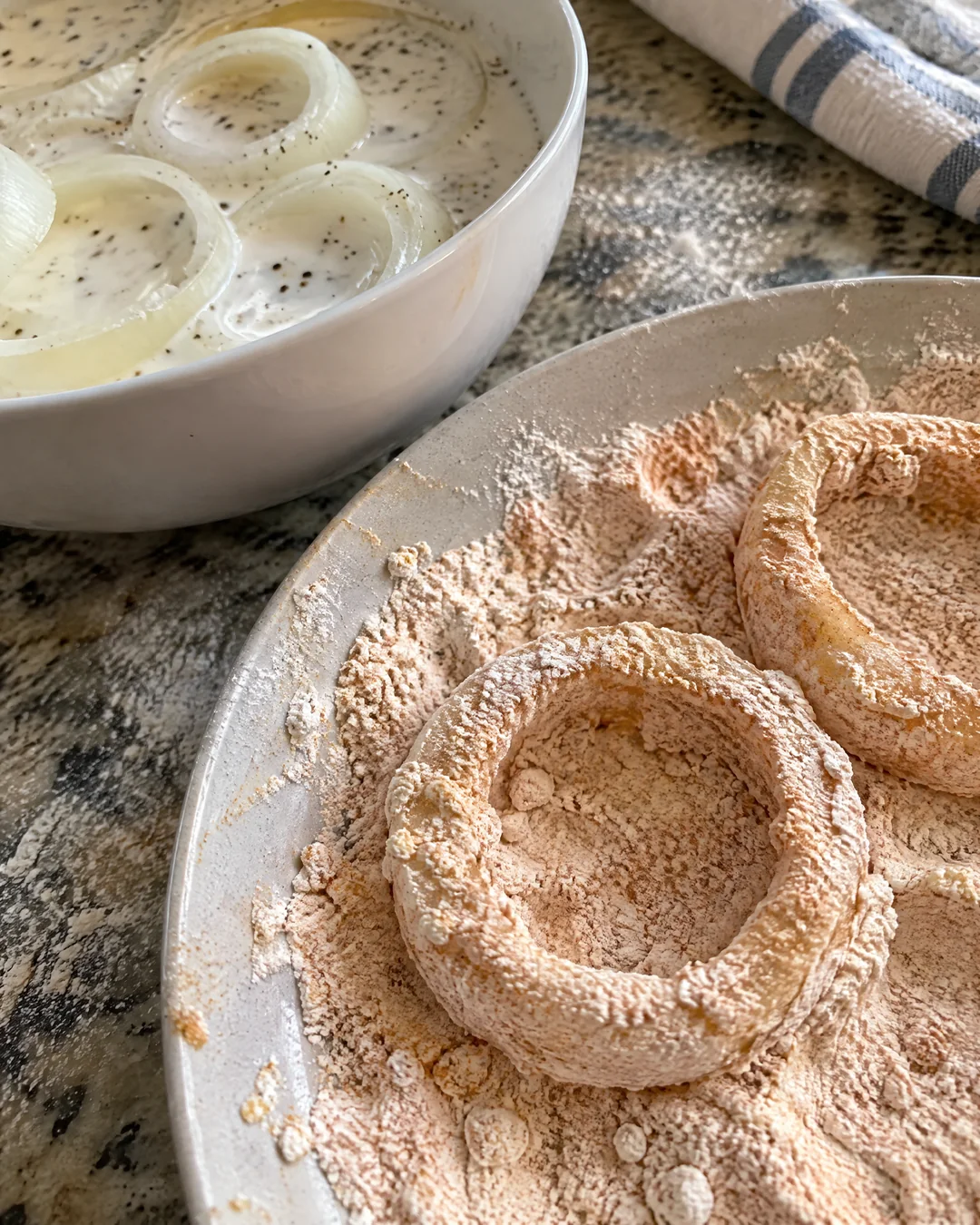
- Let the coated rings rest on the rack for 10 minutes while the oil heats.
Fry
- Heat 2 inches (5cm) of oil in a heavy pot or deep skillet to 365 degrees (185°C) on a deep-fry thermometer. Keep a second rack set over paper towels or brown paper nearby.
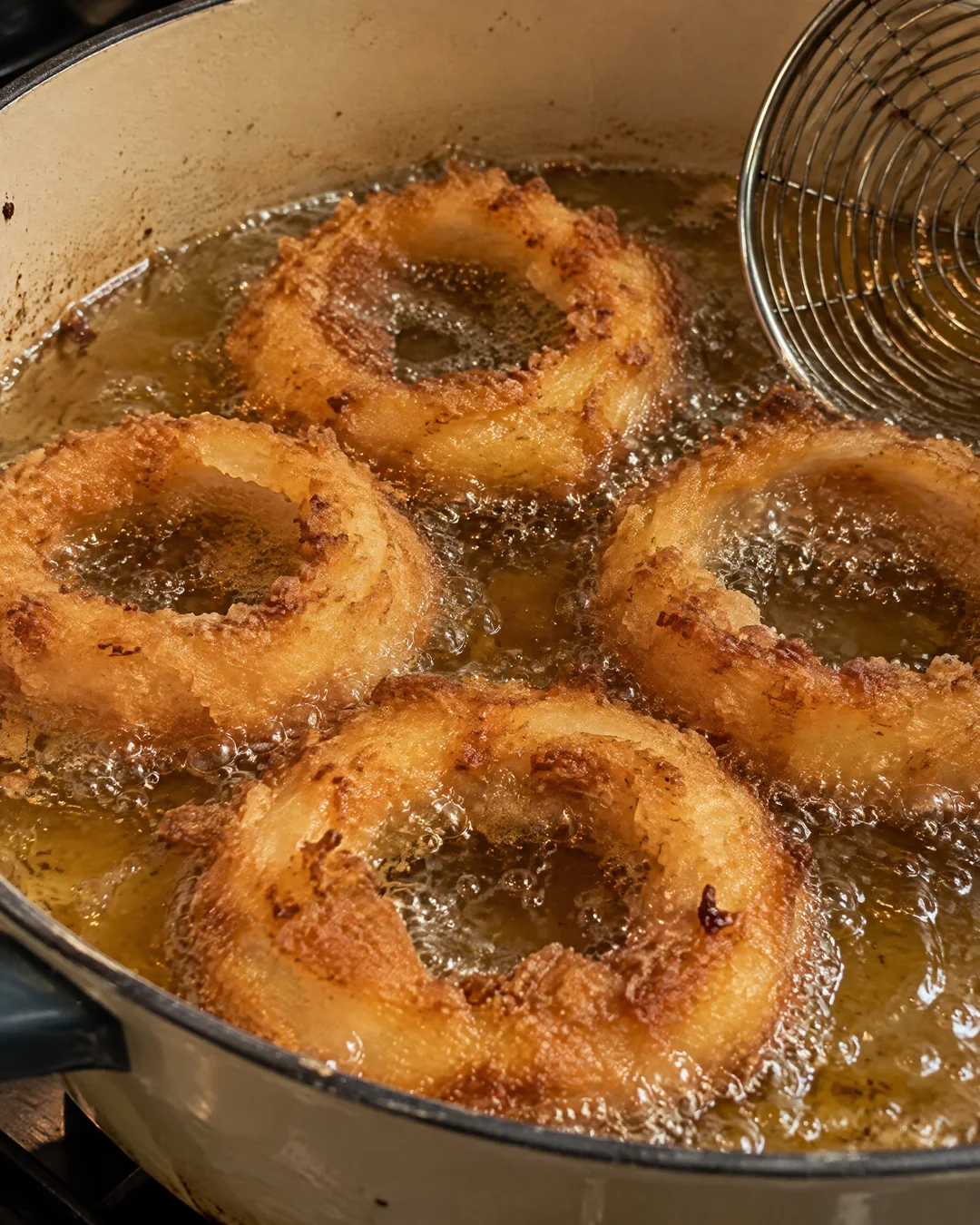
- Fry the rings 4 or 5 at a time, never crowded, for 2 to 3 minutes, turning once, until deep golden brown and crisp. The oil temperature will drop when the rings go in; adjust the heat to keep it between 350 and 365 degrees (175 to 185°C).
- Lift the rings out with a slotted spoon or spider, let them drain on the rack, and sprinkle with salt immediately. Let the oil come back to 365 degrees before the next batch.
- Serve right away, while the crust still crackles.
Tips that make the difference
- Use a thermometer. Oil that is too cool is the single reason onion rings come out greasy.
- Fry only a few at a time. A crowded pot drops the oil temperature fast and the coating goes soft.
- Use one hand for the wet dip and the other for the flour, or your fingers end up coated in paste.
- Salt them the second they come out of the oil, while the surface is still glossy enough to hold it.
- Keep finished batches warm on a rack in a 200 degree (95°C) oven, never stacked on a plate where they steam.
Variations
- Spicy. Add 1/2 teaspoon cayenne pepper to the flour and a few dashes of hot sauce to the buttermilk.
- Cornmeal crunch. Replace 1/2 cup of the flour with fine yellow cornmeal for a grittier, Southern-style crust.
- Thin and crispy. Slice the onions 1/4 inch thick, dip only once, and fry for about 90 seconds for shoestring-style rings.
- With a dipping sauce. Stir together mayonnaise, ketchup, a little horseradish, paprika and a squeeze of lemon.
Storage and make-ahead
Onion rings are best the minute they are fried. Leftovers keep in the refrigerator for 2 days in a container lined with paper towels.
Reheat them on a rack set on a baking sheet in a 400 degree (200°C) oven for 6 to 8 minutes, or in an air fryer for 3 to 4 minutes, until they crisp again. Never microwave them.
You can soak the rings in buttermilk up to 4 hours ahead in the refrigerator, but coat them only just before frying.
Frequently asked questions
How hot should the oil be for onion rings?
Heat it to 365 degrees (185°C) and keep it between 350 and 365 degrees (175 to 185°C) the whole time you fry. Below 350 the rings soak up oil and go greasy; above 375 the coating burns before the onion softens. A deep-fry thermometer clipped to the pot is the easiest way to be sure.
Why does the coating fall off my onion rings?
Usually the coating went straight into the oil without resting, or the rings were crowded and knocked against each other. Let the double-coated rings rest 10 minutes on a rack so the flour hydrates and clings, and fry a few at a time.
Why soak onions in buttermilk?
Buttermilk softens the sharp raw taste of the onion, seasons it, and its thickness helps the flour stick in thick, craggy layers.
Can I make these in an air fryer?
Not with this wet coating. Air-fried rings need a breadcrumb coating and a spray of oil. For the diner-style crackling crust, fry them in oil.
Soak them, dip them twice, watch the thermometer and salt them hot. Then take one to whoever in your house judges diners, and let them say it is all right.
Crispy Buttermilk Onion Rings (Double Dipped, Diner Style)
Homemade buttermilk onion rings: thick sweet onion rings soaked in seasoned buttermilk, dipped twice in seasoned flour and fried at 350 to 365 degrees until deep golden and crackling crisp. US cups with grams.
Ingredients
- 2 large sweet onions
- 2 cups buttermilk
- 1 teaspoon fine salt
- 1/2 teaspoon black pepper
- 2 cups all-purpose flour
- 1/4 cup cornstarch
- 2 teaspoons fine salt
- 1 teaspoon black pepper
- 2 teaspoons paprika
- 1 teaspoon garlic powder
- 1/2 teaspoon onion powder
- Vegetable or peanut oil, about 6 cups (1.4 liters), enough for 2 inches in the pot
- Flaky or fine salt, for sprinkling
Instructions
- Peel the onions and cut them crosswise into slices 1/2 inch (1.25cm) thick. Separate the slices into rings with your thumbs and keep only the large and medium rings.
- Whisk the buttermilk, salt and pepper in a large bowl. Add the rings and press them under. Leave them to soak for 20 to 30 minutes while you set up.
- Whisk the flour, cornstarch, salt, pepper, paprika, garlic powder and onion powder in a wide shallow dish.
- Lift a ring from the buttermilk, let the extra drip off, and toss it in the flour. Dip it back into the buttermilk, then back into the flour, pressing gently so the flour sticks in clumps. Set it on a wire rack. Repeat with all the rings.
- Let the coated rings rest on the rack for 10 minutes while the oil heats.
- Heat 2 inches (5cm) of oil in a heavy pot or deep skillet to 365 degrees (185°C) on a deep-fry thermometer. Keep a second rack set over paper towels or brown paper nearby.
- Fry the rings 4 or 5 at a time, never crowded, for 2 to 3 minutes, turning once, until deep golden brown and crisp. The oil temperature will drop when the rings go in; adjust the heat to keep it between 350 and 365 degrees (175 to 185°C).
- Lift the rings out with a slotted spoon or spider, let them drain on the rack, and sprinkle with salt immediately. Let the oil come back to 365 degrees before the next batch.
- Serve right away, while the crust still crackles.