In this article
Old-Fashioned Irish Soda Bread: A Quick & Comforting Homemade Classic
Part 1: A Cozy Slice of Tradition + First Steps of the Recipe
There’s something deeply comforting about a warm slice of homemade bread—especially when it’s as simple and satisfying as Irish Soda Bread. I remember the first time I made it: it was a chilly Sunday morning, and I was looking for something hearty to go with a pot of stew bubbling away on the stove. I didn’t have yeast on hand, but I did have buttermilk, baking soda, and a bag of flour. A quick search later, I discovered the magic of Irish Soda Bread—and I’ve never looked back.
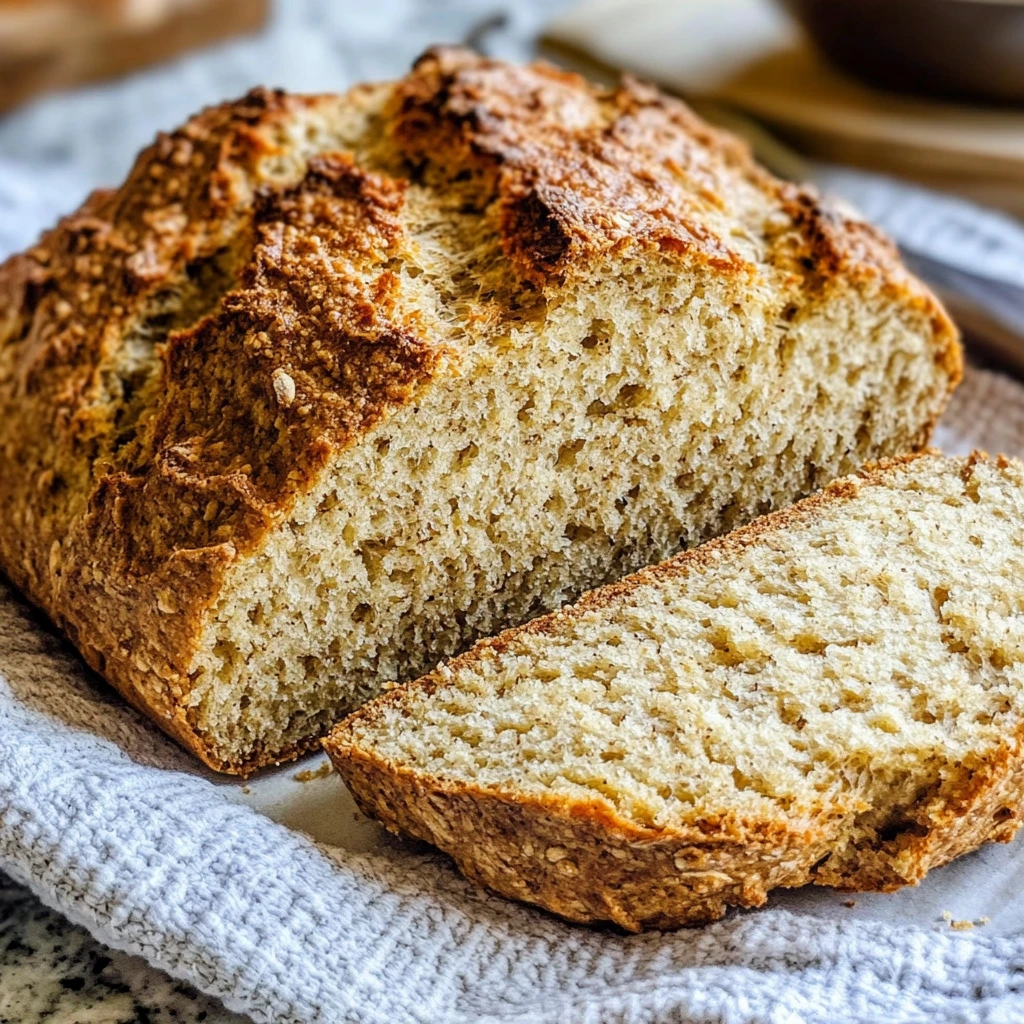
This Old-Fashioned Irish Soda Bread is rustic, cozy, and comes together in under an hour. It has that perfect golden-brown crust with a soft, tender crumb inside. The best part? No rising time. No yeast. No fuss. Just simple, wholesome ingredients and one mixing bowl.
Whether you’re serving it fresh from the oven with a generous pat of butter and some jam or pairing it with a hearty soup or stew, this bread is always a hit. Plus, it makes your kitchen smell amazing!
Let’s get into the simple steps, shall we?
Ingredients You’ll Need:
-
250g plain flour
-
250g wholemeal flour
-
1 tsp salt
-
1 tsp bicarbonate of soda
-
400ml buttermilk
Pro Tip: If you don’t have buttermilk on hand, you can make your own by adding 1 tablespoon of lemon juice or vinegar to regular milk and letting it sit for 5 minutes. Easy!
Step 1: Preheat Your Oven
Go ahead and set your oven to 200°C (that’s 180°C fan if your oven has that setting). Lightly flour a baking tray and set it aside. This bread comes together so fast that you’ll want your oven hot and ready when the dough is done.
Step 2: Mix the Dry Ingredients
In a large mixing bowl, combine the plain flour, wholemeal flour, salt, and bicarbonate of soda. Give it a good stir to distribute everything evenly.
Why both plain and wholemeal flour? It’s all about balance! Wholemeal gives you that hearty texture and nutty flavor, while plain flour keeps it from becoming too dense.
Step 3: Add the Buttermilk
Slowly pour in the buttermilk while stirring with a wooden spoon. The dough will start to come together into a shaggy, rough mass. Don’t worry if it looks a little messy—that’s exactly what we want at this stage.
Step 4: Gently Knead the Dough
Turn the dough out onto a floured surface. Now here’s the key: do not over-knead it. Just 30 seconds of gentle kneading is enough. We’re not going for a smooth dough here. Overworking it can make the bread tough.
Shape it into a round ball with your hands—rustic is beautiful here!
Ready to score, bake, and enjoy this crusty masterpiece? Let’s keep going in Part 2!
What’s your favorite way to enjoy homemade bread—savory or sweet?

Finishing the Loaf + Handy Tips for Perfect Irish Soda Bread
Alright, now that you’ve shaped that rustic round of dough, you’re just minutes away from sliding it into the oven and letting your whole kitchen fill with that cozy, nutty, baked-bread aroma. This next part is just as easy and just as important—especially the little cross on top (and no, it’s not just decorative!).
Let’s finish this bread the right way and cover a few tips to make sure your soda bread is golden, crusty, and just right every time.
Step 5: Score the Top
Once your dough is shaped and sitting pretty on the baking tray, it’s time for a little folklore-inspired tradition: cut a deep cross into the top using a sharp knife. This step helps the bread bake evenly—but it’s also said to “let the fairies out.” Whether you’re superstitious or just love old traditions, it’s a sweet detail that connects this bread to its Irish roots.
Make the cut deep—almost all the way through to the base—but don’t slice it apart. Think of it like marking quarters, not separating them.
Step 6: Bake Until Golden
Place the tray in the center of your preheated oven and bake for 30–35 minutes. You’re looking for a beautiful golden brown crust and a loaf that sounds hollow when tapped on the bottom—that’s your cue that it’s cooked through.
If it starts to brown too quickly on top, you can tent a bit of foil over it toward the end of baking to prevent burning.
Baking time can vary slightly depending on your oven, so start checking around the 30-minute mark.
Step 7: Cool Before Slicing (We Know It’s Hard!)
Once your bread is out of the oven, transfer it to a wire rack and let it cool for at least 10 minutes. I know—it’s tough to resist that just-baked smell—but slicing too early can make it gummy inside. Giving it a few minutes helps it set properly.
Serving Suggestions: The Best Ways to Enjoy It
Irish Soda Bread is one of those magical things that pairs well with both sweet and savory. Here are a few of my favorite ways to serve it:
-
Warm with butter and a drizzle of honey (my personal favorite)
-
Toasted with jam and a cup of tea
-
Served with a hearty Irish stew or soup
-
Topped with smoked salmon and cream cheese for a brunchy twist
It’s also a fantastic option for breakfast, served alongside eggs or even with a bit of sharp cheddar.
Helpful Tips for Best Results Every Time
Here are a few little nuggets of wisdom I’ve picked up after making this bread more times than I can count:
-
Don’t overwork the dough. This isn’t like traditional bread—you’re not trying to develop gluten. Keep it rough and rustic.
-
Fresh baking soda matters. If your soda is old or expired, your bread won’t rise properly. Always check the date!
-
Make it your own. Add-ins like raisins, caraway seeds, or even a handful of rolled oats on top before baking can make fun, flavorful variations.
-
Flour matters. If you only have one type of flour on hand (either all plain or all wholemeal), you can still make this bread. It’ll just be a bit denser or lighter depending on what you use.
Variations You Can Try
One of the best parts of Irish Soda Bread is how customizable it is. Once you’ve mastered the base recipe, here are a few ways to change it up:
-
Sweet Version: Add 2 tablespoons of sugar and a handful of raisins or currants.
-
Savory Twist: Mix in chopped herbs (like rosemary or chives) and shredded cheese.
-
Seeded Crust: Sprinkle sunflower seeds, flaxseeds, or sesame seeds on top before baking for an extra crunch.
Each batch is a chance to try something new—and trust me, it’s hard to mess up a loaf this simple and forgiving.
Coming up in Part 3: I’ll answer some of the most common questions people have about making Irish Soda Bread, and then we’ll wrap things up with some final thoughts and a nudge to get baking.
Your Irish Soda Bread Questions Answered + A Cozy Wrap-Up
So now that your kitchen smells like heaven and your rustic loaf is cooling on the counter, let’s talk through a few common questions people often have about making Irish Soda Bread. Whether you’re brand new to baking or just want to troubleshoot a few things, this quick FAQ has you covered.
❓FAQ: Irish Soda Bread Edition
1. Can I make Irish Soda Bread without buttermilk?
Yes! If you don’t have buttermilk on hand, you can easily make a substitute by adding 1 tablespoon of lemon juice or vinegar to 400ml of milk. Let it sit for 5–10 minutes until it curdles slightly. Works like a charm.
2. Why is my bread so dense?
Soda bread will always be a bit denser than yeast bread, but if it’s too heavy, you may have over-kneaded the dough or added too much flour. Just a gentle knead is all you need—30 seconds max!
3. Can I freeze Irish Soda Bread?
Absolutely! Let it cool completely, then wrap it tightly in plastic wrap and freeze for up to 3 months. To reheat, thaw at room temperature and warm in the oven if you like that just-baked feel.
4. How long does soda bread stay fresh?
It’s best eaten within 2–3 days. Store it wrapped in a clean kitchen towel or in an airtight container at room temperature. If it starts to go a bit stale, it makes excellent toast!
5. Can I use just white flour or just wholemeal flour?
Yes, but the texture will change. All-white flour gives a lighter crumb, while all-wholemeal makes it heartier and more rustic. I love the balance of both, but feel free to experiment based on what you have.
6. What if I don’t have bicarbonate of soda?
Unfortunately, baking soda (bicarbonate of soda) is essential for this recipe—it’s what gives the bread its rise. Baking powder won’t quite do the trick in this case.
7. Is Irish Soda Bread supposed to crack?
Yes! Cracks in the crust are a good sign. That deep cross you cut before baking helps control the expansion, but the bread will naturally split as it rises in the oven—and that’s part of its rustic charm.
Final Thoughts: A Bread for Every Day
There’s something truly special about Irish Soda Bread. It’s unfussy, down-to-earth, and made with ingredients you probably already have in your kitchen. No need for fancy equipment or hours of rising time—just a bowl, a spoon, and a little bit of floury love.
Whether you’re baking it for the first time or the fiftieth, it always manages to feel just right. I’ve served it alongside thick beef stews, brought it to potlucks, and even gifted it wrapped in a tea towel and tied with twine. It never disappoints.
So the next time you want fresh bread in under an hour, give this old-fashioned recipe a try. And if you do, I’d love to hear how it turned out! Did you add raisins? Did you go savory? Drop a comment below, snap a photo, and share your version. This bread is too good not to share.
Happy baking, friends—and may the fairies smile upon your kitchen! 🍞☘️
Old-Fashioned Irish Soda Bread Recipe – Easy, No-Yeast, Rustic Loaf in Under an Hour
This Old-Fashioned Irish Soda Bread is a classic no-yeast loaf that’s both rustic and incredibly easy to make. With a golden, crisp crust and soft, hearty crumb, it's the perfect companion to everything from sweet jam at breakfast to a warm, savory stew at dinner. Made with simple pantry staples like plain and wholemeal flour, buttermilk, and baking soda, this traditional Irish recipe comes together in under an hour—no kneading, no rising, and no fuss required. Whether you're baking it for St. Patrick’s Day or as a cozy everyday treat, this soda bread is always a crowd-pleaser.
Ingredients
- 250g plain flour
- 250g wholemeal flour
- 1 tsp salt
- 1 tsp bicarbonate of soda (baking soda)
- 400ml buttermilk
Instructions
- Preheat the oven to 200°C (180°C fan). Lightly flour a baking tray and set aside.
- Mix dry ingredients: In a large mixing bowl, combine plain flour, wholemeal flour, salt, and bicarbonate of soda.
- Add buttermilk: Gradually pour in the buttermilk, stirring with a wooden spoon until a rough dough forms.
- Knead lightly: Turn the dough out onto a floured surface. Gently knead for just 30 seconds—do not overwork it.
- Shape and score: Shape the dough into a round and place it on the prepared tray. Use a sharp knife to cut a deep cross into the top.
- Bake: Bake for 30–35 minutes until golden brown and the bottom sounds hollow when tapped.
- Cool and serve: Transfer to a wire rack and let cool for at least 10 minutes before slicing. Serve warm with butter or jam.