In this article
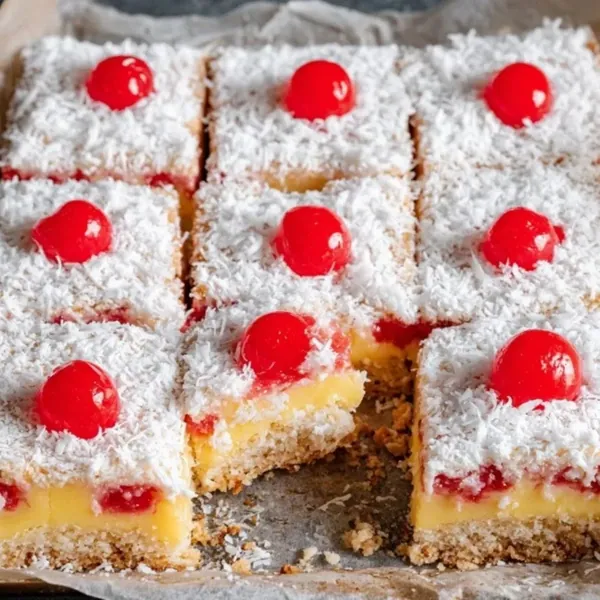
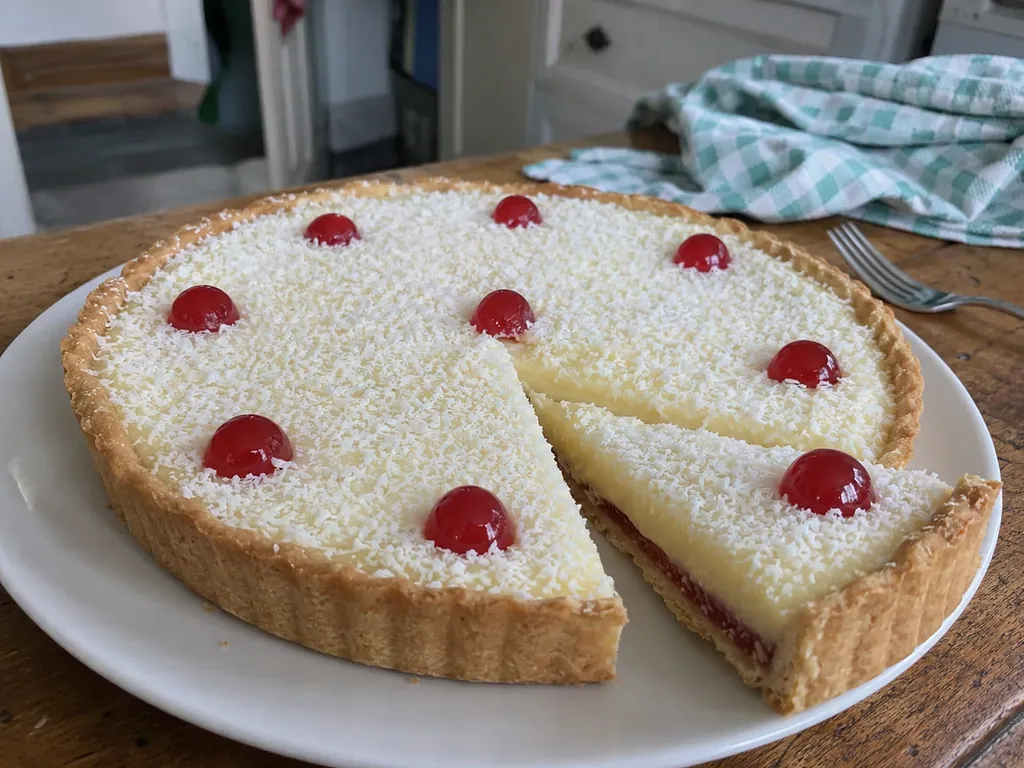
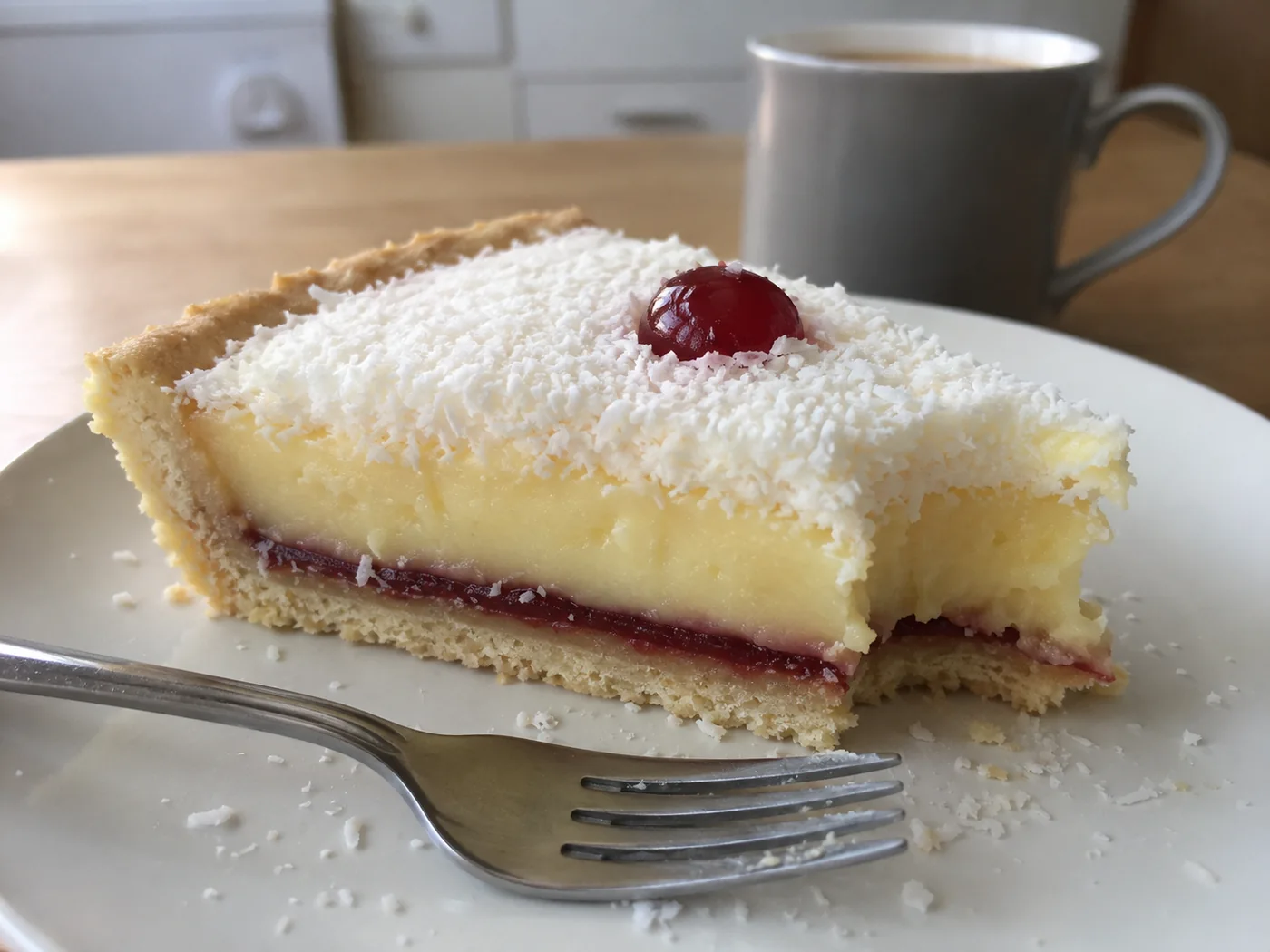
Every region of Britain had its own school dinner pudding, and the North West had the Manchester tart. A shortcrust base, a smear of raspberry jam, a thick layer of custard chilled until it cut cleanly, desiccated coconut over the top and, if the dinner ladies were feeling generous, half a glacé cherry in the middle of each square. It sat in a big metal tray under a sheet of greaseproof, and it was always cold, always sweet, and always gone before the second sitting.
It is also the one nostalgic pudding people are nervous to make at home, and the reason is nearly always the same: the custard. Too thin and it slides off the pastry; too thick and it turns rubbery. The version below uses cornflour and custard powder together, which gives the firm, sliceable, unmistakably school-dinner texture without any risk of it splitting. Everything else is easy, and shop-bought pastry is completely fine here.
What is a Manchester tart?
A Manchester tart is a traditional English dessert from the North West: a blind-baked shortcrust pastry case spread with raspberry jam, filled with thick vanilla custard, chilled until set, then topped with desiccated coconut and glacé cherries. It descends from the Victorian “Manchester pudding” recorded by Mrs Beeton in 1861, a breadcrumb and jam pudding that school kitchens simplified into a pastry-and-custard tray bake sometime in the mid-twentieth century.
Some schools added a layer of sliced banana under the custard. That is the only real point of argument about the recipe, and it usually splits along postcode lines. The recipe below is the plain version, with the banana as an option, because the plain one is what most people mean when they say “a proper Manchester tart”.
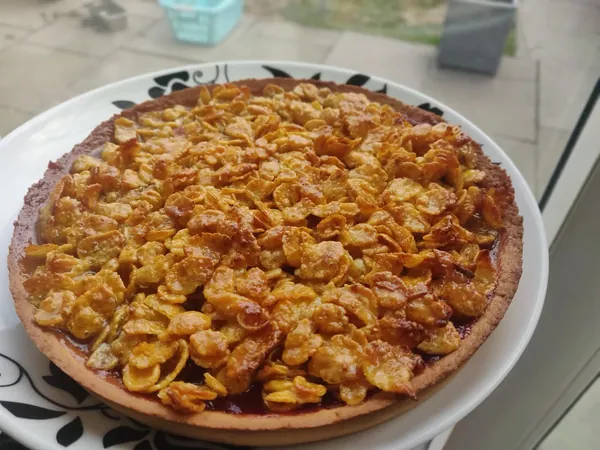
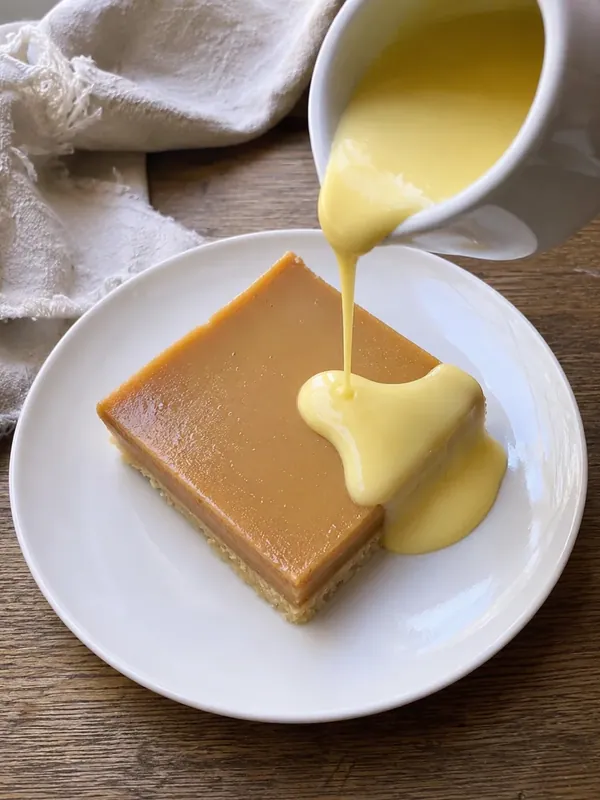
It belongs to the same family of school puddings as the gypsy tart, the cornflake tart and the butterscotch tart: cheap cupboard ingredients, made by the tray, served cold or with a jug of custard on the side.
Why this recipe works
- A custard that actually sets. Cornflour plus custard powder, cooked properly for a full two minutes after it thickens, gives a filling that slices cleanly and never weeps.
- The jam goes on warm pastry. Spreading it while the case is still warm lets it soak a few millimetres into the crust, which is exactly the texture you remember.
- Coconut on cold custard, not hot. Sprinkled over set custard it stays white and dry; on warm custard it goes translucent and sad.
- Blind-baked until it is really dry. A pale, underbaked case turns soft under the custard within an hour. Bake it until it is properly golden and it will still be crisp the next day.
- The whole thing is make-ahead. It needs at least four hours in the fridge and is better overnight, so it is one of the few puddings that is easier to make for a crowd than for four.
Ingredients
Makes one 23cm round tart or a 20x30cm rectangular tray, cutting into 8 slices or 12 squares. UK metric weights; a set of spoons and a jug will do the rest.
For the pastry (or use a 320g sheet of ready-rolled shortcrust)
- 225g plain flour
- 110g cold unsalted butter, cubed
- 1 tablespoon caster sugar
- Pinch of salt
- 3 to 4 tablespoons cold water
For the custard
- 600ml whole milk
- 3 tablespoons custard powder
- 2 tablespoons cornflour
- 60g caster sugar
- 2 egg yolks
- 1 teaspoon vanilla extract
- 15g butter
For assembling
- 150g raspberry jam (seedless if you can find it; strawberry is fine)
- 1 large banana, sliced (optional, see the banana question below)
- 40g desiccated coconut
- 8 glacé cherries, halved
A word on the custard powder: it is not cheating. School kitchens used it by the catering tin, it gives the pale yellow colour and vanilla-ish flavour people remember, and it is what makes the layer set firmly. The egg yolks and butter added here make it richer than the school version without changing the character.
How to make a Manchester tart
1. Make the pastry
Rub the butter into the flour, sugar and salt until it looks like fine breadcrumbs. Add the cold water a tablespoon at a time and bring it together into a firm dough with your hands. Flatten into a disc, wrap and chill for 30 minutes. If you are using ready-rolled pastry, skip straight to the next step.
2. Line the tin and blind bake
Heat the oven to 190C / 170C fan / gas 5. Roll the pastry out on a floured surface to the thickness of a pound coin and line a 23cm loose-bottomed tart tin, pressing it into the corners and leaving a little overhang. Prick the base all over, line with baking paper and fill with baking beans or dried rice.
Bake for 15 minutes, lift out the paper and beans, then bake for another 8 to 10 minutes until the base is dry and the whole case is golden. This second bake is the one that stops a soggy bottom, so do not cut it short. Trim the overhang with a small knife while the pastry is still warm.
3. Jam the base
While the case is still warm, spread the jam evenly over the base with the back of a spoon. If it is too stiff to spread, warm it for 20 seconds in the microwave first. If you are adding banana, lay the slices in a single layer over the jam now.
4. Make the custard
Put 100ml of the milk in a bowl with the custard powder, cornflour and sugar and whisk to a smooth paste, then whisk in the egg yolks. Heat the remaining 500ml milk in a pan until it is steaming and just starting to bubble at the edge.
Pour the hot milk over the paste in a thin stream, whisking all the time, then pour everything back into the pan. Cook over a medium heat, stirring constantly with a whisk or wooden spoon, until it thickens. Once it is thick, keep cooking and stirring for a full 2 minutes. This cooks out the starch and is what makes the difference between custard that sets and custard that slumps. Take it off the heat and beat in the vanilla and butter.
5. Fill and chill
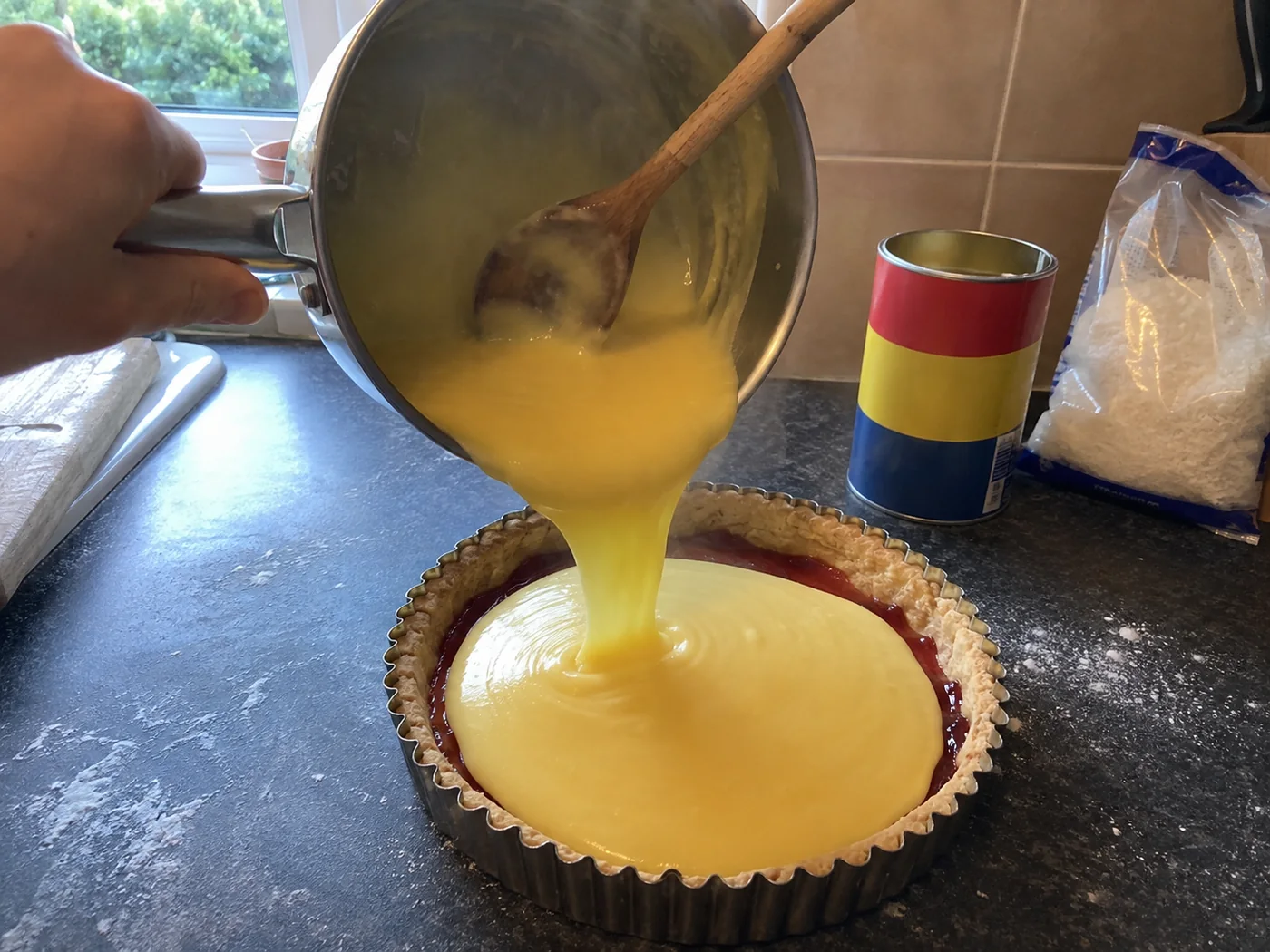
Pour the hot custard straight onto the jam layer and level it with a palette knife or the back of a spoon. Let it cool at room temperature for 30 minutes, then press a sheet of cling film directly onto the surface so it does not form a skin, and chill for at least 4 hours, preferably overnight.
6. Top and serve
Just before serving, peel off the cling film and scatter the coconut evenly over the custard. Press it very gently so it sticks. Arrange the halved glacé cherries on top, one per slice, cut side down. Cut with a sharp knife dipped in hot water and wiped between cuts for clean slices.
The banana question
Half the country will tell you a Manchester tart has sliced banana under the custard, and the other half will tell you it absolutely does not. Both are right, because it depended entirely on which school kitchen you sat in. The banana version is common in Lancashire and around Manchester itself; the plain version was the standard in most school catering across the North.
If you use banana, slice it thinly, lay it on the jam, and eat the tart within two days. Banana browns and softens under custard after that, and the tart is no longer the pretty thing it was.
Custard shortcuts that work
- Ready-made custard from a carton is too loose to set as a layer on its own. If it is all you have, warm 500ml of it with 2 tablespoons of cornflour whisked into a little cold milk, cook for 2 minutes until very thick, then use it exactly as above. It sets.
- Tinned custard behaves the same way as carton custard and needs the same cornflour boost.
- Custard powder alone, made up thick with 4 tablespoons of powder to 600ml milk and no eggs, is the true school version. It is slightly less rich and sets a little firmer. Use it if you want the tart exactly as it was.
Troubleshooting
The custard would not set. It was not cooked long enough after thickening, or the ratio was off. Two minutes of cooking after it goes thick is the fix. If it has already been poured, there is no rescue for that tart, but it will still taste good spooned into bowls.
The pastry went soft. Underbaked case, or the custard went on before the pastry was jammed. The jam layer is a barrier as much as a flavour, and the second blind bake without the beans must be long enough to colour the base.
The custard has a rubbery skin. Cling film was not pressed onto the surface while it cooled. Peel the skin off with a knife before adding the coconut; nobody will know.
The coconut turned wet and yellow. It went on too early, onto warm custard. Always add it just before serving.
The jam is bleeding up through the custard. The jam was too warm and thin when the custard went on, or the custard was poured too fast. Pour it slowly over the back of a spoon.
Variations
- Manchester tart traybake. Bake the pastry in a 20x30cm tin, use one and a half times the custard, and cut into 12 squares. This is the school format and the one to make for a party.
- Coconut pastry. Add 25g desiccated coconut to the flour when rubbing in the butter. A subtle change that a lot of Northern bakers swear by.
- Fresh raspberries. A handful pressed into the jam before the custard goes on. Not traditional, but it cuts the sweetness.
- Individual tarts. Line a 12-hole tart tin or use ready-made pastry cases, blind bake for 12 minutes, and fill. Chill for 2 hours.
- The flapjack version. Our Manchester tart flapjack traybake swaps the pastry for a chewy oat base. Same jam, custard, coconut and cherry, different bottom.
Storage
Manchester tart keeps in the fridge, loosely covered, for 3 days. Add the coconut and cherries just before serving each time, not all at once, because the coconut softens after a few hours on the custard.
Do not freeze it. The custard separates as it thaws and turns watery. The blind-baked pastry case, on the other hand, freezes perfectly for up to 3 months, so the make-ahead move is to bake and freeze the case, then jam, fill and chill the day before you need it.
Frequently asked questions
What is in a Manchester tart? Shortcrust pastry, raspberry jam, thick vanilla custard, desiccated coconut and glacé cherries. Some versions add a layer of sliced banana between the jam and the custard.
How do you make a Manchester tart? Blind bake a pastry case, spread it with jam while warm, fill with thick cornflour-set custard, chill for at least four hours, then top with desiccated coconut and a glacé cherry. The full method with quantities is above.
Does a Manchester tart have banana in it? Sometimes. The banana layer is a regional variation, common around Manchester and Lancashire, and it is not in the original recipe. The plain version without banana is the one most people mean by a “proper” Manchester tart.
Can you use ready-made or tinned custard for a Manchester tart? Yes, but it needs thickening first. Whisk 2 tablespoons of cornflour into a little cold milk, add it to 500ml of carton or tinned custard, and cook for 2 minutes until very thick. Used straight from the carton it will not set as a layer.
Which supermarket sells Manchester tart? Almost none, which is why people search for it. It appears occasionally in Northern bakeries and at Booths, and Morrisons and Asda have carried it in their bakery counters on and off. It is not a regular supermarket line, and it takes about half an hour of actual work to make one that is far better than any shop version.
Can you freeze Manchester tart? No. The set custard goes watery and grainy when it thaws. Freeze the blind-baked pastry case instead and assemble the tart from fresh.
How many calories are in a Manchester tart? Around 380 calories per slice when the tart is cut into 8. The pastry and custard are the bulk of it; the coconut and jam add a little. Cutting it into 12 squares takes a portion down to about 250.
How long does a Manchester tart last? Three days in the fridge, covered. It is best on day one and day two. The pastry gradually softens after that.
What is the difference between a Manchester tart and a gypsy tart? They share a pastry case and a place on the school dinner menu but nothing else. A gypsy tart is a Kent recipe filled with evaporated milk whipped with dark muscovado sugar, baked and served warm or cold. A Manchester tart is filled with vanilla custard and never baked after the filling goes in.
Can I make it the day before? You should. The custard needs a minimum of four hours to set and is noticeably firmer and cleaner to slice after a night in the fridge. Add the coconut and cherries just before serving.
More school dinner puddings
The Manchester tart sits in a long line of tray-baked school favourites. If it brought back a memory, the old school cake with its white icing and hundreds and thousands is the natural next bake, followed by the chocolate concrete with mint custard and the traditional custard tart, which is the Manchester tart’s baked, coconut-free cousin.
Manchester Tart – The Classic School Dinner Recipe with Custard
The traditional Manchester tart: a blind-baked shortcrust case spread with raspberry jam, filled with thick vanilla custard set with cornflour and custard powder, chilled, then topped with desiccated coconut and glacé cherries. Optional banana layer. Serves 8.
Ingredients
- 225g plain flour
- 110g cold unsalted butter, cubed
- 1 tablespoon caster sugar
- 1 pinch salt
- 3-4 tablespoons cold water
- 600ml whole milk
- 3 tablespoons custard powder
- 2 tablespoons cornflour
- 60g caster sugar
- 2 egg yolks
- 1 teaspoon vanilla extract
- 15g butter
- 150g raspberry jam
- 1 large banana, sliced (optional)
- 40g desiccated coconut
- 8 glacé cherries, halved
Instructions
Pastry
- Rub the butter into the flour, sugar and salt until it resembles fine breadcrumbs, add the cold water a tablespoon at a time and bring together into a firm dough. Wrap and chill for 30 minutes. (Or use a 320g sheet of ready-rolled shortcrust.)
- Heat the oven to 190C / 170C fan / gas 5. Roll out the pastry and line a 23cm loose-bottomed tart tin. Prick the base, line with baking paper and baking beans and bake for 15 minutes; remove the paper and beans and bake for 8-10 minutes more until dry and golden. Trim the edges while warm.
Filling
- Spread the raspberry jam over the warm pastry base. Add a single layer of sliced banana over the jam if using.
- Whisk 100ml of the milk with the custard powder, cornflour and sugar to a smooth paste, then whisk in the egg yolks. Heat the remaining 500ml milk until steaming, pour it over the paste while whisking, return everything to the pan and cook over a medium heat, stirring constantly, until thick. Keep cooking and stirring for a full 2 minutes, then beat in the vanilla and butter off the heat.
- Pour the hot custard onto the jam layer and level the top. Cool for 30 minutes, press cling film onto the surface and chill for at least 4 hours, preferably overnight.
To finish
- Just before serving, remove the cling film, scatter the desiccated coconut evenly over the custard and press gently. Top with the halved glacé cherries, one per slice. Cut with a hot, wiped knife into 8 slices.
Nutrition
- Serving
- 1 slice
- Calories
- 380 calories