In this article
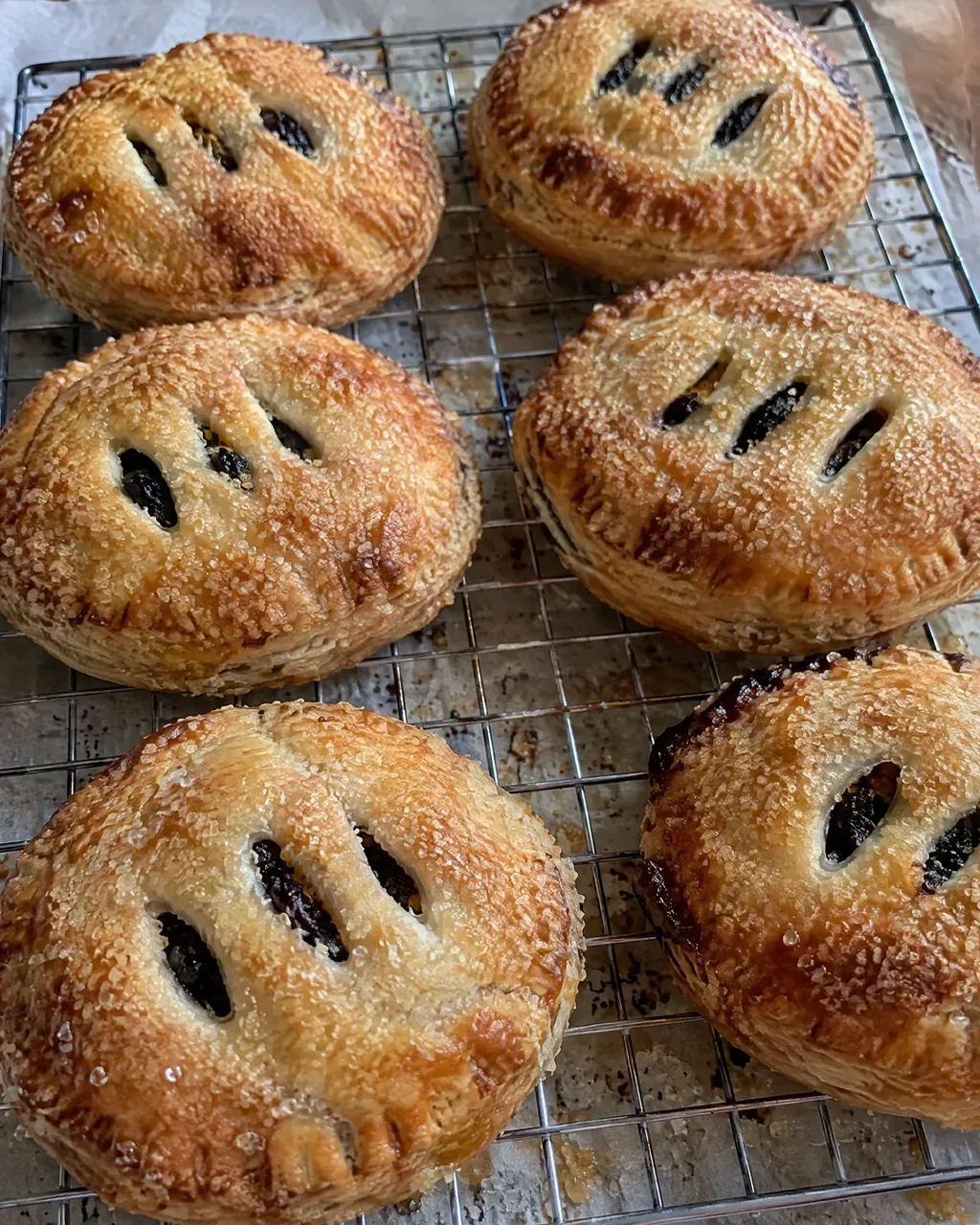
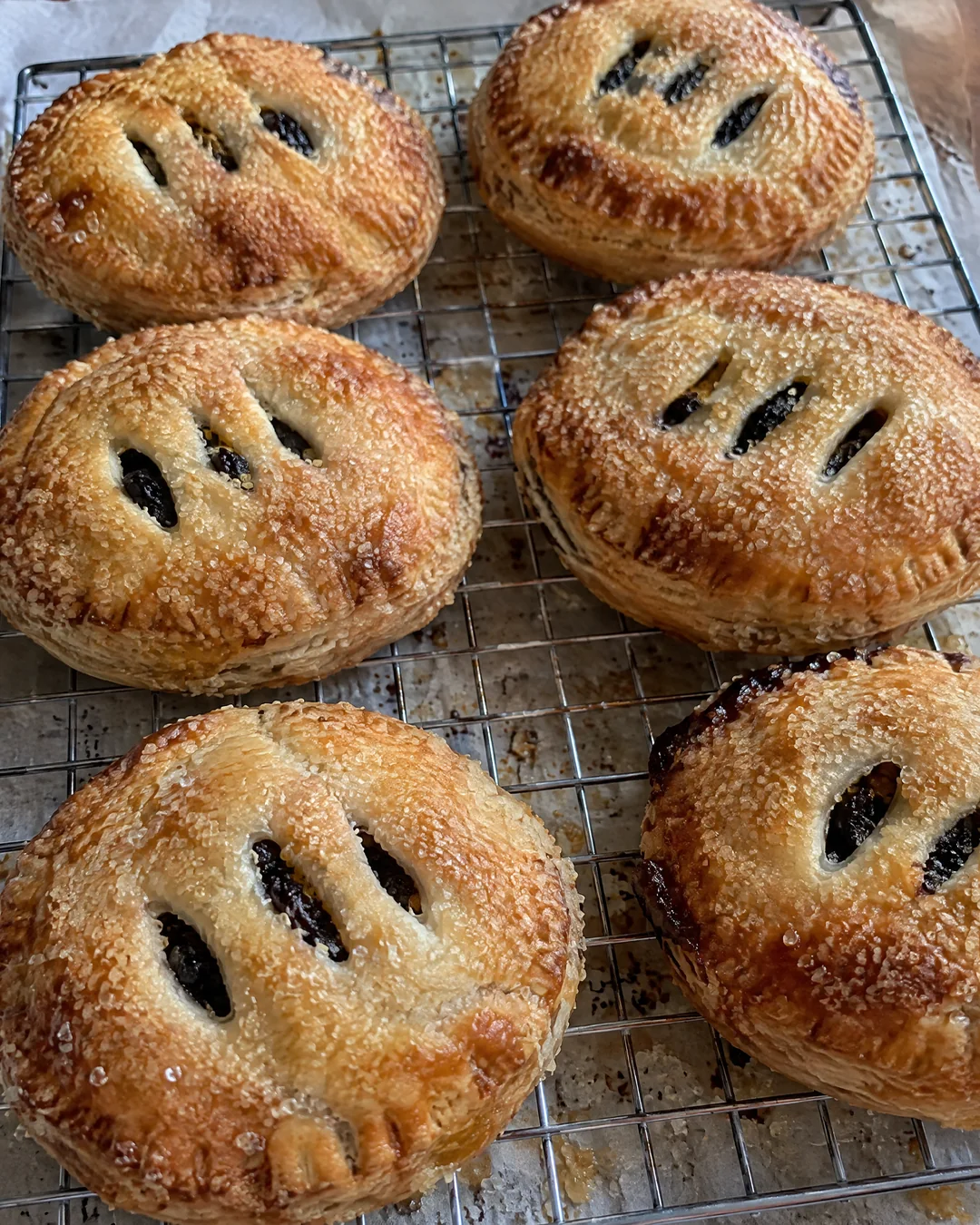
My English friend Margaret told me, with a perfectly straight face, that in the north of England these are called squashed fly cakes. Then she handed me one, still warm, with a slice of sharp, crumbly Lancashire cheese on the side of the plate. I thought she had mixed up the plates. She had not. That is how Eccles cakes are eaten where she grew up, a bite of the sweet, sticky cake and a bite of salty cheese, and after one you understand why. An Eccles cake is a small, flat, round pastry from Lancashire: flaky butter pastry wrapped around a dark filling of currants, brown sugar, butter and spice, with a crackly sugar top and three little slashes that let the currants show through.
Two things go wrong when people make them at home. The filling leaks out and burns on the tray, and the pastry comes out tough instead of flaky. Both have simple answers. The pastry here is a quick flaky pastry made with grated frozen butter, with no long folding and rolling, and it bakes into real layers. And the filling stays inside if you seal the cake like a little purse, turn it seam side down and flatten it gently. Here is the quick flaky pastry and exactly how to seal and flatten the cakes so the filling stays where it belongs.
Why this Eccles cakes works
- Grated frozen butter. Cold shreds of butter stay in separate pieces in the dough, and each piece becomes a flaky layer in the oven.
- Two quick folds. Folding the dough like a letter, twice, stacks the butter into layers in five minutes instead of an afternoon.
- A filling bound with butter and sugar. Melted butter and brown sugar coat the currants so the filling holds together in a mound instead of rolling around.
- Seam side down. The gathered edges sit underneath, where the weight of the cake keeps them shut.
- Three slashes on top. They let the steam out through the top, so it does not burst the seam and push the filling out the sides.
Ingredients
Makes 10 Eccles cakes, about 3 inches across. The measurements are in US cups with grams in brackets.
For the quick flaky pastry
- 2 cups all-purpose flour (250g), plus more for rolling
- 1/2 teaspoon fine salt
- 14 tablespoons unsalted butter (200g), frozen for at least 1 hour
- 1/2 cup ice-cold water (120ml), more or less
For the currant filling
- 2 tablespoons unsalted butter (30g), melted
- 1/3 cup packed light brown sugar (70g)
- 1 cup dried currants (150g)
- 2 tablespoons finely chopped candied orange peel (25g)
- Finely grated zest of 1/2 orange
- 1/2 teaspoon ground cinnamon
- 1/4 teaspoon ground nutmeg
For the tops
- 1 egg white, lightly beaten
- 2 to 3 tablespoons coarse sugar (demerara or turbinado)
To serve
- Lancashire cheese, or a sharp, crumbly white cheddar
Dried currants are tiny, dark, seedless dried grapes sold next to the raisins. If you cannot find them, chop dark raisins small. In a hurry, one 1 pound package of all-butter puff pastry (450g), thawed, replaces the homemade pastry.
How to make Eccles cakes
Make the quick flaky pastry
- Stir the flour and salt together in a large bowl. Grate the frozen butter on the large holes of a box grater straight into the flour, stopping now and then to toss the shreds in flour so they do not clump.
- Sprinkle in the ice water a few tablespoons at a time, stirring with a butter knife, until the dough just comes together in a rough, shaggy lump with shreds of butter still visible. Do not knead it.
- On a floured counter, pat and roll the dough into a rectangle about 12 by 6 inches. Fold it in thirds like a letter, turn it a quarter turn, roll it out again and fold it in thirds once more. Wrap it and chill it for 30 minutes.
Make the filling
- In a bowl, stir together the melted butter, brown sugar, currants, candied peel, orange zest, cinnamon and nutmeg until every currant is coated. Let it cool; it will firm up a little.
Shape the cakes
- Heat the oven to 425 degrees (220°C) and line a large baking sheet with parchment. Roll the cold pastry out on a floured counter to a little under 1/8 inch thick (3mm). Cut out circles about 4 1/2 inches across (11cm), using a saucer as a guide. Gather the scraps, stack them, roll again and cut more, to make 10 circles.
- Put a heaped tablespoon of filling in the middle of each circle. Dampen the edge of the pastry with a wet fingertip, gather the edges up over the filling like a purse and pinch them firmly together so no filling shows.
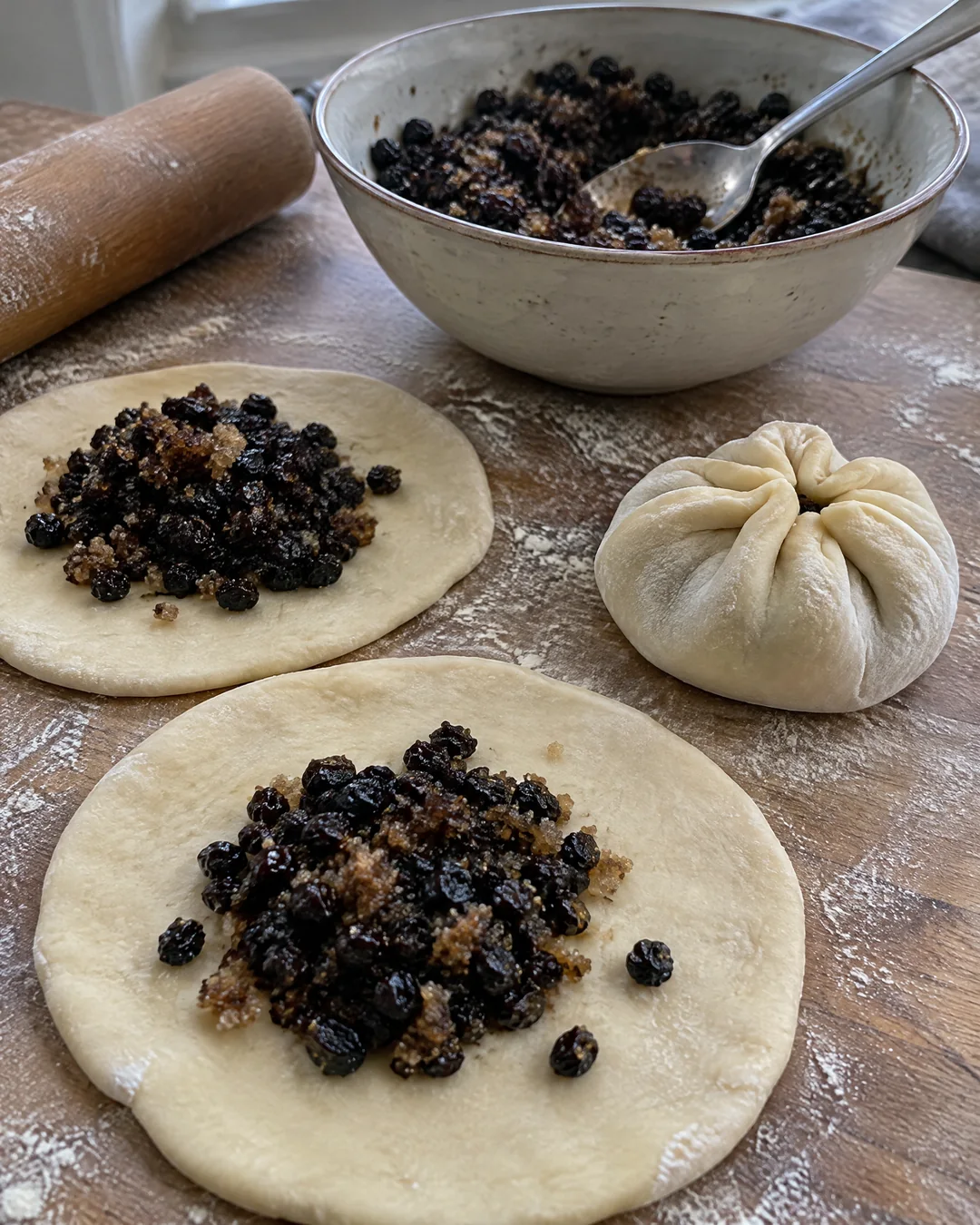
- Turn each cake over so the seam is underneath. Press it gently with the palm of your hand, then roll over it lightly with the rolling pin until it is a flat round about 3 inches across and the currants just begin to show through the top. Stop before they break the pastry.
- Set the cakes seam side down on the baking sheet and chill them for 15 minutes.
Bake
- Brush the tops with egg white and sprinkle them thickly with coarse sugar. Cut three short slashes in the top of each cake with a sharp knife.
- Bake for 15 to 18 minutes, until the cakes are deep golden and the sugar is crisp. Cool them on a rack for at least 10 minutes; the filling is very hot. Serve warm or cold, with a slice of cheese.
Tips that make the difference
- Keep everything cold. If the butter softens and the dough turns greasy while you work, put it back in the refrigerator for 15 minutes.
- Do not overfill. A heaped tablespoon looks small, but more than that will not seal and will leak in the oven.
- Pinch the seam well and always bake seam side down. This is what keeps the filling inside.
- Flatten gently. You want to see the dark shadow of the currants under the pastry, not tear it open.
- Do not skip the slashes. Without them the steam bursts the cakes open at the side.
Variations
- With puff pastry. Use store-bought all-butter puff pastry rolled a little thinner; the cakes will be puffier and lighter.
- Chorley style. Use a plain shortcrust pastry, leave off the sugar top and serve them buttered, as the neighboring town does.
- Raisin and apple. Replace half the currants with chopped raisins and a little grated apple squeezed dry.
- Mini cakes. Cut 3 inch circles, use a teaspoon of filling each and bake for 12 minutes, for a tea tray.
Storage and make-ahead
Eccles cakes keep in an airtight tin at room temperature for 4 days. The pastry softens a little and the filling grows stickier.
Warm them for 5 minutes in a 350 degree (180°C) oven to crisp the pastry again before serving.
Freeze the shaped, unbaked cakes on a tray, then bag them for up to 2 months. Bake from frozen, adding 4 to 5 minutes.
Frequently asked questions
Why are they called squashed fly cakes?
It is an old, affectionate nickname in the north of England, because the dark currants pressed flat under the pastry look like flies. Nobody who eats them minds.
Why did my filling leak out?
The cake was overfilled, the seam was not pinched shut, or it was baked seam side up. Use a heaped tablespoon, seal firmly and bake with the seam underneath.
What cheese goes with Eccles cakes?
Lancashire cheese is traditional: white, crumbly and sharp. A crumbly white cheddar or Wensleydale is the closest substitute.
Can I use raisins instead of currants?
Yes, but chop them small. Whole raisins are too big to lie flat and make the cakes lumpy.
Serve them warm with a pot of tea and a wedge of crumbly cheese, and tell everybody what they are called only after they have eaten one.
Eccles Cakes (Quick Flaky Pastry, Currant Filling That Stays Inside)
Traditional Eccles cakes from the north of England: small flat rounds of quick flaky butter pastry filled with currants, brown sugar, butter and spice, topped with crunchy sugar and eaten warm with a slice of Lancashire cheese.
Ingredients
- 2 cups all-purpose flour (250g), plus more for rolling
- 1/2 teaspoon fine salt
- 14 tablespoons unsalted butter (200g), frozen for at least 1 hour
- 1/2 cup ice-cold water (120ml), more or less
- 2 tablespoons unsalted butter (30g), melted
- 1/3 cup packed light brown sugar
- 1 cup dried currants
- 2 tablespoons finely chopped candied orange peel
- Finely grated zest of 1/2 orange
- 1/2 teaspoon ground cinnamon
- 1/4 teaspoon ground nutmeg
- 1 egg white, lightly beaten
- 2 to 3 tablespoons coarse sugar
- Lancashire cheese, or a sharp, crumbly white cheddar
Instructions
- Stir the flour and salt together in a large bowl. Grate the frozen butter on the large holes of a box grater straight into the flour, stopping now and then to toss the shreds in flour so they do not clump.
- Sprinkle in the ice water a few tablespoons at a time, stirring with a butter knife, until the dough just comes together in a rough, shaggy lump with shreds of butter still visible. Do not knead it.
- On a floured counter, pat and roll the dough into a rectangle about 12 by 6 inches. Fold it in thirds like a letter, turn it a quarter turn, roll it out again and fold it in thirds once more. Wrap it and chill it for 30 minutes.
- In a bowl, stir together the melted butter, brown sugar, currants, candied peel, orange zest, cinnamon and nutmeg until every currant is coated. Let it cool; it will firm up a little.
- Heat the oven to 425 degrees (220°C) and line a large baking sheet with parchment. Roll the cold pastry out on a floured counter to a little under 1/8 inch thick (3mm). Cut out circles about 4 1/2 inches across (11cm), using a saucer as a guide. Gather the scraps, stack them, roll again and cut more, to make 10 circles.
- Put a heaped tablespoon of filling in the middle of each circle. Dampen the edge of the pastry with a wet fingertip, gather the edges up over the filling like a purse and pinch them firmly together so no filling shows.
- Turn each cake over so the seam is underneath. Press it gently with the palm of your hand, then roll over it lightly with the rolling pin until it is a flat round about 3 inches across and the currants just begin to show through the top. Stop before they break the pastry.
- Set the cakes seam side down on the baking sheet and chill them for 15 minutes.
- Brush the tops with egg white and sprinkle them thickly with coarse sugar. Cut three short slashes in the top of each cake with a sharp knife.
- Bake for 15 to 18 minutes, until the cakes are deep golden and the sugar is crisp. Cool them on a rack for at least 10 minutes; the filling is very hot. Serve warm or cold, with a slice of cheese.