In this article
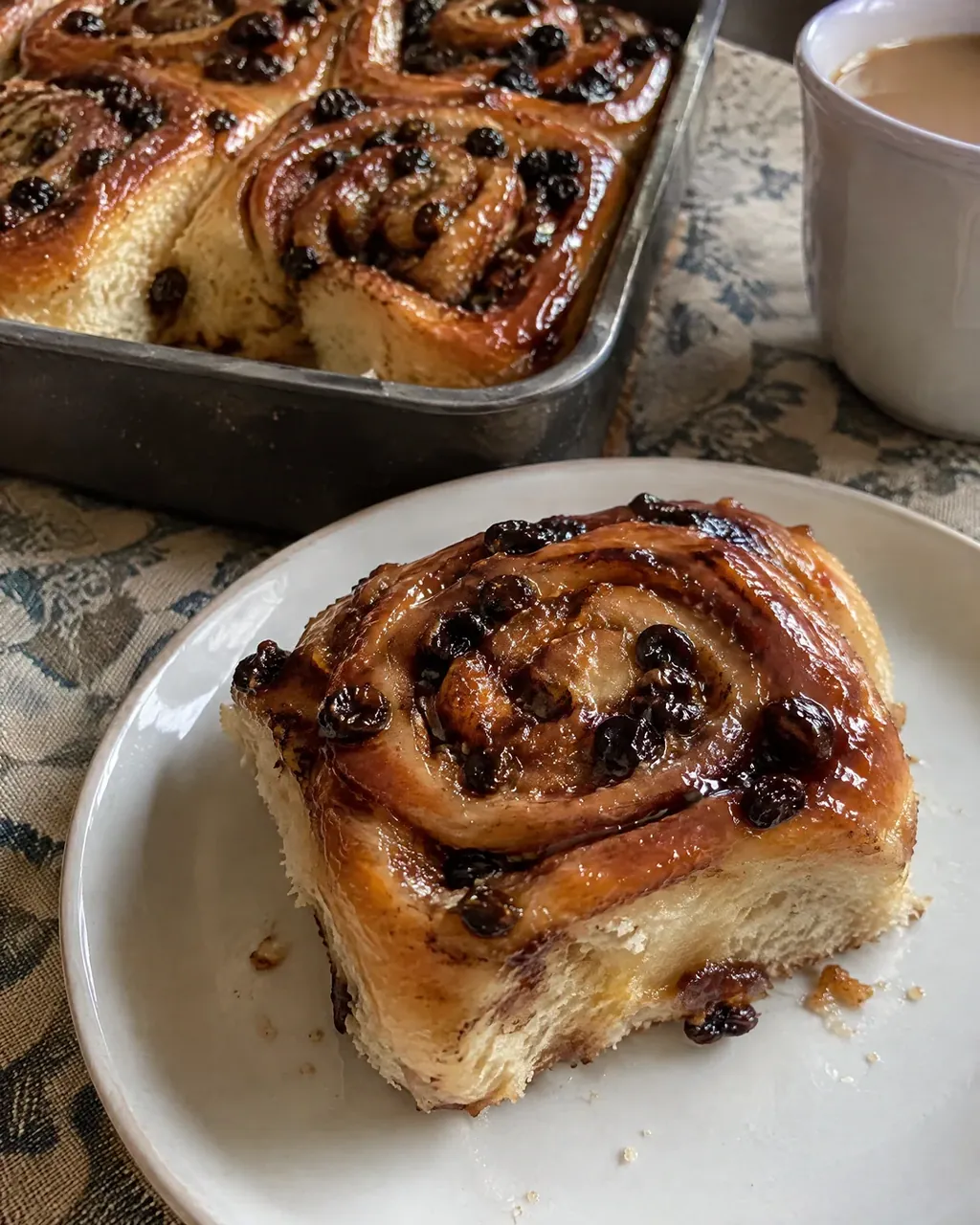
My friend Margaret grew up in England, and she told me that a little shop on the edge of London once sold so many Chelsea buns that the King himself used to stop his carriage outside for one. The shop was the Chelsea Bun House, and in the 1700s it was famous across the city. The royal family were known customers, and on a good day the line of people waiting went down the street. Everybody wanted what the King was having. The shop is long gone, but its bun never left: Chelsea buns are still in every British bakery window, a square spiral of soft, rich bread rolled around butter, brown sugar, cinnamon and currants, with a shiny sticky top.
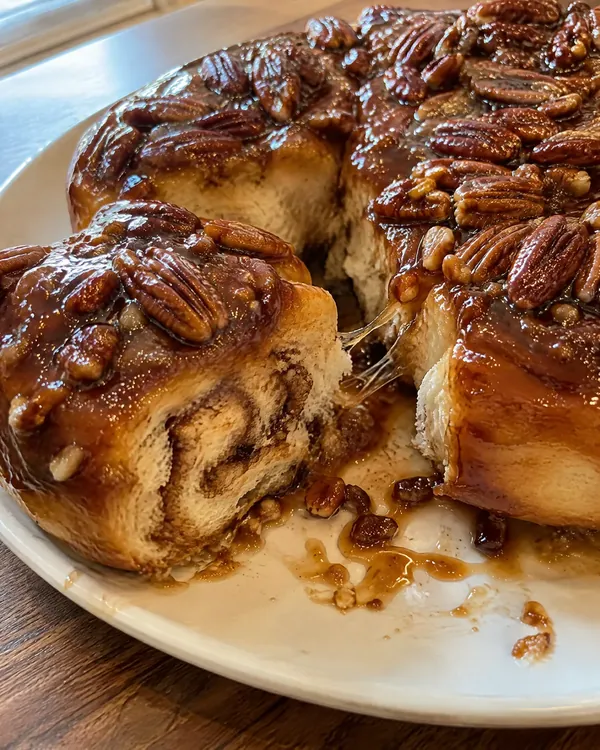
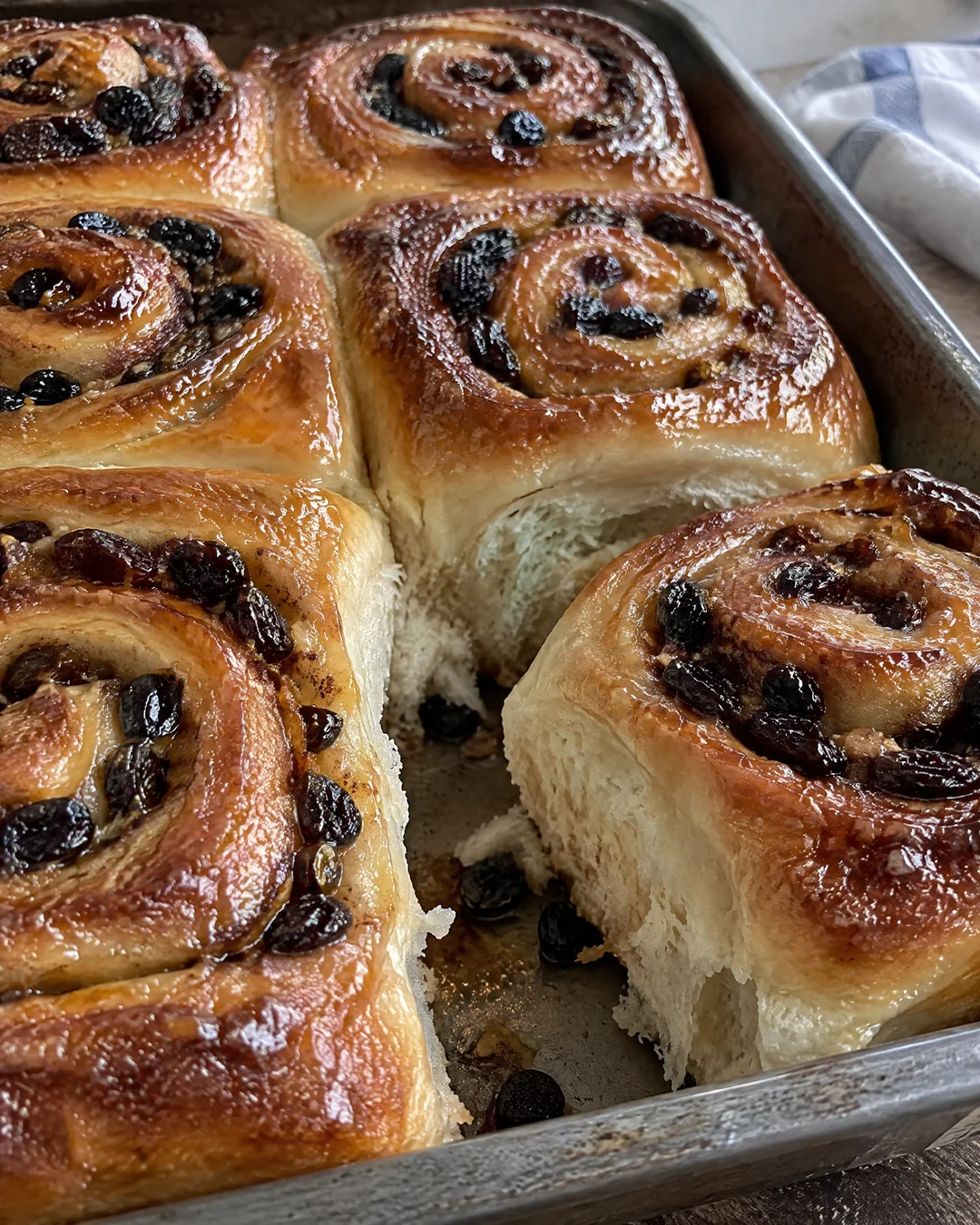
The square shape is the clever part. Margaret rolls the dough up tight like a jelly roll, cuts it in thick slices and packs them into the pan so they touch. As they rise and bake they push into each other and come out as one sheet of square buns that you pull apart, soft and tender at the torn sides. Then comes her rule: the glaze goes on the moment the pan leaves the oven, while the buns are still hot, so it soaks into the tops and sets into a thin, shiny, sticky shell. She says the bun from the middle of the pan is the prize and the corner bun goes to whoever is slowest to the table.
Why this Chelsea buns works
- An enriched dough. Milk, butter and an egg give a soft, tender bread that stays fresh, not a chewy loaf.
- Rolled tight. A tight roll keeps the spiral neat and the filling inside, instead of leaking out in the oven.
- Baked touching. Packed into the pan, the buns rise into each other, which makes them square and keeps the sides soft.
- Plumped currants. Soaking the currants in hot water first keeps them juicy so they never burn on top.
- Glazed hot. A hot bun drinks up the syrup glaze, so the top turns shiny and sticky rather than wet.
Ingredients
Makes 12 buns in a 9x13 inch pan. The measurements are in US cups with grams in brackets, the grams being the British weights Margaret uses.
For the dough
- 3 3/4 cups all-purpose or bread flour (470g)
- 1/4 cup granulated sugar (50g)
- 2 1/4 teaspoons instant yeast (one 7g packet)
- 1 teaspoon fine salt
- 1 cup whole milk, warm (240ml)
- 4 tablespoons unsalted butter, melted (56g)
- 1 large egg, at room temperature
For the filling
- 4 tablespoons unsalted butter, very soft (56g)
- 1/2 cup packed light brown sugar (100g)
- 1 1/2 teaspoons ground cinnamon
- 1/2 teaspoon mixed spice or a pinch each of nutmeg and allspice
- 1 cup currants (150g)
For the sticky glaze
- 1/4 cup granulated sugar (50g)
- 1/4 cup whole milk (60ml)
- 1 tablespoon golden syrup or light corn syrup (20g)
- 1 tablespoon granulated sugar, for sprinkling
Currants are small dried grapes, smaller and darker than raisins; raisins or golden raisins work if you cannot find them. Mixed spice is the British blend of cinnamon, nutmeg, allspice and clove, sold in most large supermarkets.
How to make Chelsea buns
Make the dough
- Put the currants in a small bowl, cover them with hot water and leave them while the dough rises. Drain and pat dry before using.
- In a large bowl, mix the flour, sugar, yeast and salt. Add the warm milk, melted butter and egg and stir into a soft, shaggy dough.
- Knead on a lightly floured counter for about 8 minutes, or 5 minutes in a stand mixer with a dough hook, until smooth and springy. The dough should be soft and a little tacky.
- Put it in a buttered bowl, cover, and leave in a warm spot for about 1 hour, until doubled in size.
Fill, roll and bake
- Butter a 9x13 inch baking pan. Mix the brown sugar, cinnamon and mixed spice in a small bowl.
- Punch the dough down and roll it out on a floured counter into a rectangle about 12 by 16 inches (30 by 40 cm), with a long side facing you.
- Spread the very soft butter all over the dough, right to the edges. Scatter the spiced brown sugar over it, then the currants, and press them in lightly with your hand.
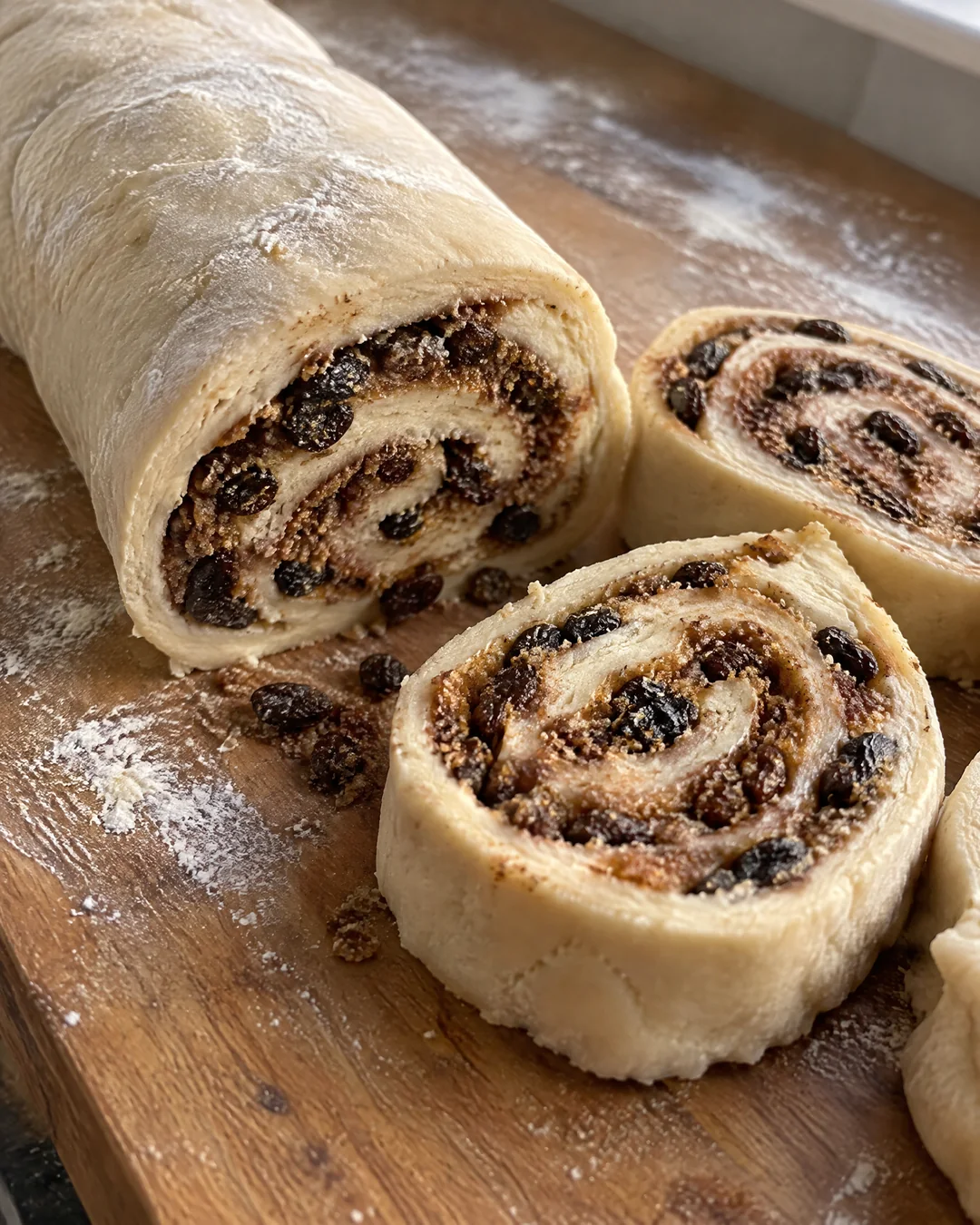
- Roll the dough up tightly from the long side nearest you, like a jelly roll, and pinch the seam closed. Cut it into 12 equal slices with a sharp knife.
- Set the slices cut side up in the pan in 3 rows of 4, almost touching. Cover and leave to rise for 30 to 40 minutes, until puffy and pressed together.
- Heat the oven to 375 degrees (190°C). Bake for 22 to 25 minutes, until deep golden brown on top.
- While the buns bake, make the glaze: heat the sugar, milk and golden syrup in a small pan, stirring, until the sugar dissolves, then let it bubble for 1 minute.
- The moment the pan comes out of the oven, brush the hot glaze generously over the hot buns and sprinkle them with the extra sugar. Leave them in the pan for 10 minutes, then lift them out onto a rack and pull apart to serve.
Tips that make the difference
- Use the warm milk at about the temperature of a baby’s bottle. Too hot and it kills the yeast; too cold and the rise takes forever.
- Spread the butter very soft, not melted. Melted butter runs out of the roll and burns on the bottom of the pan.
- Use dental floss or thread to cut the roll if your knife squashes it: slide it under the roll, cross the ends and pull.
- Brush the glaze on twice if you like them extra sticky: once straight out of the oven, again 5 minutes later.
Variations
- Lemon. Add the finely grated zest of a lemon to the brown sugar filling, the way some English bakeries do.
- Mixed fruit. Use half currants and half chopped candied peel or golden raisins.
- Iced. Skip the sugar sprinkle and drizzle the cooled buns with a thin white icing of powdered sugar and milk.
- Overnight. Shape the buns in the pan, cover, and leave in the refrigerator overnight. Let them sit at room temperature for an hour before baking.
Storage and make-ahead
Chelsea buns are best on the day they are baked. Keep leftovers in an airtight container at room temperature for up to 2 days.
Warm a day-old bun for 10 seconds in the microwave or a few minutes in a low oven and it softens again.
To freeze, wrap the cooled buns individually and freeze for up to 2 months. Thaw at room temperature and warm before serving.
Frequently asked questions
What is the difference between a Chelsea bun and a cinnamon roll?
A Chelsea bun is a British bun filled with currants, brown sugar and spice and finished with a sticky sugar glaze. An American cinnamon roll has no fruit and is usually topped with a thick white icing. Chelsea buns are also baked packed together, so they come out square.
Where does the name come from?
From the Chelsea Bun House, a bakery on the edge of London that became famous for these buns in the 1700s. The royal family were known customers and crowds queued outside on busy days.
Why are my buns dry?
Usually too much flour went into the dough or the buns baked too long. Keep the dough soft and slightly tacky and take them out as soon as they are deep golden.
Can I make them without currants?
Yes. Use raisins, chopped dried apricots or simply more brown sugar and cinnamon. They will taste like a sticky cinnamon bun.
Roll it tight, pack the buns in close, and get that glaze on while they are hot. Then fight your family for the one in the middle.
Chelsea Buns (Margaret's Sticky Currant Buns)
Margaret's Chelsea buns, the sticky square currant spirals sold in every British bakery since the Chelsea Bun House of the 1700s: an enriched yeast dough rolled with butter, brown sugar, cinnamon and currants, baked touching in a 9x13 pan and glazed hot. US cups with grams.
Ingredients
- 3 3/4 cups all-purpose or bread flour
- 1/4 cup granulated sugar
- 2 1/4 teaspoons instant yeast
- 1 teaspoon fine salt
- 1 cup whole milk, warm
- 4 tablespoons unsalted butter, melted
- 1 large egg, at room temperature
- 4 tablespoons unsalted butter, very soft
- 1/2 cup packed light brown sugar
- 1 1/2 teaspoons ground cinnamon
- 1/2 teaspoon mixed spice or a pinch each of nutmeg and allspice
- 1 cup currants
- 1/4 cup granulated sugar
- 1/4 cup whole milk
- 1 tablespoon golden syrup or light corn syrup
- 1 tablespoon granulated sugar, for sprinkling
Instructions
- Put the currants in a small bowl, cover them with hot water and leave them while the dough rises. Drain and pat dry before using.
- In a large bowl, mix the flour, sugar, yeast and salt. Add the warm milk, melted butter and egg and stir into a soft, shaggy dough.
- Knead on a lightly floured counter for about 8 minutes, or 5 minutes in a stand mixer with a dough hook, until smooth and springy. The dough should be soft and a little tacky.
- Put it in a buttered bowl, cover, and leave in a warm spot for about 1 hour, until doubled in size.
- Butter a 9x13 inch baking pan. Mix the brown sugar, cinnamon and mixed spice in a small bowl.
- Punch the dough down and roll it out on a floured counter into a rectangle about 12 by 16 inches (30 by 40 cm), with a long side facing you.
- Spread the very soft butter all over the dough, right to the edges. Scatter the spiced brown sugar over it, then the currants, and press them in lightly with your hand.
- Roll the dough up tightly from the long side nearest you, like a jelly roll, and pinch the seam closed. Cut it into 12 equal slices with a sharp knife.
- Set the slices cut side up in the pan in 3 rows of 4, almost touching. Cover and leave to rise for 30 to 40 minutes, until puffy and pressed together.
- Heat the oven to 375 degrees (190°C). Bake for 22 to 25 minutes, until deep golden brown on top.
- While the buns bake, make the glaze: heat the sugar, milk and golden syrup in a small pan, stirring, until the sugar dissolves, then let it bubble for 1 minute.
- The moment the pan comes out of the oven, brush the hot glaze generously over the hot buns and sprinkle them with the extra sugar. Leave them in the pan for 10 minutes, then lift them out onto a rack and pull apart to serve.