In this article
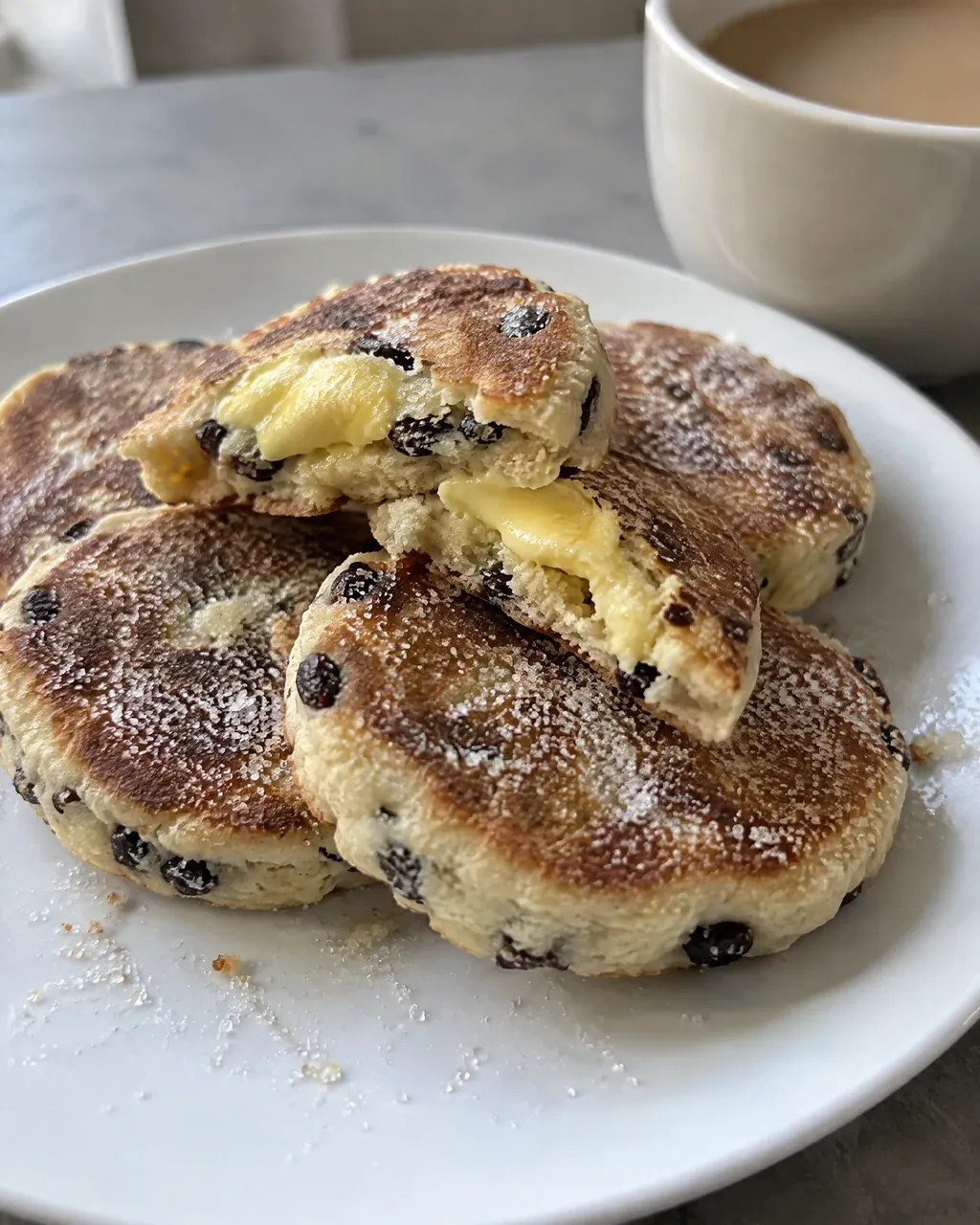
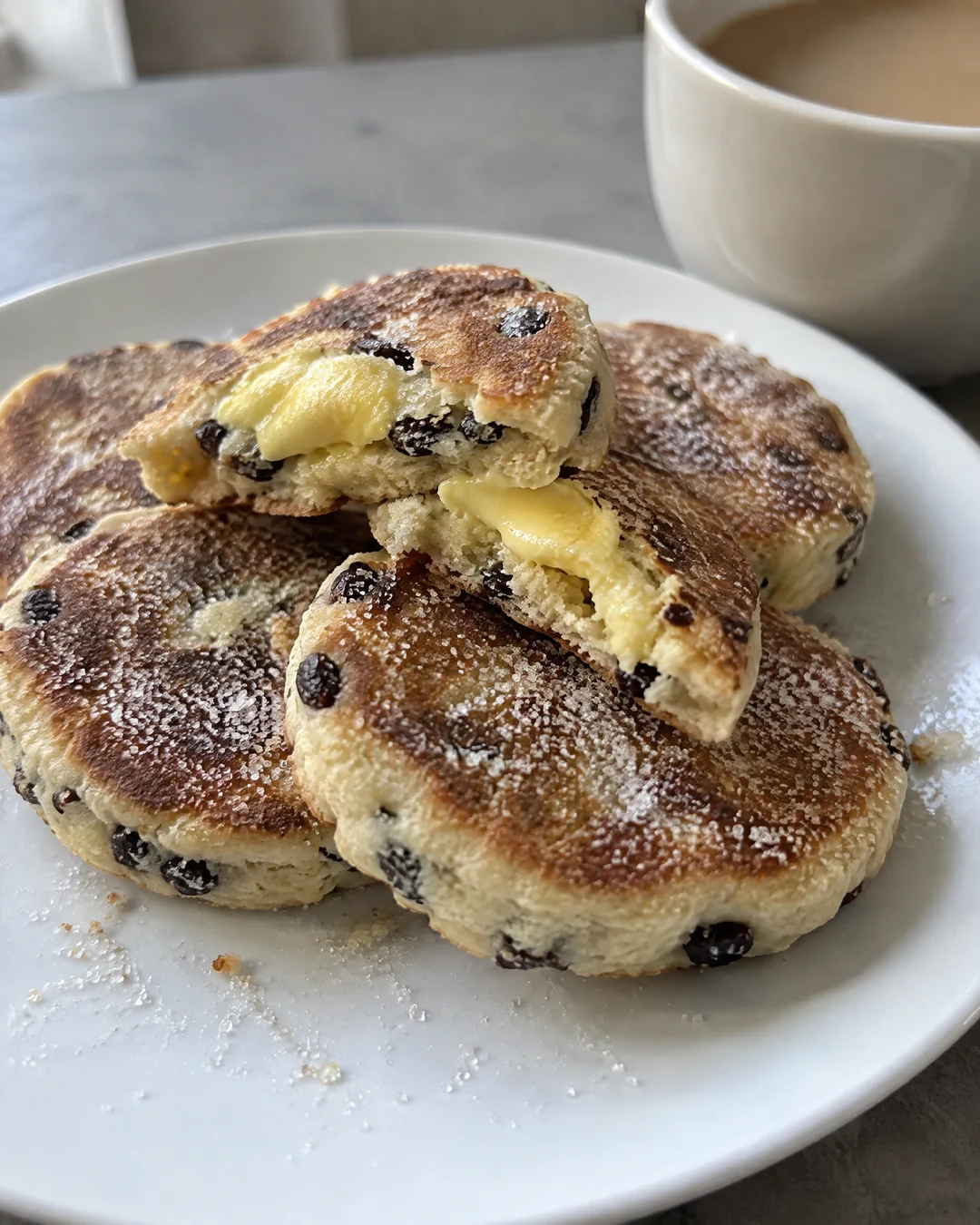
A Welsh cake is one of those things that is hard to describe to somebody who has never eaten one. It is not really a cake. It is not quite a scone and not quite a cookie either, though it sits somewhere between the two: a small, flat round, soft and a little crumbly, dotted with currants and scented with a pinch of spice. And it is never baked. In Wales the dough is rolled out, cut into rounds and cooked on a bakestone, a thick flat slab of iron that sits directly on top of the stove. The cakes go on a few at a time and are turned once, like pancakes that happen to be made of pastry.
You do not need a bakestone. A heavy cast iron skillet or a flat griddle does exactly the same work, and the dough comes together in ten minutes with nothing but your fingertips. The two things that matter are the two things recipes are often vague about: how thick to roll the dough, and how hot the pan should be. Too thin and the cakes are dry. Too hot and the outside burns while the middle is still raw. Both are answered below, with the full measurements.
Why this Welsh cakes works
- Cold butter rubbed in. Working cold butter into the flour with the fingertips gives the short, tender, slightly crumbly texture of a good Welsh cake.
- One egg and very little milk. The dough is firmer than a scone dough, so the rounds keep their shape when they are lifted onto the pan.
- A dry pan. The butter in the dough is all the fat the cakes need. A dry, heavy pan gives the freckled brown faces without frying them.
- Gentle heat. A medium-low flame lets the middle cook through in the time it takes the outside to brown.
- Sugar while hot. Sugar shaken over the cakes straight from the pan clings to the warm surface and gives a faint crunch.
Ingredients
Makes about 16 Welsh cakes, 2 1/2 inches (6 cm) across. The measurements are in US cups with grams in brackets.
For the Welsh cakes
- 1 3/4 cups all-purpose flour (225g), plus extra for rolling
- 2 teaspoons baking powder
- 1/4 teaspoon fine salt
- 1/2 teaspoon ground cinnamon
- 1/4 teaspoon ground nutmeg
- 1/2 cup cold butter (115g), 1 stick, cut in small cubes
- 1/3 cup plus 1 tablespoon granulated sugar (85g)
- 1/2 cup dried currants (75g)
- 1 large egg, beaten
- 1 to 2 tablespoons milk, only if needed
To finish
- 2 tablespoons granulated sugar, for dusting
- Butter, for the pan if needed and for serving
In Britain the recipe uses self-raising flour and a spoonful of mixed spice, a ready blend close to American pumpkin pie spice. If you have self-rising flour, use 1 3/4 cups and leave out the baking powder and salt. Currants are the traditional fruit. If you can only find raisins, chop them roughly so the pieces are small.
How to make Welsh cakes
Make the dough
- In a large bowl, stir the flour, baking powder, salt, cinnamon and nutmeg together.
- Add the cold butter. Rub it into the flour with your fingertips, lifting and dropping the mixture, until it looks like fine breadcrumbs with no lumps of butter larger than a grain of rice.
- Stir in the sugar and the currants.
- Pour in the beaten egg and mix with a table knife until the dough starts to come together in clumps. Gather it with your hand into a ball. It should be firm and smooth, like pie pastry. If it is dry and cracking, add milk a teaspoon at a time.
Roll and cut
- Flour the counter lightly and roll the dough out to a generous 1/4 inch thick (7 to 8 mm), about the thickness of your little finger. Do not go thinner.
- Cut rounds with a 2 1/2 inch (6 cm) cutter, plain or fluted. Gather the scraps, press them together, roll again and cut more. You should have about 16.
Cook on the griddle
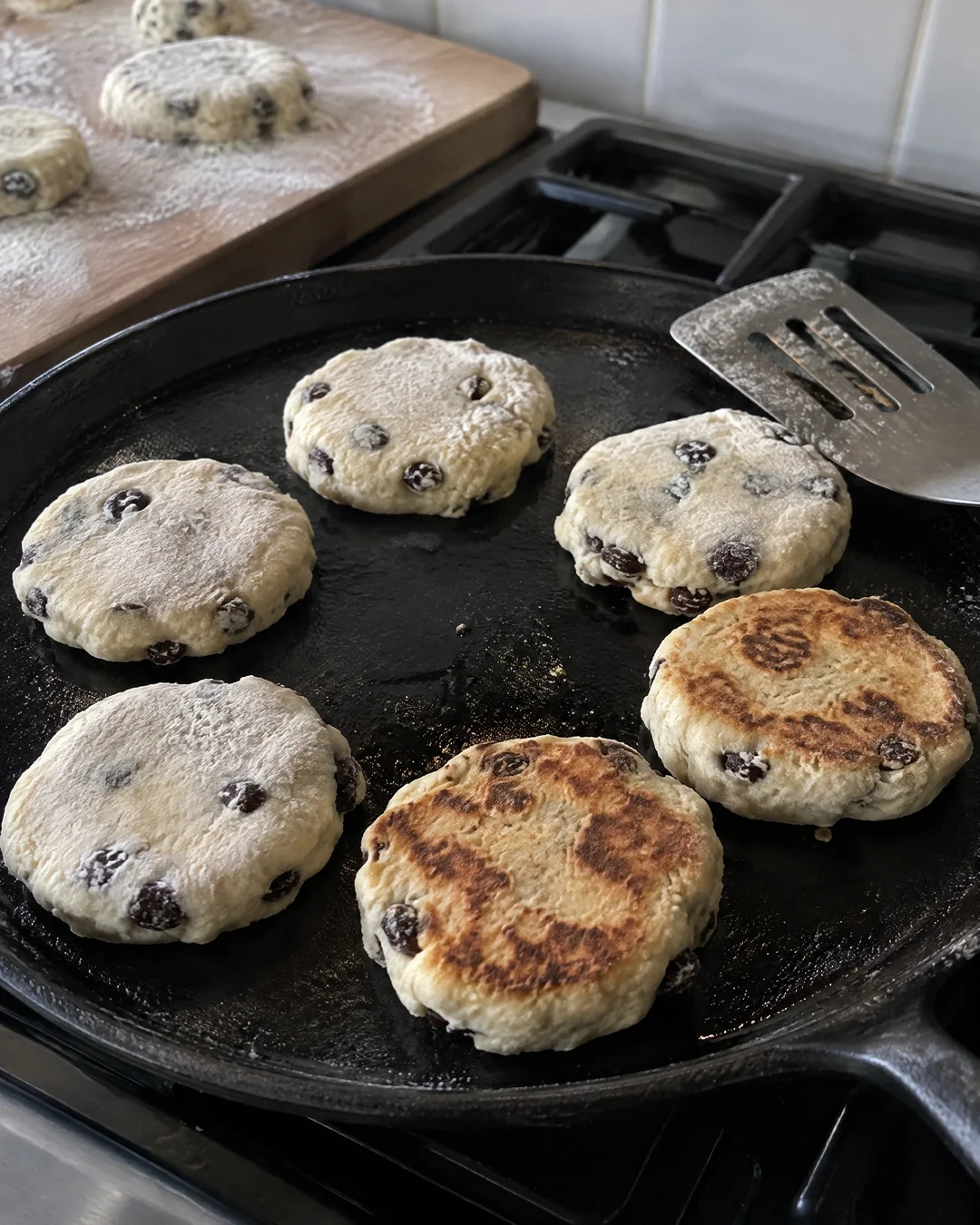
- Set a heavy cast iron skillet or flat griddle over medium-low heat and let it warm for 4 to 5 minutes. Wipe it with a scrap of butter on a paper towel so the surface barely shines. There should be no fat pooling.
- Cook one Welsh cake first as a test. It should take 3 to 4 minutes for the first face to turn golden brown with darker freckles. If it browns in under 2 minutes, lower the heat and wait a minute.
- Cook the rest in batches of five or six, 3 to 4 minutes on each side, turning them once with a spatula. They are done when both faces are freckled brown, the sides look dry and the cakes feel springy when pressed lightly in the middle.
- Lift them onto a plate and shake the sugar over them at once, while they are hot. Eat warm, plain or with butter.
Tips that make the difference
- Thickness matters more than anything. Rolled thinner than 1/4 inch, Welsh cakes dry out and turn into hard cookies. Rolled thicker than 1/2 inch, the middle stays doughy.
- Always cook one test cake before you fill the pan. Every stove and every skillet is different, and the first cake tells you whether to raise or lower the heat.
- If the outsides are brown but the inside is still pasty, the heat is too high. Turn it down and give the next batch a full 4 minutes a side.
- Handle the dough as little as you can. Kneading it makes the cakes tough.
- Wipe the pan with a dry paper towel between batches to clear any scorched flour or sugar, which would mark the next cakes.
Variations
- Lemon Welsh cakes. Add the finely grated zest of one lemon with the sugar. It is a common addition in south Wales.
- Jam splits. Roll the dough a little thinner, cook the cakes, then split them while warm and sandwich with raspberry jam.
- Without fruit. Leave the currants out and add an extra tablespoon of sugar and a little more nutmeg.
- Cranberry and orange. Swap the currants for chopped dried cranberries and add the zest of half an orange.
Storage and make-ahead
Welsh cakes are best warm from the pan, but they keep well in an airtight tin at room temperature for 4 to 5 days.
To bring them back, warm them for a minute on each side in a dry skillet over low heat, or for a few seconds in the microwave.
They freeze very well. Layer the cold cakes with parchment in a freezer bag and freeze for up to 3 months. Thaw at room temperature and warm in a dry pan.
Frequently asked questions
How thick should Welsh cakes be rolled?
A generous 1/4 inch, or 7 to 8 millimeters. That is thick enough to stay soft in the middle and thin enough to cook through on a griddle in about 8 minutes.
How hot should the pan be?
Medium-low. A drop of water flicked onto the pan should sizzle gently and take a couple of seconds to disappear, not jump and vanish at once. The first face of a cake should take 3 to 4 minutes to brown.
Can I bake Welsh cakes in the oven?
You can, at 375 degrees (190°C) for about 12 minutes, but they come out more like flat scones. The freckled faces and the soft, slightly dense middle come from the griddle.
What is a bakestone?
It is a thick, flat, round plate of cast iron, sometimes with a handle, that sits over the fire or the burner. In Welsh it is called a maen or a planc. A cast iron skillet is the closest thing in most American kitchens.
Make them when somebody is coming for tea, and cook them while the kettle boils. They are never better than in the first five minutes off the pan.
Welsh Cakes (Cooked on a Griddle, Never in the Oven)
Traditional Welsh cakes: a lightly spiced dough with butter and currants, rolled out, cut in rounds and cooked on a dry griddle or heavy skillet until both faces are freckled golden brown, then dusted with sugar while hot.
Ingredients
- 1 3/4 cups all-purpose flour (225g), plus extra for rolling
- 2 teaspoons baking powder
- 1/4 teaspoon fine salt
- 1/2 teaspoon ground cinnamon
- 1/4 teaspoon ground nutmeg
- 1/2 cup cold butter (115g), 1 stick, cut in small cubes
- 1/3 cup plus 1 tablespoon granulated sugar
- 1/2 cup dried currants
- 1 large egg, beaten
- 1 to 2 tablespoons milk, only if needed
- 2 tablespoons granulated sugar, for dusting
- Butter, for the pan if needed and for serving
Instructions
- In a large bowl, stir the flour, baking powder, salt, cinnamon and nutmeg together.
- Add the cold butter. Rub it into the flour with your fingertips, lifting and dropping the mixture, until it looks like fine breadcrumbs with no lumps of butter larger than a grain of rice.
- Stir in the sugar and the currants.
- Pour in the beaten egg and mix with a table knife until the dough starts to come together in clumps. Gather it with your hand into a ball. It should be firm and smooth, like pie pastry. If it is dry and cracking, add milk a teaspoon at a time.
- Flour the counter lightly and roll the dough out to a generous 1/4 inch thick (7 to 8 mm), about the thickness of your little finger. Do not go thinner.
- Cut rounds with a 2 1/2 inch (6 cm) cutter, plain or fluted. Gather the scraps, press them together, roll again and cut more. You should have about 16.
- Set a heavy cast iron skillet or flat griddle over medium-low heat and let it warm for 4 to 5 minutes. Wipe it with a scrap of butter on a paper towel so the surface barely shines. There should be no fat pooling.
- Cook one Welsh cake first as a test. It should take 3 to 4 minutes for the first face to turn golden brown with darker freckles. If it browns in under 2 minutes, lower the heat and wait a minute.
- Cook the rest in batches of five or six, 3 to 4 minutes on each side, turning them once with a spatula. They are done when both faces are freckled brown, the sides look dry and the cakes feel springy when pressed lightly in the middle.
- Lift them onto a plate and shake the sugar over them at once, while they are hot. Eat warm, plain or with butter.