In this article
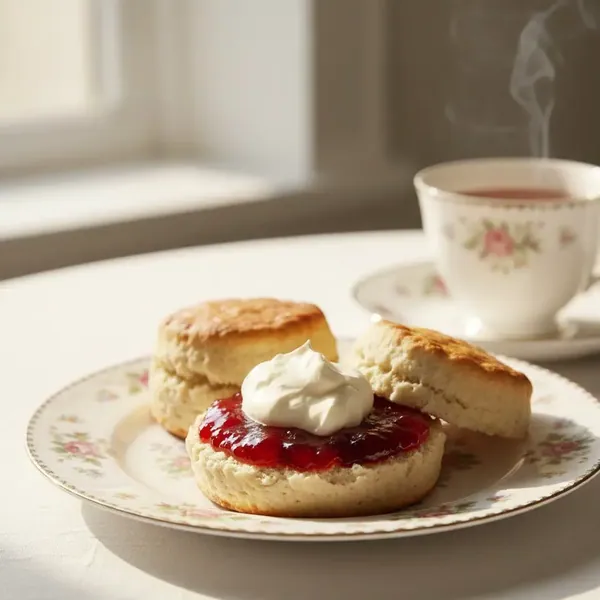
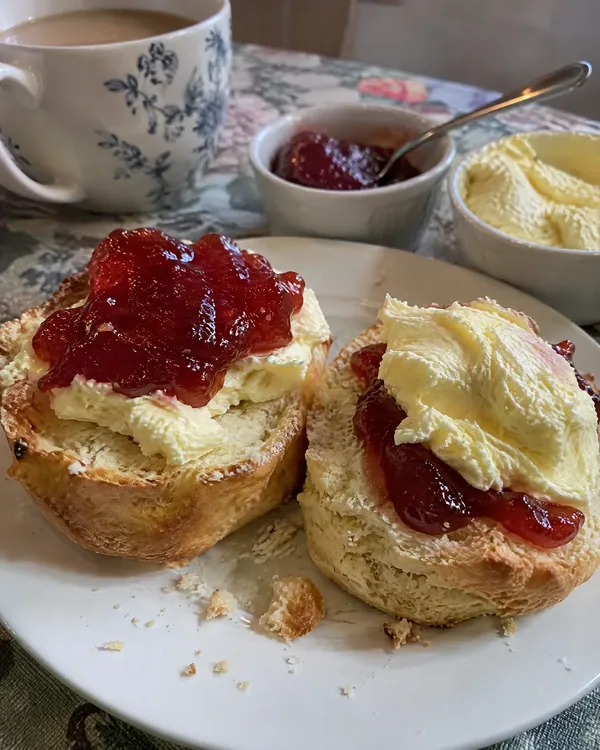
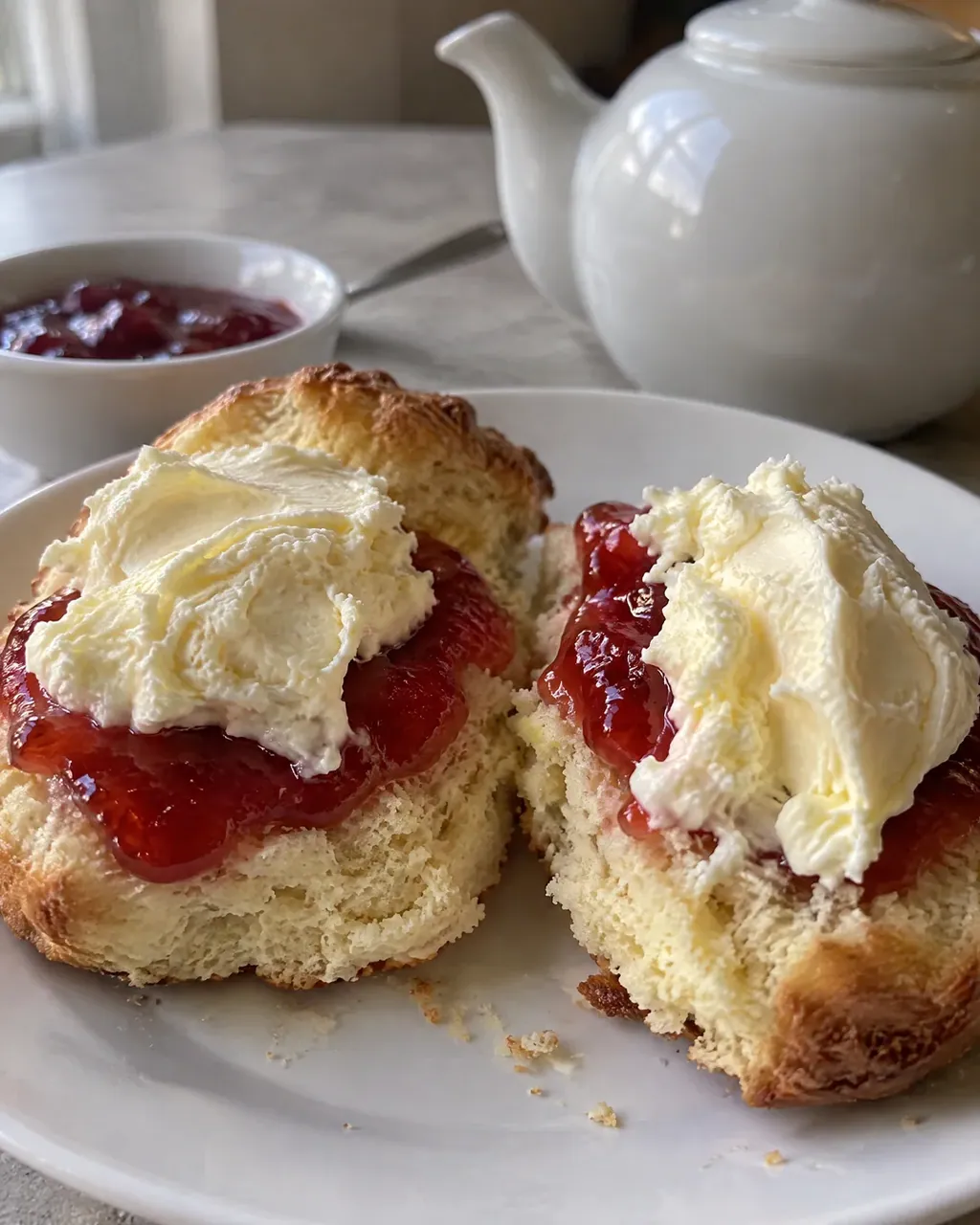
My friend Margaret grew up in Lancashire, a long way from the two counties that have fought over the cream tea for generations. In Cornwall, the jam goes on the scone first and the clotted cream is spooned on top. Cross the river into Devon and they do the opposite: the cream is spread on first, like butter, and the jam sits on top. Margaret tells me she has no horse in this race. Then she tells me it is jam first, and that anybody can see it.
Whichever side you take, you need a good scone under it. An English scone is close to what I grew up calling a biscuit: plain, barely sweet, tall and soft, made to be pulled open while it is warm. Most homemade scones come out flat and hard, and it is nearly always one of the same three mistakes: the dough was rolled too thin, the cutter was twisted, or the oven was not hot enough. Here are the amounts and the three things that make them rise tall.
Why this cream tea scones works
- A thick dough. The dough is patted out a full inch thick. A scone can only double in height, so a thin scone can never be a tall one.
- A straight cutter. The cutter goes straight down and straight up. Twisting seals the cut edge, and the scone rises lopsided or not at all.
- A hot oven. High heat turns the water in the dough to steam at once and sets the sides before the butter can melt out.
- Cold butter and a light touch. Small pieces of cold butter leave pockets of steam. Dough that is kneaded like bread turns tough.
- Plenty of baking powder. A cream tea scone has no eggs beaten for lift and no yeast, so the baking powder does all the work.
Ingredients
Makes 8 tall scones with a 2 1/4 inch (6cm) cutter, enough for a cream tea for four. The measurements are in US cups with grams in brackets.
For the scones
- 3 cups all-purpose flour (375g), plus a little for the counter
- 4 teaspoons baking powder
- 1/4 teaspoon salt
- 1/4 cup granulated sugar (50g)
- 6 tablespoons cold butter (85g), cut in small cubes
- 2/3 cup cold whole milk (160ml)
- 1 large egg
To serve
- 1 cup strawberry jam (320g)
- 1 cup clotted cream (225g), or softly whipped heavy cream
Clotted cream is a very thick, pale yellow cream from the southwest of England, sold in small tubs in the cheese or imported section of some American stores. If you cannot find it, whip 1 cup of cold heavy cream with 1 tablespoon of powdered sugar until it holds soft peaks, or stir 2 tablespoons of mascarpone into it for a thicker spoonful. In Britain, self-raising flour is used: 375g of it, with only 1 teaspoon of baking powder added.
How to make cream tea scones
Make the dough
- Heat the oven to 425 degrees (220°C). Put a heavy baking sheet in the oven to heat with it. Have a 2 1/4 inch (6cm) round cutter ready.
- In a large bowl, whisk together the flour, baking powder, salt and sugar.
- Add the cold butter. Rub it into the flour with your fingertips, lifting your fingers high over the bowl, until the mixture looks like coarse breadcrumbs with a few pieces the size of small peas.
- In a jug, beat the egg into the cold milk with a fork. Set aside 1 tablespoon of this mixture for brushing the tops.
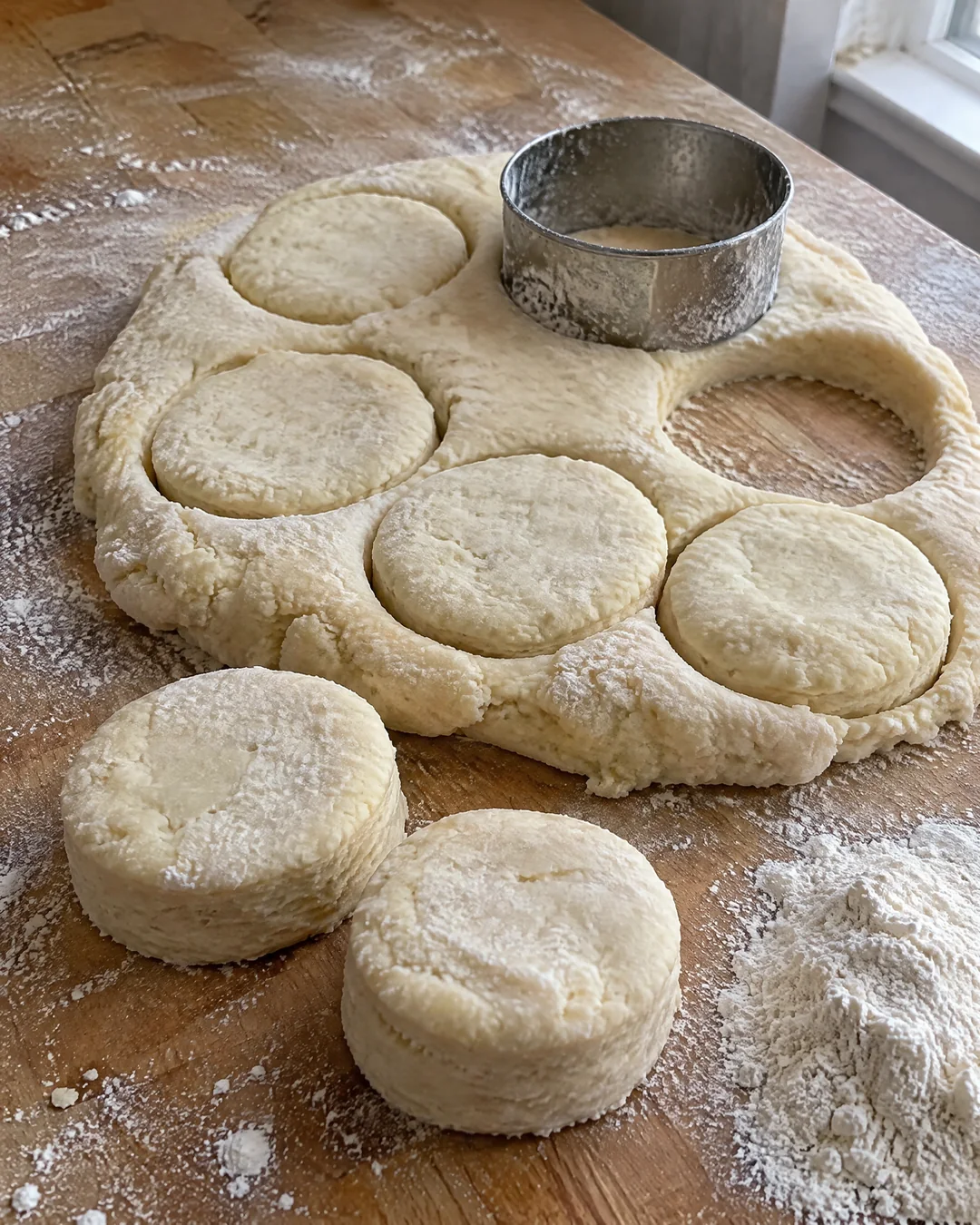
- Make a hollow in the flour and pour in the rest of the liquid all at once. Stir with a table knife, cutting through the mixture, just until it clumps into a soft, slightly sticky dough. Stop as soon as there is no dry flour left.
Shape, cut and bake
- Tip the dough onto a lightly floured counter. Fold it over on itself three or four times, no more, until it just holds together and the top is fairly smooth.
- Pat the dough out with your palm to a round a full 1 inch (2.5cm) thick. Do not use a rolling pin, and measure the first time; an inch is thicker than most people expect.
- Dip the cutter in flour. Press it straight down through the dough and lift it straight up, without twisting. Cut the scones as close together as you can. Press the scraps together gently, pat out again and cut the rest.
- Take the hot baking sheet from the oven and line it with baking parchment. Set the scones on it, almost touching. Brush only the tops with the reserved egg and milk; if it runs down the sides it glues them and they cannot rise.
- Bake on the upper middle shelf for 12 to 15 minutes, until the scones are well risen and golden on top and sound hollow when tapped underneath.
- Cool on a rack for 10 minutes. Pull each scone open with your fingers along its natural split, and serve warm with jam and cream, in whichever order your side of the river requires.
strawberry jam and clotted cream" src="/wp-content/uploads/2026/09/cream-tea-scones-jam-or-cream-first-3.webp" />
Tips that make the difference
- Thickness first: pat the dough to a full inch. This is the mistake that flattens more scones than any other.
- Cutter second: straight down, straight up. Flour the cutter each time so it comes away clean.
- Heat third: the oven must be fully up to temperature, and the tray hot, before the scones go in. A cool oven lets the butter melt and the scones spread.
- Work quickly and handle the dough as little as you can. Warm butter and a kneaded dough both make a heavy scone.
- Bake them close together. Scones that almost touch push each other upward and keep their sides soft.
Variations
- Fruit scones. Stir 1/2 cup of raisins or golden raisins (75g) into the flour after the butter is rubbed in.
- Buttermilk scones. Replace the milk with cold buttermilk and add 1/4 teaspoon of baking soda to the flour. The crumb is a little softer and tangier.
- Large scones. Use a 3 inch cutter for 5 big scones and bake them 3 to 4 minutes longer.
Storage and make-ahead
Scones are best within a few hours of baking. Keep leftovers in a tin or a bag at room temperature for up to 2 days.
To refresh them, warm in a 325 degree (165°C) oven for 5 to 8 minutes. Do not microwave, which makes them rubbery.
To freeze, cool completely, bag and freeze for up to 3 months. Thaw at room temperature and warm in the oven before serving.
Frequently asked questions
Is it jam first or cream first?
It depends where you are standing. In Cornwall the jam goes on first with the cream on top. In Devon the cream is spread first and the jam goes on top. Margaret, from Lancashire, puts the jam first. Both taste the same; the argument is the fun of it.
Why are my scones flat?
Three usual reasons: the dough was rolled or patted thinner than an inch, the cutter was twisted as it went down, or the oven was not hot enough. Old baking powder is the fourth; it loses strength after about six months once opened.
What is the difference between an English scone and an American biscuit?
They are close cousins. A scone has a little sugar and usually an egg, and it is eaten with jam and cream at teatime. A biscuit has more butter, no sugar and no egg, and goes with gravy or butter at a meal.
What can I use if I cannot find clotted cream?
Softly whipped heavy cream is the usual stand-in. For something thicker, fold 2 tablespoons of mascarpone into 1 cup of cream after whipping.
Put the jam and the cream on the table in separate dishes, and let everybody settle the order for themselves.
Cream Tea Scones (Tall Plain Scones for Jam and Clotted Cream, Cornwall or Devon Style)
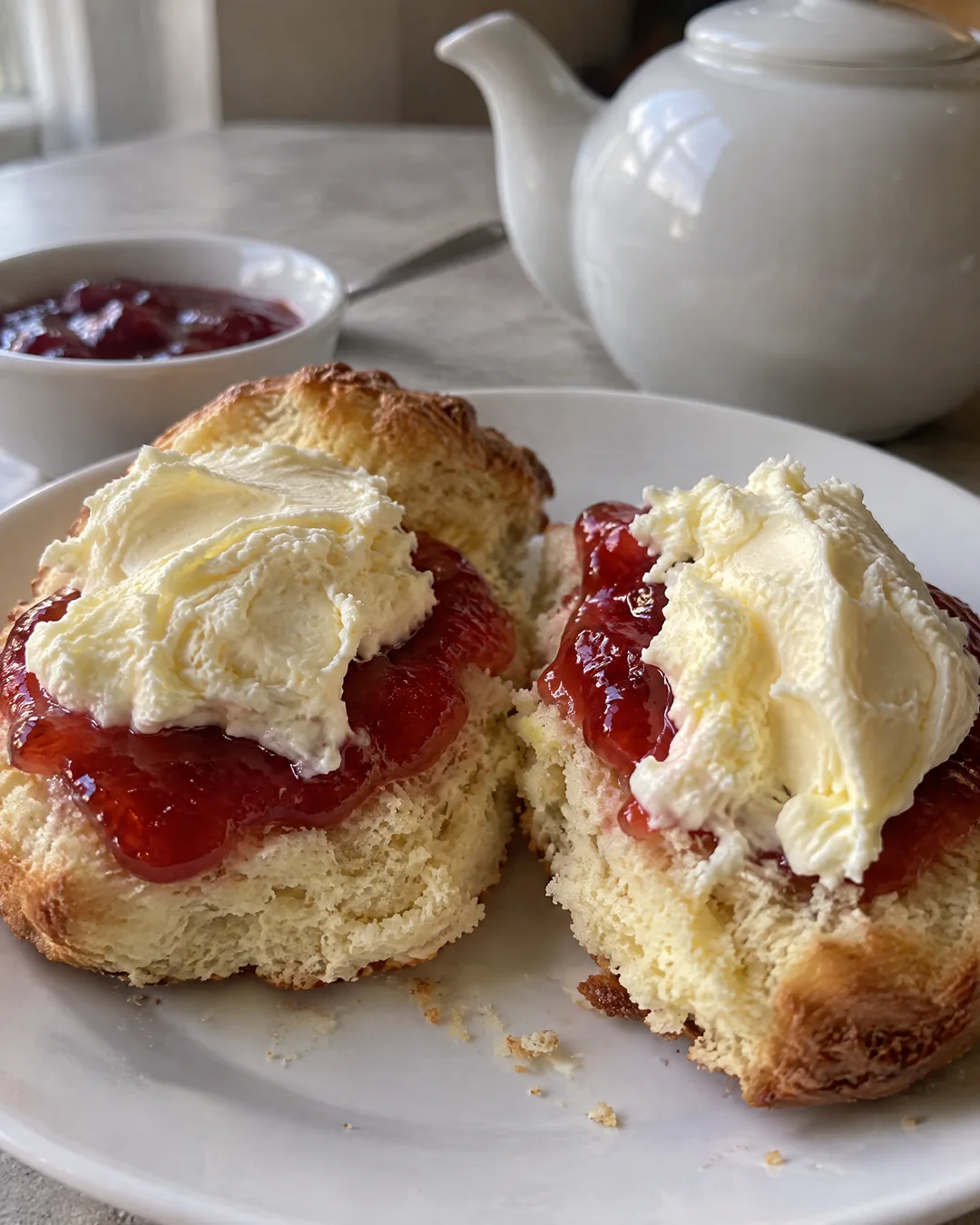
Tall, light, plain English scones for a proper cream tea, split warm and served with strawberry jam and clotted cream: jam first the Cornish way or cream first the Devon way. With the three things that make scones rise tall.
Ingredients
- 3 cups all-purpose flour (375g), plus a little for the counter
- 4 teaspoons baking powder
- 1/4 teaspoon salt
- 1/4 cup granulated sugar
- 6 tablespoons cold butter (85g), cut in small cubes
- 2/3 cup cold whole milk
- 1 large egg
- 1 cup strawberry jam
- 1 cup clotted cream (225g), or softly whipped heavy cream
Instructions
- Heat the oven to 425 degrees (220°C). Put a heavy baking sheet in the oven to heat with it. Have a 2 1/4 inch (6cm) round cutter ready.
- In a large bowl, whisk together the flour, baking powder, salt and sugar.
- Add the cold butter. Rub it into the flour with your fingertips, lifting your fingers high over the bowl, until the mixture looks like coarse breadcrumbs with a few pieces the size of small peas.
- In a jug, beat the egg into the cold milk with a fork. Set aside 1 tablespoon of this mixture for brushing the tops.
- Make a hollow in the flour and pour in the rest of the liquid all at once. Stir with a table knife, cutting through the mixture, just until it clumps into a soft, slightly sticky dough. Stop as soon as there is no dry flour left.
- Tip the dough onto a lightly floured counter. Fold it over on itself three or four times, no more, until it just holds together and the top is fairly smooth.
- Pat the dough out with your palm to a round a full 1 inch (2.5cm) thick. Do not use a rolling pin, and measure the first time; an inch is thicker than most people expect.
- Dip the cutter in flour. Press it straight down through the dough and lift it straight up, without twisting. Cut the scones as close together as you can. Press the scraps together gently, pat out again and cut the rest.
- Take the hot baking sheet from the oven and line it with baking parchment. Set the scones on it, almost touching. Brush only the tops with the reserved egg and milk; if it runs down the sides it glues them and they cannot rise.
- Bake on the upper middle shelf for 12 to 15 minutes, until the scones are well risen and golden on top and sound hollow when tapped underneath.
- Cool on a rack for 10 minutes. Pull each scone open with your fingers along its natural split, and serve warm with jam and cream, in whichever order your side of the river requires.