In this article
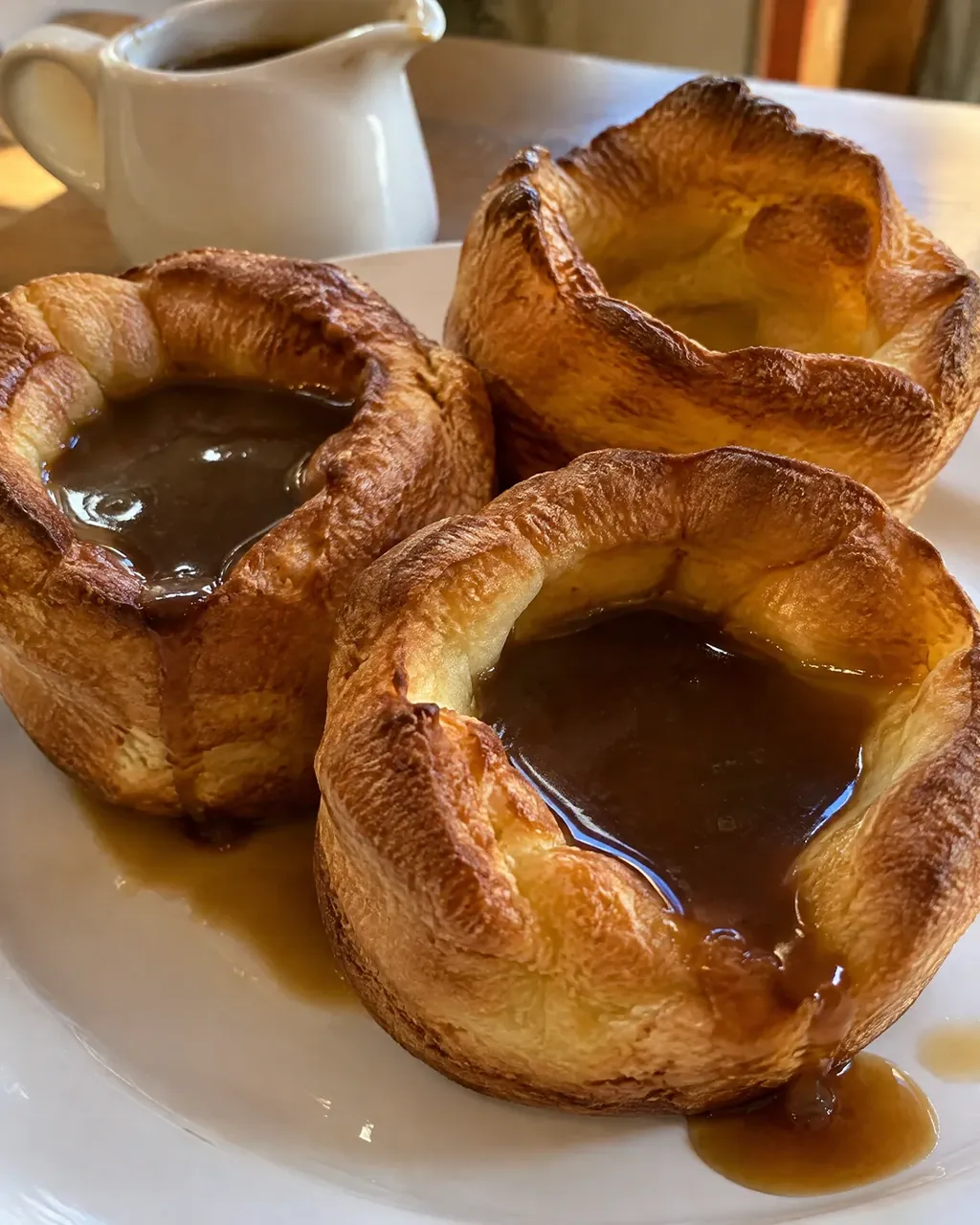
The first thing an American has to understand about a Yorkshire pudding is the word pudding. It is not sweet and it is not a dessert. It is a thin batter, the same eggs, flour and milk as a pancake, poured into a tin of fiercely hot fat and baked until it puffs up tall, crisp at the edges and hollow in the middle. The hollow is there for the gravy. In America the closest thing is a popover, and anybody who has made popovers already knows most of what follows.
My friend Margaret is from Lancashire, on the other side of the hills from Yorkshire, and she likes to say that Yorkshire takes too much credit for a batter the whole north of England has always made. She makes them every Sunday all the same. She told me that in Yorkshire, in the old days, the pudding came to the table first, by itself, with gravy, before the meat. It filled everybody up, and the roast went further. In her mother’s house, any that were left came back at teatime with jam or golden syrup. Here is why the batter has to rest, and how hot the fat must be so the puddings rise tall instead of sitting flat in the tin.
Why this Yorkshire puddings works
- Equal volumes. A cup of flour, a cup of eggs and milk between them: the old rule of equal measures gives a batter that is thin enough to rise and rich enough to hold.
- A rest for the batter. Resting lets the flour soak up the liquid and the bubbles settle, and a rested batter rises taller and more evenly.
- Smoking hot fat. The batter must sizzle and start to set the second it touches the tin. That first burst of steam is what pushes the pudding up the sides.
- A very hot oven and a closed door. The puddings are held up by steam until the walls dry and crisp. Cool air too soon and they fall.
- No baking powder. The rise comes from eggs and steam alone. Baking powder makes them cakey and heavy.
Ingredients
Makes 12 puddings in a standard 12 cup muffin tin. The measurements are in US cups with grams in brackets.
For the batter
- 1 cup all-purpose flour (125g)
- 1/2 teaspoon fine salt
- 3 large eggs, at room temperature
- 1 cup whole milk (240ml), at room temperature
- 2 tablespoons cold water
For the tin
- 1/4 cup beef fat (tallow) or a plain oil that takes high heat, such as sunflower or vegetable oil (60ml), 1 teaspoon for each cup of the tin
British cooks use plain flour, which is American all-purpose flour. Do not use self-rising flour. The traditional fat is the beef fat that has melted out of the Sunday roast; a spoonful of it in each cup gives the best flavor. A plain vegetable oil works just as well for the rise. Butter and olive oil burn at this heat and should not be used.
How to make Yorkshire puddings
Make the batter and rest it
- Put the flour and salt in a mixing bowl and make a well in the middle. Crack in the eggs and whisk, starting in the center and pulling in the flour little by little, until you have a thick, smooth paste with no lumps.
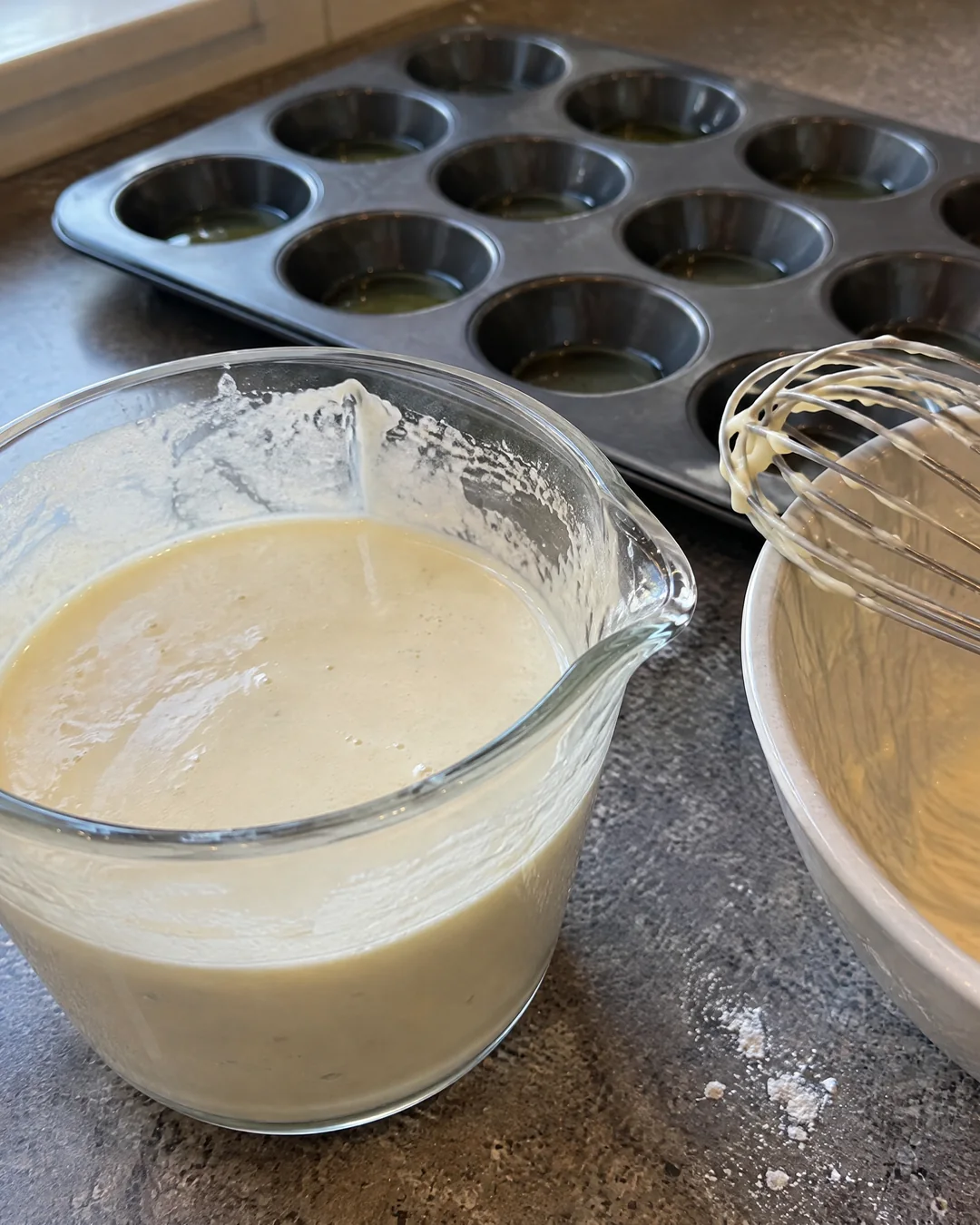
- Whisk in the milk a splash at a time, then the cold water, until the batter is as thin as pouring cream. Pour it into a jug, which will make filling the hot tin quick and safe.
- Leave the batter to rest for at least 30 minutes at room temperature. It can also rest in the refrigerator for up to 24 hours; take it out half an hour before baking and give it a stir.
Heat the fat
- Put a shelf in the upper third of the oven, with nothing above it, and heat the oven to 450 degrees (230°C).
- Put 1 teaspoon of beef fat or oil in each cup of a 12 cup metal muffin tin. Set the tin on a baking sheet and put it in the oven for 10 minutes, until the fat is shimmering and just beginning to smoke.
Bake
- Stir the batter once. Working quickly, pull the oven shelf out, or lift the tin onto the stovetop, and pour the batter into the cups, filling each one about half full. The batter should sizzle as it hits the fat.
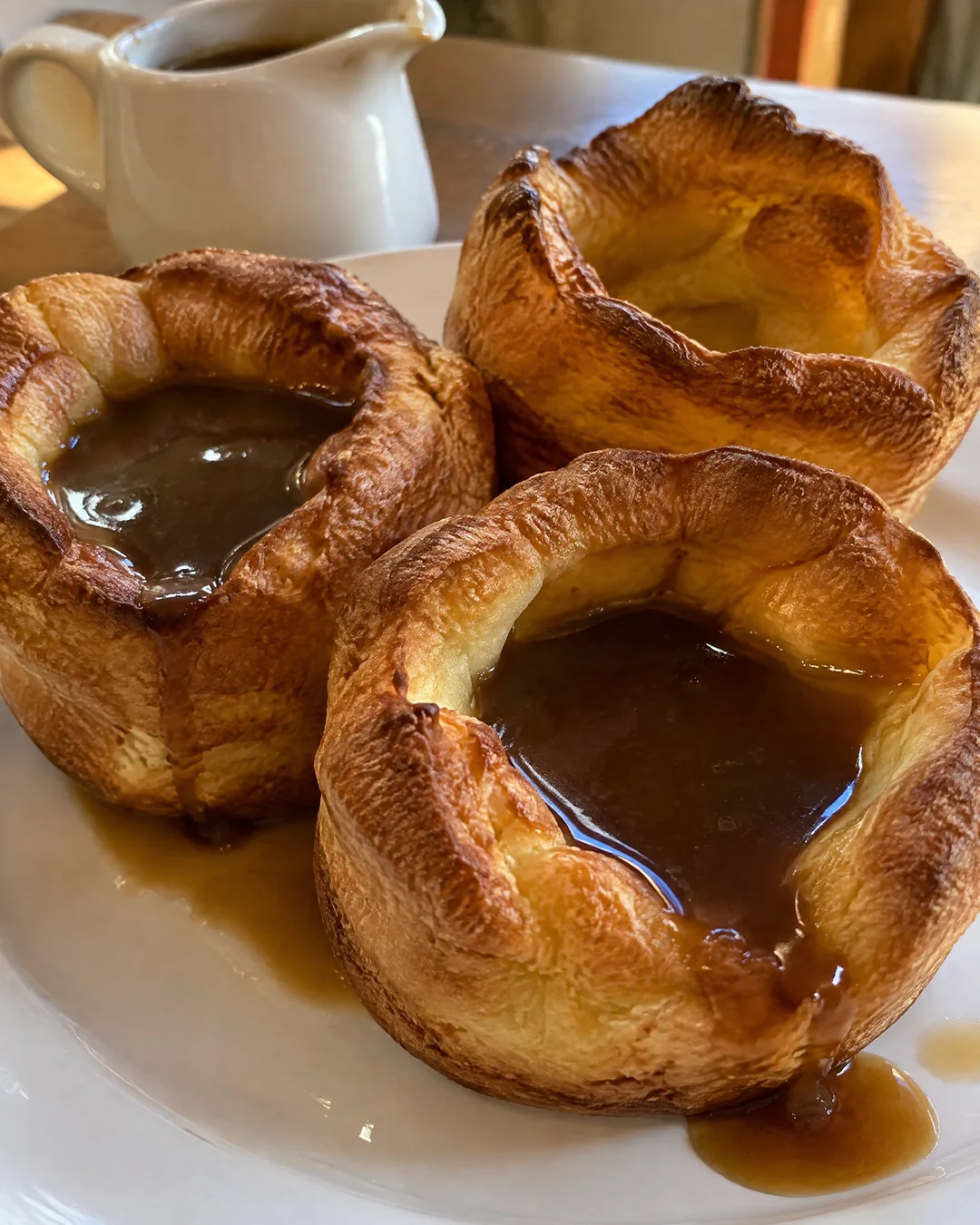
- Put the tin straight back in the oven and bake for 20 to 25 minutes, without opening the door for the first 20 minutes, until the puddings are tall, crisp and deep golden brown.
- Lift them out of the tin and serve at once, with hot gravy poured into the hollows.
Tips that make the difference
- Have the eggs and milk at room temperature. A cold batter cools the fat and the puddings rise less.
- Fill the tin fast and get it back in the oven. Every second the tin is out, the fat is losing the heat that makes the rise.
- Do not open the oven door early. The walls are soft for the first 15 to 20 minutes and a draft makes them sink.
- Bake them a shade darker than you think. A pale pudding is still damp inside and collapses on the plate; a deep golden one stays crisp.
- Use a metal tin. Silicone and glass do not get hot enough to give the batter its first lift.
Variations
- One big pudding. Heat 3 tablespoons of fat in a 9 by 13 inch metal roasting pan, pour in all the batter and bake for 30 to 35 minutes. Cut it in squares at the table, the way it was served in the old days.
- Herb puddings. Whisk 1 teaspoon of chopped fresh thyme or rosemary into the rested batter.
- With onion gravy. Serve two puddings a person, filled with a thick gravy of slowly browned onions, as a first course before the roast.
- For teatime. Warm leftover puddings in the oven and eat them the way Margaret’s family did, with a spoonful of jam or a thread of golden syrup.
Storage and make-ahead
Yorkshire puddings are at their best in the first ten minutes out of the oven. Leftovers keep in a sealed container in the refrigerator for 2 days.
To reheat, put them on a baking sheet in a 400 degree (200°C) oven for 4 to 5 minutes. They crisp up again nicely. A microwave makes them soft and chewy.
To freeze, cool the baked puddings completely, freeze them in a bag for up to 1 month, and reheat from frozen in a 400 degree oven for 6 to 8 minutes.
Frequently asked questions
Why did my Yorkshire puddings not rise?
Almost always because the fat or the oven was not hot enough, or the door was opened too soon. The fat must be smoking when the batter goes in, the oven at a full 450 degrees, and the door shut for 20 minutes.
Why does the batter have to rest?
While it stands, the flour takes up the milk and the gluten relaxes, so the batter stretches further before it sets. A batter baked straight away still rises, but lower and less evenly. Half an hour is the least; a few hours is better.
Is a Yorkshire pudding the same as a popover?
They are very close cousins made from nearly the same batter. A popover is usually baked in butter in a deep pan and eaten with butter or jam. A Yorkshire pudding is baked in beef fat or oil and eaten with gravy.
Can I make the batter the day before?
Yes, and many British cooks do. Keep it covered in the refrigerator, bring it out 30 minutes before baking and stir it well, since the flour settles to the bottom.
Get the gravy hot before the puddings come out, call everybody to the table first, and carry the tin in last.
Tall Yorkshire Puddings (Rested Batter, Smoking Hot Fat)
Traditional Yorkshire puddings: a thin batter of eggs, flour and milk, rested, then poured into a tin of smoking hot beef fat or oil and baked in a very hot oven until tall, crisp and hollow, ready for gravy.
Ingredients
- 1 cup all-purpose flour
- 1/2 teaspoon fine salt
- 3 large eggs, at room temperature
- 1 cup whole milk (240ml), at room temperature
- 2 tablespoons cold water
- 1/4 cup beef fat (tallow) or a plain oil that takes high heat, such as sunflower or vegetable oil (60ml), 1 teaspoon for each cup of the tin
Instructions
- Put the flour and salt in a mixing bowl and make a well in the middle. Crack in the eggs and whisk, starting in the center and pulling in the flour little by little, until you have a thick, smooth paste with no lumps.
- Whisk in the milk a splash at a time, then the cold water, until the batter is as thin as pouring cream. Pour it into a jug, which will make filling the hot tin quick and safe.
- Leave the batter to rest for at least 30 minutes at room temperature. It can also rest in the refrigerator for up to 24 hours; take it out half an hour before baking and give it a stir.
- Put a shelf in the upper third of the oven, with nothing above it, and heat the oven to 450 degrees (230°C).
- Put 1 teaspoon of beef fat or oil in each cup of a 12 cup metal muffin tin. Set the tin on a baking sheet and put it in the oven for 10 minutes, until the fat is shimmering and just beginning to smoke.
- Stir the batter once. Working quickly, pull the oven shelf out, or lift the tin onto the stovetop, and pour the batter into the cups, filling each one about half full. The batter should sizzle as it hits the fat.
- Put the tin straight back in the oven and bake for 20 to 25 minutes, without opening the door for the first 20 minutes, until the puddings are tall, crisp and deep golden brown.
- Lift them out of the tin and serve at once, with hot gravy poured into the hollows.