In this article
My friend Margaret grew up in Lancashire, and the first time we made cheese scones together in my kitchen she stopped me before the first one was even cut. I had pressed the cutter into the dough and given it a little turn, the way I have cut biscuits all my life. She took the cutter out of my fingers and said that in her mother’s house you went straight down and straight up, and that was the end of it. A twist, she explained, smears the edge of the dough shut. The scone cannot rise on that side, so it comes out of the oven leaning over.
I would have called what we were making cheddar biscuits. Margaret would not hear of it. A British cheese scone is a little less rich than an American biscuit, a little more bready, and it carries a good deal more cheese than seems sensible, sharpened with a pinch of mustard powder. It is split while it is still warm and spread with butter, and in her family that was lunch, or what went beside a bowl of soup. Here is how thick to pat the dough, and the small habits that get the scones tall and light.
Why this cheese scones works
- Cold butter, rubbed in. Little pieces of cold butter melt in the oven and leave pockets of steam behind, which is what makes a scone light instead of doughy.
- Mustard powder. You do not taste mustard. It sharpens the cheddar so the scones taste more of cheese.
- A knife, not a spoon. Stirring the milk in with a table knife cuts the dough together without working it, so the scones stay tender.
- Patted thick. A scone only rises to about twice its height. Dough patted to a full inch gives a tall scone; dough rolled thin gives a flat one.
- A straight cut and a hot oven. A clean edge lets the layers lift freely, and high heat sets the outside quickly so the scone goes up, not out.
Ingredients
Makes 8 scones with a 2 1/2 inch (6 cm) round cutter. The measurements are in US cups with grams in brackets.
For the scones
- 2 cups all-purpose flour (250g), plus a little for the counter
- 1 tablespoon baking powder
- 1/2 teaspoon salt
- 1/2 teaspoon mustard powder
- 1 pinch cayenne pepper, optional
- 4 tablespoons cold butter (57g), cut in small cubes
- 1 1/2 cups coarsely grated sharp cheddar (150g)
- 2/3 cup cold whole milk (160ml), plus 1 or 2 tablespoons if needed
For the tops
- 1 tablespoon milk, for brushing
- 1/4 cup grated sharp cheddar (25g)
Use the sharpest cheddar you can find, what Britain calls mature or extra mature, and grate it yourself. Ready-grated cheese is coated to keep it loose and does not melt into the dough as well. In Britain, 250g of self-raising flour can stand in for the flour and baking powder; add just 1 teaspoon of baking powder for extra lift.
How to make cheese scones
Mix the dough
- Heat the oven to 425 degrees (220°C) and put a baking sheet inside to heat up. A hot sheet gives the scones a push from underneath.
- In a large bowl, stir together the flour, baking powder, salt, mustard powder and cayenne.
- Add the cold butter. Rub it into the flour with your fingertips, lifting your hands above the bowl as you go, until the mixture looks like coarse breadcrumbs with a few pea-sized pieces left.
- Stir in the 1 1/2 cups of grated cheddar with a fork so every shred is coated in flour.
- Make a well in the middle and pour in the cold milk all at once. Stir with a table knife, cutting through the mixture, just until it comes together into a soft, shaggy dough. If dry flour is left in the bottom of the bowl, add another tablespoon of milk.
Pat, cut and bake
- Tip the dough onto a lightly floured counter. Fold it over on itself two or three times, only until it holds together. Do not knead it.
- Pat the dough out with the flat of your hand to a full 1 inch (2.5 cm) thick. Do not use a rolling pin.
- Dip a 2 1/2 inch round cutter in flour. Press it straight down through the dough and lift it straight up, without twisting. Cut the scones close together. Gently press the scraps together, pat out and cut again.
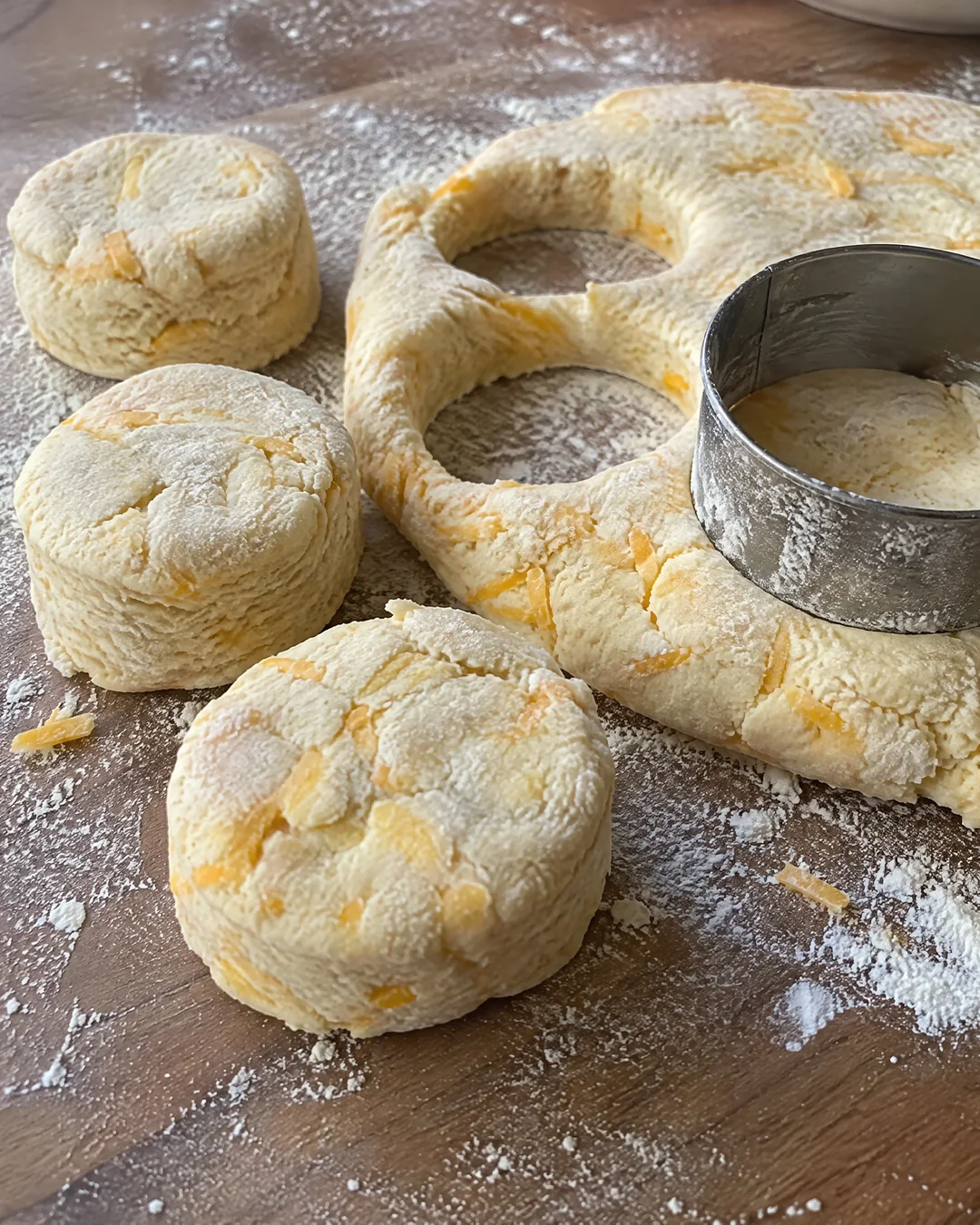
- Take the hot baking sheet out of the oven and set the scones on it, an inch apart. Brush only the tops with milk, keeping it off the sides, and sprinkle with the remaining cheddar.
- Bake for 12 to 15 minutes, until the scones are well risen and deep golden and the cheese on top has browned.
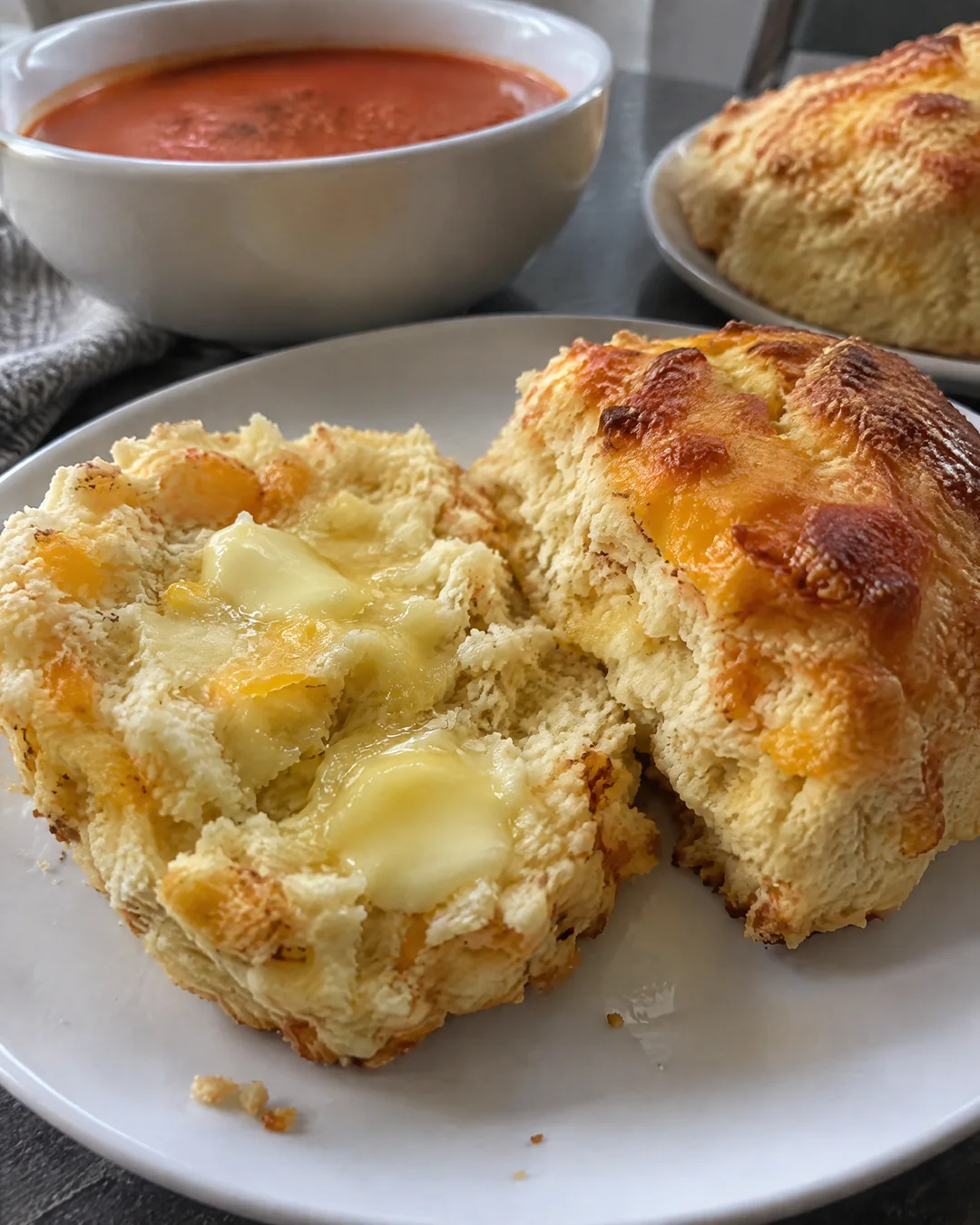
- Cool on a rack for 5 minutes. Split them with your fingers or a knife while still warm, and butter them.
Tips that make the difference
- Keep everything cold. If the kitchen is warm, put the cubed butter in the freezer for 10 minutes before you start.
- Flour the cutter before every cut. A sticky cutter drags the edge of the dough just as a twist does.
- Brush milk on the tops only. Milk that runs down the sides glues the layers together and holds the scone down.
- Stop mixing the moment the dough holds together. A rough, shaggy dough makes a light scone; a smooth one makes a tough scone.
- Bake them as soon as they are cut. Baking powder starts working when the milk goes in, and it does not wait.
Variations
- Cheese and chive. Stir 2 tablespoons of finely snipped chives into the flour with the cheese.
- Cheese and onion. Add 3 finely sliced green onions, a combination Margaret says every bakery in the north of England sells.
- Extra sharp. Replace 1/4 cup of the cheddar with finely grated Parmesan for a stronger bite and a crisper top.
- Square scones. Pat the dough into a square and cut it into 9 pieces with a floured knife, straight down. No scraps and no second patting.
Storage and make-ahead
Cheese scones are at their best within an hour or two of baking. Kept in an airtight tin, they are good for 2 days.
To freshen day-old scones, warm them in a 325 degree (160°C) oven for 6 to 8 minutes, or split and toast them.
To freeze, cool completely, wrap well and freeze for up to 3 months. Thaw at room temperature and warm through in the oven. You can also freeze the cut, unbaked scones and bake them from frozen, adding 3 to 4 minutes.
Frequently asked questions
How thick should I pat the dough for cheese scones?
A full 1 inch (2.5 cm), which looks thicker than you expect. Scones rise to about double their height in the oven, so anything thinner gives a short scone. Measure it the first time; after that your hand will know.
Why should you not twist the cutter?
Twisting smears and seals the cut edge of the dough. The sealed side cannot lift, so the scone rises unevenly and tips over. Press straight down, lift straight up, and flour the cutter between cuts.
Why are my scones flat and heavy?
The usual reasons are dough rolled too thin, butter that was warm, too much mixing, or old baking powder. Keep the butter cold, mix only until the dough holds together and check the date on the baking powder.
Are cheese scones the same as American biscuits?
They are close cousins. A scone has a little less butter and is slightly more bready, and a British cheese scone carries far more cheese. It is eaten split and buttered, on its own or beside soup.
Split one while it is still too warm to hold comfortably, butter both halves, and you will see why Margaret would not let me twist that cutter.
British Cheese Scones (Tall, Light, and the Cutter Is Never Twisted)
Tall British cheese scones: cold butter rubbed into flour with mustard powder and plenty of sharp cheddar, mixed with a knife, patted out thick by hand, cut straight down without twisting and baked hot until golden, to split warm and butter.
Ingredients
- 2 cups all-purpose flour (250g), plus a little for the counter
- 1 tablespoon baking powder
- 1/2 teaspoon salt
- 1/2 teaspoon mustard powder
- 1 pinch cayenne pepper, optional
- 4 tablespoons cold butter (57g), cut in small cubes
- 1 1/2 cups coarsely grated sharp cheddar
- 2/3 cup cold whole milk (160ml), plus 1 or 2 tablespoons if needed
- 1 tablespoon milk, for brushing
- 1/4 cup grated sharp cheddar
Instructions
- Heat the oven to 425 degrees (220°C) and put a baking sheet inside to heat up. A hot sheet gives the scones a push from underneath.
- In a large bowl, stir together the flour, baking powder, salt, mustard powder and cayenne.
- Add the cold butter. Rub it into the flour with your fingertips, lifting your hands above the bowl as you go, until the mixture looks like coarse breadcrumbs with a few pea-sized pieces left.
- Stir in the 1 1/2 cups of grated cheddar with a fork so every shred is coated in flour.
- Make a well in the middle and pour in the cold milk all at once. Stir with a table knife, cutting through the mixture, just until it comes together into a soft, shaggy dough. If dry flour is left in the bottom of the bowl, add another tablespoon of milk.
- Tip the dough onto a lightly floured counter. Fold it over on itself two or three times, only until it holds together. Do not knead it.
- Pat the dough out with the flat of your hand to a full 1 inch (2.5 cm) thick. Do not use a rolling pin.
- Dip a 2 1/2 inch round cutter in flour. Press it straight down through the dough and lift it straight up, without twisting. Cut the scones close together. Gently press the scraps together, pat out and cut again.
- Take the hot baking sheet out of the oven and set the scones on it, an inch apart. Brush only the tops with milk, keeping it off the sides, and sprinkle with the remaining cheddar.
- Bake for 12 to 15 minutes, until the scones are well risen and deep golden and the cheese on top has browned.
- Cool on a rack for 5 minutes. Split them with your fingers or a knife while still warm, and butter them.