In this article
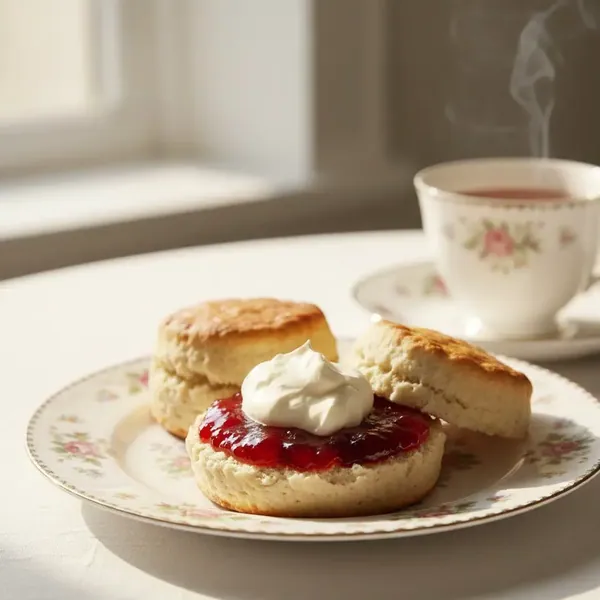
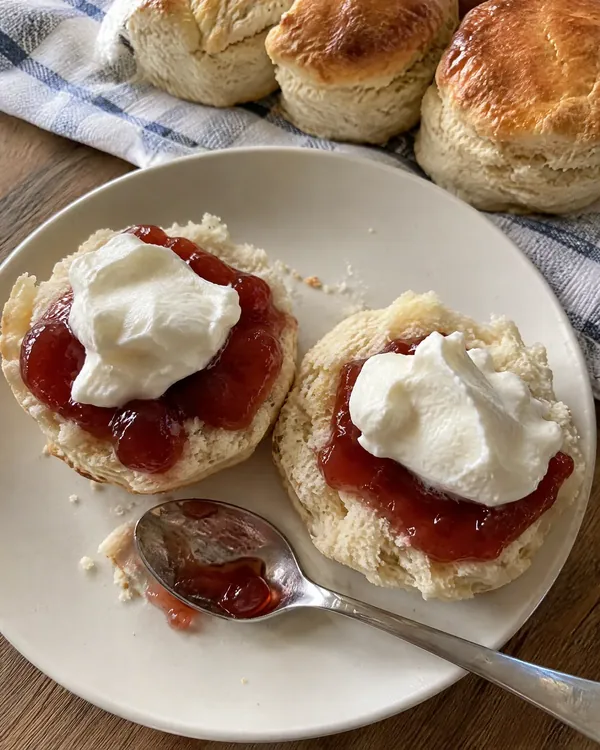
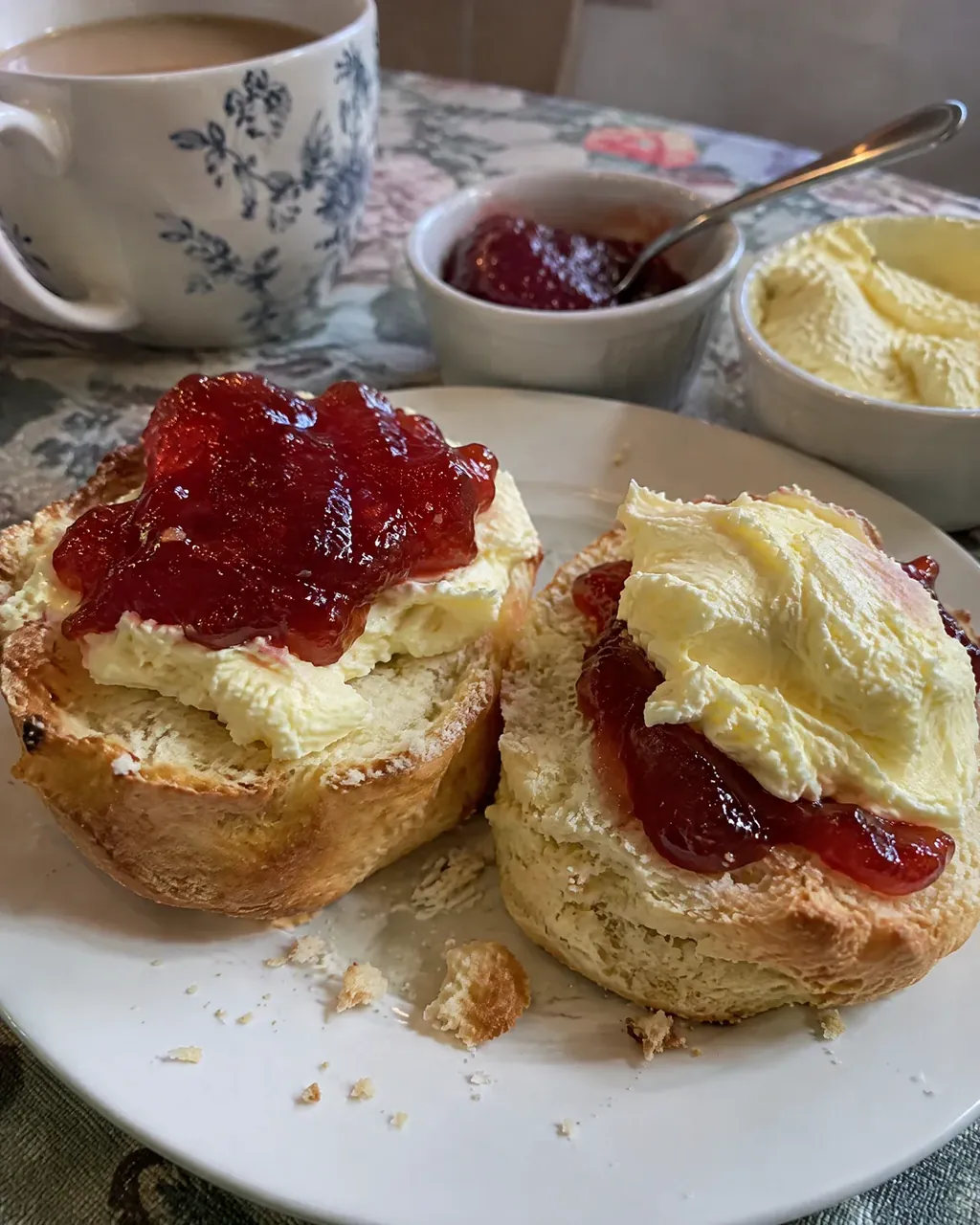
The first time I put clotted cream on a scone and the jam on top, my friend Margaret laughed out loud and told me I had just picked a side in a war between two English counties. A cream tea is a plain scone, still warm, split in two, with strawberry jam and thick clotted cream and a pot of tea beside it. In the west of England it is close to a national institution. In Devon, the cream goes on first, spread like butter, and the jam sits on top. In Cornwall, the jam goes on first and the cream is spooned over it. The two counties sit side by side, and the argument is older than anybody living in either one.
Margaret is Cornwall. Jam first. She says cream first is like buttering your toast with the jam. But both sides agree on the scone: it must be tall, light and split cleanly in the middle, with a crack around its waist. The secret of a tall scone is not in the ingredients at all. It is cold butter, a light hand, a hot oven, and cutting straight down without ever twisting the cutter. Here is how to get scones to rise tall and straight every time.
Why this cream tea scones works
- Cold butter, rubbed in. Little flakes of cold butter melt in the oven and give off steam that lifts the dough.
- A light hand. The dough is mixed only until it holds together. Kneaded dough bakes tough and flat.
- Thick dough. Patted to about 1 inch thick, never rolled thin, so each scone has height to rise into.
- Straight down, no twist. Twisting the cutter seals the edges, and sealed edges cannot rise. A clean straight cut lets the scone climb.
- A hot oven. 425 degrees sets the outside quickly and pushes the scone up before it can spread.
Ingredients
Makes 8 tall scones with a 2 1/2 inch cutter. The measurements are in US cups with grams in brackets, the grams being the British weights.
For the scones
- 2 1/2 cups all-purpose flour (315g), plus extra for the counter
- 1 tablespoon baking powder
- 3 tablespoons granulated sugar (40g)
- 1/4 teaspoon fine salt
- 6 tablespoons cold unsalted butter, cut in small cubes (85g)
- 1 large egg
- 2/3 cup cold whole milk (160ml), plus a little for brushing
To serve
- Strawberry jam
- Clotted cream, or 1 cup heavy cream whipped very thick
Clotted cream is sold in some large grocery stores in small tubs. If you cannot find it, whip heavy cream with no sugar until it is thick enough to hold a spoon standing up. Margaret allows it in America, just this once.
How to make cream tea scones
- Heat the oven to 425 degrees (220°C) and line a baking sheet with parchment.
- Whisk the flour, baking powder, sugar and salt in a large bowl. Add the cold butter and rub it in with your fingertips until the mixture looks like fine breadcrumbs.
- Beat the egg into the cold milk. Make a well in the flour, pour in most of the milk and egg, and stir with a table knife until a soft, slightly sticky dough forms. Add the rest only if there is dry flour left. Keep 1 tablespoon aside for brushing if you have it.
- Tip the dough onto a floured counter and fold it over on itself two or three times, just until smooth. Do not knead.
- Pat it out with your hands to an even thickness of about 1 inch.
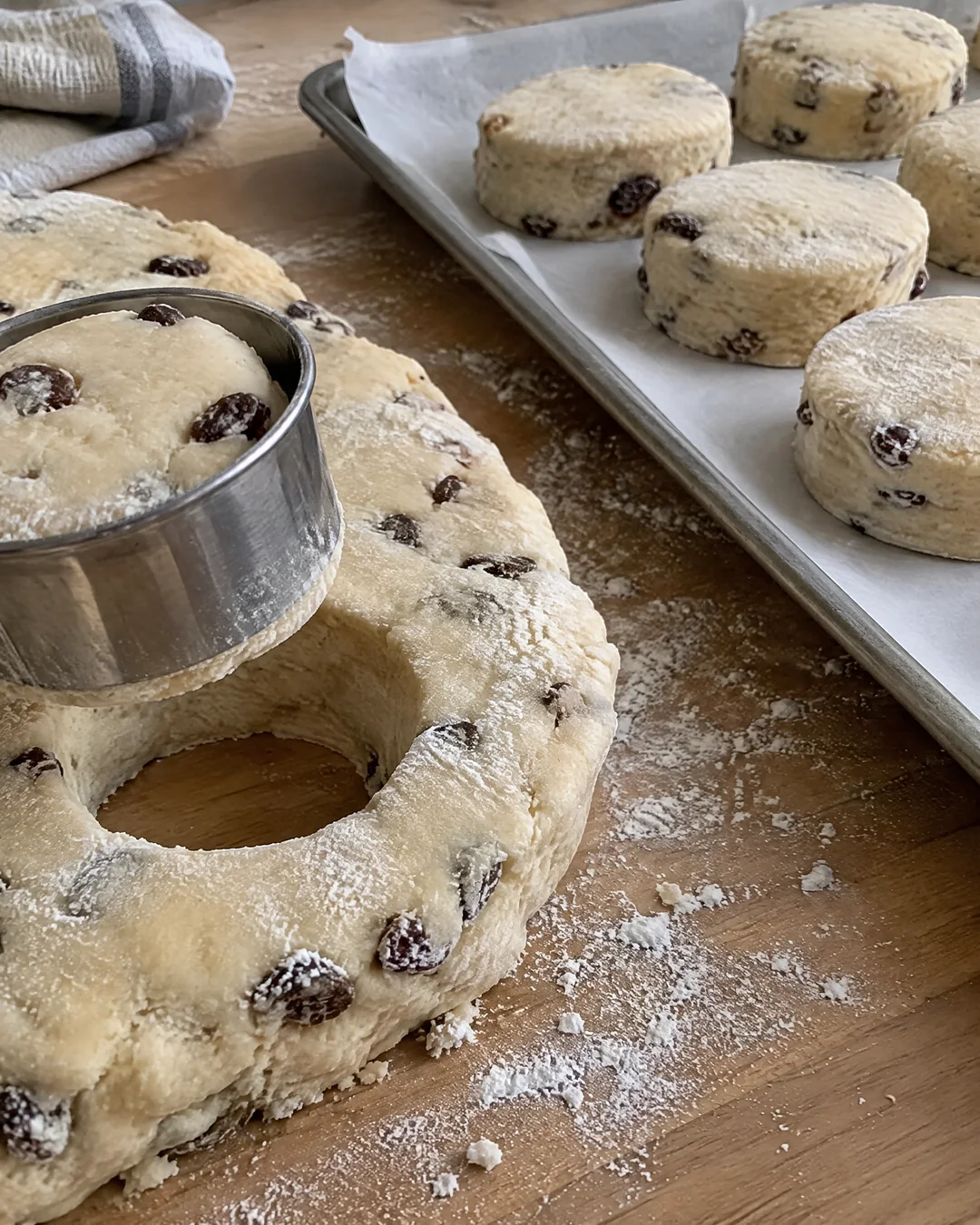
- Dip a sharp 2 1/2 inch round cutter in flour and press it straight down through the dough. Lift it straight up. Do not twist. Set the scones on the sheet, close together but not touching.
- Gather the scraps once, pat them out again and cut the last scones.
- Brush only the tops with the egg and milk, taking care that none runs down the sides.
- Bake for 12 to 15 minutes, until the scones are well risen, cracked around the middle and golden on top. They should sound hollow when tapped underneath.
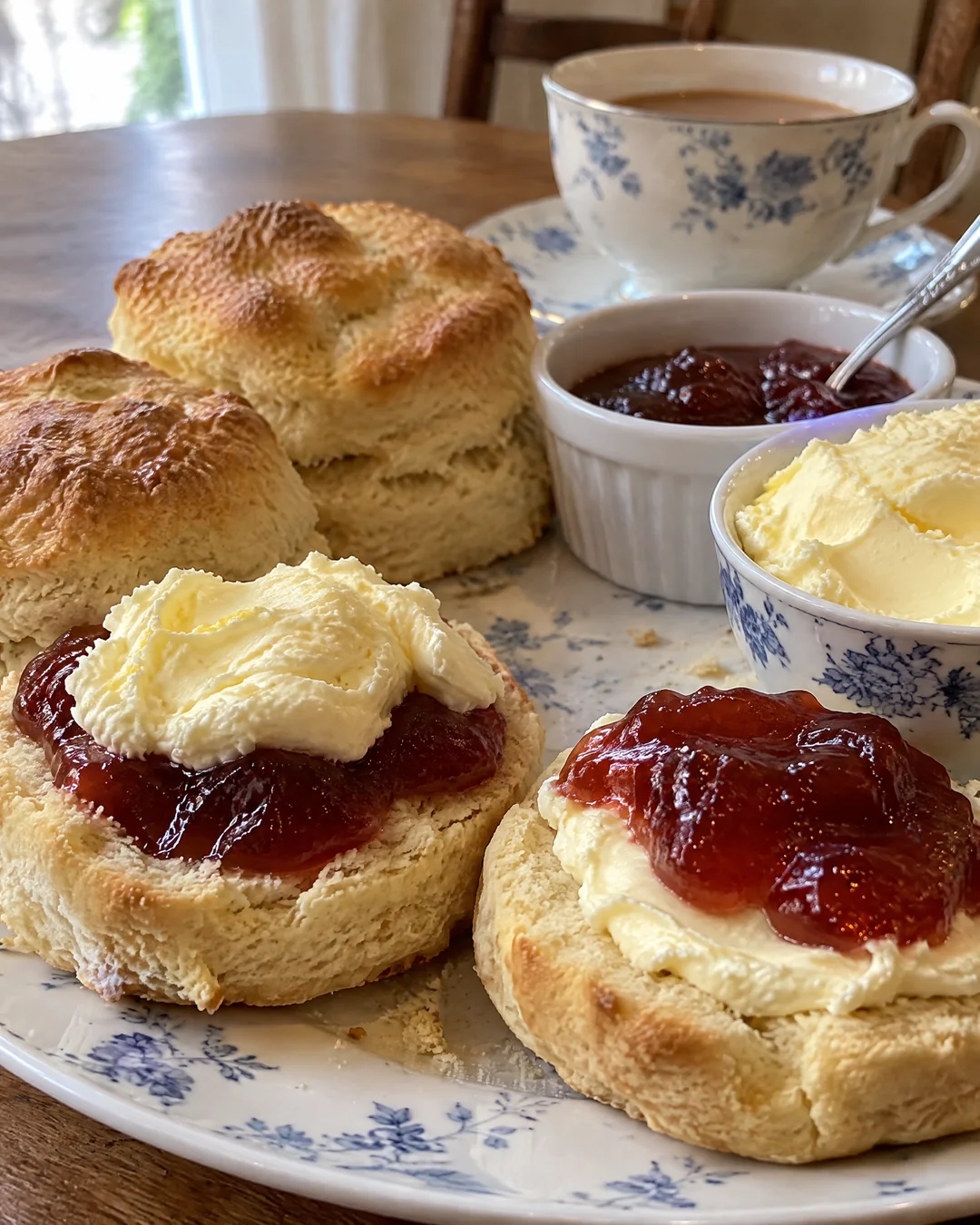
- Cool on a rack for 10 minutes, wrapped loosely in a clean dish towel to keep the crust soft. Split by hand while still warm and serve with jam and clotted cream, in whichever order your county demands.
Tips that make the difference
- Keep everything cold. On a warm day, chill the bowl of rubbed-in flour for 10 minutes before adding the milk.
- Brush only the tops. Glaze running down the sides glues them, and they rise crooked.
- Set them close together on the sheet. Scones that bake near each other push one another up instead of out.
- Split them by hand, not with a knife. Pulled apart, the inside stays soft and open for the cream.
Variations
- Fruit scones. Stir 1/3 cup raisins or currants into the dry ingredients before the milk.
- Buttermilk scones. Use buttermilk in place of the milk for a little tang and an even softer crumb.
- Cheese scones. Leave out the sugar and add 3/4 cup grated sharp cheddar for a savory scone to serve with butter.
- Mini scones. Cut with a 1 1/2 inch cutter and bake for 9 to 10 minutes for a party plate.
Storage and make-ahead
Scones are best the day they are baked. Keep leftovers in a tin at room temperature for up to 2 days and warm them for 5 minutes in a 325 degree oven.
They freeze well for up to 2 months. Thaw at room temperature, then warm before serving.
You can cut the scones, freeze them unbaked on a tray, then bag them. Bake straight from frozen, adding 2 to 3 minutes.
Frequently asked questions
Jam first or cream first?
In Devon, cream first and jam on top. In Cornwall, jam first and cream on top. Both are a proper cream tea; you only have to pick a side and defend it.
Why didn’t my scones rise?
The usual reasons are warm butter, an overworked dough, a dough patted too thin, or a twisted cutter. Keep it cold, handle it little, pat it 1 inch thick and cut straight down.
Why did my scones rise crooked?
Glaze ran down one side, or the cutter was twisted. Brush only the tops and lift the cutter straight up.
What can I use instead of clotted cream?
Heavy cream whipped with no sugar until very thick, or a mix of whipped cream and a spoon of mascarpone or cream cheese for extra body.
Bake them tall, split them warm, and then make your choice. Margaret will tell you there is only one right answer, and that it is hers.
Cream Tea Scones (Jam First or Cream First?)
Tall English scones for a cream tea: flour, cold butter, milk and egg, cut straight down with a sharp cutter, baked at 425 degrees for 12 to 15 minutes, served with strawberry jam and clotted cream, Devon style or Cornish style.
Ingredients
- 2 1/2 cups all-purpose flour (315g), plus extra for the counter
- 1 tablespoon baking powder
- 3 tablespoons granulated sugar
- 1/4 teaspoon fine salt
- 6 tablespoons cold unsalted butter, cut in small cubes
- 1 large egg
- 2/3 cup cold whole milk (160ml), plus a little for brushing
- Strawberry jam
- Clotted cream, or 1 cup heavy cream whipped very thick
Instructions
- Heat the oven to 425 degrees (220°C) and line a baking sheet with parchment.
- Whisk the flour, baking powder, sugar and salt in a large bowl. Add the cold butter and rub it in with your fingertips until the mixture looks like fine breadcrumbs.
- Beat the egg into the cold milk. Make a well in the flour, pour in most of the milk and egg, and stir with a table knife until a soft, slightly sticky dough forms. Add the rest only if there is dry flour left. Keep 1 tablespoon aside for brushing if you have it.
- Tip the dough onto a floured counter and fold it over on itself two or three times, just until smooth. Do not knead.
- Pat it out with your hands to an even thickness of about 1 inch.
- Dip a sharp 2 1/2 inch round cutter in flour and press it straight down through the dough. Lift it straight up. Do not twist. Set the scones on the sheet, close together but not touching.
- Gather the scraps once, pat them out again and cut the last scones.
- Brush only the tops with the egg and milk, taking care that none runs down the sides.
- Bake for 12 to 15 minutes, until the scones are well risen, cracked around the middle and golden on top. They should sound hollow when tapped underneath.
- Cool on a rack for 10 minutes, wrapped loosely in a clean dish towel to keep the crust soft. Split by hand while still warm and serve with jam and clotted cream, in whichever order your county demands.