In this article
Lemonade scones are an Australian kitchen secret that sounds like a joke until you bake them. There are three ingredients: self-rising flour, cream and a can of fizzy lemonade. No butter to rub in, no eggs, no sugar to measure. In Australia, lemonade means the clear, fizzy, lemon-lime soft drink, not the still lemonade Americans squeeze from lemons, and that is what does the work here. The bubbles lift the dough, the sugar in the drink sweetens it just enough, and the cream brings all the fat that butter would. The recipe has been passed around Australian country bake sales and community cookbooks for generations, and plenty of grandmothers there will tell you they have never made scones any other way.
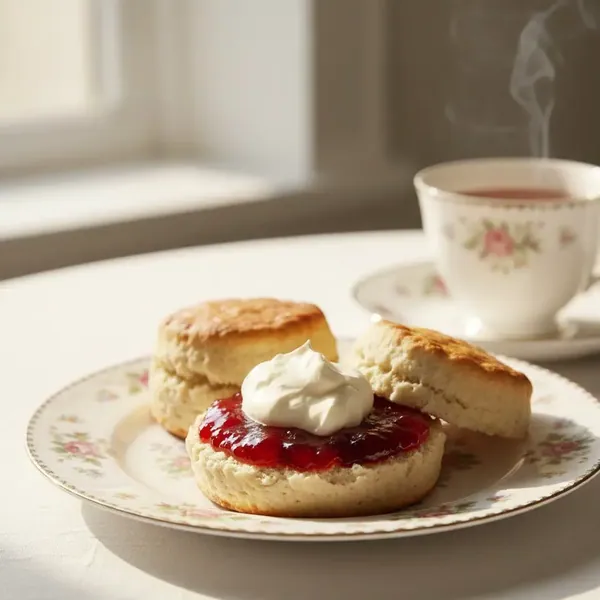
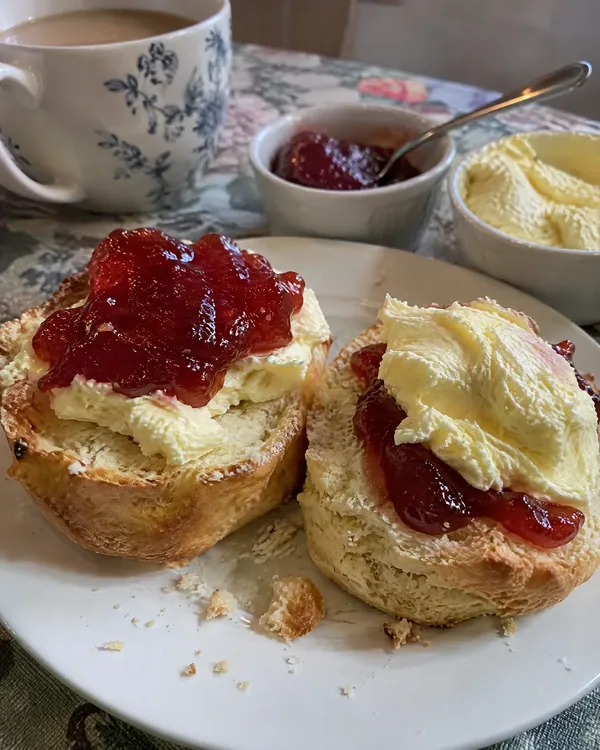
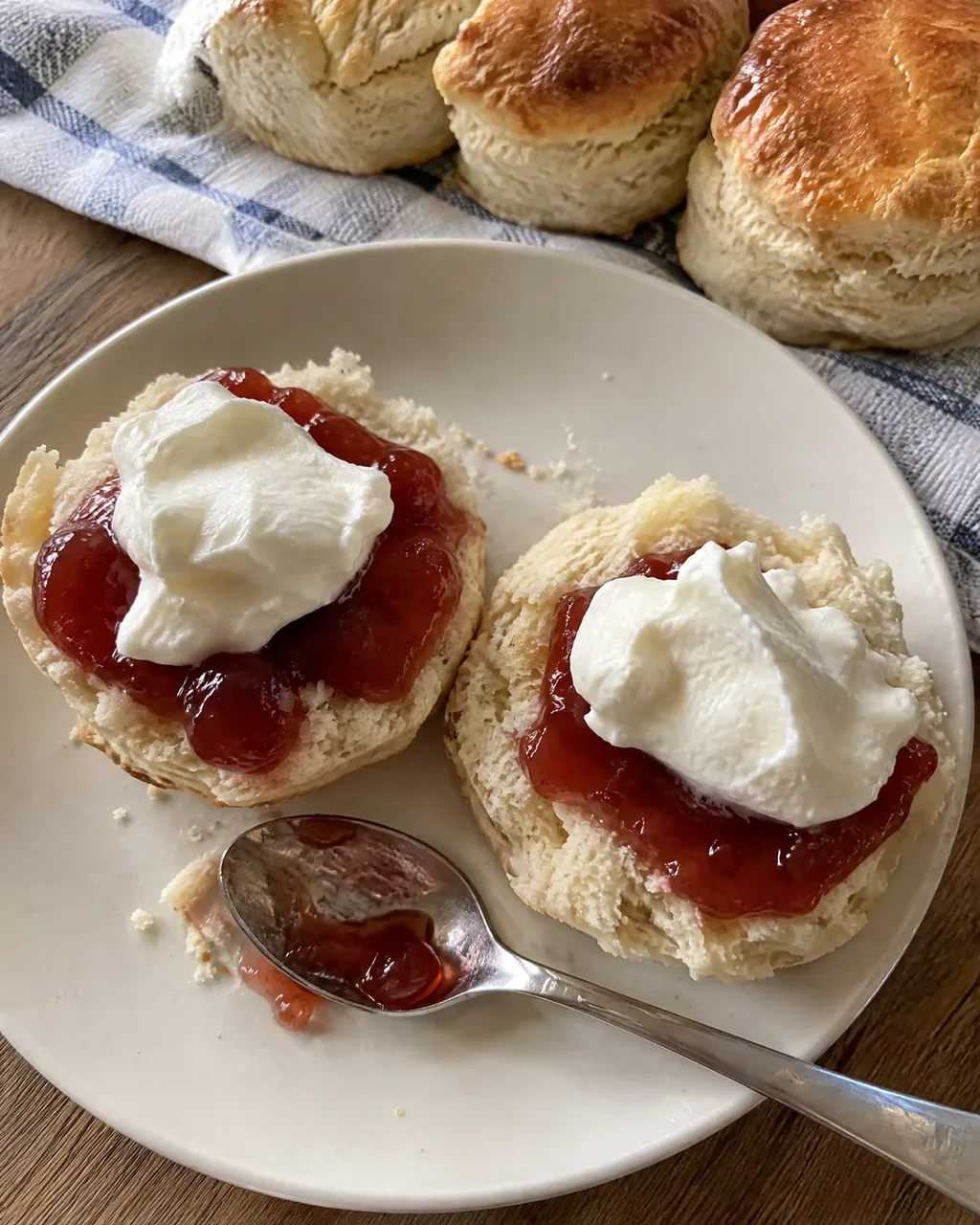
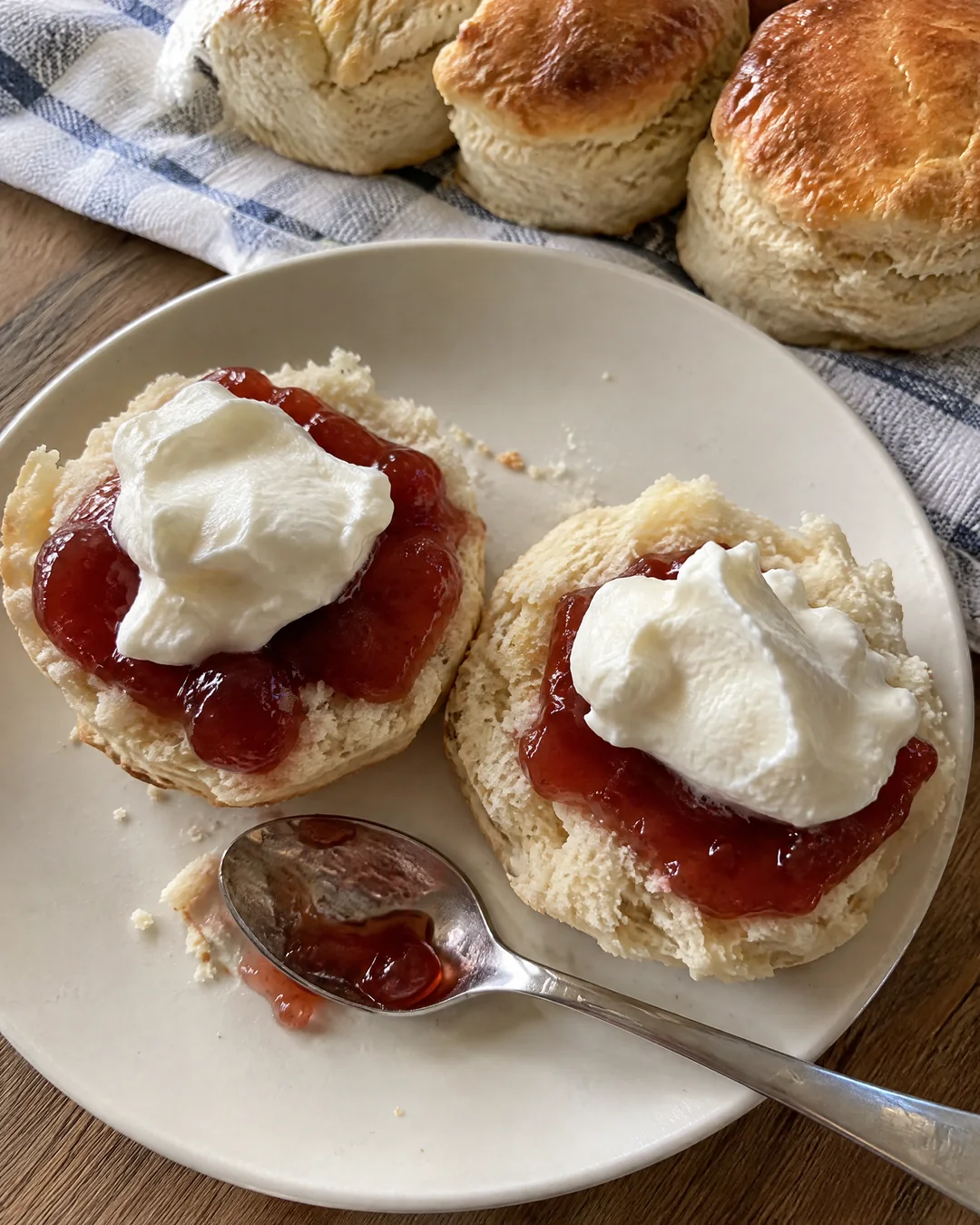
If you have never had a scone, think of a tall American biscuit, a little sweeter and softer, split in half and piled with strawberry jam and softly whipped cream. The only way to get lemonade scones wrong is to handle the dough too much. Stirred with a spoon, kneaded or rolled with a pin, it loses its bubbles and bakes into hard little rocks. Stirred with a butter knife for half a minute, patted out thick with floured fingers and cut straight down, it rises tall and feather light. Here are the exact amounts and how to handle the dough, the way it is done in Australia.
Why this lemonade scones works
- Cold fizzy lemonade. The bubbles are a second raising agent on top of the one in the flour, so the scones climb high.
- Cream in place of butter. The fat is already spread through the liquid, so nothing has to be rubbed in.
- A butter knife, not a spoon. A blade cuts the wet into the dry without working the dough.
- A thick pat, never a rolling pin. Dough patted to over an inch keeps its air and bakes tall.
- Baked touching each other. The scones hold each other up and rise instead of spreading, and the sides stay soft.
Ingredients
Makes about 10 scones cut with a 2 1/2 inch (6cm) cutter. The measurements are in US cups with grams in brackets.
For the scones
- 3 cups self-rising flour (375g), plus more for the counter
- 1 cup cold heavy whipping cream (240ml)
- 1 cup cold fizzy lemonade, meaning clear lemon-lime soda (240ml), freshly opened
- A little milk, for brushing the tops
To serve
- Strawberry or raspberry jam
- 1 cup heavy whipping cream (240ml), softly whipped
If you have no self-rising flour, whisk 3 cups of all-purpose flour (375g) with 4 1/2 teaspoons of baking powder and 3/4 teaspoon of salt. Use regular lemon-lime soda with sugar, not a diet one, and open it just before you pour so it is at its fizziest. Sparkling lemonade works as well.
How to make lemonade scones
Make the dough
- Heat the oven to 425 degrees (220°C). Line a baking sheet with parchment and dust it lightly with flour.
- Put the flour in a large bowl and make a well in the middle. Pour in the cold cream and then the cold lemonade. It will foam up.
- Stir with a butter knife, cutting through the mixture in a figure eight, just until it comes together into a soft, rough, sticky dough. This takes about 30 seconds. Stop while it still looks shaggy.
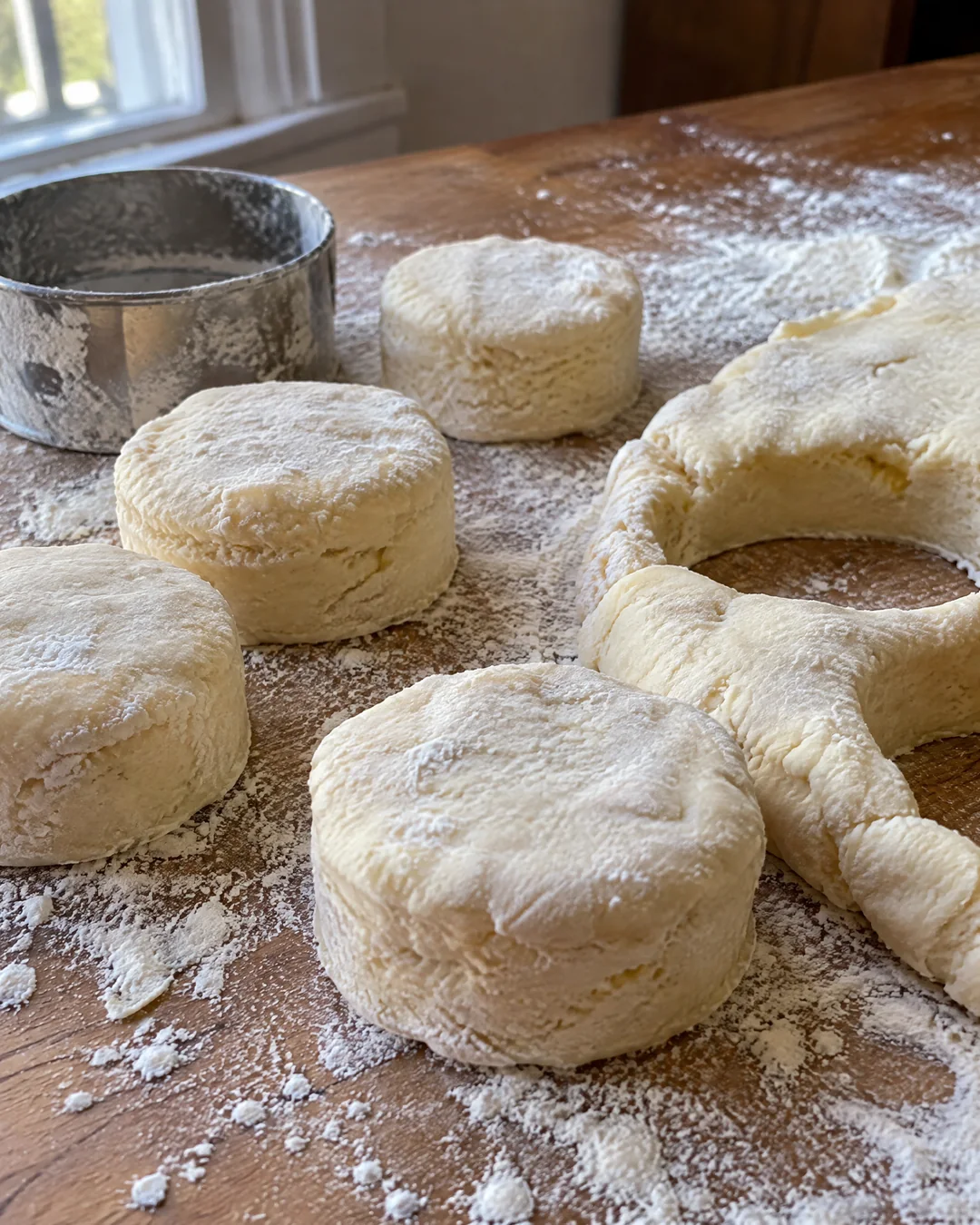
- Tip the dough onto a well floured counter. Flour your fingers and pat it gently into a slab about 1 1/4 inches (3cm) thick. Do not knead it and do not roll it.
Cut and bake
- Dip a 2 1/2 inch (6cm) round cutter in flour and cut straight down without twisting. Twisting seals the edges and the scones rise lopsided.
- Set the scones on the baking sheet so they are just touching each other. Gently press the scraps together, pat out and cut again.
- Brush the tops lightly with milk.
- Bake for 12 to 15 minutes, until the scones are tall, light golden on top and sound hollow when tapped underneath.
- Cool for 5 minutes under a clean tea towel, which keeps the tops soft. Pull the scones apart, split them and serve with jam and whipped cream.
Tips that make the difference
- Keep the cream and the lemonade in the refrigerator until the second you pour them. Cold dough holds its bubbles.
- Work fast. From the moment the lemonade hits the flour, the bubbles are escaping. Have the oven hot and the tray ready before you start.
- A sticky dough is a good dough. Flour your fingers and the counter rather than adding more flour to the bowl.
- No cutter? Pat the dough into a square and cut it into 9 or 12 pieces with a floured knife, pressing straight down.
- Split scones with your fingers or a fork, not a knife. A torn surface holds the jam and cream better.
Variations
- Date scones. Stir 3/4 cup of chopped dates into the flour before adding the liquid, the Australian cafe favorite.
- Raisin scones. Add 1/2 cup of raisins or sultanas to the flour.
- Cheese scones. Use plain sparkling water in place of the lemonade and add 1 cup of grated sharp cheddar and a pinch of salt.
- Lemon scones. Add the finely grated zest of one lemon to the flour and serve with lemon curd.
Storage and make-ahead
Lemonade scones are best on the day they are baked, ideally within a few hours.
Keep leftovers in a sealed container at room temperature for up to 2 days and warm them in a 300 degree (150°C) oven for 5 minutes.
Freeze baked, cooled scones in a bag for up to 2 months. Thaw at room temperature and warm in the oven before serving.
Frequently asked questions
What kind of lemonade do I use?
The clear, fizzy, lemon-lime soft drink, with sugar. In Australia that is simply called lemonade. Still lemonade made from lemons has no bubbles and will not lift the dough.
Why did my scones turn out hard?
The dough was handled too much or the lemonade was flat. Stir for no more than half a minute with a knife, pat rather than roll, and open the lemonade fresh.
Do they taste of lemonade?
Hardly at all. They taste like a light, slightly sweet scone. The lemonade is there for its bubbles and its sugar.
Can I use half-and-half or milk in place of the cream?
No. The cream is the only fat in the recipe. It must be heavy whipping cream or the scones will be dry and tough.
Have the jam and the cream on the table before the scones come out, because they will not last long enough to go cold.
Lemonade Scones (The Australian 3 Ingredient Scones That Rise Tall and Light)
Australian lemonade scones made from three ingredients: self-rising flour, cream and fizzy lemonade, stirred with a butter knife, patted out thick and baked close together until tall, pale gold and feather light, served with jam and whipped cream.
Ingredients
- 3 cups self-rising flour (375g), plus more for the counter
- 1 cup cold heavy whipping cream
- 1 cup cold fizzy lemonade, meaning clear lemon-lime soda (240ml), freshly opened
- A little milk, for brushing the tops
- Strawberry or raspberry jam
- 1 cup heavy whipping cream (240ml), softly whipped
Instructions
- Heat the oven to 425 degrees (220°C). Line a baking sheet with parchment and dust it lightly with flour.
- Put the flour in a large bowl and make a well in the middle. Pour in the cold cream and then the cold lemonade. It will foam up.
- Stir with a butter knife, cutting through the mixture in a figure eight, just until it comes together into a soft, rough, sticky dough. This takes about 30 seconds. Stop while it still looks shaggy.
- Tip the dough onto a well floured counter. Flour your fingers and pat it gently into a slab about 1 1/4 inches (3cm) thick. Do not knead it and do not roll it.
- Dip a 2 1/2 inch (6cm) round cutter in flour and cut straight down without twisting. Twisting seals the edges and the scones rise lopsided.
- Set the scones on the baking sheet so they are just touching each other. Gently press the scraps together, pat out and cut again.
- Brush the tops lightly with milk.
- Bake for 12 to 15 minutes, until the scones are tall, light golden on top and sound hollow when tapped underneath.
- Cool for 5 minutes under a clean tea towel, which keeps the tops soft. Pull the scones apart, split them and serve with jam and whipped cream.