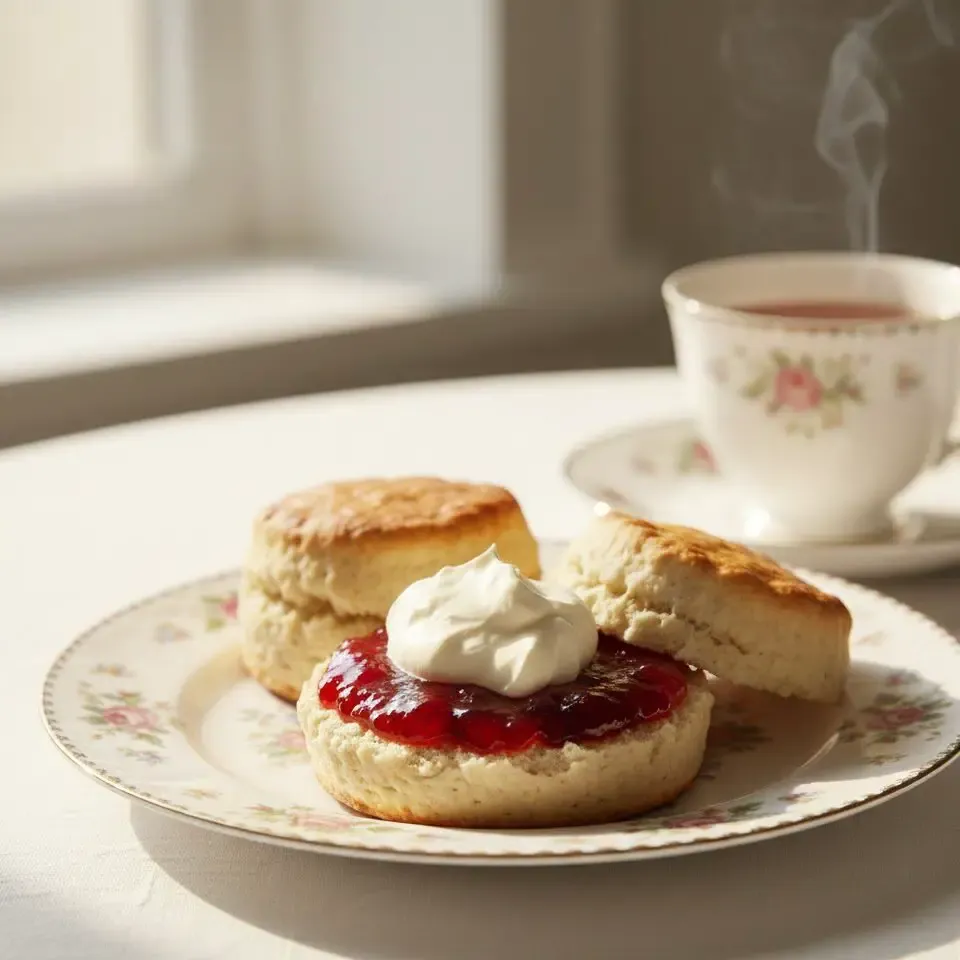
What Are Classic British Scones?
A classic British scone is a light, slightly sweet quick bread made from flour, butter, sugar, and milk. Unlike American biscuits or French pastries, British scones occupy a unique middle ground: tender but sturdy, rich but not heavy, sweet enough to complement jam yet restrained enough to let the butter and cream shine. The scone forms the centrepiece of the cream tea, one of the most beloved food rituals in British culture.
The tradition of the cream tea traces back to at least the 11th century. According to historical records, monks at Tavistock Abbey in Devon served bread with clotted cream and strawberry jam to workers rebuilding the abbey after a Viking raid. The cream tea as we recognise it today flourished during the 1850s, when the railway opened up Devon and Cornwall to holidaymakers who discovered the local tradition and carried it home across Britain.
No conversation about cream tea can avoid the great debate: cream first or jam first? In Devon, tradition dictates spreading clotted cream onto the split scone like butter, then adding a spoonful of jam on top. In Cornwall, the rule reverses: jam goes on first, followed by a generous cloud of clotted cream. Both camps defend their method passionately, and the rivalry remains one of the most charming food arguments in British culture. This recipe takes no sides; it simply delivers scones worthy of whichever topping order you prefer.
The key to a truly excellent scone lies in three principles that every tearoom baker knows: keep the butter cold, handle the dough gently, and never twist the cutter. Follow these rules and your scones will rise tall, bake golden, and break apart in tender layers every single time. If you enjoy traditional British baking, you will find these scones sit perfectly alongside our yogurt scones recipe and our traditional Welsh cakes.
Ingredients for Perfect Classic Scones
Every ingredient in this recipe serves a specific purpose. Read through the complete list before you begin so that everything sits measured and ready on your worktop.
| Ingredient | Quantity | Notes |
|---|---|---|
| Self-raising flour | 350 g | Plus extra for dusting |
| Salt | Pinch | Fine sea salt preferred |
| Unsalted butter | 85 g | Chilled and cubed |
| Caster sugar | 2 tbsp | Just enough sweetness without overpowering |
| Whole milk | 175 ml | Plus extra for brushing |
| Lemon juice | 1 tsp | Creates a buttermilk effect with the milk |
| Vanilla extract | 1/2 tsp | Pure extract, not essence |
| Egg (optional) | 1 | Beaten, for glazing only |
For serving:
| Accompaniment | Quantity | Notes |
|---|---|---|
| Strawberry jam | 150 g | Good-quality, with visible fruit pieces |
| Clotted cream | 200 g | Rodda’s or another Westcountry brand |
Why Cold Butter Matters
Cold butter is the single most important factor in achieving tall, flaky scones. When small pieces of chilled butter enter the hot oven, they melt rapidly and release steam. That burst of steam pushes the dough upward, creating air pockets that give scones their characteristic light, layered texture. Room-temperature butter blends too smoothly into the flour, producing a denser, flatter result with a bread-like crumb. Cut the butter into small cubes straight from the fridge and work quickly so it stays cold throughout the mixing process.
The Lemon Juice Trick
Adding a teaspoon of lemon juice to the milk mimics the acidity of buttermilk. When the acid meets the raising agent in the self-raising flour, it creates additional carbon dioxide bubbles that boost the rise. Let the milk and lemon juice stand together for one minute before adding to the flour; the milk will thicken slightly and look a little curdled, which is exactly right. This simple trick produces noticeably taller, more tender scones with almost no extra effort.
Smart Substitutions
For a richer scone, replace 50 ml of the milk with double cream. The extra fat creates a more tender crumb and adds a subtle richness. For fruit scones, fold 75 g of sultanas or dried mixed fruit into the dough just after the wet ingredients combine. Our easy banana flapjack recipe shows how fruit additions transform a classic base recipe. For a vegan version, use plant-based block margarine (straight from the fridge) and oat milk with the lemon juice, and brush the tops with oat milk instead of egg.
Equipment You Need
Classic scones require only basic baking equipment:
- A large mixing bowl
- A fine-mesh sieve
- A table knife or pastry blender for cutting in butter
- A small jug for the milk mixture
- A rolling pin
- A 5 cm round cutter (fluted or plain)
- A baking tray lined with baking parchment
- A pastry brush for glazing
- A wire cooling rack
A metal round cutter produces the cleanest cut and the straightest rise. If you do not own one, use the rim of a glass tumbler dusted in flour. Avoid using anything with a dull edge, as a ragged cut seals the dough and restricts the rise.
How to Make Classic Scones (Step-by-Step)
Follow these detailed steps precisely and your scones will rise beautifully, break apart in tender layers, and taste every bit as good as the finest tearoom version.
Setting Up
Step 1: Preheat and Prepare
Set your oven to 220 degrees Celsius (200 degrees Celsius fan). Line a baking tray with baking parchment.
Mixing the Dry Ingredients
Step 2: Sift the Flour
Sift the self-raising flour and the pinch of salt into a large mixing bowl. Sifting aerates the flour and ensures the raising agent distributes evenly, which promotes a consistent rise across every scone.
Rubbing in the Butter
Step 3: Cut in the Cold Butter
Add the cold, cubed butter to the flour. Using your fingertips, rub the butter into the flour quickly and lightly, lifting the mixture as you work to incorporate air. Continue until the mixture resembles fine breadcrumbs with no large lumps of butter visible. This should take about three to four minutes. Work swiftly to prevent the warmth of your hands from softening the butter.
[!TIP] For even faster results, grate frozen butter directly into the flour using a coarse box grater. This distributes the fat evenly without any rubbing and keeps the butter extremely cold throughout.
Step 4: Stir in the Sugar
Add the caster sugar to the breadcrumb mixture and stir it through with a table knife until evenly combined.
Creating the Dough
Step 5: Prepare the Wet Ingredients
Pour the whole milk into a small jug. Add the lemon juice and vanilla extract. Stir briefly and let the mixture stand for one minute. The milk will thicken slightly and may look a little curdled; this reaction between the acid and the milk proteins creates a tender, more flavourful crumb.
Step 6: Bring the Dough Together
Make a well in the centre of the flour mixture and pour in most of the milk mixture, reserving about two tablespoons. Use a table knife to cut through the mixture in swift, short strokes, gradually drawing the flour into the liquid. Continue until the dough just comes together into a soft, slightly shaggy mass. Add the remaining milk only if the dough feels too dry. Do not overmix; a rough dough produces lighter scones than a smooth one. Overworking develops gluten, which makes scones tough and chewy instead of tender and crumbly.
Shaping and Cutting
Step 7: Knead Lightly and Roll
Turn the dough out onto a lightly floured surface. Fold it over on itself three or four times with gentle hands, just enough to bring it into a cohesive round. Press or roll the dough out to a thickness of 2 to 3 cm. Resist the temptation to roll thinner; thick dough gives tall, impressive scones with a beautifully layered interior.
Step 8: Cut the Scones
Dip a 5 cm round cutter into flour and press straight down through the dough in one clean motion. Do not twist the cutter. Twisting seals the edges and prevents the scone from rising evenly. Lift the cutter cleanly and place each round onto the prepared baking tray. Set the scones close together, almost touching; this encourages them to rise upward rather than spreading outward. Gather any remaining dough scraps, press them gently together (do not re-knead), and cut more rounds. The second pressing will produce slightly less perfect scones, but they will still taste excellent.
Glazing and Baking
Step 9: Glaze the Tops
Brush the top of each scone lightly with whole milk or beaten egg. Use a gentle touch and avoid letting the glaze drip down the sides, as this can seal the cut edges and restrict the rise. The glaze creates a beautiful golden-brown finish and adds a slight sheen to the baked scone.
Step 10: Bake Until Tall and Golden
Place the baking tray on the middle shelf of the oven and bake for 10 to 12 minutes. The scones are ready when they have risen dramatically, the tops glow a deep golden brown, and the sides look dry and set. Underbaked scones taste doughy in the centre; properly baked scones feel light when you pick them up and sound slightly hollow when tapped on the base. According to The Great British Bake Off, the hallmark of a well-made scone is a tall rise with a visible horizontal split around the middle, showing the internal layers.
Cooling and Serving
Step 11: Cool and Serve Warm
Transfer the scones to a wire cooling rack and let them cool for five to ten minutes. Scones taste best served slightly warm, not piping hot, as the crumb needs a few minutes to set its structure. Split each scone in half horizontally (never cut with a knife; pull them apart gently with your hands for a rustic, textured surface) and load up with jam and clotted cream.
Troubleshooting Your Scones
Even a simple recipe can produce unexpected results. Here are the most common issues and how to prevent them.
Why Didn’t My Scones Rise?
Flat scones almost always result from one of three causes: expired baking powder (or expired self-raising flour), a twisted cutter, or overworked dough. Check the date on your flour and baking powder before you start. Press the cutter straight down in one clean motion. And stop mixing the moment the dough comes together; a shaggy, rough dough rises better than a smooth one.
My Scones Are Dense and Heavy
Dense scones usually mean the dough received too much handling. Every fold and press develops gluten, which tightens the crumb. Limit your kneading to three or four gentle folds, and roll only once. Also check that your butter stayed cold throughout the process; warm butter produces a tighter, less airy texture.
The Tops Are Too Dark But the Inside Is Raw
This happens when the oven runs too hot. Use an oven thermometer to verify the temperature, as many domestic ovens run 10 to 15 degrees higher than the dial indicates. If the tops brown too quickly, move the tray to a lower shelf and loosely tent a piece of foil over the scones for the remaining baking time.
My Scones Spread Sideways Instead of Rising
Spreading usually indicates that the dough was too wet or rolled too thin. Add the milk gradually, reserving a little, so you can judge the consistency before committing all the liquid. Roll the dough to at least 2 cm thick; thinner dough lacks the height to rise dramatically. Placing scones close together on the tray also encourages upward rise.
The Scones Taste Bland
Scones rely on their accompaniments for bold flavour, but they should still taste subtly sweet and buttery on their own. Ensure you use real butter (not margarine) and pure vanilla extract (not synthetic essence). A generous pinch of salt enhances all the other flavours; without it, the scone tastes flat. Our strawberry jam recipe pairs perfectly if you want to control both the scone and the jam quality.
Recipe Variations
Classic scones adapt beautifully to different additions while keeping their essential light, tender character.
Fruit Scones
Fold 75 g of sultanas, raisins, or dried mixed fruit into the dough immediately after the wet ingredients combine. Toss the fruit in a tablespoon of flour before adding to prevent it from sinking during baking. Fruit scones pair especially well with cream without jam, as the dried fruit provides its own sweetness.
Cheese Scones
Omit the sugar and vanilla. Add 100 g of grated mature cheddar and half a teaspoon of mustard powder to the flour at the rubbing-in stage. Scatter a little extra cheese on top before baking. These savoury scones make a brilliant partner for soups, salads, and afternoon picnics. Our cheese and onion bread recipe shares the same affection for sharp, punchy cheese in baking.
Lemon and Poppy Seed Scones
Add the finely grated zest of two lemons and two tablespoons of poppy seeds to the dry ingredients at Step 2. The lemon lifts the entire flavour profile and the poppy seeds add a gentle crunch. Serve with lemon curd and cream for an elegant twist on the classic cream tea.
Chocolate Chip Scones
Fold 75 g of dark chocolate chips into the dough after the wet ingredients combine. The melted pockets of chocolate create an indulgent treat that children and adults love equally. Serve warm with just butter, or go all out with clotted cream and a drizzle of British chocolate custard.
Serving and Storage
How to Serve a Proper Cream Tea
A proper cream tea requires just three elements: freshly baked scones, clotted cream, strawberry jam, and a pot of strong tea. Warm the scones slightly before serving if they have cooled completely; a minute in a low oven or ten seconds in the microwave brings back that just-baked softness. Split each scone in half by pulling it apart gently with your hands. Then choose your allegiance: Devon style (cream first, jam on top) or Cornish style (jam first, cream on top). Either way, apply both toppings generously. A cream tea is not the time for restraint.
Brew a pot of strong English breakfast tea or a fragrant Earl Grey to accompany the scones. The tannins in black tea cut through the richness of the cream beautifully. For a special occasion, set out the scones on a tiered cake stand alongside our classic Victoria sponge for a full afternoon tea spread.
Storage Guidelines
Fresh scones taste best on the day you bake them, but they keep reasonably well in an airtight container at room temperature for up to two days. Warm them briefly in a low oven (140 degrees Celsius for five minutes) before serving to restore their fresh-from-the-oven texture. Avoid storing scones in the fridge, as the cold air dries them out and toughens the crumb.
Can You Freeze Scones?
Yes, scones freeze brilliantly at two stages. Freeze the unbaked, cut scones on a lined tray until solid, then transfer to a freezer bag. Bake from frozen, adding two to three minutes to the baking time. Alternatively, freeze fully baked and cooled scones in a sealed bag for up to three months. Defrost at room temperature and warm gently in the oven before serving.
Frequently Asked Questions (FAQ)
What is the difference between a cream tea and an afternoon tea?
A cream tea is a simpler affair consisting of scones, clotted cream, strawberry jam, and a pot of tea. An afternoon tea is more elaborate and typically includes a tiered selection of finger sandwiches, cakes, pastries, and scones, served with tea. Both traditions originated in England, but they represent very different levels of formality and preparation.
Should I put jam or cream on the scone first?
This depends entirely on where your loyalties lie. In Devon, the tradition places clotted cream on the scone first (like butter), with jam spooned on top. In Cornwall, jam goes on first, followed by a generous dollop of cream. Both methods taste equally delicious, and the debate between the two remains one of the most enduring and charming food arguments in British culture.
Why should you not twist the cutter when cutting scones?
Twisting the cutter as you press through the dough seals the edges of the cut. Those sealed edges prevent the scone from rising evenly during baking, producing a lopsided or stunted rise. Press straight down in one clean motion and lift cleanly. This allows the layers of dough to expand freely in the oven, creating a tall, evenly risen scone with a visible horizontal split.
Can I make scone dough ahead of time?
You can prepare the dough up to the cutting stage, place the cut scones on a lined tray, cover tightly with cling film, and refrigerate for up to four hours. The cold rest actually benefits the scones by firming the butter further, which promotes an even better rise. Alternatively, freeze the unbaked scones and bake directly from frozen.
What makes scones dense instead of fluffy?
Dense scones result from overworking the dough, which develops excess gluten and creates a tight, chewy crumb. Other causes include using warm butter (which blends too smoothly into the flour) and rolling the dough too thin. Follow the gentle handling approach in this recipe: mix until just combined, fold only three or four times, and roll to at least 2 cm thick.
Can I use plain flour instead of self-raising flour?
Yes, substitute 350 g of plain flour mixed with four teaspoons of baking powder and the pinch of salt. Sift everything together twice to distribute the raising agent evenly. Self-raising flour simply contains pre-mixed baking powder, so adding your own achieves the same result. Always check that your baking powder has not expired; old baking powder produces flat, dense scones.
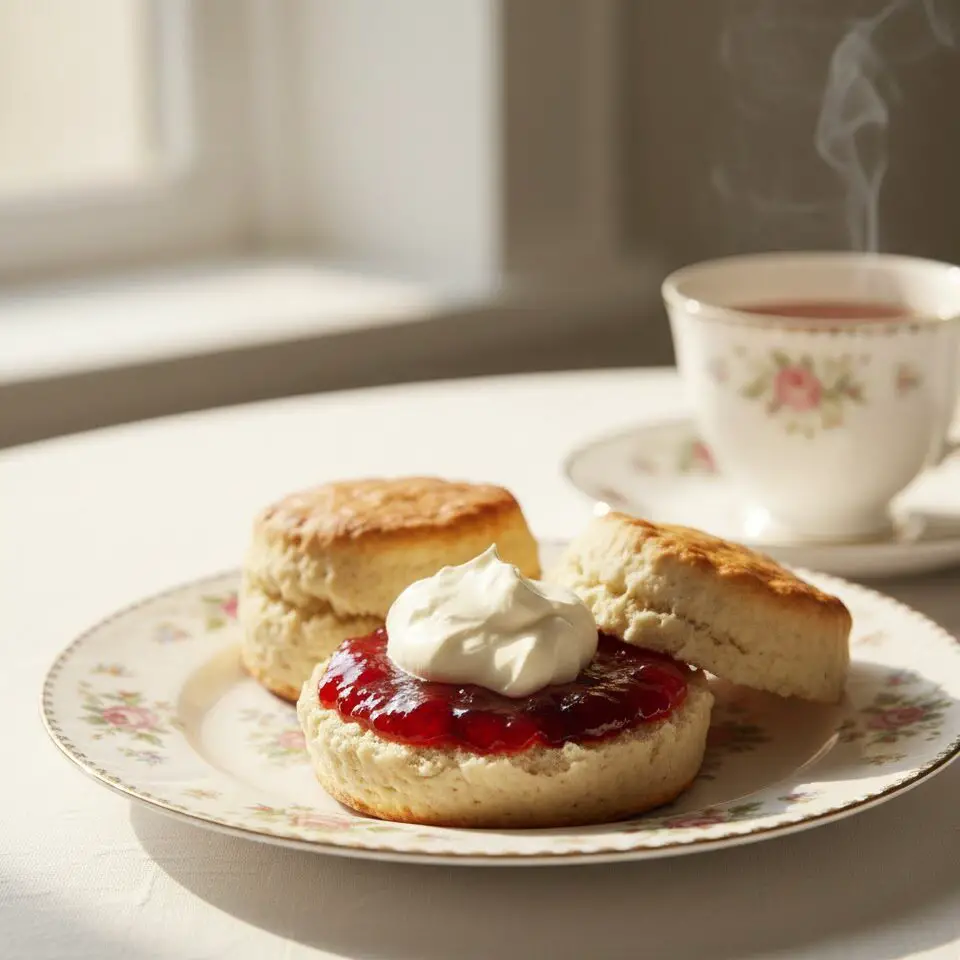
Classic Scones Recipe: Fluffy British Scones with Jam and Clotted Cream
Tall, golden, beautifully risen classic scones made with cold butter, self-raising flour, and a clever lemon juice trick. Serve warm with strawberry jam and clotted cream for a proper British cream tea. Makes 8 scones.
Ingredients
- 350 g self-raising flour, plus extra for dusting
- Pinch of fine sea salt
- 85 g unsalted butter, chilled and cubed
- 2 tbsp caster sugar
- 175 ml whole milk, plus extra for brushing
- 1 tsp lemon juice
- 1/2 tsp vanilla extract
- 1 egg, beaten (optional, for glazing)
- 150 g strawberry jam
- 200 g clotted cream
Instructions
- Preheat the oven to 220 degrees Celsius (200 degrees Celsius fan). Line a baking tray with baking parchment.
- Sift the self-raising flour and salt into a large mixing bowl.
- Add the cold, cubed butter. Rub into the flour with your fingertips until the mixture resembles fine breadcrumbs.
- Stir in the caster sugar.
- In a small jug, combine the milk, lemon juice, and vanilla extract. Let stand for 1 minute until slightly thickened.
- Make a well in the flour mixture. Pour in most of the milk mixture. Cut through with a table knife until a soft, slightly shaggy dough forms. Add remaining milk only if needed.
- Turn the dough onto a lightly floured surface. Fold gently 3 to 4 times, then roll to 2 to 3 cm thick.
- Dip a 5 cm round cutter in flour. Press straight down through the dough without twisting. Place rounds close together on the baking tray. Gently re-press scraps and cut more rounds.
- Brush the tops lightly with milk or beaten egg.
- Bake for 10 to 12 minutes until risen and golden brown.
- Cool on a wire rack for 5 to 10 minutes. Split gently by hand and serve warm with jam and clotted cream.
Nutrition
- Serving
- 1 scone with toppings
- Calories
- 320 calories
- Sugar
- 12
- Sodium
- 210
- Fat
- 15
- Saturatedfat
- 9
- Unsaturatedfat
- 4
- Transfat
- 0
- Carbohydrate
- 40
- Fiber
- 1
- Protein
- 5
- Cholesterol
- 45