In this article
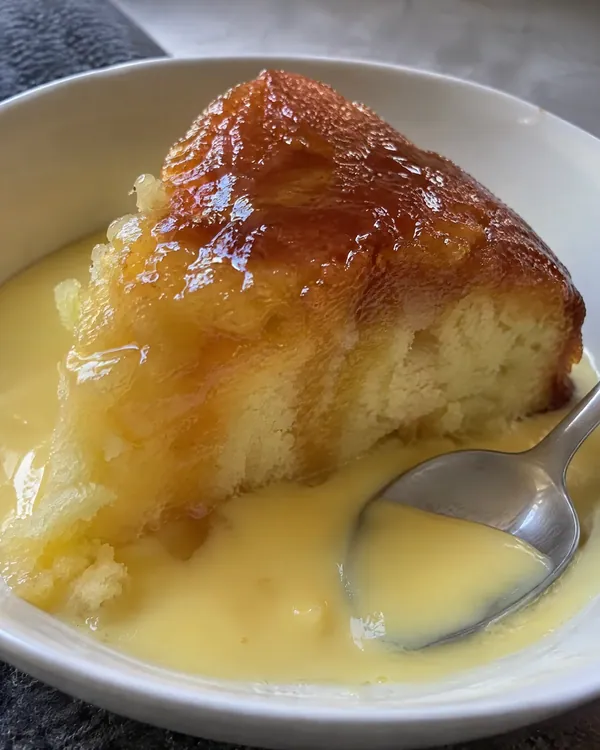
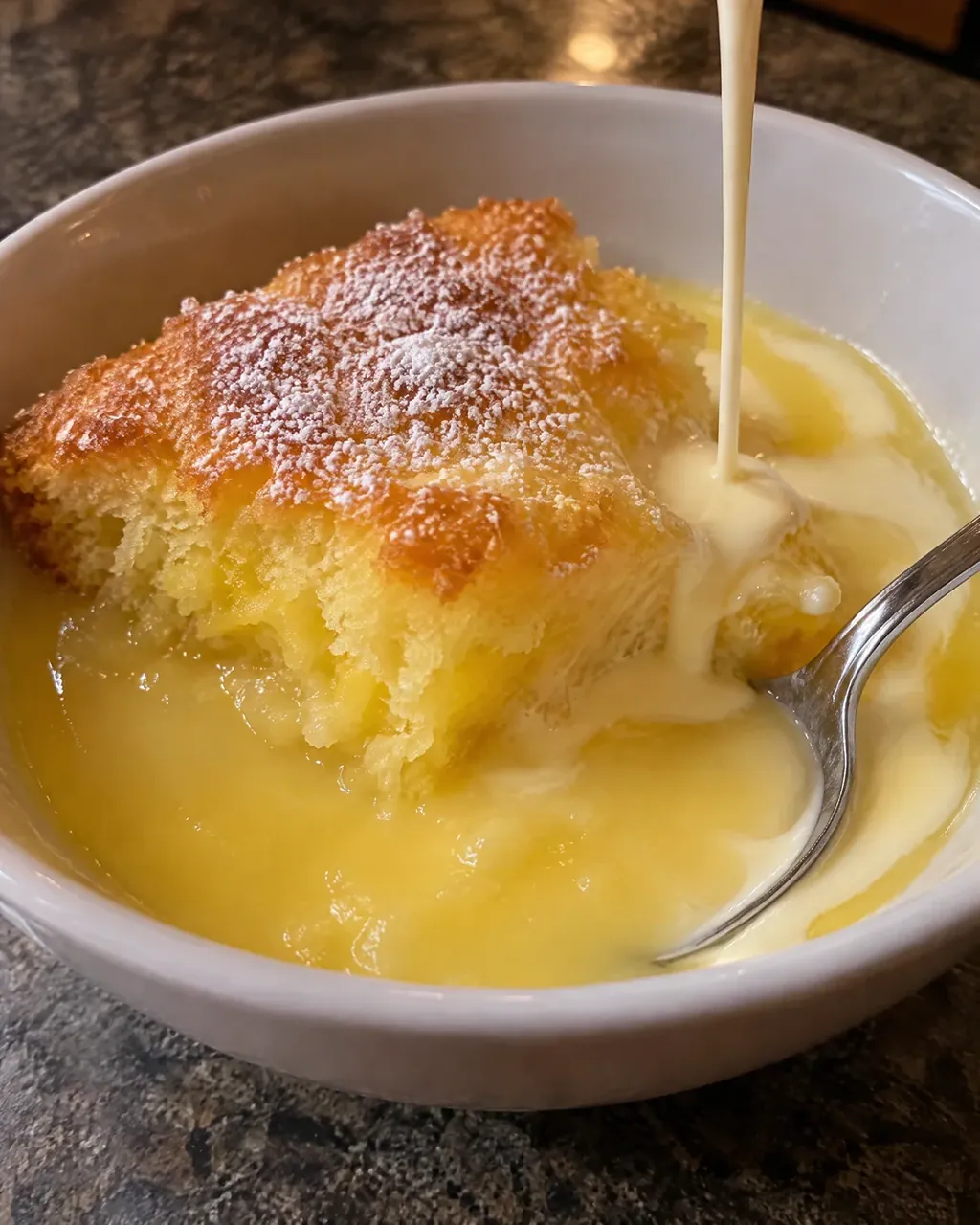
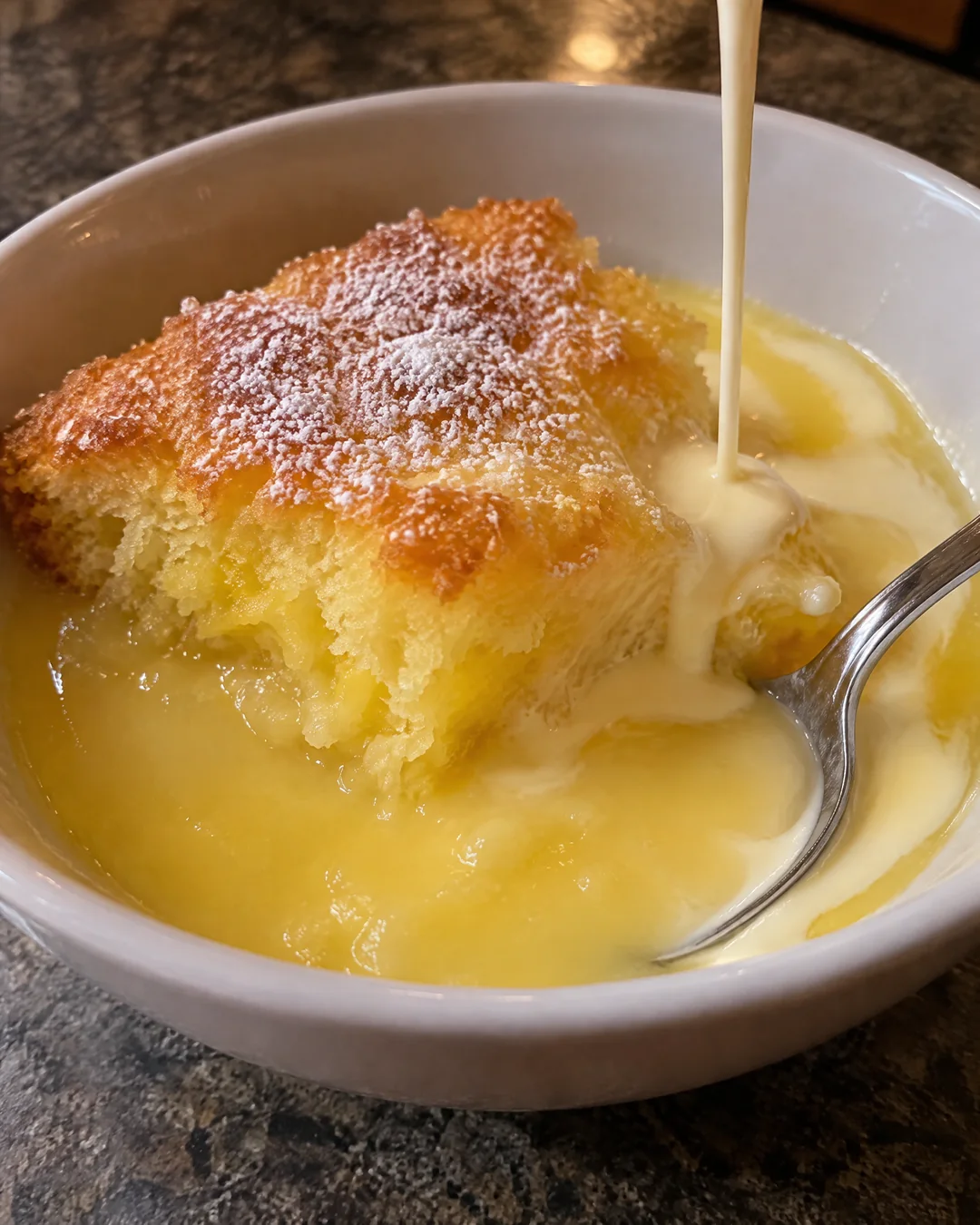
Ask an Australian what pudding their mother made and a great many will say lemon delicious before you have finished the question. It has been on family tables there for generations, written on cards and passed down, and it is made from what is in any kitchen: butter, sugar, eggs, a little flour, milk and a couple of lemons. In America a close cousin goes by the name lemon pudding cake. What makes people fond of it is the small surprise at the table. The spoon goes through a light golden sponge and comes up with a pool of sharp lemon custard from underneath, and nobody made a sauce.
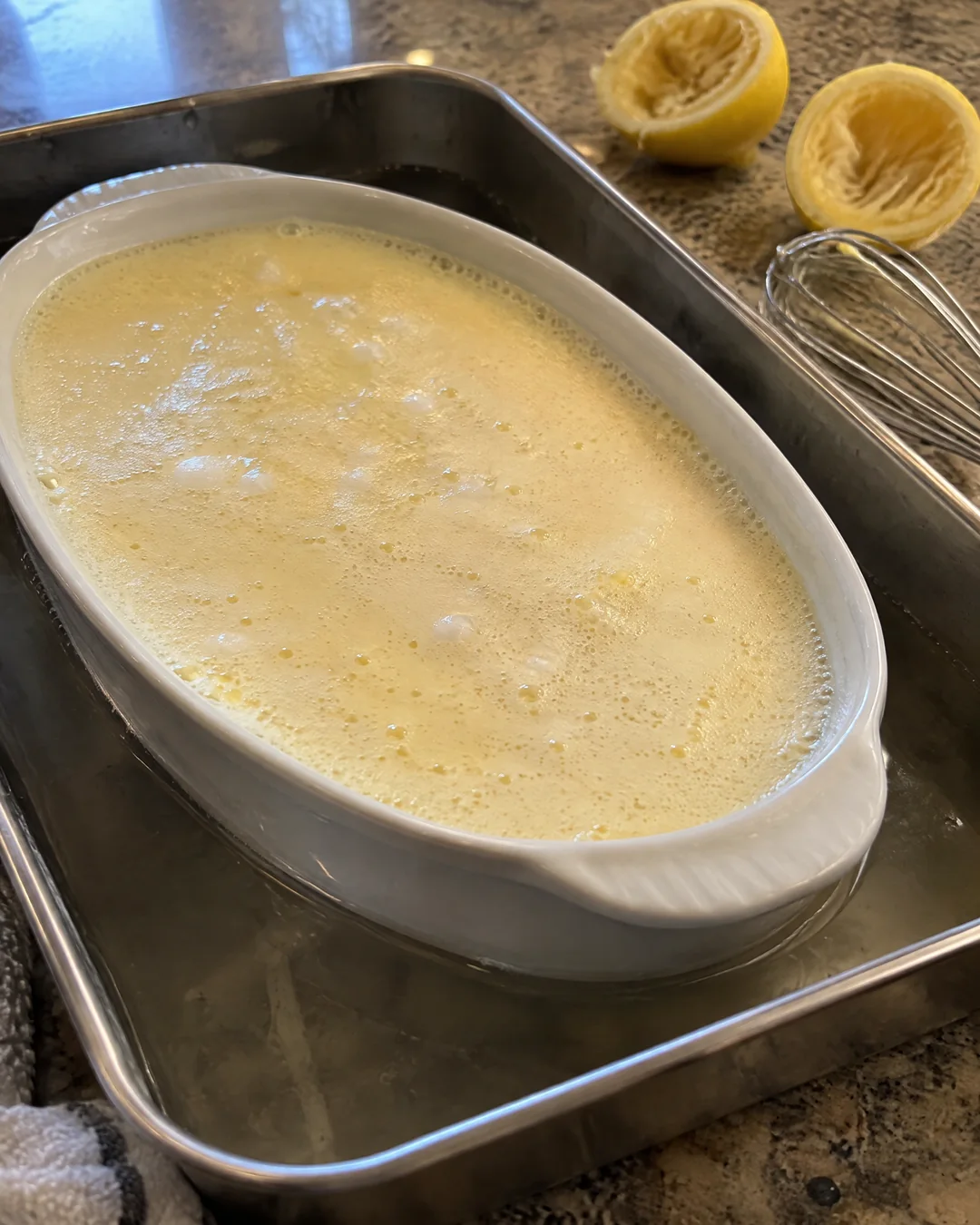
It goes into the oven as one thin batter, and to be honest it looks wrong: curdled and split, as if something has gone badly. It has not. The beaten egg whites folded in at the end float to the top and bake into the sponge, the heavier part sinks and thickens into custard, and the pan of hot water the dish stands in keeps that custard soft. Fold the whites in badly, or leave out the water, and you get a flat lemon cake with a rubbery bottom and no sauce at all. Here is how to fold in the whites, and why the dish sits in water.
Why this lemon delicious works
- Very little flour. Just enough to set the top into a sponge, and too little to thicken the whole batter, so a layer of custard is left underneath.
- Egg whites beaten separately. They are what float to the top and become the sponge. Folded in gently, they keep their air.
- A batter that looks curdled. Lemon juice splits the milk a little. That is expected and disappears in the oven.
- A pan of hot water around the dish. It holds the bottom of the pudding at a gentle heat, so the custard stays soft and creamy instead of boiling and turning rubbery.
- Served warm, soon after baking. The sponge goes on soaking up the sauce as it stands, so it is at its best in the first fifteen minutes.
Ingredients
Makes one pudding in a 1 1/2 quart (1.5 litre) baking dish, enough for 6. The measurements are in US cups with grams in brackets.
For the pudding
- 4 tablespoons butter (56g), soft, plus a little for the dish
- 3/4 cup granulated sugar (150g)
- Finely grated zest of 2 lemons
- 3 large eggs, at room temperature, separated
- 1/3 cup all-purpose flour (45g)
- 1/2 teaspoon baking powder
- 1 pinch of salt
- 1/3 cup fresh lemon juice (80ml), from about 2 lemons
- 1 1/4 cups whole milk (300ml), at room temperature
To serve
- Powdered sugar, for dusting
- Pouring cream or vanilla ice cream
In Australia the pudding is made with self-raising flour: if you have it, use 1/3 cup (45g) and leave out the baking powder. Use fresh lemons, not bottled juice, since the zest carries most of the flavor. Take the milk and eggs out of the refrigerator half an hour ahead; a cold batter separates less cleanly. The mixing bowl and beaters for the egg whites must be completely clean and free of grease, or the whites will not stand up.
How to make lemon delicious
Prepare the dish and the water
- Heat the oven to 350 degrees (175°C). Butter a 1 1/2 quart baking dish, about 2 inches deep. Find a roasting pan or a larger baking pan that the dish fits inside with room around it. Put a kettle of water on to boil.
Make the batter
- In a large bowl, beat the soft butter, sugar and lemon zest together until pale and creamy, about 3 minutes with an electric mixer. With so little butter it will look sandy at first, then come together.
- Beat in the egg yolks one at a time. Stir in the flour, baking powder and salt.
- Stir in the lemon juice, then the milk, a little at a time, until you have a thin, smooth batter. It may look slightly curdled. That is as it should be.
- In a clean bowl with clean beaters, beat the egg whites until they hold firm peaks that stand up when the beaters are lifted, but still look glossy and smooth. Stop before they turn dry and lumpy.
Fold in the whites
- Stir one large spoonful of the whites into the lemon batter to loosen it. Tip the rest of the whites on top.
- Fold them in with a large metal spoon or a spatula: cut down through the middle to the bottom of the bowl, sweep along the bottom and lift the batter over the top, turning the bowl a little each time. Stop when there are no lumps of white bigger than a pea. The batter will be thin and foamy, with small flecks of white still showing. Do not stir or beat, which knocks out the air.
Bake in the water bath
- Pour the batter into the buttered dish. Set the dish in the roasting pan and put the pan on the middle shelf of the oven with the shelf pulled out a little.
- Pour boiling water from the kettle into the roasting pan until it comes halfway up the side of the dish. Slide the shelf in gently.
- Bake for 40 to 45 minutes, until the top is golden brown, puffed, and springs back when touched lightly in the center. The pudding should still wobble slightly underneath when the dish is nudged.
- Lift the dish out of the water carefully and let it stand for 5 minutes. Dust with powdered sugar and serve warm, spooning right to the bottom of the dish so each serving has both sponge and sauce, with cream or ice cream.
Tips that make the difference
- Stop folding early. A few small flecks of egg white in the batter do no harm, but a batter stirred smooth has lost the air that makes the sponge.
- Do not skip the water. Baked dry, the bottom of the pudding boils, the custard scrambles, and you get a dense, rubbery layer and no sauce.
- Take it out while it still wobbles. Baked until it is firm all the way down, the sauce has all set into the sponge.
Variations
- Individual puddings. Divide the batter among six buttered 6 ounce ramekins, stand them in the water bath and bake for 25 to 30 minutes.
- Lime delicious. Use limes in place of the lemons, with the zest of 3 limes and the same amount of juice.
Storage and make-ahead
Lemon delicious is meant to be eaten warm from the oven. Leftovers keep covered in the refrigerator for 2 days, though the sponge will have soaked up much of the sauce.
To reheat, warm single servings in the microwave for 20 to 30 seconds. It is also very good cold, when the bottom layer sets like a lemon custard.
Frequently asked questions
How do I fold in the egg whites?
Loosen the batter with one spoonful of whites first, then add the rest and fold with a large spoon, cutting down through the middle and lifting the batter over the top. Stop when the largest lumps of white are the size of a pea.
Why does the dish sit in a pan of water?
The water never gets hotter than its boiling point, so it keeps the bottom of the pudding at a gentle, even heat. That lets the custard layer thicken softly instead of boiling, curdling and turning rubbery.
Why did my lemon delicious have no sauce?
It was baked too long, baked without the water bath, or the egg whites were stirred in until the batter went flat. Take it out when the top is golden and springy but the pudding still wobbles.
Dig the spoon right to the bottom of the dish, and make sure everybody gets their part of the sauce.
Lemon Delicious Pudding (The Australian Pudding That Makes Its Own Sauce)
Australian lemon delicious pudding: one thin lemon batter with beaten egg whites folded in, baked in a dish standing in hot water, that separates in the oven into a light golden sponge on top and a sharp lemon custard sauce underneath.
Ingredients
- 4 tablespoons butter (56g), soft, plus a little for the dish
- 3/4 cup granulated sugar
- Finely grated zest of 2 lemons
- 3 large eggs, at room temperature, separated
- 1/3 cup all-purpose flour
- 1/2 teaspoon baking powder
- 1 pinch of salt
- 1/3 cup fresh lemon juice (80ml), from about 2 lemons
- 1 1/4 cups whole milk (300ml), at room temperature
- Powdered sugar, for dusting
- Pouring cream or vanilla ice cream
Instructions
- Heat the oven to 350 degrees (175°C). Butter a 1 1/2 quart baking dish, about 2 inches deep. Find a roasting pan or a larger baking pan that the dish fits inside with room around it. Put a kettle of water on to boil.
- In a large bowl, beat the soft butter, sugar and lemon zest together until pale and creamy, about 3 minutes with an electric mixer. With so little butter it will look sandy at first, then come together.
- Beat in the egg yolks one at a time. Stir in the flour, baking powder and salt.
- Stir in the lemon juice, then the milk, a little at a time, until you have a thin, smooth batter. It may look slightly curdled. That is as it should be.
- In a clean bowl with clean beaters, beat the egg whites until they hold firm peaks that stand up when the beaters are lifted, but still look glossy and smooth. Stop before they turn dry and lumpy.
- Stir one large spoonful of the whites into the lemon batter to loosen it. Tip the rest of the whites on top.
- Fold them in with a large metal spoon or a spatula: cut down through the middle to the bottom of the bowl, sweep along the bottom and lift the batter over the top, turning the bowl a little each time. Stop when there are no lumps of white bigger than a pea. The batter will be thin and foamy, with small flecks of white still showing. Do not stir or beat, which knocks out the air.
- Pour the batter into the buttered dish. Set the dish in the roasting pan and put the pan on the middle shelf of the oven with the shelf pulled out a little.
- Pour boiling water from the kettle into the roasting pan until it comes halfway up the side of the dish. Slide the shelf in gently.
- Bake for 40 to 45 minutes, until the top is golden brown, puffed, and springs back when touched lightly in the center. The pudding should still wobble slightly underneath when the dish is nudged.
- Lift the dish out of the water carefully and let it stand for 5 minutes. Dust with powdered sugar and serve warm, spooning right to the bottom of the dish so each serving has both sponge and sauce, with cream or ice cream.