In this article
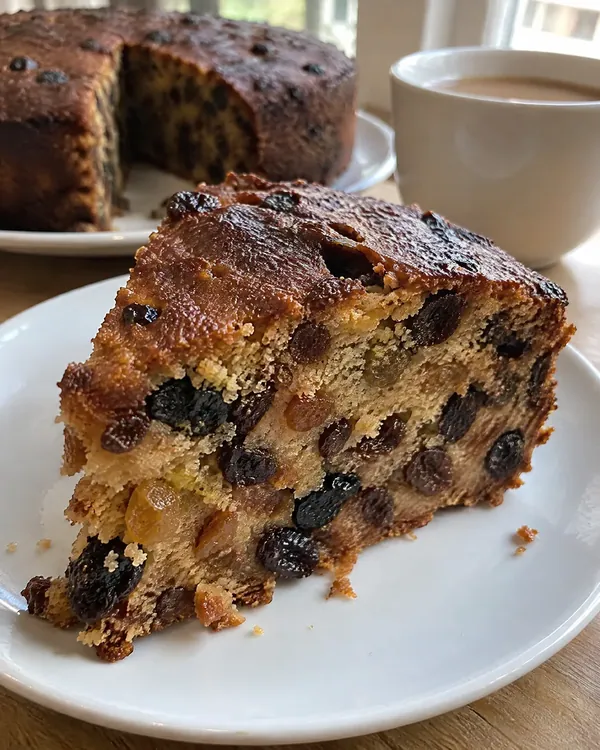
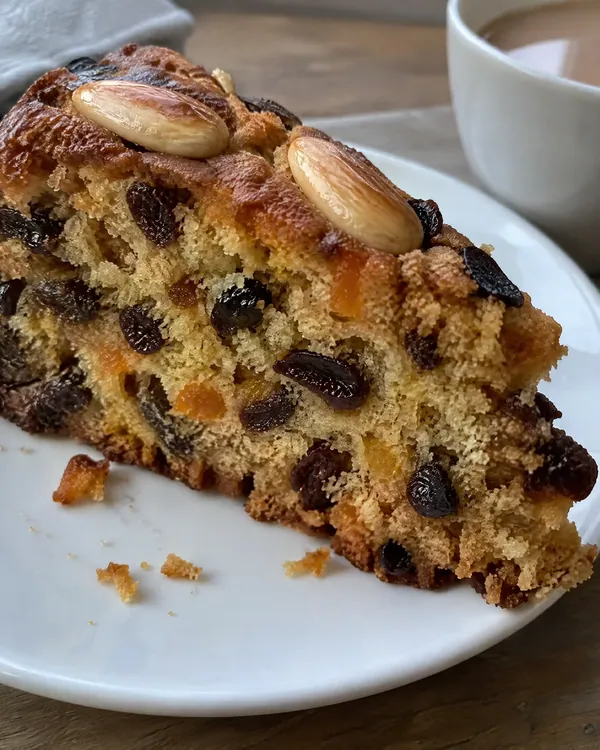
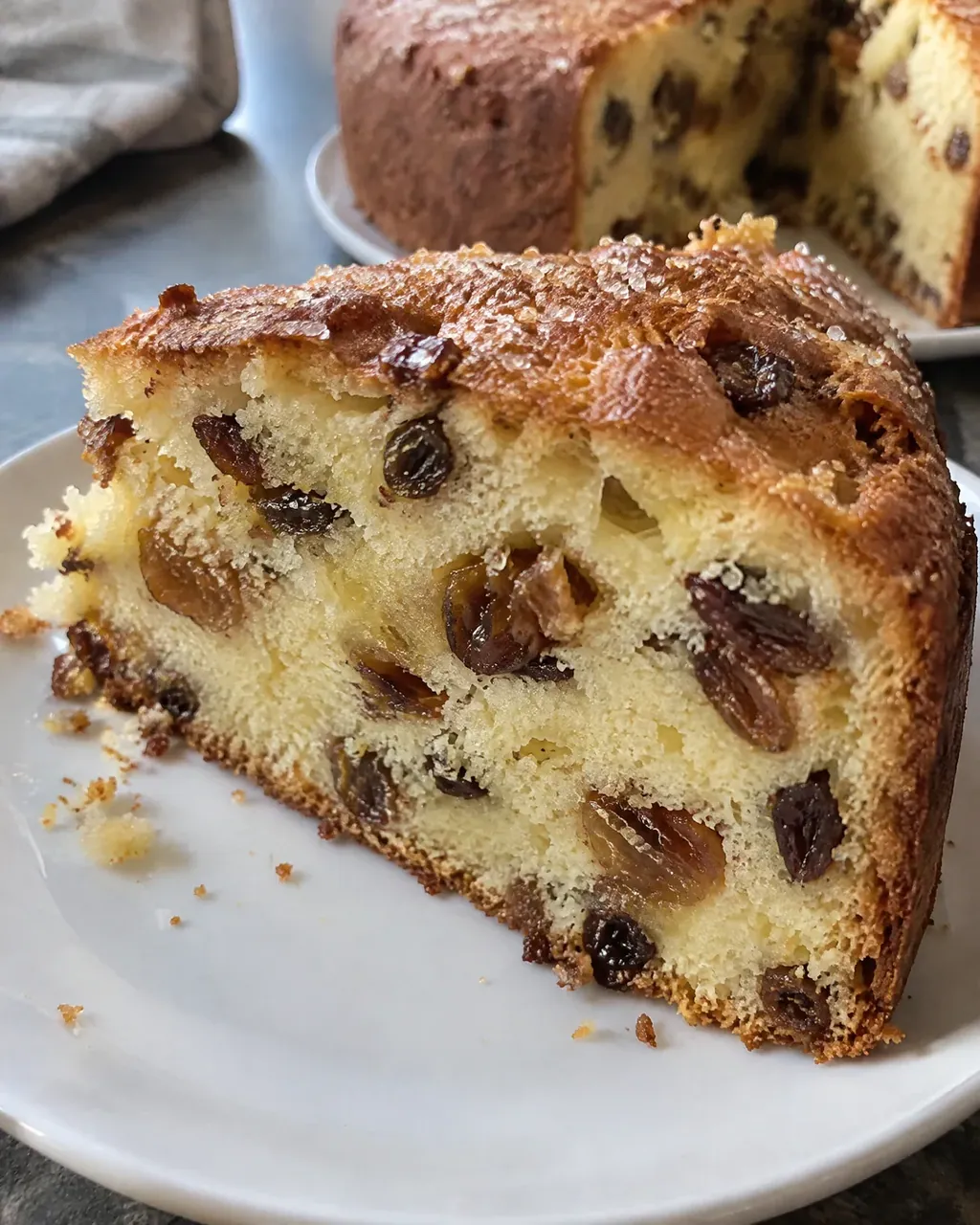
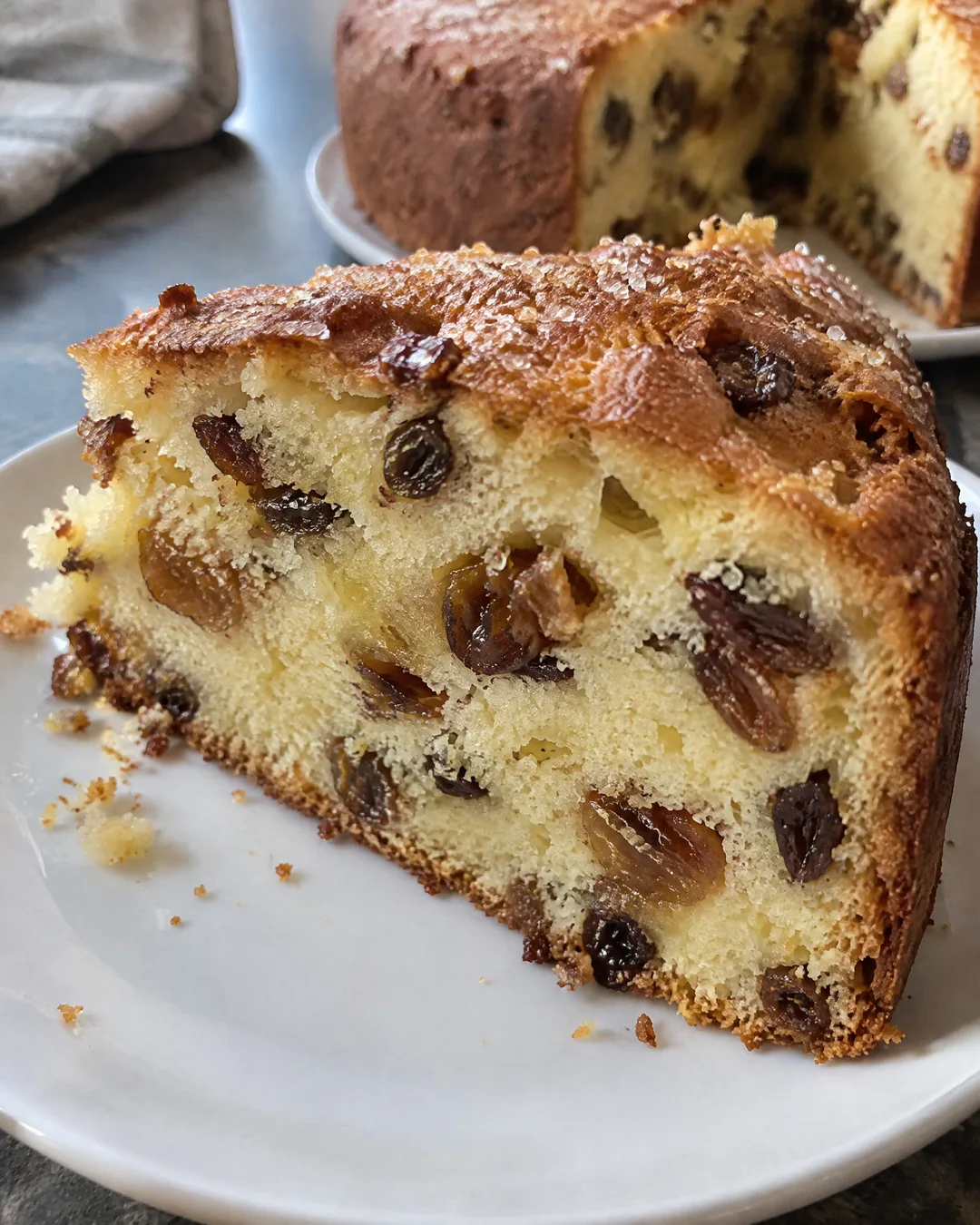
My friend Margaret says that when she was small there was a cake like this in a tin in every kitchen she was ever sent to on an errand. It was never a special cake. It was the plain one, pale and buttery and full of sultanas, with a crust of crunchy sugar on top and nothing else: no spice, no peel, no icing. The old cookbooks called it a cut and come again cake, because you cut a slice, put the lid back on, and came again tomorrow, and it was just as good.
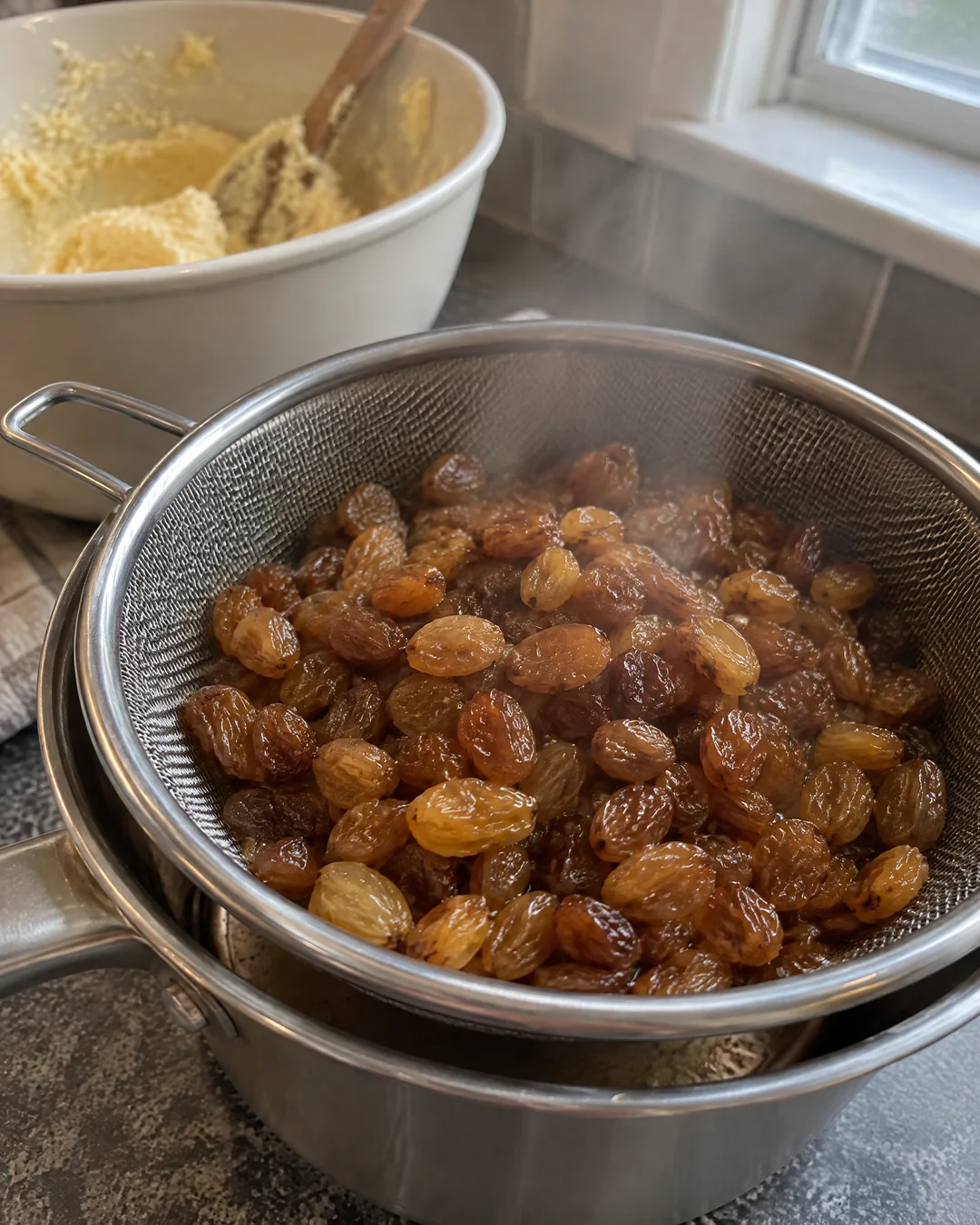
The reason it stays that good is a step that looks like a mistake. The sultanas, which America calls golden raisins, are simmered in a pan of water for a few minutes and drained while they are hot. They go into the batter plump and warm. Dry fruit straight from the bag does the opposite: it spends the next few days drinking the moisture out of the crumb around it, and the cake is stale by the third day. Here is how long to simmer the fruit, and how to bake a deep cake slowly so the middle is cooked before the top is too dark.
Why this farmhouse sultana cake works
- Sultanas simmered for five minutes. They swell with water before baking, so they stay soft and give moisture to the cake instead of taking it.
- Drained hot and left to steam dry. The surface water evaporates in a few minutes, so the fruit is plump but not wet, and does not sink.
- A stiff, buttery batter. It is thick enough to hold the fruit in place from the top of the slice to the bottom.
- A low oven and a long bake. A deep cake needs gentle heat to cook through to the center without a burnt crust.
- Coarse sugar on top. It bakes into the crunchy crust that is the only decoration the cake has ever had.
Ingredients
Makes one deep 8 inch (20cm) round cake, about 12 slices. The measurements are in US cups with grams in brackets.
For the fruit
- 2 1/4 cups sultanas or golden raisins (340g)
- Water to cover
For the cake
- 1 cup butter (225g), 2 sticks, soft
- 1 cup plus 2 tablespoons granulated sugar (225g)
- 3 large eggs, at room temperature
- 1 teaspoon vanilla extract
- 1/2 teaspoon almond extract, if you like
- 2 3/4 cups all-purpose flour (340g)
- 1 1/2 teaspoons baking powder
- 1/4 teaspoon salt
- 2 tablespoons milk
For the top
- 2 tablespoons coarse sugar (25g), such as turbinado or demerara
Sultanas are sold in America as golden raisins. Ordinary dark raisins work too and give a slightly darker, less delicate cake. In Britain the cake is made with self-raising flour: if you have it, use 2 3/4 cups (340g) and leave out the baking powder. If you have no coarse sugar, plain granulated sugar gives a thinner but still crunchy crust.
How to make farmhouse sultana cake
Boil the fruit
- Put the sultanas in a saucepan and pour in cold water to cover them by about 1/2 inch. Bring to a boil, turn the heat down and simmer for 5 minutes, until the fruit is plump and soft.
- Drain the sultanas in a sieve at once. Shake the sieve well, then spread the hot fruit out on a plate or a clean kitchen towel and leave it to steam dry for 15 minutes. It should be warm, not hot, when it goes into the batter.
Make the batter
- Heat the oven to 325 degrees (160°C). Grease a deep 8 inch round cake pan or springform pan and line the bottom and sides with a double layer of baking parchment standing 1 inch above the rim.
- Beat the soft butter and granulated sugar together with a wooden spoon or an electric mixer until pale and fluffy, about 4 minutes with a mixer.
- Beat in the eggs one at a time, adding a spoonful of the flour with the last one so the mixture does not curdle. Beat in the vanilla and the almond extract.
- Stir the flour, baking powder and salt together and fold them into the butter mixture with a large spoon, in two parts, adding the milk between them. The batter will be stiff.
- Fold in the warm sultanas until they are evenly spread through the batter.
Bake slowly
- Scrape the batter into the pan and level the top, making a very slight hollow in the center so the cake rises flat. Sprinkle the coarse sugar evenly over the top.
- Bake on the middle shelf for 1 hour 20 minutes to 1 hour 30 minutes. After 50 minutes, if the top is already a deep gold, lay a sheet of foil loosely over the pan.
- The cake is done when a skewer pushed into the center comes out clean, with no wet batter on it, and the top feels firm. A sultana on the skewer does not count.
- Leave the cake in the pan on a rack for 30 minutes, then lift it out by the paper and let it cool completely before cutting. It slices best the next day.
Tips that make the difference
- Do not simmer the fruit for longer than 5 minutes. Overcooked sultanas burst and turn the crumb gummy around them.
- Let the fruit steam dry. Dripping wet sultanas make streaks in the cake and sink to the bottom.
- Keep the oven low. At a higher heat the outside is brown and dry long before the middle of a deep cake has set.
- Wait a day if you can. Wrapped and left overnight, the crumb settles and the cake cuts in clean slices instead of crumbling.
Variations
- As a loaf. Divide the batter between two 8 1/2 by 4 1/2 inch loaf pans and bake for 55 to 65 minutes.
- Lemon sultana cake. Add the finely grated zest of 2 lemons to the butter and sugar, and leave out the almond extract.
- With cheese, the Yorkshire way. Serve each slice with a piece of sharp, crumbly white cheese beside it. Margaret raises an eyebrow, but a great many people in Yorkshire would not eat fruit cake any other way.
Storage and make-ahead
Wrapped in baking parchment and kept in an airtight tin at room temperature, the cake stays moist for a full week, and many people think it is better on day three than on day one.
To freeze, wrap the whole cake or thick slices tightly and freeze for up to 3 months. Thaw at room temperature in the wrapping.
Frequently asked questions
How long do I boil the sultanas?
Simmer them for 5 minutes in water to cover, then drain them at once and let them steam dry for 15 minutes. They should be plump and soft but still whole.
Why do you boil the fruit for a sultana cake?
Dried fruit soaks up moisture. If it does that in the pan of water, it goes into the cake plump and keeps the crumb moist. If it goes in dry, it takes that moisture from the cake as it sits in the tin.
Why did my sultanas sink to the bottom?
The fruit was too wet, or the batter was too soft. Let the drained fruit steam dry before folding it in, and do not add more milk than the recipe gives. A stiff batter holds the fruit up.
How do I stop the top burning before the middle is cooked?
Bake at 325 degrees, not higher, line the pan with a double layer of parchment, and cover the top loosely with foil after 50 minutes if it has already turned a deep gold.
Put the lid back on the tin after every slice, and it will still be good when you come again.
Farmhouse Sultana Cake (The Fruit Is Boiled First, Moist for a Week)
A plain British farmhouse sultana cake: sultanas simmered in water and drained hot so they stay plump, a pale buttery crumb with no spice and no peel, and a crunchy sugar crust on top. It keeps moist in a tin for a week.
Ingredients
- 2 1/4 cups sultanas or golden raisins
- Water to cover
- 1 cup butter (225g), 2 sticks, soft
- 1 cup plus 2 tablespoons granulated sugar
- 3 large eggs, at room temperature
- 1 teaspoon vanilla extract
- 1/2 teaspoon almond extract, if you like
- 2 3/4 cups all-purpose flour
- 1 1/2 teaspoons baking powder
- 1/4 teaspoon salt
- 2 tablespoons milk
- 2 tablespoons coarse sugar (25g), such as turbinado or demerara
Instructions
- Put the sultanas in a saucepan and pour in cold water to cover them by about 1/2 inch. Bring to a boil, turn the heat down and simmer for 5 minutes, until the fruit is plump and soft.
- Drain the sultanas in a sieve at once. Shake the sieve well, then spread the hot fruit out on a plate or a clean kitchen towel and leave it to steam dry for 15 minutes. It should be warm, not hot, when it goes into the batter.
- Heat the oven to 325 degrees (160°C). Grease a deep 8 inch round cake pan or springform pan and line the bottom and sides with a double layer of baking parchment standing 1 inch above the rim.
- Beat the soft butter and granulated sugar together with a wooden spoon or an electric mixer until pale and fluffy, about 4 minutes with a mixer.
- Beat in the eggs one at a time, adding a spoonful of the flour with the last one so the mixture does not curdle. Beat in the vanilla and the almond extract.
- Stir the flour, baking powder and salt together and fold them into the butter mixture with a large spoon, in two parts, adding the milk between them. The batter will be stiff.
- Fold in the warm sultanas until they are evenly spread through the batter.
- Scrape the batter into the pan and level the top, making a very slight hollow in the center so the cake rises flat. Sprinkle the coarse sugar evenly over the top.
- Bake on the middle shelf for 1 hour 20 minutes to 1 hour 30 minutes. After 50 minutes, if the top is already a deep gold, lay a sheet of foil loosely over the pan.
- The cake is done when a skewer pushed into the center comes out clean, with no wet batter on it, and the top feels firm. A sultana on the skewer does not count.
- Leave the cake in the pan on a rack for 30 minutes, then lift it out by the paper and let it cool completely before cutting. It slices best the next day.