In this article
My uncle ate two bowls of my mother’s lemon pudding cake one October night and then asked her, very seriously, where she had hidden the sauce. She hadn’t hidden anything. She had poured one thin batter into a dish, set the dish in a pan of hot water and baked it, and the cake had made its own sauce. He did not believe her until she made it again in front of him.
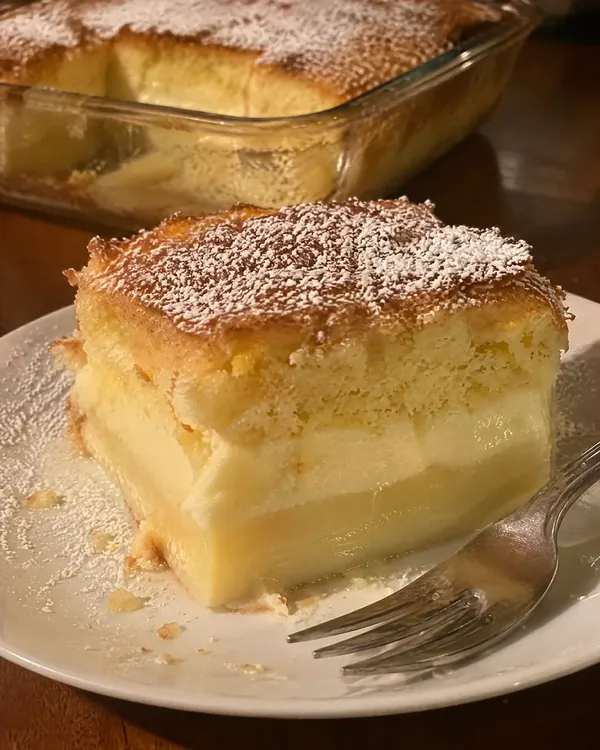
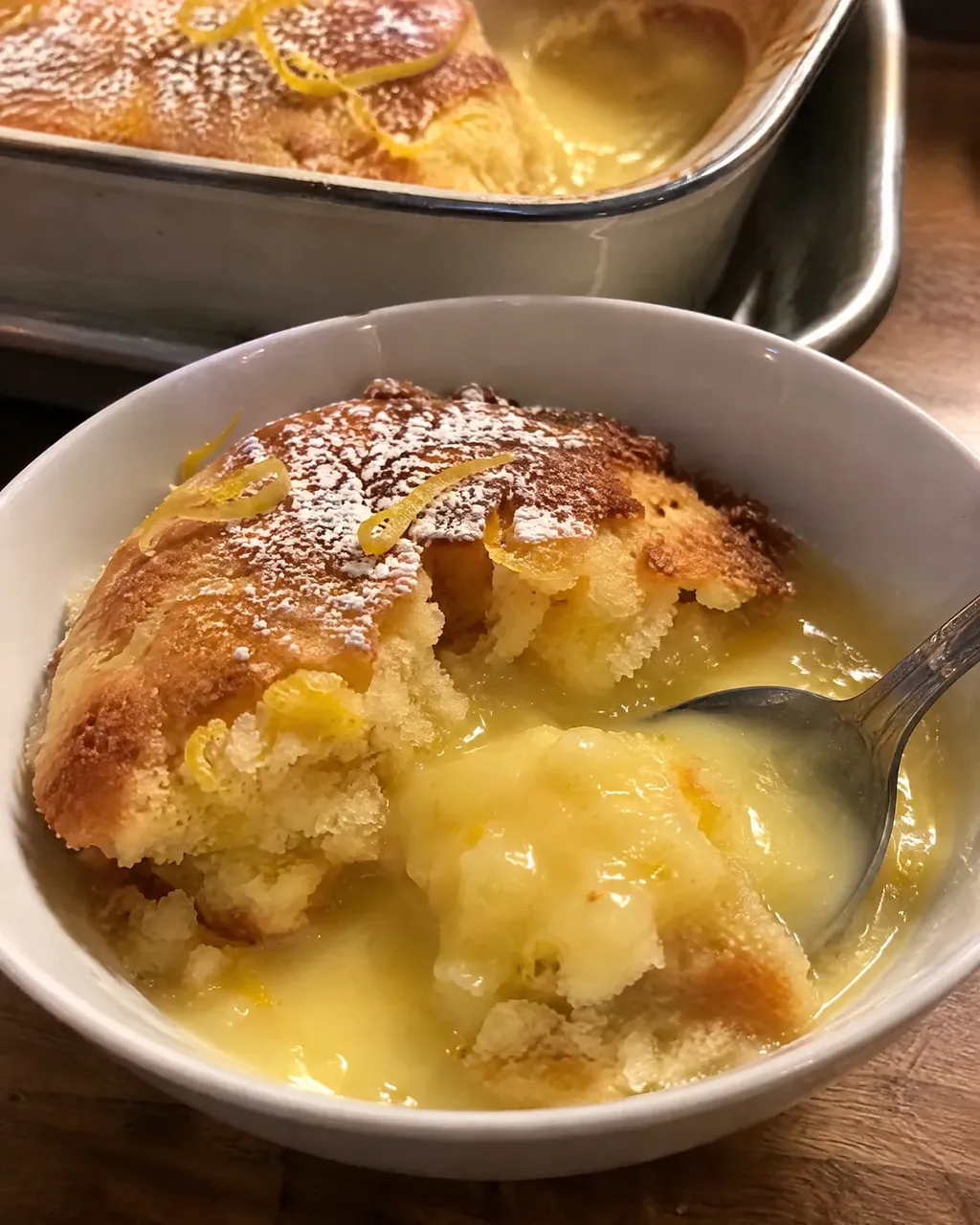
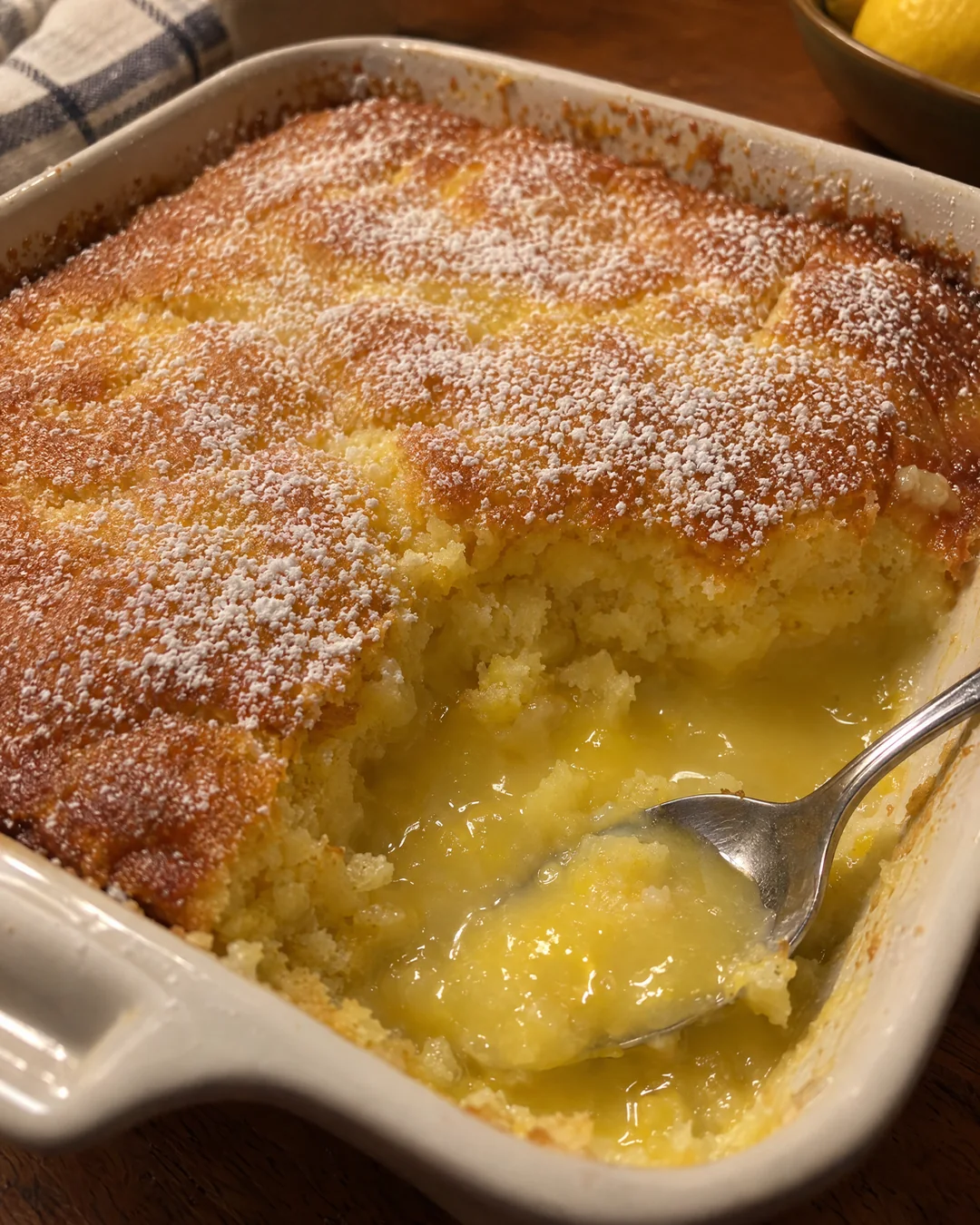
The batter is so runny it looks as if the flour was forgotten: butter and sugar, egg yolks, fresh lemon juice and zest, milk and a little flour. The egg whites are whipped until they stand in peaks and folded in at the end. In the oven the batter separates. The airy whites rise and bake into a light golden sponge, and the heavier part settles to the bottom as a soft lemon custard. Spooned out warm, the sauce comes up around the sponge, sharp and sweet. Because there is a sauce underneath, a toothpick tells you nothing, so how to tell it is done is explained below.
Why this lemon pudding cake works
- Whipped whites folded in last. They carry the air that rises to the top and bakes into the sponge layer.
- A thin batter. The extra milk is what sinks and becomes the custard. A thick batter would bake into an ordinary cake.
- A hot water bath. The water keeps the bottom gentle so it sets into a soft sauce instead of curdling or drying out.
- Fresh lemons. Fresh juice and zest give the bright, sharp flavor. Bottled juice tastes flat here.
Ingredients
Serves 6 from an 8 inch square (2 liter) baking dish. The measurements are in US cups with grams in brackets.
For the pudding cake
- 3 tablespoons unsalted butter (42g), softened
- 1 cup granulated sugar (200g), divided
- 3 large eggs, separated, at room temperature
- 1/3 cup fresh lemon juice (80ml), from about 2 lemons
- 1 tablespoon finely grated lemon zest
- 1/4 cup all-purpose flour (31g)
- 1/4 teaspoon fine salt
- 1 1/2 cups whole milk (360ml), at room temperature
- Powdered sugar, for dusting
Zest the lemons before you juice them. Separate the eggs while they are cold, then let them come to room temperature: warm whites whip higher.
How to make lemon pudding cake
- Heat the oven to 350 degrees (175°C). Butter an 8 inch square (2 liter) baking dish and set it in a larger roasting pan. Put a kettle of water on to boil.
- Beat the soft butter with 3/4 cup (150g) of the sugar until crumbly and well mixed. Beat in the egg yolks one at a time, then the lemon juice and zest.
- Stir in the flour and salt, then slowly whisk in the milk. The batter will be very thin and may look a little curdled. That is normal.
- In a clean bowl, whisk the egg whites to soft peaks, then add the remaining 1/4 cup (50g) sugar and whisk until they hold firm, glossy peaks.
- Fold a third of the whites into the lemon batter to loosen it, then fold in the rest gently, just until no large patches of white remain.
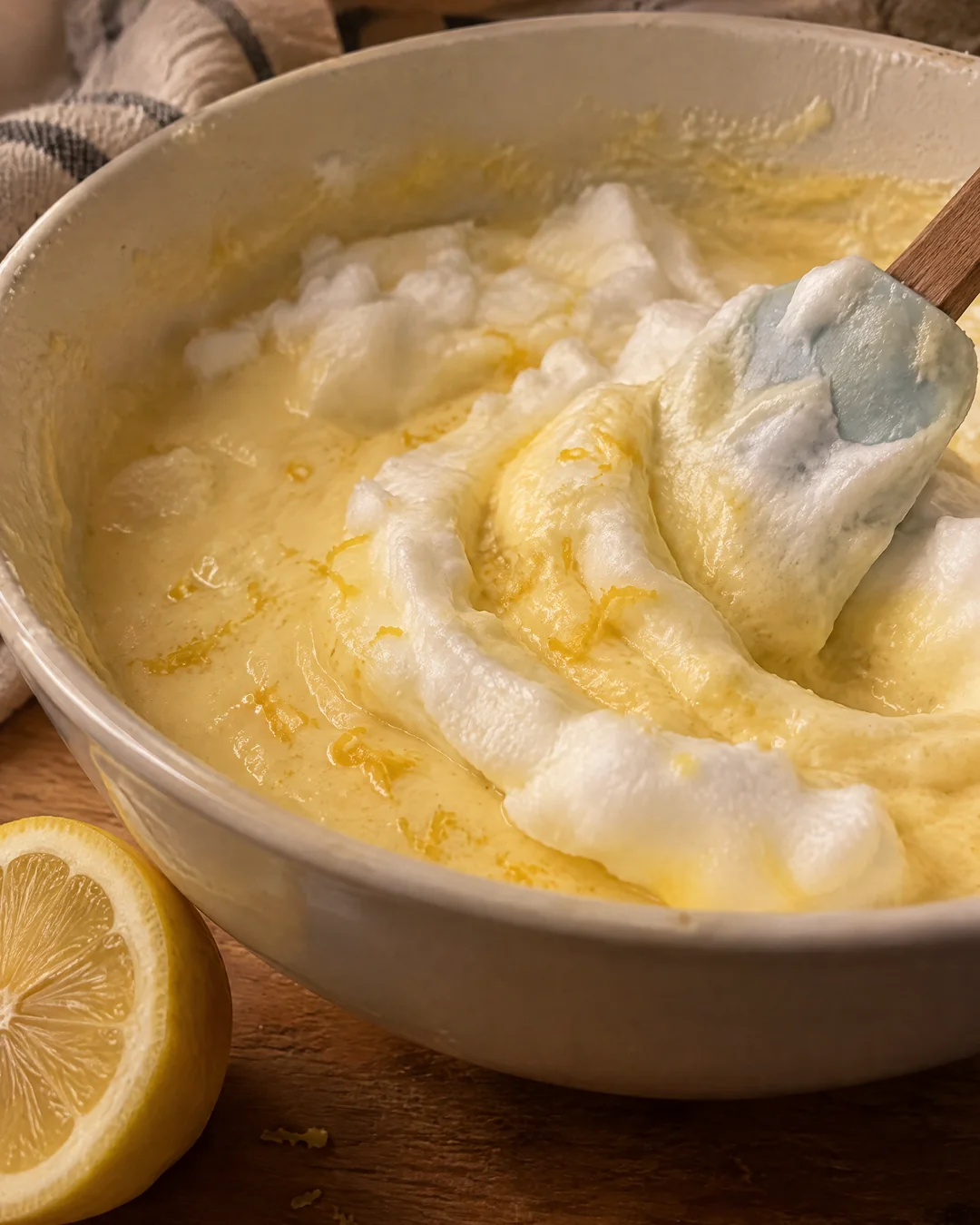
- Pour into the baking dish. Pour hot water into the roasting pan to come halfway up the sides of the dish.
- Bake for 40 to 45 minutes. It is done when the top is evenly golden, springs back when you touch it lightly in the center, and the dish no longer jiggles like liquid on top when you nudge it. Underneath it will still be saucy, and it should be.
- Lift the dish out of the water and let it rest 10 minutes. Dust with powdered sugar and spoon into bowls, scooping deep so each serving gets sponge and sauce.
Tips that make the difference
- Fold the whites gently. Knocking the air out of them means no sponge on top.
- Do not open the oven in the first 30 minutes; the rising sponge can fall.
- Serve it warm. As it cools, the sauce thickens into a soft custard, still lovely but not as saucy.
- Spoon the servings upside down into the bowl so the lemon sauce runs over the sponge.
Variations
- Individual cups. Bake in six buttered ramekins in the water bath for 25 to 30 minutes.
- Orange. Use orange juice and zest with 1 tablespoon of lemon juice for a gentler, sweeter pudding.
- Berries. Scatter a handful of blueberries or raspberries in the dish before pouring in the batter.
- Chocolate cousin. For the chocolate version, my mother made a hot fudge pudding cake, where hot water poured over the batter becomes the sauce.
Storage and make-ahead
Lemon pudding cake is best warm, the day it is made.
Cover and refrigerate leftovers for up to 2 days. Eat them cold, when the sauce has set into a lemon custard, or warm a serving gently for 20 seconds in the microwave.
It does not freeze well.
Frequently asked questions
How do I know lemon pudding cake is done without a toothpick?
Touch the center lightly: the golden sponge should spring back. Nudge the dish: the top should not ripple like liquid. The sauce underneath stays soft, so a toothpick would always come out wet.
Why didn’t my pudding cake separate into layers?
The whites were underwhipped or overmixed into the batter, or the batter was too thick. Whip the whites to firm peaks and fold them in gently.
Do I really need the water bath?
Yes. Without it the bottom overcooks and you lose the sauce.
Can I use bottled lemon juice?
Fresh is much better here. The lemon is the whole flavor, and bottled juice tastes flat.
It looks like a mistake going in. It never is. Pour, bake, and let the cake make its own sauce.
Lemon Pudding Cake (One Batter, Its Own Lemon Sauce)
Old-fashioned lemon pudding cake: one thin lemon batter with whipped egg whites folded in, baked in a water bath at 350 degrees for 40 to 45 minutes, separating into a light sponge on top and lemon custard sauce underneath. How to tell it's done without a toothpick.
Ingredients
- 3 tablespoons unsalted butter (42g), softened
- 1 cup granulated sugar (200g), divided
- 3 large eggs, separated, at room temperature
- 1/3 cup fresh lemon juice (80ml), from about 2 lemons
- 1 tablespoon finely grated lemon zest
- 1/4 cup all-purpose flour
- 1/4 teaspoon fine salt
- 1 1/2 cups whole milk (360ml), at room temperature
- Powdered sugar, for dusting
Instructions
- Heat the oven to 350 degrees (175°C). Butter an 8 inch square (2 liter) baking dish and set it in a larger roasting pan. Put a kettle of water on to boil.
- Beat the soft butter with 3/4 cup (150g) of the sugar until crumbly and well mixed. Beat in the egg yolks one at a time, then the lemon juice and zest.
- Stir in the flour and salt, then slowly whisk in the milk. The batter will be very thin and may look a little curdled. That is normal.
- In a clean bowl, whisk the egg whites to soft peaks, then add the remaining 1/4 cup (50g) sugar and whisk until they hold firm, glossy peaks.
- Fold a third of the whites into the lemon batter to loosen it, then fold in the rest gently, just until no large patches of white remain.
- Pour into the baking dish. Pour hot water into the roasting pan to come halfway up the sides of the dish.
- Bake for 40 to 45 minutes. It is done when the top is evenly golden, springs back when you touch it lightly in the center, and the dish no longer jiggles like liquid on top when you nudge it. Underneath it will still be saucy, and it should be.
- Lift the dish out of the water and let it rest 10 minutes. Dust with powdered sugar and spoon into bowls, scooping deep so each serving gets sponge and sauce.