In this article
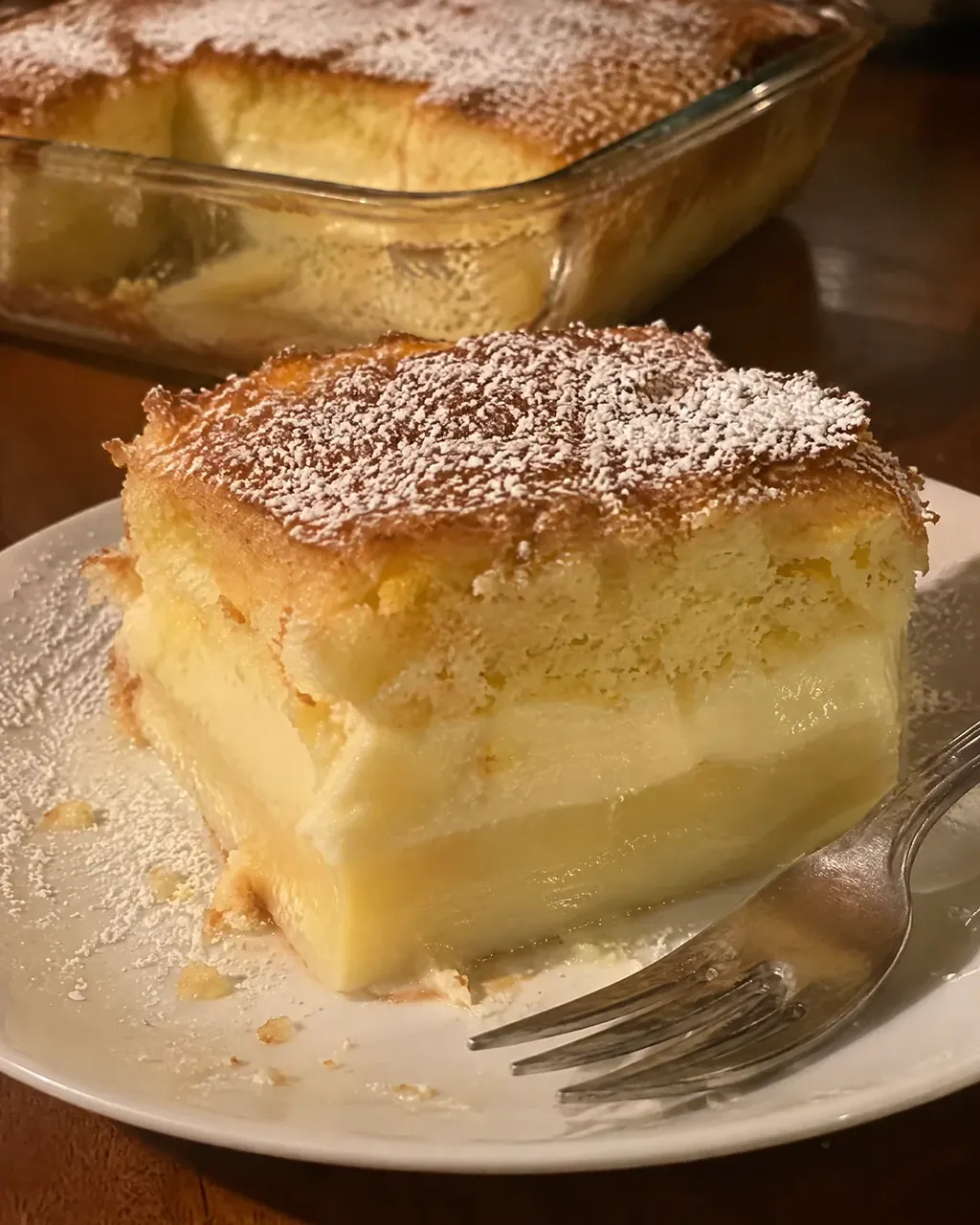
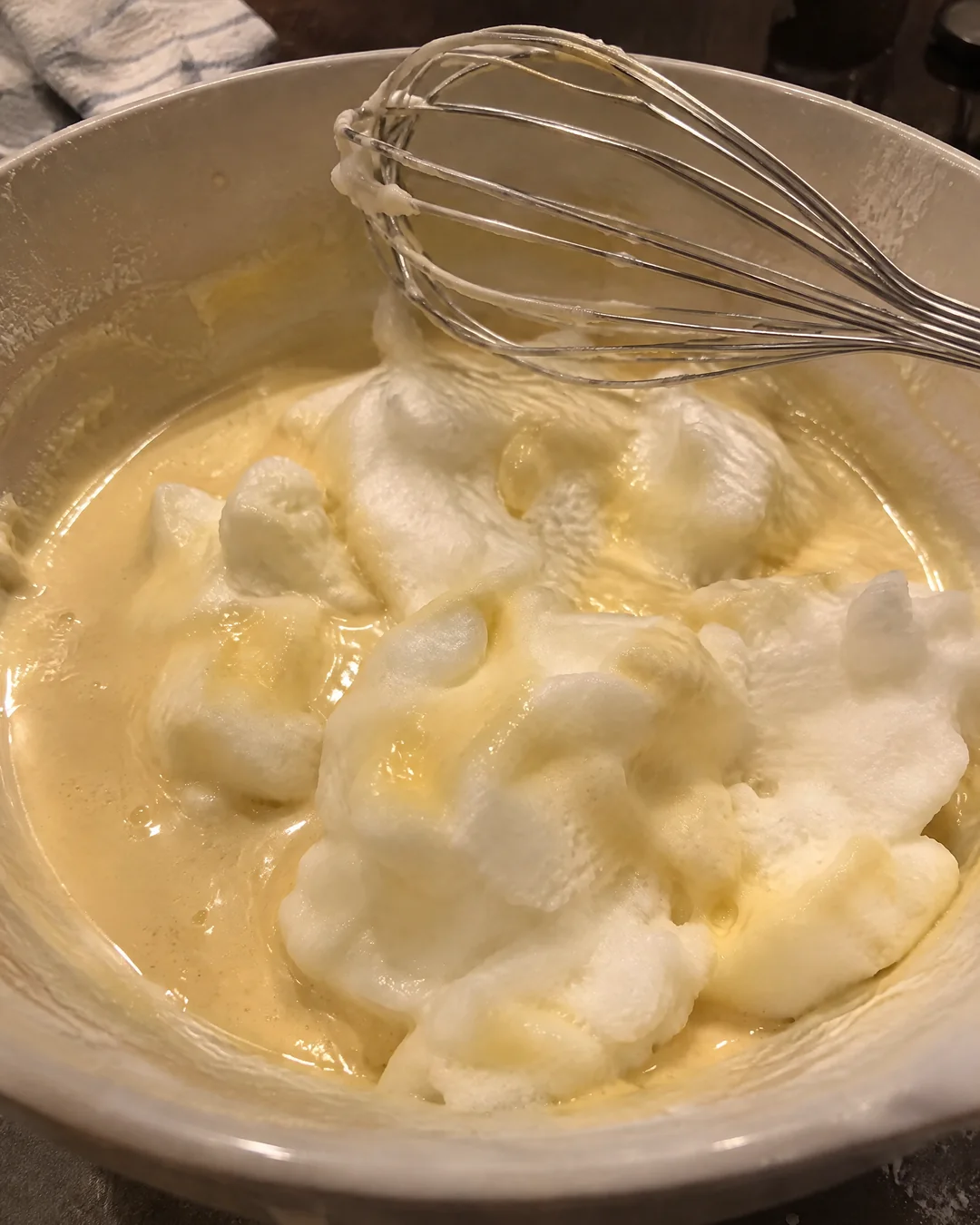
My uncle ate a piece of my mother’s custard cake at the kitchen table and swore up and down that she had made three different recipes and stacked them. She had made one batter, in one bowl. When she told him so he laughed, had a second piece, and went home still not believing her. The first time I made it myself I was sure I had left something out, because the batter that goes into the pan is as thin as milk with eggs in it, with little white clouds of beaten egg white floating on the top.
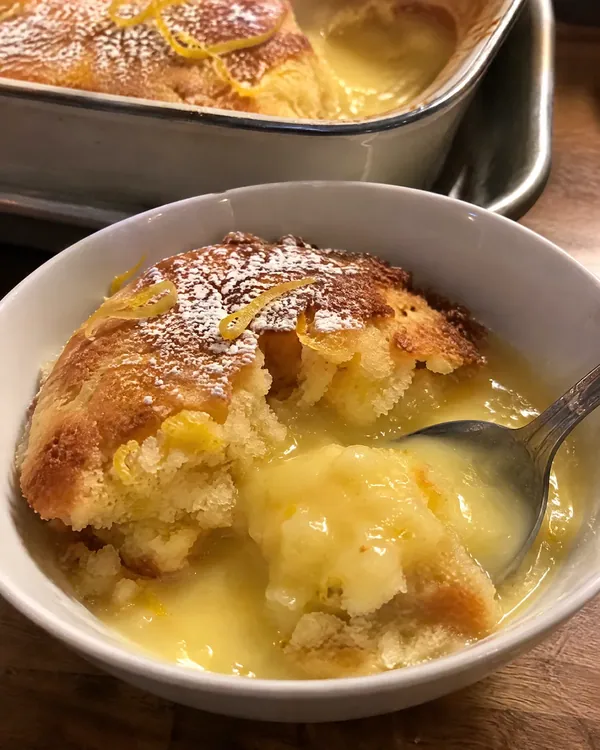
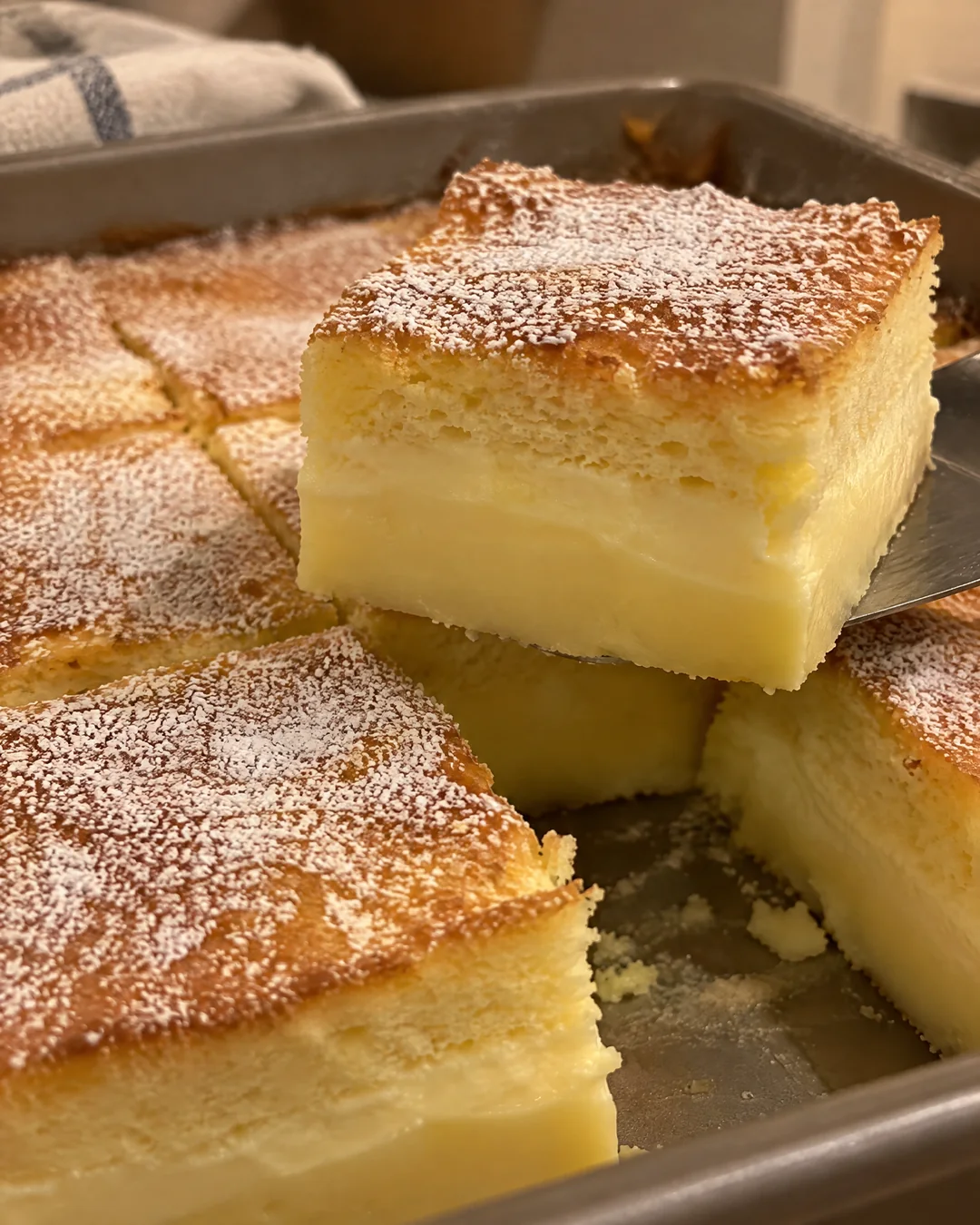
That thin batter is the whole trick. The eggs are separated. The yolks are beaten with sugar and melted butter, a little flour is stirred in, and then warm milk is poured in slowly. The whites are beaten stiff and folded in at the very end, gently. In a low oven of 325 degrees the batter sorts itself out. The heavy part sinks and sets into a dense custard. The middle turns silky and creamy. The beaten whites rise and bake into a light, golden sponge. The hardest part is waiting: it must chill for at least three hours before you cut it, or the middle layer runs.
Why this magic custard cake works
- A very thin batter. It must be runny for the layers to separate. A thick batter bakes into an ordinary cake.
- Warm milk. Milk just warm to the touch helps the batter separate. Cold milk will not, and hot milk scrambles the yolks.
- Beaten whites folded in last. The whites float to the top and become the sponge layer.
- A low oven. At 325 degrees the custard sets gently instead of curdling, and the layers have time to form.
- A long chill. Cold firms the creamy middle so the three layers cut cleanly.
Ingredients
Makes one 8 inch square cake, 9 squares. The measurements are in US cups with grams in brackets.
For the cake
- 4 large eggs, at room temperature, separated
- 1 tablespoon water
- 1 cup powdered sugar (120g)
- 1/2 cup unsalted butter, melted and cooled slightly (113g)
- 3/4 cup all-purpose flour (95g)
- 2 cups whole milk, warmed to lukewarm (480ml)
- 2 teaspoons vanilla extract
- 1/4 teaspoon fine salt
- 1/2 teaspoon lemon juice
To finish
- 2 tablespoons powdered sugar, for dusting
Room temperature eggs whip higher and blend more smoothly. The milk should feel just warm on the inside of your wrist, like a baby’s bottle, about 100 degrees (38°C).
How to make magic custard cake
- Heat the oven to 325 degrees (160°C). Butter an 8 inch square baking pan and line the bottom and two sides with parchment so you can lift the cake out.
- In a large bowl, beat the egg yolks with the water and the powdered sugar until pale and thick, about 2 minutes.
- Beat in the cooled melted butter, then the flour, until smooth.
- With the mixer on low, pour in the lukewarm milk slowly, then the vanilla and salt. The batter will be very thin. That is correct.
- In a clean bowl, beat the egg whites with the lemon juice until they hold stiff peaks.
- Fold the whites into the batter in three additions, gently, with a whisk or spatula. Stop while small clouds of white still float on top. Do not beat it smooth.
- Pour into the pan and bake at 325 degrees for 50 to 60 minutes, until the top is golden and the center only jiggles slightly when you nudge the pan.
- Cool completely in the pan, then refrigerate for at least 3 hours, or overnight. Lift out, dust with powdered sugar and cut into 9 squares.
Tips that make the difference
- Use a glass or light metal pan. A dark pan browns the bottom before the custard sets.
- If the top is browning too fast, lay a sheet of foil loosely over it for the last 15 minutes.
- Do not open the oven in the first 30 minutes; the layers are forming.
- Wipe your knife clean between cuts for neat layers.
Variations
- Lemon. Add the finely grated zest of one lemon to the yolk mixture.
- Chocolate. Replace 2 tablespoons of the flour with cocoa powder for a chocolate magic cake.
- Cinnamon. Dust the finished cake with cinnamon sugar instead of plain powdered sugar.
- With fruit. Serve each square with a spoonful of fresh berries.
Storage and make-ahead
Keep the cake covered in the refrigerator for up to 4 days. It is best served cold.
Do not leave it out at room temperature for more than 2 hours; it is a custard.
It does not freeze well: the custard layer weeps when thawed.
Frequently asked questions
Why didn’t my magic cake make three layers?
Usually the milk was too cold or too hot, or the whites were overmixed into the batter. Use lukewarm milk and fold the whites in gently, leaving clouds on top.
Is the batter supposed to be so runny?
Yes. It should look like milk with eggs in it. That thinness is what lets it separate into layers.
Why is the middle layer runny?
It was cut too soon, or it needed a few more minutes in the oven. Chill it at least 3 hours before cutting.
Can I make it the day before?
Yes, and it is better that way. A night in the refrigerator sets the layers firmly.
One bowl, one thin batter, and three layers you didn’t have to make. Let somebody guess how you did it.
Magic Custard Cake (One Thin Batter, Three Layers)
Magic custard cake: a single thin batter of eggs, sugar, melted butter, flour and warm milk that bakes at 325 degrees into three layers by itself: dense custard, creamy middle and light sponge. Baked in an 8 inch square pan.
Ingredients
- 4 large eggs, at room temperature, separated
- 1 tablespoon water
- 1 cup powdered sugar
- 1/2 cup unsalted butter, melted and cooled slightly
- 3/4 cup all-purpose flour
- 2 cups whole milk, warmed to lukewarm
- 2 teaspoons vanilla extract
- 1/4 teaspoon fine salt
- 1/2 teaspoon lemon juice
- 2 tablespoons powdered sugar, for dusting
Instructions
- Heat the oven to 325 degrees (160°C). Butter an 8 inch square baking pan and line the bottom and two sides with parchment so you can lift the cake out.
- In a large bowl, beat the egg yolks with the water and the powdered sugar until pale and thick, about 2 minutes.
- Beat in the cooled melted butter, then the flour, until smooth.
- With the mixer on low, pour in the lukewarm milk slowly, then the vanilla and salt. The batter will be very thin. That is correct.
- In a clean bowl, beat the egg whites with the lemon juice until they hold stiff peaks.
- Fold the whites into the batter in three additions, gently, with a whisk or spatula. Stop while small clouds of white still float on top. Do not beat it smooth.
- Pour into the pan and bake at 325 degrees for 50 to 60 minutes, until the top is golden and the center only jiggles slightly when you nudge the pan.
- Cool completely in the pan, then refrigerate for at least 3 hours, or overnight. Lift out, dust with powdered sugar and cut into 9 squares.