In this article
For years I believed good bread had to be earned with sore arms and a floured counter. Then I learned how focaccia is really made in a home kitchen, and I felt a little foolish. You stir flour, water, salt, yeast and a spoonful of olive oil together in a bowl in the evening, with a spoon, until no dry flour is left. By morning the bowl is full of bubbles and the dough has turned smooth and stretchy without anybody touching it. The cold and the hours have done the work that kneading does.
The next day the dough is tipped into a pan flooded with olive oil, left on the counter until it is puffed and wobbly, pressed all over with oiled fingertips and baked in a very hot oven. The top blisters, and the bottom fries crisp in the oil it is sitting in. The only thing you need to get right is the clock. Here is the timing from the evening stir to the lunch table, and how to get the big bubbles and the crisp bottom every time.
Why this overnight focaccia works
- A very wet dough. The dough holds much more water than a sandwich loaf. Water turns to steam in the oven and blows the big, uneven holes that make focaccia light.
- A long cold night. In the refrigerator the yeast works slowly, the flour soaks up the water and the dough builds its own stretch. Time takes the place of kneading, and it adds flavor too.
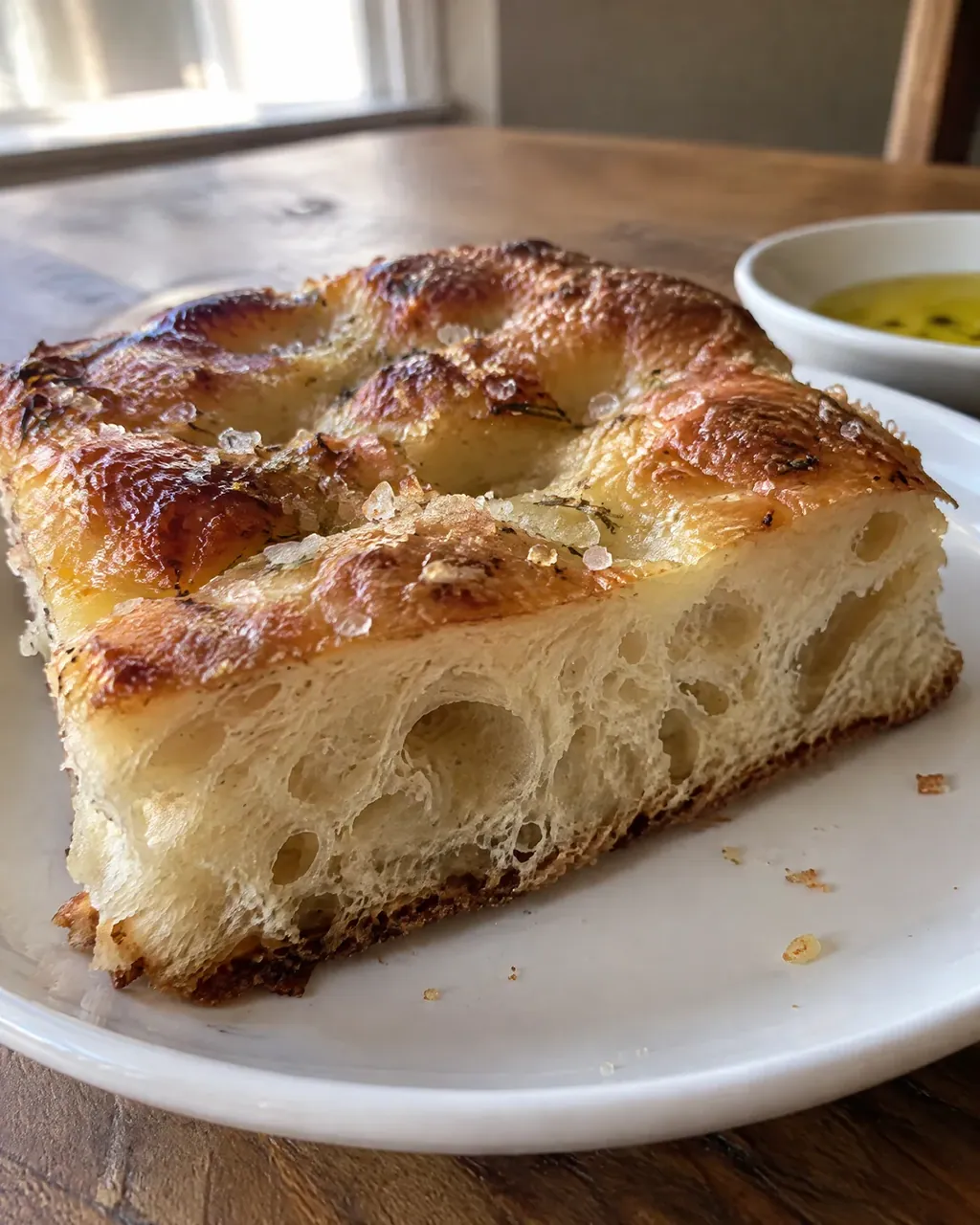
- Plenty of oil in the pan. The oil under the dough gets hot enough to fry the bottom of the bread. That is the crisp, golden crust you hear when you cut it.
- Deep dimples. Pressing right down to the pan keeps the slab from ballooning like a pillow and leaves little wells for the oil and salt.
- A very hot oven. High heat sets the bubbles before they can sink and browns the top while the inside is still soft.
Ingredients
Makes one 9 by 13 inch pan (23 by 33 cm), about 12 thick pieces. The dough needs 12 to 18 hours in the refrigerator and 2 to 3 hours on the counter. The measurements are in US cups with grams in brackets.
For the dough
- 4 cups all-purpose or bread flour (500g)
- 2 teaspoons fine salt (12g)
- 2 teaspoons instant yeast (7g), or one packet
- 2 cups minus 2 tablespoons lukewarm water (450ml)
- 1 tablespoon olive oil, for the bowl
For the pan and the top
- 1 tablespoon soft butter (15g), for greasing the pan
- 1/4 cup olive oil (60ml), for the pan
- 2 tablespoons olive oil (30ml), for the top
- 1 teaspoon coarse or flaky salt
- Needles from 1 sprig of fresh rosemary, optional
Bread flour gives a chewier crumb and slightly bigger holes, but ordinary all-purpose flour works well. Use a good olive oil, since you taste it in every bite. If you only have active dry yeast, stir it into the lukewarm water first and leave it for 5 minutes before adding the flour.
How to make overnight focaccia
The evening before: stir
- In a large bowl, stir the flour, fine salt and yeast together. Pour in the lukewarm water and stir with a wooden spoon or a rubber spatula until there is no dry flour left. The dough will be wet, sticky and lumpy. Do not knead it and do not add flour.
- Pour the tablespoon of olive oil over the dough and turn it over once with the spatula so the surface is coated. Cover the bowl tightly with a plate or plastic wrap.
- Put the bowl in the refrigerator for at least 12 hours and up to 18. A dough stirred at eight in the evening is ready for the pan any time between eight in the morning and two in the afternoon.
The next day: pan, rise and bake
- About 3 hours before you want to eat, rub the bottom and sides of a 9 by 13 inch metal baking pan with the soft butter, then pour in the 1/4 cup of olive oil. The butter keeps the bread from sticking and the oil fries the bottom.
- Take the bowl from the refrigerator. The dough should be bubbly and about double. With oiled fingers or a spatula, fold the edges of the dough into the middle four times, turning the bowl as you go, to make a loose ball. Tip it into the pan and turn it over once in the oil.
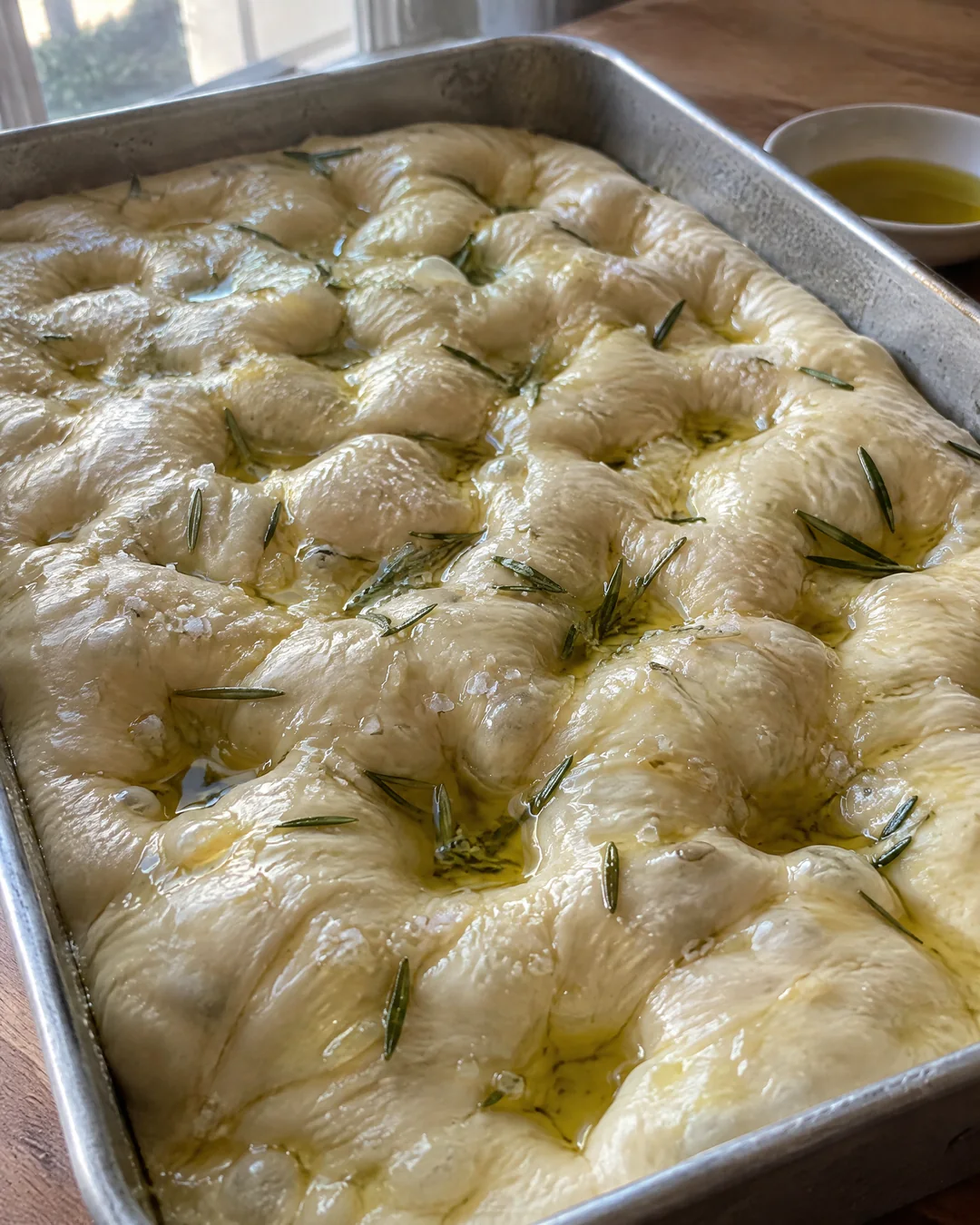
- Leave the pan uncovered in a warm spot for 2 to 3 hours, until the dough has spread nearly to the corners, is puffed and jiggles like a waterbed when you shake the pan. In a cold kitchen this can take up to 4 hours.
- Heat the oven to 450 degrees (230°C) with a rack in the lower third.
- Pour the 2 tablespoons of olive oil over the dough. Oil your fingertips and press them straight down through the dough to the bottom of the pan, all over, to make deep dimples. Stretch the dough gently toward the corners as you go. Leave any big bubbles alone.
- Sprinkle the coarse salt over the top and scatter the rosemary needles, if you are using them.
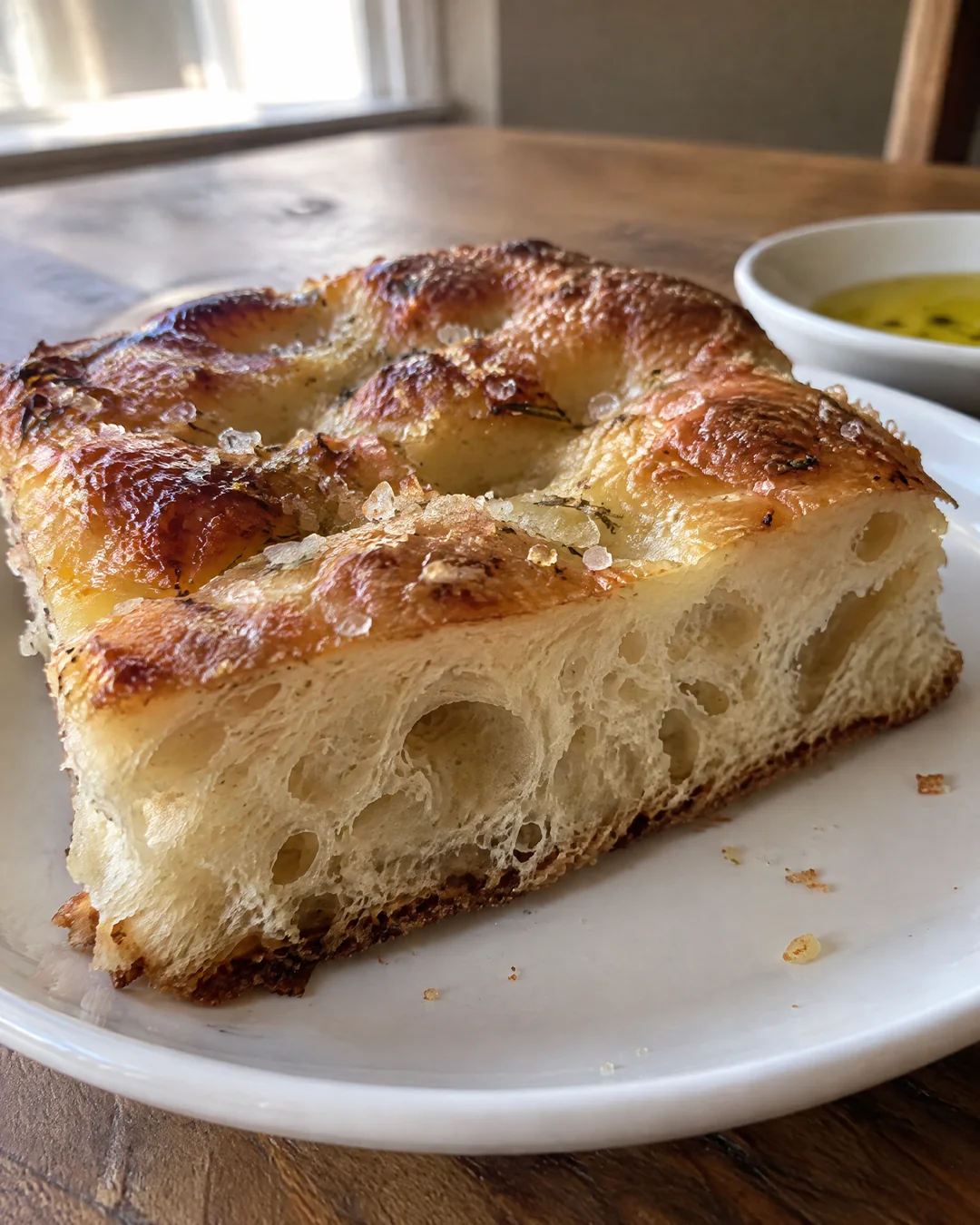
- Bake for 25 to 30 minutes, until the top is deep golden with darker bubbles and the edges have pulled away from the pan.
- Lift the focaccia out of the pan with a spatula straight away and set it on a rack, so the bottom stays crisp. Wait 10 minutes, then tear or cut it and eat it warm.
Tips that make the difference
- Use a metal pan, not glass or ceramic. Metal heats fast and fries the bottom; in a glass dish the bottom stays pale and soft.
- Do not punch the dough down when it comes out of the refrigerator. Every bubble you keep in the bowl is a hole in the finished bread.
- Oil your fingertips before you dimple, and press until you touch the pan. Shallow dimples puff back up and vanish in the oven.
- Take the bread out of the pan as soon as it is baked. Left sitting in the hot pan, the bottom steams and loses its crunch.
Variations
- Garlic and herb. Warm the 2 tablespoons of oil for the top with a crushed clove of garlic and a pinch of dried oregano, let it cool, and pour it over the dough before you dimple.
- Tomato and olive. Press halved cherry tomatoes and pitted olives into the dimples just before baking.
Storage and make-ahead
Focaccia is at its best on the day it is baked. Keep what is left loosely wrapped in foil or a paper bag at room temperature for up to 2 days.
To bring it back, warm the pieces in a 375 degree (190°C) oven for 8 to 10 minutes. The crust crisps again. A microwave makes it tough and chewy.
Frequently asked questions
What is the timing from evening to lunch?
Stir the dough around eight in the evening and put it in the refrigerator. At nine the next morning, tip it into the oiled pan. Let it rise on the counter until about noon, dimple it, and bake it for 25 to 30 minutes. It is on the table at half past twelve.
Why did my focaccia come out flat and dense?
The dough was too cold or had not risen long enough in the pan, or too much flour was added. A dough straight from the refrigerator needs a full 2 to 3 hours on the counter. Wait until it is puffed and wobbly before you dimple and bake.
How do I get big bubbles?
Keep the dough wet, give it the full night in the refrigerator, and handle it gently the next day. Fold it only four times, never press the air out, and leave the large bubbles alone when you dimple.
Stir it tonight, forget it until morning, and tear it apart at the table while it is still too hot to hold.
Overnight No-Knead Focaccia (Stirred with a Spoon, Big Bubbles, Crisp Bottom)
An overnight no-knead focaccia: flour, water, salt, yeast and olive oil stirred with a spoon in the evening, left in the refrigerator all night, then tipped into a pan flooded with olive oil, dimpled with oiled fingertips and baked until the top blisters and the bottom fries crisp.
Ingredients
- 4 cups all-purpose or bread flour
- 2 teaspoons fine salt
- 2 teaspoons instant yeast (7g), or one packet
- 2 cups minus 2 tablespoons lukewarm water
- 1 tablespoon olive oil, for the bowl
- 1 tablespoon soft butter (15g), for greasing the pan
- 1/4 cup olive oil (60ml), for the pan
- 2 tablespoons olive oil (30ml), for the top
- 1 teaspoon coarse or flaky salt
- Needles from 1 sprig of fresh rosemary, optional
Instructions
- In a large bowl, stir the flour, fine salt and yeast together. Pour in the lukewarm water and stir with a wooden spoon or a rubber spatula until there is no dry flour left. The dough will be wet, sticky and lumpy. Do not knead it and do not add flour.
- Pour the tablespoon of olive oil over the dough and turn it over once with the spatula so the surface is coated. Cover the bowl tightly with a plate or plastic wrap.
- Put the bowl in the refrigerator for at least 12 hours and up to 18. A dough stirred at eight in the evening is ready for the pan any time between eight in the morning and two in the afternoon.
- About 3 hours before you want to eat, rub the bottom and sides of a 9 by 13 inch metal baking pan with the soft butter, then pour in the 1/4 cup of olive oil. The butter keeps the bread from sticking and the oil fries the bottom.
- Take the bowl from the refrigerator. The dough should be bubbly and about double. With oiled fingers or a spatula, fold the edges of the dough into the middle four times, turning the bowl as you go, to make a loose ball. Tip it into the pan and turn it over once in the oil.
- Leave the pan uncovered in a warm spot for 2 to 3 hours, until the dough has spread nearly to the corners, is puffed and jiggles like a waterbed when you shake the pan. In a cold kitchen this can take up to 4 hours.
- Heat the oven to 450 degrees (230°C) with a rack in the lower third.
- Pour the 2 tablespoons of olive oil over the dough. Oil your fingertips and press them straight down through the dough to the bottom of the pan, all over, to make deep dimples. Stretch the dough gently toward the corners as you go. Leave any big bubbles alone.
- Sprinkle the coarse salt over the top and scatter the rosemary needles, if you are using them.
- Bake for 25 to 30 minutes, until the top is deep golden with darker bubbles and the edges have pulled away from the pan.
- Lift the focaccia out of the pan with a spatula straight away and set it on a rack, so the bottom stays crisp. Wait 10 minutes, then tear or cut it and eat it warm.