In this article
No-knead bread is the loaf that changed what people thought they could bake at home. Four things go into a bowl on Saturday night: flour, water, salt and a pinch of yeast so small it looks like a mistake. You stir them with a spoon for less than a minute, cover the bowl with a plate and go to bed. Nobody kneads it. Nobody touches it. By Sunday morning the wet, shaggy lump has grown to twice its size, the top is covered in bubbles, and the dough has done by itself the work that arms and a floured counter were supposed to do.
Two things make this bread work, and both are about patience rather than skill. The first is time: a very small amount of yeast, working slowly for twelve to eighteen hours, builds the stretchy structure that kneading normally builds, and it gives the bread a deeper flavor than a quick loaf ever has. The second is the pot. A heavy covered pot, heated empty until it is blazing hot, traps the steam that comes off the wet dough, and that steam is what gives the loaf a thin, crackling, deep golden crust like the one from a bakery oven. Here is the timing through the night and the way the hot pot does its job.
Why this no-knead bread works
- A wet dough. There is more water here than in an ordinary bread dough. The extra water lets the dough develop by itself and makes the big, glossy holes inside.
- A pinch of yeast and a long night. A quarter teaspoon is enough when it has twelve hours or more. Slow rising means more flavor and a better texture.
- No kneading at all. Time lines up the gluten the way kneading would. One or two folds in the morning are all the shaping the loaf needs.
- A preheated covered pot. The pot acts like a small steam oven. Steam keeps the crust soft long enough for the loaf to spring up, then lets it set thin and crisp.
- The lid comes off at the end. The last minutes without the lid dry the crust and turn it deep gold.
Ingredients
Makes one round loaf of about 1 1/2 pounds, 10 thick slices. You need a heavy pot with a lid that holds 4 to 6 quarts and can go into a very hot oven. The measurements are in US cups with grams in brackets.
For the dough
- 3 cups all-purpose flour or bread flour (390g), plus more for dusting
- 1 1/2 teaspoons fine salt (9g)
- 1/4 teaspoon instant or active dry yeast
- 1 1/2 cups cool tap water (360ml)
For baking
- A sheet of parchment paper, about 15 inches long
- A heavy 4 to 6 quart pot with a lid, such as enameled cast iron
Bread flour gives a slightly chewier loaf with bigger holes, all-purpose flour a more tender one. Both work. Measure the flour by spooning it into the cup and leveling it, or weigh it. If the knob on your pot lid is plastic, check that it is safe at high heat, or unscrew it and plug the hole with a small ball of foil.
How to make no-knead bread
The night before (2 minutes)
- In a large bowl, stir together the flour, salt and yeast. Pour in the water and stir with a wooden spoon until no dry flour is left. The dough will be wet, sticky and shaggy. That is right.
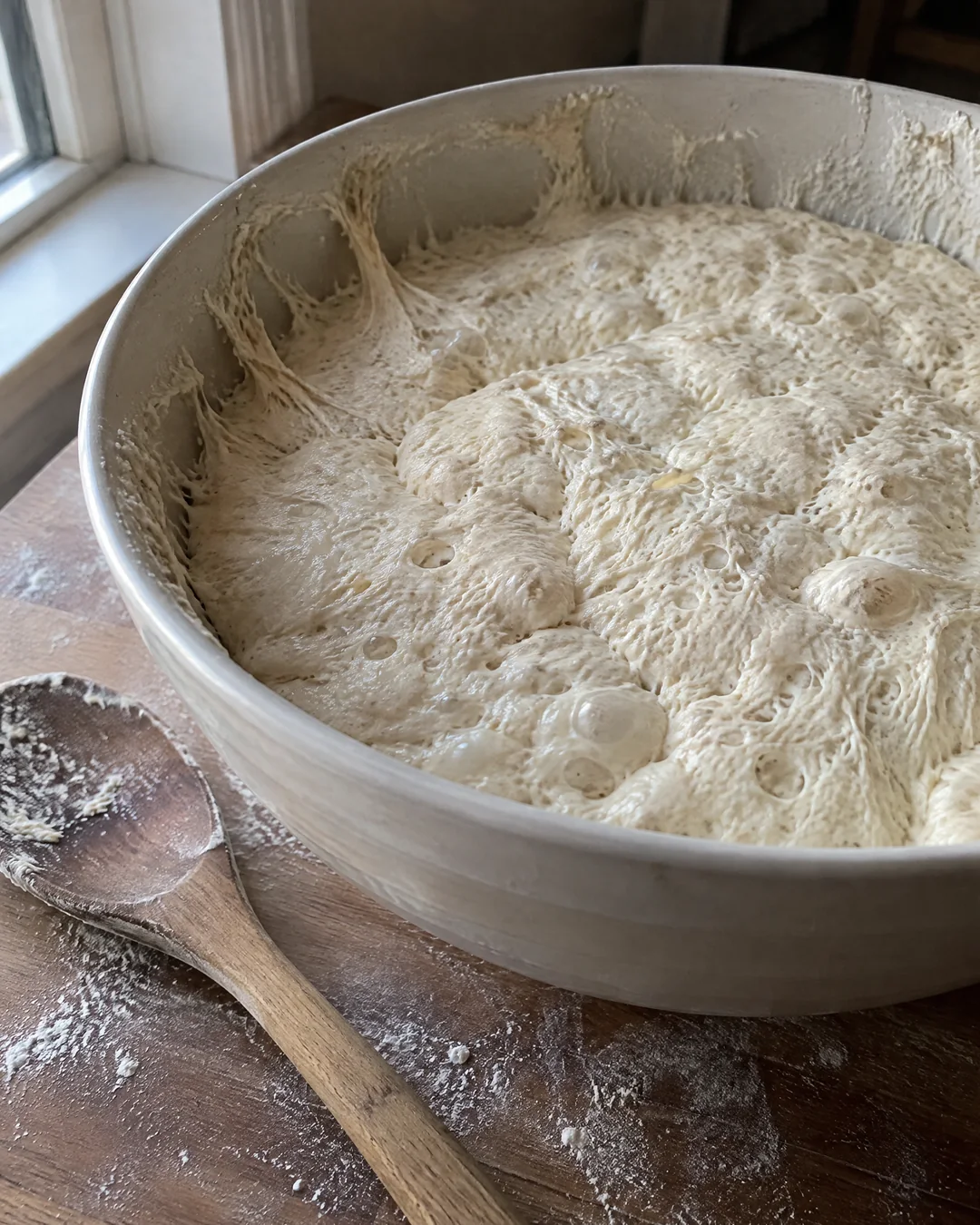
- Cover the bowl with a plate or a lid and leave it on the counter at room temperature for 12 to 18 hours. Stirred at eight or nine in the evening, it is ready any time between eight in the morning and early afternoon.
In the morning
- The dough is ready when it has doubled, the surface is covered in bubbles and it wobbles when you move the bowl. Flour the counter well and scrape the dough out onto it.
- With floured fingers or a scraper, fold the edges of the dough into the middle four or five times to make a rough ball. Turn it over, seam side down, onto the sheet of parchment. Dust the top with flour, cover loosely with a clean towel and let it rest for 30 to 45 minutes.
- As soon as the dough is resting, put the empty pot with its lid on the middle rack and heat the oven to 450 degrees (230°C). The pot needs a full 30 minutes to get hot all the way through.
- Carefully take the hot pot out and remove the lid. Lift the dough by the corners of the parchment and lower it, paper and all, into the pot. Put the lid back on.
- Bake covered for 30 minutes. Remove the lid and bake 15 to 20 minutes more, until the crust is deep golden brown.
- Lift the loaf out by the parchment and cool it on a rack for at least 45 minutes before slicing. You will hear the crust crackle as it cools.
Tips that make the difference
- Use cool water, not warm. Warm water speeds the yeast up, and the long, slow rise is where the flavor comes from.
- If your kitchen is cold, give the dough the full 18 hours. If it is very warm, 12 hours is plenty.
- Do not skip heating the pot. A cold pot gives a pale, tough crust and a flat loaf.
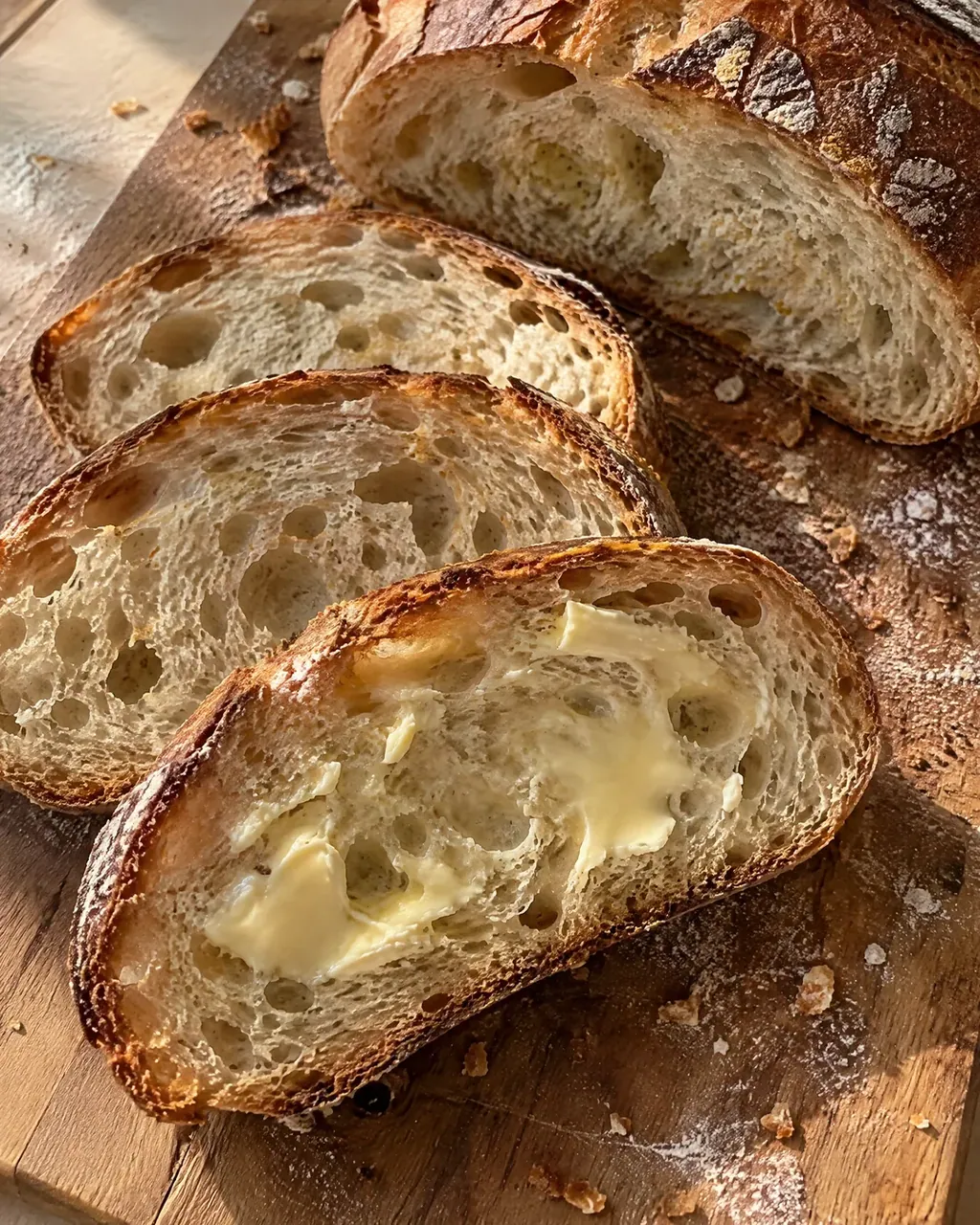
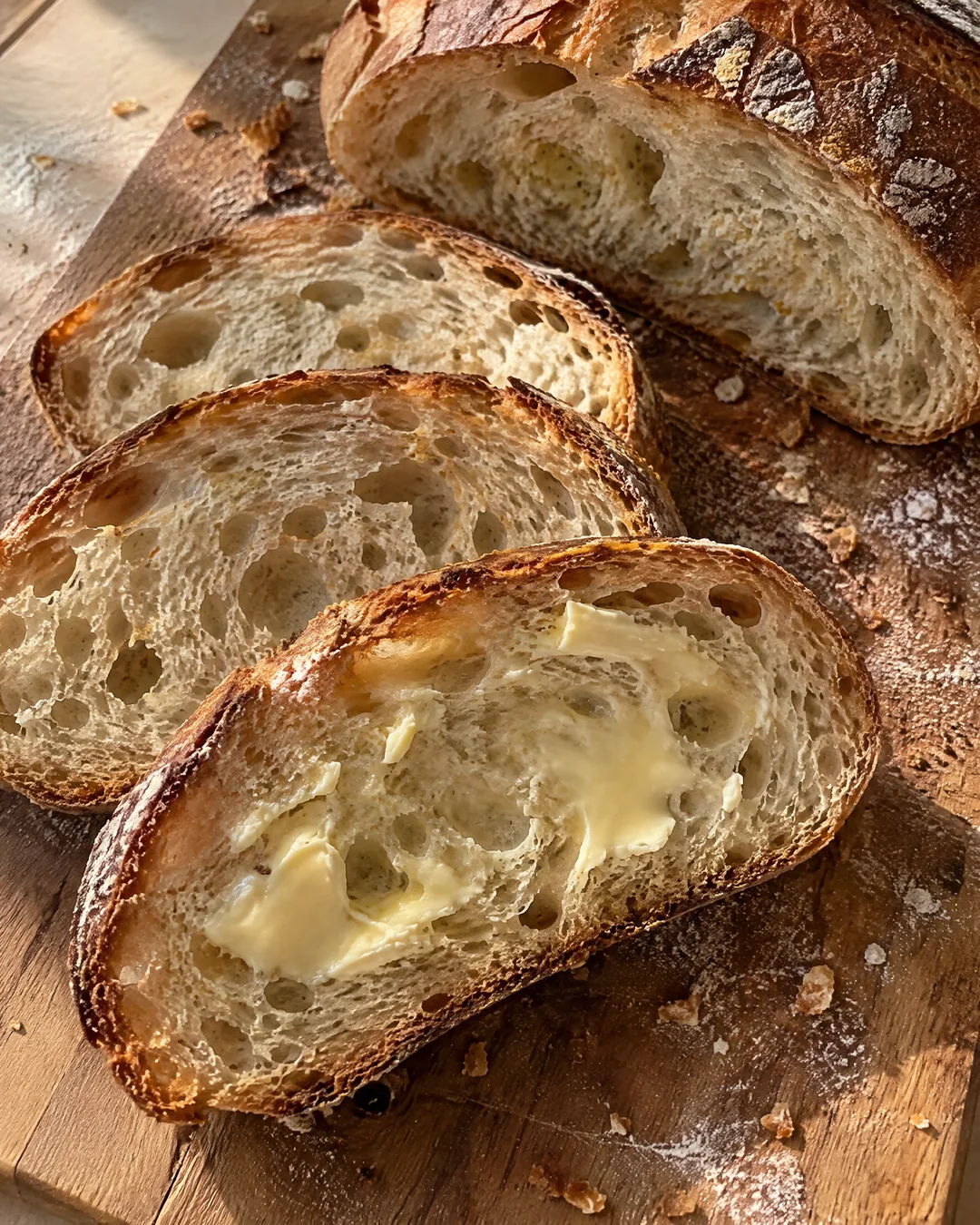
- Keep your fingers well floured in the morning. The dough is sticky, and that stickiness is what makes the open crumb.
- Wait before you cut. The inside is still cooking as the loaf cools, and a hot loaf slices gummy.
Variations
- Seeded. Stir 1/4 cup of sunflower, sesame or pumpkin seeds into the flour and sprinkle a few more on top before baking.
- Garlic and rosemary. Add 2 teaspoons of chopped fresh rosemary and 2 minced cloves of garlic with the flour.
- Part whole wheat. Replace 1 cup of the flour with whole wheat flour and add 2 more tablespoons of water.
- Cheddar. Fold 1 cup of shredded sharp cheddar into the dough during the morning folds.
Storage and make-ahead
Keep the loaf cut side down on a board, or in a paper bag, at room temperature for up to 2 days. A plastic bag softens the crust.
To bring the crust back, put the loaf straight on the oven rack at 350 degrees (175°C) for 8 to 10 minutes.
To freeze, slice the cooled loaf, wrap it tightly and freeze for up to 3 months. Toast the slices straight from the freezer.
Frequently asked questions
Do I really not have to knead it?
Not once. The long rest lets the flour and water build the structure by themselves. All you do is stir at night and fold the dough a few times in the morning.
What if I do not have a cast iron pot?
Any heavy pot with a tight lid that is safe at 450 degrees works: a covered ceramic or glass casserole, or a deep oven-safe saucepan with a lid. The lid is what matters, because it holds the steam.
Why is my loaf flat or dense?
Usually the dough rested too short a time, the pot was not hot enough, or too much flour was worked in during shaping. Wait for the bubbles, heat the pot a full 30 minutes and handle the dough as little as you can.
Can I let it rise longer than 18 hours?
Up to about 20 hours is fine at cool room temperature. Longer than that, put the bowl in the refrigerator after 12 hours and bake within 3 days.
Stir it tonight, forget about it, and tomorrow morning stand next to the rack and listen to the crust.
Overnight No-Knead Bread (Stirred with a Spoon, Baked in a Hot Pot for a Crackling Crust)
A crusty round loaf made from flour, water, salt and a pinch of yeast, stirred together with a spoon at night, left on the counter until morning and baked inside a preheated covered pot for a bakery crust.
Ingredients
- 3 cups all-purpose flour or bread flour (390g), plus more for dusting
- 1 1/2 teaspoons fine salt
- 1/4 teaspoon instant or active dry yeast
- 1 1/2 cups cool tap water
- A sheet of parchment paper, about 15 inches long
- A heavy 4 to 6 quart pot with a lid, such as enameled cast iron
Instructions
- In a large bowl, stir together the flour, salt and yeast. Pour in the water and stir with a wooden spoon until no dry flour is left. The dough will be wet, sticky and shaggy. That is right.
- Cover the bowl with a plate or a lid and leave it on the counter at room temperature for 12 to 18 hours. Stirred at eight or nine in the evening, it is ready any time between eight in the morning and early afternoon.
- The dough is ready when it has doubled, the surface is covered in bubbles and it wobbles when you move the bowl. Flour the counter well and scrape the dough out onto it.
- With floured fingers or a scraper, fold the edges of the dough into the middle four or five times to make a rough ball. Turn it over, seam side down, onto the sheet of parchment. Dust the top with flour, cover loosely with a clean towel and let it rest for 30 to 45 minutes.
- As soon as the dough is resting, put the empty pot with its lid on the middle rack and heat the oven to 450 degrees (230°C). The pot needs a full 30 minutes to get hot all the way through.
- Carefully take the hot pot out and remove the lid. Lift the dough by the corners of the parchment and lower it, paper and all, into the pot. Put the lid back on.
- Bake covered for 30 minutes. Remove the lid and bake 15 to 20 minutes more, until the crust is deep golden brown.
- Lift the loaf out by the parchment and cool it on a rack for at least 45 minutes before slicing. You will hear the crust crackle as it cools.