In this article
The first time I read a bagel recipe I thought the printer had made a mistake. You make a dough, you let it rise, you shape it into rings, and then you drop those rings into a pot of simmering water. Only after that do they see the oven. It sounded like a fine way to ruin a morning’s work. It is, in fact, the whole secret. A ring of bread dough that goes straight into the oven comes out as a soft roll with a hole in it. The same ring, given a minute in the water on each side, comes out as a bagel.
The bath cooks the outside of the dough just enough to set it. That thin cooked skin cannot stretch much in the oven, so the inside stays tight and chewy, and the surface bakes into the shiny, slightly blistered crust you know from the bakery. Everything else about a bagel is plain: flour, water, yeast, salt and a little honey. This page gives you the measurements, exactly how long each one stays in the water, and how to shape the hole so it is still there when the bagels come out.
Why this homemade bagels works
- Bread flour. The extra protein in bread flour is what gives a bagel its chew. All-purpose flour works, but the bagels are softer and more like rolls.
- A stiff dough. Bagel dough has much less water than sandwich bread dough. It is firm and smooth, and it holds its ring shape in the pot.
- The boil. A minute a side in simmering water sets the crust before baking. That is where the chew and the shine come from.
- Honey in the water. A spoonful of honey in the pot helps the crust turn glossy and deep golden in the oven.
- A hot oven. The bagels need a strong heat to brown quickly while the inside stays moist.
Ingredients
Makes 8 bagels. The measurements are in US cups with grams in brackets. For bread, the grams are the safer guide.
For the dough
- 4 cups bread flour (500g), plus a little for the counter
- 1 1/2 teaspoons instant or rapid-rise yeast
- 2 teaspoons fine salt (10g)
- 1 tablespoon honey (20g)
- 1 1/4 cups warm water (300ml), warm to the touch, not hot
For the pot
- 2 quarts water (about 2 liters)
- 1 tablespoon honey
For the tops (optional)
- Sesame seeds, poppy seeds or coarse salt
If you have barley malt syrup from the health food store, use it in place of the honey, in the dough and in the pot. It is the old bagel shop sweetener and gives a slightly deeper flavor. With active dry yeast, stir it into the warm water with the honey and wait 5 minutes for it to foam before you mix the dough.
How to make homemade bagels
Make the dough
- In a large bowl, stir the flour, yeast and salt together. Stir the honey into the warm water until it dissolves, then pour it into the flour.
- Mix with a wooden spoon and then with your hand until every bit of flour is taken up. The dough will be firm and a little dry. That is correct. Do not add more water unless flour is still loose in the bowl after a minute of mixing, and then only a teaspoon at a time.
- Turn the dough onto the counter and knead it for 10 minutes, until it is smooth, tight and springy. In a stand mixer with a dough hook, knead for 6 to 7 minutes on low speed.
- Put the dough in a lightly oiled bowl, cover it and leave it in a warm place for 1 hour, until it has puffed and nearly doubled.
Shape
- Line a baking sheet with parchment. Turn the dough out, press the air out of it and cut it into 8 equal pieces, about 3.5 ounces (100g) each.
- Roll each piece into a tight, smooth ball by cupping it under your palm and moving it in small circles on a clean counter with no flour.
- Push a floured finger straight through the middle of a ball. Slip a second finger in from the other side and turn the ring around both fingers, stretching it gently, until the hole is about 2 inches (5 cm) across, roughly as wide as the ring of dough around it. It will look too big. It shrinks back in the water and again in the oven.
- Set the rings on the parchment, cover them with a clean towel and let them rest for 15 to 20 minutes. Meanwhile heat the oven to 425 degrees (220°C).
Boil and bake
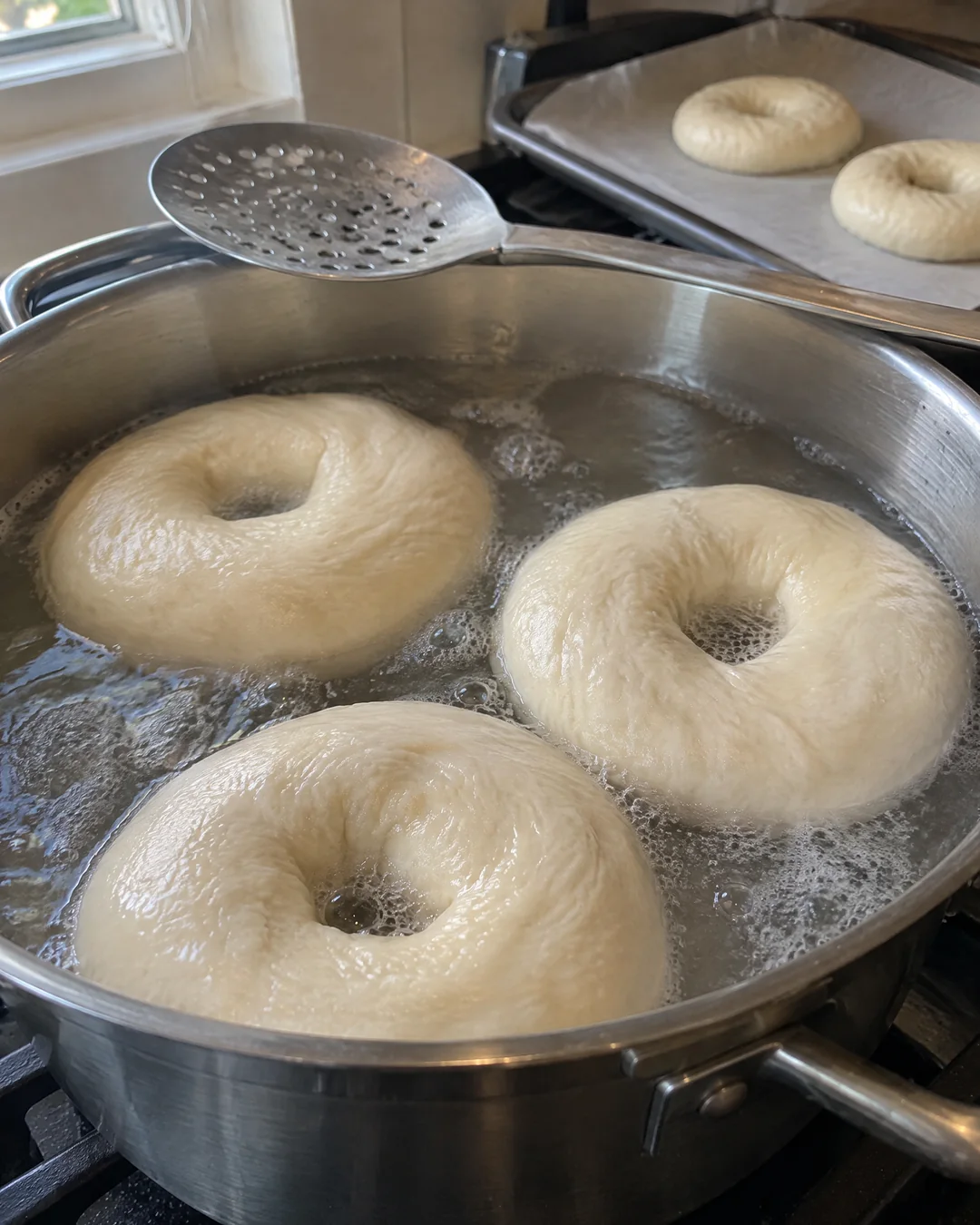
- Bring the 2 quarts of water to a boil in a wide pot, stir in the tablespoon of honey and turn the heat down so the water simmers gently.
- Lower in 3 or 4 bagels at a time, with room to float. Simmer for 1 minute, turn them over with a slotted spoon and simmer for 1 minute more. For a thicker, chewier crust, give them up to 2 minutes a side.
- Lift each bagel out, let the water drain off for a few seconds and put it back on the parchment. If you want seeds, sprinkle them on now, while the surface is wet and sticky.
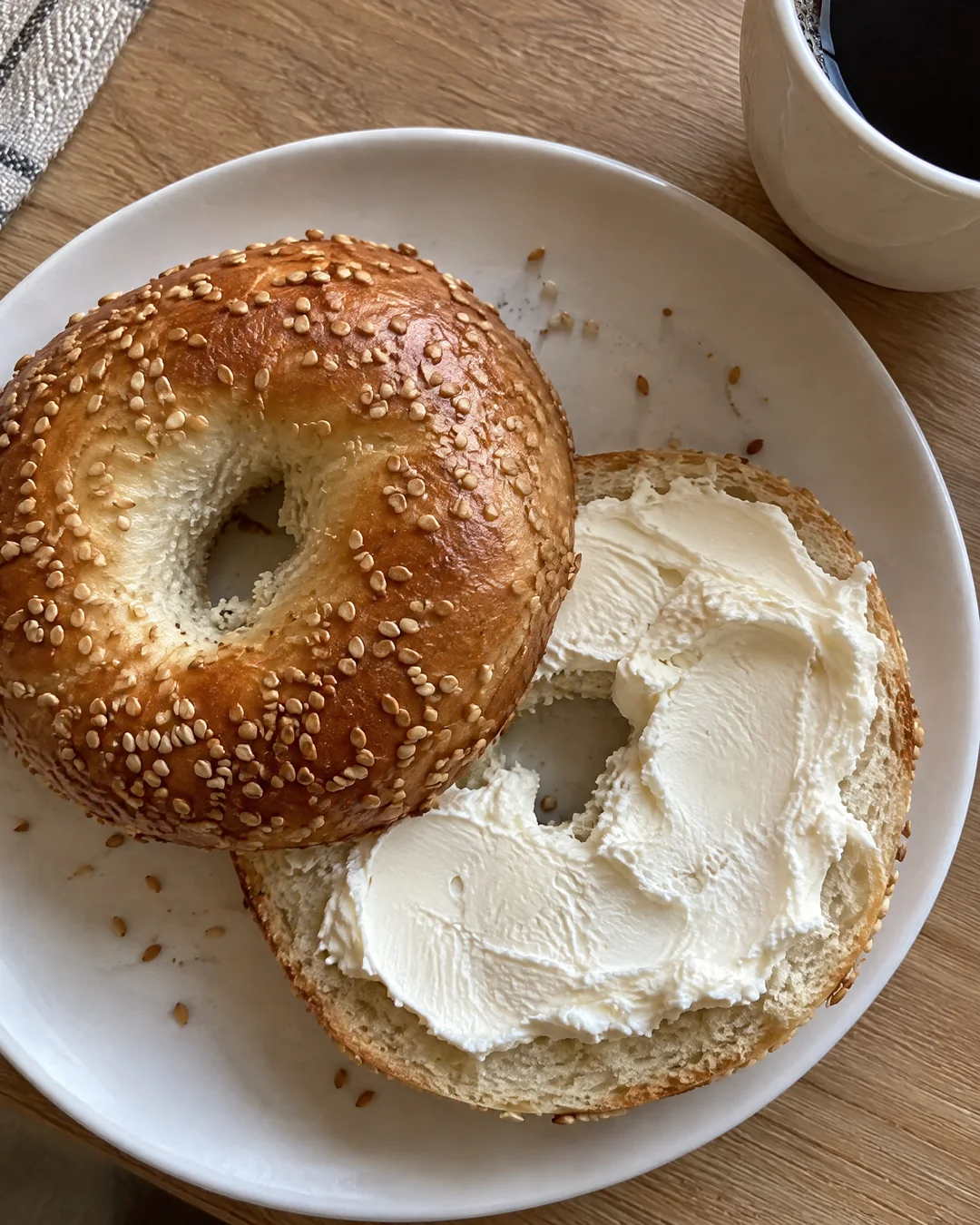
- Bake for 20 to 25 minutes, turning the sheet around halfway, until the bagels are deep golden brown all over.
- Cool on a wire rack for at least 20 minutes before splitting. The inside finishes setting as it cools.
Tips that make the difference
- Make the hole bigger than seems sensible. A small neat hole closes completely by the time the bagel has puffed in the water and the oven.
- Keep the water at a gentle simmer. A hard rolling boil knocks the bagels about and gives them a rough, wrinkled skin.
- A bagel that sinks and stays down for more than a few seconds needed a longer rest. Give the rest of the tray 10 more minutes before boiling them.
- Do not boil for longer than 2 minutes a side. Past that the crust turns thick and tough, and the bagel cannot rise in the oven.
Variations
- Overnight bagels. After shaping, cover the tray and put it in the refrigerator overnight. Boil and bake them straight from the cold in the morning. The slow rest gives a deeper flavor and more blisters on the crust.
- Cinnamon raisin. Knead 1/2 cup of raisins and 2 teaspoons of ground cinnamon into the dough for the last minute.
Storage and make-ahead
Bagels are at their best the day they are baked. Once completely cold, keep them in a paper bag inside a plastic bag at room temperature for up to 2 days.
For longer keeping, slice them in half, freeze them in a freezer bag for up to 3 months and toast the halves straight from frozen.
Frequently asked questions
Why are bagels boiled before baking?
The hot water cooks the starch on the surface of the dough and sets a thin skin. That skin limits how much the bagel can swell in the oven, which keeps the inside tight and chewy, and it bakes into the shiny crust. Without the boil you get a soft roll.
How long should I boil each bagel?
One minute on each side makes a bagel with a thin, shiny, chewy crust, which suits most people. Up to 2 minutes a side makes a thicker, chewier crust. Less than 30 seconds a side is not enough to set the skin.
Why did the holes in my bagels close up?
The hole was too small to begin with. Stretch it to about 2 inches (5 cm), as wide as the ring of dough itself. The dough springs back during the rest, swells in the water and swells again in the oven.
Bake them on a Saturday morning, split the first one while it is still warm, and you will not look at the bag from the supermarket the same way again.
Homemade New York Style Bagels (Boiled First, Then Baked)
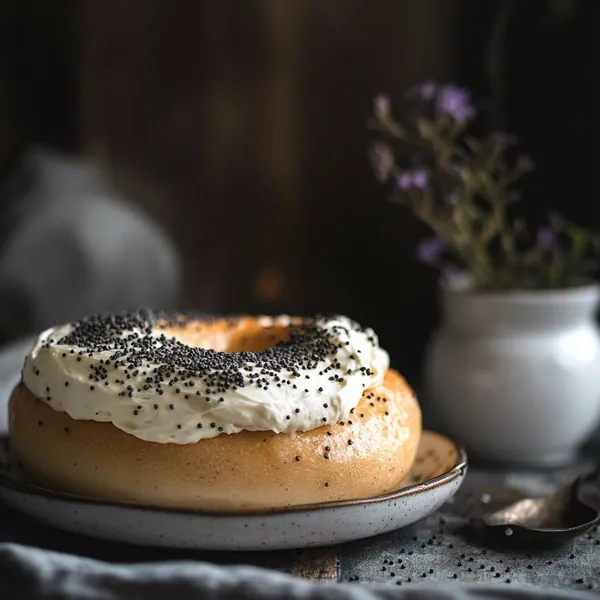
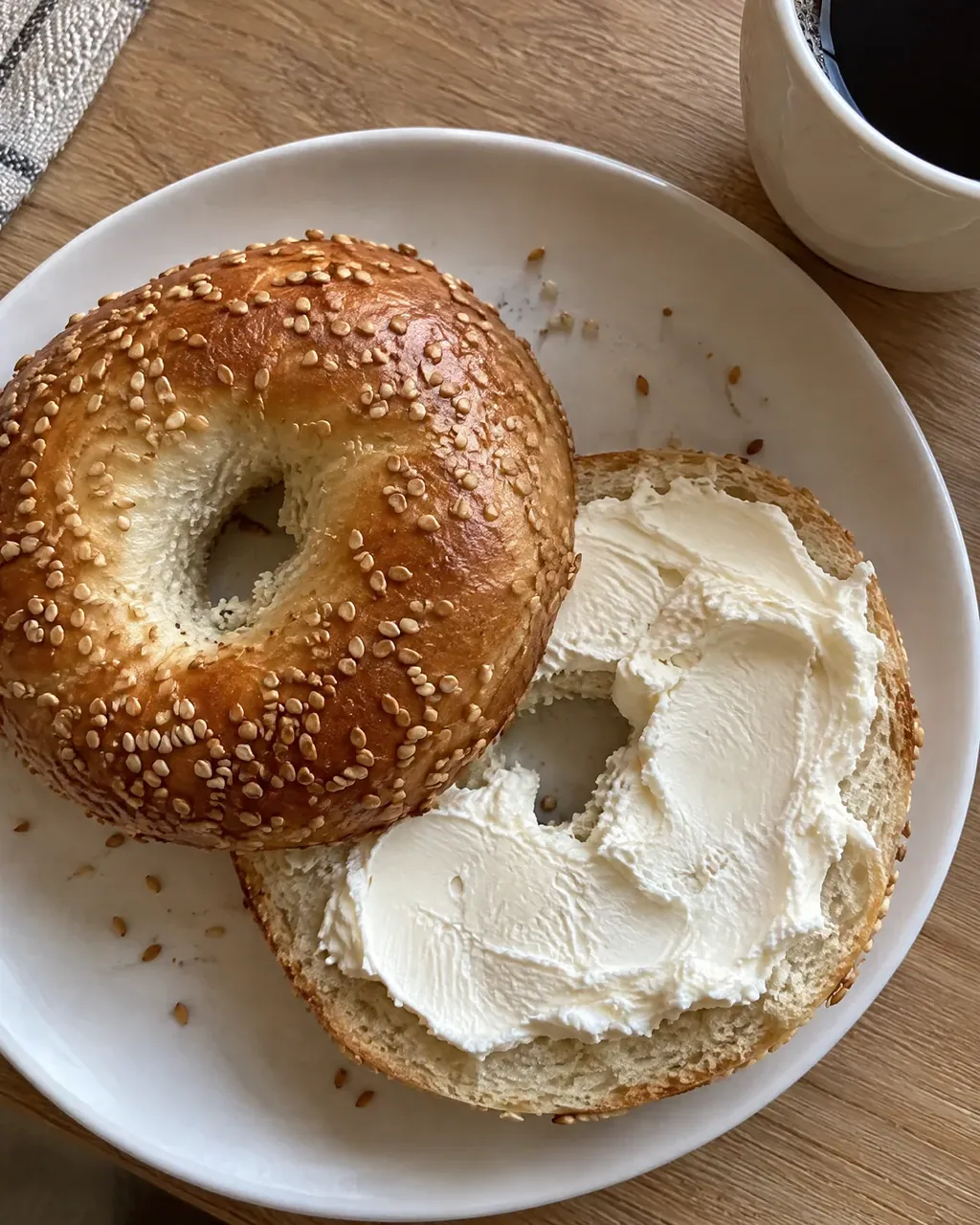
Homemade New York style bagels: a stiff, plain dough of bread flour, water, yeast, salt and a little honey, shaped into rings, boiled for a minute on each side in honey water and baked until deep golden, with a shiny crust and a tight, chewy inside.
Ingredients
- 4 cups bread flour (500g), plus a little for the counter
- 1 1/2 teaspoons instant or rapid-rise yeast
- 2 teaspoons fine salt
- 1 tablespoon honey
- 1 1/4 cups warm water (300ml), warm to the touch, not hot
- 2 quarts water
- 1 tablespoon honey
- Sesame seeds, poppy seeds or coarse salt
Instructions
- In a large bowl, stir the flour, yeast and salt together. Stir the honey into the warm water until it dissolves, then pour it into the flour.
- Mix with a wooden spoon and then with your hand until every bit of flour is taken up. The dough will be firm and a little dry. That is correct. Do not add more water unless flour is still loose in the bowl after a minute of mixing, and then only a teaspoon at a time.
- Turn the dough onto the counter and knead it for 10 minutes, until it is smooth, tight and springy. In a stand mixer with a dough hook, knead for 6 to 7 minutes on low speed.
- Put the dough in a lightly oiled bowl, cover it and leave it in a warm place for 1 hour, until it has puffed and nearly doubled.
- Line a baking sheet with parchment. Turn the dough out, press the air out of it and cut it into 8 equal pieces, about 3.5 ounces (100g) each.
- Roll each piece into a tight, smooth ball by cupping it under your palm and moving it in small circles on a clean counter with no flour.
- Push a floured finger straight through the middle of a ball. Slip a second finger in from the other side and turn the ring around both fingers, stretching it gently, until the hole is about 2 inches (5 cm) across, roughly as wide as the ring of dough around it. It will look too big. It shrinks back in the water and again in the oven.
- Set the rings on the parchment, cover them with a clean towel and let them rest for 15 to 20 minutes. Meanwhile heat the oven to 425 degrees (220°C).
- Bring the 2 quarts of water to a boil in a wide pot, stir in the tablespoon of honey and turn the heat down so the water simmers gently.
- Lower in 3 or 4 bagels at a time, with room to float. Simmer for 1 minute, turn them over with a slotted spoon and simmer for 1 minute more. For a thicker, chewier crust, give them up to 2 minutes a side.
- Lift each bagel out, let the water drain off for a few seconds and put it back on the parchment. If you want seeds, sprinkle them on now, while the surface is wet and sticky.
- Bake for 20 to 25 minutes, turning the sheet around halfway, until the bagels are deep golden brown all over.
- Cool on a wire rack for at least 20 minutes before splitting. The inside finishes setting as it cools.