In this article
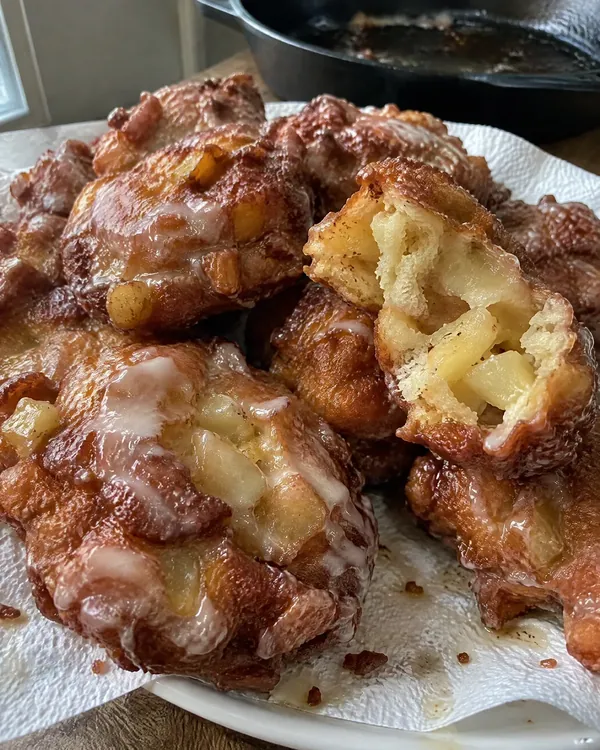
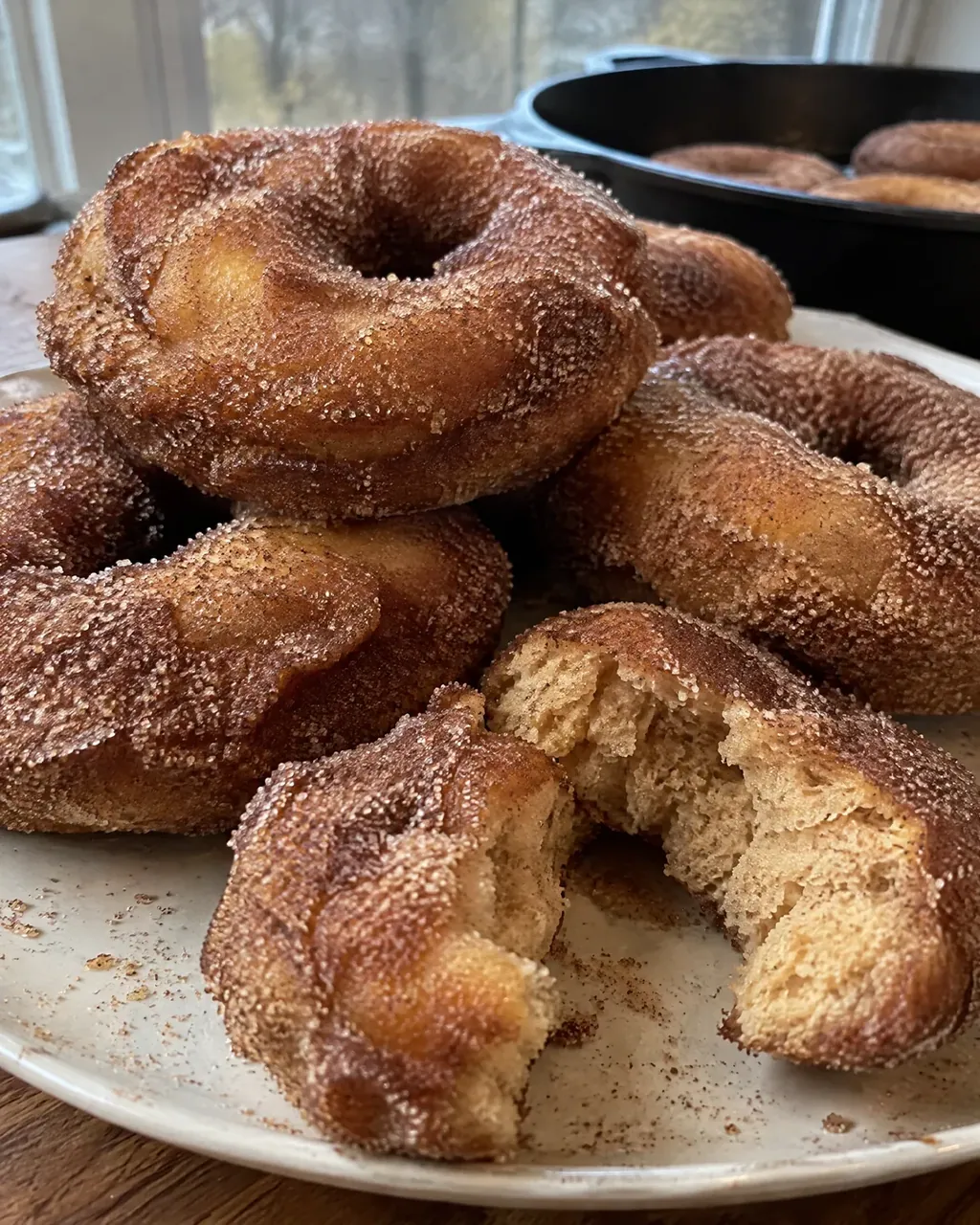
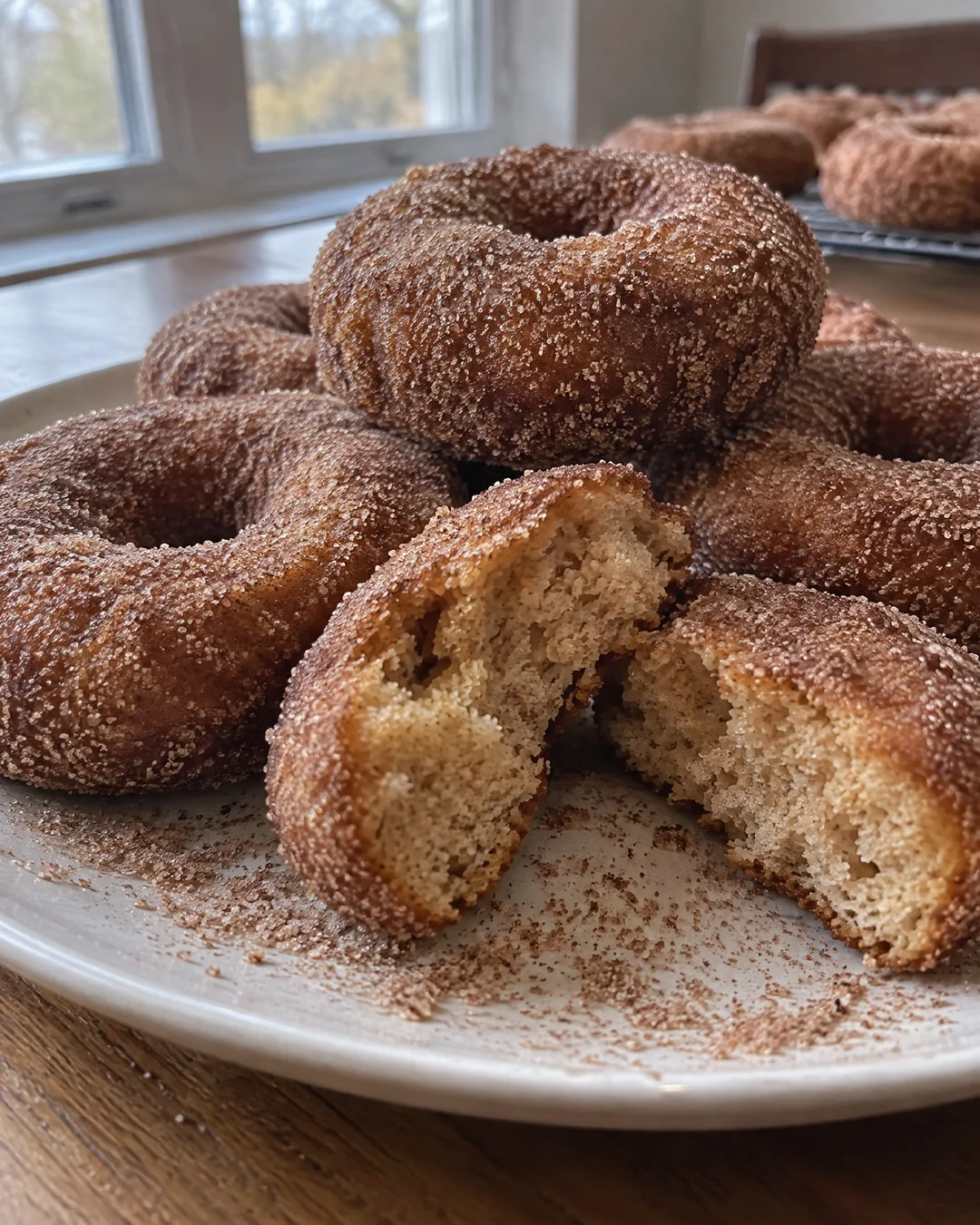
Every October there is a line at the orchard stand for these, and every October there was a mother somewhere in our town who would not stand in it. Apple cider donuts are cake donuts, the dense, tender kind made with baking powder rather than yeast, spiced with cinnamon and nutmeg and rolled in cinnamon sugar while too hot to hold. What sets a good one apart is what you do with the cider.
Cider straight from the jug is mostly water. Half a cup of it in a dough tastes of very little. Boil that same cider until two thirds of it has gone up in steam, and what remains is a dark, glossy syrup that tastes like ten apples. That is the flavor of an orchard donut. The rest is patience: an hour in the refrigerator for the soft dough, a drinking glass for the rounds, a bottle cap or a thimble for the holes, two inches of hot oil, one turn, and a bowl of cinnamon sugar beside the stove.
Why this apple cider donuts works
- Boiled cider. 1 1/2 cups cooked down to 1/2 cup concentrates the apple flavor and drives off the water that would make the dough slack.
- Butter, brown sugar and buttermilk. A cake donut dough mixed like a quick bread: the brown sugar deepens the color, the buttermilk keeps the crumb tender and works with the soda for lift.
- An hour of chilling. Cold dough rolls without sticking, holds its shape in the oil and soaks up less grease.
- 365°F and about a minute a side. Hot enough to set the crust fast so the inside steams tender, cool enough that the outside does not darken before the middle cooks.
Ingredients
Makes about 14 donuts plus their holes. The measurements are in US cups with grams in brackets.
For the dough
- 1 1/2 cups apple cider (360ml), the cloudy unfiltered kind
- 3 1/2 cups all-purpose flour (440g), plus more for rolling
- 2 teaspoons baking powder
- 1 teaspoon baking soda
- 1 teaspoon fine salt
- 1 1/2 teaspoons ground cinnamon
- 1/2 teaspoon ground nutmeg
- 1/4 cup unsalted butter (57g), softened
- 3/4 cup packed light brown sugar (150g)
- 2 large eggs
- 1/2 cup buttermilk (120ml)
- 1 teaspoon vanilla extract
For frying and coating
- About 6 cups vegetable oil (1.4 liters), enough for 2 inches in the skillet
- 1 cup granulated sugar (200g)
- 2 tablespoons ground cinnamon
Fresh cider, not apple juice, which boils down to something thin and one-note. Boil the cider first thing, since it needs to cool before it goes into the dough.
How to make apple cider donuts
- Pour the cider into a small saucepan and boil it over medium-high heat for 15 to 20 minutes, until it has reduced to 1/2 cup (120ml). Measure it, and if there is more, boil it a little longer. It will be dark amber, glossy and thick like maple syrup. Let it cool to room temperature.
- Whisk the flour, baking powder, baking soda, salt, cinnamon and nutmeg together in a large bowl.
- In a second bowl, beat the softened butter and brown sugar together for about 2 minutes, until creamy. Beat in the eggs one at a time, then the cooled cider syrup, the buttermilk and the vanilla. It will look thin and a little curdled. That is fine.
- Add the flour mixture and stir with a spatula just until no dry flour remains. The dough will be soft and sticky, closer to a thick batter than a bread dough. Do not add more flour; the refrigerator fixes it.
- Scrape the dough onto a large sheet of plastic wrap, pat it into a disk about 1 inch thick, wrap it and refrigerate for 1 hour, or up to overnight. It firms up considerably.
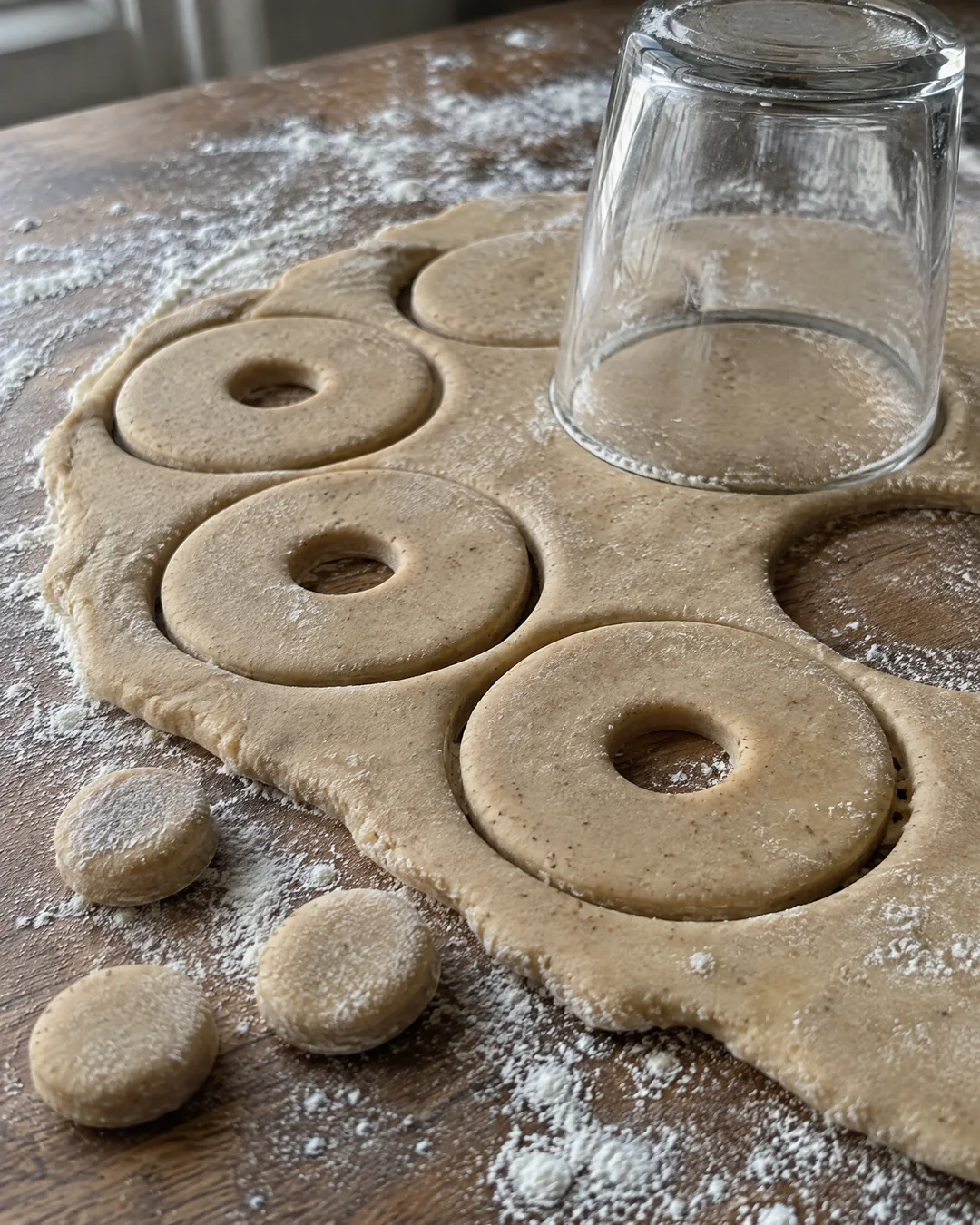
- Flour the counter generously. Roll or pat the cold dough out to 1/2 inch thick. Cut rounds with a 3-inch drinking glass dipped in flour, and cut the centers out with a bottle cap or a thimble. Gather the scraps, press them together gently, and cut again.
- Stir the granulated sugar and 2 tablespoons cinnamon together in a wide bowl and set it beside the stove, with a wire rack next to it.
- Pour 2 inches of oil into a deep cast iron skillet or a Dutch oven and heat it over medium-high to 365°F (185°C) on a thermometer. Slide in 3 or 4 donuts at a time. Fry about 1 minute, until the underside is deep golden brown, turn once with a slotted spoon, and fry about 1 minute more. The holes take 30 to 40 seconds a side.
- Lift them out, drain them on the rack for 30 seconds, and while they are still hot roll them in the cinnamon sugar. Let the oil come back to 365°F between batches.
Tips that make the difference
- Trust the thermometer, not the clock. Below 350°F the donuts soak up oil and turn heavy; above 375°F they are dark outside and raw in the middle.
- Keep the dough cold. If the kitchen is warm, cut half the dough at a time and leave the rest in the refrigerator.
- Dip the glass in flour before every cut and push straight down without twisting, so the donuts rise evenly.
- Coat them within a minute of leaving the oil. Once the surface dries, the sugar falls off.
Variations
- Glazed. Skip the cinnamon sugar and dip the cooled donuts in a glaze of 1 1/2 cups powdered sugar (180g) whisked with 3 tablespoons of boiled cider or milk.
- Baked. Spoon the dough into a greased donut pan and bake at 350°F for 12 to 14 minutes; brush with melted butter and roll in cinnamon sugar.
- Donut holes only. Roll the whole batch into 1-inch balls and fry about 2 minutes, turning. Good for a potluck platter.
- Extra spice. Add 1/2 teaspoon ground ginger and 1/4 teaspoon allspice to the flour.
Storage and make-ahead
Cake donuts are best within the hour, and honestly within ten minutes. They keep in a paper bag at room temperature for 1 day. Do not seal them in plastic, which turns the sugar wet.
The dough can be made a day ahead and kept wrapped in the refrigerator, which is the make-ahead that matters. Cut and fry in the morning.
Fried donuts freeze for up to 1 month. Warm them in a 350°F oven for 5 minutes and give them a fresh roll in cinnamon sugar.
Frequently asked questions
Can I use apple juice instead of cider?
You can boil it down the same way, but the result is sweeter and flatter. Cloudy fresh cider has the tartness that survives the boiling. If juice is all you have, add 1 tablespoon lemon juice to the reduced syrup.
Do I really have to boil the cider down?
Yes, if you want the donuts to taste of apple. Half a cup of cider from the jug adds water and almost no flavor. Half a cup of boiled cider is the concentrated taste of a cup and a half of apples.
Why are my donuts greasy?
The oil was too cool, the dough was too warm, or the pan was crowded, which drops the temperature. Hold 365°F, fry 3 or 4 at a time, and keep the dough cold.
Can I bake these or use an air fryer?
The baked version is in the variations. In an air fryer, brush the cut donuts with melted butter and cook at 350°F for 6 to 8 minutes. Both give the texture of a muffin rather than a fried donut.
Boil the cider until it is dark and thick, chill the dough, mind the thermometer and coat them hot. Then decide for yourself whether the drive to the orchard was ever worth it.
Apple Cider Donuts (Boiled Cider, Fried in a Skillet)
Old-fashioned cake-style apple cider donuts: cider boiled down to a syrup, a soft spiced dough chilled an hour, cut with a glass, fried in two inches of oil at 365°F and rolled in cinnamon sugar while hot. Cups and grams.
Ingredients
- 1 1/2 cups apple cider (360ml), the cloudy unfiltered kind
- 3 1/2 cups all-purpose flour (440g), plus more for rolling
- 2 teaspoons baking powder
- 1 teaspoon baking soda
- 1 teaspoon fine salt
- 1 1/2 teaspoons ground cinnamon
- 1/2 teaspoon ground nutmeg
- 1/4 cup unsalted butter (57g), softened
- 3/4 cup packed light brown sugar
- 2 large eggs
- 1/2 cup buttermilk
- 1 teaspoon vanilla extract
- About 6 cups vegetable oil (1.4 liters), enough for 2 inches in the skillet
- 1 cup granulated sugar
- 2 tablespoons ground cinnamon
Instructions
- Pour the cider into a small saucepan and boil it over medium-high heat for 15 to 20 minutes, until it has reduced to 1/2 cup (120ml). Measure it, and if there is more, boil it a little longer. It will be dark amber, glossy and thick like maple syrup. Let it cool to room temperature.
- Whisk the flour, baking powder, baking soda, salt, cinnamon and nutmeg together in a large bowl.
- In a second bowl, beat the softened butter and brown sugar together for about 2 minutes, until creamy. Beat in the eggs one at a time, then the cooled cider syrup, the buttermilk and the vanilla. It will look thin and a little curdled. That is fine.
- Add the flour mixture and stir with a spatula just until no dry flour remains. The dough will be soft and sticky, closer to a thick batter than a bread dough. Do not add more flour; the refrigerator fixes it.
- Scrape the dough onto a large sheet of plastic wrap, pat it into a disk about 1 inch thick, wrap it and refrigerate for 1 hour, or up to overnight. It firms up considerably.
- Flour the counter generously. Roll or pat the cold dough out to 1/2 inch thick. Cut rounds with a 3-inch drinking glass dipped in flour, and cut the centers out with a bottle cap or a thimble. Gather the scraps, press them together gently, and cut again.
- Stir the granulated sugar and 2 tablespoons cinnamon together in a wide bowl and set it beside the stove, with a wire rack next to it.
- Pour 2 inches of oil into a deep cast iron skillet or a Dutch oven and heat it over medium-high to 365°F (185°C) on a thermometer. Slide in 3 or 4 donuts at a time. Fry about 1 minute, until the underside is deep golden brown, turn once with a slotted spoon, and fry about 1 minute more. The holes take 30 to 40 seconds a side.
- Lift them out, drain them on the rack for 30 seconds, and while they are still hot roll them in the cinnamon sugar. Let the oil come back to 365°F between batches.