In this article
Every fall my father drove us out to the orchard stand for apple fritters, and every fall my mother said hers were better, and every fall she was right, and we went anyway. The stand fried theirs in a big vat behind a window and sold them in paper bags that went see-through with grease before we reached the car. Hers came out of a black cast iron skillet on the back burner.
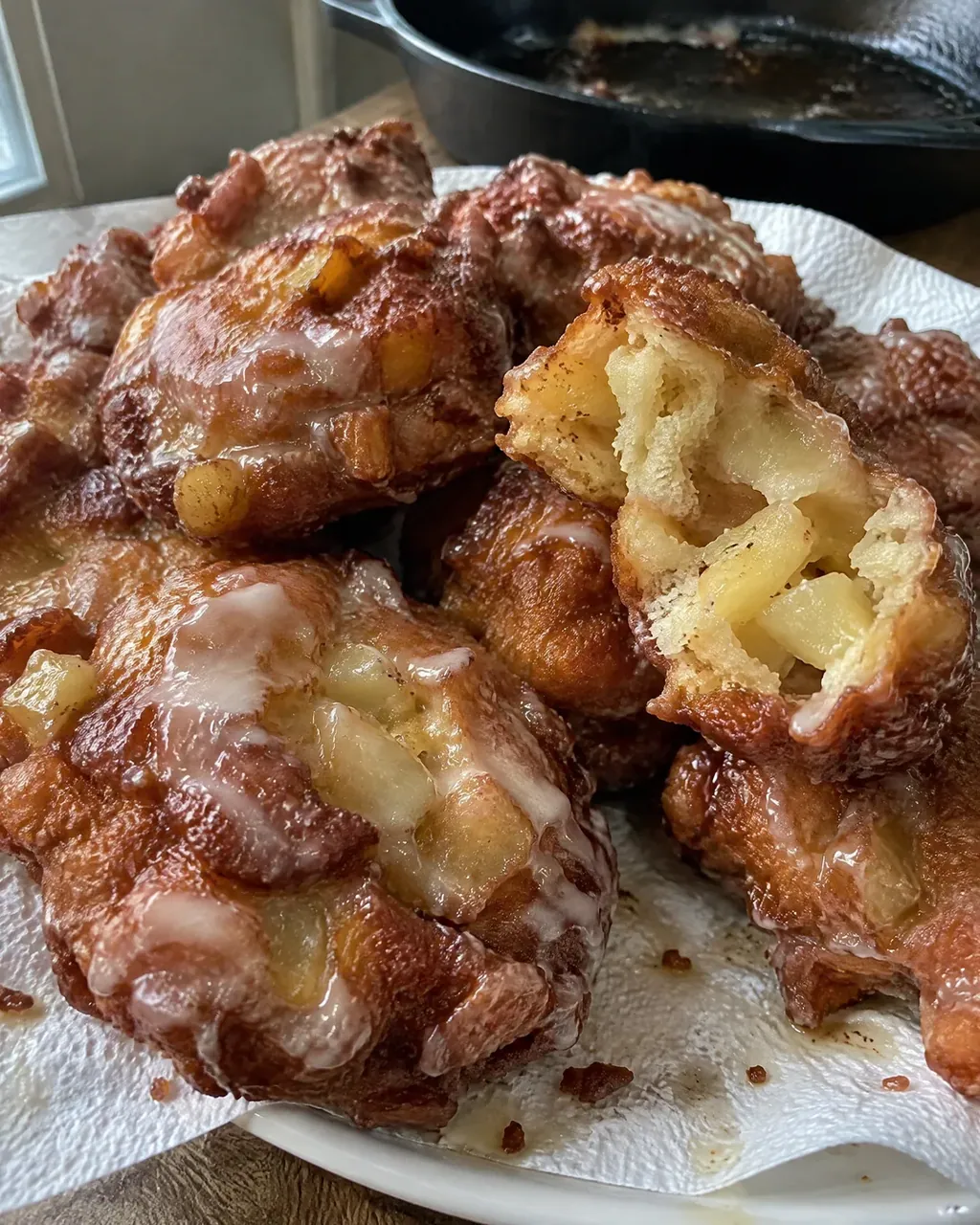
Hers were better for one reason. She used tart apples, she cut them small, and she left them raw in the batter, so the apple cooked in the oil and kept a little bite and a little sourness against the sweet glaze. The stand used soft sweet apples, cooked them first, and you could never find them inside the dough. She had one rule about the oil, too. If a drop of batter did not sizzle and rise straight away, the oil was not ready and you waited. Fritters that go in too early drink the oil and come out heavy. Turned once. Onto a paper sack. Glazed while hot.
Why this apple fritters works
- Raw tart apple, diced small. Small pieces cook through in four minutes of frying, stay a little firm, and their sourness balances the glaze. Cooked apple turns to mush.
- A thick batter. Thick enough to hold a spoon upright, so the fritters keep their craggy shape instead of spreading into pancakes.
- One inch of oil at 350°F in cast iron. The heavy skillet holds the heat steady between batches, and at 350°F the outside seals at once while the inside steams through.
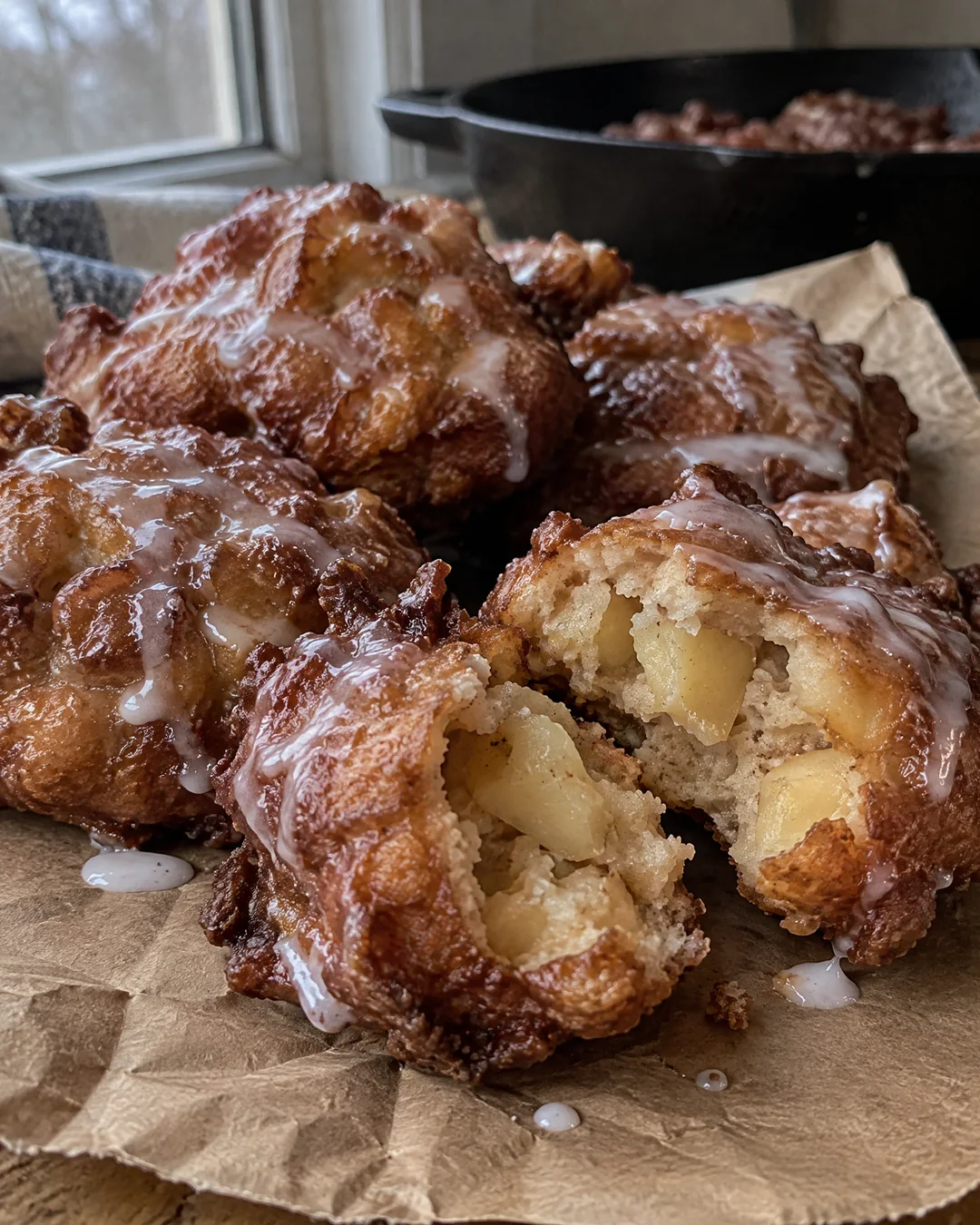
- A thin glaze while hot. The heat of the fritter melts the glaze into a thin shell that dries and cracks, the way the stand’s did.
Ingredients
Makes about 14 fritters the size of a large egg. The measurements are in US cups with grams in brackets.
For the fritters
- 2 cups all-purpose flour (250g)
- 1/4 cup granulated sugar (50g)
- 2 teaspoons baking powder
- 1 teaspoon ground cinnamon
- 1/4 teaspoon ground nutmeg
- 1/2 teaspoon fine salt
- 2 large eggs
- 2/3 cup whole milk (160ml)
- 2 tablespoons unsalted butter (28g), melted
- 1 teaspoon vanilla extract
- 2 medium tart apples, peeled, cored and cut into 1/4 inch dice (about 2 cups, 250g)
- About 4 cups vegetable oil (950ml), enough for 1 inch in the skillet
For the glaze
- 1 1/2 cups powdered sugar (180g)
- 3 to 4 tablespoons milk
- 1/2 teaspoon vanilla extract
Granny Smith is the classic tart apple here; any firm, sour apple does the same job. Peel them, because the skin toughens in the oil. A 10 or 12 inch cast iron skillet with sides at least 2 inches high is the right pan.
How to make apple fritters
- Tear open a brown paper sack and lay it flat on a sheet pan beside the stove. Pour oil into a 10 or 12 inch cast iron skillet to a depth of 1 inch and heat it over medium to 350°F (175°C) on a thermometer, about 10 minutes. Make the batter while it heats.
- Whisk together the flour, sugar, baking powder, cinnamon, nutmeg and salt in a large bowl.
- In a second bowl, whisk the eggs, milk, melted butter and vanilla. Stir the wet into the dry just until no dry flour remains. The batter will be thick, closer to a soft drop-biscuit dough than to pancake batter. A few lumps are fine.
- Fold in the raw diced apple. It will look like too much apple for the batter. That is the right amount.
- Test the oil with a small drop of batter: it should sizzle and rise at once. If it sinks and sits, wait. Drop the batter in by heaping tablespoons, about 3 tablespoons per fritter, sliding it off a second spoon, 4 or 5 at a time so the skillet is never crowded. Fry about 2 minutes, until the underside is deep golden brown, turn once with a slotted spoon, and fry the other side about 2 minutes more.
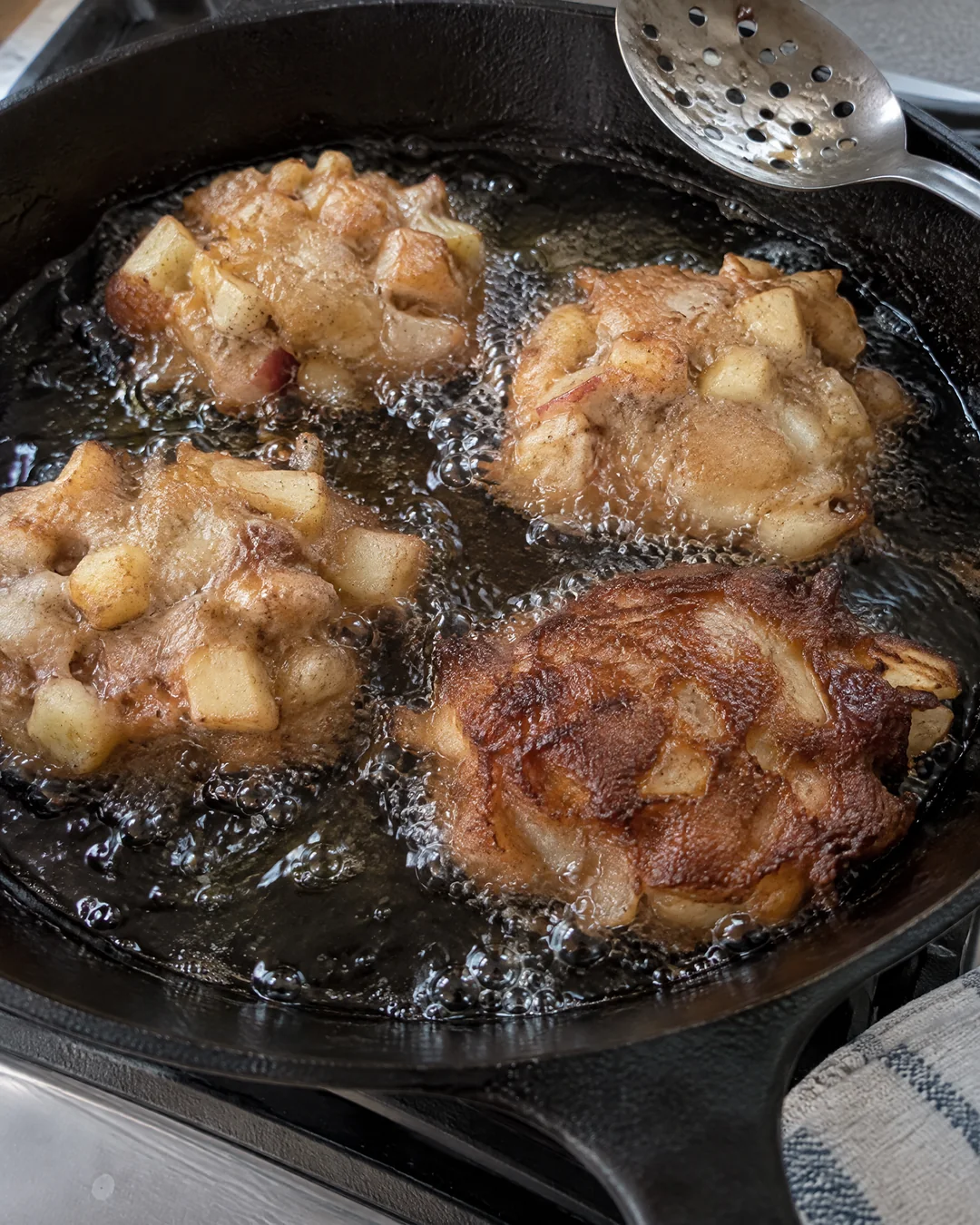
- Lift the fritters onto the paper sack to drain. Let the oil come back to 350°F between batches, adding a little more if the depth drops below an inch.
- Whisk the powdered sugar, milk and vanilla until smooth and thin enough to run off a spoon in a ribbon. Dip the top of each fritter into the glaze while it is still hot, or drizzle it over the tray, and set them on a rack. The glaze dries in minutes to a thin shell that cracks when you bite it. Eat them warm.
Tips that make the difference
- Keep the pieces of apple small and even. Big chunks stay raw inside and make the fritter fall apart in the oil.
- Watch the thermometer, not the clock. Oil that drops to 325°F gives greasy fritters; oil above 375°F browns the outside before the inside cooks.
- Do not flatten the fritters or smooth them. The ragged edges are the best part, crisp and dark and full of glaze.
- Glaze them hot. A cold fritter takes a thick, chalky coat; a hot one takes a thin glass shell.
Variations
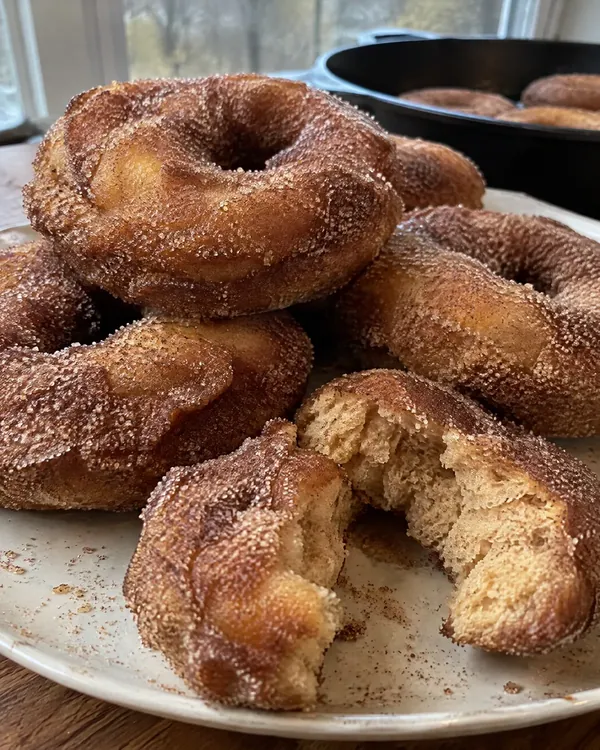
- Cinnamon sugar. Skip the glaze and roll the hot fritters in 1/2 cup sugar (100g) mixed with 1 teaspoon cinnamon, the way the fair booths did.
- Maple glaze. Replace 2 tablespoons of the milk in the glaze with pure maple syrup.
- Pear fritters. Use 2 firm pears in place of the apples, diced the same size, with a pinch of ground ginger in the batter.
- Apple cider batter. Replace the milk with fresh apple cider for a fritter that tastes of the orchard all the way through.
Storage and make-ahead
Fritters are best within an hour of leaving the oil. If you must keep them, cool them completely and store loosely covered at room temperature for 1 day. Sealed tight, the glaze goes sticky and the crust softens.
To bring them back, warm them on a sheet pan in a 350°F oven for 5 to 6 minutes. A microwave makes them soft.
They freeze unglazed for up to 2 months. Reheat frozen fritters in a 350°F oven for 10 minutes and glaze them hot.
Frequently asked questions
Why do you leave the apples raw?
Because small pieces of raw apple cook through perfectly in the four minutes the fritter spends in hot oil, and they keep a firmness and tartness that cooked apple loses. Precooked apple turns soft and disappears into the dough, which is exactly what the orchard stand did wrong.
What kind of apples are best for fritters?
Tart, firm apples: Granny Smith, or any sour baking apple from a local orchard. Sweet, soft apples turn mushy in the oil and taste flat against the glaze. Peel them and cut them into 1/4 inch dice.
How hot does the oil need to be?
350°F in about 1 inch of oil. Without a thermometer, drop in a small spoonful of batter: it should sizzle and rise immediately and turn golden in about 2 minutes. If it sinks or browns in under a minute, adjust the heat and test again.
Why are my fritters greasy or heavy?
The oil was too cool, or the skillet was crowded. Each fritter cools the oil a little, so fry only 4 or 5 at a time and let it come back to 350°F between batches. A paper sack drains them better than a plate.
Tart apples, cut small and left raw, an inch of oil that sizzles when you test it, and the glaze while they are hot. Better than the stand, and you never have to leave the kitchen.
Skillet Apple Fritters (The Orchard Stand Kind, With Raw Apple)
Old-fashioned apple fritters: a thick cinnamon batter full of small-diced raw tart apple, dropped by spoonfuls into an inch of oil at 350°F in a cast iron skillet, fried about 2 minutes a side, drained on a paper sack and glazed thin while hot.
Ingredients
- 2 cups all-purpose flour
- 1/4 cup granulated sugar
- 2 teaspoons baking powder
- 1 teaspoon ground cinnamon
- 1/4 teaspoon ground nutmeg
- 1/2 teaspoon fine salt
- 2 large eggs
- 2/3 cup whole milk
- 2 tablespoons unsalted butter (28g), melted
- 1 teaspoon vanilla extract
- 2 medium tart apples, peeled, cored and cut into 1/4 inch dice
- About 4 cups vegetable oil (950ml), enough for 1 inch in the skillet
- 1 1/2 cups powdered sugar
- 3 to 4 tablespoons milk
- 1/2 teaspoon vanilla extract
Instructions
- Tear open a brown paper sack and lay it flat on a sheet pan beside the stove. Pour oil into a 10 or 12 inch cast iron skillet to a depth of 1 inch and heat it over medium to 350°F (175°C) on a thermometer, about 10 minutes. Make the batter while it heats.
- Whisk together the flour, sugar, baking powder, cinnamon, nutmeg and salt in a large bowl.
- In a second bowl, whisk the eggs, milk, melted butter and vanilla. Stir the wet into the dry just until no dry flour remains. The batter will be thick, closer to a soft drop-biscuit dough than to pancake batter. A few lumps are fine.
- Fold in the raw diced apple. It will look like too much apple for the batter. That is the right amount.
- Test the oil with a small drop of batter: it should sizzle and rise at once. If it sinks and sits, wait. Drop the batter in by heaping tablespoons, about 3 tablespoons per fritter, sliding it off a second spoon, 4 or 5 at a time so the skillet is never crowded. Fry about 2 minutes, until the underside is deep golden brown, turn once with a slotted spoon, and fry the other side about 2 minutes more.
- Lift the fritters onto the paper sack to drain. Let the oil come back to 350°F between batches, adding a little more if the depth drops below an inch.
- Whisk the powdered sugar, milk and vanilla until smooth and thin enough to run off a spoon in a ribbon. Dip the top of each fritter into the glaze while it is still hot, or drizzle it over the tray, and set them on a rack. The glaze dries in minutes to a thin shell that cracks when you bite it. Eat them warm.