In this article
Lancashire hotpot was the supper of the cotton mill families in the north of England. It was made from the cheapest cut of lamb, a few onions and a sack of potatoes, and it was left in a low oven all day while everybody was at work. My friend Margaret’s grandmother worked in one of those mills, and she told Margaret the hotpot was the one hot meal you could always count on, whatever was left in the purse that week. It is still one of the most loved dishes in Britain, and it is nothing more than lamb, onions, gravy and potatoes, cooked slowly until all of it is tender.
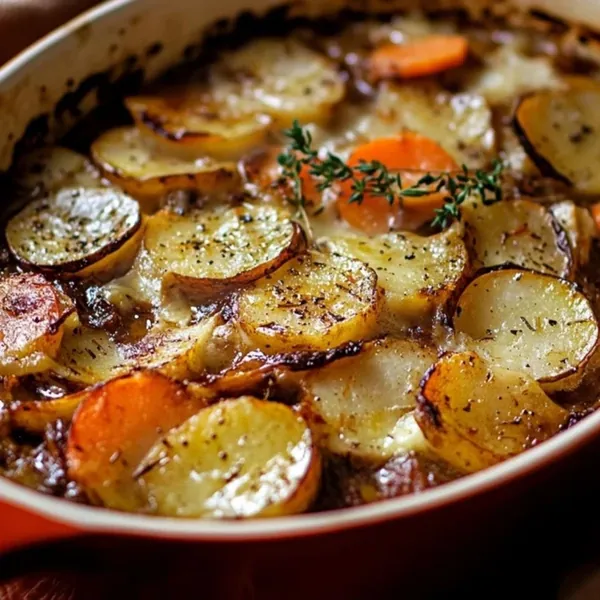
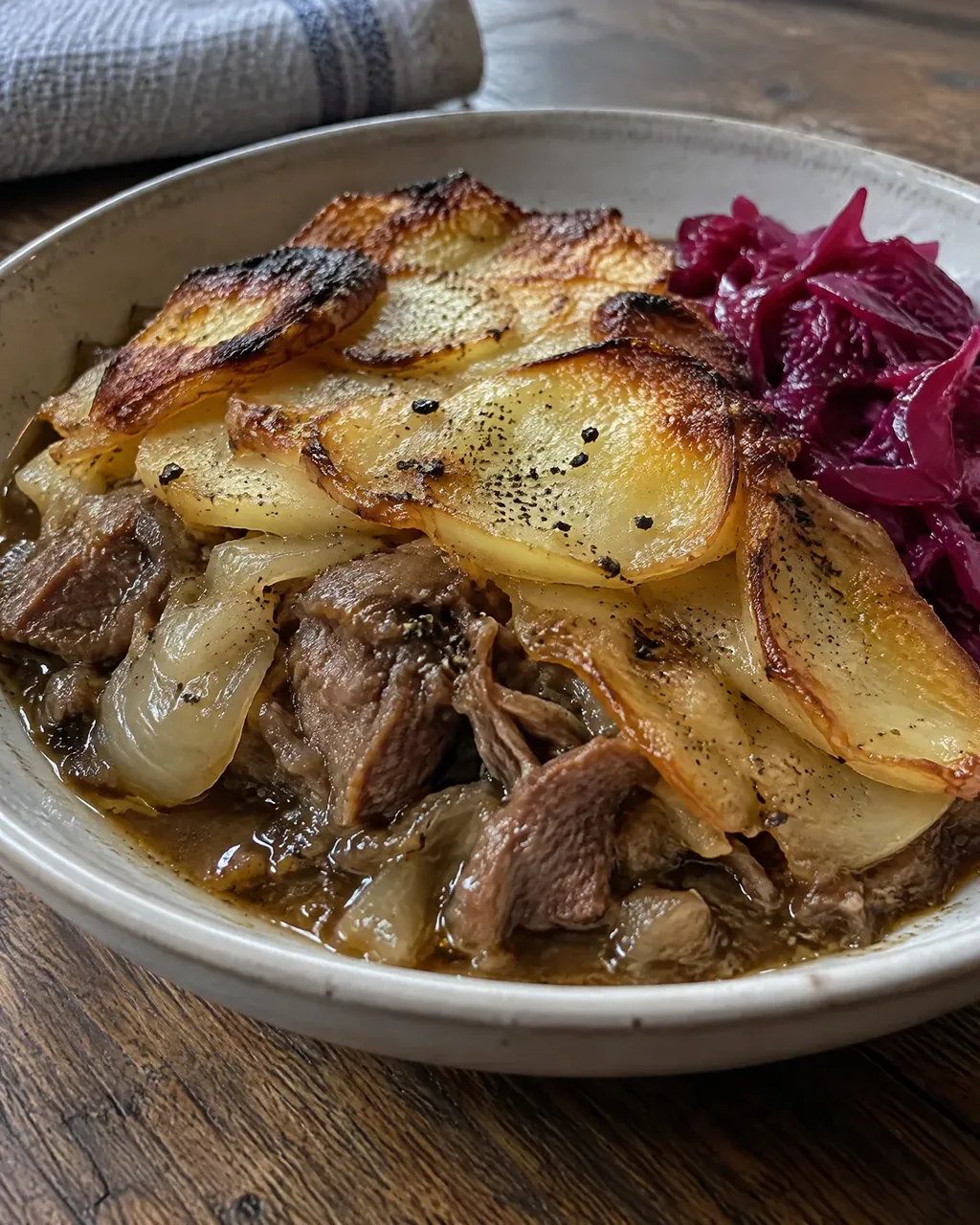
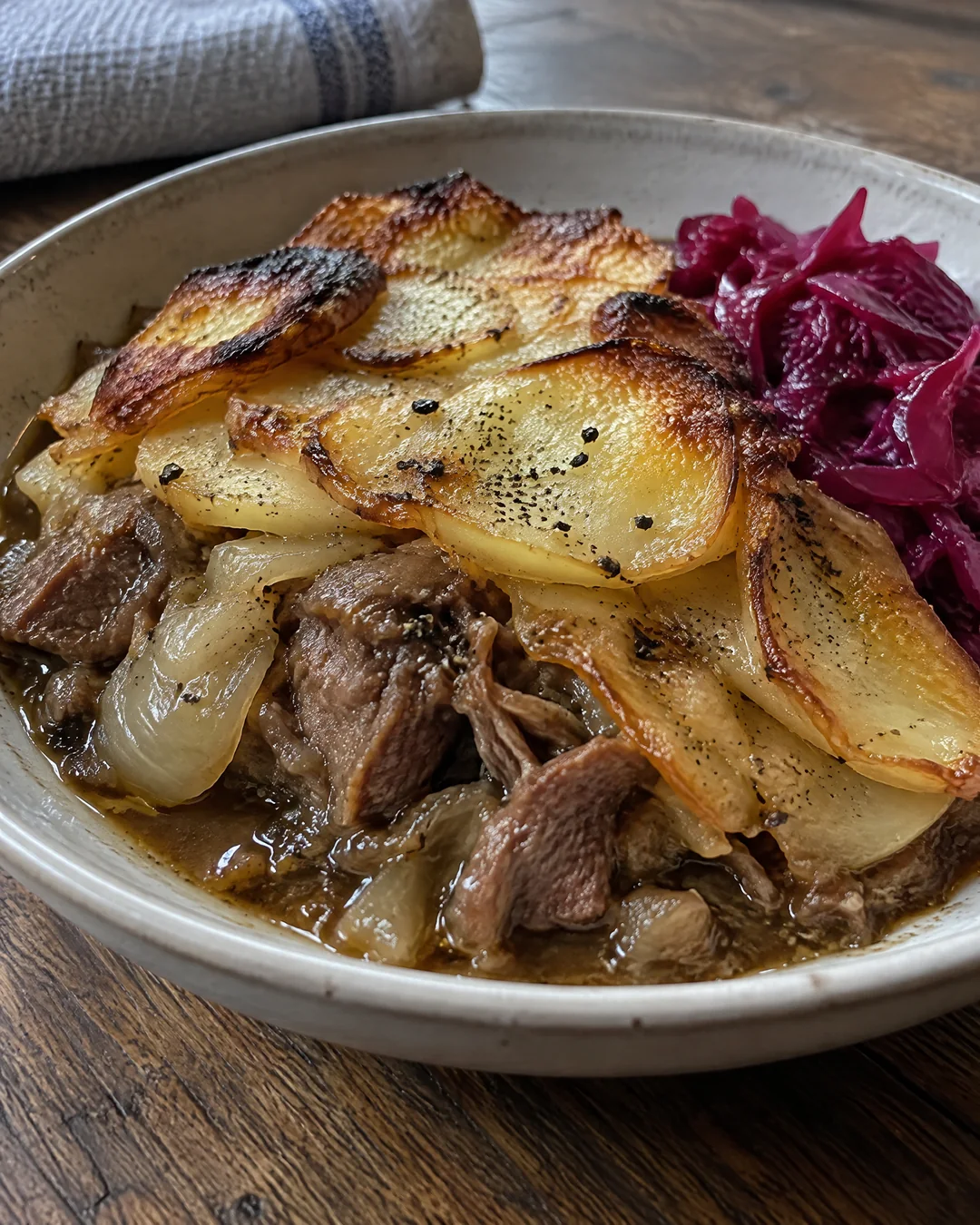
What makes it a hotpot is the lid. Thin slices of potato are laid over the meat like roof tiles, overlapping all the way around, and baked with the pot covered so the meat braises underneath. At the end the lid comes off and the top slices turn crisp and brown while the ones beneath stay soft and soak up the gravy. Get the slices too thick and they stay hard; leave the lid on too long and they stay pale. Here is how to get the potato lid crisp on top and soft underneath.
Why this Lancashire hotpot works
- Browned lamb. Searing the meat in batches gives the gravy its deep color and flavor.
- Onions cooked in the same pot. They pick up every brown bit left by the lamb.
- A little flour and stock. The gravy thickens slowly in the oven, so the hotpot is rich, not soupy.
- Thin, even potato slices. Slices about the thickness of a coin cook through under the lid and crisp quickly once it comes off.
- Lid on, then lid off. Covered baking braises the meat; the uncovered finish browns the top.
Ingredients
Serves 6 in a 4 to 5 quart deep casserole. The measurements are in US cups with grams in brackets.
For the filling
- 2 1/2 pounds boneless lamb shoulder (1.1kg), cut in 1 1/2 inch chunks, or beef chuck
- 2 tablespoons vegetable oil
- 1 1/2 teaspoons fine salt and 1 teaspoon black pepper
- 3 large yellow onions (about 700g), sliced thick
- 3 tablespoons all-purpose flour (25g)
- 2 1/2 cups lamb or beef stock (600ml)
- 1 tablespoon Worcestershire-style sauce or 1 extra teaspoon salt
- 2 bay leaves
- 1 teaspoon dried thyme
For the potato lid
- 2 1/2 pounds russet or Yukon Gold potatoes (1.1kg), peeled
- 3 tablespoons unsalted butter (45g), melted
- Salt and pepper
To serve
- Pickled red cabbage
Lamb shoulder or neck has enough fat to stay tender through the long baking. Beef chuck makes a beef hotpot in the same way. Use a deep, heavy casserole with a lid.
How to make Lancashire hotpot
Make the filling
- Heat the oven to 325 degrees (160°C). Pat the lamb dry and season it with the salt and pepper.
- Heat the oil in a large deep casserole over medium-high heat. Brown the lamb in two or three batches, about 5 minutes a batch, until well browned on most sides. Move each batch to a plate.
- Lower the heat to medium, add the onions with a pinch of salt and cook, stirring and scraping the bottom, for 10 minutes, until soft and golden.
- Sprinkle in the flour and stir for 1 minute. Pour in the stock slowly, stirring, then add the sauce, bay leaves and thyme. Return the lamb and its juices and bring it to a simmer. The liquid should come just to the top of the meat.
Build the lid and bake
- Slice the potatoes about 1/8 inch thick, by hand or on a mandoline. Keep the best, roundest slices for the top.
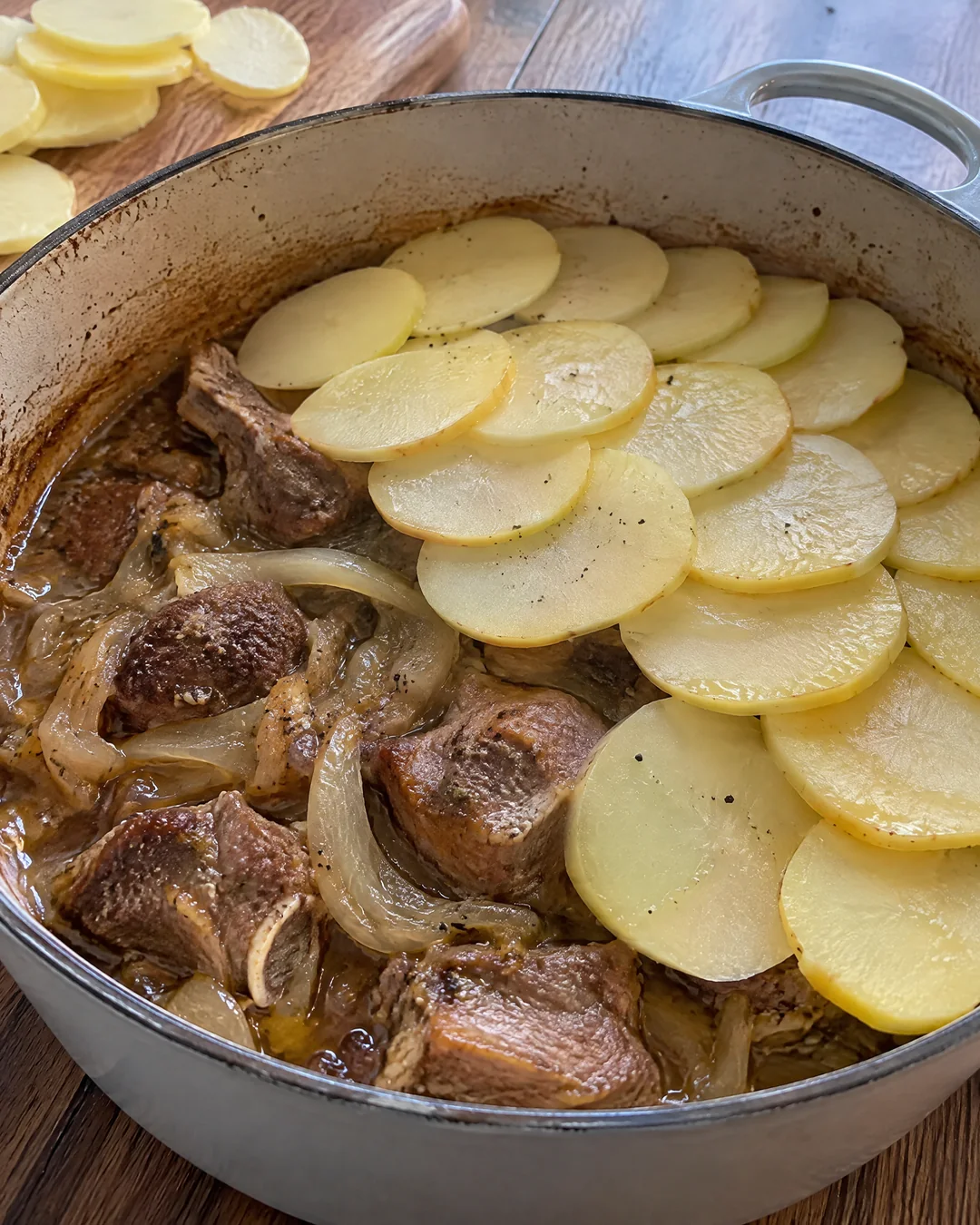
- Lay the potato slices over the lamb in overlapping rings, starting at the edge and working to the middle, two or three layers deep. Brush the top with melted butter and season with salt and pepper.
- Cover the pot and bake for 1 1/2 hours.
- Take off the lid, brush the potatoes with the rest of the butter and bake uncovered for 45 minutes to 1 hour more, until the top slices are crisp and deep golden at the edges.
- If you want an even darker top, slide the pot under the broiler for 2 to 3 minutes, watching it closely.
- Rest for 10 minutes, then serve with pickled red cabbage on the side.
Tips that make the difference
- Slice the potatoes thin and even. Thick slices stay hard in the middle while the edges burn.
- Do not drown the meat. If the stock covers the meat by a lot, the bottom potato layer boils instead of steaming.
- Overlap the slices well, like roof tiles, so no gravy bubbles up through the lid.
- If the edges brown before the middle, brush the middle with a little more butter and give it more time.
- Make it a day ahead if you can. The gravy is even better the next day; crisp the top again in the oven.
Variations
- Beef hotpot. Use beef chuck in place of lamb and cook it 30 minutes longer under the lid.
- With carrots. Add two thick sliced carrots with the onions.
- Cheesy top. Scatter a little sharp cheddar over the potatoes for the last 10 minutes.
- Ground lamb. For a quicker weeknight version, brown ground lamb with the onions and bake for 1 hour in all.
Storage and make-ahead
Cool leftovers, cover and refrigerate for up to 4 days.
Reheat covered in a 350 degree oven until hot through, then uncover for 10 minutes to crisp the top again.
The filling freezes well for up to 3 months; the potato lid softens when frozen, so for freezing, slice fresh potatoes when you bake.
Frequently asked questions
Why is it called a hotpot?
It is simply the hot pot the supper was baked in, a deep covered dish left in the oven while the family worked.
Can I make Lancashire hotpot with beef?
Yes. Beef chuck works the same way and needs a little longer under the lid.
Why are my potatoes still hard?
The slices were too thick, or the lid came off too soon. Keep them thin and give the covered stage its full time.
What do you serve with it?
Traditionally pickled red cabbage, which cuts the richness. Green beans or peas are good too.
Put it in the oven in the afternoon, and let the kitchen smell like supper long before anybody sits down.
Lancashire Hotpot (Lamb and Onions Under a Crisp Potato Lid)
Traditional Lancashire hotpot: browned lamb and soft onions in a thick gravy, slow baked under overlapping potato slices that turn crisp and golden on top while the layer underneath soaks up the gravy.
Ingredients
- 2 1/2 pounds boneless lamb shoulder (1.1kg), cut in 1 1/2 inch chunks, or beef chuck
- 2 tablespoons vegetable oil
- 1 1/2 teaspoons fine salt and 1 teaspoon black pepper
- 3 large yellow onions (about 700g), sliced thick
- 3 tablespoons all-purpose flour
- 2 1/2 cups lamb or beef stock
- 1 tablespoon Worcestershire-style sauce or 1 extra teaspoon salt
- 2 bay leaves
- 1 teaspoon dried thyme
- 2 1/2 pounds russet or Yukon Gold potatoes (1.1kg), peeled
- 3 tablespoons unsalted butter (45g), melted
- Salt and pepper
- Pickled red cabbage
Instructions
- Heat the oven to 325 degrees (160°C). Pat the lamb dry and season it with the salt and pepper.
- Heat the oil in a large deep casserole over medium-high heat. Brown the lamb in two or three batches, about 5 minutes a batch, until well browned on most sides. Move each batch to a plate.
- Lower the heat to medium, add the onions with a pinch of salt and cook, stirring and scraping the bottom, for 10 minutes, until soft and golden.
- Sprinkle in the flour and stir for 1 minute. Pour in the stock slowly, stirring, then add the sauce, bay leaves and thyme. Return the lamb and its juices and bring it to a simmer. The liquid should come just to the top of the meat.
- Slice the potatoes about 1/8 inch thick, by hand or on a mandoline. Keep the best, roundest slices for the top.
- Lay the potato slices over the lamb in overlapping rings, starting at the edge and working to the middle, two or three layers deep. Brush the top with melted butter and season with salt and pepper.
- Cover the pot and bake for 1 1/2 hours.
- Take off the lid, brush the potatoes with the rest of the butter and bake uncovered for 45 minutes to 1 hour more, until the top slices are crisp and deep golden at the edges.
- If you want an even darker top, slide the pot under the broiler for 2 to 3 minutes, watching it closely.
- Rest for 10 minutes, then serve with pickled red cabbage on the side.