In this article
In most Southern kitchens cornbread was not a recipe, it was a habit. A black iron skillet lived on the back of the stove, a sack of cornmeal lived in the pantry, and a pan of cornbread was on the table with the beans, the greens, the chili and the Sunday chicken without anybody ever announcing it.
It also started one of the longest running arguments in American cooking, which is sugar. Further north, a quarter cup of sugar in the batter is normal. In the Deep South that is called cake, and people will say so to your face. This recipe takes the old Southern side: no sugar, no flour, only cornmeal, buttermilk, eggs and a little butter. The sweet version is in the variations, because families are families.
The part nobody argues about is the skillet. It has to be hot, with the fat already shimmering in it, before the batter goes in. Pour batter into a cold skillet and you get a pale, soft bottom. Pour it into a hot one and the bottom fries on contact into a deep brown crust.
Why this skillet cornbread works
- A hot skillet. The skillet heats with the oven, fat and all, so the batter starts frying the second it lands. No hiss means no crust.
- All cornmeal. With no wheat flour to soften it, the crumb is coarse, tender and tastes of corn.
- Buttermilk and baking soda. The acid in the buttermilk reacts with the soda for a quick, strong rise, and it gives a faint tang.
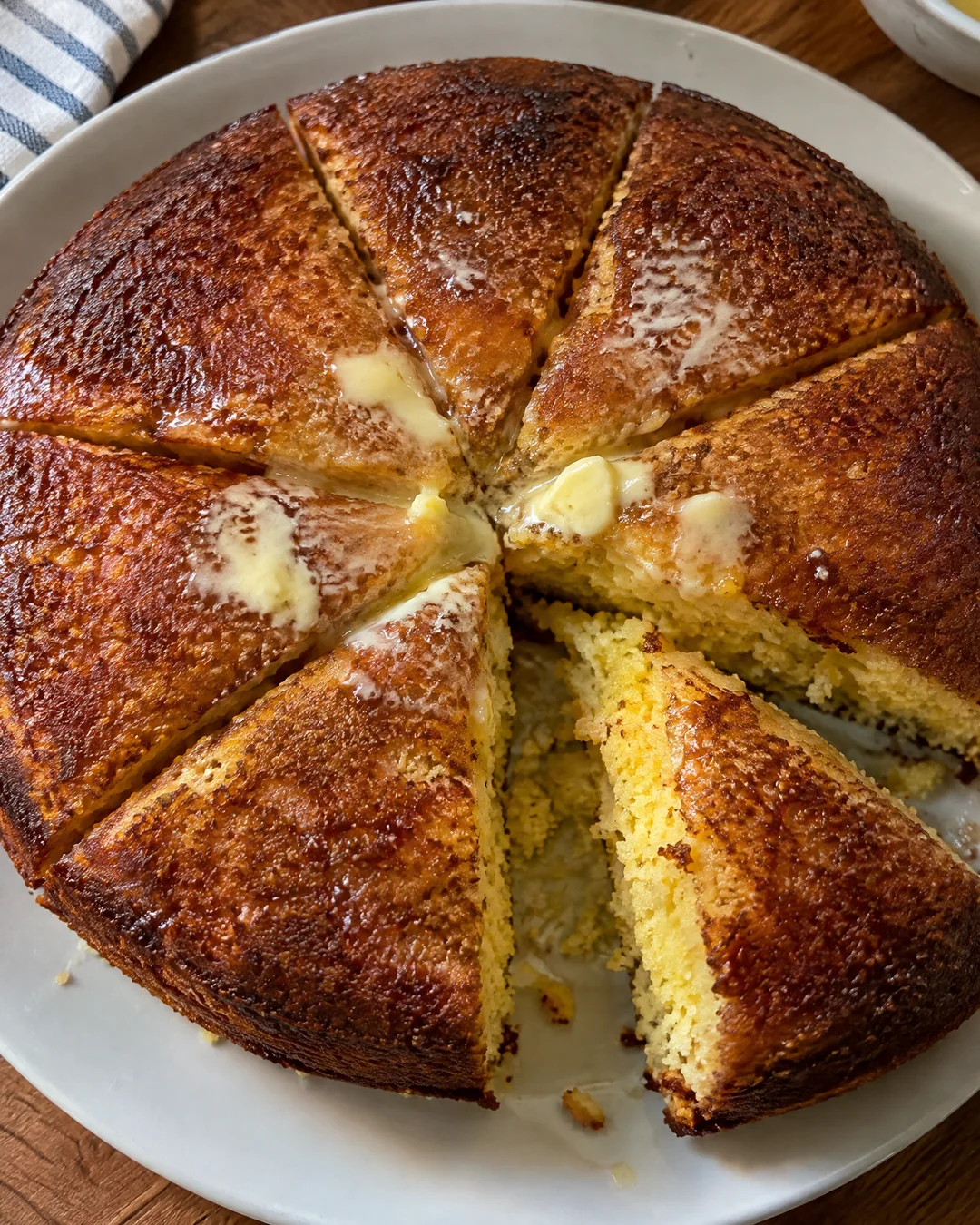
- Turned out upside down. The bottom is the top. Flipping it onto a plate keeps the crisp brown crust from steaming soft in the pan.
Ingredients
Makes one 10-inch round, 8 wedges. The measurements are in US cups with grams in brackets.
- 2 tablespoons vegetable oil or butter, for the skillet
- 2 cups yellow or white cornmeal (280g), plain, not a self-rising mix
- 1 teaspoon fine salt
- 1 teaspoon baking soda
- 1 teaspoon baking powder
- 2 large eggs
- 1 3/4 cups buttermilk (420ml)
- 1/4 cup unsalted butter (57g), melted
- Soft butter, for serving
Medium-grind or stone-ground cornmeal gives the best texture. Shake the buttermilk carton well before you measure.
How to make skillet cornbread
- Put the 2 tablespoons of oil or butter in a 10-inch cast iron skillet and set the skillet on the middle rack of the oven. Heat the oven to 425°F (220°C) with the skillet inside. The skillet has to be hot before anything else happens, so give it at least 15 minutes, or until the oven reaches temperature.
- While the skillet heats, whisk the cornmeal, salt, baking soda and baking powder together in a large bowl, breaking up any lumps of soda with your fingers.
- Add the eggs, buttermilk and melted butter to the bowl and stir with a wooden spoon just until everything is wet. The batter should be thick but pourable. Lumpy is fine. Do not beat it smooth.
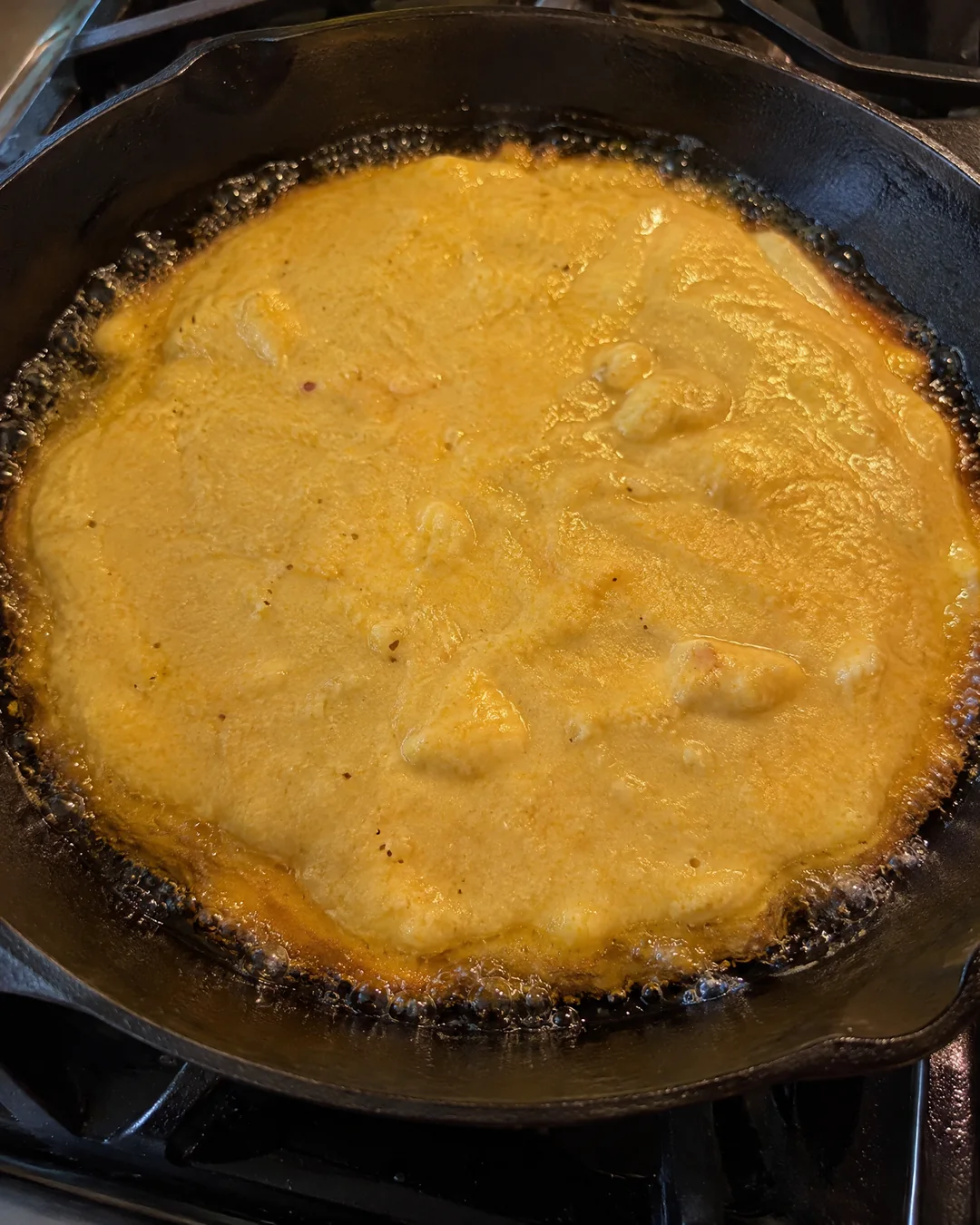
- Using thick oven mitts, take the hot skillet out of the oven and set it on the stove. Tilt it carefully so the fat coats the bottom and runs a little way up the sides. Pour the batter into the hot skillet all at once. It should hiss loudly and the edges should start to bubble and set right away. If it doesn’t hiss, the skillet wasn’t ready.
- Return the skillet to the oven and bake at 425°F for 20 to 25 minutes, until the top is gold, the center springs back when pressed lightly, and the edges are brown and pulling away from the sides of the skillet.
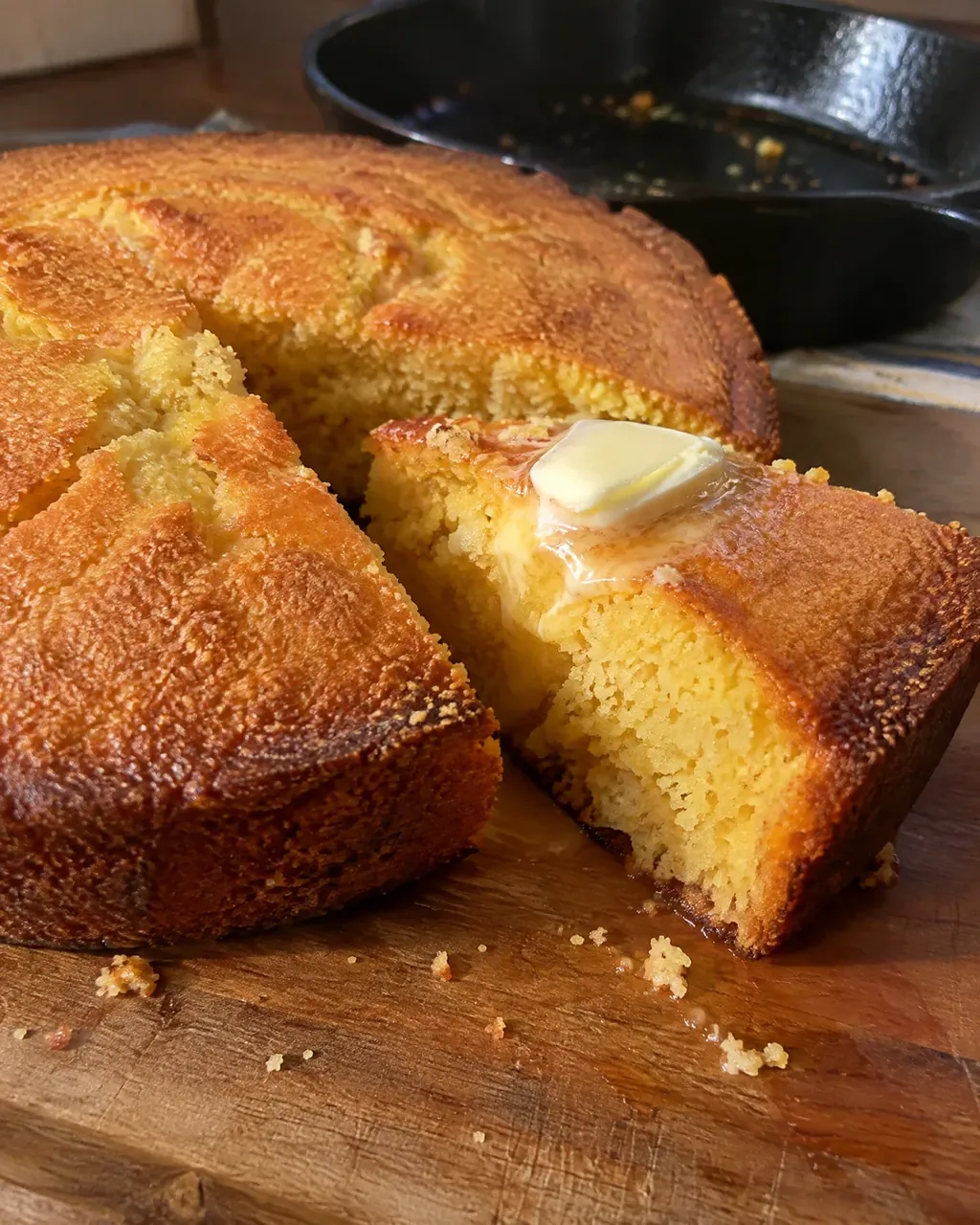
- Run a knife around the edge. Set a plate or a board over the skillet and, holding both with mitts, turn it over so the cornbread drops out upside down. The deep brown bottom crust is now the top. That’s the good part.
- Butter it while it’s hot, cut it into 8 wedges, and serve right away.
Tips that make the difference
- Butter in the skillet will brown as the oven heats. That tastes good, but pull the skillet as soon as the oven is hot so it does not burn. Oil is more forgiving.
- Have the batter ready before you open the oven. A hot skillet loses its heat quickly, and the hiss depends on it.
- Do not overmix. Stir until the dry cornmeal is gone and stop.
- No cast iron? A heavy 9-inch metal cake pan, heated the same way, is the next best thing. Glass does not give a crust.
Variations
- With sugar. For the sweeter, more northern style, whisk 1/4 cup granulated sugar (50g) into the dry ingredients. Nothing else changes, and the top browns a little faster.
- Jalapeño and cheddar. Stir in 1 cup grated sharp cheddar (115g) and 1 or 2 finely chopped jalapeños with the wet ingredients.
- Corn kernel. Fold in 1 cup of fresh or thawed frozen corn kernels (150g) for a moister cornbread with little sweet pops in it.
- A softer crumb. Swap 1/2 cup of the cornmeal for 1/2 cup all-purpose flour (63g) if your family likes a finer, less crumbly wedge.
Storage and make-ahead
Cornbread is at its best within an hour of coming out of the skillet. Leftovers keep, wrapped in foil, for 2 days at room temperature or 5 days in the refrigerator.
To reheat, split the wedges, butter the cut sides and brown them in a hot skillet for a minute or two. Wedges freeze well for up to 3 months.
Day-old cornbread has its own traditions. Crumble it into a glass of cold buttermilk and eat it with a spoon, the old Sunday night supper, or let it dry out overnight and use it as the base of a pan of cornbread dressing.
Frequently asked questions
Why didn’t my batter hiss when I poured it in?
The skillet was not hot enough. It needs the whole preheat, at least 15 minutes, and the batter needs to go in within seconds of the skillet coming out. The cornbread will still bake, but the crust will be pale and soft.
Can I make it without buttermilk?
Stir 1 1/2 tablespoons of lemon juice or white vinegar into 1 3/4 cups of whole milk and let it stand 10 minutes. The acid is needed to react with the baking soda, so plain milk alone will not do.
Why is my cornbread dry and crumbly?
Usually it baked too long or the batter was too stiff. Cornmeals absorb different amounts of liquid, so if your batter looks like dough, stir in a few more tablespoons of buttermilk. Start checking at 20 minutes.
Does real Southern cornbread have flour or sugar in it?
The oldest versions have neither, only cornmeal, buttermilk, eggs and fat. Plenty of good Southern cooks add a little of one or both. This recipe keeps the base plain and gives the sugar as a variation.
Heat the skillet, listen for the hiss, turn it out upside down and butter it while it’s hot. Whether the sugar goes in is between you and your people.
Southern Skillet Cornbread (Cast Iron, No Sugar)
Real Southern skillet cornbread: all cornmeal, buttermilk, and a cast iron skillet heated until the batter hisses when it goes in. Crisp brown crust, tender crumb, no sugar, with the sweet version given as a variation.
Ingredients
- 2 tablespoons vegetable oil or butter, for the skillet
- 2 cups yellow or white cornmeal (280g), plain, not a self-rising mix
- 1 teaspoon fine salt
- 1 teaspoon baking soda
- 1 teaspoon baking powder
- 2 large eggs
- 1 3/4 cups buttermilk
- 1/4 cup unsalted butter (57g), melted
- Soft butter, for serving
Instructions
- Put the 2 tablespoons of oil or butter in a 10-inch cast iron skillet and set the skillet on the middle rack of the oven. Heat the oven to 425°F (220°C) with the skillet inside. The skillet has to be hot before anything else happens, so give it at least 15 minutes, or until the oven reaches temperature.
- While the skillet heats, whisk the cornmeal, salt, baking soda and baking powder together in a large bowl, breaking up any lumps of soda with your fingers.
- Add the eggs, buttermilk and melted butter to the bowl and stir with a wooden spoon just until everything is wet. The batter should be thick but pourable. Lumpy is fine. Do not beat it smooth.
- Using thick oven mitts, take the hot skillet out of the oven and set it on the stove. Tilt it carefully so the fat coats the bottom and runs a little way up the sides. Pour the batter into the hot skillet all at once. It should hiss loudly and the edges should start to bubble and set right away. If it doesn't hiss, the skillet wasn't ready.
- Return the skillet to the oven and bake at 425°F for 20 to 25 minutes, until the top is gold, the center springs back when pressed lightly, and the edges are brown and pulling away from the sides of the skillet.
- Run a knife around the edge. Set a plate or a board over the skillet and, holding both with mitts, turn it over so the cornbread drops out upside down. The deep brown bottom crust is now the top. That's the good part.
- Butter it while it's hot, cut it into 8 wedges, and serve right away.