In this article
Every Southern garden grows more okra than the family can eat, and from July until the first frost there was a skillet of fried okra on our table most nights, next to the sliced tomatoes and the cornbread. My brothers ate it standing at the stove, straight off the paper sack.
It is also the vegetable half the country says it cannot stand, and every one of those people was fed it boiled. Boiled okra is slimy. Nobody argues that. Fried okra is not, and the difference is how it meets the heat. Sliced into little rounds, dipped in buttermilk for a minute, rolled in cornmeal with salt and pepper, and every bit of loose meal shaken off, it goes into a hot skillet dry. A wet piece steams and goes soft. A dry piece fries.
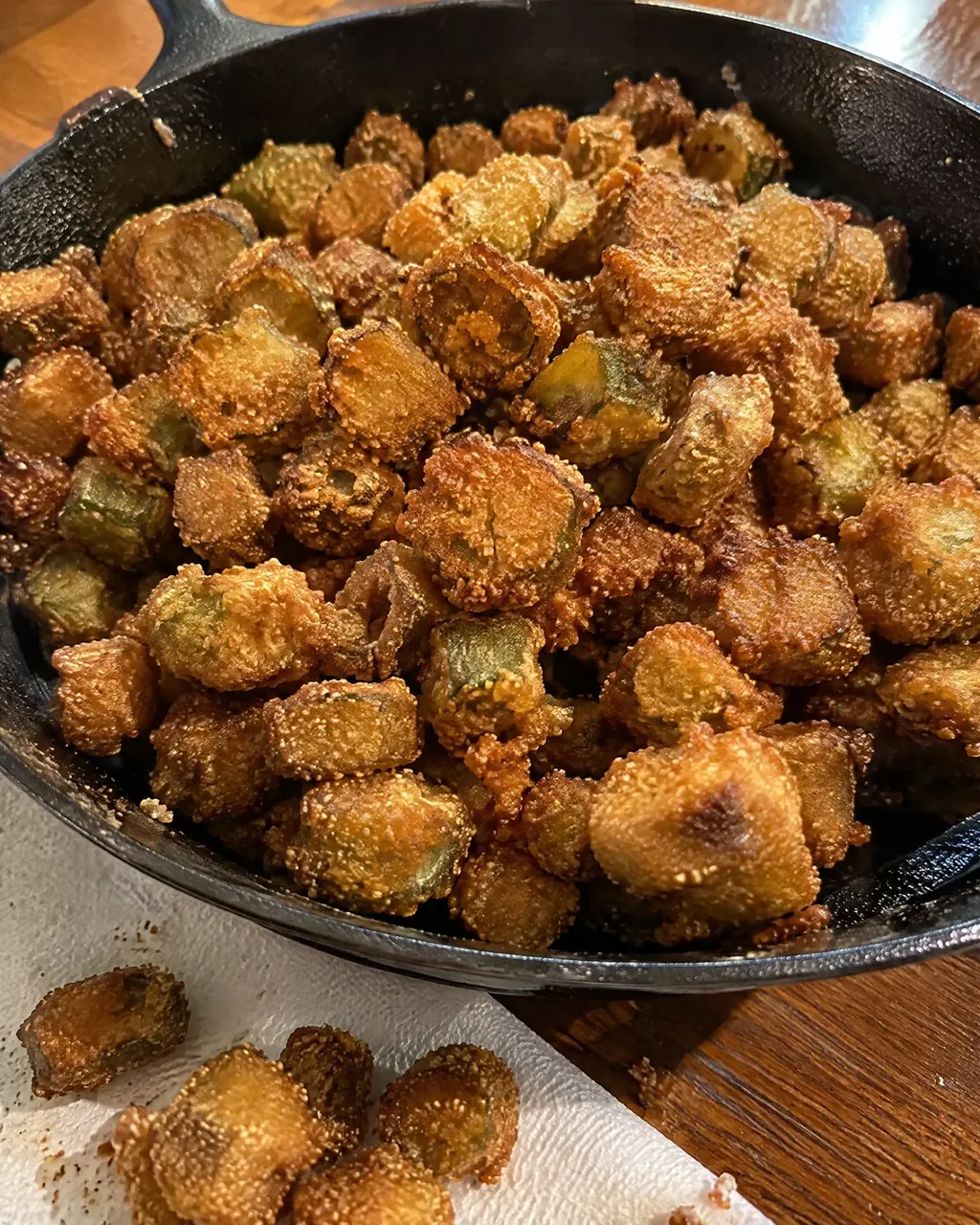
The other half of the method is patience. The skillet has to be hot and never crowded, and once the okra is in, you do not stir it. Let it sit until the bottoms brown, turn it once with a spatula, and let it sit again. Stirring knocks the crust off, and the crust is the whole point.
Why this fried okra works
- Buttermilk, then cornmeal. The buttermilk gives the cornmeal something to hold onto and takes the raw edge off the okra.
- The loose meal shaken off. Meal that is not stuck to the okra falls into the oil, burns, and turns the skillet bitter.
- Half an inch of hot oil in cast iron. Iron holds its heat when cold okra hits it, and half an inch is enough to fry the bottoms hard without deep frying.
- Not stirred, turned once. Left alone, the cornmeal sets into a crust that stays on the okra. Stirred, it flakes off into the oil and you end up with crumbs and slime.
Ingredients
Serves 6 as a side dish. The measurements are in US cups with grams in brackets.
- 1 1/2 pounds fresh okra (680g), about 6 cups once sliced
- 1 cup buttermilk (240ml)
- 1 1/2 cups plain yellow or white cornmeal (210g)
- 1 teaspoon fine salt, plus more for the table
- 1/2 teaspoon black pepper
- Vegetable oil for frying, about 1 1/2 cups (360ml), enough for 1/2 inch in the skillet
- A brown paper sack or a few layers of paper towels for draining
Pick small, bright green pods no longer than your finger. The big ones are woody. Use plain cornmeal, not a self-rising mix; the fine or medium grind sticks best.
How to make fried okra
- Rinse the okra and dry it well. Cut off the stem ends and slice the pods into rounds about 1/2 inch thick. Throw out any pod that is hard to cut; it will be woody on the plate too.
- Put the sliced okra in a bowl, pour the buttermilk over it and stir so every piece is wet. Let it sit a minute or two while you set up the cornmeal.
- In a second bowl or a clean paper sack, mix the cornmeal with 1 teaspoon salt and the black pepper.
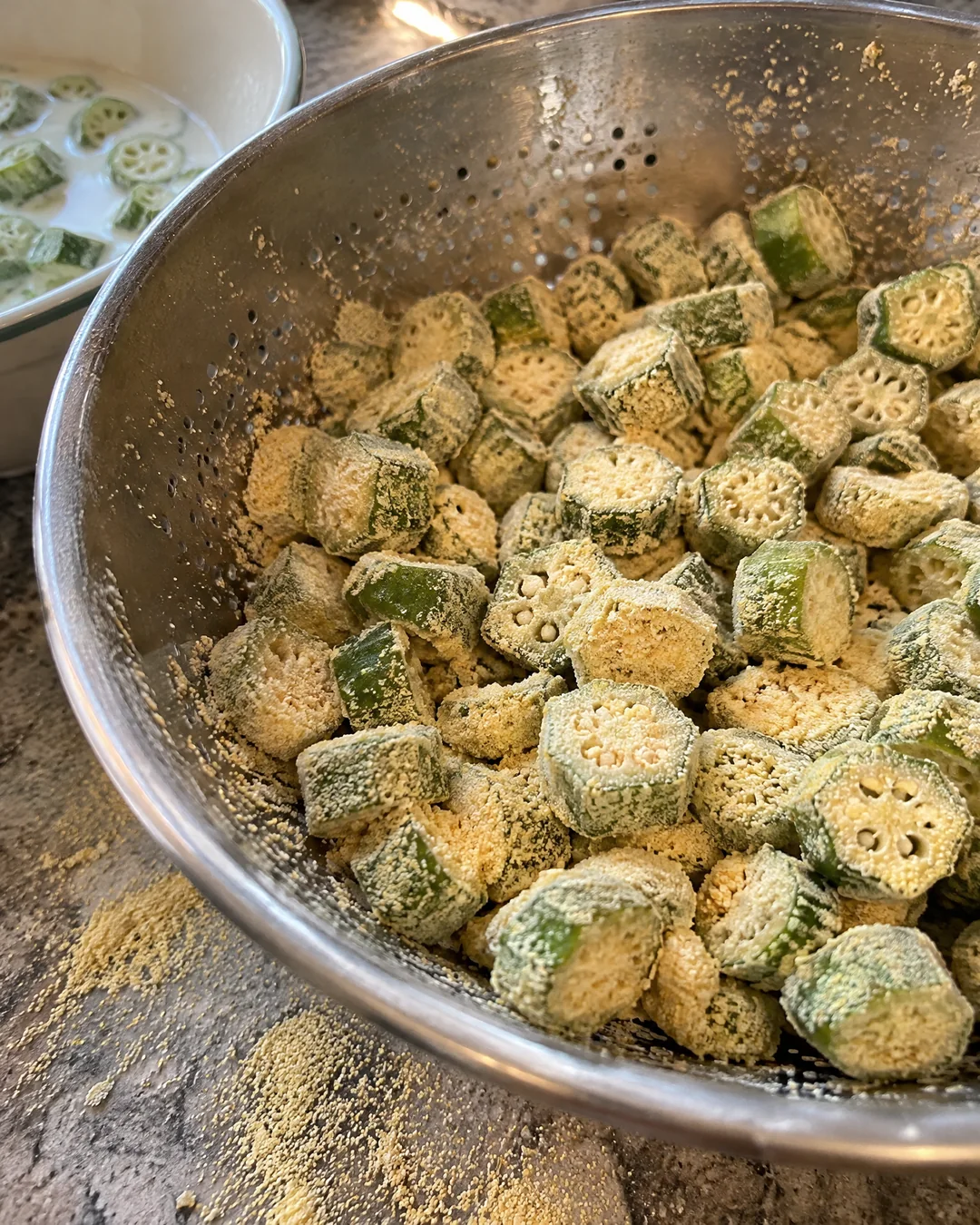
- Lift the okra out of the buttermilk with a slotted spoon, letting the extra drip off, and drop it into the cornmeal. Toss until every round is coated, then tip it all into a colander and shake it well over the sink so every bit of loose meal falls away. What stays on the okra is exactly enough.
- Pour oil into a 10 or 12 inch cast iron skillet until it is about 1/2 inch deep. Heat it over medium-high until a single piece of okra dropped in sizzles hard at once, about 350°F (175°C) if you own a thermometer. Spread a paper sack or paper towels on a sheet pan next to the stove.
- Add a single layer of okra with a little space between the pieces. In a 10 inch skillet that is about a third of the okra. Do not stir it. Let it sit for 3 to 4 minutes, until the bottoms are deep golden brown and the pieces slide when you nudge the pan.
- Turn the okra once with a thin spatula, working in sections across the pan, and let it sit again for 3 to 4 minutes, until the second side is brown and crisp.
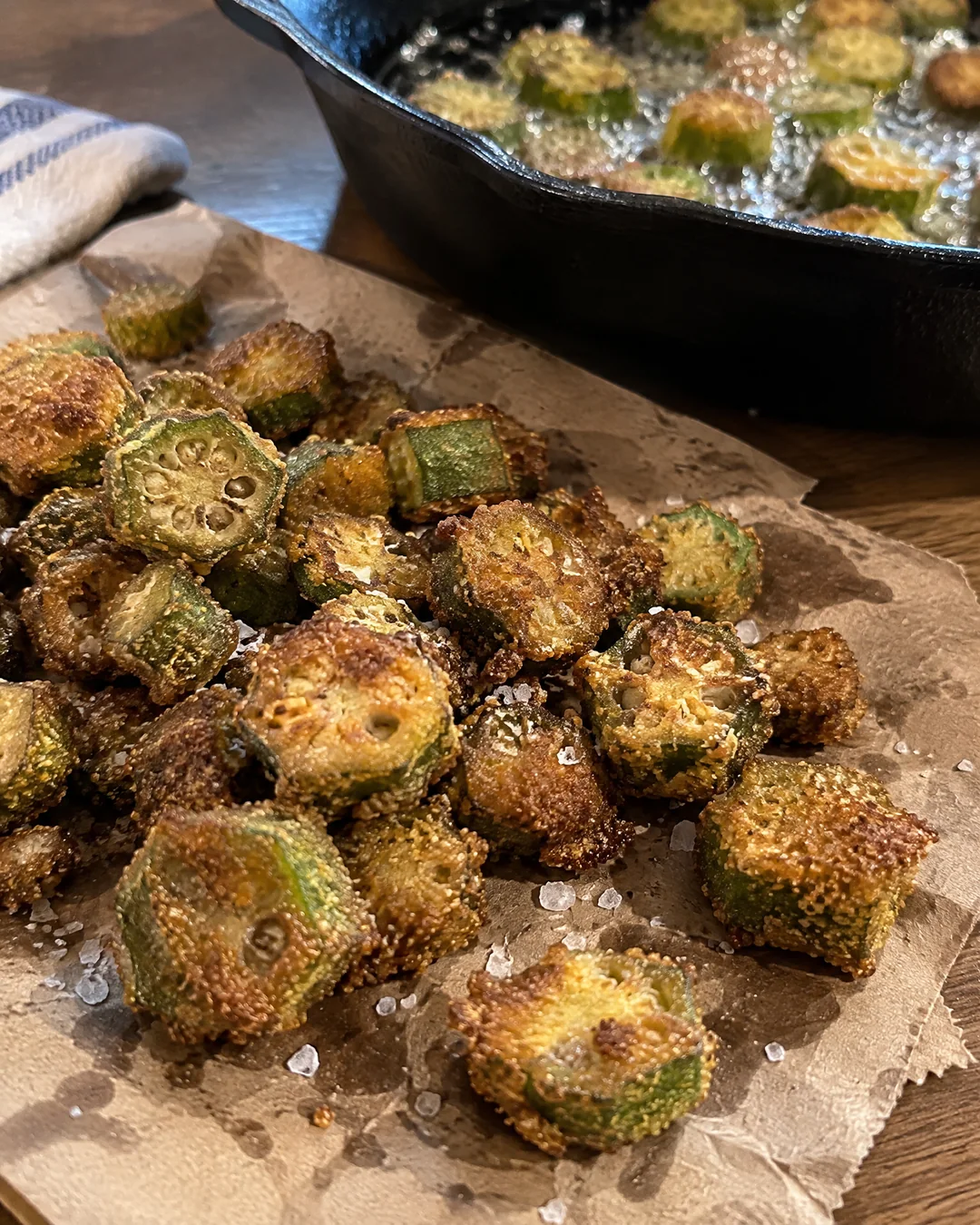
- Lift it out with a slotted spoon onto the paper sack and salt it right away, while it is hot. Let the oil come back to heat for a minute, then fry the next batch the same way. Serve warm.
Tips that make the difference
- Dry okra fries, wet okra steams. Dry the pods after washing, let the extra buttermilk drip off, and shake off the loose meal.
- Never crowd the skillet. A packed pan drops the temperature, the okra sweats, and you get the slime you were trying to avoid.
- If the first batch browns in under 2 minutes, turn the heat down a notch. If it takes more than 5, let the oil reheat longer between batches.
- Salt after frying, not before. Salt in the buttermilk draws water out of the okra and softens the crust.
Variations
- Half flour, half cornmeal. Use 3/4 cup cornmeal (105g) and 3/4 cup all-purpose flour (95g) for a smoother, lighter coat, the way some families in the Carolinas made it.
- Spiced. Add 1/2 teaspoon paprika and 1/4 teaspoon cayenne to the cornmeal for a little color and heat.
- Okra and green tomatoes. Cut a firm green tomato into wedges, coat them the same way and fry them alongside the okra at the end of summer.
- Oven version. Spread the coated okra on an oiled sheet pan, drizzle with 3 tablespoons oil and roast at 450°F (230°C) for 20 to 25 minutes, turning once. Not the same, but close enough on a weeknight.
Storage and make-ahead
Fried okra is a right-now food. It is at its best within 15 minutes of leaving the skillet, and it should never be covered, because the steam softens the crust.
Leftovers keep in the refrigerator for 2 days in an open container. Reheat them spread on a sheet pan in a 400°F (200°C) oven for 8 to 10 minutes, never in a microwave.
You can slice, coat and freeze uncooked okra on a tray, then bag it and fry it straight from the freezer in winter, adding a minute to each side. Our mothers did this in August for the whole year.
Frequently asked questions
Why is my fried okra slimy?
It was wet when it hit the oil, the skillet was crowded, or it was stirred. Okra has to fry hard and dry: let the buttermilk drip off, shake off the loose meal, fry in a single layer with space between the pieces, and turn it only once.
Can I use frozen sliced okra?
Yes. Thaw it just enough to separate the pieces, pat it dry with a towel, and go straight to the buttermilk. It will not be quite as crisp as fresh, but it fries well.
How do I know when the oil is hot enough?
Drop in one piece. It should sizzle hard the second it lands and start browning within a minute. A thermometer will read about 350°F. If the piece sits there quietly, wait.
Can I fry it in something other than a cast iron skillet?
A heavy stainless steel skillet works. Thin pans lose their heat when the okra goes in and the first batch steams. Keep the oil at about half an inch and the batches small.
Buttermilk, cornmeal, a hot skillet, and hands that leave it alone until it is brown. That is fried okra, and it will change the mind of anybody who was fed it boiled.
Southern Fried Okra (Cornmeal, Cast Iron, Never Stirred)
Old-fashioned Southern fried okra: sliced rounds dipped in buttermilk, tossed in seasoned cornmeal, the loose meal shaken off, and fried in batches in half an inch of hot oil in a cast iron skillet without stirring. Crisp, brown and never slimy.
Ingredients
- 1 1/2 pounds fresh okra (680g), about 6 cups once sliced
- 1 cup buttermilk
- 1 1/2 cups plain yellow or white cornmeal
- 1 teaspoon fine salt, plus more for the table
- 1/2 teaspoon black pepper
- Vegetable oil for frying, about 1 1/2 cups (360ml), enough for 1/2 inch in the skillet
- A brown paper sack or a few layers of paper towels for draining
Instructions
- Rinse the okra and dry it well. Cut off the stem ends and slice the pods into rounds about 1/2 inch thick. Throw out any pod that is hard to cut; it will be woody on the plate too.
- Put the sliced okra in a bowl, pour the buttermilk over it and stir so every piece is wet. Let it sit a minute or two while you set up the cornmeal.
- In a second bowl or a clean paper sack, mix the cornmeal with 1 teaspoon salt and the black pepper.
- Lift the okra out of the buttermilk with a slotted spoon, letting the extra drip off, and drop it into the cornmeal. Toss until every round is coated, then tip it all into a colander and shake it well over the sink so every bit of loose meal falls away. What stays on the okra is exactly enough.
- Pour oil into a 10 or 12 inch cast iron skillet until it is about 1/2 inch deep. Heat it over medium-high until a single piece of okra dropped in sizzles hard at once, about 350°F (175°C) if you own a thermometer. Spread a paper sack or paper towels on a sheet pan next to the stove.
- Add a single layer of okra with a little space between the pieces. In a 10 inch skillet that is about a third of the okra. Do not stir it. Let it sit for 3 to 4 minutes, until the bottoms are deep golden brown and the pieces slide when you nudge the pan.
- Turn the okra once with a thin spatula, working in sections across the pan, and let it sit again for 3 to 4 minutes, until the second side is brown and crisp.
- Lift it out with a slotted spoon onto the paper sack and salt it right away, while it is hot. Let the oil come back to heat for a minute, then fry the next batch the same way. Serve warm.