In this article
In a lot of Southern houses you knew it was going to be Sunday because there was a bowl of chicken sitting in buttermilk in the refrigerator on Saturday night. The next day it was fried in an inch of oil in a black cast iron skillet, with the lid on for the first half and off for the second, and served on a platter with a rack underneath so the bottoms stayed crisp.
Nobody who cooked it this way measured anything, which is why most written recipes for it are guesses. This one was taken down standing next to the stove with a notebook, and then tested until it came out the same every time. The buttermilk soak seasons the meat and keeps it juicy. The paper bag coats the chicken more evenly than a bowl. The fifteen-minute rest after flouring lets the coating set so it does not slide off in the oil. And the lid traps steam for the first eight minutes, so the meat cooks through before the crust gets too dark.
Why this buttermilk fried chicken works
- An overnight soak. Salted buttermilk with a little hot sauce seasons the chicken to the bone and tenderizes it. Four hours is the minimum; overnight is right.
- Flour in a paper bag. Shaking the pieces in a bag gives an even, thin coat with no bare patches and no clumps. It is also less washing up.
- The rest on the rack. Fifteen minutes lets the flour hydrate and stick to the chicken. Skip it and the crust separates from the meat.
- Lid on, then lid off. Covered, the skillet steams the meat through. Uncovered, the crust dries and crisps. That is the whole secret of skillet chicken.
Ingredients
Serves 4 generously from one whole chicken cut into 8 pieces. US cups with grams in brackets.
For the soak
- 1 whole chicken (about 4 pounds, 1.8kg), cut into 8 pieces
- 2 cups buttermilk (480ml)
- 1 tablespoon kosher salt
- 1 teaspoon hot sauce
For the coating
- 2 cups all-purpose flour (250g)
- 1 tablespoon kosher salt
- 1 tablespoon sweet paprika
- 1 teaspoon black pepper
- 1 teaspoon garlic powder
- 1 teaspoon onion powder
For frying
- About 4 cups neutral oil (950ml), such as peanut, canola or vegetable, enough for 1 inch in the skillet
- Flaky salt for finishing
Cut the chicken yourself or ask the butcher for 8 pieces: 2 thighs, 2 drumsticks, 2 wings and 2 breast halves, with the breasts cut across into two if they are large. Even-sized pieces fry evenly.
How to make buttermilk fried chicken
The night before
- Whisk the buttermilk, salt and hot sauce in a large bowl. Add the chicken pieces, turn to coat, cover and refrigerate for at least 4 hours and up to 24. Overnight is ideal.
Coating
- Put the flour, salt, paprika, pepper, garlic powder and onion powder in a large paper bag (or a big zip-top bag) and shake to mix.
- Lift the chicken pieces out of the buttermilk one at a time, letting the excess drip off but not wiping it. Drop 2 or 3 pieces into the bag, fold the top over and shake well. Press the flour onto each piece with your fingers so it clings.
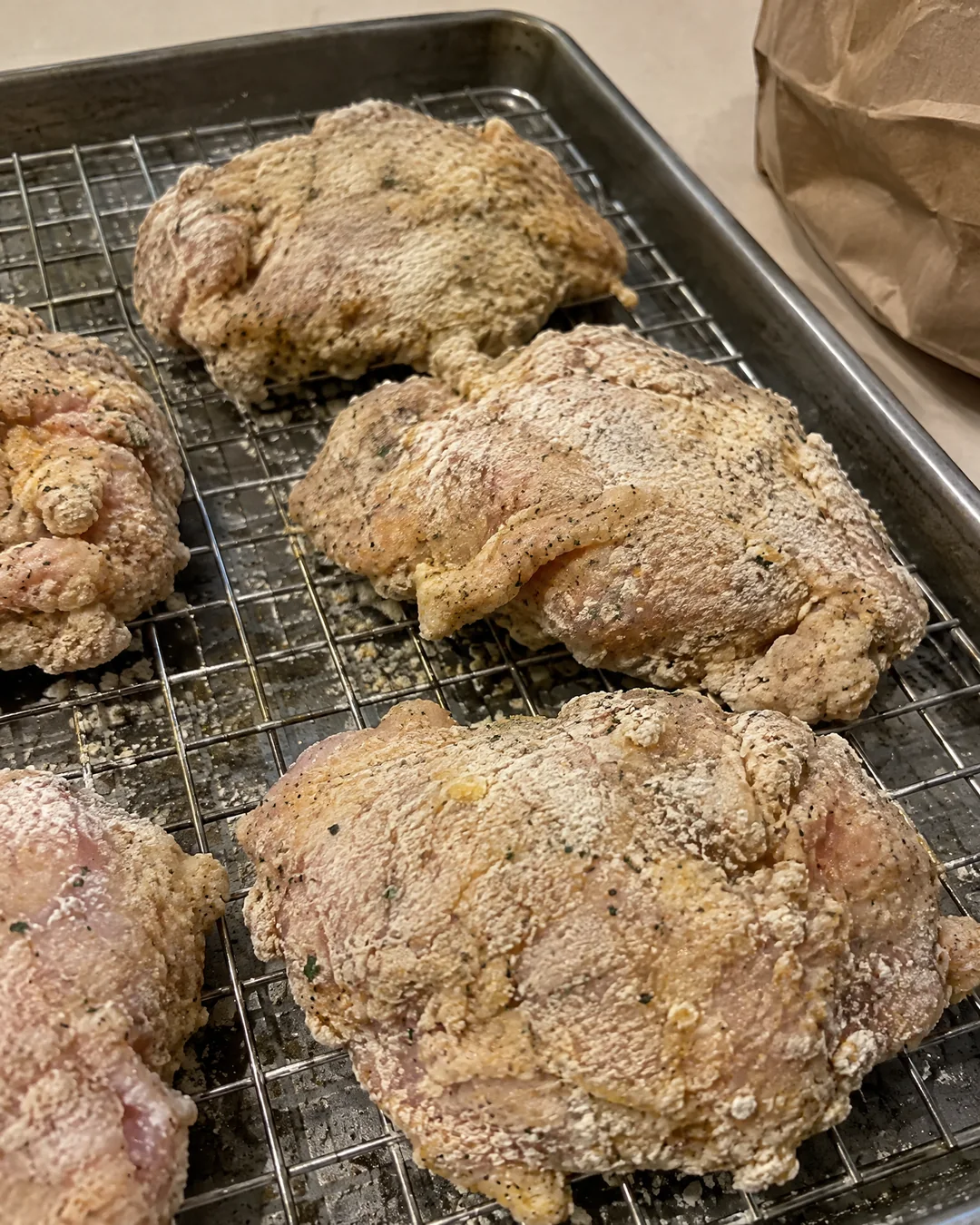
- Set the floured chicken on a wire rack over a baking sheet and leave it for 15 minutes. The coating will go from powdery to slightly tacky. That is what you want.
Frying
- Pour 1 inch of oil into a deep 12-inch cast iron skillet and heat over medium until a deep-fry thermometer reads 325°F (165°C). A pinch of flour dropped in should fizz at once.
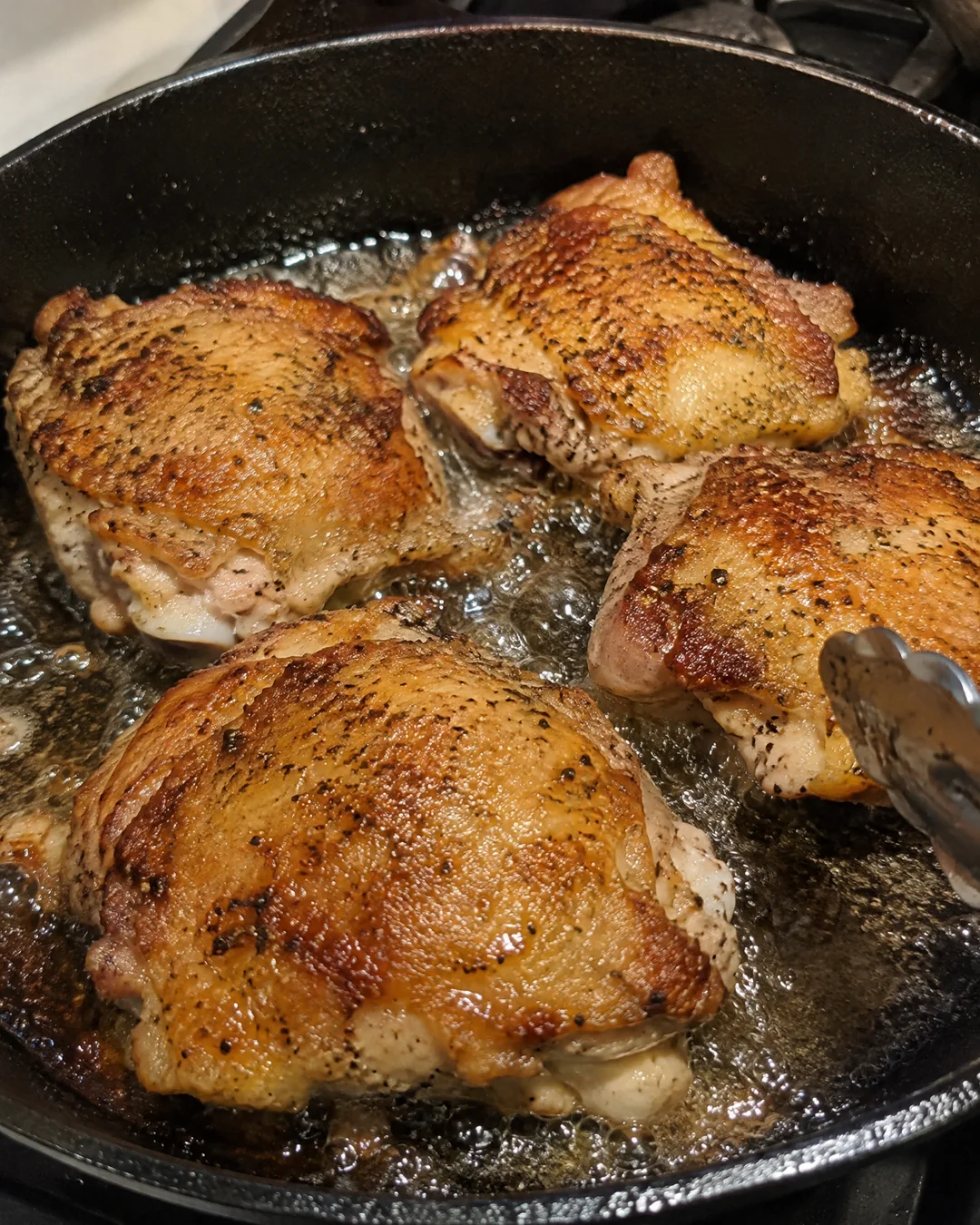
- Add the dark meat first, skin side down, without crowding (4 pieces at most). Put the lid on and fry for 8 minutes. The oil should bubble steadily, not violently; adjust the heat to hold about 300°F once the chicken is in.
- Take the lid off, turn the pieces with tongs and fry uncovered for 8 more minutes, until the crust is deep golden and the thickest part reads 175°F (80°C) for thighs and legs.
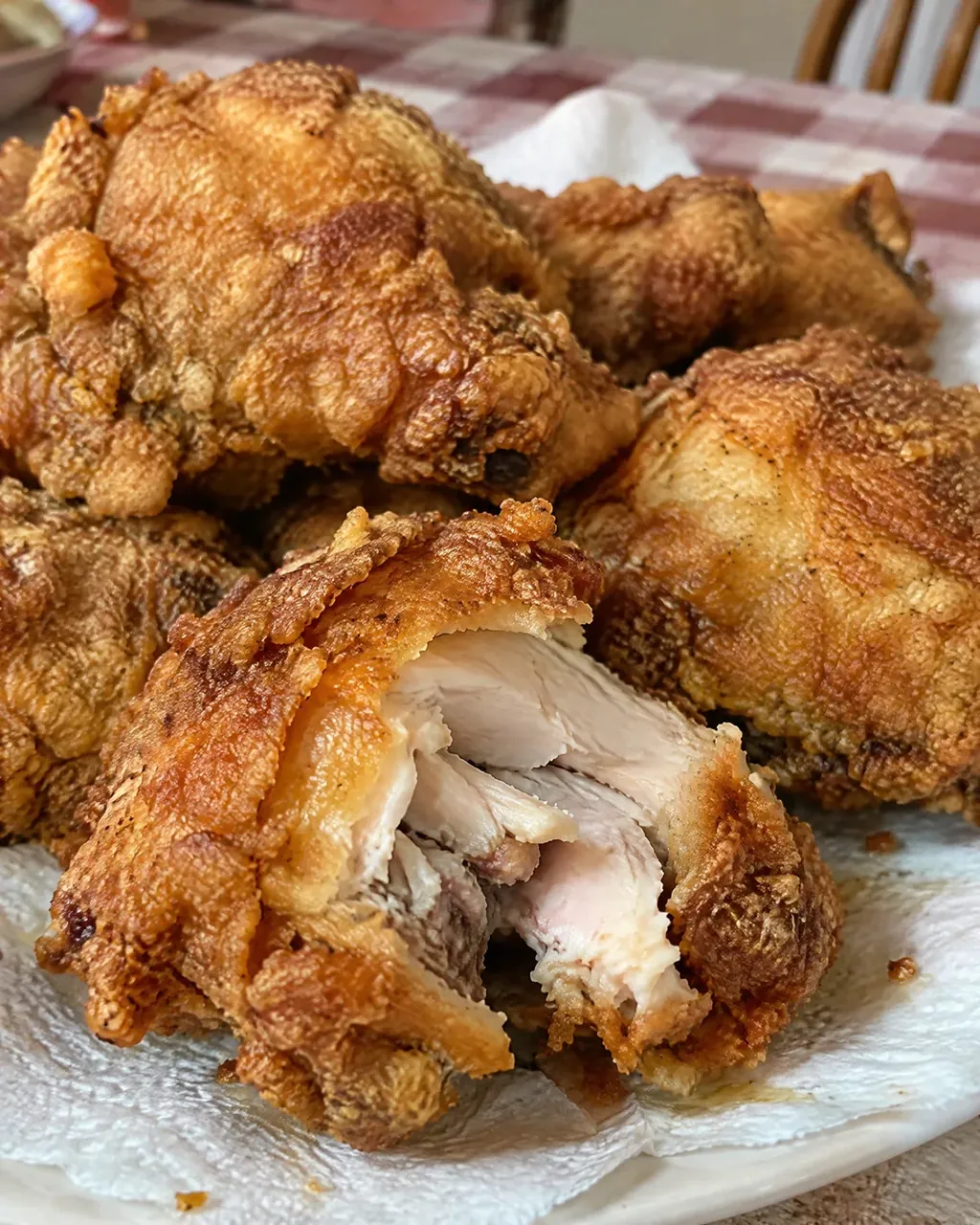
- Move the cooked pieces to a clean rack, never onto paper towels, and sprinkle with flaky salt while they are hot. Bring the oil back to 325°F and fry the white meat the same way, 7 minutes covered and 6 to 7 uncovered, to 165°F (74°C) at the center.
- Let the chicken rest on the rack for 5 minutes before serving. The crust firms up as it stands.
Tips that make the difference
- Keep a thermometer in the oil. Too cool and the crust soaks up grease; too hot and it darkens before the meat is done. 300 to 325°F is the window.
- Fry in two batches. Crowding drops the oil temperature and the chicken steams instead of crisping.
- Use the rack, not paper. Paper traps steam under the chicken and the bottom goes soft in two minutes.
- If the coating comes out in pale patches, the chicken was too wet going into the bag. Let it drip a few seconds longer next time.
Variations
- Spicy. Add 1 tablespoon cayenne to the flour and double the hot sauce in the soak.
- Extra-crunchy. Dip the floured chicken back into the buttermilk and into the flour a second time. Rest 15 minutes as before.
- Thighs only. Eight bone-in thighs, same method, 9 minutes covered and 8 uncovered. The easiest way to feed a crowd.
- Oven finish. If the crust is done but the meat is not, move the pieces to a rack in a 350°F oven for 10 minutes.
Storage and make-ahead
Leftover fried chicken keeps in the refrigerator for 3 days in a container with the lid slightly open the first hour, so the steam escapes and the crust does not soften.
To reheat, set the pieces on a rack in a 375°F (190°C) oven for 15 to 20 minutes. The crust comes back nearly as crisp as fresh. Never microwave it.
It also freezes well for 2 months. Reheat from frozen at 375°F for 30 to 35 minutes.
Frequently asked questions
Can I use boneless chicken?
You can, but the result is different. Boneless thighs fry in about 5 minutes a side and stay juicy; boneless breasts dry out easily. Bone-in pieces are what this method is built for.
Do I have to use cast iron?
Cast iron holds heat steadily, which is why it is the classic choice. A heavy stainless or enameled Dutch oven works too. Avoid thin pans, which let the oil temperature swing.
Can I make the soak with regular milk?
Stir 2 tablespoons of lemon juice or white vinegar into 2 cups of milk and let it stand 10 minutes. It is not quite as tangy but it does the job.
Why did my crust fall off?
Either the chicken did not rest after flouring, or the pieces were moved too early in the oil. Give the coating 15 minutes to set, and do not turn the chicken until the first side has fried the full 8 minutes.
Skillet chicken is slower than a deep fryer and it makes a mess of the stove, and it is still the best fried chicken most of us have ever eaten. Put the bowl in the refrigerator tonight.
Buttermilk Fried Chicken (Cast Iron Skillet, Lid On Then Off)
Real Southern buttermilk fried chicken in a cast iron skillet: an overnight buttermilk soak, seasoned flour in a paper bag, and the lid-on-then-off method that gives a shattering crust and juicy meat every time.
Ingredients
- 1 whole chicken (about 4 pounds, 1.8kg), cut into 8 pieces
- 2 cups buttermilk
- 1 tablespoon kosher salt
- 1 teaspoon hot sauce
- 2 cups all-purpose flour
- 1 tablespoon kosher salt
- 1 tablespoon sweet paprika
- 1 teaspoon black pepper
- 1 teaspoon garlic powder
- 1 teaspoon onion powder
- About 4 cups neutral oil (950ml), such as peanut, canola or vegetable, enough for 1 inch in the skillet
- Flaky salt for finishing
Instructions
- Whisk the buttermilk, salt and hot sauce in a large bowl. Add the chicken pieces, turn to coat, cover and refrigerate for at least 4 hours and up to 24. Overnight is ideal.
- Put the flour, salt, paprika, pepper, garlic powder and onion powder in a large paper bag (or a big zip-top bag) and shake to mix.
- Lift the chicken pieces out of the buttermilk one at a time, letting the excess drip off but not wiping it. Drop 2 or 3 pieces into the bag, fold the top over and shake well. Press the flour onto each piece with your fingers so it clings.
- Set the floured chicken on a wire rack over a baking sheet and leave it for 15 minutes. The coating will go from powdery to slightly tacky. That is what you want.
- Pour 1 inch of oil into a deep 12-inch cast iron skillet and heat over medium until a deep-fry thermometer reads 325°F (165°C). A pinch of flour dropped in should fizz at once.
- Add the dark meat first, skin side down, without crowding (4 pieces at most). Put the lid on and fry for 8 minutes. The oil should bubble steadily, not violently; adjust the heat to hold about 300°F once the chicken is in.
- Take the lid off, turn the pieces with tongs and fry uncovered for 8 more minutes, until the crust is deep golden and the thickest part reads 175°F (80°C) for thighs and legs.
- Move the cooked pieces to a clean rack, never onto paper towels, and sprinkle with flaky salt while they are hot. Bring the oil back to 325°F and fry the white meat the same way, 7 minutes covered and 6 to 7 uncovered, to 165°F (74°C) at the center.
- Let the chicken rest on the rack for 5 minutes before serving. The crust firms up as it stands.