In this article
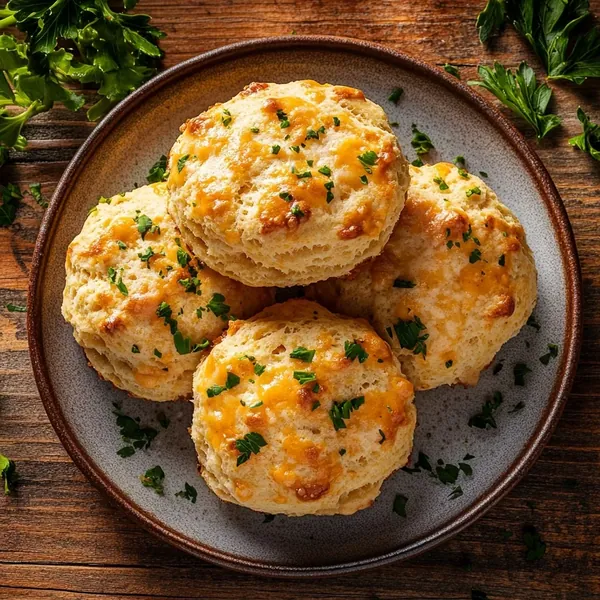
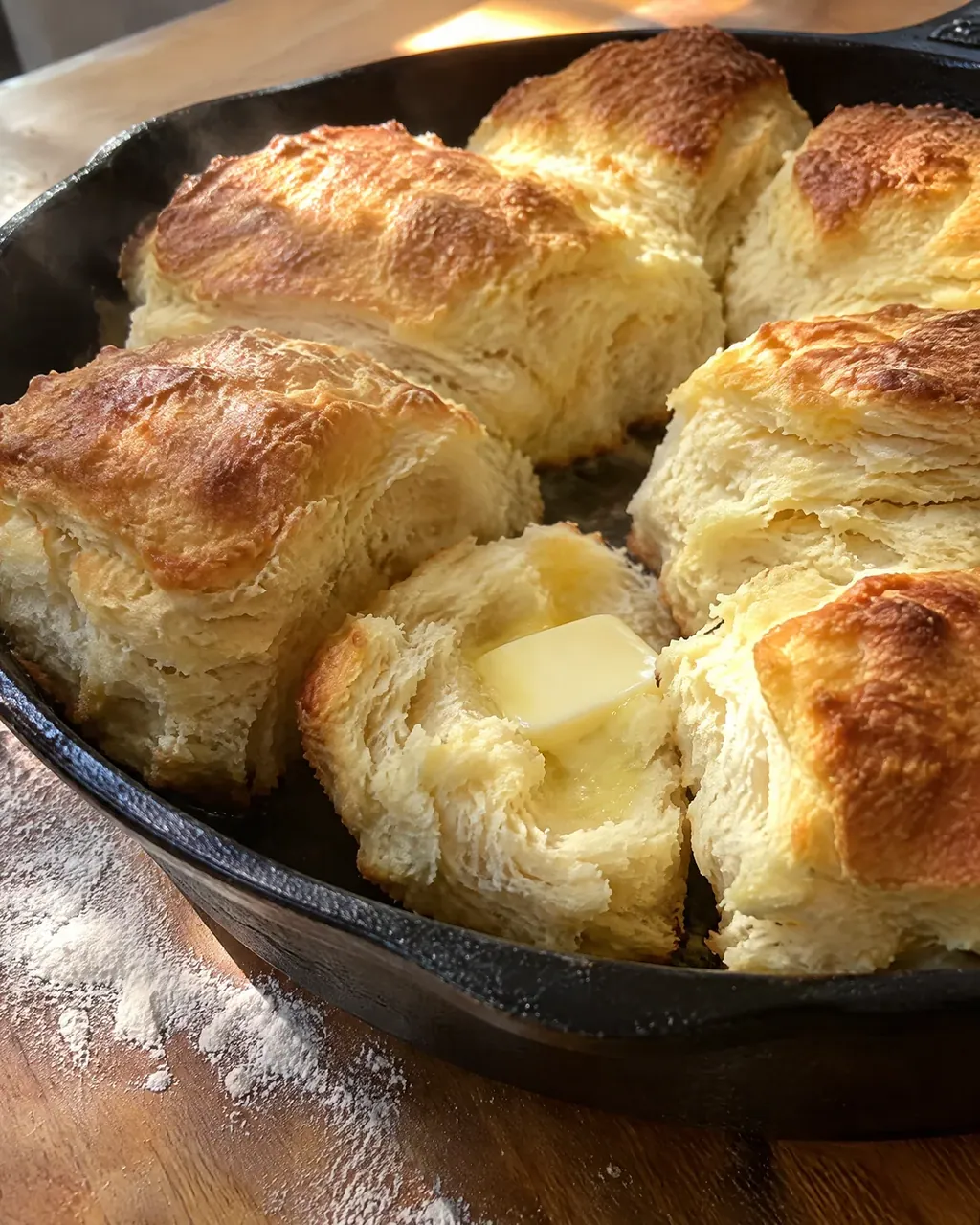
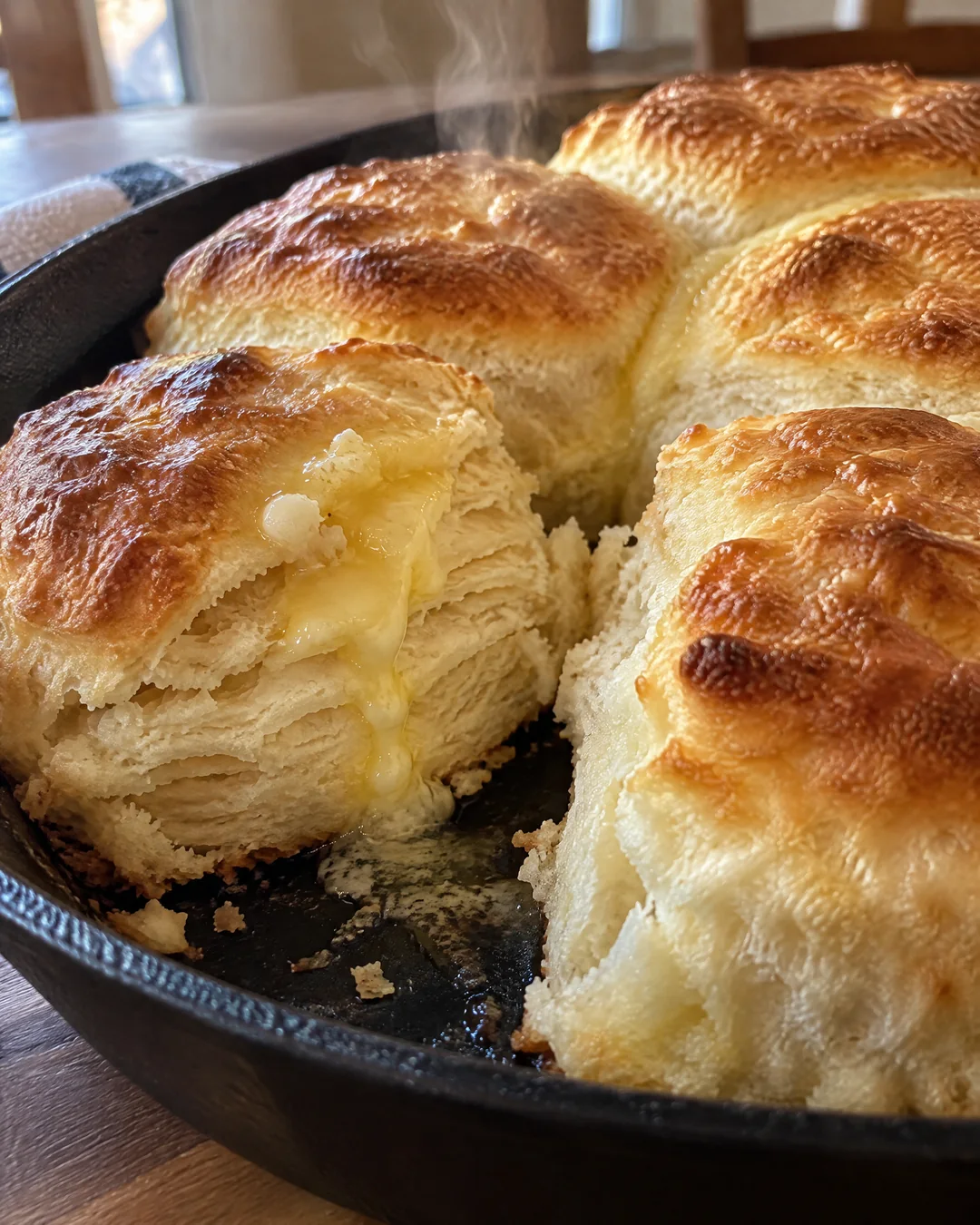
There is no dish more argued over in a Southern kitchen than the biscuit, and most of the arguments come down to height. A good buttermilk biscuit stands tall, with sides you can peel apart in layers and a top that splits with your thumbs. A bad one is a flat, tight puck with a nice brown lid. Both were made from the same flour, buttermilk and butter. The difference is in the hands.
Our mothers had rules, and every one of them turns out to be about either cold or air. The butter was frozen and grated on a box grater, so it went into the flour in cold shreds that stay whole. The buttermilk was cold. The dough was patted, never rolled, and folded over on itself like a letter, four times, which is where the layers come from. The cutter went straight down and straight up, because twisting seals the edges and a sealed biscuit cannot climb. The scraps were pressed back together, never re-rolled, because a re-rolled biscuit bakes up tough. And the biscuits went into the skillet touching each other, so they had nowhere to go but up.
Why this buttermilk biscuits works
- Frozen butter on a box grater. Grated shreds stay cold and separate in the flour. In the oven they melt into thin gaps that steam apart into layers.
- Cold buttermilk and quick hands. Warm butter smears into the flour and the biscuit comes out fine but flat. Cold keeps the shreds whole until they hit the oven.
- Four letter folds. Each fold stacks the dough on itself. Four folds give dozens of thin layers without kneading or toughening.
- Straight cutter, touching biscuits, hot oven. An unsealed edge lets the layers rise, the neighbors push each biscuit up rather than out, and 450°F sets the outside before the butter can run.
Ingredients
Makes 8 tall biscuits from a 2 1/2 inch cutter, baked in a 10-inch cast iron skillet. The measurements are in US cups with grams in brackets.
- 2 1/2 cups all-purpose flour (313g), plus more for the board
- 1 tablespoon baking powder
- 1/2 teaspoon baking soda
- 1 tablespoon granulated sugar
- 1 teaspoon fine salt
- 1/2 cup unsalted butter (1 stick, 113g), frozen solid
- 1 cup cold buttermilk (240ml), plus a spoonful more if needed
- 2 tablespoons unsalted butter (28g), melted, for brushing
A soft Southern flour makes the most tender biscuit, but plain all-purpose flour works well with this method. Put the stick of butter in the freezer at least 30 minutes ahead, overnight if you can, and keep the buttermilk in the refrigerator until the moment you pour it.
How to make buttermilk biscuits
- Heat the oven to 450°F (230°C) with a rack in the middle. Set a 10-inch cast iron skillet aside, ungreased or rubbed with a little butter. Make sure the butter is frozen hard.
- In a large bowl, whisk together the flour, baking powder, baking soda, sugar and salt. Put the bowl in the freezer for 5 minutes while you get the grater out.
- Take the frozen butter out and grate it on the large holes of a box grater straight into the flour, stopping halfway to toss the shreds through the flour with a fork so they do not clump together. Grate the rest and toss again. Work quickly. The butter should stay in cold, separate shreds.
- Pour in the cold buttermilk all at once and stir with a fork just until a shaggy dough forms and no dry flour is left in the bowl. It will look rough and a little sticky in places. If it is dry, add another spoonful of buttermilk.
- Turn the dough out onto a well floured board and flour your hands. Pat it, do not roll it, into a rectangle about 3/4 inch thick. Fold it in thirds like a letter: one end over the middle, the other end over that. Turn it a quarter turn, pat it out again and fold it the same way. Do this 4 times in all. That is the layers. No kneading.
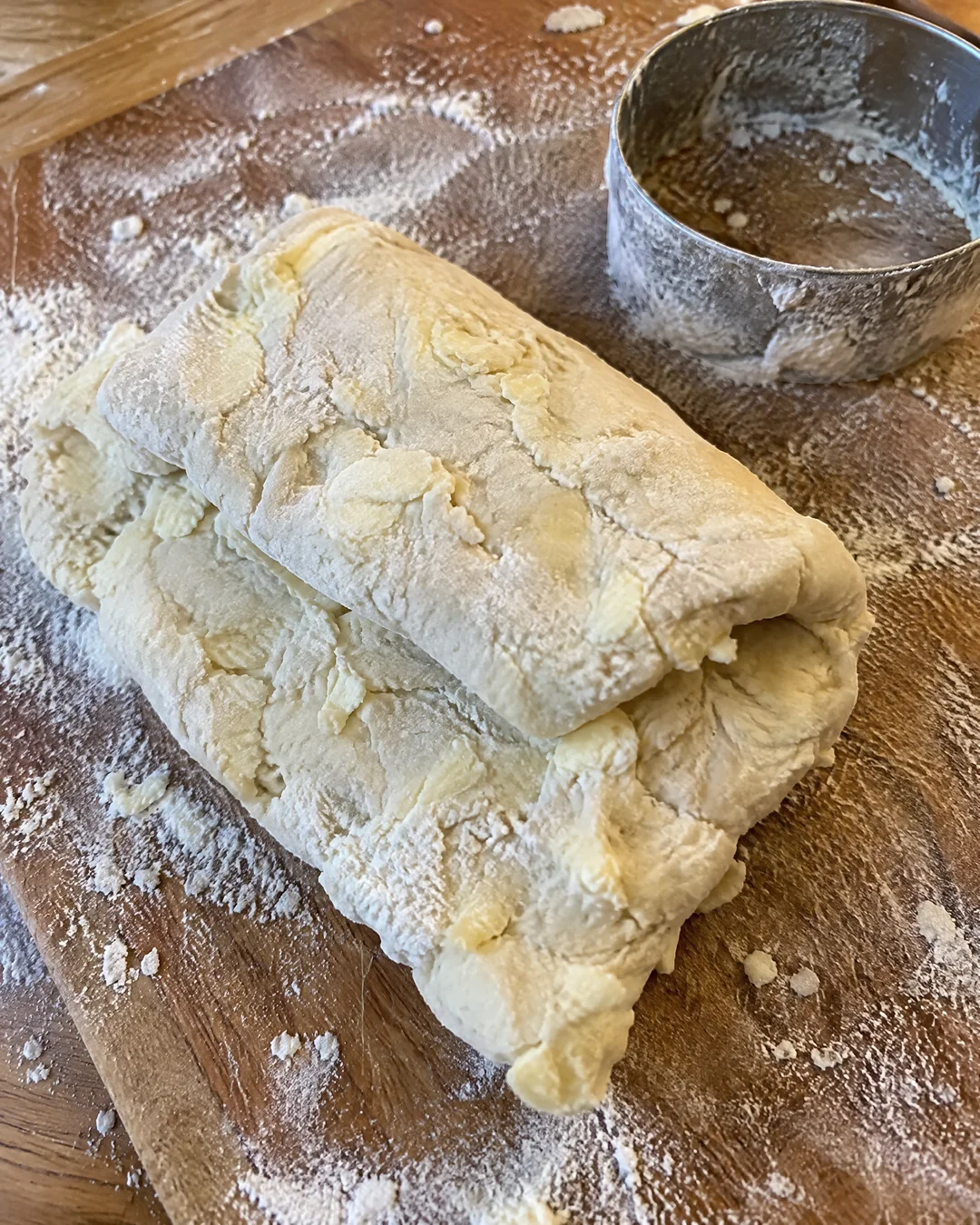
- Pat the folded dough out to a full 1 inch thick. Dip a 2 1/2 inch round cutter in flour and cut straight down and straight back up. Do not twist. Cut the biscuits close together. Then stack the scraps on each other, press them together with your palms, pat to 1 inch and cut the last one or two. Never gather the scraps into a ball and re-roll them.
- Arrange the biscuits in the skillet so that they touch each other, with the pressed-scrap ones on the outside. Brush the tops with the melted butter.
- Bake at 450°F for 12 to 15 minutes, until the biscuits have risen tall and the tops are deep golden brown. Brush with the rest of the melted butter, pull them apart and eat them hot.
Tips that make the difference
- If the kitchen is warm and the butter starts to soften while you fold, slide the whole board into the refrigerator for 10 minutes before cutting.
- Flour the cutter between every cut. A clean, floured edge cuts cleanly and does not drag the layers.
- Do not pat the dough thinner than 1 inch. A thin biscuit cannot be a tall biscuit no matter how well you fold.
- Check at 12 minutes. Biscuits go from golden to too dark quickly at 450°F, and cast iron browns the bottoms fast.
Variations
- Drop biscuits. Add 1/4 cup more buttermilk (60ml), skip the folding, and drop 8 rough mounds into the skillet. Less tall, very tender.
- Cheddar and black pepper. Toss 1 cup grated sharp cheddar (115g) and 1/2 teaspoon black pepper through the flour after the butter goes in.
- Sweet biscuits for shortcake. Use 3 tablespoons sugar instead of 1 and brush the tops with buttermilk and a sprinkle of sugar before baking. Split and fill with sugared berries and cream.
- Baking sheet instead of skillet. Set the biscuits touching in the center of a parchment lined sheet. The method is the same.
Storage and make-ahead
Biscuits are best within 20 minutes of the oven. Leftovers keep in a covered container at room temperature for 2 days. Split and toast them in a hot skillet with a little butter to bring them back.
Better than freezing baked biscuits, freeze them unbaked. Cut them, freeze on a tray until hard, then bag them. Bake from frozen at 450°F, touching in the skillet, for 18 to 20 minutes.
Frequently asked questions
Why does twisting the cutter matter so much?
Twisting drags the dough and pinches the cut edge closed, sealing the layers together. Steam and the leavening then have to push the biscuit out instead of up. Straight down and straight up leaves the edge open so the layers can separate and rise.
Why grate the butter instead of cutting it in?
Grated frozen butter goes into the flour in fine cold shreds in seconds, with no warming from your fingers. Cutting in works, but the butter softens as you work and the biscuit is less flaky.
How many times should I fold the dough?
Four folds. Fewer gives fewer layers. Many more starts to work the flour and toughen the biscuit. Four is the number that gives tall, peelable sides without any chewiness.
Can I use milk instead of buttermilk?
The tang and acidity of buttermilk are part of the flavor and the rise. If you have none, stir 1 tablespoon of lemon juice or white vinegar into 1 cup of cold whole milk and let it stand 10 minutes.
Freeze the butter, grate it, fold four times, cut straight down and let them touch in the skillet. The first time one splits open in layers under your thumbs, you will understand why nobody in the family was allowed to twist the cutter.
Old-Fashioned Buttermilk Biscuits (Frozen Butter, Four Folds, No Twisting)
Tall old-fashioned buttermilk biscuits with sides you can peel into layers: frozen butter grated on a box grater, cold buttermilk, the dough folded like a letter four times, cut straight down without twisting, and baked touching in a cast iron skillet at 450°F. Cups and grams.
Ingredients
- 2 1/2 cups all-purpose flour (313g), plus more for the board
- 1 tablespoon baking powder
- 1/2 teaspoon baking soda
- 1 tablespoon granulated sugar
- 1 teaspoon fine salt
- 1/2 cup unsalted butter (1 stick, 113g), frozen solid
- 1 cup cold buttermilk (240ml), plus a spoonful more if needed
- 2 tablespoons unsalted butter (28g), melted, for brushing
Instructions
- Heat the oven to 450°F (230°C) with a rack in the middle. Set a 10-inch cast iron skillet aside, ungreased or rubbed with a little butter. Make sure the butter is frozen hard.
- In a large bowl, whisk together the flour, baking powder, baking soda, sugar and salt. Put the bowl in the freezer for 5 minutes while you get the grater out.
- Take the frozen butter out and grate it on the large holes of a box grater straight into the flour, stopping halfway to toss the shreds through the flour with a fork so they do not clump together. Grate the rest and toss again. Work quickly. The butter should stay in cold, separate shreds.
- Pour in the cold buttermilk all at once and stir with a fork just until a shaggy dough forms and no dry flour is left in the bowl. It will look rough and a little sticky in places. If it is dry, add another spoonful of buttermilk.
- Turn the dough out onto a well floured board and flour your hands. Pat it, do not roll it, into a rectangle about 3/4 inch thick. Fold it in thirds like a letter: one end over the middle, the other end over that. Turn it a quarter turn, pat it out again and fold it the same way. Do this 4 times in all. That is the layers. No kneading.
- Pat the folded dough out to a full 1 inch thick. Dip a 2 1/2 inch round cutter in flour and cut straight down and straight back up. Do not twist. Cut the biscuits close together. Then stack the scraps on each other, press them together with your palms, pat to 1 inch and cut the last one or two. Never gather the scraps into a ball and re-roll them.
- Arrange the biscuits in the skillet so that they touch each other, with the pressed-scrap ones on the outside. Brush the tops with the melted butter.
- Bake at 450°F for 12 to 15 minutes, until the biscuits have risen tall and the tops are deep golden brown. Brush with the rest of the melted butter, pull them apart and eat them hot.