In this article
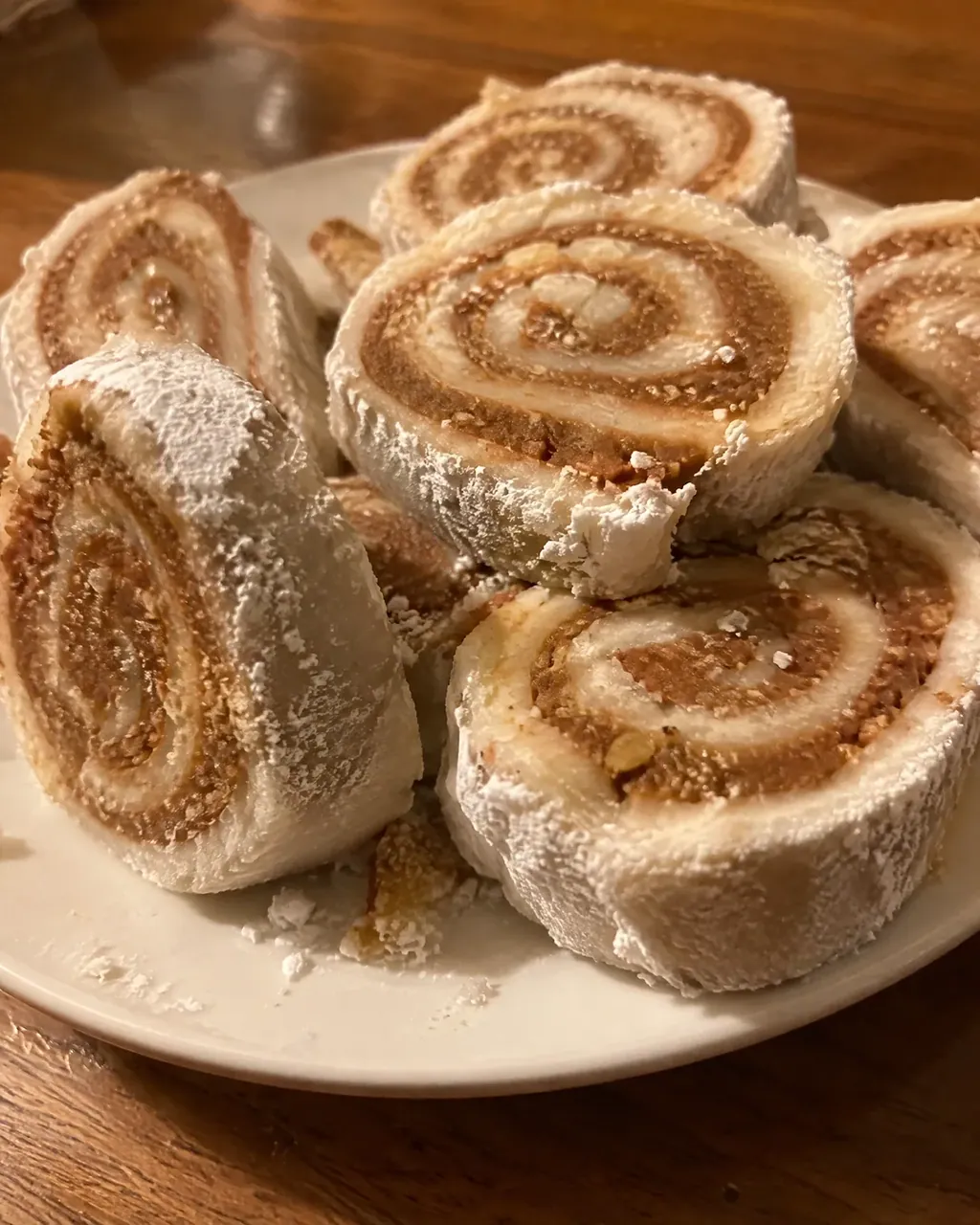
Potato candy came out of the years when a candy had to be made from what was already in the house. Sugar was in the pantry, a potato was in the bin, and peanut butter was a treat that went further spread thin. One egg-sized potato, worked with a bag of powdered sugar, makes enough pinwheels to cover a platter, which is why grandmothers across the Appalachians, the Midwest and the South made it for a whole table of children and wrote it into the community cookbook without explaining it.
The potato is not there for flavor. It is there for moisture and starch. Mashed plain, it holds a remarkable amount of sugar and turns it into a dough that can be rolled out like pie crust, which water or milk alone cannot do. The finished candy tastes of vanilla, sugar and peanut butter, with the soft, fudge-like give of an old-fashioned cream candy. The potato is a secret only because nobody believes it.
Two things go wrong. The first is too much potato, which eats sugar by the cup and never firms up. The second is impatience: the first cup of sugar turns the potato into a thin white soup that looks ruined. It is not. Keep adding.
Why this potato candy works
- One small potato, boiled plain. An egg-sized potato, mashed with nothing added, gives just enough starch and moisture to bind 4 to 6 cups of sugar. Butter, salt or milk in the mash make a dough that never stiffens.
- Powdered sugar added a cup at a time. The soup stage is normal. The dough forms all at once near the end, so adding sugar slowly keeps you from overshooting into a dry sheet that cracks when rolled.
- A board dusted with sugar, not flour. Rolling on powdered sugar keeps the dough from sticking and adds no raw floury taste.
- An hour in the refrigerator before slicing. Cold, the roll cuts into clean spirals. Warm, the peanut butter smears and the sugar dough drags on the knife.
Ingredients
Makes one log, about 36 pinwheels. The measurements are in US cups with grams in brackets.
- 1 small russet potato (about 4 ounces, 115g), the size of an egg
- 4 to 6 cups powdered sugar (480 to 720g), plus about 1 cup more (120g) for rolling
- 1 teaspoon vanilla extract
- 3/4 cup creamy peanut butter (195g)
The potato has to be plain: no butter, no salt, no milk in the mash. Measure what you have after mashing and use about 1/3 cup (75g). Keep a little extra sugar in the house, since a wetter potato takes more.
How to make potato candy
- Peel the potato, cut it into 4 pieces and put it in a small saucepan with cold water to cover. Bring to a boil and cook 12 to 15 minutes, until a fork goes through with no resistance. Drain thoroughly and leave the pieces in the hot pan for a minute so the steam dries them.
- Mash the potato in a large mixing bowl until perfectly smooth, with no lumps at all. You should have about 1/3 cup (75g). If you have much more than that, take some out. Let it cool until it is just warm, about 10 minutes.
- Add 1 cup of the powdered sugar and stir with a wooden spoon. The potato will turn into a thin white soup. This is right. Keep going: add the sugar a cup at a time, stirring well after each, and somewhere between 4 and 6 cups it will change all at once from a paste into a stiff, smooth dough that pulls away from the sides of the bowl. Stir in the vanilla with the last cup. Stop when the dough is stiff enough to press without sticking to your finger.
- Dust the counter or a large board heavily with powdered sugar. Turn the dough out, dust the top, and roll it with a sugared rolling pin into a rectangle about 10 by 14 inches and 1/4 inch thick. Lift it and re-sugar underneath if it sticks.
- Spread the peanut butter over the dough in a thin, even layer, right to the edges on the short sides and leaving a 1/2 inch strip bare along one long side.
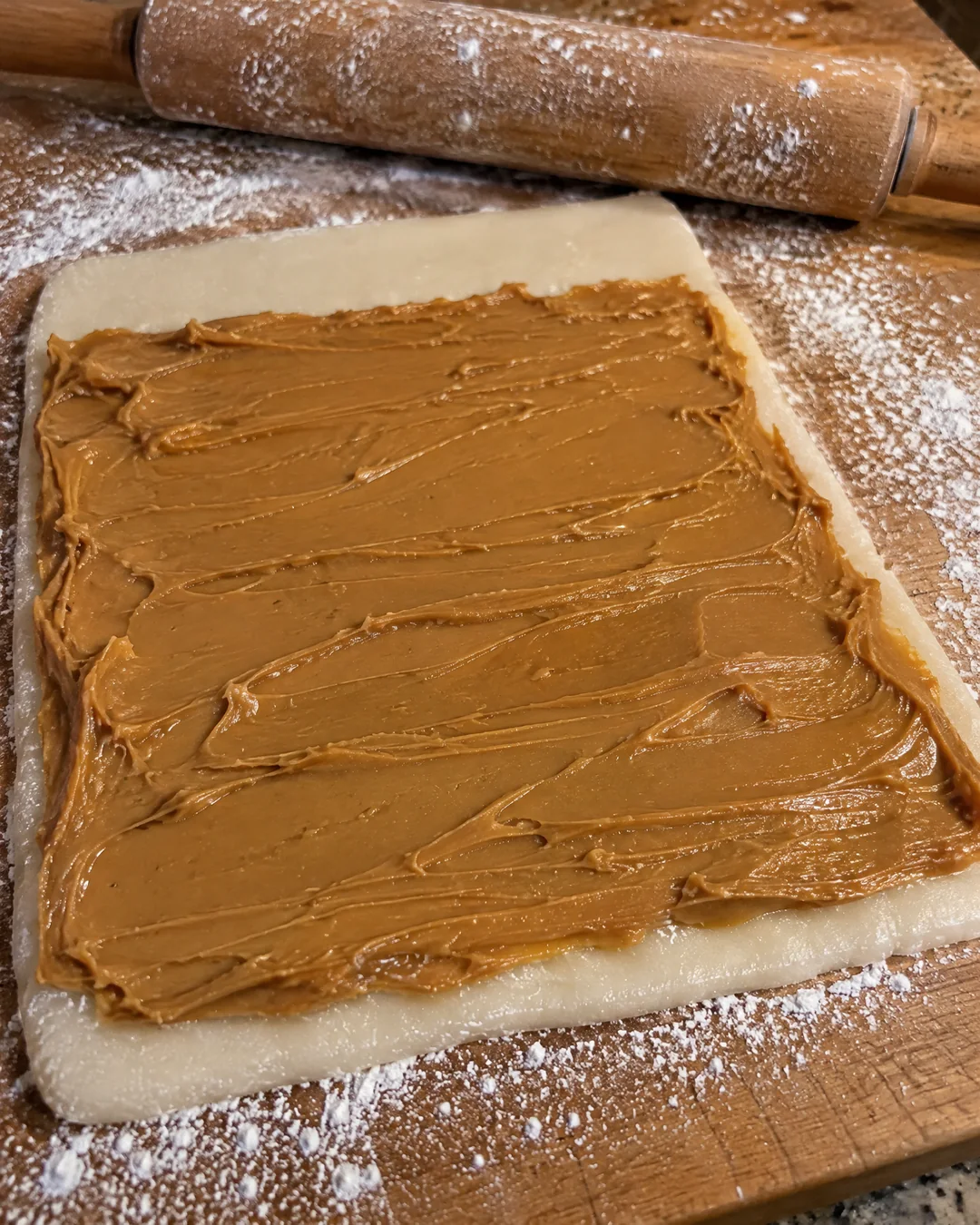
- Starting at the long side opposite the bare strip, roll the dough up tightly like a jelly roll, using a knife or a thin spatula to lift the first edge if it clings. Press the bare strip against the roll to seal the seam.
- Wrap the log tightly in waxed paper or plastic wrap and refrigerate for 1 hour, until firm all the way through.
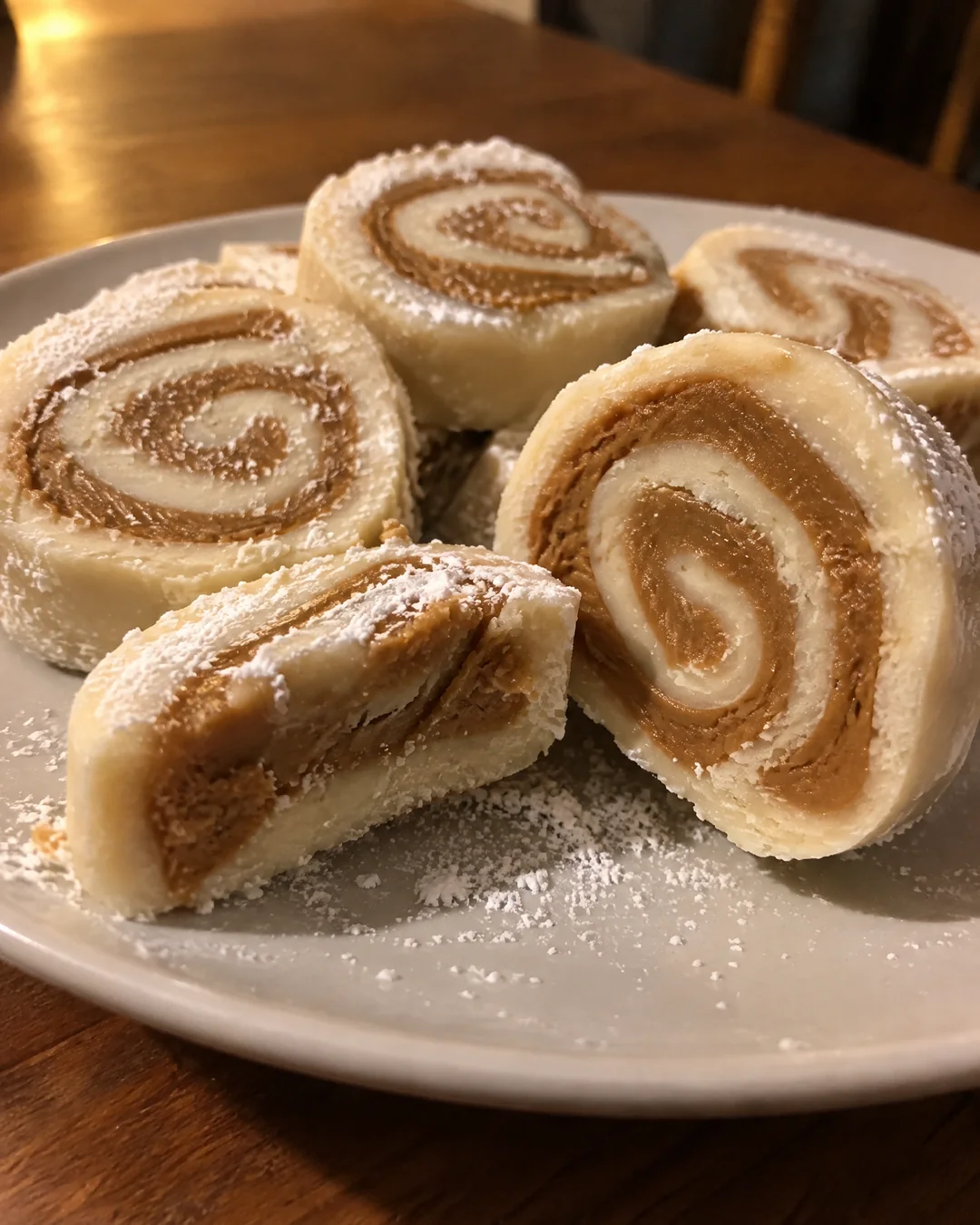
- Unwrap it and slice with a thin, sharp knife into pinwheels about 1/2 inch thick, wiping the blade between cuts. Arrange on a plate and keep cold until serving.
Tips that make the difference
- An egg-sized potato is right. A big baking potato takes 10 cups of sugar and still stays soft, and that is where most first attempts go wrong.
- Mash while hot and mash completely. A single lump of potato is a wet spot in the dough that will not hold sugar and will tear when rolled.
- If the dough cracks as you roll it, knead in a teaspoon of milk. If it sticks, knead in more sugar. It forgives both directions.
- Roll it tight. A loose roll leaves gaps in the spiral, and the slices fall apart on the plate.
Variations
- Chocolate. Spread the peanut butter, then scatter 1/2 cup miniature chocolate chips (85g) over it before rolling.
- Coconut. In place of peanut butter, spread the sheet with 2 tablespoons very soft butter and press 1 cup sweetened flaked coconut (85g) into it.
- Cinnamon. Knead 1/2 teaspoon ground cinnamon into the dough with the last cup of sugar and spread the peanut butter as usual.
- Two logs. Divide the dough in half and roll two smaller rectangles if your counter or your rolling pin is short. Same peanut butter, same hour in the cold.
Storage and make-ahead
Potato candy keeps in an airtight container in the refrigerator for 2 weeks, with waxed paper between the layers. It is meant to be eaten cold, straight from the container.
The whole unsliced log freezes well for up to 2 months, wrapped in plastic and then foil. Let it thaw halfway in the refrigerator and slice it while it is still very firm.
Do not leave it out on the counter for hours. The dough softens at room temperature, the peanut butter smears and the spiral loses its edges.
Frequently asked questions
Can you taste the potato?
Not at all. One small potato in 4 to 6 cups of sugar has no flavor left to give. It supplies moisture and starch to bind the sugar into a dough. What you taste is vanilla, sugar and peanut butter.
Why did my dough never get stiff?
Almost always too much potato, or a wet mash. Use an egg-sized potato, drain it very well, let it steam dry in the pan, and mash it plain. If you are already 6 cups in and it is still soft, keep adding sugar a half cup at a time; it will get there.
Can I use leftover mashed potatoes?
Only if they are plain. Mashed potatoes made with butter, milk and salt take far more sugar and the dough stays greasy and soft. Boil a fresh small potato; it takes 15 minutes.
Does potato candy need to be refrigerated?
Yes. The hour of chilling before slicing is essential for clean spirals, and the finished candy keeps its shape and its snap only when it is kept cold.
One small potato, a bag of sugar, a thin layer of peanut butter and an hour in the cold. Serve them and say nothing until somebody asks what is in them.
Old-Fashioned Potato Candy Pinwheels (One Small Boiled Potato)
The Depression-era peanut butter potato candy: one small boiled potato beaten with powdered sugar into a dough, rolled out on sugar, spread with peanut butter, rolled up, chilled an hour and sliced into pinwheels. Cups and grams, and the one rule about the potato.
Ingredients
- 1 small russet potato (about 4 ounces, 115g), the size of an egg
- 4 to 6 cups powdered sugar (480 to 720g), plus about 1 cup more (120g) for rolling
- 1 teaspoon vanilla extract
- 3/4 cup creamy peanut butter
Instructions
- Peel the potato, cut it into 4 pieces and put it in a small saucepan with cold water to cover. Bring to a boil and cook 12 to 15 minutes, until a fork goes through with no resistance. Drain thoroughly and leave the pieces in the hot pan for a minute so the steam dries them.
- Mash the potato in a large mixing bowl until perfectly smooth, with no lumps at all. You should have about 1/3 cup (75g). If you have much more than that, take some out. Let it cool until it is just warm, about 10 minutes.
- Add 1 cup of the powdered sugar and stir with a wooden spoon. The potato will turn into a thin white soup. This is right. Keep going: add the sugar a cup at a time, stirring well after each, and somewhere between 4 and 6 cups it will change all at once from a paste into a stiff, smooth dough that pulls away from the sides of the bowl. Stir in the vanilla with the last cup. Stop when the dough is stiff enough to press without sticking to your finger.
- Dust the counter or a large board heavily with powdered sugar. Turn the dough out, dust the top, and roll it with a sugared rolling pin into a rectangle about 10 by 14 inches and 1/4 inch thick. Lift it and re-sugar underneath if it sticks.
- Spread the peanut butter over the dough in a thin, even layer, right to the edges on the short sides and leaving a 1/2 inch strip bare along one long side.
- Starting at the long side opposite the bare strip, roll the dough up tightly like a jelly roll, using a knife or a thin spatula to lift the first edge if it clings. Press the bare strip against the roll to seal the seam.
- Wrap the log tightly in waxed paper or plastic wrap and refrigerate for 1 hour, until firm all the way through.
- Unwrap it and slice with a thin, sharp knife into pinwheels about 1/2 inch thick, wiping the blade between cuts. Arrange on a plate and keep cold until serving.