In this article
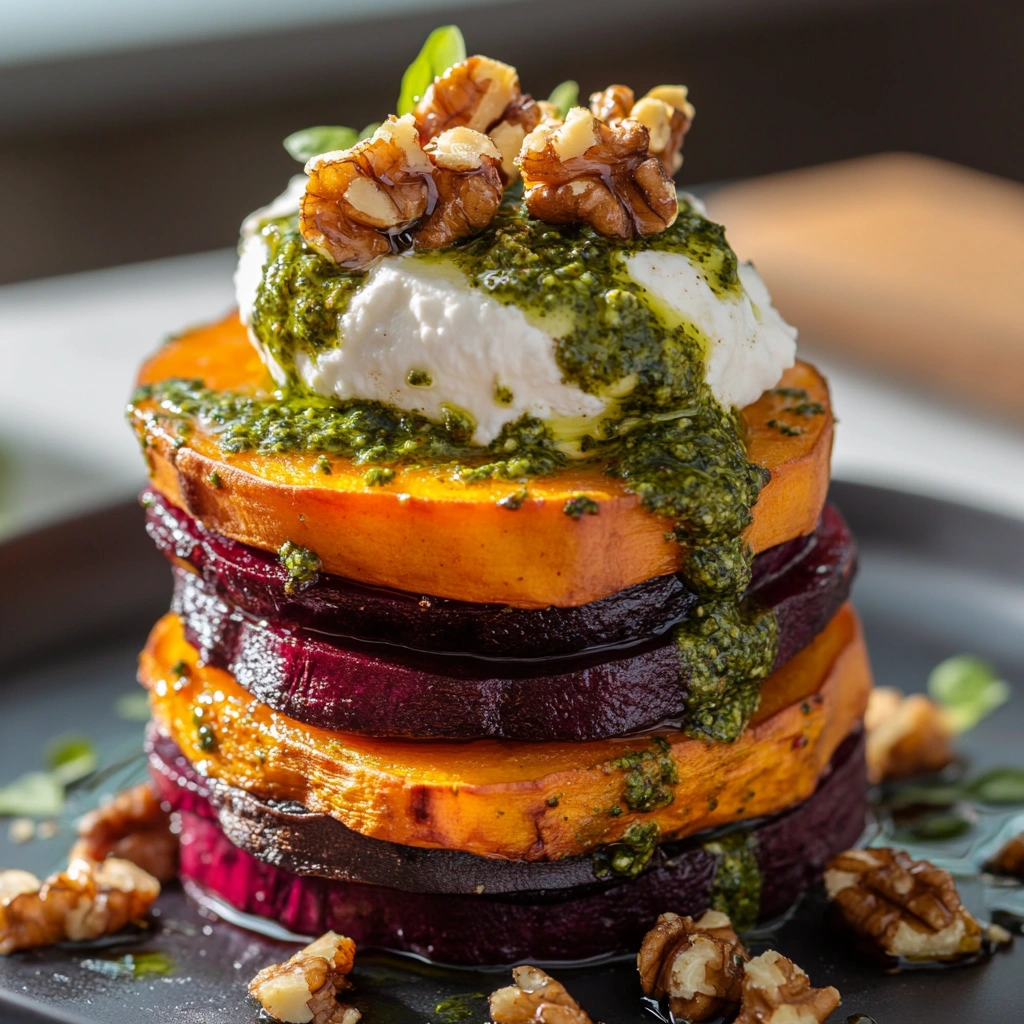
Sweet Potato & Beet Stacks with Pesto, Burrata & Walnuts are a visually stunning and flavor-packed dish perfect for entertaining or elevating a casual dinner. These vibrant stacks combine the natural sweetness of roasted sweet potatoes and earthy beets with creamy burrata cheese, herbaceous pesto, and the satisfying crunch of toasted walnuts. Each bite offers a balanced mix of textures and flavors—rich, fresh, and slightly nutty.
This dish not only looks elegant on a plate but also packs impressive nutritional value, making it a healthy yet indulgent choice. It works beautifully as a vegetarian appetizer, a light entrée, or a shareable platter at dinner parties. The layers can be prepared ahead of time and assembled just before serving, making it a convenient option for busy hosts or meal-preppers looking for variety. Whether you’re celebrating the season or simply craving something colorful and wholesome, this recipe is a standout.
Health Benefits of Key Ingredients
This recipe brings together several powerhouse ingredients, each contributing unique nutritional benefits.
Sweet potatoes are rich in beta-carotene, an antioxidant that converts to vitamin A in the body, supporting eye health and immunity. They’re also an excellent source of dietary fiber, which aids digestion and promotes satiety.
Beets are loaded with nitrates that help improve blood flow and lower blood pressure. They’re also high in folate and contain anti-inflammatory compounds that support heart health. Their natural sweetness and earthy flavor add depth to the dish.
Burrata, while indulgent, provides calcium and protein, making it a good source of essential nutrients for bone health. Its creamy texture adds a luxurious element without overwhelming the palate.
Walnuts are one of the best plant-based sources of omega-3 fatty acids, which contribute to brain health and reduce inflammation. Their crunch contrasts beautifully with the softer components of the dish.
Pesto, typically made with fresh basil, olive oil, garlic, nuts, and cheese, delivers heart-healthy fats and an antioxidant boost while enhancing the overall flavor profile of the stack.
Altogether, these ingredients create a dish that is both indulgent and nutritionally balanced.
Ingredient Breakdown
To make Sweet Potato & Beet Stacks with Pesto, Burrata & Walnuts, quality ingredients are key to maximizing flavor and presentation.
Start with medium-sized sweet potatoes, ideally with orange flesh for a vibrant look. Look for firm potatoes without blemishes or soft spots. Slice them evenly to ensure uniform cooking.
Beets can be red, golden, or a combination of both for added visual interest. Roasting them intensifies their natural sweetness and reduces bitterness. Avoid using pre-cooked packaged beets if possible, as fresh-roasted ones offer better texture and taste.
Burrata cheese is a creamy cousin of mozzarella with a soft, rich center. Use it fresh and chilled. One large ball is usually enough for 4 servings, but you can adjust based on preference.
Pesto can be homemade or store-bought. A classic basil pesto works well, but you can also use arugula or kale-based versions for variation. Choose a pesto with minimal preservatives and high-quality olive oil.
Walnuts should be raw and unsalted. Toasting them enhances their nutty flavor and adds crunch.
Optional garnishes include microgreens, arugula, or a drizzle of balsamic glaze for added acidity and presentation appeal.

Kitchen Tools & Preparation Tips
Having the right tools on hand ensures both efficiency and precision.
A mandoline slicer is ideal for evenly slicing sweet potatoes and beets into uniform rounds, which is essential for consistent cooking. If unavailable, a sharp chef’s knife will suffice, though it may take more time.
For roasting, use a baking sheet lined with parchment paper or a silicone mat to prevent sticking and make cleanup easier.
If you’re making pesto from scratch, a food processor or high-speed blender is a must. Use it to combine basil, olive oil, garlic, parmesan, and nuts into a smooth paste.
Tongs are useful for handling hot vegetables, and a small offset spatula or butter knife can help assemble and layer the ingredients neatly.
To toast walnuts, use a dry skillet over medium heat for 3–5 minutes, stirring occasionally until fragrant.
Prep all ingredients ahead of time and allow components to cool slightly before assembling to maintain structural integrity.
Step-by-Step Instructions
Step 1: Prep the Vegetables
Preheat your oven to 400°F (200°C). Wash and peel the sweet potatoes and beets. Using a mandoline or sharp knife, slice them into ¼-inch thick rounds. Aim for slices of similar size to ensure even stacking and cooking.
Step 2: Roast the Vegetables
Place the sweet potato slices on one baking sheet and the beet slices on another, as they have different cooking times and the beets may bleed color. Drizzle both with olive oil, season lightly with salt and pepper, and toss to coat. Roast sweet potatoes for 20–25 minutes, flipping halfway. Roast beets for 30–35 minutes, flipping if desired. Remove when tender and slightly crisped on the edges.
Step 3: Prepare the Pesto (if homemade)
In a food processor, combine 2 cups fresh basil, ¼ cup toasted nuts (pine nuts or walnuts), 1–2 cloves garlic, ½ cup grated parmesan, and ½ cup olive oil. Blend until smooth. Season to taste.
Step 4: Toast the Walnuts
Place ½ cup of chopped raw walnuts in a dry skillet over medium heat. Stir frequently until golden brown and fragrant, about 3–5 minutes. Remove from heat and let cool.
Step 5: Assemble the Stacks
On a serving plate, start with a slice of sweet potato, then add a slice of beet, a spoonful of pesto, and a small piece of burrata. Repeat the layering once or twice, depending on height and stability. Top with more burrata, a sprinkle of toasted walnuts, and optional microgreens or a drizzle of balsamic glaze.
Step 6: Serve
Serve immediately at room temperature for the best flavor and texture. The dish can also be served slightly chilled or gently warmed in the oven just before serving.
Serving Suggestions
Sweet Potato & Beet Stacks with Pesto, Burrata & Walnuts can be served in a variety of ways, depending on the occasion. As a starter, arrange individual stacks on small appetizer plates or serve them on a platter as finger food for gatherings. Their vibrant colors and layered presentation make them an eye-catching addition to holiday spreads or dinner parties.
For a light lunch or dinner, pair the stacks with a side salad or whole grains like quinoa or farro to make the meal more filling. You can also present them deconstructed on a serving board, allowing guests to build their own layers.
To elevate presentation, consider using a ring mold for perfect rounds or drizzle with balsamic glaze for an added touch of sophistication. These stacks are most flavorful when served at room temperature, which allows the burrata and pesto to soften slightly and blend with the roasted vegetables.
Recipe Variations and Dietary Swaps
This versatile recipe can be adapted to fit different dietary needs and personal preferences without compromising on flavor or presentation.
Vegan version: Swap burrata with vegan cheese alternatives such as cashew cream, almond ricotta, or dairy-free mozzarella. Ensure the pesto is made without parmesan or use nutritional yeast instead.
Nut-free option: Replace walnuts with toasted pumpkin seeds or sunflower seeds. These alternatives still offer a satisfying crunch and nutty flavor without triggering allergies.
Low-dairy or lactose-free: Use lactose-free burrata if available, or substitute with a plant-based cheese that has a creamy texture. Goat cheese can also be a suitable alternative for those who tolerate it.
Pesto variations: Experiment with different greens like arugula, spinach, or kale. For a spicier note, try adding chili flakes or substituting part of the basil with cilantro.
Visual variety: Use a mix of red and golden beets, or Japanese sweet potatoes with purple skin and white flesh, to add color contrast and intrigue.
These variations allow you to customize the recipe based on dietary restrictions or simply to keep things interesting across seasons.
Pairing Ideas
The rich, earthy, and slightly sweet profile of these stacks makes them suitable for pairing with a variety of side dishes and beverages.
For drinks, light white wines such as Sauvignon Blanc or Pinot Grigio complement the creaminess of the burrata and the herbaceous notes of the pesto. A dry rosé or even a Pinot Noir also works well, offering subtle fruitiness without overpowering the dish.
As a side, serve with toasted sourdough, herbed couscous, or a lemon-dressed arugula salad for a refreshing contrast. For a heartier pairing, try alongside roasted lentils, wild rice, or stuffed bell peppers.
To keep the dish light and clean, avoid overly rich or creamy sides. Instead, focus on adding acidic or fresh elements to cut through the cheese and root vegetables, such as pickled onions or citrus-based dressings.
These pairings elevate the overall experience while maintaining balance.
Storage and Make-Ahead Tips
This dish can be prepared in advance with a few considerations to maintain texture and freshness.
Make-ahead prep: Roast the sweet potatoes and beets up to 2 days ahead. Store them separately in airtight containers in the refrigerator. Pesto can be made up to 5 days in advance and stored in a jar with a layer of olive oil to prevent oxidation.
Burrata should be added just before serving for the best texture. If using a vegan or firmer cheese substitute, you can layer it earlier without issue.
Assembly: It’s best to assemble the stacks shortly before serving to prevent sogginess. If necessary, you can pre-assemble them and store in the fridge for a few hours, but allow them to come to room temperature before serving.
Storage: Leftovers should be stored in a single layer in an airtight container. While the components may soften slightly, they’re still enjoyable up to 2 days later.
Common Mistakes to Avoid
To ensure your Sweet Potato & Beet Stacks turn out beautifully, avoid these common pitfalls:
Overcooking the vegetables: Roasting too long can cause the sweet potatoes and beets to become mushy and lose their structure, making the stacks unstable. Aim for tender but firm slices.
Uneven slicing: If slices vary in thickness, they’ll cook unevenly. Use a mandoline or steady hand with a sharp knife for consistency.
Overpowering flavors: Pesto can dominate the dish if overused. Apply in thin layers to complement, not overwhelm, the other ingredients.
Cold cheese: Burrata is best served at room temperature. If it’s too cold, the texture is less creamy and doesn’t meld as well with the warm vegetables.
Premature assembly: Assembling too far in advance can lead to soggy stacks and loss of height. Assemble close to serving time for the best appearance and taste.
With these tips, your dish will stay flavorful and visually appealing.
FAQs (From Google’s People Also Ask Section)
Can I make beet stacks ahead of time?
Yes, you can roast the beets and sweet potatoes ahead of time and store them in the fridge for up to 2 days. However, it’s best to assemble the stacks just before serving to maintain texture and presentation.
What pairs well with burrata besides tomatoes?
Burrata pairs beautifully with roasted vegetables like beets and sweet potatoes, as well as fruits such as figs, peaches, and pears. It also complements pesto, arugula, and crusty bread.
Is it better to roast or boil sweet potatoes?
Roasting is generally preferred for this recipe because it enhances the natural sweetness of the sweet potatoes and adds slight caramelization. Boiling can make them waterlogged and less flavorful.
Can I use canned beets in this recipe?
While fresh roasted beets offer the best flavor and texture, canned beets can be used for convenience. Just make sure to drain and pat them dry before layering to avoid sogginess.
How do I keep sweet potato stacks from falling apart?
Use uniformly sliced vegetables and stack in a stable, alternating pattern. Slightly press each layer for stability and serve on a flat surface. Using a toothpick for support is optional if transporting.
What nut can replace walnuts in pesto for allergies?
Pumpkin seeds or sunflower seeds are great nut-free alternatives. They still provide a rich, nutty flavor and work well in pesto recipes.
Can I serve this dish cold or is it better warm?
The stacks are best served at room temperature. However, they can be enjoyed slightly warm or even chilled, depending on your preference.

Sweet Potato & Beet Stacks with Pesto, Burrata & Walnuts
These Sweet Potato & Beet Stacks with Pesto, Burrata & Walnuts are a stunning and delicious vegetarian dish perfect for entertaining or everyday meals. Layers of tender roasted sweet potatoes and earthy beets are stacked with creamy burrata cheese, rich pesto, and toasted walnuts for a flavorful bite that’s both healthy and indulgent. Serve them as a vibrant appetizer, elegant side, or light entrée. Naturally gluten-free, this recipe is customizable for vegan or nut-free diets with simple swaps.
Ingredients
- 2 medium sweet potatoes, peeled and sliced into 1/4-inch rounds
- 2 medium beets, peeled and sliced into 1/4-inch rounds
- 2 tablespoons olive oil (for roasting)
- Salt and pepper, to taste
- 2 balls burrata cheese (about 6 oz each)
- 1/2 cup walnuts, toasted
- 1/4 cup fresh basil leaves (for pesto)
- 1/4 cup fresh parsley (for pesto)
- 1/4 cup pine nuts (for pesto)
- 2 tablespoons grated Parmesan cheese (for pesto)
- 1 clove garlic (for pesto)
- 1/4 cup extra virgin olive oil (for pesto)
- Juice of 1/2 lemon (for pesto)
- Salt and pepper to taste
Instructions
- Preheat Oven: Preheat your oven to 400°F (200°C). Line a baking sheet with parchment paper.
- Roast Sweet Potatoes and Beets: Arrange the sweet potato and beet slices on the baking sheet. Drizzle with olive oil and season with salt and pepper. Roast in the oven for 25-30 minutes, flipping halfway through, until both the sweet potatoes and beets are tender and slightly caramelized.
- Make the Pesto: While the vegetables are roasting, prepare the pesto. In a food processor, combine the basil, parsley, pine nuts, Parmesan cheese, garlic, olive oil, and lemon juice. Blend until smooth. Season with salt and pepper to taste.
- Toast Walnuts: Toast the walnuts in a dry skillet over medium heat for 3-4 minutes, stirring occasionally, until fragrant and golden brown. Set aside.
- Assemble the Stacks: Once the sweet potatoes and beets are roasted, start stacking them alternately on a serving platter: 1 slice of sweet potato, followed by 1 slice of beet, then repeat, creating a stack of 4-5 layers. Repeat with the remaining slices.
- Top with Burrata: Tear the burrata into pieces and place them on top of the stacks.
- Garnish and Serve: Drizzle the pesto over the stacks and sprinkle with toasted walnuts. Serve immediately and enjoy!