In this article
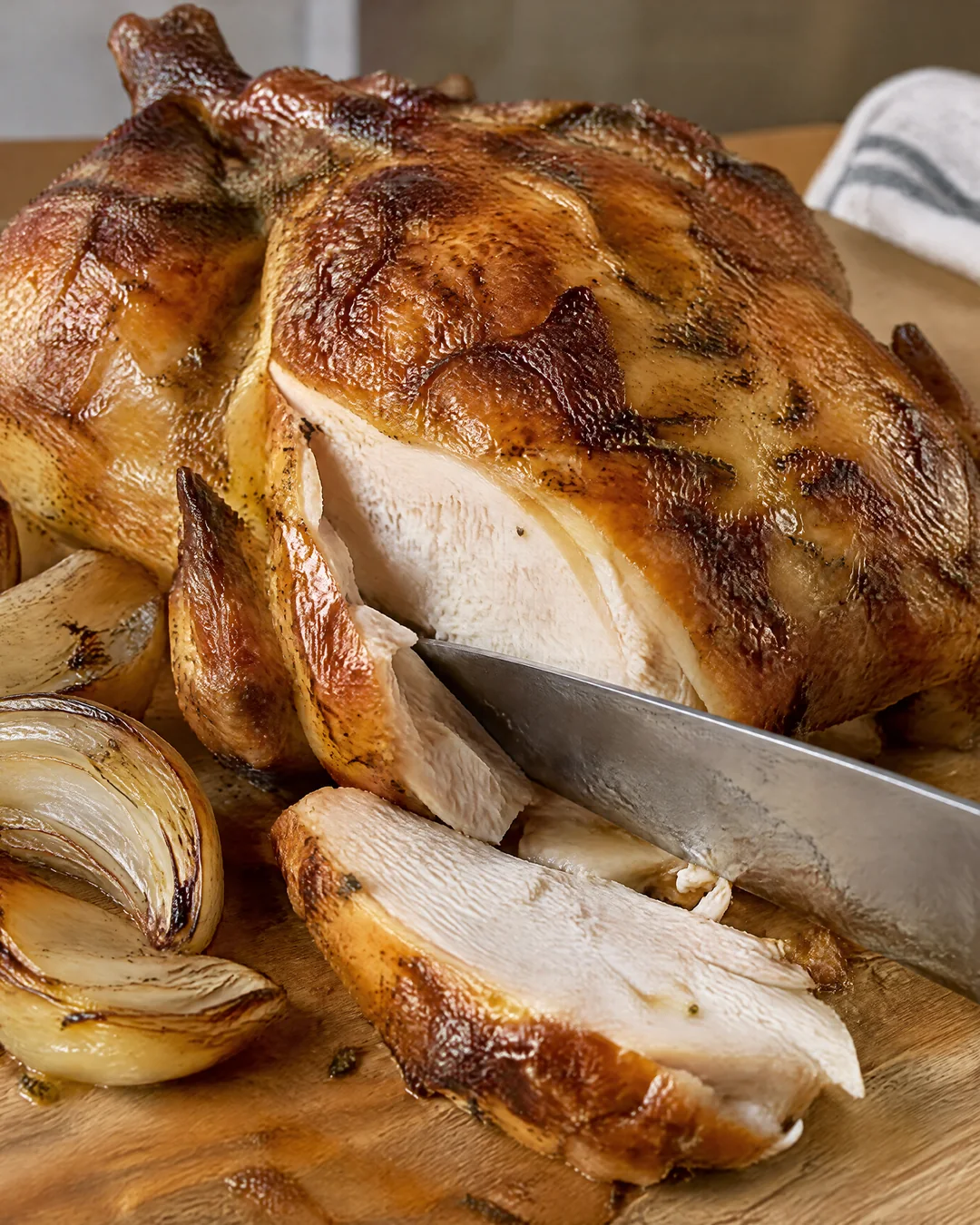
My mother roasted a chicken almost every week of my childhood, and I never once saw her baste it. Other mothers on our street opened the oven every twenty minutes to spoon the pan juices over the top, and their chickens came out pale and soft skinned. Hers came out deep gold and crackling, so crisp you could hear it when she carved. My brothers fought over the wings every single time. When I finally asked her the secret, she told me it was not something she did on the day. It was something she did the night before.
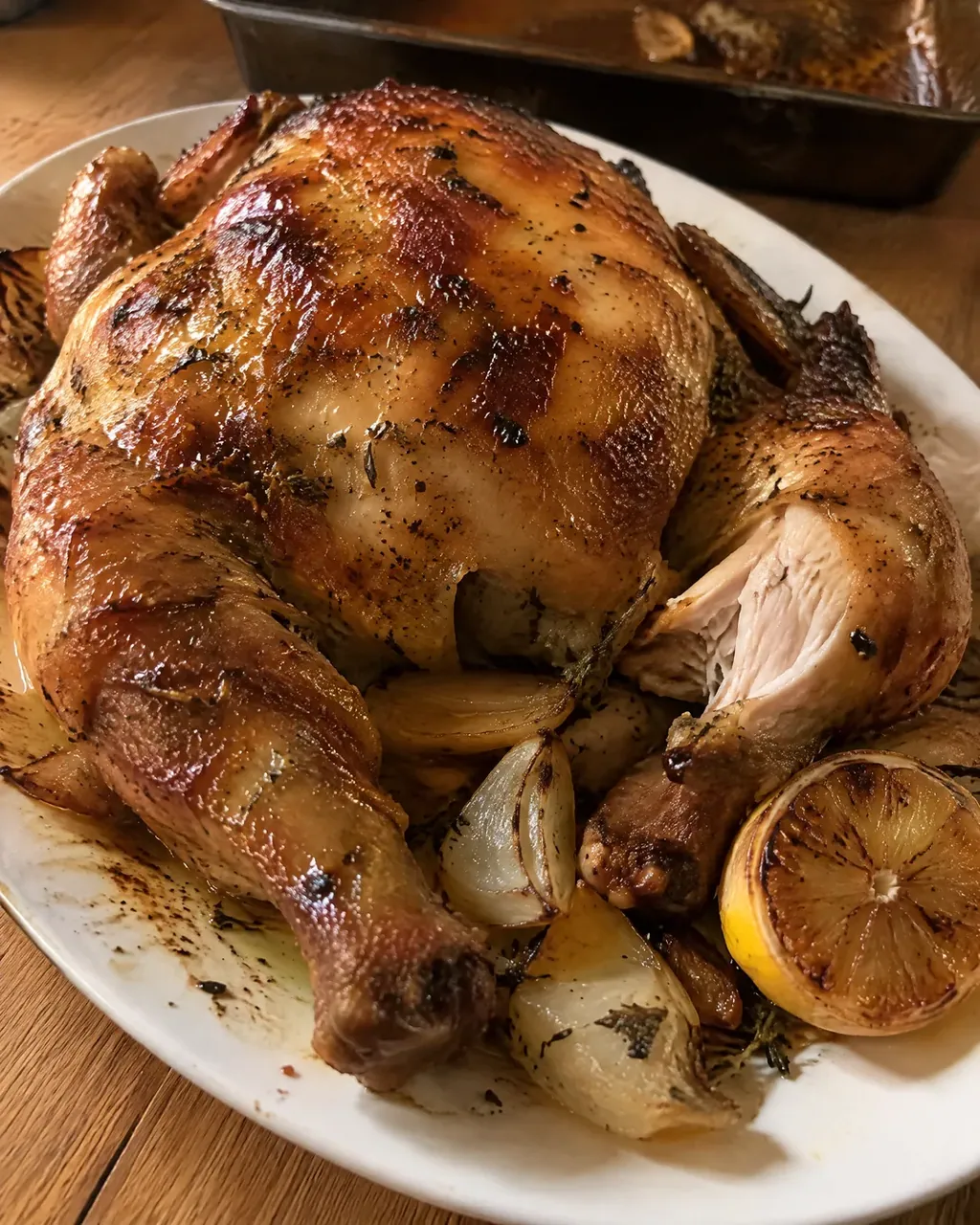
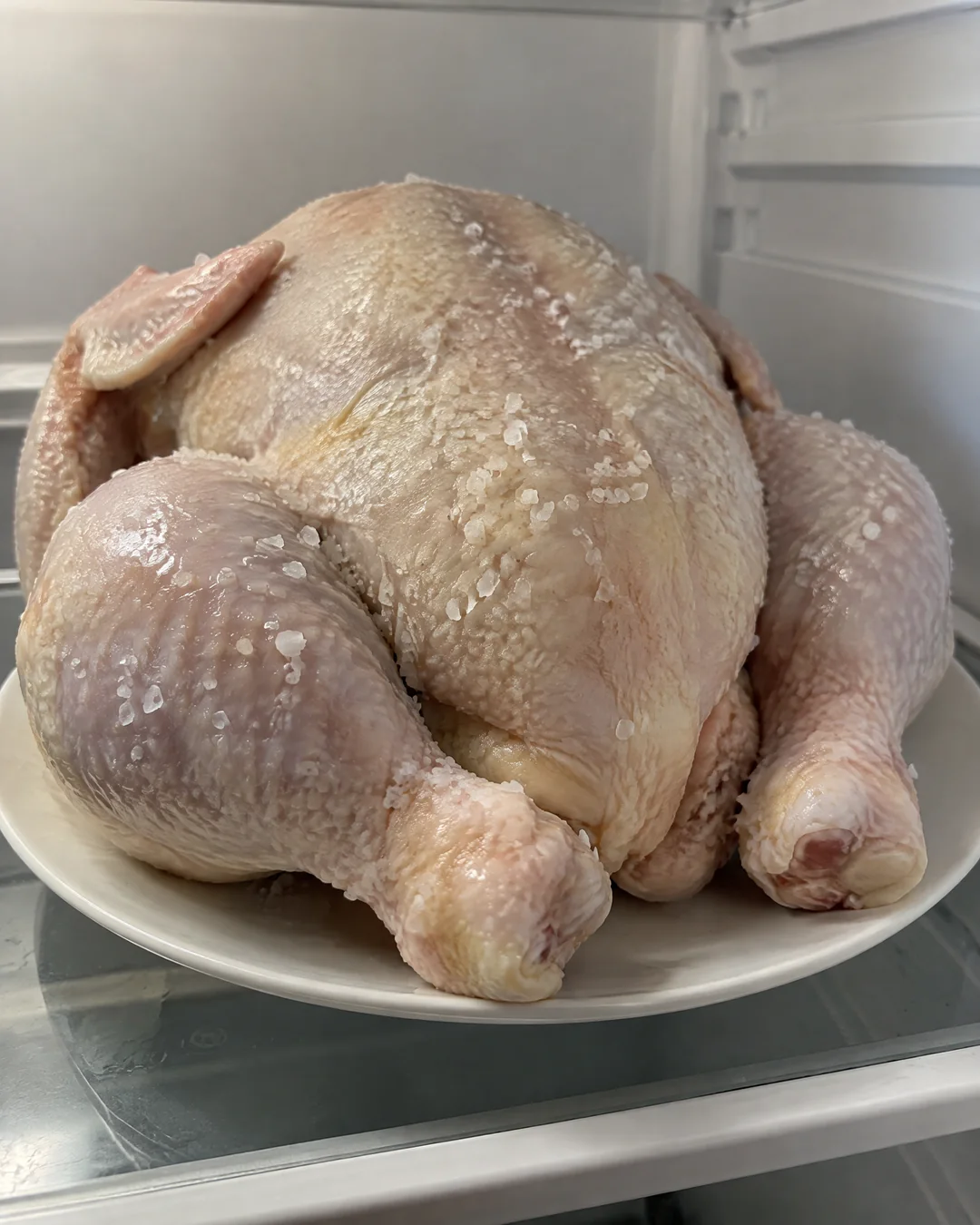
The night before, she patted the chicken completely dry with paper towels, inside and out, salted it all over and set it on a plate in the refrigerator with nothing covering it. Overnight the salt seasons the meat right through and the cold dry air of the refrigerator dries the skin until it is tight and papery. On the day, the chicken goes into a hot oven with a little soft butter rubbed over it, a lemon and an onion inside, and the door stays shut. No basting, no foil, no peeking. Basting only adds moisture to the skin and lets the heat out of the oven every time you do it. The chicken is done when the juices run clear at the thigh, and then it rests before anybody touches a knife.
Why this roast chicken works
- Dry skin crisps; wet skin steams. Patting the bird dry and leaving it uncovered overnight removes the moisture that keeps skin soft.
- Salt the night before. Salt has time to season the meat all the way through and to keep it juicy as it roasts.
- A hot oven. At 425 degrees the fat under the skin renders quickly and the skin browns before the breast dries out.
- No basting. Pan juices are mostly water. Spooning them over the top undoes the drying, and opening the door drops the heat.
- A real rest. Fifteen minutes on the board lets the juices settle back into the meat instead of running out onto the counter.
Ingredients
Serves 4 to 6 from one 4 to 5 pound chicken. Start the night before: the chicken needs 12 to 24 hours uncovered in the refrigerator.
For the chicken
- 1 whole chicken, 4 to 5 pounds (1.8 to 2.3kg)
- 1 tablespoon kosher salt (about 3/4 teaspoon per pound of chicken)
- 1/2 teaspoon ground black pepper
- 2 tablespoons unsalted butter, softened (28g)
- 1 lemon, halved
- 2 yellow onions, one quartered and one cut into thick slices
- 4 sprigs fresh thyme, optional
Roasting times at 425 degrees, about 15 minutes per pound: a 3 1/2 pound chicken takes 50 to 55 minutes, a 4 pound chicken 60 to 65 minutes, a 4 1/2 pound chicken 65 to 70 minutes, and a 5 pound chicken 75 to 80 minutes. Always check the thigh: the juices should run clear and a thermometer in the thickest part should read 165 degrees (74°C).
How to make roast chicken
- The night before, take the chicken out of its wrapping and remove anything inside the cavity. Pat it completely dry with paper towels, inside and out, pressing into every fold.
- Sprinkle the salt evenly all over the outside and a little inside the cavity. Set the chicken breast side up on a plate or a small rack over a plate and refrigerate it uncovered for 12 to 24 hours.
- The next day, take the chicken out 30 minutes before roasting. Heat the oven to 425 degrees (220°C).
- Lay the thick onion slices in the center of a roasting pan or a large cast iron skillet. Put the lemon halves, the quartered onion and the thyme inside the chicken.
- Rub the soft butter over the skin, season with the pepper, and tuck the wing tips under the back. Tie the legs together loosely with kitchen string if you like.
- Set the chicken breast side up on the onion slices and roast without opening the oven for the first 45 minutes. Do not baste and do not cover it.
- Roast until the skin is deep golden and the juices run clear when you pierce the thickest part of the thigh, about 15 minutes per pound in all (see the chart above). A thermometer in the thigh should read 165 degrees (74°C).
- Move the chicken to a carving board and let it rest for 15 minutes before carving. Serve with the roasted onions from the pan.
Tips that make the difference
- The drier the skin, the crisper the result. If you forgot to salt it the night before, even 2 hours uncovered in the refrigerator helps.
- Use kosher salt for the overnight salting. Fine table salt is saltier by volume, so use about half as much.
- If your oven runs hot and the skin darkens before the thigh is done, lower the heat to 400 degrees for the last 15 minutes rather than covering it.
- Pour the pan juices off the onions after roasting and spoon them over the carved meat, not over the skin.
Variations
- Garlic and herb. Push a few garlic cloves and some rosemary into the cavity with the lemon.
- Paprika skin. Mix 1 teaspoon smoked paprika into the soft butter for a deep red, smoky skin.
- Potatoes underneath. Surround the chicken with halved small potatoes tossed in oil and salt; they roast in the fat.
- Pan gravy. Pour off most of the fat, stir 2 tablespoons flour into the pan, then whisk in 1 1/2 cups chicken broth and simmer until thick.
Storage and make-ahead
Refrigerate leftover chicken, taken off the bone, in a covered container for up to 4 days.
Reheat pieces with the skin on in a 400 degree oven for 10 to 15 minutes, which keeps the skin crisp better than the microwave.
Simmer the carcass with an onion, a carrot and water for a pot of broth, the way my mother always did.
Frequently asked questions
Why is my roast chicken skin not crispy?
The skin was too wet. Pat it dry, salt it and leave it uncovered in the refrigerator overnight, and do not baste it while it roasts.
Should I baste a roast chicken?
No. Basting puts moisture back on the skin and lets heat out of the oven every time the door opens. The overnight salting keeps the meat juicy without it.
How long do I roast a chicken?
About 15 minutes per pound at 425 degrees: roughly 50 to 55 minutes for 3 1/2 pounds and 75 to 80 minutes for 5 pounds. The thigh should reach 165 degrees and the juices should run clear.
Does the chicken really go in the refrigerator uncovered?
Yes. Set it on a plate on a low shelf, away from anything ready to eat. The cold, dry air is what dries the skin.
Salt it tonight, leave it alone tomorrow, and listen to the skin crackle when you carve. Then decide who gets the wings.
Crispy Roast Chicken (Salted the Night Before, Never Basted)
My mother's crispy roast chicken: dried and salted the night before, roasted at 425 degrees with no basting and no foil, about 15 minutes per pound, then rested before carving. A roasting chart for every size of bird.
Ingredients
- 1 whole chicken, 4 to 5 pounds
- 1 tablespoon kosher salt
- 1/2 teaspoon ground black pepper
- 2 tablespoons unsalted butter, softened
- 1 lemon, halved
- 2 yellow onions, one quartered and one cut into thick slices
- 4 sprigs fresh thyme, optional
Instructions
- The night before, take the chicken out of its wrapping and remove anything inside the cavity. Pat it completely dry with paper towels, inside and out, pressing into every fold.
- Sprinkle the salt evenly all over the outside and a little inside the cavity. Set the chicken breast side up on a plate or a small rack over a plate and refrigerate it uncovered for 12 to 24 hours.
- The next day, take the chicken out 30 minutes before roasting. Heat the oven to 425 degrees (220°C).
- Lay the thick onion slices in the center of a roasting pan or a large cast iron skillet. Put the lemon halves, the quartered onion and the thyme inside the chicken.
- Rub the soft butter over the skin, season with the pepper, and tuck the wing tips under the back. Tie the legs together loosely with kitchen string if you like.
- Set the chicken breast side up on the onion slices and roast without opening the oven for the first 45 minutes. Do not baste and do not cover it.
- Roast until the skin is deep golden and the juices run clear when you pierce the thickest part of the thigh, about 15 minutes per pound in all (see the chart above). A thermometer in the thigh should read 165 degrees (74°C).
- Move the chicken to a carving board and let it rest for 15 minutes before carving. Serve with the roasted onions from the pan.