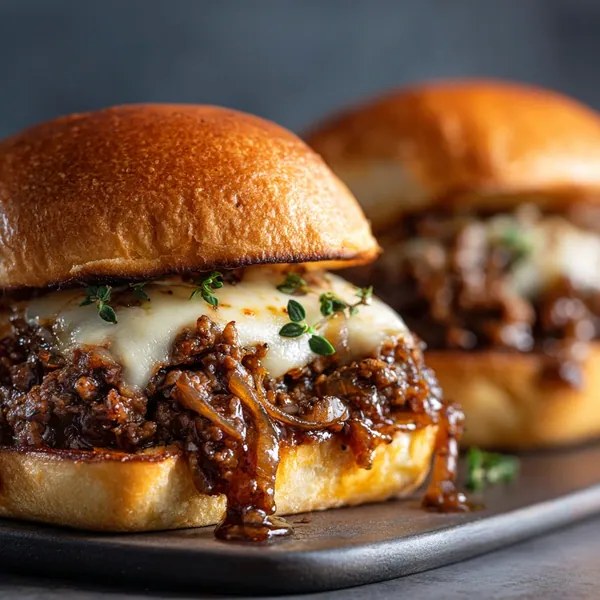
These Baked French Dip Biscuits combine the buttery, flaky goodness of classic American drop biscuits with all the savory appeal of a French dip sandwich. Each biscuit is stuffed with tender, thinly sliced roast beef and melted provolone (or Swiss), then finished with a golden-butter glaze and served alongside a warm…
Baked French Dip Biscuits represent a playful mash-up of two beloved comfort-food classics: the flaky American biscuit and the savory French dip sandwich. This hybrid recipe takes tender, buttery biscuits—light and flaky on the inside, golden and crisp on the outside—and stuffs them with thinly sliced roast beef, melty cheese, and a side of rich au jus for dipping. The result is a handheld delight that combines textures and flavors in every bite.
What makes this creation so irresistible is its balance of contrasts: the pillowy biscuit absorbs jus without becoming soggy, while the roast beef stays juicy beneath a blanket of cheese. Unlike traditional French dip sandwiches, which use rolls or baguettes, these biscuits bring their own layer of buttery complexity. At the same time, they elevate the humble drop biscuit into something unexpectedly sophisticated.
In this article, you’ll explore the origins of both components—the classic French dip and the American biscuit—and discover how they came together in modern kitchens. You’ll learn about the precise ingredients and equipment you need to achieve bakery-quality biscuits, and you’ll find troubleshooting tips that ensure every batch turns out perfectly. We’ll also provide nutrition information so you can make informed choices or adapt the recipe for lighter preferences.
Whether you’re hosting a casual gathering, planning a game-day spread, or simply craving something comforting and novel, these Baked French Dip Biscuits deliver on both taste and presentation. By the end of this guide, you’ll be ready to bake, assemble, and serve a dish that’s sure to impress family and friends alike.
Origins & History
The story of Baked French Dip Biscuits begins with two distinct culinary lineages. First, the French dip sandwich itself was reportedly invented in 1918 at Philippe’s in Los Angeles, when Philippe Mathieu accidentally dropped a French roll into a pan of meat drippings and served it to a customer requesting a soft roll. The appreciative diner found the soggy sandwich deeply flavorful, and the “au jus” style was born. Over the ensuing decades, French dip sandwiches spread across the United States, becoming a staple in delis and diners alike.
Meanwhile, American biscuits trace their roots to early colonial times, when cooks adapted British quick-bread techniques to local ingredients. By the mid-19th century, the buttermilk biscuit—made with flour, fat, and cultured buttermilk—became a Southern staple. Drop biscuits, which require no rolling or cutting, offered a quicker, rustic option suited to home kitchens. The hallmark of a great biscuit lies in its flaky layers, achieved by incorporating cold fat into the dough and handling it gently.
Fusion cooking in the late 20th and early 21st centuries has embraced mash-ups that marry regional favorites. Food blogs and chefs began experimenting with stuffing biscuits or sliders with everything from barbecue to Thanksgiving leftovers. It was only a matter of time before someone married the savory allure of French dip with the tender crumb of a homemade biscuit.
By baking the assembled rolls rather than toasting them, this hybrid takes advantage of residual heat to meld flavors and textures. Today, Baked French Dip Biscuits appear on casual-dining menus and in home kitchens, celebrated for their ease of preparation and shareable format. Their rise in popularity reflects a broader trend toward creative, comfort-food hybrids that honor tradition while pushing flavor boundaries.
Key Ingredients Explained
Achieving the perfect Baked French Dip Biscuit requires attention to five core components: the biscuit dough, roast beef, au jus, cheese, and flavor enhancers.
Biscuits
Type: Buttermilk drop biscuits are ideal, offering both tenderness and structure. The acidity of the buttermilk reacts with baking powder to give height and lightness.
Flour: Use all-purpose flour for reliable gluten development. A portion of cake flour can be substituted (up to 25 percent) for a more tender crumb.
Fat: Cold unsalted butter or solid vegetable shortening—cut into small pieces—creates steam pockets as it melts, yielding flaky layers.
Roast Beef
Cut: Opt for lean yet tender cuts such as top round or eye of round. Pre-cooked deli-style roast beef works well for quick assembly, but a home-roasted eye of round sliced thin offers superior texture and flavor.
Temperature: Slightly warm or at room temperature ensures the biscuit doesn’t cool excessively and helps the cheese melt evenly.
Au Jus
Homemade vs. Store-Bought: Homemade jus (pan drippings deglazed with beef broth and aromatics) delivers the richest flavor. Store-bought beef consommé can be seasoned with Worcestershire sauce, garlic powder, and onion powder if time is short.
Consistency: Aim for a thin, pourable jus—not a gravy—so it coats the meat without weighing down the biscuit.
Cheese
Varieties: Provolone, Swiss, or mild white cheddar each melt smoothly and complement the beef. Provolone offers a subtle nuttiness, while Swiss adds a hint of sweetness.
Portioning: Thin slices or shredded cheese ensure rapid melting during the final bake.
Flavor Enhancers
Herbs & Spices: A pinch of onion powder, garlic powder, and dried thyme can be mixed into the biscuit dough or sprinkled atop assembled biscuits.
Finishing Touches: Melted butter brushed on top before baking and a sprinkle of coarse sea salt or poppy seeds elevate both appearance and taste.
By sourcing quality ingredients and fine-tuning each element, you can build layers of texture and flavor that define the Baked French Dip Biscuit experience.
Proper equipment and organized prep work are essential for streamlined execution and consistent results.
Baking Tools
Sheet Pans: Two half-sheet pans with rims accommodate biscuits without overcrowding.
Mixing Bowls: A large bowl for dry ingredients and a smaller bowl for wet ingredients facilitate efficient “dry-to-wet” mixing.
Pastry Cutter or Food Processor: Either works to cut cold butter into flour quickly, preserving small pea-sized pieces.
Measuring Tools: Accurate measuring cups and spoons ensure the correct ratio of leaveners and liquids.
Assembly & Baking
Offset Spatula: Useful for spreading softened butter atop assembled biscuits or for scooping softened pan drippings.
Cooling Rack: A wire rack allows biscuits to cool slightly before slicing and stuffing, preventing steam buildup.
Oven Thermometer: Validates that your oven reaches and holds 425°F—a common temperature for drop biscuits.
Mise en Place
Pre-Slice Meat & Cheese: Thinly slice roast beef and cheese in advance, storing each on parchment-lined trays in the refrigerator. This prevents rushed assembly and ensures uniform portions.
Prepare Au Jus: If making homemade au jus, deglaze the roasting pan while the biscuits rise, then strain and keep warm on the stovetop.
Chill Ingredients: Keep butter, shortening, and even your mixing bowl chilled until immediately before mixing. Cold ingredients create flakier layers.
Timing & Workflow
Biscuit Dough First: Mix and portion biscuit dough, then allow a short resting period (10–15 minutes) for the gluten to relax, facilitating tender layers.
Simultaneous Steps: While the biscuits bake, reheat sliceable roast beef in a covered dish with a splash of jus to maintain moisture. Then assemble and return to the oven for melting and melding.
With the right tools at your fingertips and a clear workflow, you’ll minimize stress in the kitchen and maximize delicious results.
Nutrition Snapshot
A typical serving of two Baked French Dip Biscuits (with roast beef, cheese, and a moderate portion of au jus) provides approximately 550–650 calories. Of those calories, about 30–35 grams come from fat—primarily from butter and cheese—and 40–45 grams from carbohydrates in the biscuit dough. Protein content ranges from 25 to 30 grams, thanks to the roast beef and cheese slices.
To lighten the recipe, consider the following substitutions:
Buttermilk Greek Yogurt Blend: Replace half the butter in the biscuit dough with Greek yogurt to reduce fat and boost protein.
Lean Beef Cut: Use eye of round roast, trimmed of visible fat, or substitute thinly sliced turkey roast for lower calories.
Light Cheese: Swap regular provolone or Swiss for a reduced-fat variety.
Low-Sodium Broth: Prepare au jus with low-sodium beef broth to moderate sodium intake.
By making these adjustments, you can enjoy the signature flavors of Baked French Dip Biscuits with a lighter nutritional profile—ideal for those watching calories or seeking a protein-rich meal.
Step-by-Step Recipe
Prepare the Biscuit Dough
Combine dry ingredients: In a large bowl, whisk 2¼ cups all-purpose flour, 1 tablespoon baking powder, ½ teaspoon baking soda, 1 teaspoon sugar, and 1 teaspoon coarse salt.
Cut in the fat: Add 6 tablespoons cold, diced unsalted butter and 2 tablespoons cold shortening. Using a pastry cutter or your fingertips, blend until pea-sized pieces of fat remain dispersed throughout the flour.
Add liquids: Whisk together 1 cup cold buttermilk with 2 tablespoons melted (cooled) butter. Pour into the flour mixture and stir just until the dough comes together—don’t overmix.
Portion the dough: Using a ¼-cup scoop or spoon, drop 12 even mounds onto a parchment-lined half-sheet pan, spacing them about 1½ inches apart.
Rest: Let the biscuits sit at room temperature for 10 minutes to relax the gluten and hydrate the flour.
Bake the Biscuits
Preheat & bake: While dough rests, preheat oven to 425°F (220°C). Bake biscuits for 12–14 minutes, rotating the pan halfway through, until golden brown on top and bottoms.
Cool slightly: Transfer biscuits to a wire rack and let cool for 5 minutes—this prevents steam buildup when you slice them.
Prepare Roast Beef & Au Jus
Warm the beef: Place 1 pound thinly sliced roast beef in a shallow baking dish. Add ¼ cup au jus or beef consommé, cover tightly with foil, and heat in the oven at 300°F (150°C) for 8–10 minutes until warm and moist.
Make au jus (if homemade): In a small saucepan, sauté 1 minced garlic clove in 1 tablespoon butter until fragrant. Add 1 cup beef broth, 1 teaspoon Worcestershire sauce, and a pinch of onion powder. Simmer 5 minutes, skim fat, and keep warm.
Assemble & Bake Filled Biscuits
Slice & layer: Carefully slice each biscuit horizontally halfway through. On the bottom half, layer 2–3 ounces warm roast beef and 1 slice (or a small handful shredded) provolone or Swiss cheese.
Top & brush: Place the biscuit top back on. Lightly brush each with melted butter and sprinkle with coarse salt or poppy seeds.
Final bake: Return assembled biscuits to the oven at 375°F (190°C) for 5–7 minutes, until cheese is fully melted and biscuits are warmed through.
Serve
Arrange biscuits on a platter alongside small ramekins of hot au jus. Encourage guests to dip each bite. Garnish the serving tray with fresh thyme sprigs or chopped parsley for color.
Variations & Creative Twists
Vegetarian “Mushroom Dip” Biscuits Replace roast beef with a sautéed medley of cremini mushrooms, shallots, and garlic, deglazed with vegetable broth. A splash of soy sauce and a sprinkle of thyme add umami. Use vegetarian “au jus” made from mushroom stock.
Spicy Chipotle Au Jus Amp up the heat by stirring in 1–2 teaspoons chipotle in adobo (finely chopped) into your au jus. The smokiness pairs beautifully with sharp cheddar instead of provolone. Garnish with pickled jalapeño slices.
Slider-Style Minis Scale down to 2-inch biscuits for bite-sized sliders perfect for parties. Use cocktail forks and serve on a communal board. Offer an array of dipping sauces: classic jus, horseradish cream, and mustard aioli.
Thanksgiving Leftover Fusion Incorporate shredded turkey instead of roast beef and use turkey gravy in place of au jus. Add a spoonful of cranberry relish atop the meat layer before baking for a festive flair.
Gluten-Free & Dairy-Free Adaptation Use a 1:1 gluten-free flour blend with xanthan gum for the biscuits. Swap butter for coconut oil or vegan “buttery” spread, and choose a plant-based milk with a tablespoon of vinegar to mimic buttermilk. Select dairy-free cheese slices and a vegetable-based jus.
Serving Suggestions & Pairings
Sides: Serve with crisp, tangy coleslaw to cut through the richness; a simple green salad with lemon-vinaigrette balances flavors and adds freshness. For a heartier spread, offer oven-baked sweet potato fries dusted with smoked paprika.
Condiments: Set out small bowls of horseradish cream, Dijon mustard, and garlic aioli—each provides a contrasting flavor when spread inside the biscuits.
Beverages:
Non-Alcoholic: Iced tea with lemon, sparkling water infused with cucumber slices, or a ginger-lime soda refresh the palate between bites.
Presentation: Arrange biscuits on a wooden board or rustic platter, garnish with fresh herbs, and serve with small dipping bowls for a shareable, inviting display.
Troubleshooting & Pro Tips
Dense Biscuits: Likely from overmixing. Stir until just combined—visible dry streaks are okay before resting, as they hydrate during baking.
Soggy Bottoms: Ensure your au jus is not too thick or applied too generously under the biscuits. Drain excess jus before assembling or serve jus on the side for dipping.
Uneven Browning: Rotate pans halfway through the bake and check oven temperature with a thermometer; adjust rack to the center position.
Lukewarm Filling: Warm sliced beef and au jus separately, and assemble biscuits on a preheated tray to maintain heat.
Flat Biscuits: Confirm your baking powder is fresh (within six months) and that the oven is fully preheated to 425°F (220°C) before baking.
Conclusion & Call to Action
Baked French Dip Biscuits marry the buttery flakiness of classic American biscuits with the robust, savory notes of a French dip sandwich, resulting in a handheld marvel that’s as comforting as it is impressive. From the moment you pull golden-topped biscuits from the oven to the first dunk into steaming au jus, each bite delivers layered textures and balanced flavors. Whether you’re hosting a casual family dinner, preparing game-day snacks, or seeking an inventive twist on a weeknight meal, these biscuits rise to the occasion.
By mastering the biscuit dough, fine-tuning your au jus, and assembling with care, you ensure consistent, bakery-quality results every time. Don’t be afraid to experiment with the variations—whether it’s a spicy chipotle infusion, vegetarian mushroom filling, or bite-sized slider format, there’s a version to suit every palate.
Now it’s your turn: preheat the oven, gather your ingredients, and bake a batch of these indulgent biscuits. Share your creations on social media—tag your photos with #FrenchDipBiscuits and let us know which twist is your favorite. If you loved this recipe, leave a comment below with your tips or questions, and be sure to subscribe for more inventive comfort-food recipes delivered straight to your inbox.
Frequently Asked Questions
What makes drop biscuits different from rolled biscuits? Drop biscuits are spooned or scooped directly onto the baking sheet, creating a more rustic shape without rolling or cutting. They require less handling—preserving cold pockets of fat for extra flakiness—and bake faster, making them ideal for quick preparations.
Can I use leftover cooked roast beef? Absolutely. Leftover roast beef works well if thinly sliced. Warm it gently with a splash of au jus in a covered dish to restore moisture before assembling the biscuits for optimal tenderness.
How should I store and reheat leftover biscuits? Store leftover filled biscuits in an airtight container in the refrigerator for up to 2 days. To reheat, place biscuits on a baking sheet, cover loosely with foil, and bake at 350°F (175°C) for 10–12 minutes, or microwave individual servings for 60–90 seconds.
Is there a vegetarian version of French dip biscuits? Yes—swap roast beef for sautéed mushrooms or jackfruit seasoned with soy sauce, garlic, and smoked paprika. Use mushroom or vegetable broth to create a flavorful “au jus” for dipping.
What’s the best way to prevent soggy bottoms? Avoid over-moistening the biscuit base: drain excess au jus from meat before assembling, and apply jus sparingly under the biscuits. Alternatively, serve au jus on the side so guests can control the amount they add.
Recipe
Baked French Dip Biscuits
These Baked French Dip Biscuits combine the buttery, flaky goodness of classic American drop biscuits with all the savory appeal of a French dip sandwich. Each biscuit is stuffed with tender, thinly sliced roast beef and melted provolone (or Swiss), then finished with a golden-butter glaze and served alongside a warm, garlicky au jus for dipping. The biscuits hold their shape yet absorb just enough jus to stay juicy without becoming soggy, making them perfect for casual gatherings, game-day spreads, or a comforting weeknight treat. Ready in under an hour from start to finish, this recipe walks you through every step—from mixing the dough and baking the biscuits to warming the beef and assembling the sliders—so you can achieve consistent, bakery-quality results in your own kitchen.