In this article
My friend Margaret grew up in England, and she told me once that the crust on a Cornish pasty was never meant to be eaten. I stopped with a pasty halfway to my mouth. The story goes that the tin miners of Cornwall carried their pasties down the mines for lunch, held them by the thick crimped edge with hands black from the work, ate the rest, and threw the crust away. Nobody can prove every miner did it, but every child in Cornwall knows the story. And today, Margaret says, a pasty can only be sold as a Cornish pasty if it was made in Cornwall. The name is protected by law. Anywhere else, it is simply a pasty.
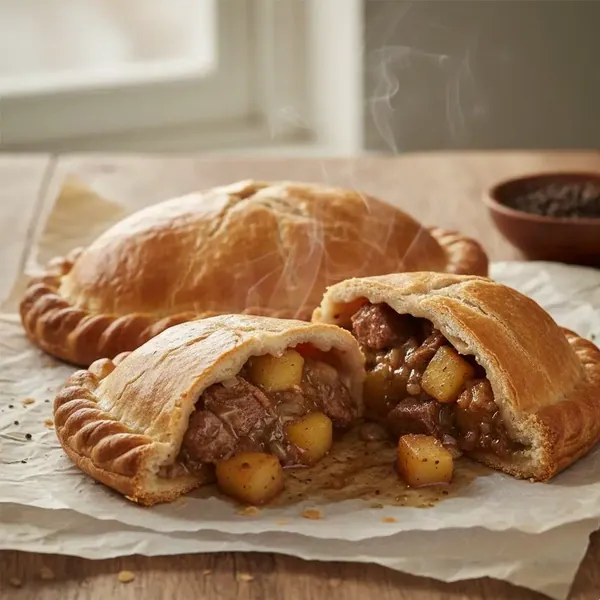
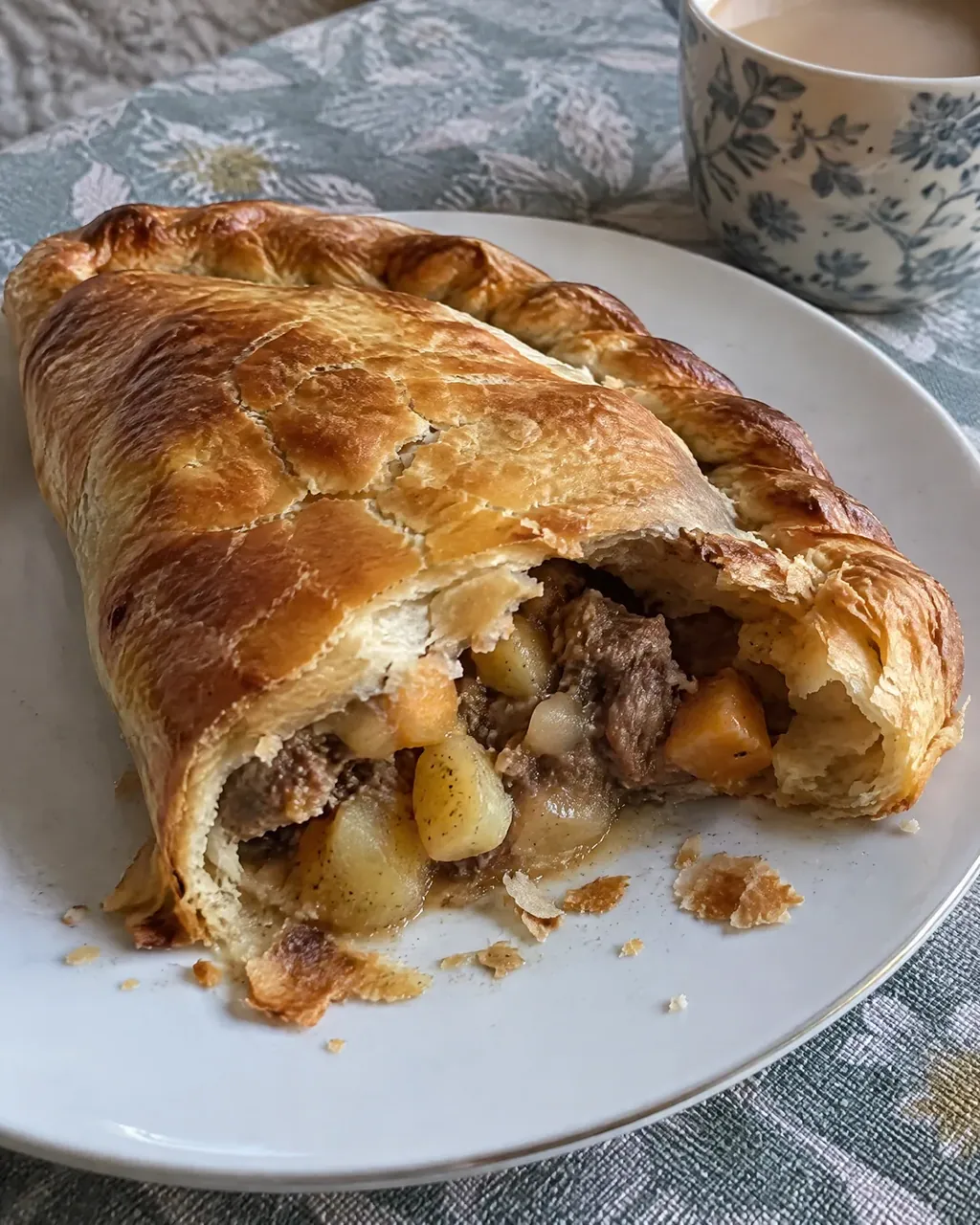
The traditional filling is short and strict: beef, potato, swede and onion, seasoned with plenty of salt and black pepper. Swede is what Americans call rutabaga, and it gives the filling a gentle sweetness. Nothing is cooked before it goes into the pastry. The beef is cut in small pieces, never ground, and the vegetables are sliced thin, so everything steams together inside the sealed pastry and makes its own gravy. The pastry has to be sturdy enough to hold its shape and be eaten in the hand, and the crimp along the side has to be tight enough that none of that gravy escapes. Margaret eats the crust anyway. She says she is not a miner.
Why this Cornish pasty works
- Raw filling. Beef and vegetables cooked from raw inside the pastry release their juices and make a gravy no stock could match.
- Thin slices, small beef. Thin vegetables and small pieces of beef cook through in the time it takes the pastry to bake.
- Sturdy pastry. A firm shortcrust made with a little more fat and a bread-like knead holds the heavy filling without cracking.
- A tight crimp. Rolling the edge over on itself seals the pasty so the juices stay inside.
- Two oven temperatures. A hot start sets and browns the pastry; a lower finish cooks the filling through without burning it.
Ingredients
Makes 4 large pasties. The measurements are in US cups with grams in brackets.
For the pastry
- 4 cups all-purpose flour (500g), plus more for rolling
- 1 teaspoon fine salt
- 1 cup cold unsalted butter, cut in pieces (226g)
- 1/4 cup vegetable shortening, cold (48g)
- 2/3 to 3/4 cup ice water (160 to 180ml)
For the filling
- 1 pound beef skirt or chuck steak (450g), trimmed and cut in 1/2 inch pieces
- 2 medium potatoes, peeled (about 350g)
- 1 small swede (rutabaga), peeled (about 250g)
- 1 medium onion (about 150g)
- 1 1/2 teaspoons fine salt
- 1 1/2 teaspoons freshly ground black pepper
- 2 tablespoons unsalted butter (28g), cut in 4 pieces
To finish
- 1 large egg, beaten with 1 tablespoon milk
Beef skirt is the traditional Cornish cut because it is tender and juicy and cooks quickly. Well-marbled chuck works too. Do not use ground beef, which turns grainy and loses the classic texture.
How to make Cornish pasty
Make the pastry
- Whisk the flour and salt in a large bowl. Rub in the butter and shortening with your fingertips until the mixture looks like coarse crumbs with a few pea-sized pieces left.
- Sprinkle in most of the ice water and mix with a fork, then your hand, adding the rest only if needed, until it forms a firm dough. Knead it on the counter for 1 minute until smooth; a pasty pastry should be a little stronger than a pie crust.
- Divide it into 4 pieces, flatten each into a disk, wrap and chill for at least 30 minutes.
Prepare the filling
- Slice the potatoes and swede into thin, irregular flakes about 1/8 inch thick, and chop the onion. Keep everything separate. Season the beef with half the salt and pepper.
Fill and crimp
- Heat the oven to 400 degrees (200°C) and line a large baking sheet with parchment.
- Roll each piece of pastry into a circle about 9 inches (23cm) across, using a plate as a guide.
- On one half of each circle, leaving a 1 inch border, layer some potato and swede, season with salt and pepper, then onion, then a quarter of the beef, then a little more potato. Put a piece of butter on top.
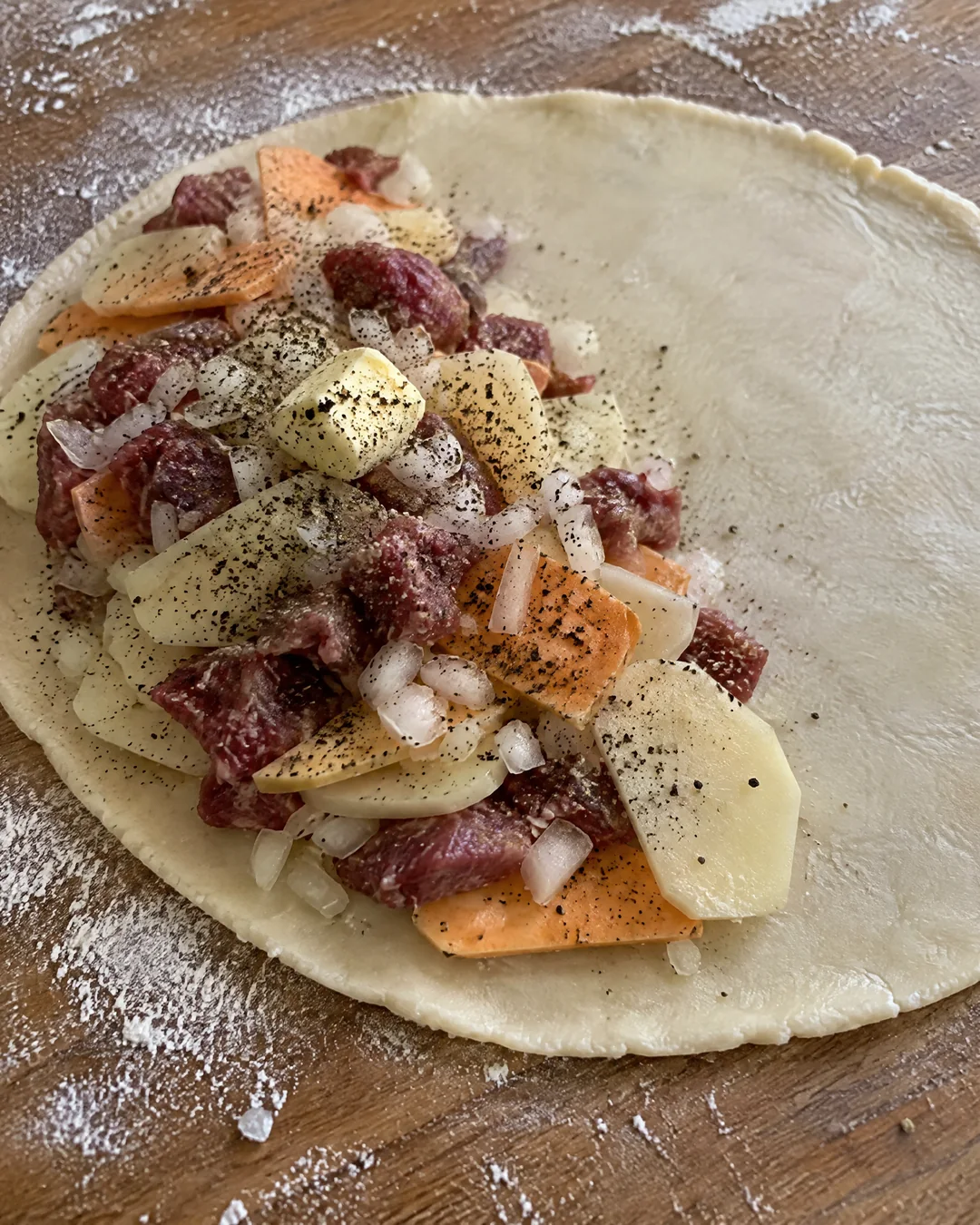
- Brush the border with water. Fold the empty half over the filling into a half moon and press the edges together firmly.
- To crimp, start at one corner. Pinch the edge between your thumb and finger, fold it over onto itself, and press down. Move along a little and repeat, fold after fold, so the edge looks like a twisted rope. Tuck the last corner under. A tight crimp is what stops the pasty opening in the oven.
- Set the pasties on the baking sheet, brush all over with the egg wash and cut a small slit in the top of each.
Bake
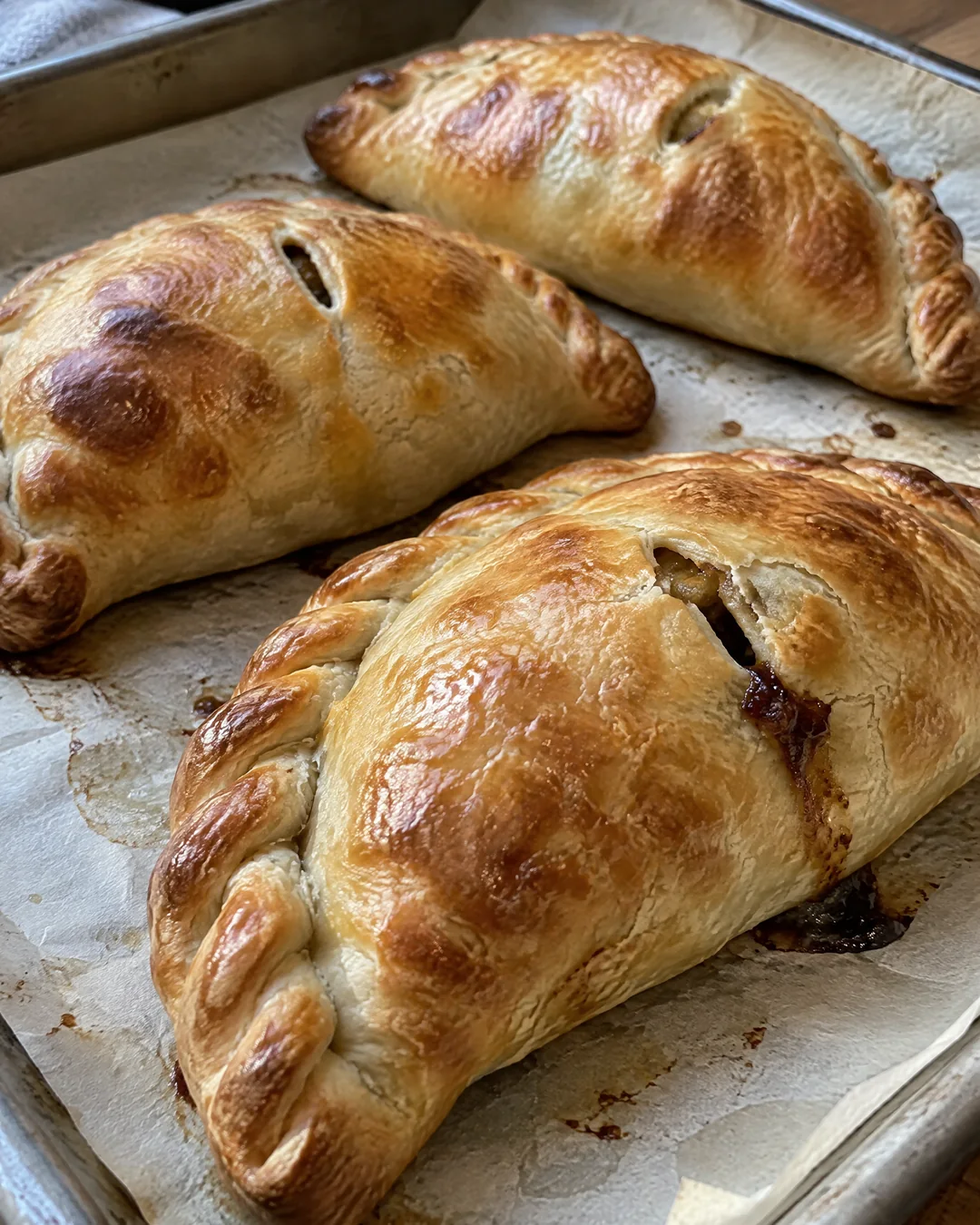
- Bake 20 minutes at 400 degrees, then lower the oven to 350 degrees (175°C) and bake another 30 to 35 minutes, until the pastry is deep golden and a skewer pushed through the slit slides easily into tender potato.
- Rest the pasties on the sheet for 10 minutes before eating. The filling inside is very hot.
Tips that make the difference
- Keep the pastry cold until the moment you roll it. Warm pastry tears under the weight of a raw filling.
- Do not overfill. A pasty that is packed too tight splits along the crimp as the filling steams.
- If you are new to crimping, a fork pressed along the edge seals it too. It is not traditional, but it will not leak.
- Check doneness on the potato, not the pastry. When a skewer slides through the potato easily, the beef is tender too.
Variations
- Smaller pasties. Roll 8 circles of 6 inches (15cm) and bake about 35 to 40 minutes in all for a picnic size.
- Lamb. Use diced lamb shoulder in place of beef for a richer pasty.
- Vegetable. Leave out the beef and add diced carrot and a little grated cheddar with the vegetables.
- With gravy. Serve with a jug of hot beef gravy on the side for supper rather than lunch.
Storage and make-ahead
Cool leftover pasties completely, wrap and refrigerate for up to 3 days. Reheat on a baking sheet at 350 degrees for about 20 minutes so the pastry crisps again; the microwave makes it soft.
Baked pasties freeze well for up to 3 months. Reheat from frozen at 350 degrees for 35 to 40 minutes.
You can also freeze them unbaked. Bake from frozen at 400 degrees for 25 minutes, then 350 degrees for about 40 minutes more.
Frequently asked questions
How do you crimp a Cornish pasty so it doesn’t open?
Press the edges together firmly first, then starting at one corner, pinch a small piece of the edge, fold it over on itself and press it down. Repeat all the way along to make a rope-like edge and tuck the last corner under. Brushing the edge with water before folding helps the two layers stick.
What is swede?
Swede is the British name for rutabaga, a large round root vegetable with yellow flesh. In Cornwall it is sometimes called turnip. It gives the pasty its mild sweetness. Use rutabaga, or white turnip if you cannot find it.
Should the filling be cooked first?
No. A traditional Cornish pasty uses raw beef and raw vegetables. They cook inside the sealed pastry and make their own gravy, which is the whole point.
Why is the crimp on the side?
Pasties from Cornwall are crimped along the side, not over the top. Pasties crimped across the top are the style from Devon, next door, and the two counties are proud of the difference.
Cut the beef small, slice the vegetables thin, crimp it tight and leave the rest to the oven. Eat the crust or hand it back. Margaret will not judge you either way.
Traditional Cornish Pasty (Beef, Potato, Swede and Onion)
A traditional Cornish pasty: raw diced beef, potato, swede (rutabaga) and onion seasoned with salt and pepper, sealed in sturdy shortcrust pastry with a crimped side edge and baked at 400 then 350 degrees until golden. US cups with grams.
Ingredients
- 4 cups all-purpose flour (500g), plus more for rolling
- 1 teaspoon fine salt
- 1 cup cold unsalted butter, cut in pieces
- 1/4 cup vegetable shortening, cold
- 2/3 to 3/4 cup ice water
- 1 pound beef skirt or chuck steak (450g), trimmed and cut in 1/2 inch pieces
- 2 medium potatoes, peeled
- 1 small swede
- 1 medium onion
- 1 1/2 teaspoons fine salt
- 1 1/2 teaspoons freshly ground black pepper
- 2 tablespoons unsalted butter (28g), cut in 4 pieces
- 1 large egg, beaten with 1 tablespoon milk
Instructions
- Whisk the flour and salt in a large bowl. Rub in the butter and shortening with your fingertips until the mixture looks like coarse crumbs with a few pea-sized pieces left.
- Sprinkle in most of the ice water and mix with a fork, then your hand, adding the rest only if needed, until it forms a firm dough. Knead it on the counter for 1 minute until smooth; a pasty pastry should be a little stronger than a pie crust.
- Divide it into 4 pieces, flatten each into a disk, wrap and chill for at least 30 minutes.
- Slice the potatoes and swede into thin, irregular flakes about 1/8 inch thick, and chop the onion. Keep everything separate. Season the beef with half the salt and pepper.
- Heat the oven to 400 degrees (200°C) and line a large baking sheet with parchment.
- Roll each piece of pastry into a circle about 9 inches (23cm) across, using a plate as a guide.
- On one half of each circle, leaving a 1 inch border, layer some potato and swede, season with salt and pepper, then onion, then a quarter of the beef, then a little more potato. Put a piece of butter on top.
- Brush the border with water. Fold the empty half over the filling into a half moon and press the edges together firmly.
- To crimp, start at one corner. Pinch the edge between your thumb and finger, fold it over onto itself, and press down. Move along a little and repeat, fold after fold, so the edge looks like a twisted rope. Tuck the last corner under. A tight crimp is what stops the pasty opening in the oven.
- Set the pasties on the baking sheet, brush all over with the egg wash and cut a small slit in the top of each.
- Bake 20 minutes at 400 degrees, then lower the oven to 350 degrees (175°C) and bake another 30 to 35 minutes, until the pastry is deep golden and a skewer pushed through the slit slides easily into tender potato.
- Rest the pasties on the sheet for 10 minutes before eating. The filling inside is very hot.