In this article
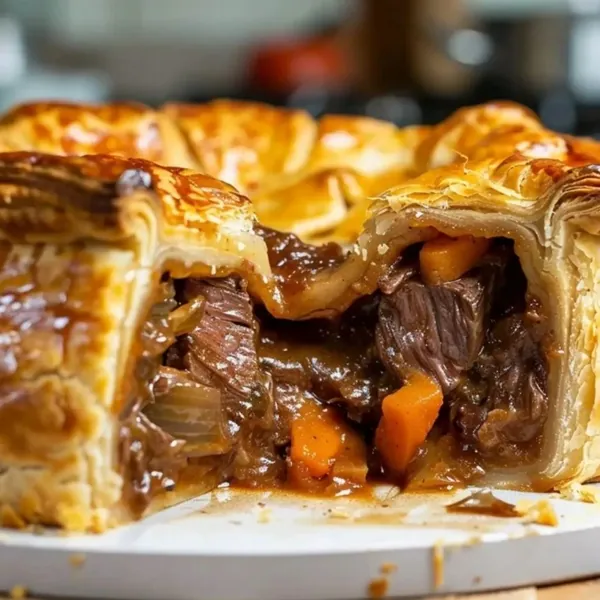
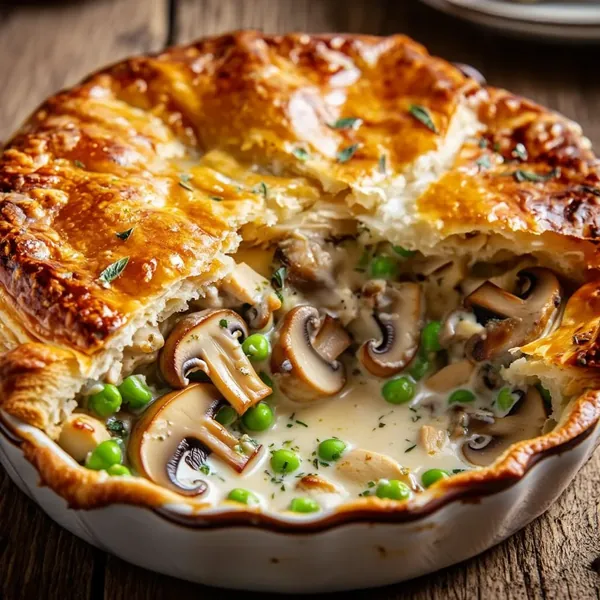
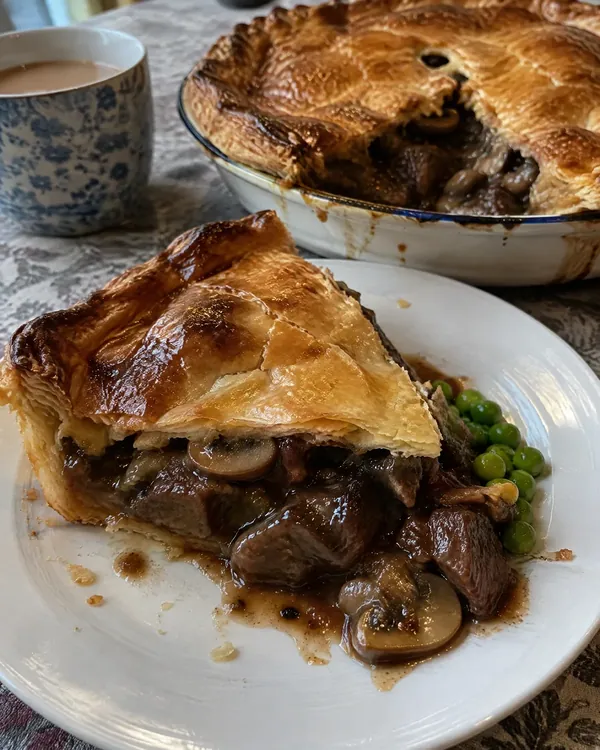
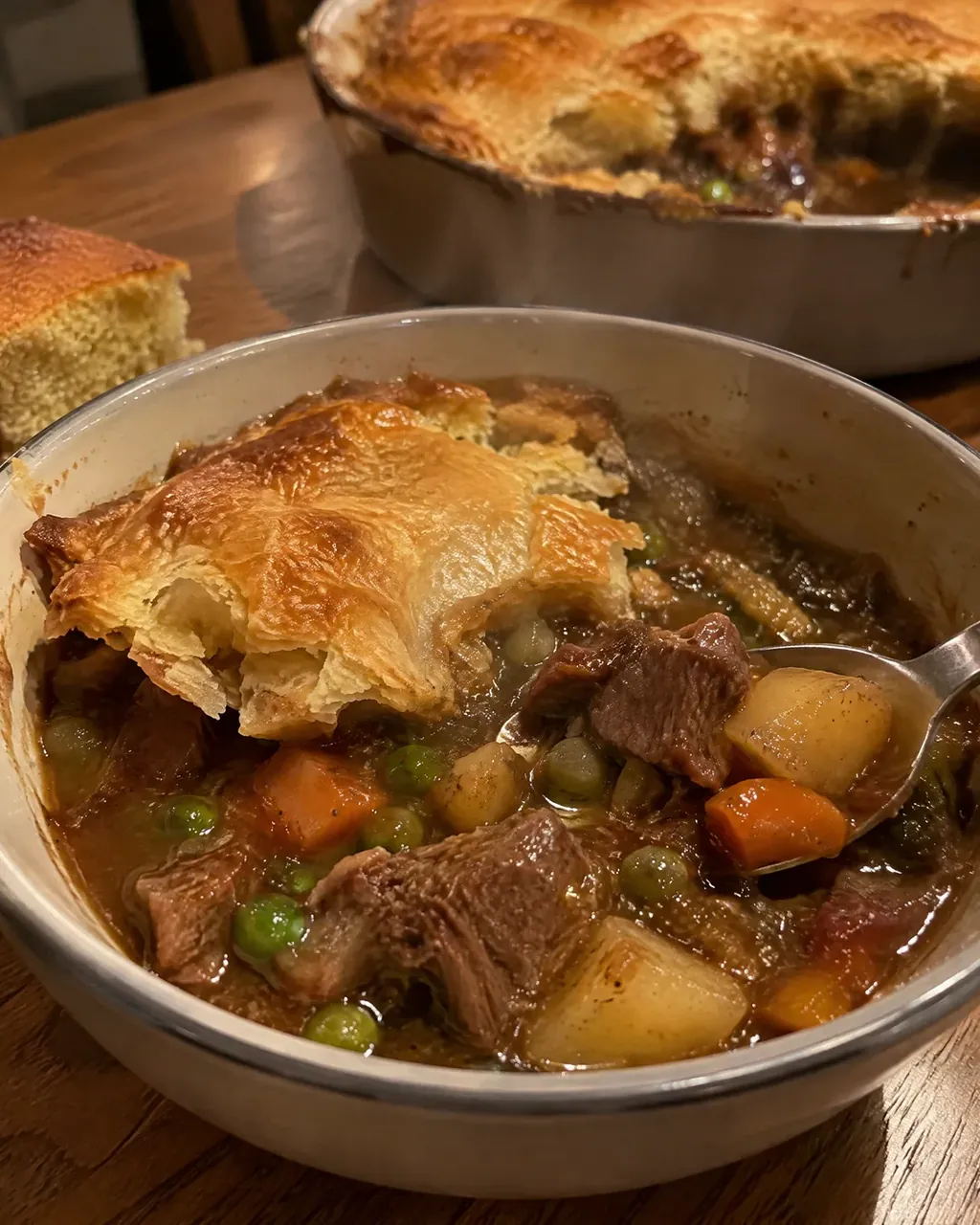
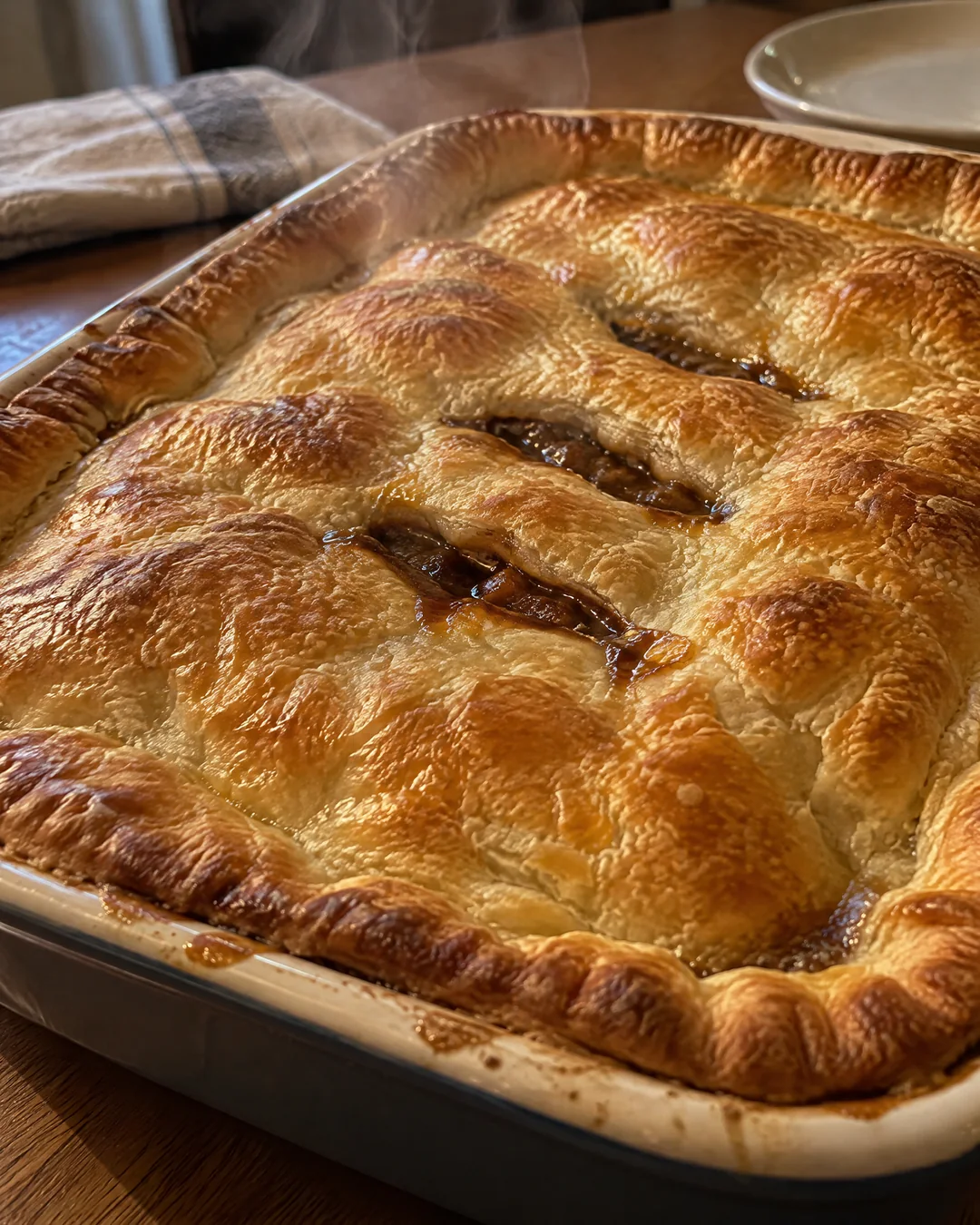
My mother said a pot pie with a bottom crust was a pot pie with a wet bottom crust, and she never made one in her life. Hers had one crust, on top, flaky and golden and puffed, laid over a thick beef stew in a deep baking dish. On the first cold night of every fall my father asked for it by name. She broke the crust at the table with a big spoon, and the steam came up like a kettle. Underneath were tender chunks of beef, carrots, potatoes and green peas in a dark, glossy gravy, and everybody fought politely for the pieces of crust that had soaked a little of it up.
A good beef pot pie is really two things done well. The first is the stew, and the stew is only as good as the browning. Chuck cut in chunks and dried, browned hard in batches without crowding, so every side goes dark. That crust on the meat is where the gravy gets its color and its depth. The second is the gravy’s thickness. It must be thick enough to coat the back of a spoon and leave a clean line when you draw a finger through it. A thin gravy boils up through the crust and makes it sink and turn soggy. Let the filling cool a little, lay the cold pastry over it, and the crust bakes up tall and flaky.
Why this beef pot pie works
- Hard browning. Dark-browned beef gives a deep brown gravy with no packet and no shortcut.
- Chuck, simmered slowly. Chuck turns fork-tender and juicy after a long gentle simmer, where leaner cuts go dry.
- A thick gravy. A gravy that coats a spoon holds the crust up instead of soaking it.
- Top crust only. No bottom crust means nothing soggy, and the crust can bake crisp from the steam below.
- Slightly cooled filling. Pastry laid on a filling that is no longer boiling keeps its butter cold until the oven puffs it.
Ingredients
Serves 6 from a 9x13 inch or 3 quart (about 3 liter) baking dish. The measurements are in US cups with grams and milliliters in brackets.
For the filling
- 2 1/2 pounds boneless beef chuck (1.1kg), cut in 1 1/2 inch pieces
- 1 1/2 teaspoons fine salt, plus more to taste
- 1 teaspoon black pepper
- 3 tablespoons vegetable oil (45ml)
- 2 tablespoons unsalted butter (28g)
- 2 medium onions, chopped (about 300g)
- 3 cloves garlic, minced
- 1/3 cup all-purpose flour (42g)
- 1 tablespoon tomato paste
- 4 cups beef broth (960ml)
- 1 teaspoon dried thyme
- 2 bay leaves
- 1 tablespoon Worcestershire-style steak sauce or soy sauce
- 3 medium carrots, sliced thick (about 250g)
- 3 medium potatoes, peeled and cut in 1 inch cubes (about 500g)
- 1 cup frozen green peas (140g)
For the top crust
- 1 1/2 cups all-purpose flour (190g)
- 1/2 teaspoon fine salt
- 1/2 cup plus 2 tablespoons cold unsalted butter, cut in cubes (140g)
- 4 to 6 tablespoons ice water (60 to 90ml)
- 1 large egg, beaten with 1 tablespoon milk
Choose chuck with good marbling. It is the cut that becomes tender after a slow simmer. A good beef broth matters here, since it is most of the gravy.
How to make beef pot pie
Make the crust
- Whisk the flour and salt. Cut or rub in the cold butter until the pieces are the size of small peas. Sprinkle in the ice water a spoon at a time, mixing with a fork, until the dough holds together when squeezed. Press into a flat rectangle, wrap and chill at least 1 hour.
Make the stew filling
- Pat the beef very dry with paper towels and season it with the salt and pepper.
- Heat the oil in a large heavy pot over medium-high heat. Brown the beef in 3 batches, without crowding, turning only when each side is deep brown, about 8 minutes a batch. Move the browned beef to a plate.
- Lower the heat to medium, add the butter and onions to the pot and cook, scraping up the brown bits, until soft and golden, about 6 minutes. Stir in the garlic and tomato paste for 1 minute.
- Sprinkle in the flour and stir for 2 minutes. Pour in the broth slowly, stirring and scraping the bottom, until smooth. Add the thyme, bay leaves, steak sauce and the beef with its juices.
- Bring to a boil, then cover and simmer on low for 1 1/2 hours, stirring now and then, until the beef is nearly tender.
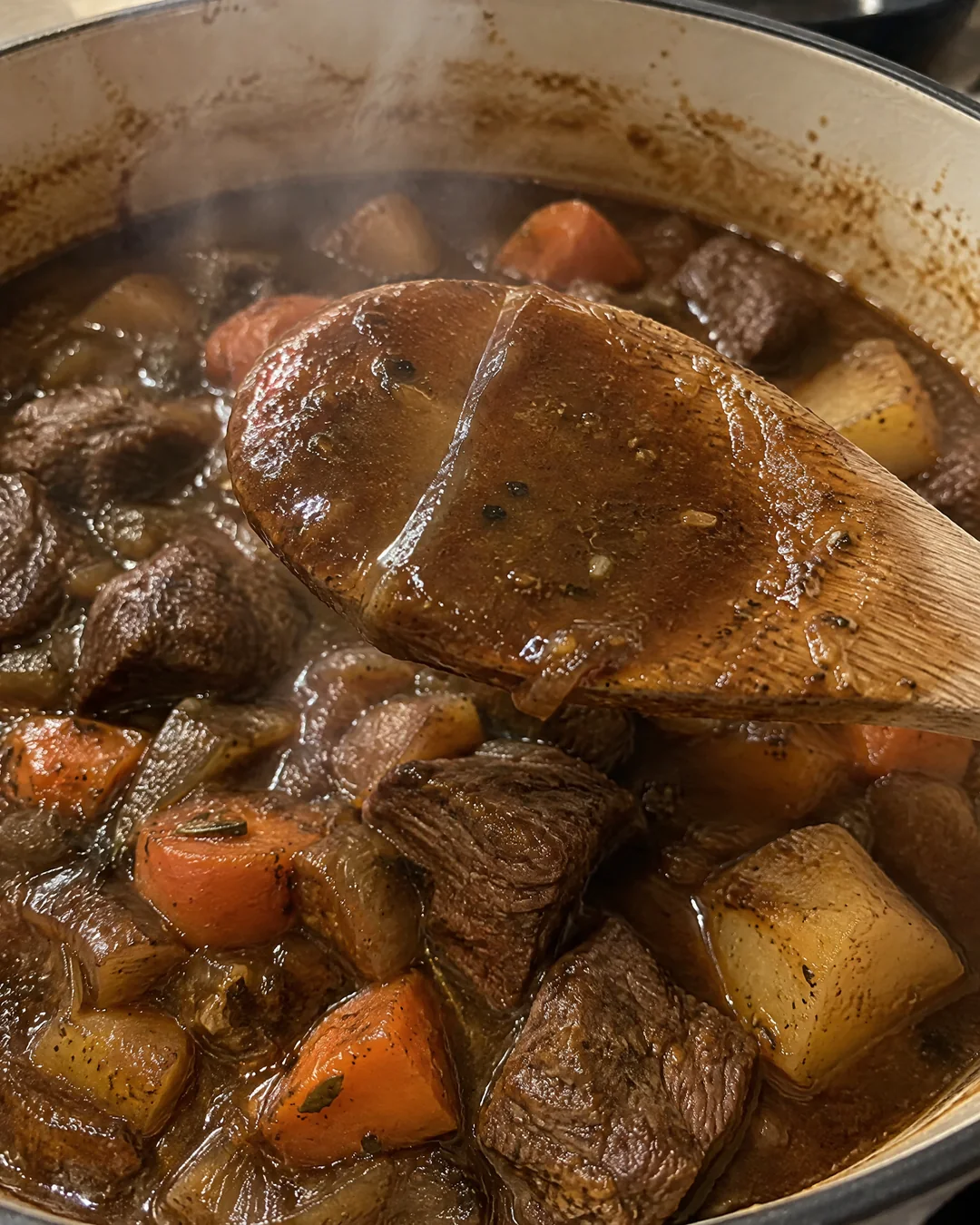
- Add the carrots and potatoes and simmer uncovered 25 to 30 minutes more, until the vegetables are tender and a fork slides through the beef.
- Check the gravy. It must coat the back of a spoon thickly and hold a clean line when you draw a finger across it. If it is thin, simmer uncovered a few minutes more, or stir in 1 tablespoon flour mashed with 1 tablespoon soft butter and simmer 3 minutes.
- Take out the bay leaves, stir in the frozen peas and taste for salt. Pour the filling into the baking dish and let it cool for 20 to 30 minutes, until it is warm but no longer bubbling.
Top and bake
- Heat the oven to 400 degrees (200°C). Roll the crust on a floured counter a little larger than the dish.
- Lay the crust over the filling, trim it to leave a 1 inch overhang, fold the edge under and press it to the rim of the dish. Cut three slits in the middle. Brush with the egg wash.
- Set the dish on a baking sheet and bake 30 to 35 minutes, until the crust is deep golden and puffed and the gravy bubbles at the slits. Rest 10 minutes before serving.
Tips that make the difference
- Dry the beef before browning. Wet meat steams grey instead of browning dark.
- Never crowd the pot while browning. Three batches is the difference between a brown gravy and a pale one.
- Do the spoon test before the crust goes on. A gravy that runs off the spoon will soak and sink the crust.
- Add the peas at the very end, straight from frozen. They cook in the oven and stay bright green.
Variations
- Store-bought crust. Use one refrigerated pie crust or a sheet of puff pastry for the top.
- Biscuit top. Drop rounds of buttermilk biscuit dough over the hot filling instead of pastry and bake until golden.
- Individual pies. Divide the filling among 6 oven-safe bowls, top each with a circle of crust and bake 25 minutes.
Storage and make-ahead
Cover and refrigerate leftovers for up to 4 days. Reheat portions at 350 degrees (175°C) for about 20 minutes so the crust crisps again.
Freeze the cooled filling for up to 3 months. Thaw overnight in the refrigerator, warm it, pour into the dish and top with fresh pastry.
Frequently asked questions
How thick should the gravy be for a pot pie?
Thick enough to coat the back of a spoon in a heavy layer and hold a clean line when you run your finger through it. If it runs off the spoon, simmer it uncovered a few more minutes or whisk in a little flour and butter paste. A thin gravy boils up through the crust and makes it soggy.
Why doesn’t this pot pie have a bottom crust?
A bottom crust sits in the gravy and never crisps. With a top crust only, all the pastry bakes flaky and golden, and the filling stays a true stew.
What cut of beef is best for pot pie?
Boneless chuck. It has enough fat and connective tissue to become tender and juicy after a long simmer. Lean cuts like sirloin turn dry and tough.
Brown the beef dark, thicken the gravy until it coats the spoon, and give it one crust, on top. Then break it at the table and let the steam do the talking.
Old-Fashioned Beef Pot Pie with One Golden Top Crust
Homemade beef pot pie: chuck browned hard and simmered in a thick brown gravy with onion, carrots, potatoes and peas, cooled slightly and baked under a flaky all-butter top crust at 400 degrees until deep golden. US cups with grams.
Ingredients
- 2 1/2 pounds boneless beef chuck (1.1kg), cut in 1 1/2 inch pieces
- 1 1/2 teaspoons fine salt, plus more to taste
- 1 teaspoon black pepper
- 3 tablespoons vegetable oil
- 2 tablespoons unsalted butter
- 2 medium onions, chopped
- 3 cloves garlic, minced
- 1/3 cup all-purpose flour
- 1 tablespoon tomato paste
- 4 cups beef broth
- 1 teaspoon dried thyme
- 2 bay leaves
- 1 tablespoon Worcestershire-style steak sauce or soy sauce
- 3 medium carrots, sliced thick
- 3 medium potatoes, peeled and cut in 1 inch cubes
- 1 cup frozen green peas
- 1 1/2 cups all-purpose flour
- 1/2 teaspoon fine salt
- 1/2 cup plus 2 tablespoons cold unsalted butter, cut in cubes
- 4 to 6 tablespoons ice water
- 1 large egg, beaten with 1 tablespoon milk
Instructions
- Whisk the flour and salt. Cut or rub in the cold butter until the pieces are the size of small peas. Sprinkle in the ice water a spoon at a time, mixing with a fork, until the dough holds together when squeezed. Press into a flat rectangle, wrap and chill at least 1 hour.
- Pat the beef very dry with paper towels and season it with the salt and pepper.
- Heat the oil in a large heavy pot over medium-high heat. Brown the beef in 3 batches, without crowding, turning only when each side is deep brown, about 8 minutes a batch. Move the browned beef to a plate.
- Lower the heat to medium, add the butter and onions to the pot and cook, scraping up the brown bits, until soft and golden, about 6 minutes. Stir in the garlic and tomato paste for 1 minute.
- Sprinkle in the flour and stir for 2 minutes. Pour in the broth slowly, stirring and scraping the bottom, until smooth. Add the thyme, bay leaves, steak sauce and the beef with its juices.
- Bring to a boil, then cover and simmer on low for 1 1/2 hours, stirring now and then, until the beef is nearly tender.
- Add the carrots and potatoes and simmer uncovered 25 to 30 minutes more, until the vegetables are tender and a fork slides through the beef.
- Check the gravy. It must coat the back of a spoon thickly and hold a clean line when you draw a finger across it. If it is thin, simmer uncovered a few minutes more, or stir in 1 tablespoon flour mashed with 1 tablespoon soft butter and simmer 3 minutes.
- Take out the bay leaves, stir in the frozen peas and taste for salt. Pour the filling into the baking dish and let it cool for 20 to 30 minutes, until it is warm but no longer bubbling.
- Heat the oven to 400 degrees (200°C). Roll the crust on a floured counter a little larger than the dish.
- Lay the crust over the filling, trim it to leave a 1 inch overhang, fold the edge under and press it to the rim of the dish. Cut three slits in the middle. Brush with the egg wash.
- Set the dish on a baking sheet and bake 30 to 35 minutes, until the crust is deep golden and puffed and the gravy bubbles at the slits. Rest 10 minutes before serving.