In this article
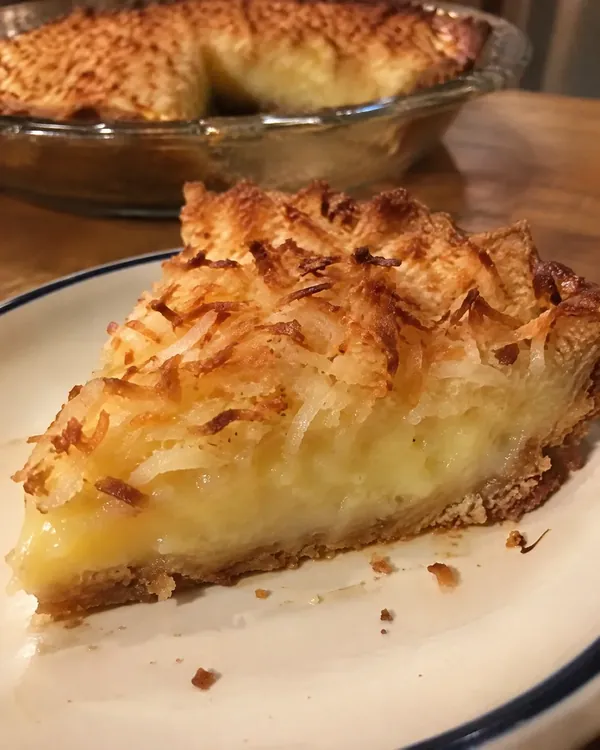
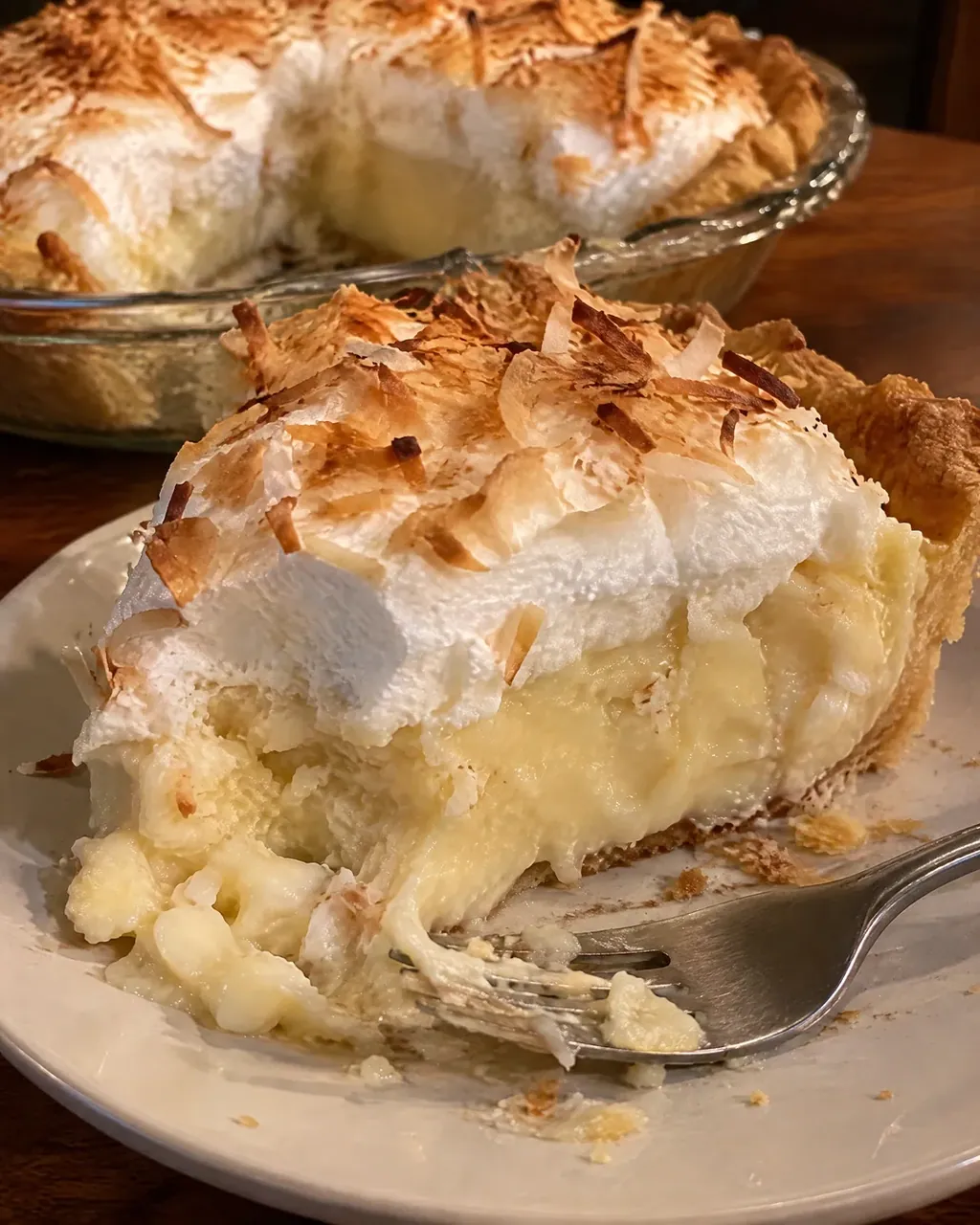
A man sitting at the diner counter next to my mother once looked at the coconut cream pie in the glass case and said nobody made that pie from scratch anymore. My mother told him she made one every week, and he did not believe her. The next week she brought him a slice wrapped in a napkin. Coconut cream pie is a crisp golden crust, a thick cold coconut custard cooked on the stove, and a meringue piled high and browned, with toasted coconut scattered over the peaks.
Two things go wrong with cream pies at home. The meringue weeps, leaving beads of syrup on top and a watery layer underneath, and the custard runs out across the plate when you cut it. Both have simple fixes. The custard has to be cooked until it truly boils, so the cornstarch sets. The meringue has to go onto hot filling and be sealed to the crust all the way around. And the pie has to chill properly before the knife goes in. Here is how to keep the meringue from weeping and the custard from running when you cut it.
Why this coconut cream pie works
- A fully baked crust. Blind baking makes the bottom crisp before the wet filling goes in.
- Custard boiled for one full minute. Cornstarch only thickens properly once it reaches a boil; underdone custard runs.
- Yolks for the custard, whites for the meringue. One set of eggs makes the whole pie.
- Meringue on hot filling. The heat cooks the underside of the meringue so it does not weep a watery layer.
- Sealed to the crust. Meringue spread to touch the crust all the way around does not shrink or slide.
Ingredients
Makes one 9 inch pie, 8 slices. The measurements are in US cups with grams in brackets.
For the crust
- 1 unbaked 9 inch pie crust, homemade or store-bought, fitted into the pie plate
For the coconut custard
- 2/3 cup granulated sugar (135g)
- 1/4 cup cornstarch (32g)
- 1/4 teaspoon fine salt
- 3 cups whole milk (720ml)
- 4 large egg yolks (save the whites)
- 2 tablespoons butter (30g)
- 1 1/2 teaspoons vanilla extract
- 1 1/4 cups sweetened shredded coconut (100g)
For the meringue
- 4 large egg whites, at room temperature
- 1/4 teaspoon cream of tartar
- 1/2 cup granulated sugar (100g)
- 1/2 teaspoon vanilla extract
- 1/3 cup sweetened shredded coconut (25g), for the top
Whole milk gives the richest custard. Do not use reduced fat milk or the filling will be thin. Separate the eggs while they are cold, then let the whites warm up for 30 minutes so they whip higher.
How to make coconut cream pie
Bake the crust
- Heat the oven to 400 degrees (200°C). Prick the crust all over with a fork, line it with parchment and fill it with pie weights or dried beans.
- Bake for 15 minutes, lift out the parchment and weights, and bake 8 to 10 minutes more, until golden all over. Lower the oven to 350 degrees (175°C).
Make the filling and meringue
- Toast the 1/3 cup coconut for the top in a dry skillet over medium-low heat, stirring, until golden. Set aside.
- In a heavy saucepan, whisk the sugar, cornstarch and salt. Whisk in the milk and egg yolks until smooth.
- Cook over medium heat, whisking constantly and scraping the bottom, until the mixture thickens and comes to a boil. Let it bubble for one full minute, still whisking. It should be as thick as pudding.
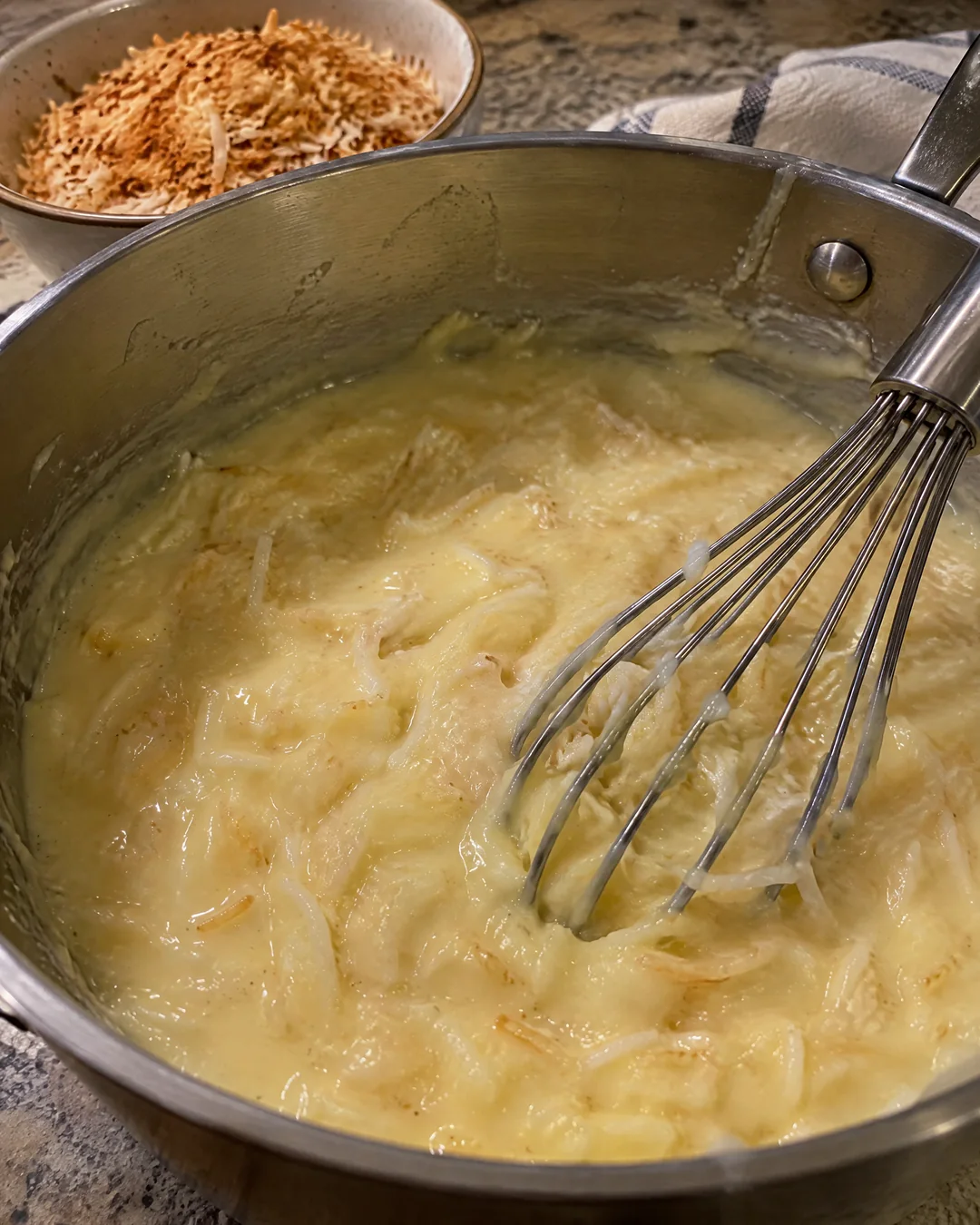
- Take it off the heat and stir in the butter, vanilla and shredded coconut. Cover the pan to keep the filling hot while you make the meringue.
- Beat the egg whites and cream of tartar with a mixer on medium until foamy. Raise the speed and add the sugar one spoonful at a time, then the vanilla, and beat until the meringue is stiff and glossy and the sugar has dissolved.
- Pour the hot filling into the baked crust and smooth the top.
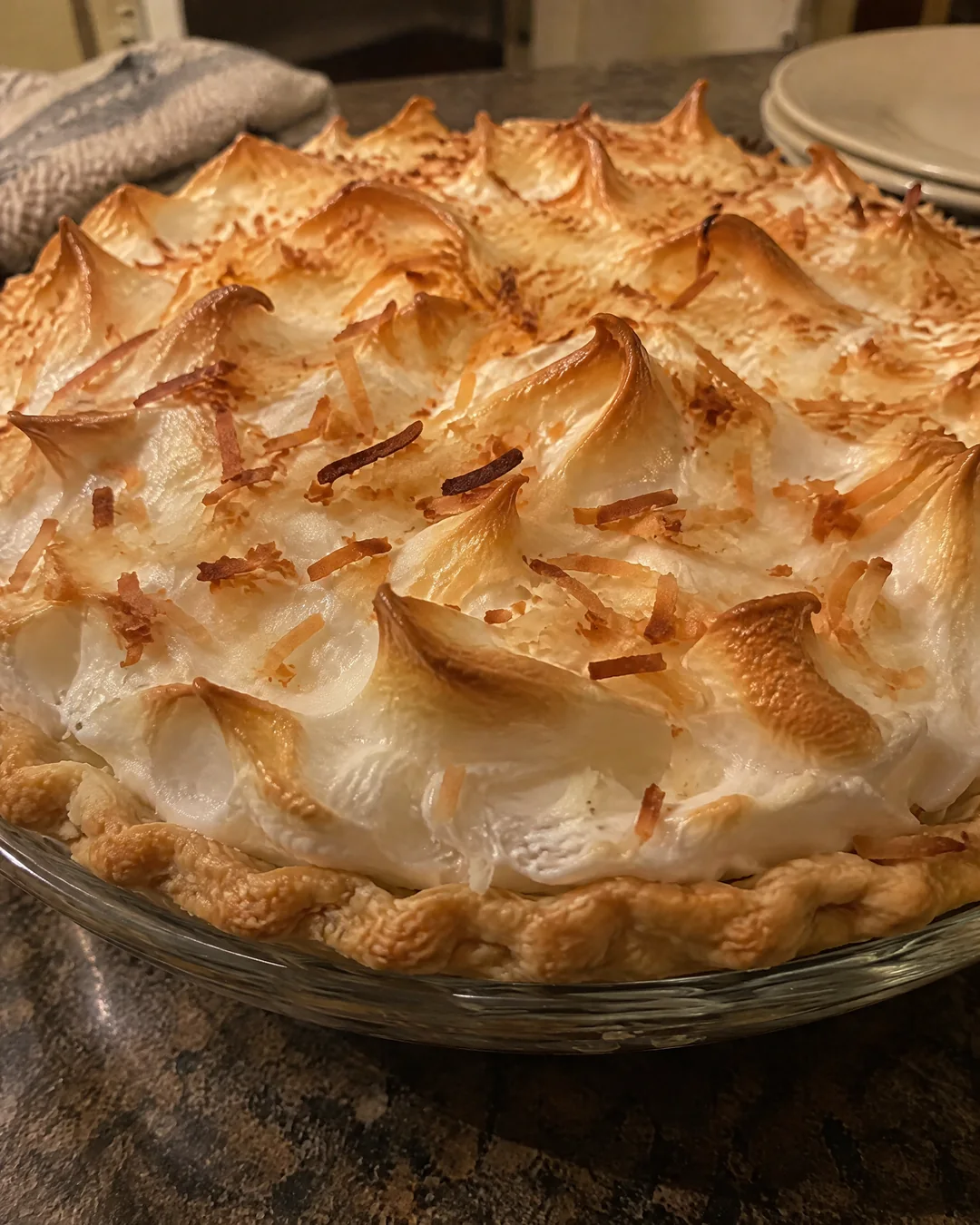
- Spoon the meringue over the hot filling, starting at the edges. Spread it so it touches the crust all the way around, then pile the rest in the middle and lift it into peaks with the back of the spoon. Sprinkle with the toasted coconut.
- Bake for 12 to 15 minutes, until the meringue peaks are golden brown.
- Cool the pie on a rack at room temperature for 1 hour, then refrigerate for at least 3 hours before slicing.
Tips that make the difference
- Use a clean, dry bowl for the whites. A speck of yolk or grease stops them from whipping.
- Make the meringue on a dry day if you can. Humidity is the other cause of weeping.
- Cut with a sharp knife dipped in hot water and wiped between slices.
- Do not cover the pie tightly while it chills; plastic wrap pulls the meringue off.
Variations
- Whipped cream top. Skip the meringue, chill the pie with plastic wrap pressed onto the filling, and top it with sweetened whipped cream and toasted coconut.
- Banana coconut. Layer one sliced banana in the crust before the filling.
- Graham crust. Use a baked graham cracker crust instead of pastry.
- Extra coconut. Replace 1 cup of the milk with canned coconut milk for a stronger flavor.
Storage and make-ahead
Keep the pie in the refrigerator, loosely covered, for up to 2 days. Meringue pies are best on the day they are made.
The baked crust can be made a day ahead and kept at room temperature, covered.
Coconut cream pie does not freeze well; the custard and meringue weep when thawed.
Frequently asked questions
Why does my meringue weep?
The filling was cool when the meringue went on, the sugar was not dissolved, or the day was humid. Spread meringue on hot filling and beat until no grains of sugar remain.
Why is my coconut cream pie runny?
The custard did not boil long enough or the pie was not chilled long enough. Boil it for one full minute and chill for at least 3 hours.
Can I make it the day before?
The custard and crust, yes. For the best meringue, bake the pie the morning of the day you serve it.
How do I get clean slices?
Chill it well and use a hot, wet knife, wiping it clean after every cut.
Make one, wrap a slice in a napkin, and take it to whoever told you nobody bakes like that anymore.
Old-Fashioned Coconut Cream Pie with Tall Meringue (No Weeping, Clean Slices)
Diner-style coconut cream pie from scratch: a blind-baked crust, a thick stovetop coconut custard made with milk and egg yolks, and a tall meringue sealed to the crust and topped with toasted coconut.
Ingredients
- 1 unbaked 9 inch pie crust, homemade or store-bought, fitted into the pie plate
- 2/3 cup granulated sugar
- 1/4 cup cornstarch
- 1/4 teaspoon fine salt
- 3 cups whole milk
- 4 large egg yolks
- 2 tablespoons butter
- 1 1/2 teaspoons vanilla extract
- 1 1/4 cups sweetened shredded coconut
- 4 large egg whites, at room temperature
- 1/4 teaspoon cream of tartar
- 1/2 cup granulated sugar
- 1/2 teaspoon vanilla extract
- 1/3 cup sweetened shredded coconut (25g), for the top
Instructions
- Heat the oven to 400 degrees (200°C). Prick the crust all over with a fork, line it with parchment and fill it with pie weights or dried beans.
- Bake for 15 minutes, lift out the parchment and weights, and bake 8 to 10 minutes more, until golden all over. Lower the oven to 350 degrees (175°C).
- Toast the 1/3 cup coconut for the top in a dry skillet over medium-low heat, stirring, until golden. Set aside.
- In a heavy saucepan, whisk the sugar, cornstarch and salt. Whisk in the milk and egg yolks until smooth.
- Cook over medium heat, whisking constantly and scraping the bottom, until the mixture thickens and comes to a boil. Let it bubble for one full minute, still whisking. It should be as thick as pudding.
- Take it off the heat and stir in the butter, vanilla and shredded coconut. Cover the pan to keep the filling hot while you make the meringue.
- Beat the egg whites and cream of tartar with a mixer on medium until foamy. Raise the speed and add the sugar one spoonful at a time, then the vanilla, and beat until the meringue is stiff and glossy and the sugar has dissolved.
- Pour the hot filling into the baked crust and smooth the top.
- Spoon the meringue over the hot filling, starting at the edges. Spread it so it touches the crust all the way around, then pile the rest in the middle and lift it into peaks with the back of the spoon. Sprinkle with the toasted coconut.
- Bake for 12 to 15 minutes, until the meringue peaks are golden brown.
- Cool the pie on a rack at room temperature for 1 hour, then refrigerate for at least 3 hours before slicing.