In this article
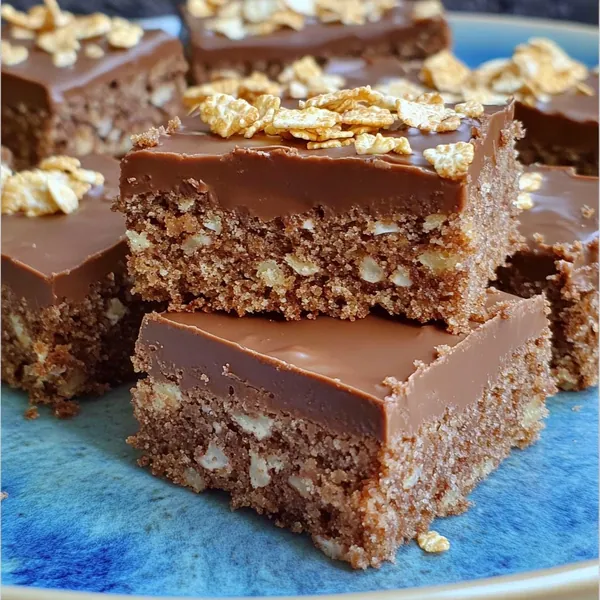
Every British baker starts somewhere, and for most of us it was this: a chocolate cornflake traybake, made standing on a chair at a parent’s elbow, licking the spoon before the tray was anywhere near the fridge. Chocolate, butter and golden syrup melted together, cornflakes folded through until every flake is coated, the lot pressed into a tin and cut into squares once it sets.
It’s a three-ingredient recipe, and that’s exactly why it’s worth writing down properly. With nothing to hide behind, the details decide everything: the ratio of chocolate to cornflakes (too much and it’s a slab, too little and it crumbles), which chocolate to use, how firmly to press, and how to melt everything without the chocolate seizing. Get those right and you get glossy, snappy squares that hold together and still crunch – not the greasy, bendy version that’s given cornflake cakes a bad name at many a bake sale.
What is a chocolate cornflake traybake?
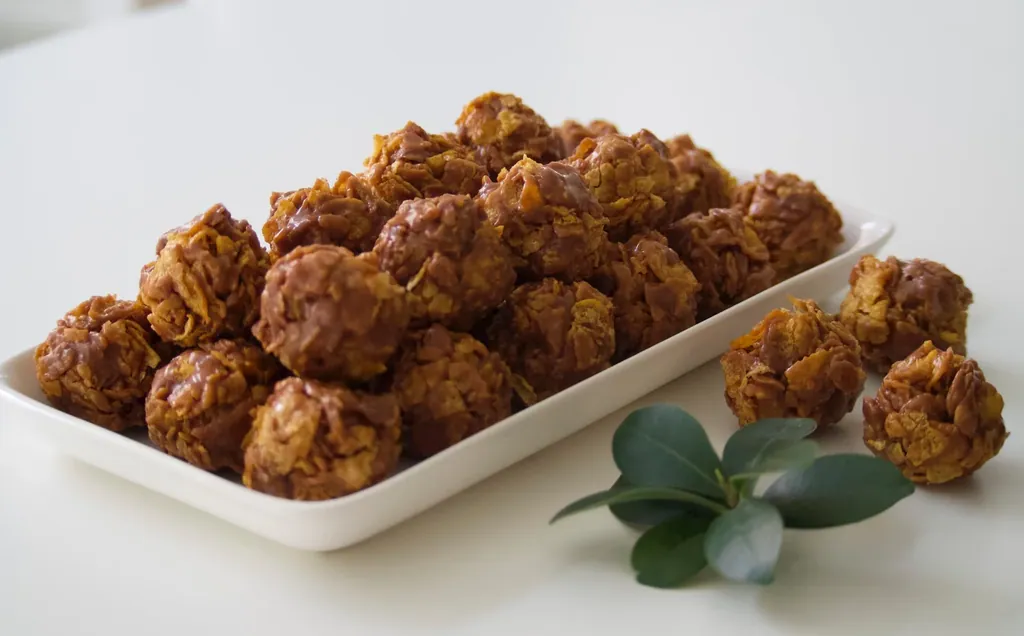
A chocolate cornflake traybake – also called cornflake cake, chocolate cornflake cake, or just cornflake crunch – is a no-bake British treat: cornflakes bound in a melted mixture of chocolate, butter and golden syrup, set in a tray and cut into squares. Made in individual paper cases it becomes the cornflake cakes of childhood birthday parties and Easter nests; made in a tray it’s a proper cut-and-come-again bake.
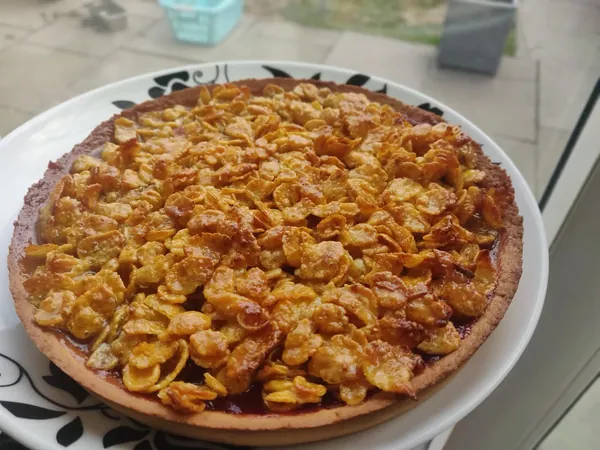
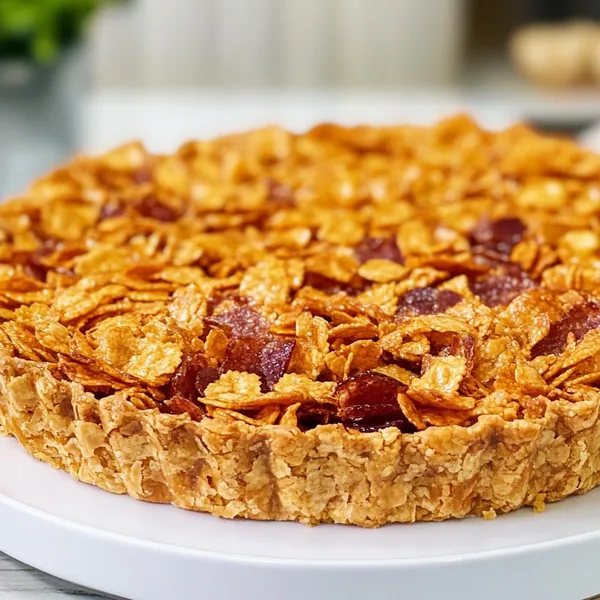
It’s worth separating it from two close relatives, because the search for one often turns up the other. A cornflake tart is a different school-dinner pudding entirely – jam and syrup-bound cornflakes in a pastry case. And the school-dinner cornflake cake – the one served in a pool of custard on a Formica tray – was usually made with cocoa powder, butter, sugar and syrup rather than melted chocolate bars. That version is in the variations below, custard and all.
Chocolate cornflake cakes have been a fixture of British childhood since at least the 1950s, when Kellogg’s printed the recipe on the side of the box. They’ve never really needed improving – just remembering.
Why this recipe works
- Two parts chocolate to one part cornflakes by weight. 300g of chocolate to 150g of cornflakes sounds like a lot, but cornflakes are nearly weightless – this is the ratio that coats every flake and still sets firm enough to slice cleanly.
- Butter and golden syrup keep it sliceable. Chocolate alone sets rock-hard and shatters when you cut it. Butter softens the set; golden syrup adds chew and that toffee-ish edge – and stops the squares crumbling when you bite them.
- Half milk, half dark chocolate. All milk is toothachingly sweet next to the syrup; all dark loses the nostalgia. Half and half tastes like the childhood version, just better.
- Melt gently, off the boil. Chocolate that gets too hot seizes into a grainy paste or blooms grey as it sets. A bowl over barely simmering water – or short bursts in the microwave – keeps it glossy.
- Press firmly, then chill. A loose press makes crumbly squares. Pack the mixture down hard with the back of a spoon and give it a full hour in the fridge before cutting.
Ingredients
For a 20cm square tin (16 squares):
- 150g milk chocolate, roughly chopped
- 150g dark chocolate (around 50–55% cocoa), roughly chopped
- 100g unsalted butter
- 3 tablespoons golden syrup (about 65g)
- 150g cornflakes
- A pinch of fine sea salt
On chocolate: supermarket own-brand bars are absolutely fine here – this is not the place for expensive single-origin chocolate. What matters is the milk–dark split. Chocolate chips work but melt less smoothly than chopped bars.
On cornflakes: fresh ones. A box that’s been open for a month has already gone soft, and no amount of chocolate brings the crunch back.
How to make a chocolate cornflake traybake
1. Line the tin
Line a 20cm square tin with baking parchment, leaving some overhanging the sides so you can lift the whole slab out later. No need to grease it.
2. Melt the chocolate mixture
Put the chopped chocolate, butter and golden syrup in a heatproof bowl set over a pan of barely simmering water – the bowl shouldn’t touch the water. Stir now and then until smooth and glossy, then take it off the heat and stir in the salt. (Microwave method: 30-second bursts on medium, stirring between each, stopping while a few lumps remain – the residual heat melts them.)
3. Fold in the cornflakes
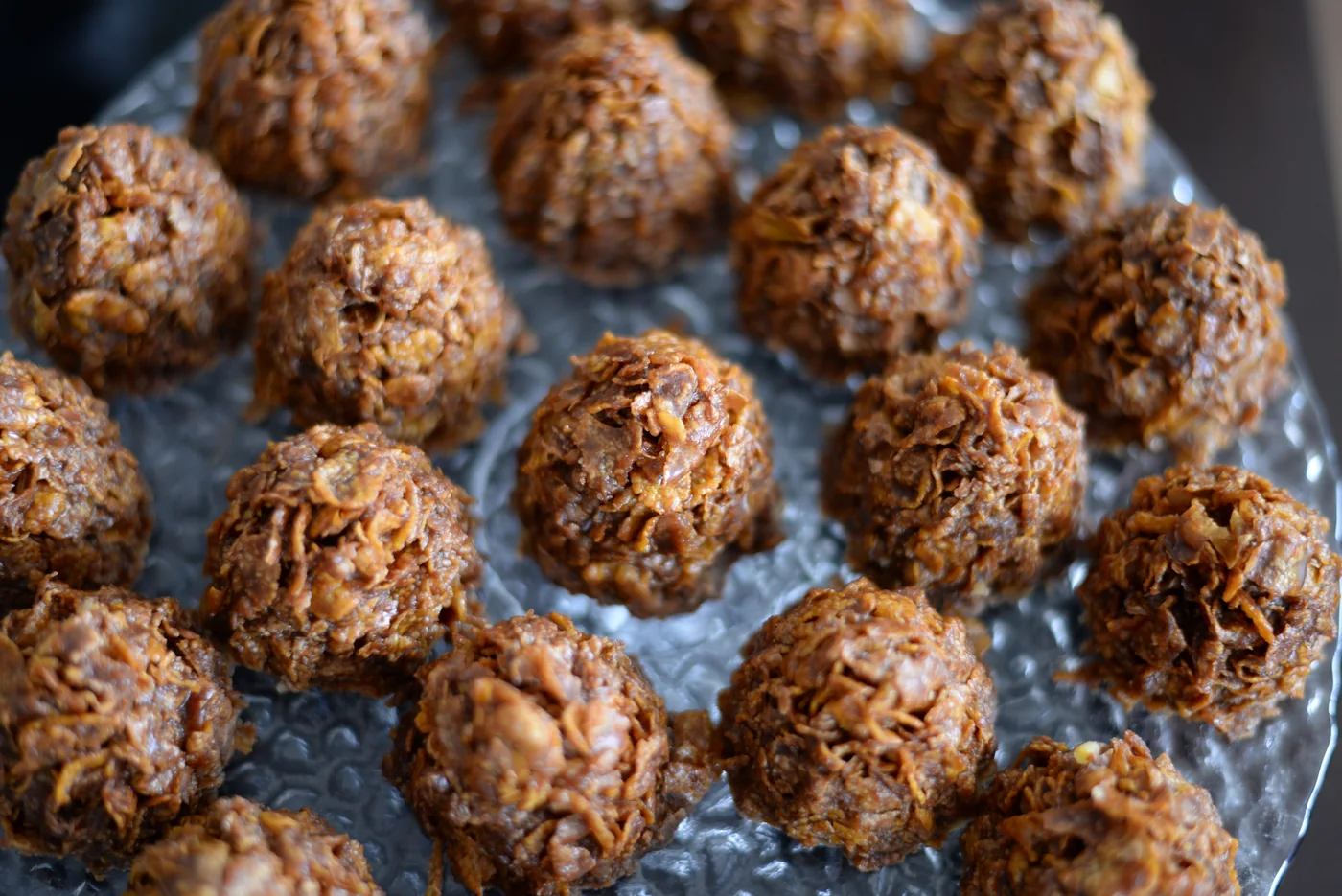
Let the chocolate mixture cool for 2–3 minutes – piping-hot chocolate softens the flakes. Add the cornflakes in two or three additions, folding gently with a spatula until every flake is coated. Fold rather than stir; you want the flakes coated, not crushed.
4. Press and chill
Tip the mixture into the tin and press it down firmly and evenly with the back of a spoon, right into the corners. Chill in the fridge for at least 1 hour, until fully set.
5. Slice and serve
Lift the slab out by the parchment, peel it away and cut into 16 squares with a large sharp knife. If it’s been in the fridge overnight, let it sit for 10 minutes first so the knife goes through cleanly instead of shattering it.
The school-dinner version (with custard)
The cornflake cake of British school dinners wasn’t made with chocolate bars at all – dinner ladies made it with cocoa powder, which is why it had that slightly dry, deeply chocolatey taste, and it came half-drowned in custard.
To make it: melt 100g butter, 3 tablespoons golden syrup and 50g caster sugar together in a large pan over a low heat. Stir in 30g cocoa powder until smooth, then fold in 125g cornflakes. Press into the lined tin, chill for an hour, and cut into squares. Serve just as school did – a square in a bowl with hot custard poured around it, the bottom going fudgy while the top stays crisp. That contrast is the whole point.
If that’s your era of pudding, the chocolate crunch and the chocolate concrete are the same custard-soaked school tray, one shelf along.
Serving suggestions
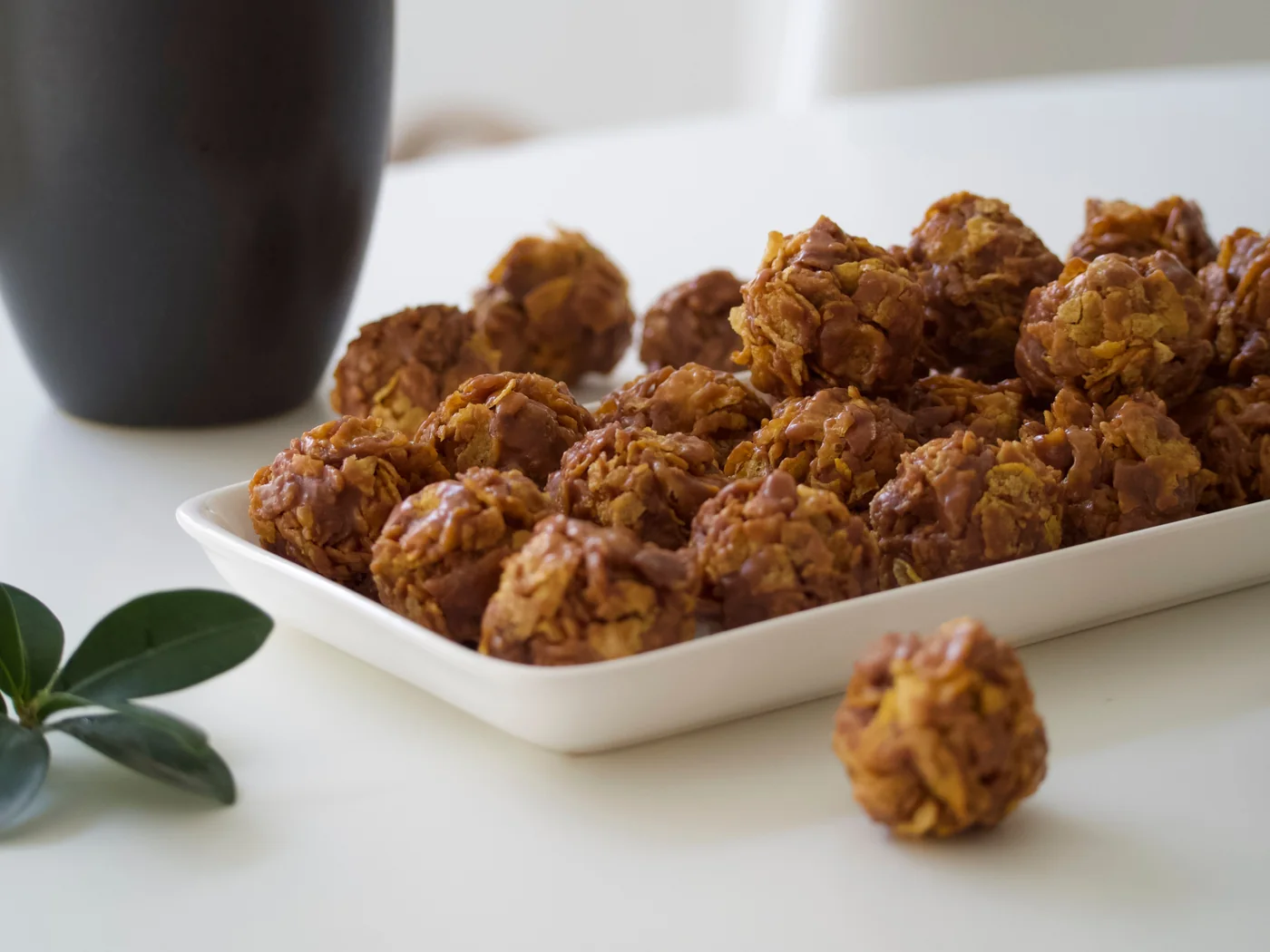
Cornflake traybake squares are made for a cake tin on the counter – with a cup of tea, in a lunchbox, on a bake-sale table where they always go first. They’re sturdy enough to stack and travel, which is more than can be said for most traybakes.
For pudding, go the school route with hot custard, or slightly grander: a square with a scoop of vanilla ice cream, or alongside berries to cut the sweetness. For parties, press the mixture into paper cake cases instead of a tin – about 12 generous cornflake cakes – and top each with mini eggs at Easter.
Troubleshooting
The chocolate seized into a grainy lump. It got too hot, or a splash of water got in. Take it off the heat and beat in a tablespoon of just-boiled water (counter-intuitively, more liquid rescues it) or a knob of butter until it loosens.
The squares crumble when cut. Either the mixture wasn’t pressed down firmly enough, or there weren’t enough cornflakes coated per flake – next time press harder and fold longer. Cutting straight from a cold fridge shatters it too; let it stand 10 minutes first.
It set greasy, with a white film. The chocolate overheated and the cocoa butter separated (bloom). It still tastes fine, but melt more gently next time – off the boil, stirring often.
The cornflakes went soft. Stale flakes, hot chocolate poured straight on, or a night uncovered in a humid kitchen. Use a fresh box, let the melt cool a few minutes, and store the squares airtight.
It’s rock-hard. Too much dark chocolate, or no syrup. The butter and golden syrup are what keep it biteable – don’t skip them.
Variations
- Cornflake cakes – spoon the mixture into 12 paper cases and chill. The classic party version; top with mini eggs for Easter nests.
- Rocky road cornflake traybake – fold 50g mini marshmallows and a handful of chopped glacé cherries through with the cornflakes.
- Peanut butter – stir 2 tablespoons of smooth peanut butter into the melted chocolate.
- White chocolate drizzle – melt 50g white chocolate and zigzag it over the pressed slab before chilling.
- Rice crispy version – swap the cornflakes for rice krispies, as in our old-school chocolate rice crispy cakes – softer crunch, same nostalgia.
Storage
Keep the squares in an airtight tin at room temperature for up to a week – the fridge keeps them snappier but can dull the chocolate’s shine. Layer them between sheets of baking parchment so they don’t stick together.
They freeze surprisingly well: freeze the squares on a tray until solid, then bag them up for up to 3 months. Defrost at room temperature for half an hour – or eat one straight from the freezer, which is its own pleasure.
Frequently asked questions
Why won’t my cornflake cakes set? Almost always too much syrup or not enough chill time. Golden syrup never fully hardens, so an extra-generous glug keeps the mixture soft forever. Stick to 3 tablespoons and give the tray a full hour in the fridge.
Can I make them with just chocolate, no butter or syrup? You can, but they’ll set very hard and snap into shards rather than slicing into squares. The butter and syrup are what make it a traybake rather than chocolate-glued cereal.
Milk, dark or white chocolate? Half milk, half dark is the sweet spot. All milk is very sweet, all dark tastes grown-up but loses the childhood flavour. White chocolate works – treat it gently, as it seizes more easily than the others.
Can I use rice krispies or shreddies instead of cornflakes? Yes – weight for weight. Rice krispies give a lighter, softer crunch; crushed shredded-wheat types give a denser, chewier bar. Cornflakes stay the crunchiest.
Why did school cornflake cakes taste different? Because they were made with cocoa powder rather than melted chocolate – see the school-dinner version above. Cocoa gives that darker, drier, more bittersweet flavour you remember, especially under hot custard.
How far ahead can I make them for a bake sale? Two or three days, easily – they’re at their best on day one or two but hold up all week in an airtight tin. That sturdiness is why they’ve been a bake-sale fixture for seventy years.
More old-school no-bake treats
The chocolate cornflake traybake sits in our Classic British Bakes & Puddings collection with the rest of the school-days table: the cornflake tart with custard, chocolate crunch, golden syrup flapjacks and the tuck-shop rice crispy cakes. And if you want the pudding that graduates from the school tray to the dinner party, there’s always sticky toffee pudding.
Chocolate Cornflake Traybake
The classic British no-bake chocolate cornflake traybake: cornflakes folded through melted milk and dark chocolate, butter and golden syrup, pressed into a 20cm tin and cut into 16 squares. Includes the school-dinner cocoa version served with custard.
Ingredients
- 150g milk chocolate, roughly chopped
- 150g dark chocolate (50-55% cocoa), roughly chopped
- 100g unsalted butter
- 3 tablespoons golden syrup (about 65g)
- 150g cornflakes
- 1 pinch fine sea salt
Instructions
- Line a 20cm square tin with baking parchment, leaving some overhanging the sides.
- Melt the chopped chocolate, butter and golden syrup in a heatproof bowl set over a pan of barely simmering water, stirring until smooth and glossy. Take off the heat and stir in the salt.
- Let the mixture cool for 2-3 minutes, then fold in the cornflakes in two or three additions until every flake is coated.
- Tip into the tin and press down firmly and evenly with the back of a spoon. Chill in the fridge for at least 1 hour until set.
- Lift the slab out by the parchment and cut into 16 squares with a large sharp knife.
Nutrition
- Serving
- 1 square
- Calories
- 215 calories