What Is Toad in the Hole?
Toad in the hole is a classic British dish of sausages baked inside Yorkshire pudding batter. The name has appeared in print since at least 1762, when it described “a small piece of beef baked in a large pudding.” The dish became a household staple across England as an economical way for families to stretch a small amount of meat into a filling meal by surrounding it with an inexpensive egg-and-flour batter. According to The English Breakfast Society, the dish appeared in Mrs. Beeton’s famous Book of Household Management in 1861, which helped cement its place in the national culinary canon.
The curious name has debated origins, but the most widely accepted theory suggests that the sausages poking through the risen batter resemble toads peeking out of their holes. Early versions used whatever meat was available, including beef, lamb kidneys, and even pigeon, before sausages became the standard filling.
This cheesy version adds a generous layer of grated mature Cheddar over the batter before baking. The cheese melts into the surface, creating a savoury crust that adds incredible depth of flavour. It transforms a comforting classic into something truly special without changing the fundamentals that make toad in the hole so satisfying.
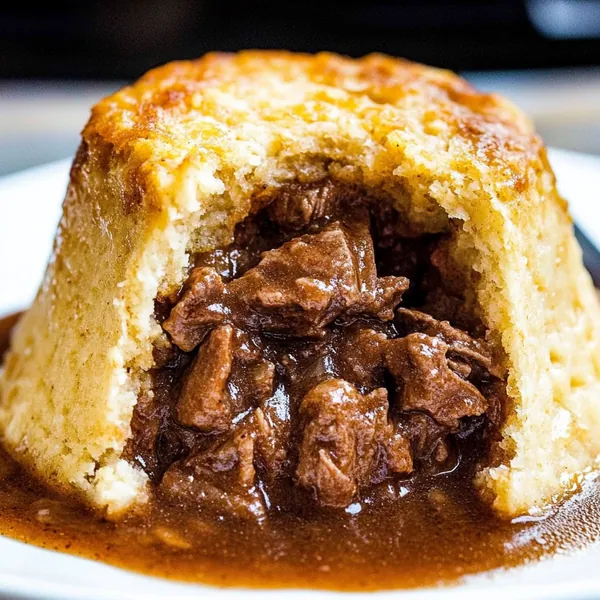
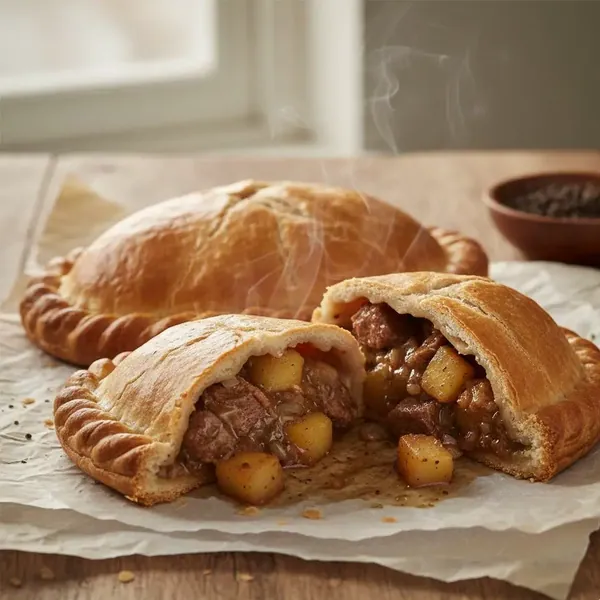
If you enjoy hearty British comfort food, this cheesy toad in the hole sits beautifully alongside our homemade steak pie and our cottage pie recipe. For a proper Sunday dinner spread, serve it after our roast dinner Yorkshire puddings and round off with something sweet from our dessert collection.
Ingredients for Cheesy Toad in the Hole
Every ingredient plays its part. Read through the complete list before you begin.
The Batter
| Ingredient | Quantity | Notes |
|---|---|---|
| Large free-range eggs | 4 | At room temperature for best rise |
| Whole milk | 1 1/4 cups (300 ml) | Room temperature, not cold from the fridge |
| Plain flour | 1 1/2 cups (190 g) | Not self-raising; plain flour gives better structure |
| Salt | 1 tsp | Fine sea salt or table salt |
| Black pepper | 1/2 tsp | Freshly ground for the best flavour |
The Sausages and Topping
| Ingredient | Quantity | Notes |
|---|---|---|
| Beef sausages | 8 | Good-quality, high meat content |
| Vegetable oil or beef dripping | 4 tbsp | Beef dripping adds exceptional flavour |
| Grated mature Cheddar cheese | 1 cup (about 100 g) | Mature or extra mature for bold flavour |
Why Plain Flour, Not Self-Raising
Yorkshire pudding batter relies on eggs and steam for its rise, not chemical raising agents. Plain flour provides the right gluten structure to create a batter that puffs up dramatically when it hits smoking hot fat, then holds its shape as it bakes. Self-raising flour produces a denser, cakier result that lacks the characteristic crispy edges and hollow, airy pockets that make a proper toad in the hole so special.
The Importance of Room-Temperature Ingredients
Take the eggs and milk out of the fridge at least 30 minutes before you begin. Cold batter hitting hot oil creates a thermal shock that can prevent even rising. Room-temperature ingredients mix more smoothly, create a better emulsion, and produce a batter that rises consistently across the entire tin.
Vegetable Oil vs Beef Dripping
Both produce excellent results. Vegetable oil has a high smoke point and creates a neutral-flavoured, crispy batter. Beef dripping adds a richer, more savoury depth that complements the sausages beautifully. According to Great British Chefs, beef dripping was the traditional choice in most British households and creates the most authentic flavour. If you can find it, beef dripping is worth trying at least once. Duck fat and goose fat work brilliantly too.
Equipment You Need
- A large 9 x 13-inch (23 x 33 cm) metal roasting tin
- A large jug for mixing batter
- A sieve for the flour
- A whisk (balloon or electric)
- A frying pan for browning sausages
- Oven gloves for handling the hot tin
[!IMPORTANT] Use a metal roasting tin, not ceramic or glass. Metal conducts heat faster and more evenly, which helps the batter rise dramatically when you pour it in. Ceramic and glass heat too slowly and produce a flatter, denser result.
How to Make Cheesy Toad in the Hole (Step-by-Step)
Follow these ten detailed steps for a magnificently risen, crispy, cheesy toad in the hole.
Making the Batter
Step 1: Whisk the Eggs and Milk
In a large jug, whisk together the four eggs and the whole milk until thoroughly combined and slightly frothy. Using a jug makes pouring the batter into the hot tin much easier and safer than using a bowl.
Step 2: Sift and Combine the Dry Ingredients
Sift the plain flour, salt, and black pepper into a large mixing bowl. Make a well in the centre of the flour.
Step 3: Build the Batter
Gradually pour the egg-and-milk mixture into the well, whisking from the centre outwards. Start slowly, incorporating the flour from the edges little by little, until you have a smooth, lump-free batter with the consistency of single cream. Do not overwork the batter once smooth; a few tiny lumps are perfectly fine.
Step 4: Rest the Batter
Cover the batter and leave it to rest at room temperature for at least 30 minutes. Resting allows the flour to fully hydrate and the gluten to relax, which produces a lighter, crispier batter with significantly better rise. You can prepare the batter up to 12 hours ahead and rest it in the fridge; just give it a gentle stir before using and let it come to room temperature.
Preparing the Tin and Sausages
Step 5: Heat the Oil Until Smoking
Preheat your oven to 220 degrees Celsius (200 degrees Celsius fan). Pour the vegetable oil or beef dripping into the roasting tin and place it in the oven for 10 minutes. The fat must reach smoking point before the batter goes in. This is the single most important step for achieving a good rise: when the cold batter hits the smoking hot fat, it creates an immediate burst of steam that forces the batter upward into dramatic, puffy billows.
Step 6: Brown the Sausages
While the oil heats in the oven, place the beef sausages in a dry frying pan over medium heat. Cook for 5 to 7 minutes, turning occasionally, until they develop an even golden-brown colour on all sides. The sausages do not need to cook through completely at this stage; they will finish cooking inside the batter in the oven. Browning adds flavour, colour, and prevents pale, steamed-looking sausages in the finished dish.
Assembling and Baking
Step 7: Add the Sausages to the Hot Tin
Very carefully remove the roasting tin from the oven using thick oven gloves. The fat will be extremely hot and may spit. Quickly and carefully arrange the browned sausages in the tin, spacing them evenly so the batter has room to rise around each one.
Step 8: Pour in the Batter
Immediately pour the rested batter over the sausages in one confident, steady stream. The batter should sizzle and bubble the moment it hits the hot fat. Do not stir or disturb the batter once poured.
[!CAUTION] The fat is extremely hot and will spit when the cold batter makes contact. Wear long sleeves, use thick oven gloves, and pour carefully but quickly.
Step 9: Add the Cheese
Sprinkle the grated mature Cheddar cheese evenly over the surface of the batter. The cheese will melt and form a golden, savoury crust as the batter rises and sets.
Step 10: Bake Until Magnificently Risen
Place the tin on the top shelf of the oven and bake for 30 to 35 minutes. Do not open the oven door for at least the first 25 minutes. Opening the door lets out the steam and causes the batter to collapse, ruining the rise. The toad in the hole is ready when the batter has risen dramatically, turned a deep golden brown, feels crisp and firm to the touch, and the cheese on top has melted into a beautiful, bubbly crust. Serve immediately.
The Science Behind the Rise
Understanding why the batter rises helps you avoid common mistakes. Yorkshire pudding batter contains no chemical raising agent. The rise comes entirely from steam. When the cold, egg-rich batter hits the smoking hot fat, the water in the milk and eggs rapidly converts to steam. The egg proteins set around the expanding steam bubbles, creating the characteristic puffy, hollow structure. This is why three factors matter so much:
- The fat must be smoking hot. Lukewarm fat does not generate enough steam for a proper rise.
- The batter must be rested. Rested batter has fully hydrated flour, which forms a more elastic network that traps steam better.
- The oven door must stay closed. Opening the door drops the temperature and allows steam to escape, deflating the batter before the egg proteins set.
Get all three right, and the batter rises into a golden, crispy frame around the sausages and cheese.
Troubleshooting Your Toad in the Hole
The Batter Did Not Rise
The most common cause is fat that was not hot enough. The oil must be visibly smoking before the batter goes in. If your oven runs cool, add an extra five minutes to the preheating time. Also check that you used plain flour, not self-raising, and that the batter rested for at least 30 minutes.
The Batter Rose Then Collapsed
This almost always means the oven door was opened too early. Keep the door completely closed for at least the first 25 minutes. The batter needs that consistent high heat to set the egg proteins around the steam bubbles. Once the structure has set, opening the door for a quick check is safe.
The Base Is Soggy
A soggy bottom usually results from not enough fat in the tin, or from fat that was not hot enough. Use a generous four tablespoons and heat until it is properly smoking. Also ensure your batter has the correct consistency, like single cream. Too thick and it does not spread and set evenly; too thin and it creates a flat, wet layer.
The Sausages Sank to the Bottom
Sausages sink when the batter is too thin or when they were not browned first. Pre-browning partially cooks the sausages and reduces their weight. Also ensure the batter is the right consistency and that you pour it quickly over the sausages so the initial sizzle starts setting the batter immediately.
The Cheese Burned Before the Batter Cooked
If the cheese browns too fast, your oven temperature may run high, or the tin was positioned too close to the top heating element. Move the tin down one shelf position. You can also add the cheese halfway through baking instead of at the beginning; this gives the batter time to rise first and prevents the cheese from over-browning.
Recipe Variations
Cheesy toad in the hole adapts well to different flavours while keeping its core structure.
Classic Toad in the Hole (Without Cheese)
Simply omit the Cheddar cheese for a traditional, purist version. The batter rises even higher without the weight of the cheese, producing an even more dramatic, billowing result. Serve with onion gravy and plenty of mustard.
Herby Cheddar Toad in the Hole
Add one tablespoon of finely chopped fresh rosemary and one teaspoon of dried thyme directly into the batter before resting. The herbs infuse the batter with a fragrant, savoury depth that complements the Cheddar beautifully. Our rosemary focaccia recipe uses the same principle of rosemary transforming a simple dough.
Mustard and Cheddar Toad in the Hole
Whisk two tablespoons of wholegrain mustard into the batter before resting. The mustard adds a sharp, tangy kick that cuts through the richness of the cheese and sausages. This version pairs especially well with caramelised onion gravy.
Vegetable Toad in the Hole
Replace the sausages with eight thick slices of halloumi cheese or vegetarian sausages. Brown them in the same way before adding to the hot tin. The batter and cheese topping work identically with vegetarian fillings, producing an equally satisfying result.
Serving and Storage
How to Serve Cheesy Toad in the Hole
Serve cheesy toad in the hole immediately, straight from the oven, while the batter is still crispy and puffed and the cheese is molten and bubbly. Cut into generous portions and serve with a rich onion gravy poured generously alongside (not over, so the crispy edges stay crisp). Steamed green beans, garden peas, buttered cabbage, or mashed potatoes all make excellent accompaniments. A dollop of English mustard on the side completes the plate.
This dish does not wait well. The batter loses its crispness within 15 to 20 minutes of leaving the oven, so call everyone to the table before you take it out.
Storage Guidelines
Leftover toad in the hole stores in a sealed container in the fridge for up to two days. Reheat in the oven at 190 degrees Celsius (fan) for 10 to 12 minutes to restore some crispness. Avoid the microwave, which makes the batter rubbery. The reheated version will not achieve the same dramatic rise as fresh, but it still tastes excellent.
Can You Freeze Toad in the Hole?
You can freeze cooked toad in the hole for up to one month. Wrap portions tightly in cling film and foil. Defrost in the fridge overnight and reheat in a hot oven. The batter texture will be softer than freshly baked, but the flavour remains very good. Alternatively, freeze the raw batter in a sealed container and thaw overnight before using.
Frequently Asked Questions (FAQ)
Why is it called toad in the hole?
The most widely accepted theory suggests that the sausages poking through the risen batter resemble toads peeking out of their holes. The name has appeared in British cookery writing since at least 1762, though the exact origin remains debated. Despite the name, the dish has never contained actual toads.
What makes the batter rise so much?
The rise comes from steam, not from any raising agent. When the cold batter hits smoking hot fat, the water in the eggs and milk rapidly converts to steam. The egg proteins set around the expanding steam bubbles, creating the characteristic puffy, hollow structure. Resting the batter, using smoking hot fat, and keeping the oven door closed are the three keys to a dramatic rise.
Can I make the batter in advance?
Yes, you can make the batter up to 12 hours ahead. Cover it and store it in the fridge. Give it a gentle stir before using and allow it to come back to room temperature. If anything, a longer rest often produces an even better rise.
Should I use vegetable oil or beef dripping?
Both work well. Vegetable oil has a high smoke point and creates crispy, neutral-flavoured batter. Beef dripping adds a richer, more savoury depth that complements the sausages and cheese beautifully. Beef dripping was the traditional choice in British kitchens and produces the most authentic flavour.
Can I add other ingredients to the batter?
Yes, you can add chopped herbs (rosemary, thyme, sage), wholegrain mustard, or even a pinch of smoked paprika to the batter before resting. Keep additions small; large chunks or heavy additions can weigh the batter down and prevent it from rising properly.
What gravy goes best with toad in the hole?
A rich onion gravy is the classic pairing. Slowly caramelise thinly sliced onions in butter, deglaze with a splash of red wine or balsamic vinegar, add beef stock, and simmer until thick and glossy. Season with salt, pepper, and a pinch of sugar. The sweet, savoury gravy contrasts beautifully with the crispy batter and melted cheese.
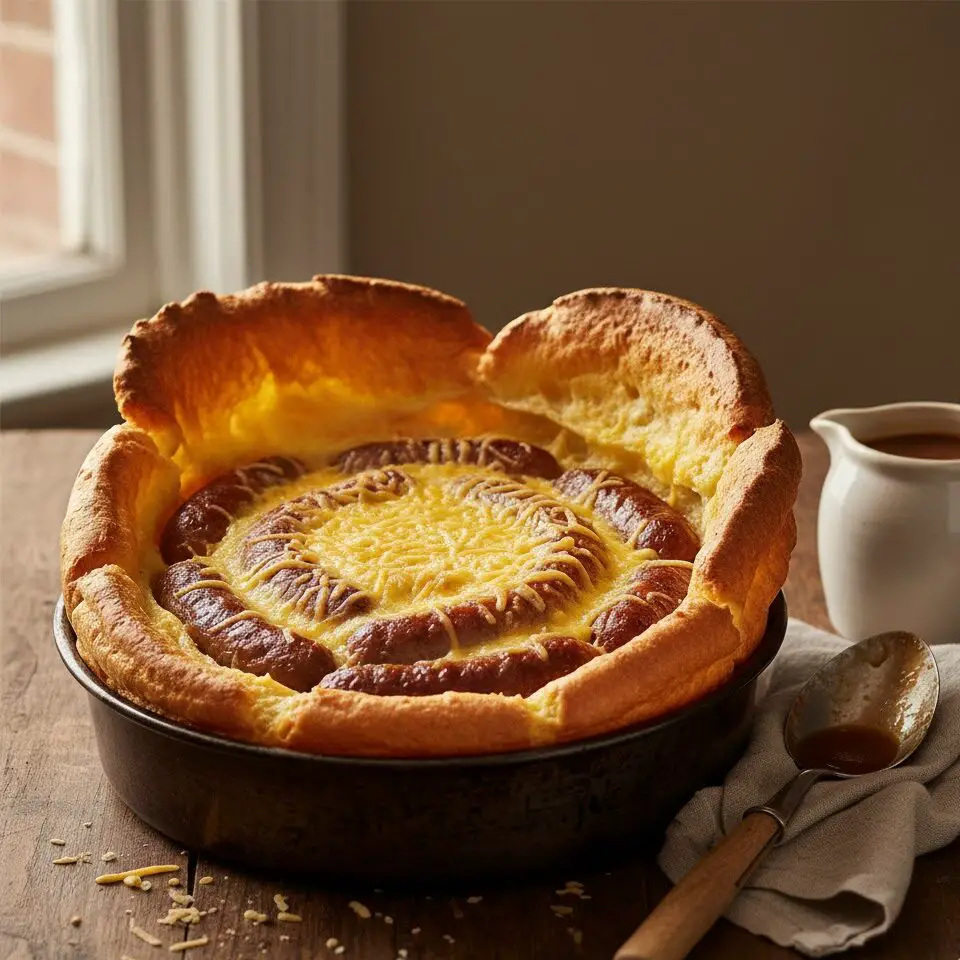
Cheesy Toad in the Hole Recipe: Crispy Yorkshire Pudding Batter with Beef Sausages and Cheddar
Cheesy toad in the hole with eight beef sausages baked inside crispy Yorkshire pudding batter, topped with melted mature Cheddar cheese. Magnificently risen, golden, and irresistible. Serves 4 to 6.
Ingredients
- 4 large free-range eggs, at room temperature
- 1 1/4 cups (300 ml) whole milk, at room temperature
- 1 1/2 cups (190 g) plain flour
- 1 tsp salt
- 1/2 tsp black pepper
- 8 good-quality beef sausages
- 4 tbsp vegetable oil or beef dripping
- 1 cup (100 g) grated mature Cheddar cheese
Instructions
- Whisk together the eggs and milk in a large jug until combined and slightly frothy.
- Sift the plain flour, salt, and black pepper into a mixing bowl. Make a well in the centre.
- Gradually pour in the egg-and-milk mixture, whisking from the centre outwards until smooth with the consistency of single cream.
- Cover the batter and rest at room temperature for at least 30 minutes.
- Preheat the oven to 220 degrees Celsius (200 degrees Celsius fan). Pour the oil or dripping into a 9×13-inch metal roasting tin and place in the oven for 10 minutes until smoking hot.
- Brown the beef sausages in a dry frying pan over medium heat for 5 to 7 minutes until golden on all sides.
- Carefully remove the hot tin from the oven. Quickly arrange the browned sausages evenly in the tin.
- Immediately pour the rested batter over the sausages. It should sizzle on contact.
- Sprinkle the grated Cheddar cheese evenly over the top.
- Place on the top shelf and bake for 30 to 35 minutes without opening the oven door until magnificently risen, deep golden brown, and the cheese has melted into a bubbly crust.
Nutrition
- Serving
- 1 serving
- Calories
- 650 calories
- Sugar
- 4
- Sodium
- 890
- Fat
- 38
- Saturatedfat
- 16
- Unsaturatedfat
- 18
- Transfat
- 0
- Carbohydrate
- 42
- Fiber
- 2
- Protein
- 32
- Cholesterol
- 210