In this article
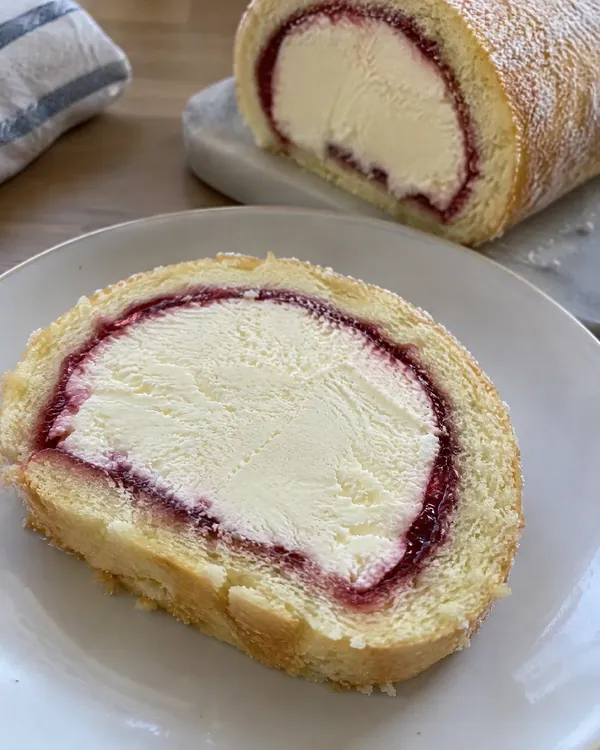
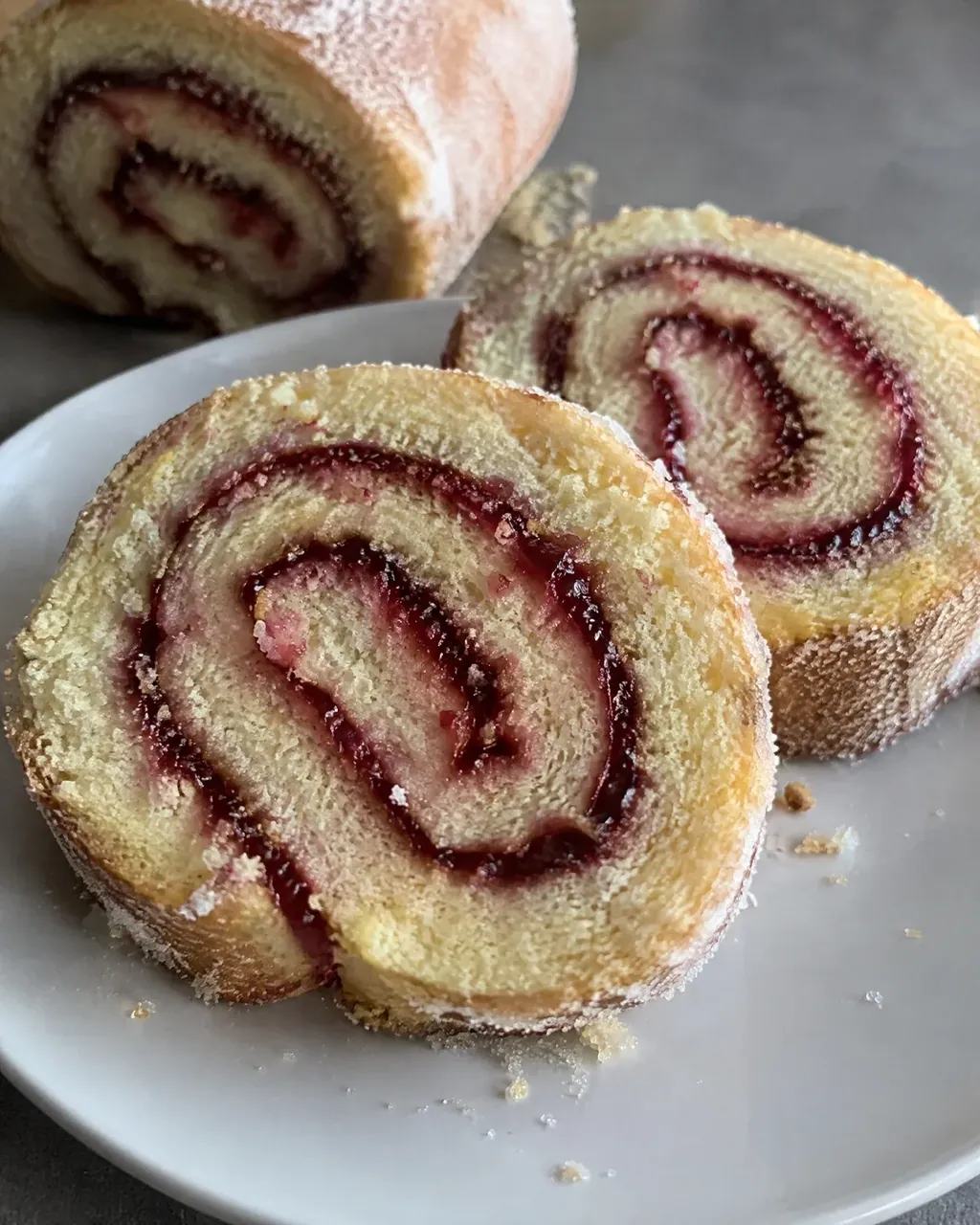
My friend Margaret grew up in Lancashire, and she says a Swiss roll was the first cake she was ever trusted to make on her own, standing on a chair at her mother’s table. It was the cake of an ordinary afternoon: one bowl, one whisk, a tin, and a jar of raspberry jam. There is no butter in the sponge and no oil either. The eggs do all the work. Whisked with the sugar until they are thick and pale, they carry enough air to lift the whole cake, and it bakes in about ten minutes.
What frightens people is the rolling. A cold sponge bent into a spiral cracks from one end to the other. The answer is the step that feels wrong: the sponge is turned out and rolled up the minute it leaves the oven, with a sheet of sugared paper rolled up inside it, and left to cool in that shape. When it is cold it is unrolled, spread with jam and rolled again, and it bends without a mark. Here is how long to whisk the eggs, and exactly how to roll it.
Why this Swiss roll works
- No fat in the sponge. A sponge made from eggs, sugar and flour only is light, flexible and springy, which is exactly what a cake that has to bend needs.
- Eggs whisked to the ribbon. Five to seven minutes of whisking traps the air that raises the sponge. Under-whisked eggs give a flat, tough sheet that cracks.
- A short, hot bake. Ten minutes in a hot oven sets the sponge before it can dry out. A dry sponge is a brittle sponge.
- Rolled while hot. Warm sponge is soft and full of steam. Cooled in a spiral, it sets in that shape and can be opened and closed again.
- Paper rolled inside. The sugared paper keeps the layers from sticking together while the roll cools.
Ingredients
Makes one roll about 10 inches long, 10 slices, baked in a 10 by 15 inch jelly roll pan (a shallow rimmed baking tin). The measurements are in US cups with grams in brackets.
For the sponge
- 4 large eggs, at room temperature
- 1/2 cup granulated sugar (100g), superfine if you have it
- 3/4 cup all-purpose flour (100g)
- 1 teaspoon baking powder
- 1 pinch of salt
- 1 tablespoon warm water
For rolling and filling
- 3 tablespoons granulated sugar, for the paper and the top
- 1/2 cup raspberry jam (160g)
- A little soft butter, for greasing the pan
In Britain the sponge is made with self-raising flour: if you have it, use 3/4 cup (100g) and leave out the baking powder. Cold eggs will not whisk up thick, so take them out of the refrigerator an hour ahead, or stand them in a bowl of warm tap water for 5 minutes. A seedless raspberry jam spreads most easily, but any good jam works. If yours is stiff, stir it hard with a spoon to loosen it; do not heat it, or it will soak into the sponge.
How to make Swiss roll
Make the sponge
- Heat the oven to 400 degrees (200°C). Grease a 10 by 15 inch jelly roll pan lightly with butter and line the bottom and sides with one sheet of baking parchment, letting it stand a little above the rim.
- Put the eggs and the 1/2 cup of sugar in a large bowl. Whisk with an electric mixer on high speed for 5 to 7 minutes, until the mixture is very pale, has tripled in volume and is thick enough that a trail dropped from the beaters lies on the surface for a slow count of three before sinking. By hand with a balloon whisk it takes about 15 minutes.
- Stir the flour, baking powder and salt together and sift half of it over the eggs. Fold it in with a large metal spoon or a spatula, cutting down through the middle and turning the mixture over, until no dry flour shows. Sift and fold in the rest the same way, then fold in the warm water. Be gentle and stop as soon as the flour has gone.
- Pour the batter into the pan and tilt the pan to ease it into the corners. Do not spread it hard with a knife, which knocks out the air.
- Bake on the middle shelf for 9 to 11 minutes, until the sponge is golden, has shrunk very slightly from the sides and springs back when pressed lightly in the center.
Roll it hot
- While the sponge bakes, lay a clean sheet of baking parchment, larger than the pan, on the counter and sprinkle it evenly with 2 tablespoons of the sugar.
- The moment the pan comes out of the oven, turn the sponge upside down onto the sugared paper. Lift off the pan and peel away the lining paper slowly.
- With a sharp knife, trim a thin strip, about 1/4 inch, off all four edges. Then score a shallow line across one short end, about 3/4 inch in from the edge, cutting only halfway through the sponge. This helps the first turn tuck in tightly.
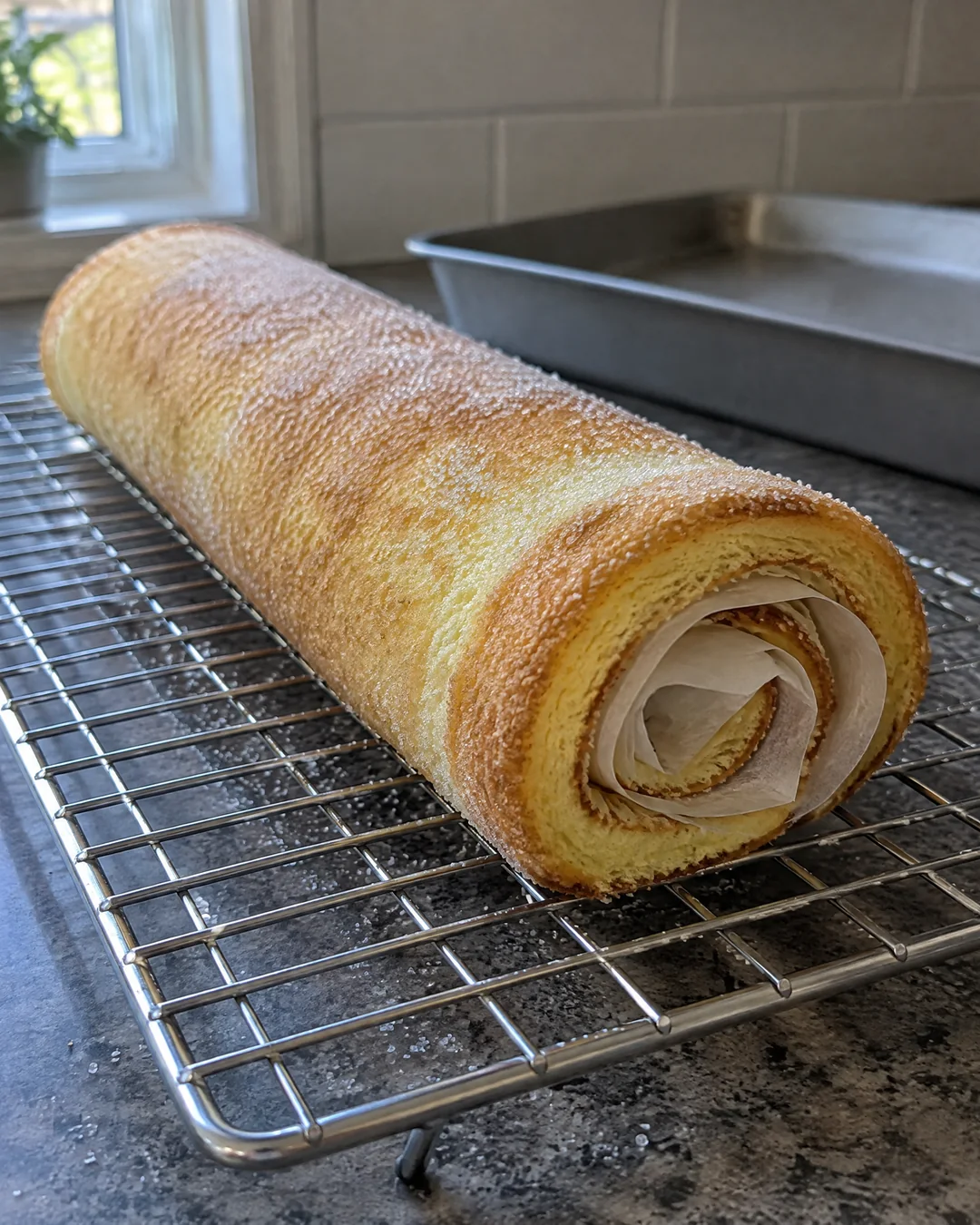
- Starting from the scored short end, fold that edge over and roll the hot sponge up firmly with the sugared paper inside it, using the paper to push the roll along. Leave it seam side down on a wire rack until completely cold, 30 to 40 minutes.
Fill and roll again
- Unroll the cold sponge gently, only as far as it wants to go. The inner end will stay curled; leave it that way.
- Spread the jam over the sponge in an even layer, right to the long edges but stopping 1/2 inch short of the far end.
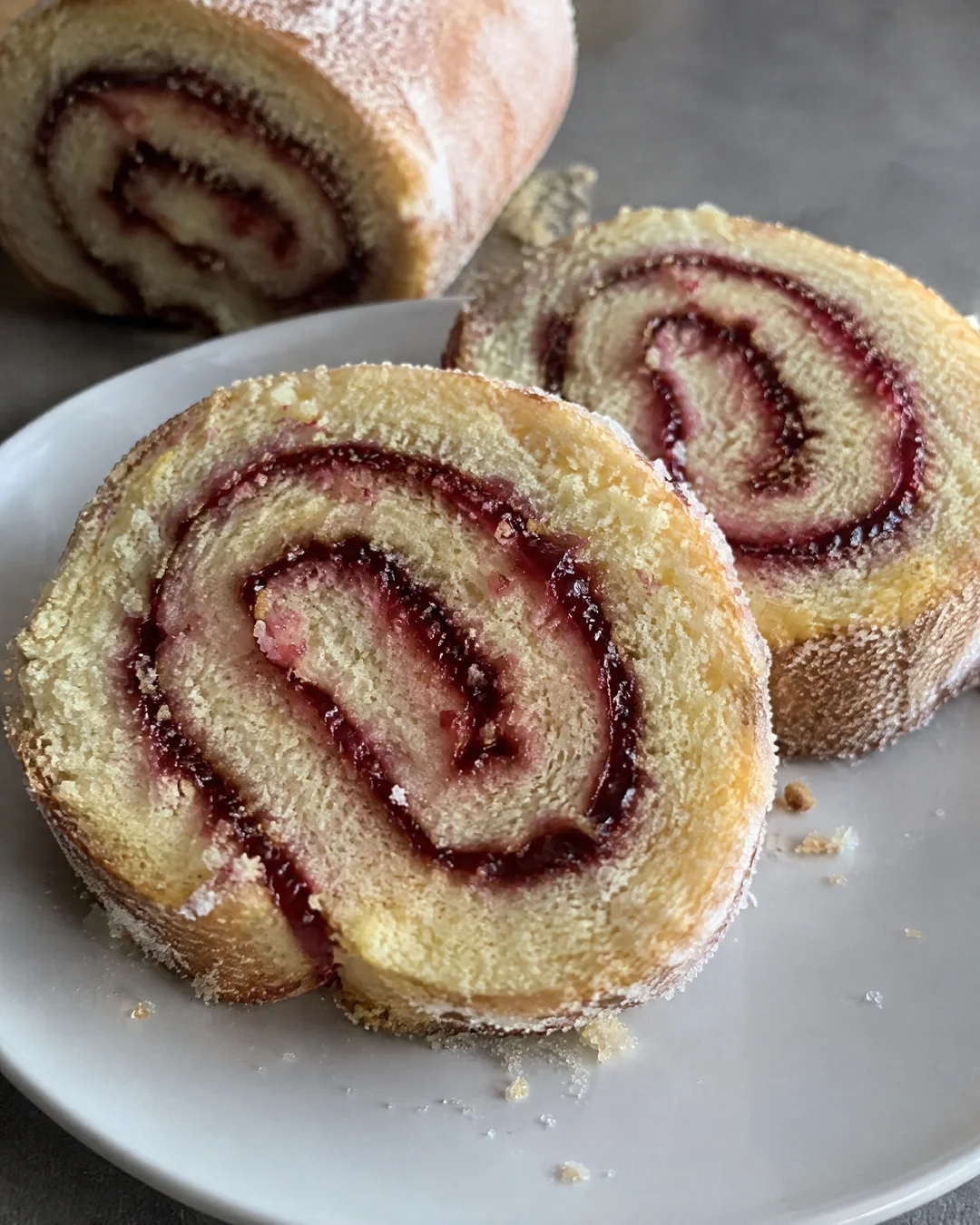
- Roll it up again, without the paper this time, and set it seam side down on a plate. Sprinkle with the last tablespoon of sugar and cut in slices with a serrated knife.
Tips that make the difference
- Do not shorten the whisking. If the trail from the beaters disappears at once, the sponge will be thin and tough, and that is the kind that cracks.
- Have the sugared paper ready before the sponge comes out. Every minute the sponge sits flat in the open air, it loses the steam that makes it bend.
- Do not overbake. One or two minutes too long dries the edges, and no amount of careful rolling saves a dry sponge.
Variations
- Jam and cream. Wait until the sponge is completely cold, spread it with the jam, then with 3/4 cup of heavy cream whipped until thick. Keep it in the refrigerator and eat it the same day.
- Lemon roll. Fill with 1/2 cup of lemon curd in place of the jam and add the grated zest of a lemon to the eggs and sugar.
Storage and make-ahead
A jam Swiss roll keeps for 2 days in an airtight tin at room temperature. It is at its softest on the day it is made.
With cream inside it must be kept in the refrigerator and is best eaten within 24 hours.
Frequently asked questions
How long do I whisk the eggs for a Swiss roll?
For 5 to 7 minutes with an electric mixer on high speed. The test is the ribbon: lift the beaters and let the mixture fall back into the bowl. If the trail sits on the surface for about three seconds before it sinks, it is ready.
Why did my Swiss roll crack?
Nearly always because it was rolled cold, baked too long, or the eggs were not whisked enough. Roll it the moment it leaves the oven, with sugared paper inside, and let it cool in that shape.
Why is it called a Swiss roll?
Nobody is sure. The cake is not Swiss; rolled sponges of this kind were made across central Europe, and the name has been used in Britain since the nineteenth century.
Cut it at the table, so everybody can see the spiral before it disappears.
British Swiss Roll (The Fatless Sponge Rolled Up Hot So It Never Cracks)
A classic British Swiss roll: a light sponge made with only eggs, sugar and flour, baked in a shallow tin for ten minutes, rolled up hot on sugared paper so it never cracks, then filled with raspberry jam.
Ingredients
- 4 large eggs, at room temperature
- 1/2 cup granulated sugar (100g), superfine if you have it
- 3/4 cup all-purpose flour
- 1 teaspoon baking powder
- 1 pinch of salt
- 1 tablespoon warm water
- 3 tablespoons granulated sugar, for the paper and the top
- 1/2 cup raspberry jam
- A little soft butter, for greasing the pan
Instructions
- Heat the oven to 400 degrees (200°C). Grease a 10 by 15 inch jelly roll pan lightly with butter and line the bottom and sides with one sheet of baking parchment, letting it stand a little above the rim.
- Put the eggs and the 1/2 cup of sugar in a large bowl. Whisk with an electric mixer on high speed for 5 to 7 minutes, until the mixture is very pale, has tripled in volume and is thick enough that a trail dropped from the beaters lies on the surface for a slow count of three before sinking. By hand with a balloon whisk it takes about 15 minutes.
- Stir the flour, baking powder and salt together and sift half of it over the eggs. Fold it in with a large metal spoon or a spatula, cutting down through the middle and turning the mixture over, until no dry flour shows. Sift and fold in the rest the same way, then fold in the warm water. Be gentle and stop as soon as the flour has gone.
- Pour the batter into the pan and tilt the pan to ease it into the corners. Do not spread it hard with a knife, which knocks out the air.
- Bake on the middle shelf for 9 to 11 minutes, until the sponge is golden, has shrunk very slightly from the sides and springs back when pressed lightly in the center.
- While the sponge bakes, lay a clean sheet of baking parchment, larger than the pan, on the counter and sprinkle it evenly with 2 tablespoons of the sugar.
- The moment the pan comes out of the oven, turn the sponge upside down onto the sugared paper. Lift off the pan and peel away the lining paper slowly.
- With a sharp knife, trim a thin strip, about 1/4 inch, off all four edges. Then score a shallow line across one short end, about 3/4 inch in from the edge, cutting only halfway through the sponge. This helps the first turn tuck in tightly.
- Starting from the scored short end, fold that edge over and roll the hot sponge up firmly with the sugared paper inside it, using the paper to push the roll along. Leave it seam side down on a wire rack until completely cold, 30 to 40 minutes.
- Unroll the cold sponge gently, only as far as it wants to go. The inner end will stay curled; leave it that way.
- Spread the jam over the sponge in an even layer, right to the long edges but stopping 1/2 inch short of the far end.
- Roll it up again, without the paper this time, and set it seam side down on a plate. Sprinkle with the last tablespoon of sugar and cut in slices with a serrated knife.