In this article
My friend Margaret laughed at me the first time I called it a caramel apple, and then she told me that in England a toffee apple is something else entirely. Every fifth of November, Britain lights bonfires and sets off fireworks in parks, fields and back gardens all over the country, and the treat that every child holds in a mittened hand, standing in the smoke and the cold, is a toffee apple on a stick. Margaret’s mother made a trayful every year, and Margaret says the smell of hot sugar still means fireworks to her.
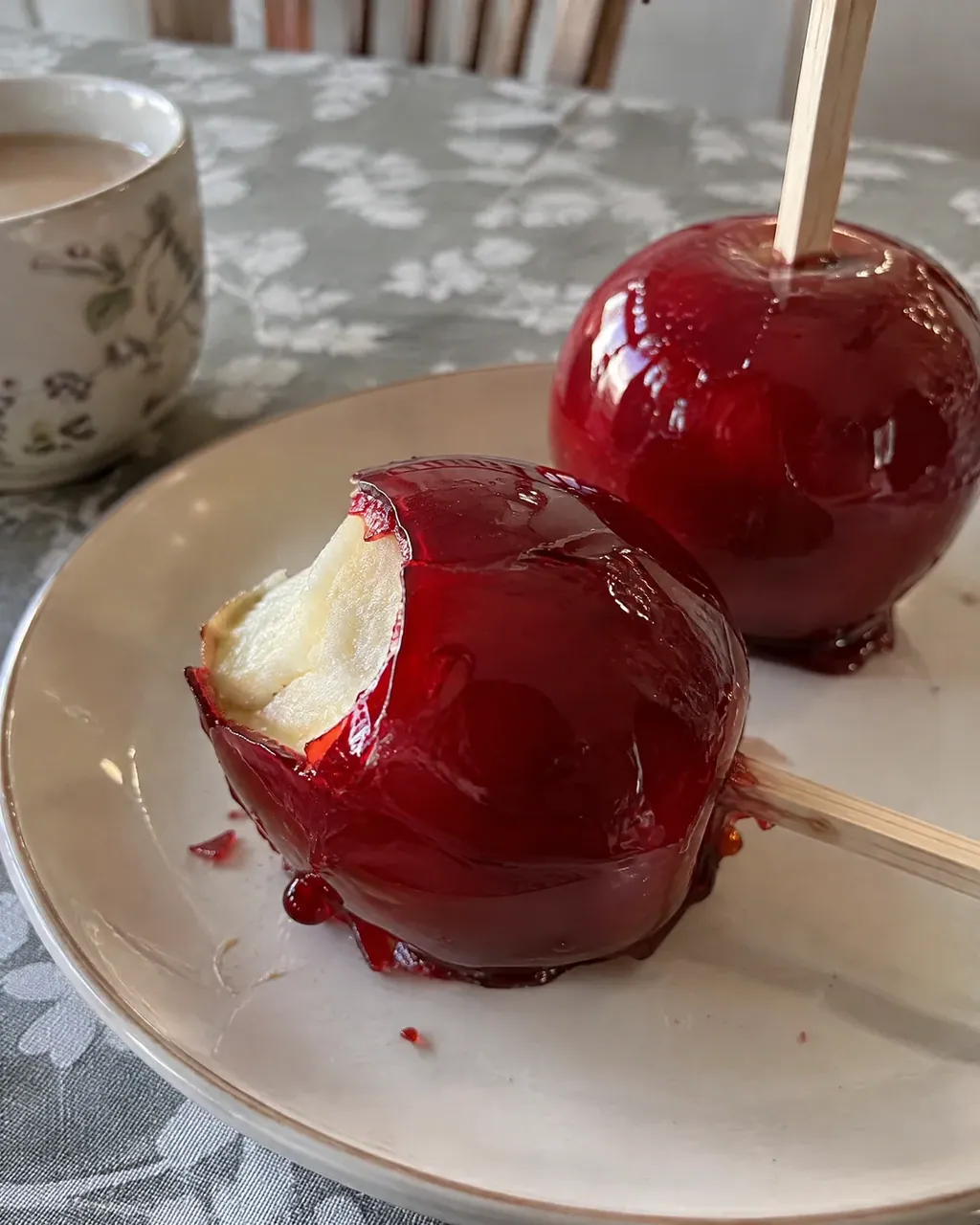
The difference is the candy. An American caramel apple is made with butter and cream and stays soft, pale and chewy. A British toffee apple is sugar cooked with a little water until it reaches the hard crack stage, colored bright red, and it sets into a thin glass shell around a cold, crisp apple. The whole art is knowing when the toffee is hot enough. Too cool and it stays sticky and pulls your teeth out; just right and it snaps clean. Below you will find the thermometer reading and the old cold water test Margaret’s mother used, which works every time.
Why this toffee apples works
- Hard crack stage. Sugar syrup cooked to 300 to 310 degrees sets hard and glassy instead of chewy.
- A little vinegar. The acid stops the sugar from crystallizing, so the shell stays clear like glass instead of turning grainy.
- No stirring. Stirring a boiling sugar syrup makes crystals form. Swirling the pan gently is all it needs.
- Dry, wax-free apples. Toffee will not stick to a waxy or wet skin. A quick dip in hot water and a hard rub with a towel fixes it.
- Small tart apples. They are easier to coat in one dip, and their sharpness balances the sweet shell.
Ingredients
Makes 8 small toffee apples. The measurements are in US cups with grams in brackets.
- 8 small tart apples, such as Granny Smith, Braeburn or Pink Lady
- 8 sturdy wooden sticks or lollipop sticks
- 2 cups granulated sugar (400g)
- 1/2 cup water (120ml)
- 1 teaspoon white vinegar or lemon juice
- 2 tablespoons light corn syrup or golden syrup (40g)
- 1/2 teaspoon red food coloring, liquid or gel
- A little butter or oil for the tray
Choose the smallest apples you can find. A toffee apple should be eaten in hand on a cold night, and a huge apple is hard to coat evenly and hard to finish. A candy thermometer makes this easy, but the cold water test below works just as well.
How to make toffee apples
Get the apples ready
- Put the apples in a bowl, pour boiling water over them for 10 seconds, then drain and rub each one hard with a clean towel. This removes the wax so the toffee sticks.
- Dry the apples completely, pull off the stalks, and push a wooden stick firmly into each one through the stalk end.
- Line a tray with parchment or butter it well, and have it next to the stove.
Cook the toffee
- Put the sugar and water in a heavy saucepan over medium heat and stir only until the sugar dissolves.
- Add the vinegar and syrup, stop stirring, and bring to a boil. Brush down any sugar crystals on the side of the pan with a wet pastry brush.
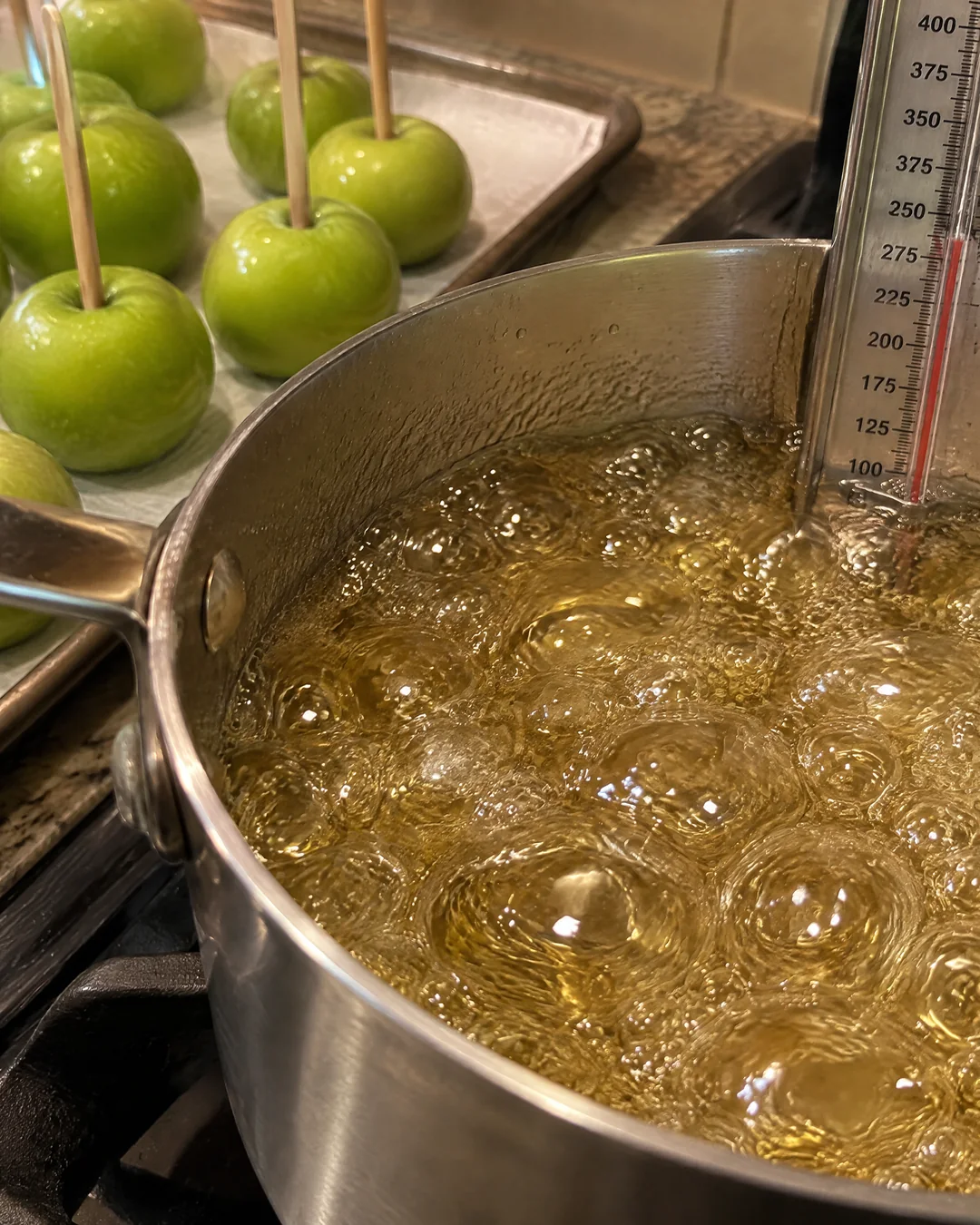
- Boil without stirring, swirling the pan now and then, until the syrup reaches 300 to 310 degrees (150°C) on a candy thermometer, about 15 to 20 minutes.
- No thermometer? Drop a little syrup into a glass of very cold water. If it sets at once into hard, brittle threads that snap when you bend them, it is ready. If it is soft or bendy, keep boiling.
- Take the pan off the heat and stir in the red coloring carefully; it will bubble up.
Dip
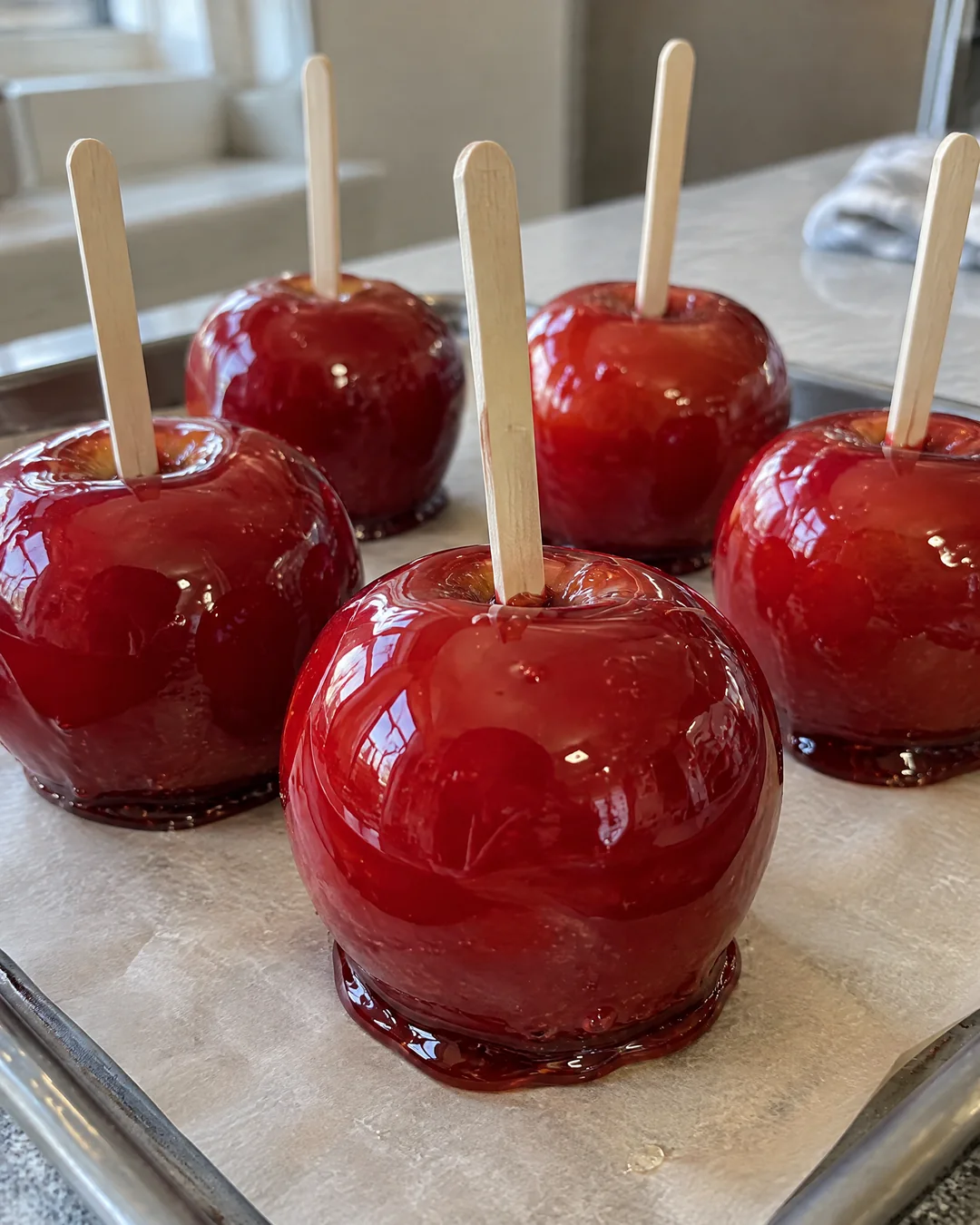
- Working quickly, tilt the pan and dip one apple at a time, turning it to coat completely, then lift it and twirl it over the pan so the extra drips off.
- Stand the apples stick up on the prepared tray. If the toffee thickens in the pan, warm it gently for a moment.
- Leave them to set hard at room temperature, about 20 minutes, and eat them the same day.
Tips that make the difference
- Never touch the hot toffee. Sugar at hard crack is far hotter than boiling water. Keep a bowl of cold water nearby just in case.
- Do not put toffee apples in the refrigerator. The damp air makes the shell sticky and cloudy.
- Make them on a dry day if you can. Humidity softens a sugar shell within hours.
- Soak the pan in hot water straight away. The leftover toffee dissolves on its own.
Variations
- Clear toffee apples. Leave out the coloring for a golden glass shell.
- Nutty base. Dip the bottom of each freshly coated apple into chopped toasted hazelnuts before it sets.
- Mini toffee apples. Use crab apples or melon balls of apple on short sticks for a party tray.
- Soft caramel apples. For the American version, cook sugar, butter and cream to 245 degrees instead and dip the same way.
Storage and make-ahead
Toffee apples are best eaten within 12 hours of making. Keep them uncovered in a cool, dry room, not in the refrigerator.
To keep them a little longer, wrap each set apple in a square of cellophane and tie it around the stick. They will hold up to 2 days.
Frequently asked questions
Why is my toffee sticky instead of hard?
It did not get hot enough. The syrup must reach the hard crack stage, 300 to 310 degrees. Use a thermometer or the cold water test, and do not stop at the first sign of color.
Why won’t the toffee stick to my apples?
Most apples are coated in wax. Dip them in boiling water for a few seconds and rub them hard with a towel, and make sure they are completely dry.
What is the difference between a toffee apple and a caramel apple?
A toffee apple has a hard, clear, glassy sugar shell. A caramel apple is coated in a soft, chewy caramel made with butter and cream.
Why did my toffee go cloudy and grainy?
Sugar crystals formed, usually from stirring the boiling syrup or crystals on the side of the pan. The vinegar and a wet pastry brush prevent it.
Margaret says the first bite always goes up your nose a little, and that is half the fun. Make them on a cold night, and eat them outside.
British Toffee Apples with a Hard Glassy Red Shell
Traditional British toffee apples: small tart apples dipped in a hard, glassy red sugar candy cooked to 300 degrees (hard crack), the bonfire and fireworks treat of the fifth of November.
Ingredients
- 8 small tart apples, such as Granny Smith, Braeburn or Pink Lady
- 8 sturdy wooden sticks or lollipop sticks
- 2 cups granulated sugar
- 1/2 cup water
- 1 teaspoon white vinegar or lemon juice
- 2 tablespoons light corn syrup or golden syrup
- 1/2 teaspoon red food coloring, liquid or gel
- A little butter or oil for the tray
Instructions
- Put the apples in a bowl, pour boiling water over them for 10 seconds, then drain and rub each one hard with a clean towel. This removes the wax so the toffee sticks.
- Dry the apples completely, pull off the stalks, and push a wooden stick firmly into each one through the stalk end.
- Line a tray with parchment or butter it well, and have it next to the stove.
- Put the sugar and water in a heavy saucepan over medium heat and stir only until the sugar dissolves.
- Add the vinegar and syrup, stop stirring, and bring to a boil. Brush down any sugar crystals on the side of the pan with a wet pastry brush.
- Boil without stirring, swirling the pan now and then, until the syrup reaches 300 to 310 degrees (150°C) on a candy thermometer, about 15 to 20 minutes.
- No thermometer? Drop a little syrup into a glass of very cold water. If it sets at once into hard, brittle threads that snap when you bend them, it is ready. If it is soft or bendy, keep boiling.
- Take the pan off the heat and stir in the red coloring carefully; it will bubble up.
- Working quickly, tilt the pan and dip one apple at a time, turning it to coat completely, then lift it and twirl it over the pan so the extra drips off.
- Stand the apples stick up on the prepared tray. If the toffee thickens in the pan, warm it gently for a moment.
- Leave them to set hard at room temperature, about 20 minutes, and eat them the same day.