In this article
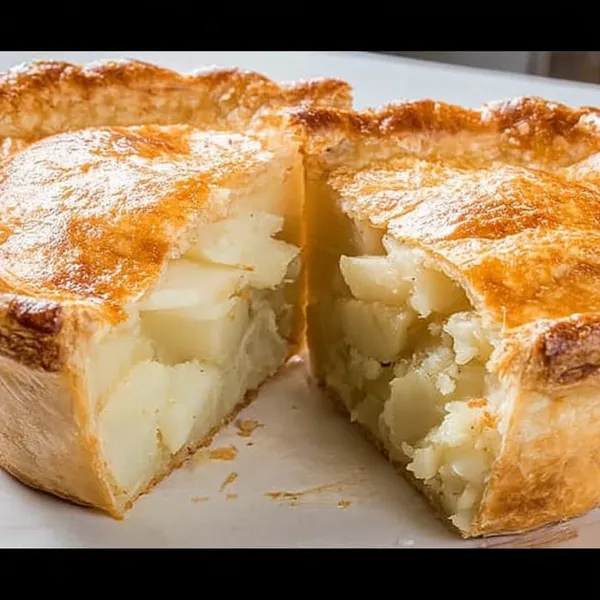
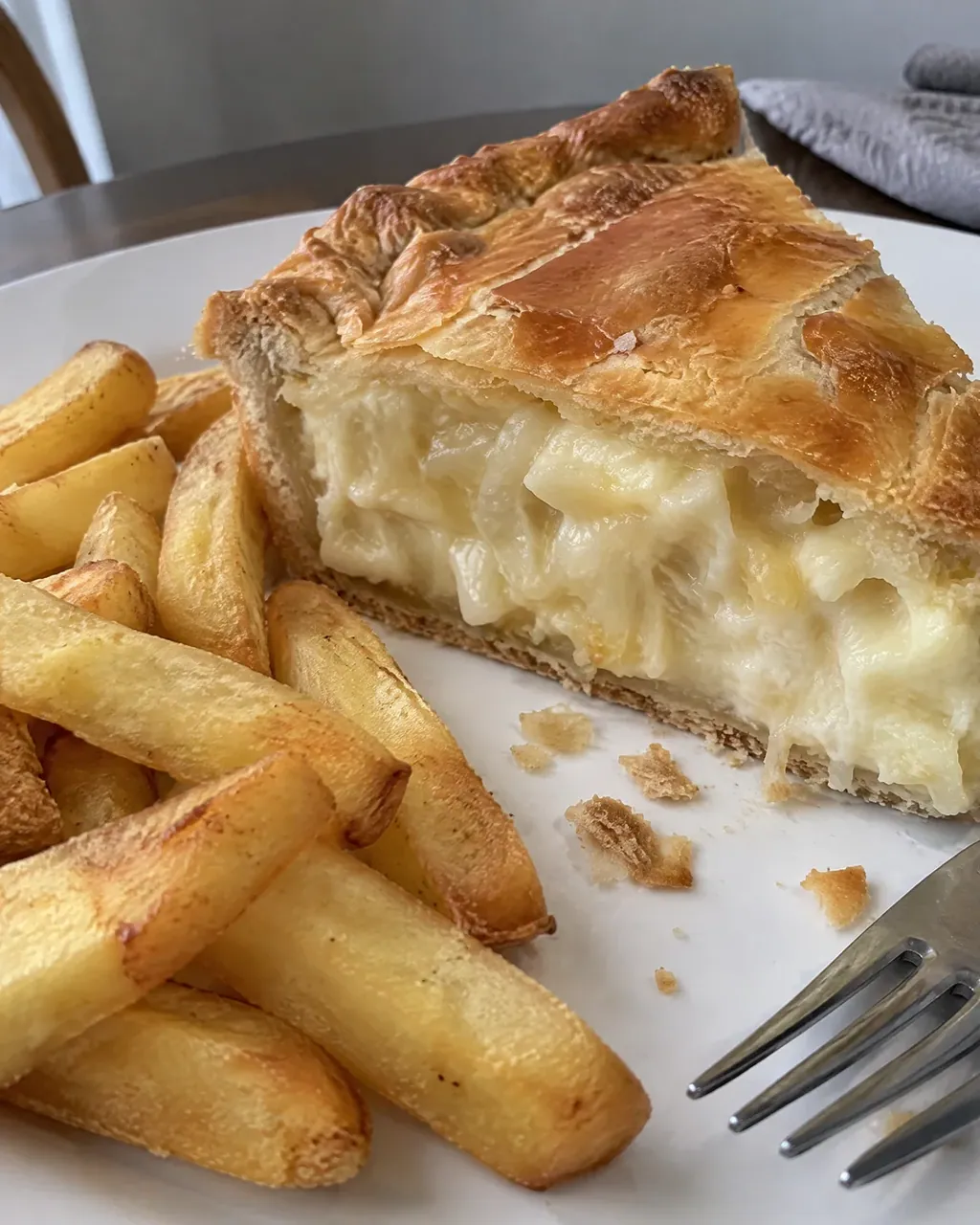
My friend Margaret grew up in Lancashire, in the north of England, and when she is homesick this is the pie she talks about. Friday dinner came from the chip shop, wrapped in paper, and for a great many families that meant a cheese and onion pie with chips. Her mother made the same pie at home on the days when there was no meat in the house, and nobody at the table felt they had gone without. It is a deep pie with pastry underneath and on top, and inside there is cheese, there are onions, and there is nothing else.
With only two things in the filling, how you treat them is everything. The mistake nearly everybody makes the first time is to put the onions in raw or half cooked. Onions are mostly water, and in the oven that water runs out into the pie, so the filling swims and the bottom crust turns to paste. The cure is patience at the stove, before the pie is ever built. Here is how to cook the onions so the filling comes out soft and creamy and never watery, and which cheese to buy on this side of the ocean.
Why this cheese and onion pie works
- Onions cooked first, slowly, under a lid. They soften in their own steam and turn sweet without browning. Browned onions make a dark, sharp pie, which is a different thing.
- The lid off at the end. The last few minutes boil away the liquid the onions have given up. That liquid is what makes a pie watery.
- A cold filling. Warm onions melt the cheese into a greasy pool and soften the raw pastry before it reaches the oven.
- Crumbly cheese, crumbled. A young, sharp, crumbly cheese melts into the onions and stays creamy. Finely grated hard cheese goes oily.
- A hot baking sheet under the tin. The bottom crust starts cooking the moment the pie goes in, so it bakes crisp instead of steaming.
Ingredients
Makes one deep 9 inch pie, 6 generous wedges. The measurements are in US cups with grams in brackets.
For the butter pastry
- 2 1/2 cups all-purpose flour (315g), plus more for rolling
- 1/2 teaspoon salt
- 1 cup cold butter (225g), 2 sticks, cut in small cubes
- 6 to 8 tablespoons ice water
For the filling
- 2 tablespoons butter (28g)
- 3 large yellow onions, about 1 1/2 pounds (680g), peeled, halved and sliced
- 1/4 cup water (60ml)
- 1/2 teaspoon salt
- 12 ounces Lancashire cheese or sharp white cheddar (340g), crumbled or coarsely grated
- 1/2 teaspoon ground white pepper, or black pepper
- 1/2 teaspoon dry mustard powder
To finish
- 1 egg, beaten, or 2 tablespoons milk, for brushing the top
Lancashire cheese is white, mild, tangy and crumbly, and it is hard to find in American stores. The closest stand-in is a sharp or extra sharp white cheddar, the kind sold in a block. Break it up with your fingers or grate it on the large holes. Avoid bags of ready-shredded cheese, which are coated to stop them clumping and do not melt creamily. Margaret’s family never put potato in the filling. If yours did, see the variations.
How to make cheese and onion pie
Make the pastry
- Stir the flour and salt together in a large bowl. Add the cold butter and rub it in with your fingertips, or cut it in with a pastry blender, until the mixture looks like coarse crumbs with a few pea-size pieces of butter left.
- Sprinkle over 6 tablespoons of the ice water and stir with a knife until the dough starts to clump. Add more water a tablespoon at a time only if it will not hold together when squeezed.
- Gather the dough into two flat discs, one a little larger than the other. Wrap them and chill for at least 45 minutes.
Cook the onions
- Melt the butter in a wide pan over medium-low heat. Add the sliced onions, the water and the salt, stir, and put the lid on.
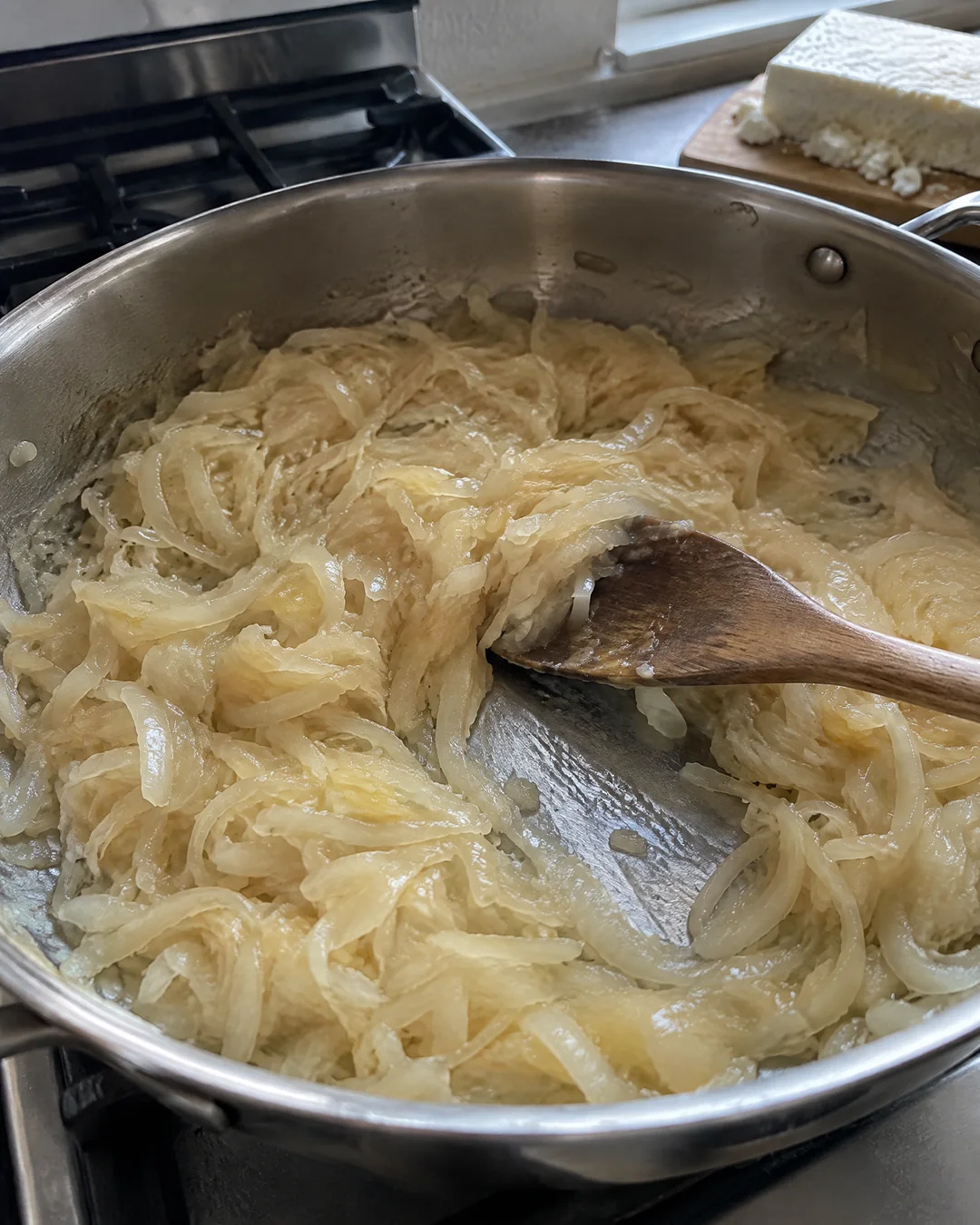
- Cook gently for 20 minutes, stirring now and then, until the onions are completely soft and translucent. They must not brown. Turn the heat down if they start to color.
- Take the lid off, raise the heat to medium and cook for 5 to 8 minutes more, stirring, until every bit of liquid in the pan has boiled away and the onions look glossy, not wet.
- Tip the onions onto a plate, spread them out and let them cool completely, about 30 minutes. When they are cold, mix them in a bowl with the crumbled cheese, the pepper and the mustard powder.
Build and bake the pie
- Put a heavy baking sheet on the lower shelf of the oven and heat the oven to 400 degrees (200°C).
- On a floured counter, roll the larger disc of pastry into a round about 13 inches across. Line a deep 9 inch metal pie tin with it, letting the extra hang over the edge.
- Pack the cold filling into the pastry and press it down level. Brush the rim of the pastry with a little water.
- Roll the second disc into a 10 inch round and lay it over the top. Press the edges together, trim, and crimp with a fork. Brush the lid with beaten egg and cut two small slits in the middle.
- Set the tin on the hot baking sheet and bake for 20 minutes. Turn the oven down to 375 degrees (190°C) and bake for 25 to 30 minutes more, until the pastry is deep golden.
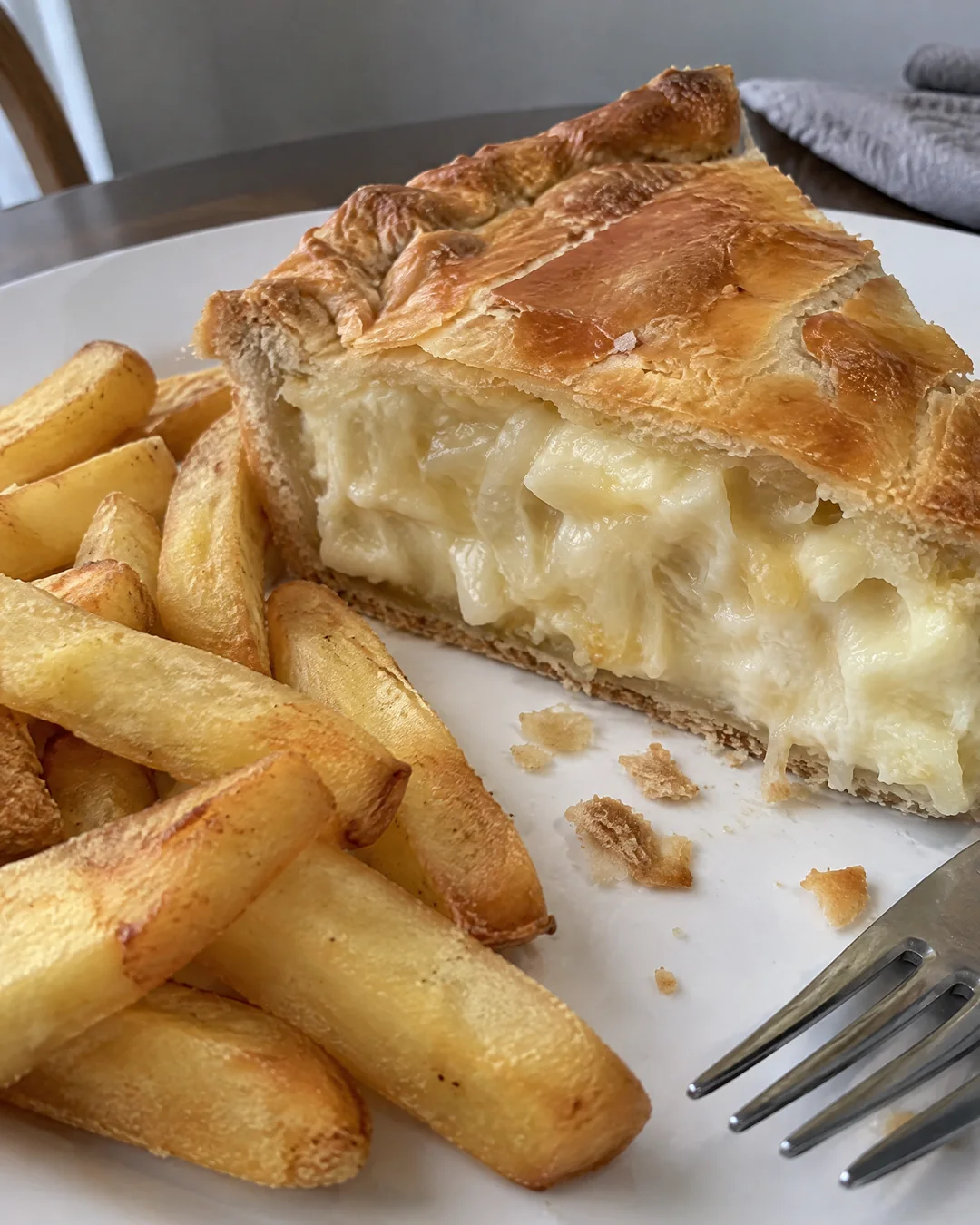
- Let the pie stand for at least 30 minutes before cutting, so the filling can settle. Serve warm with chips, or cold in a wedge.
Tips that make the difference
- Judge the onions with your eyes. When you drag a spoon across the pan and no liquid runs back into the track, they are dry enough.
- Do not rush the cooling. A warm filling is the second most common reason for a soggy bottom, right after wet onions.
Variations
- With potato. Some families add one medium floury potato, boiled until just tender, cooled and cut in small cubes, folded into the cold filling. It makes the pie go further and the filling firmer.
- Hand pies. Cut the pastry into six 6 inch rounds, fill one half of each, fold, crimp and bake at 400 degrees (200°C) for 25 minutes.
Storage and make-ahead
The pie keeps, covered, in the refrigerator for up to 4 days. It is very good cold.
Reheat wedges in a 350 degree (175°C) oven for 15 minutes. A microwave softens the pastry.
To freeze, wrap the baked and cooled pie well and freeze for up to 2 months. Thaw overnight in the refrigerator before reheating.
Frequently asked questions
Why is my cheese and onion pie watery?
Because the onions still held water when the pie was built. Cook them under a lid until soft, then with the lid off until the pan is dry, and cool them completely before adding the cheese.
What cheese can I use instead of Lancashire?
A sharp or extra sharp white cheddar from a block is the best American stand-in. Crumble or coarsely grate it. A mix of white cheddar and a little Monterey Jack gives a milder, creamier filling.
Should the onions be browned?
No. For this pie they are cooked slowly until soft, sweet and pale. Browned onions taste stronger and turn the filling dark.
Is cheese and onion pie eaten hot or cold?
Both. From the chip shop it is eaten hot with chips and often peas or baked beans. At home, a cold wedge the next day is just as popular.
Cook the onions until the pan is dry and let them go cold, and the rest of the pie takes care of itself.
Lancashire Cheese and Onion Pie (No Meat, Soft Onions, Never Watery)
A deep Lancashire cheese and onion pie: butter shortcrust top and bottom, filled with nothing but crumbly cheese and onions cooked slowly until soft. With how to cook the onions so the filling is creamy and the bottom is never soggy.
Ingredients
- 2 1/2 cups all-purpose flour (315g), plus more for rolling
- 1/2 teaspoon salt
- 1 cup cold butter (225g), 2 sticks, cut in small cubes
- 6 to 8 tablespoons ice water
- 2 tablespoons butter
- 3 large yellow onions, about 1 1/2 pounds (680g), peeled, halved and sliced
- 1/4 cup water
- 1/2 teaspoon salt
- 12 ounces Lancashire cheese or sharp white cheddar (340g), crumbled or coarsely grated
- 1/2 teaspoon ground white pepper, or black pepper
- 1/2 teaspoon dry mustard powder
- 1 egg, beaten, or 2 tablespoons milk, for brushing the top
Instructions
- Stir the flour and salt together in a large bowl. Add the cold butter and rub it in with your fingertips, or cut it in with a pastry blender, until the mixture looks like coarse crumbs with a few pea-size pieces of butter left.
- Sprinkle over 6 tablespoons of the ice water and stir with a knife until the dough starts to clump. Add more water a tablespoon at a time only if it will not hold together when squeezed.
- Gather the dough into two flat discs, one a little larger than the other. Wrap them and chill for at least 45 minutes.
- Melt the butter in a wide pan over medium-low heat. Add the sliced onions, the water and the salt, stir, and put the lid on.
- Cook gently for 20 minutes, stirring now and then, until the onions are completely soft and translucent. They must not brown. Turn the heat down if they start to color.
- Take the lid off, raise the heat to medium and cook for 5 to 8 minutes more, stirring, until every bit of liquid in the pan has boiled away and the onions look glossy, not wet.
- Tip the onions onto a plate, spread them out and let them cool completely, about 30 minutes. When they are cold, mix them in a bowl with the crumbled cheese, the pepper and the mustard powder.
- Put a heavy baking sheet on the lower shelf of the oven and heat the oven to 400 degrees (200°C).
- On a floured counter, roll the larger disc of pastry into a round about 13 inches across. Line a deep 9 inch metal pie tin with it, letting the extra hang over the edge.
- Pack the cold filling into the pastry and press it down level. Brush the rim of the pastry with a little water.
- Roll the second disc into a 10 inch round and lay it over the top. Press the edges together, trim, and crimp with a fork. Brush the lid with beaten egg and cut two small slits in the middle.
- Set the tin on the hot baking sheet and bake for 20 minutes. Turn the oven down to 375 degrees (190°C) and bake for 25 to 30 minutes more, until the pastry is deep golden.
- Let the pie stand for at least 30 minutes before cutting, so the filling can settle. Serve warm with chips, or cold in a wedge.