In this article
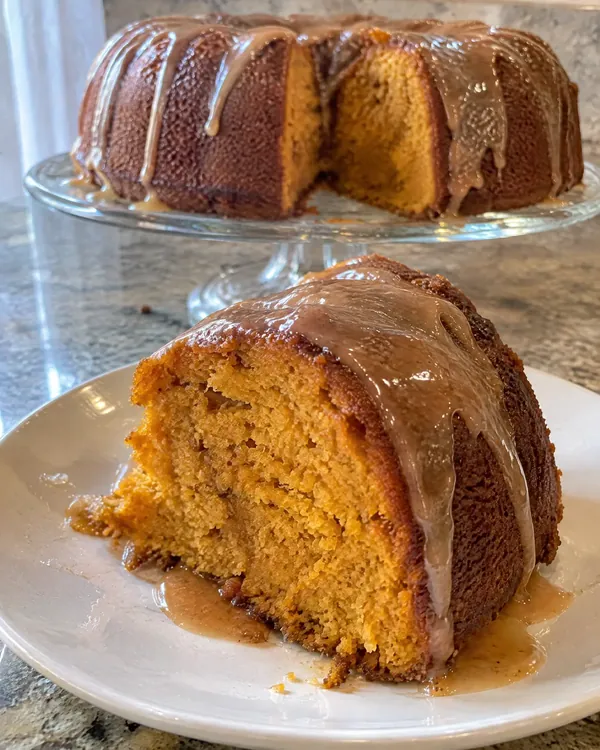
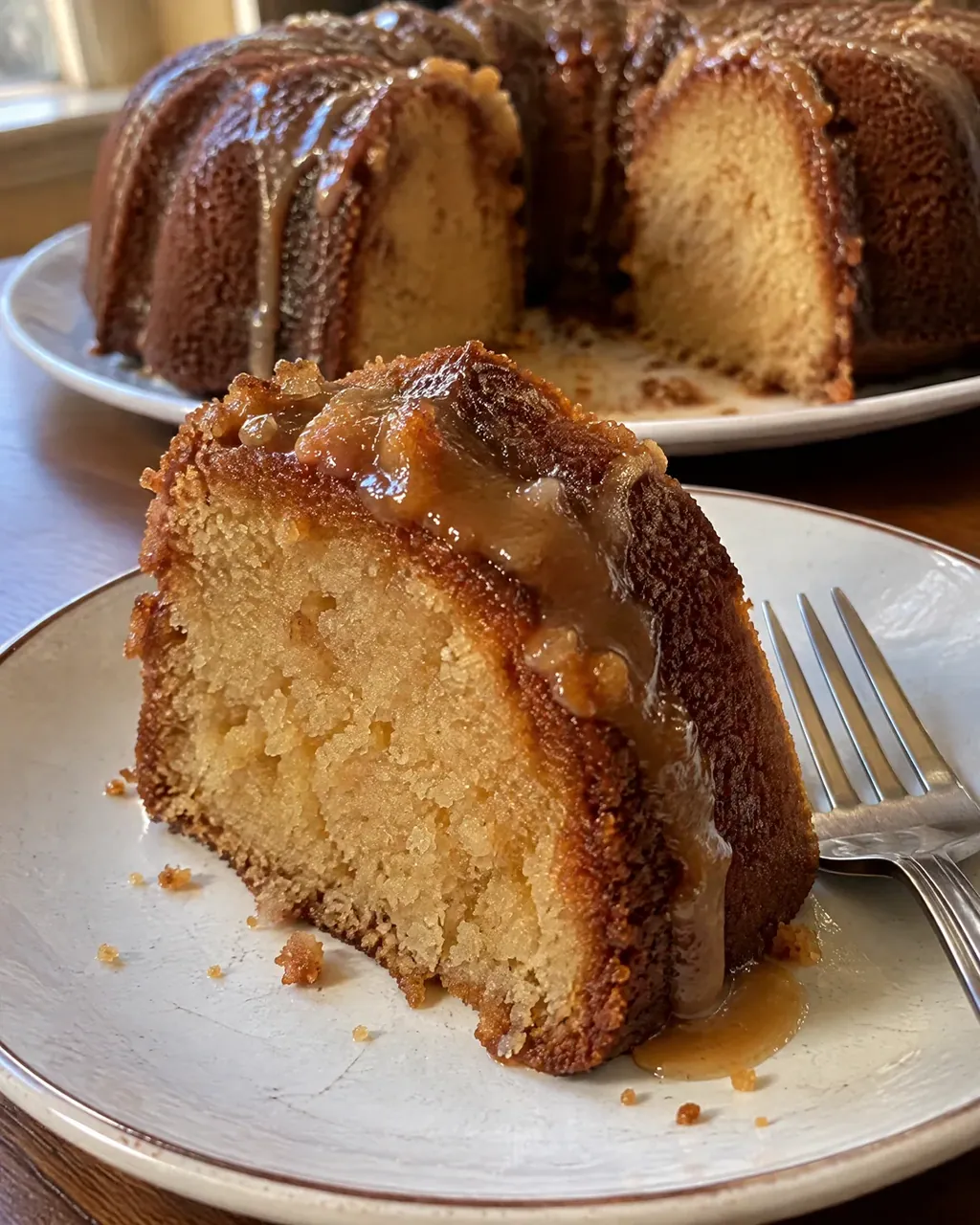
My mother kept a pound cake under a glass dome on the kitchen counter for most of my childhood, and the one I remember best is the brown sugar one. It was the same old tube pan cake every Southern kitchen made, dense and buttery with a fine tight crumb, except that she made it with light brown sugar instead of white. The molasses in the sugar turns the whole cake the color of toffee and gives it a caramel taste from the crust to the very middle. Every October, when the evenings turned cool, that cake came back to the counter and stayed there until the last slice was gone.
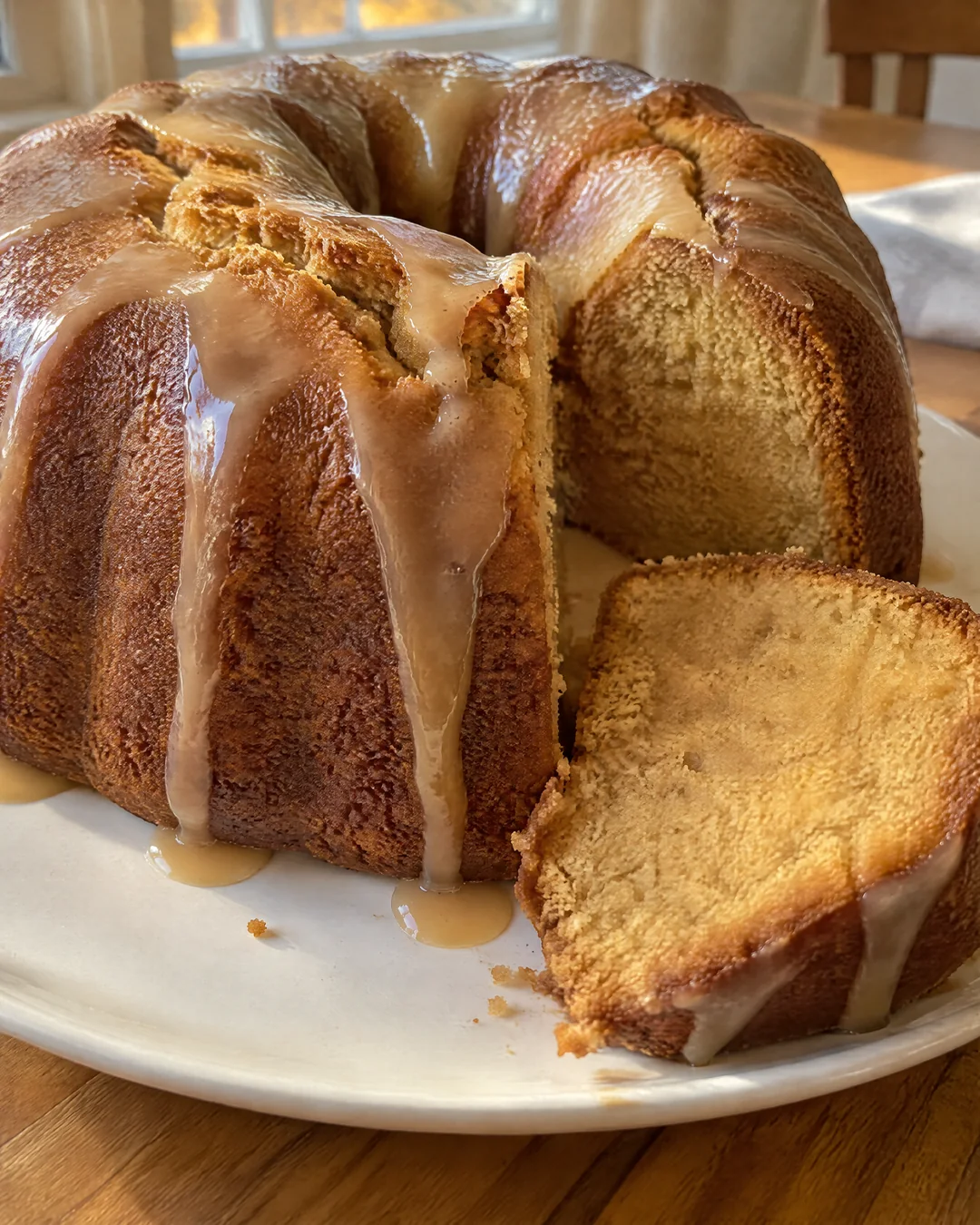
The first time I baked it on my own, the top split open in a long ragged crack and I thought I had ruined it. My mother laughed. A heavy pound cake batter sets on the outside first, she told me, and the middle keeps rising and pushes up through the crust. The crack is not a flaw. A pound cake with no crack at all is usually one that was not creamed long enough, so it never had the air it needed to rise. The low oven is the other half of the secret: it lets that thick batter bake all the way through to the center before the outside turns too dark. Then, while the cake is still warm, a simple brown sugar glaze goes over the top and runs down into the crack.
Why this brown sugar pound cake works
- Brown sugar for the caramel taste. Light brown sugar carries a little molasses, which keeps the crumb moist and gives the whole cake a toffee flavor no white sugar pound cake has.
- A long creaming. Butter and sugar beaten for a full 6 to 7 minutes trap the air that makes the cake rise. This is the step most people cut short.
- Eggs one at a time. Each egg beaten in fully before the next keeps the batter smooth and stops it curdling.
- Flour and milk in turns. Adding them alternately, and mixing only until the flour disappears, keeps the crumb fine and tender instead of tough.
- A low oven. At 325 degrees the thick batter bakes evenly to the center, the crust turns deep gold instead of burnt, and the top cracks the way it should.
Ingredients
Makes one 10 inch tube cake, about 16 slices. The measurements are in US cups with grams in brackets.
For the cake
- 1 1/2 cups unsalted butter, softened (340g)
- 2 1/4 cups packed light brown sugar (450g)
- 1/2 cup granulated sugar (100g)
- 5 large eggs, at room temperature
- 3 cups all-purpose flour (375g)
- 1/2 teaspoon baking powder
- 1/2 teaspoon fine salt
- 1 cup whole milk, at room temperature (240ml)
- 2 teaspoons vanilla extract
For the brown sugar glaze
- 4 tablespoons unsalted butter (56g)
- 1/2 cup packed light brown sugar (100g)
- 3 tablespoons whole milk (45ml)
- 1/2 teaspoon vanilla extract
- 1/2 cup powdered sugar (60g)
Soft butter matters more here than in almost any other cake. It should give easily when you press it but still hold its shape, never greasy or melted. Take the butter, eggs and milk out of the refrigerator about an hour ahead.
How to make brown sugar pound cake
- Heat the oven to 325 degrees (165°C). Grease a 10 inch tube pan generously with soft butter and dust it with flour, tapping out the extra.
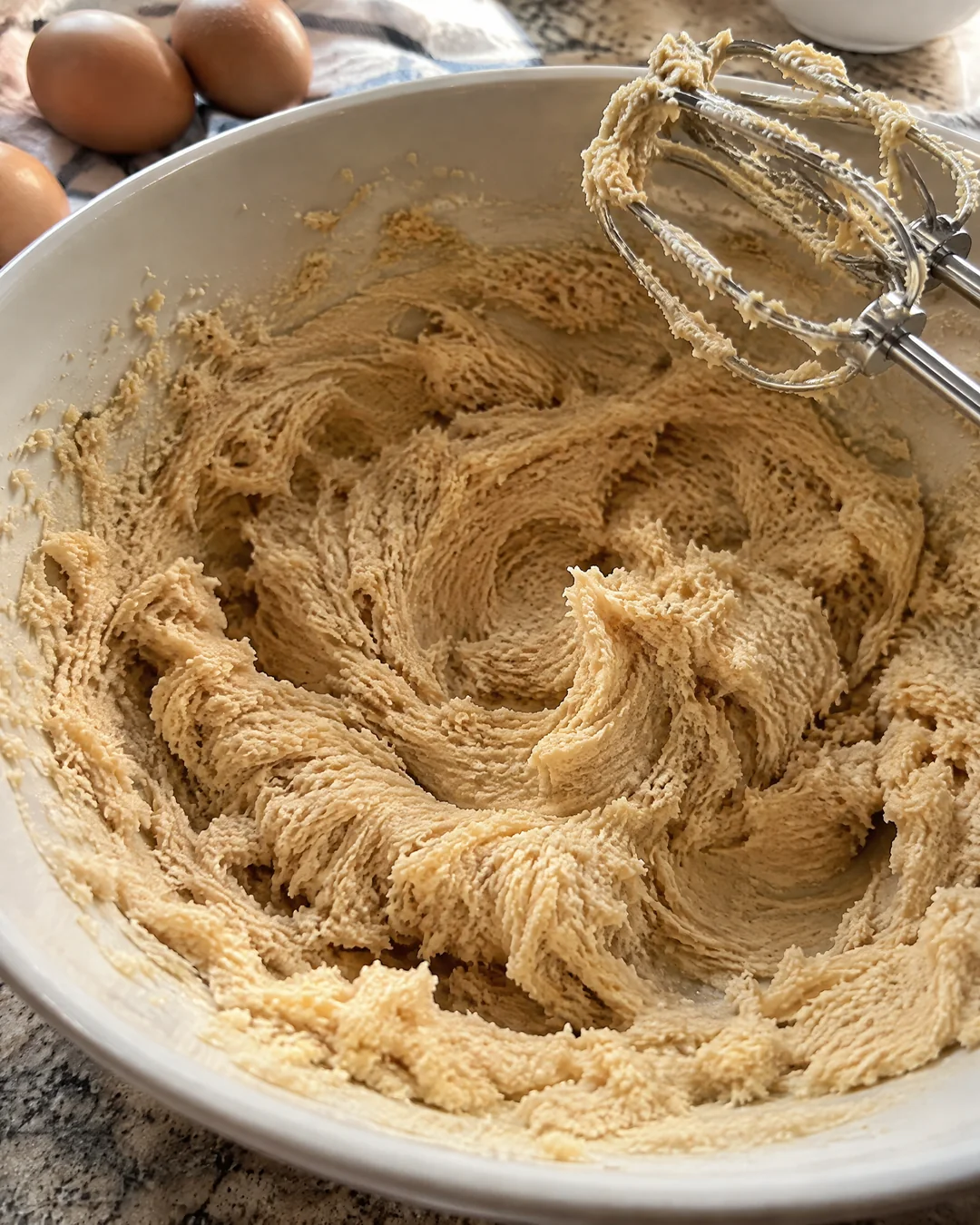
- In a large bowl, beat the butter with an electric mixer until creamy. Add the brown sugar and granulated sugar and beat on medium speed for 6 to 7 minutes, scraping the bowl now and then, until the mixture is pale, fluffy and noticeably lighter in color.
- Add the eggs one at a time, beating well after each one until it disappears into the batter.
- In another bowl, whisk together the flour, baking powder and salt. Stir the vanilla into the milk.
- With the mixer on low, add the flour in three parts and the milk in two, starting and ending with the flour. Mix only until the last of the flour is gone, then finish with a few strokes of a spatula.
- Spoon the thick batter into the pan, smooth the top, and tap the pan once on the counter to settle it.
- Bake at 325 degrees for 70 to 80 minutes, without opening the oven for the first hour, until the top is deep golden, cracked, and a long skewer pushed into the center comes out clean.
- Cool the cake in the pan on a rack for 15 minutes, then run a thin knife around the edges and turn it out onto a cake plate.
- For the glaze, melt the butter with the brown sugar and milk in a small saucepan over medium heat, bring it to a boil and boil for 1 minute, stirring. Take it off the heat, stir in the vanilla and the powdered sugar until smooth, and spoon it over the warm cake so it runs down the sides and into the crack. Let it set for an hour before slicing.
Tips that make the difference
- Do not open the oven door during the first hour. A rush of cool air can make a heavy pound cake sink in the middle.
- If the top is browning too fast in the last 20 minutes, lay a sheet of foil loosely over the pan.
- Weigh the flour if you can. Too much flour is the most common reason a pound cake turns dry.
- Let the glaze cool for a minute or two before spooning it over. Too hot and it soaks straight in; too cool and it will not run.
Variations
- Pecan. Fold 1 cup of chopped toasted pecans (115g) into the finished batter, the way many Georgia kitchens make it.
- Caramel frosting. Skip the glaze and spread the top with a cooked caramel icing for a richer, birthday style cake.
- Spiced. Add 1 teaspoon ground cinnamon and 1/4 teaspoon nutmeg to the flour for an autumn version.
- Bundt pan. It bakes well in a 12 cup Bundt pan at the same temperature; start checking at 65 minutes.
Storage and make-ahead
Keep the cake covered under a cake dome or wrapped in plastic at room temperature for up to 4 days. Like most pound cakes, it tastes better on the second day.
To freeze, wrap the cooled, unglazed cake or individual slices tightly in plastic and then foil, and freeze for up to 3 months. Thaw in the wrapping on the counter.
Slices that have gone a little dry are wonderful toasted in a skillet with a bit of butter.
Frequently asked questions
Why did my pound cake crack on top?
Because a thick pound cake batter sets on the outside first while the middle is still rising, and the rising center pushes up through the crust. It is the sign of a well creamed batter and a cake baked low and slow, not a mistake.
Why is my pound cake dense and heavy at the bottom?
Usually the butter and sugar were not creamed long enough, or the batter was overmixed after the flour went in. Cream for the full 6 to 7 minutes and stop mixing as soon as the flour disappears.
Can I use dark brown sugar?
Yes. The cake will be darker and taste more strongly of molasses. Many people love it that way.
How do I know when it is done?
The top will be deep golden and cracked, the cake will pull slightly from the sides of the pan, and a long skewer in the center will come out clean, with no wet batter.
Cream the butter longer than you think, keep the oven low, and when that crack opens across the top, smile. It means you did it right.
Brown Sugar Pound Cake (and Why the Crack on Top Means You Did It Right)
An old-fashioned Southern brown sugar pound cake with a caramel flavor all the way through, baked low and slow in a 10 inch tube pan at 325 degrees and finished with a warm brown sugar glaze. US cups with grams.
Ingredients
- 1 1/2 cups unsalted butter, softened
- 2 1/4 cups packed light brown sugar
- 1/2 cup granulated sugar
- 5 large eggs, at room temperature
- 3 cups all-purpose flour
- 1/2 teaspoon baking powder
- 1/2 teaspoon fine salt
- 1 cup whole milk, at room temperature
- 2 teaspoons vanilla extract
- 4 tablespoons unsalted butter
- 1/2 cup packed light brown sugar
- 3 tablespoons whole milk
- 1/2 teaspoon vanilla extract
- 1/2 cup powdered sugar
Instructions
- Heat the oven to 325 degrees (165°C). Grease a 10 inch tube pan generously with soft butter and dust it with flour, tapping out the extra.
- In a large bowl, beat the butter with an electric mixer until creamy. Add the brown sugar and granulated sugar and beat on medium speed for 6 to 7 minutes, scraping the bowl now and then, until the mixture is pale, fluffy and noticeably lighter in color.
- Add the eggs one at a time, beating well after each one until it disappears into the batter.
- In another bowl, whisk together the flour, baking powder and salt. Stir the vanilla into the milk.
- With the mixer on low, add the flour in three parts and the milk in two, starting and ending with the flour. Mix only until the last of the flour is gone, then finish with a few strokes of a spatula.
- Spoon the thick batter into the pan, smooth the top, and tap the pan once on the counter to settle it.
- Bake at 325 degrees for 70 to 80 minutes, without opening the oven for the first hour, until the top is deep golden, cracked, and a long skewer pushed into the center comes out clean.
- Cool the cake in the pan on a rack for 15 minutes, then run a thin knife around the edges and turn it out onto a cake plate.
- For the glaze, melt the butter with the brown sugar and milk in a small saucepan over medium heat, bring it to a boil and boil for 1 minute, stirring. Take it off the heat, stir in the vanilla and the powdered sugar until smooth, and spoon it over the warm cake so it runs down the sides and into the crack. Let it set for an hour before slicing.