In this article
- Why Peach Cake Is a Summer Favorite
- A Brief History of Peach Desserts
- Ingredient Spotlight: Fresh Peaches & Brown Sugar
- Equipment & Kitchen Prep
- Selecting & Preparing Peaches
- Crafting the Cake Batter
- Baking & Troubleshooting
- Preparing the Brown Sugar Frosting
- Assembling & Decorating the Cake
- Storage, Make-Ahead & Reheating Tips
- Variations & Ingredient Substitutions
- Nutritional Information & Health Considerations
- Conclusion
- Frequently Asked Questions
Nothing evokes the warmth of a sun-soaked afternoon quite like a slice of peach cake, its tender crumb infused with the fruity sweetness of freshly picked peaches and crowned with a silky, caramel-kissed brown sugar frosting. This dessert marries the peak-season vibrancy of ripe peaches with the comforting depth of brown sugar, creating a harmonious flavor profile that delights both casual bakers and seasoned pastry enthusiasts. In this article, you’ll discover every step—from selecting the juiciest peaches to mastering the perfect frosting consistency—equipping you with the confidence to bake a show-stopping cake that celebrates summer’s bounty. Whether you’re hosting a backyard barbecue, planning a festive brunch, or simply craving a nostalgic taste of warm weather pleasures, this guide provides clear, actionable techniques and insider tips. Prepare to transform simple ingredients into an unforgettable peach-studded masterpiece, and learn how subtle adjustments can elevate your creation from delightful to extraordinary.
Why Peach Cake Is a Summer Favorite
Peaches reach their peak ripeness in mid-summer, offering a balance of acidity and sweetness that shines in baked goods. Unlike denser fruit cakes, a peach cake maintains a light, airy texture while delivering juicy bursts of flavor with every bite. Its pastel hue and speckled peach pieces evoke the season’s carefree spirit, making it a natural centerpiece for summer gatherings. Families often associate peach desserts with backyard picnics, county fairs and lazy afternoons on the porch, forging nostalgic connections that transcend generations. Compared to apple or berry cakes, peach cake’s subtler acidity complements a wider array of spices and frostings—especially the deep, toasty notes of brown sugar. This versatility allows home bakers to experiment with variations such as cinnamon-kissed batters or bourbon-infused syrups. Ultimately, peach cake’s capacity to capture the essence of high summer—warmth, sweetness and simplicity—cements its status as a seasonal favorite for both casual treats and celebratory occasions.
A Brief History of Peach Desserts
Peaches, native to China over 4,000 years ago, became prized in Europe following Alexander the Great’s conquests and later flourished in America after Spanish explorers introduced the fruit in the 16th century. Early European cookbooks from the 17th century include recipes for peach preserves and stews, while colonial America embraced peaches in cobblers, pies and mock mincemeat. The first recorded peach cake recipe appeared in 19th-century Southern cookbooks, where home cooks layered fresh peach slices into butter-rich batters, often sweetening them with molasses or brown sugar. By the early 20th century, advancements in home ovens and the popularization of cake mixes transformed peach cake from a labor-intensive specialty into an accessible weekend project. Post-war America saw a boom in canned and frozen peach desserts, but the modern farm-to-table movement has rekindled interest in baking with fresh, locally sourced fruit. Today’s peach cake pays homage to these culinary traditions while embracing contemporary techniques and flavor pairings.
Ingredient Spotlight: Fresh Peaches & Brown Sugar
The cornerstone of any stellar peach cake lies in two ingredients: ripe, aromatic peaches and richly flavored brown sugar. Fresh peaches should yield slightly to gentle pressure and emit a fragrant, floral aroma; underripe fruit can result in a tart, dry crumb, while overripe specimens introduce excess moisture. Choosing freestone varieties simplifies peeling and slicing, ensuring even distribution throughout the batter. Brown sugar, with its higher moisture content and molasses undertones, deepens the cake’s flavor profile and contributes to a tender crumb by retaining humidity during baking. Light brown sugar offers a subtle caramel note, while dark brown sugar intensifies that molasses richness, ideal for robust frosting. When creamed with butter, brown sugar creates micro-air pockets that aid leavening, while in frosting it imparts a silky texture and complex sweetness. Together, these ingredients form the backbone of a peach cake that’s simultaneously nostalgic and refined.
Equipment & Kitchen Prep
Before you begin, gather the following essentials: two 8- or 9-inch round cake pans, parchment paper strips for easy layer removal, a reliable hand or stand mixer, heat-proof mixing bowls, and an accurate oven thermometer. Line pans with parchment and lightly grease the sides to prevent sticking. Preheat your oven to 350°F (175°C) at least 20 minutes beforehand and verify temperature accuracy with the oven thermometer. Use a fine mesh sieve to whisk together dry ingredients—flour, baking powder, baking soda and salt—ensuring uniform distribution. Prepare a cooling rack within reach to prevent overbaking once the cake layers emerge from the oven. For frosting, reserve a medium-sized mixing bowl chilled in the refrigerator, which helps maintain a cool, spreadable consistency. Organized mise en place minimizes interruptions and guarantees a smooth baking process.
Selecting & Preparing Peaches
To maximize flavor and texture, choose peaches at the peak of ripeness: they should be fragrant, yielding gently to the touch, and free of bruises or wrinkles. Freestone varieties like Elberta or Redhaven simplify peeling, but clingstone peaches can work if properly handled. If peaches aren’t fully ripe, ripen them at room temperature in a paper bag for one to three days. Once ripe, transfer to the refrigerator if not using immediately to slow further softening. To peel, score a shallow “X” on the bottom of each peach, briefly blanch in boiling water for 30 seconds, then plunge into an ice bath; the skins will slip off easily. Alternatively, use a sharp paring knife for small batches. After peeling, halve and pit the peaches, then slice into uniform ¼-inch wedges or dice into ½-inch cubes. Toss the pieces with a tablespoon of flour or cornstarch to absorb excess juice and prevent the fruit from sinking in the batter. Reserve a few decorative slices for the cake top, if desired. Properly prepped peaches ensure even moisture distribution and vibrant fruit pockets throughout each slice.
Crafting the Cake Batter
Begin by room-tempuring 1 cup (227 g) unsalted butter and 1¼ cups (250 g) light brown sugar until soft; cream them together on medium speed for four to five minutes, until pale and fluffy. In a separate bowl, whisk 2¼ cups (280 g) all-purpose flour, 1 tsp baking powder, ½ tsp baking soda, and ½ tsp fine sea salt. Add eggs one at a time—three large, at room temperature—mixing on low until just incorporated. Alternate adding the dry mixture and 1 cup (240 ml) whole milk in three additions, beginning and ending with dry ingredients; mix until just combined to avoid gluten overdevelopment. Fold in the floured peach pieces gently with a silicone spatula, ensuring even distribution without deflating the batter. Scrape the mixture into prepared pans, smoothing the tops with an offset spatula. For decorative flair, arrange the reserved peach slices in a concentric pattern atop each layer. Bake on the center rack for 25–30 minutes, or until a toothpick inserted at the center emerges with moist crumbs attached. Allow layers to cool in pans for 10 minutes before transferring to racks to cool completely. Proper mixing technique and ingredient temperature control are crucial for a consistent crumb and robust rise.

Baking & Troubleshooting
Monitor bake times closely: most peach cakes require 25–30 minutes at 350°F (175°C), but oven variances demand vigilance. Insert a toothpick into the center of each layer at the 25-minute mark. If it emerges with dry crumbs, the cake is done; wet batter indicates additional two- to three-minute increments. A sinking center often results from underbaking or abrupt temperature changes—avoid opening the oven door during the first 20 minutes and allow pans to rest on a cooling rack for ten minutes before unmolding. Should your crumb turn out dry, consider increasing the peach-to-batter ratio slightly or replacing 2 tablespoons of flour with cornstarch to tenderize. Uneven browning can be corrected by rotating pans halfway through baking. If the top domes excessively, tap pans on the counter before placing them in the oven to redistribute batter, or reduce oven temperature by 10°F and bake a few minutes longer. Proactive temperature checks and gentle handling ensure consistently moist, evenly risen layers.
Preparing the Brown Sugar Frosting
Begin by creaming 1 cup (227 g) unsalted butter at room temperature until pale and aerated—approximately three to four minutes on medium speed. Gradually add 2 cups (400 g) light brown sugar, continuing to beat until fully incorporated and fluffy. Meanwhile, heat ½ cup (120 ml) heavy cream in a small saucepan over medium heat until it just begins to steam; do not boil. With the mixer on low, slowly stream in the warm cream, allowing it to meld with the butter-sugar mixture. Increase speed to medium-high and whip for two minutes to ensure smoothness. In a separate bowl, sift 2 cups (240 g) powdered sugar and ¼ teaspoon fine sea salt; add this dry mixture in three parts to the butter base, mixing on low after each addition. Once combined, beat on medium-high for an additional two minutes to remove any small lumps. The frosting should hold soft peaks and spread easily without sliding—if it’s too loose, fold in extra sifted powdered sugar; if excessively stiff, add a teaspoon of cream at a time until desired consistency is reached. For depth of flavor, you may substitute dark brown sugar for light, or incorporate a teaspoon of pure vanilla extract during the final beating stage. Store frosting in an airtight container at room temperature for up to two days or in the refrigerator for up to one week; bring to room temperature and re-whip before using.
Assembling & Decorating the Cake
Ensure cake layers are completely cool before assembly to prevent frosting from melting. Level each layer with a serrated knife or cake leveler, reserving trimmings for snack. Place the first layer on a cake board or serving plate, centering it precisely. Using an offset spatula, apply a generous dollop—about one-third—of brown sugar frosting, spreading it evenly to the edge. Gently lower the second layer, pressing lightly to adhere. Reserve a small amount of frosting (¼ cup) for the crumb coat: apply a thin, even layer over the top and sides to lock in stray crumbs. Chill the cake for 10–15 minutes to set this base coat. Remove from the refrigerator and apply remaining frosting in a thicker, decorative coat, smoothing sides with a bench scraper and topping with generous swirls on top. For a finishing touch, arrange thin fan slices of fresh peach in a concentric pattern or rose shape on the top center. Dust the rim with finely grated lemon zest or a sprinkling of demerara sugar for sparkle. If desired, add edible flowers or mint sprigs for a refined, celebratory presentation. Chill briefly to firm up decorations before serving.
Storage, Make-Ahead & Reheating Tips
Room-temperature storage in an airtight cake carrier keeps the cake moist for up to 48 hours; avoid refrigeration, which can stiffen frosting and dull flavor. For longer preservation, freeze individual slices on a parchment-lined sheet pan until solid, then wrap each in plastic and store in a freezer bag for up to one month. To reheat, thaw wrapped slices at room temperature for 30 minutes, then warm in a 300°F (150°C) oven for five to seven minutes to revive tenderness. If frosting weeps after reheating, blot gently with a paper towel and re-chill briefly before serving.

Variations & Ingredient Substitutions
Swap all-purpose flour for a 1:1 gluten-free blend; add ½ teaspoon xanthan gum if it’s not included. Replace 1 cup butter with coconut oil for a subtle tropical note. For lighter texture, substitute ½ cup Greek yogurt for half the butter, adjusting milk by 2 tablespoons. Infuse the frosting with ½ teaspoon ground cinnamon or cardamom for warm spice depth. To experiment, fold ½ cup finely chopped toasted pecans or almonds into the batter for a nutty crunch without altering core flavors.
Nutritional Information & Health Considerations
One generous slice (1/12 of cake) contains approximately 350–400 calories, with 18 g total fat (10 g saturated), 50 g carbohydrates (including 35 g sugars), and 3 g protein. Fresh peaches contribute vitamins A and C, dietary fiber and potassium, while brown sugar frosting adds iron from molasses. To reduce sugar, swap half the brown sugar in the cake for coconut sugar or date sugar, and reduce powdered sugar in the frosting by 25%, compensating with an extra tablespoon of cream. Those with dairy sensitivities can use plant-based butter and coconut cream; ensure all ingredients are certified gluten-free if needed.
Conclusion
Mastering a peach cake with brown sugar frosting celebrates the harmony of seasonal fruit and deep, caramelized sweetness. By selecting perfectly ripe peaches and understanding the science behind creaming butter with brown sugar, you create a tender, moist crumb that consistently delights. Precise oven calibration and strategic batter handling minimize common pitfalls like sinking centers or dry layers, while a thoughtful approach to frosting—from warming cream to meticulous beating—yields a luxuriously smooth finish. Decorating with fresh peach slices and minimal garnishes highlights the fruit’s natural beauty, transforming a simple cake into a stunning centerpiece. Storage and make-ahead techniques ensure your creation retains peak flavor whether served immediately or days later, and substitution ideas invite creativity for diverse dietary needs. Nutritional tweaks let you lighten sugar or fat without sacrificing texture, making this recipe adaptable for health-focused bakers. When you slice into your creation—revealing tender peach pockets enveloped in golden crumb—you’ll appreciate how each ingredient and method contributes to the final indulgence. Embrace this guide as your roadmap, and let each practice run inspire your own innovations. Share your successes and custom twists with fellow food lovers, extending the joy of homemade peach cake far beyond your kitchen.
Frequently Asked Questions
1. Can I use canned or frozen peaches?
Yes—thaw frozen peaches, drain excess liquid, pat dry and toss with flour. For canned, drain and rinse to reduce syrupy sweetness, then proceed as with fresh.
2. How do I know when my cake is fully baked?
Insert a wooden toothpick into the center; it should come out with moist crumbs but no raw batter.
3. Why did my frosting weep?
Frosting weeps when it’s too warm or overbeaten. Chill ingredients and bowl, beat at moderate speed, and refrigerate the finished frosting briefly.
4. Can I halve the recipe?
Absolutely—use smaller pans, adjust bake time to 20–25 minutes, and monitor doneness closely.
5. What’s the best way to transport this cake?
Use a lidded cake carrier at room temperature. Chill for 15 minutes before travel to firm frosting.
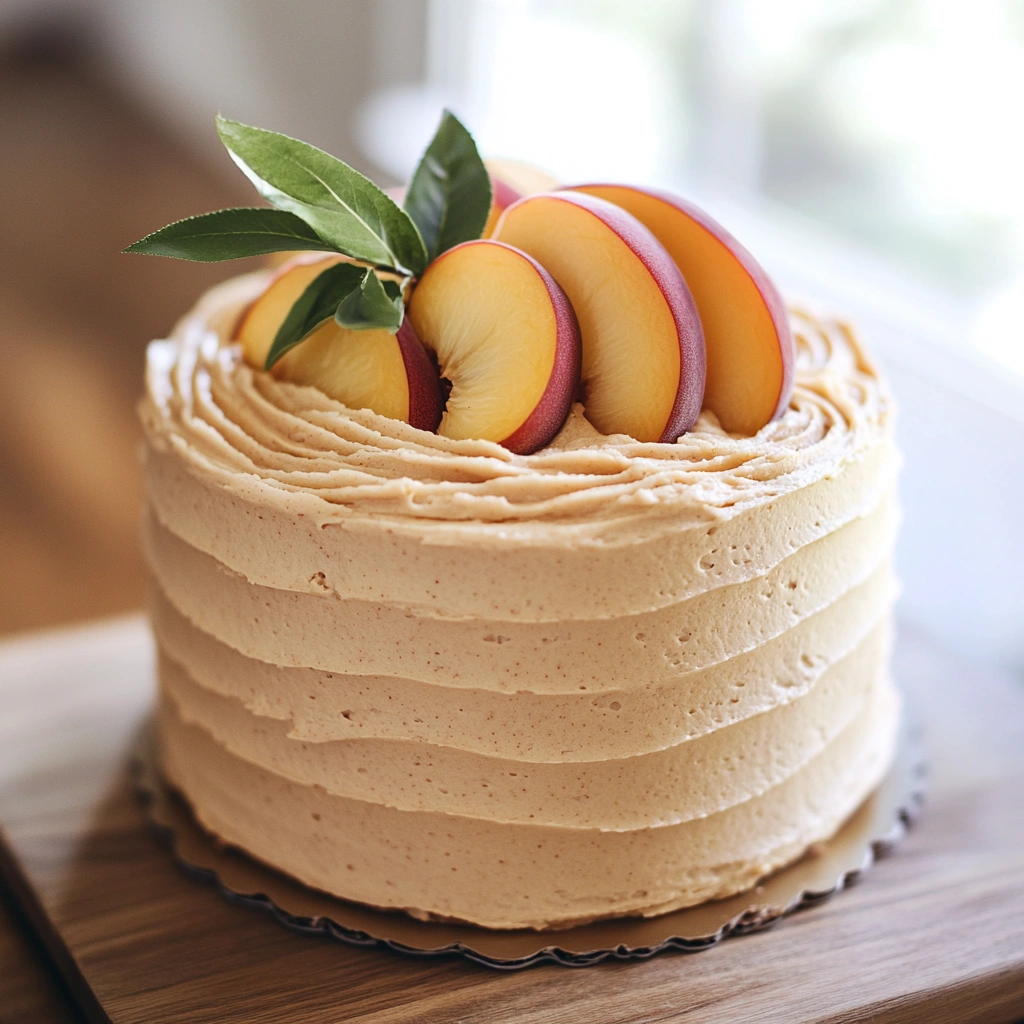
Peach Cake with Brown Sugar Frosting
This moist peach cake is studded with tender, juicy peach pieces and layered with a luxuriously smooth brown sugar frosting that balances caramel notes with bright fruit sweetness. Perfect for summer gatherings or a special brunch, it showcases peak-season peaches in every bite and comes together with straightforward techniques—from creaming butter with brown sugar to arranging fresh peach fan slices on top. Whether you’re a novice baker or looking to elevate your dessert repertoire, this recipe yields a show-stopping centerpiece that’s as beautiful as it is delicious.
Ingredients
- 2 cups all-purpose flour
- 1 ½ teaspoons baking powder
- ½ teaspoon baking soda
- ½ teaspoon salt
- 1 cup granulated sugar
- ½ cup unsalted butter, softened
- 2 large eggs
- 1 teaspoon vanilla extract
- ½ cup sour cream
- 1 cup fresh or canned peaches, diced
- ½ cup unsalted butter
- 1 cup packed brown sugar
- ¼ cup milk
- 2 cups powdered sugar
- ½ teaspoon vanilla extract
Instructions
- Prepare the Cake Batter: Preheat your oven to 350°F (175°C) and grease a 9×13-inch baking pan. In a medium bowl, whisk together flour, baking powder, baking soda, and salt. In a separate large bowl, cream together the butter and sugar until light and fluffy. Add the eggs, one at a time, beating well after each addition. Mix in the vanilla extract and sour cream. Gradually add the dry ingredients to the wet ingredients, mixing until just combined. Fold in the peaches.
- -step-2″>2. Bake the Cake: Pour the batter into the prepared baking pan and spread evenly. Bake for 30-35 minutes, or until a toothpick inserted into the center comes out clean. Let the cake cool completely.
- tep-3″>3. Make the Brown Sugar Frosting: In a saucepan over medium heat, melt the butter. Stir in the brown sugar and cook for 2-3 minutes, until it dissolves and becomes smooth. Add the milk, bring to a boil, and then remove from heat. Let the mixture cool slightly before whisking in the powdered sugar and vanilla extract until smooth and creamy. 4.